There is more evidence that more younger people are feeling burnt out. There is evidence that more younger people have increasing levels of difficulties like anxiety or depression. I'm probably not even graduating till I'm 24.
The feeling of being left behind is so, so overwhelming to me, like it consumes my whole being. Morning. It's 7:15 in the morning.
I'm in my flat in London. We're starting the episode in a bit of a different location today, because I thought I would bring you guys on my journey into work. I can't lie, I'm a little bit late.
I don't know how I've managed to do it again. Okay. I have about a 20 minute walk to the tube station.
London is not kind when you're late. And I've made it. That was pretty painless compared to normal.
I'm just going have to frantically search for my pass so I can actually get into the BBC building. Okay. I'm back.
I'm Iqra, this is What in the World from the BBC World Service. That was a bit of my morning. It might be similar to some of you guys as well.
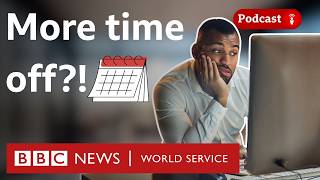
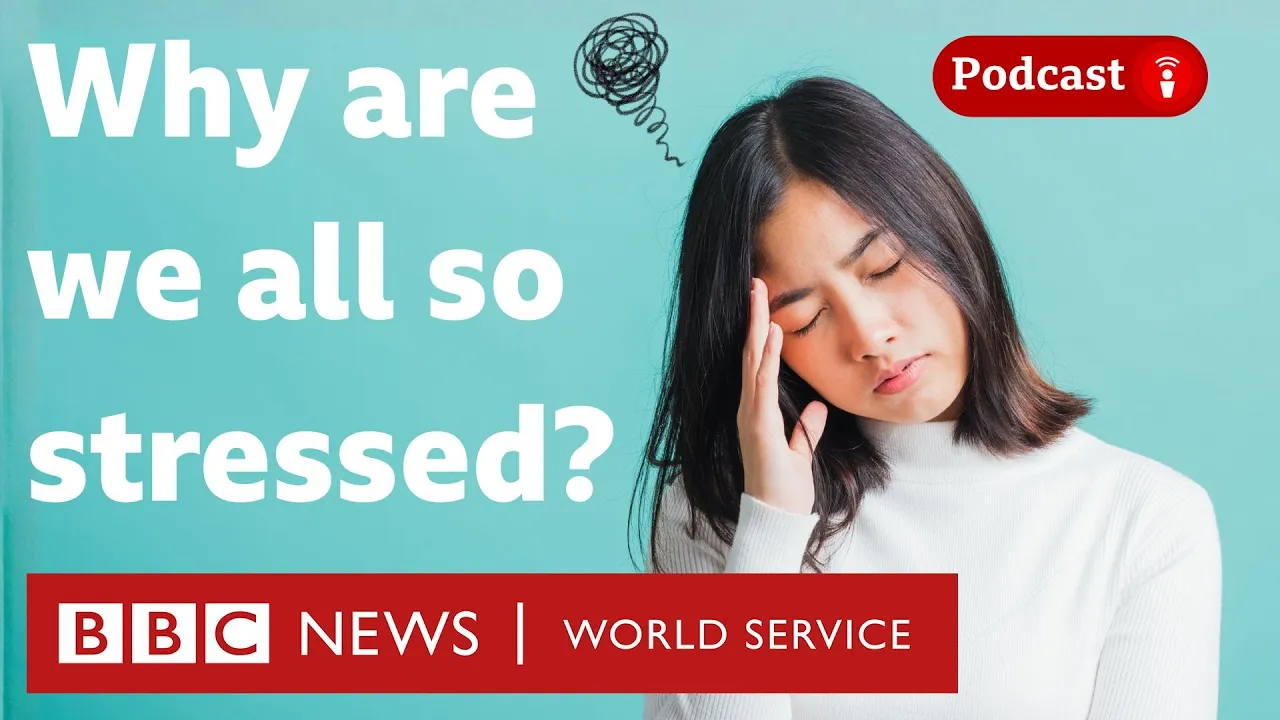
One thing's for sure that overwhelmed feeling hits most of us at some point in our day. And that's what we're getting into today. I know there's a bunch of Tik Tok videos out there about this, so we wanted to talk about why we're all feeling so stressed and overwhelmed in our lives and how we get around it, too.
We've got some of your questions and we're putting them to the BBC presenter and psychologist Claudia Hammond. She's also written a book about being overwhelmed. It's called Overwhelmed.
Claudia is right here, right now. Hey, Claudia. Hi.
Thanks for having me. Yeah. Thank you for coming.
I know we've got a bunch of questions to get through. Before we get to the questions, though, I wanted to actually get into the definition of overwhelm. When we say overwhelm, what do we mean?
What is that? So overwhelm is an emotional state where you are struggling with your current situation. So you might feel overloaded, you might feel you can't cope, and that might be a temporary thing, hopefully.
But if it's not in the longer term, if that becomes more of a kind of chronic kind of stress, then that might lead to burnout in the end. Yeah. And have you noticed this has become more common for Gen Z?
I see all the TikTok videos about burnout, stress. There is more evidence that more younger people are feeling burnt out. There is evidence that more younger people have increasing levels of difficulties like anxiety or depression, and it is a time of transition when you're young, there's so much uncertainty, there's uncertainty about your own life, there's uncertainty about what's happening in the world as well.
There's uncertainty about what will happen with the world in the future, if you think about things like climate change. There's a lot going on. I'm glad you said it.
So I guess let's focus on different aspects of life. And we look at social media. It's so easy to pick up your phone and you've got that instant access to whatever is going on in the world.
There can be a lot of bad stuff going on in the world. How does that affect how overwhelmed we feel, that kind of instant access? Yeah.
If people find themselves, you know, doomscrolling and looking for the bad news in a way, and then carrying on and on, looking at that bad news and getting alerts all the time that are telling them what's happening in the world, then when it's bad, there is evidence that that can be damaging for people. There was a really interesting study that was done after a Boston Marathon bombing that took place in 2013. And there were some people even back then who watched more than six hours a day of coverage of it, either on TV, on rolling news or online.
And they found that those people who did that actually had more acute stress than people who were actually at the bombing, which seems really extraordinary. But it's because if you keep watching the worst bits of it, there's no beginning, middle and end. If you were actually there, thankfully, the experience does end in the end, and so if people find themselves drawn to watching negative things all the time, we know that if they're already in a low mood, they're more likely to then carry on looking for negative things, and then that puts them in a lower mood again.
So I think we do have to be careful how we consume news of what's going on. Do you need to know immediately? Do you have to have alerts that tell you immediately when a news story has happened?
Or would it be okay to find out at the end of the day? Something that me and my sister talk about a lot when it comes to overwhelm and social media is, I sometimes say to her, why do you not reply to my messages? Like, I know you've seen them instantly when they come up on your phone.
And she says, sometimes I just get overwhelmed when when I see the messages or there's a few coming through, or maybe there's not even a few coming through, but there's like they're building up, you know, a backlog that she needs to reply to. And I've heard a few of my friends say that too. So why does that happen?
Yeah, I think there can be a real pressure because we've got messages coming in via loads of different methods now, and it is really hard to stay across those and answer them all immediately. And especially when people know whether you've seen the message, then it feels rude if you don't answer, but then that can add to the pressure of all the other things you've got to do as well. And maybe at that moment you didn't want to engage with that person.
Not because you don't like them at all just because you're thinking about something else. You know, maybe you're watching something, you're watching a film or something. Maybe you're chatting to friends, maybe you're out enjoying nature.
Maybe you don't want to be interrupted at that moment and that that's okay. So I think in a way we need to give ourselves a bit less of a hard time about that and not expect to be able to be perfect and answer everything straight away, but also to let our friends off a bit, you know, to not take it personally. If they don't answer straight away, it's not because they hate you, it's because they're doing something else.
Okay, maybe I'll give my sister some time. Yeah give her a break. And we know sometimes big news headlines can make us feel overwhelmed.
Sometimes these headlines hit closer to home as well. We have heard from someone who's experiencing just that. Here's Sonia, who's from Ukraine.
I felt overwhelmed lately because of all the news about my country and the world in general. It just feels like the future is so unpredictable and hectic, and it's very hard to build any plans. And what's really helpful for me is to stay off the social media as long as possible and also go to the gym regularly.
So Claudia, Sonia there mentions about going to the gym is a really helpful tool for her. Is that something you would recommend? What other ways can we kind of help ourselves?
Totally. I think it's really important to find the activity that you find helps you switch off. And this will be different for different people.
And I did a big piece of research on this, where for some people it was exercise, 15% of people told us that exercise was the thing that allowed them to rest in a way that allowed all those thoughts in their brain to stop whirring around. But for other people, you know, it might be watching a video. It might be reading a book.
Reading actually came top. And I think particularly if, like Sonia, you're living through a difficult, uncertain situation. It's so important to find those moments where you do the thing that will make you feel a bit better and feel a bit more restored.
Moving on to, I guess, another big stressor that hits a lot of our lives - exams, being in school. It can be a huge source of overwhelm. We've actually heard from someone who's going through just that as well.
This is Mari Suomi, who's from Finland. Let's have a listen. So I come from a background of two very different cultures, but the common thing in these cultures are succeeding in life.
And I think quite many people my age are that come from a family where academics succeeding is a priority, can feel the pressure of having to fulfill people's sometimes unrealistic expectations. So in my country, in Finland, at high school, we have matriculation exams on our last years of high school. Months of studying and preparation for these exams that last six to eight hours in a big hall.
There is so much pressure on little 18-year-olds to make huge life decisions about what they want to do or have as a career. It can become quite overwhelming to constantly think how you can be better or do better. And when you, for the first time, don't meet the unrealistic expectations and feel the disappointment, that's the point you never want to go back to.
How does she deal with that pressure? It's hard, isn't it? And six to eight hour exams.
Wow, that does sound hard. Yes when the pressure comes from outside, that can be really difficult. And there is this thing called socially prescribed perfectionism, which is where other people, which might be your school, it might be your parents, it might be others, it might be society are expecting you to be perfect.
And that that feels really difficult. Now, sometimes it's the case that we might be misinterpreting that pressure and they might not be quite as harsh on you as you imagine. You know, if you ask most parents, if you say to them, what do you really want?
They will say they want their child to be really happy, but they also want them to have, you know, the best start in life and the best opportunities and get them to work hard for their exams is one way of doing that. But I think it's very normal. And I think an important thing for Mari to remember is that it's very normal to feel stressed while all this is going on, and that actually to tell yourself one of the reasons you feel so stressed is that this is something that's really important to you, and this is something that really matters.
And that also particularly in the exam itself, if you feel stressed, then just knowing that you may well perform better while you're stressed that this. It concentrates the mind, it sharpens and, you know, nerves sharpen your thinking and allow you to really do your best. And if as you're sitting down to that exam beforehand or you're thinking, I'm really, really worried about this, I feel really, really stressed that stress is actually helping you to do better.
It's helping you to perform like an actor on a stage feels nervous beforehand. They need to feel a little bit nervous. If they were too laid back, they might not do their very best performance.
It's good to hear that stress can be the fuel. It can be a good thing as well. Sticking with the theme of school, we've got Yusaira, who's from Bangladesh.
She's studying at the moment. She's just started her university applications. Here she is.
The university admissions system in Bangladesh is very, very hectic. For example, in the last one and a half months I've sat for nine different exams. And it's very - and the competition is so, so fierce.
For example, the last exam that I sat for had 6000 plus applicants and they're only going to take 100 of them. So getting in is nothing short of a miracle. And nine exams like that competitive - or somewhere even more competitive than that.
So it has taken a toll on me and I've been so overwhelmed. And also the fact that people who are my age, or even a two or three years older than me, living in another country, and I see them getting graduated, graduating, and getting their own apartments or like even getting a big girl job and all I can think of is I'm probably not even graduating till I'm 24 and, I'm - it, I don't know it. The feeling of being left behind is so, so overwhelming to me.
Like it consumes my whole being. So Yusaira speaks there about feeling left behind, like especially on social media, and how that can contribute to things. What would you say about that?
I guess it's such a - it's a feeling a lot of us can relate to. Totally and such and such a horrible feeling as well. And I think one of the difficulties with social media is, of course, that you used to be able to only compare yourself to say, I don't know the rest of your class and, you know, you may well be top of your class, but now you can compare with everybody else.
So now you can compare with millions of people who we know are very much curating what's on their social media feeds. And we know people will do this in loads of ways. People, on average, now are less satisfied with their appearance, and how much of that is down to who they're able to compare themselves with now on social media, but also in terms of success as well.
And I think it's really hard because what you're seeing is the other people who are all going on to do these things, and you're often not seeing the people in just the same situation who are also waiting, you know, and feeling frustrated at not knowing what's going to happen. And so then I think it's a question of really trying to take things one step at a time. Things really often do work out.
And I know that sounds really easy to say, but it may not feel like that at this moment. But these periods of transition, it's really normal to feel uncertain about those. It's been really good to hear all these different experiences, tapping into feeling overwhelmed.
So if someone's listening and thinking, I want some top tips on just feeling overwhelmed generally in my life. What would you say to them? So first I would say accept that your to do list is never going to end.
It's always going to be there. So even - I know that might sound defeatist, but even if you get to the end of it today, tomorrow there will be something else on it. And that's just life.
And then I think the second thing is to really ask what is good enough? You know, do I have to be perfect at everything? Or will good enough do?
And then the third thing I'd say is to take rest seriously and be really kind to yourself. And that could make a real difference. Thank you.
I'm going to take those on board as well. Claudia, it's been so good to have you come by and answer those questions. Thank you so much.
You're very welcome. And if any of you guys have managed to find your own ways to beat feeling that overwhelmed feeling, I want to hear from you. Remember, you can comment below, like and subscribe.
I'm Iqra, this is What in the World from the BBC World Service and we'll see you next time. Bye.