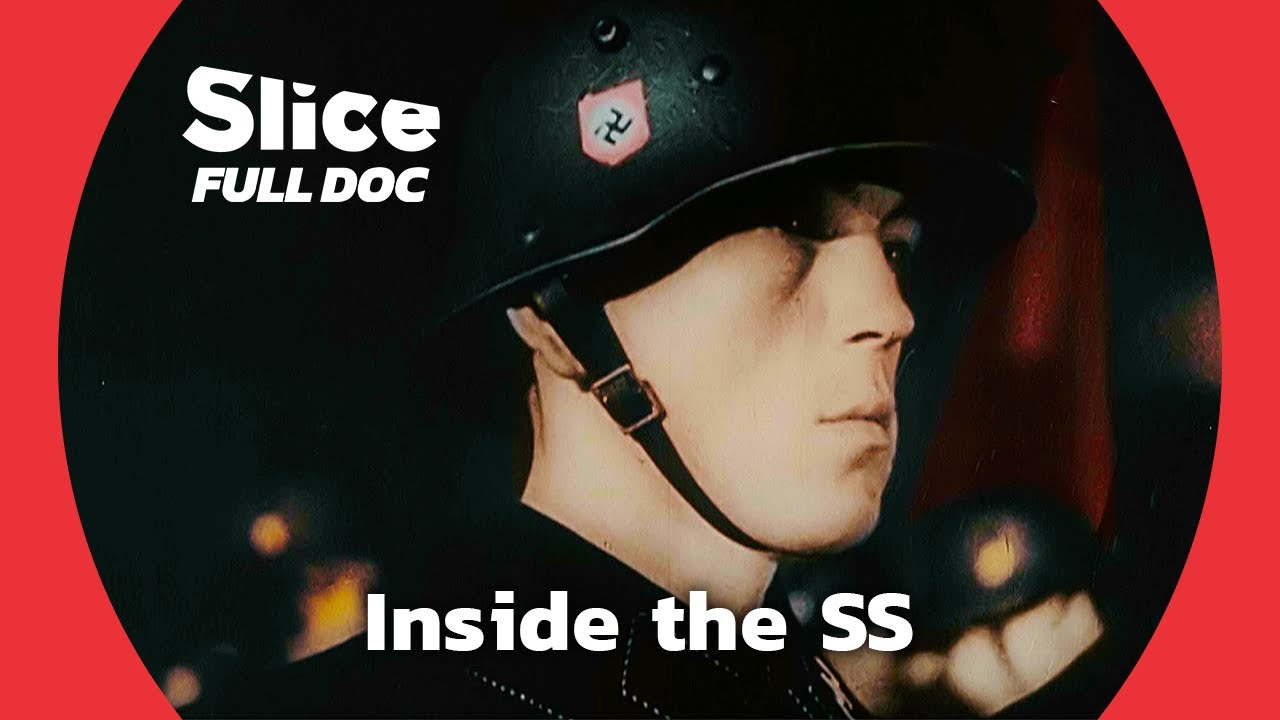
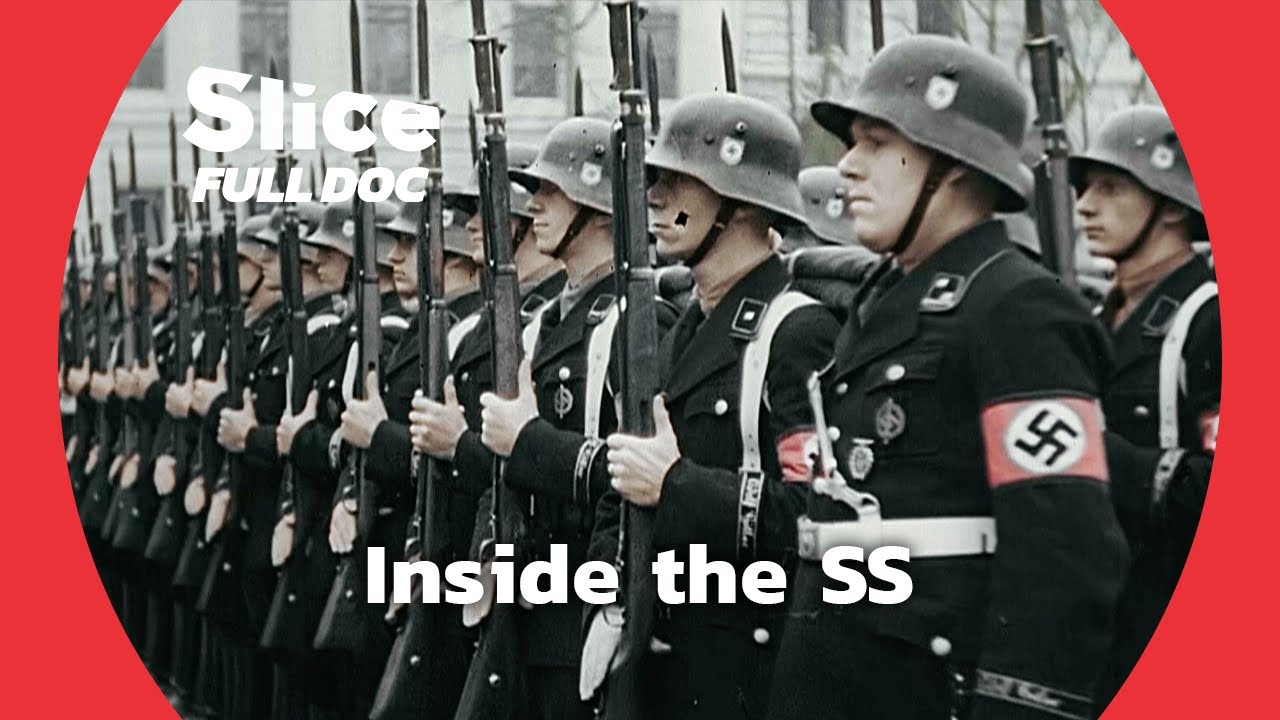
August 1934, Nazi Germany. The military changes its oath of service and swears “unconditional obedience” to the Führer personally rather than to the German constitution. Even though the highest-ranking officers in the German army do not always agree with Hitler, they find common ground that allows them to partner with him because: - The Führer succeeds in rebuilding the German military after the humiliating reductions of the Versailles Treaty after World War I; - He promises the opportunity to fight their enemies in France and the Bolshevist Soviet Union; - And finally, many generals receive systematic bribes from Hitler in the form of extra pay, grants, and even gifts of lands and estates.
After the outbreak of the Second World War on 1 September 1939 and especially after the invasion of the Soviet Union in June 1941, the German military knowingly supports the Einsatzgruppen – the Nazi mobile killing squads, which work in the rear of the German lines and carry out the systematic mass murder of 1. 5-2 million Jewish men, women, and children throughout the East. However, many members of the German military murder or are complicit not only in the killing of Jews, but also of people with disabilities, Roma people, Eastern European civilians, as well as prisoners of war.
One such military member is a German General, Anton Dostler. Anton Dostler was born on the 10th of May 1891 in Munich, then part of the German Empire. In June 1910, Dostler, then 19 years old, joined the 6th Infantry Regiment of the Bavarian Army as a cadet, and two years later he was promoted to lieutenant.
The First World War began on the 28th of July 1914. In January 1916, Dostler was promoted to Oberleutnant, which was equivalent to First lieutenant, and in October 1918 to Hauptmann, which was equivalent to Captain. For gallantry in action, he was awarded both classes of the Iron Cross and the Bavarian Military Merit Order, which was the kingdom's main decoration for bravery and military merit for officers and higher-ranking officials.
The First World War ended on the 11th of November 1918, when the German leaders signed the armistice in the Compiègne Forest in France. In the new Weimar Republic, which was the name given to the German government from 1918 to 1933, Dostler served in the newly created Reichswehr – the German Army, which was restricted to 100,000 men. On the 1st of October 1924, he was transferred to the military intelligence department in the Reichswehr Ministry in Berlin, and at the same time, he began to study at the local university, and in 1932 he was promoted to Major.
Adolf Hitler and his Nazi Party came into power in January 1933. In 1935, in accordance with Nazi racial law, the military prohibited Jews from joining its ranks, and those already serving were dismissed. In 1938, Hitler assumed the title of supreme commander of the entire German military.
By this time, the Wehrmacht was "nazified" after Hitler gained the respect and fear of the armed forces by taking over territories, such as Austria and parts of Czechoslovakia, without having to resort to war. In addition, by that time, many young soldiers had joined the armed forces straight out of the Hitler Youth movement and the Reich Labor Services. Some officers may have disapproved of the atrocities carried out by the Nazis when Germany invaded Poland, but they kept quiet after Germany vanquished France in May and June 1940 in a striking display of military strength and might.
During the invasion of the Soviet Union, which was codenamed Operation Barbarossa and started on the 22nd of June 1941, the German army provided logistical support to the Einsatzgruppen as they carried out the systematic mass murder of 1. 5-2 million Jewish men, women, and children throughout the East. The army was fully aware of the activities of these units through liaison officers and its own reports.
Almost no officers voiced objections to Hitler's barbaric orders regarding the "ideological war" against the Soviet Union. Before the start of Operation Barbarossa, the main criticism the Wehrmacht officers had for Hitler was about not being able to keep to the original schedule for the invasion. When Germany and its allies attacked the Soviet Union, Anton Dostler commanded the 57th Infantry Division, which took part in the campaign as part of Army Group South, where it assaulted Kiev.
Army Group South, commanded by an avowed Nazi, Walter von Reichenau, cooperated with the SS Einsatzgruppen in the commission of the massacre at Babi Yar. On the 29th-30th of September 1941, SS and German police units and their auxiliaries, under the jurisdiction of Einsatzgruppe C, murdered the Jewish population of Kiev at Babi Yar, a ravine northwest of the city. This was one of the largest mass murders at an individual location during World War II.
According to reports by the Einsatzgruppe to headquarters, 33,771 Jews were massacred in two days. Most of those who had been killed were women, children, the elderly, those who were ill, or those who had been unable or unwilling to flee earlier. Between June and December 1942, Dostler commanded the 163rd Infantry Division, which fought alongside the Finnish Army during Operation Barbarossa against the Soviet Union in 1941 and then spent most of the war in Finland, where it remained until the Germans withdrew from Finland back to Norway in autumn 1944.
On January 1, 1943, Dostler was promoted to Generalleutnant, which was equivalent to Major General. After that, he performed some temporary stand-ins at corps. On the 8th of September 1943, an Italian general, Badoglio, announced Italy's unconditional surrender to the Allies.
Until then, Italy had been an ally of Nazi Germany. The Germans, who had grown suspicious of Italian intentions, quickly occupied northern and central Italy, as well as the Italian zones in Yugoslavia, Greece, and France. SS paratroopers freed the Italian fascist leader Benito Mussolini from prison and installed him as the head of a pro-German Italian Social Republic, based in Salò in northern Italy.
In January 1944, Dostler was appointed commander of the 75th Army Corps, which was created on the 15th of January 1944 in Frankfurt am Main. On the 24th of January 1944, the Corps was put on transport, via Munich and Verona, to Liguria in Italy. The Corps became responsible for the coastal defense of the Ligurian coast, as well as anti-partisan actions and the construction of fortifications on the Elba.
and around Genoa, La Spezia, and Livorno. This lasted until mid-July 1944, when the front line reached Liguria from the south. On the 22nd of March 1944, 15 soldiers of the U.
S. Army, including two officers, landed on the Italian coast about 15 kilometers north of La Spezia, 400 km (250 miles) behind the then established front, as part of Operation Ginny II. They were all properly dressed in the field uniform of the U.
S. Army and carried no civilian clothes. Their objective was to demolish a tunnel at Framura on the important railway line between La Spezia and Genoa.
Two days later, the group was captured by a combined party of Italian Fascist soldiers and troops from the German Army. They were taken to La Spezia, where they were confined near the headquarters of the 135th Fortress Brigade, which was under the command of German Colonel Kurt Almers. His immediate superior was the commander of the 75th Army Corps, General Anton Dostler.
The captured American party was interrogated by Wehrmacht intelligence officers, and an officer revealed the mission. The information, including that it was a commando raid, was then sent to Dostler at the 75th Army Corps headquarters. The following day, he informed his superior, Field Marshal Albert Kesselring, commanding general of all German forces in Italy, about the captured U.
S. commandos and asked what to do with them. According to Dostler's adjutant, Kesselring responded by ordering the execution.
Later that day, Dostler sent a telegram to the 135th Fortress Brigade passing on the order that the captured commando party was to be executed, in line with the Commando Order of 1942 issued by Adolf Hitler, which stated that all Allied commandos captured in Europe and Africa should be summarily executed without trial, even if in proper uniforms or if they attempted to surrender. Colonel Almers was uneasy with the execution order and approached Dostler again to delay the execution command. In response, Dostler dispatched another telegram ordering Almers to carry out the execution as previously ordered.
Two last attempts were made by Colonel Almers to stop the execution, including some by telephone, as he knew that executing uniformed prisoners of war was in violation of the 1929 Geneva Convention on Prisoners of War. His appeals were unsuccessful, and the 15 Americans of the commando raid were executed on the morning of the 26th of March 1944, at Punta Bianca, south of La Spezia, in the municipality of Ameglia. After this execution, which was more of a massacre, their bodies were buried in a mass grave that was camouflaged afterwards.
Alexander zu Dohna-Schlobitten, a member of Dostler's staff who, unaware of the existence of Hitler's "Commando Order," had refused to sign the execution order for the American commandos, was dismissed from the Wehrmacht for insubordination. After the execution of fifteen American prisoners, General Dostler’s life carried on as usual. From November 1944, he was reassigned to the 73rd Army Corps, where he finished the war.
Justice finally caught up with Dostler when he was taken prisoner of war by the United States Army. Unlike the 15 soldiers he had executed, General Dostler, after the Americans discovered the fate of the commando raiding team, had his day in court and was put on trial for war crimes on the 8th of May 1945. A military tribunal was held at the seat of the Supreme Allied Commander, the Royal Palace in Caserta in Italy, on the 8th of October 1945.
In the first Allied war crimes trial, he was accused of carrying out an illegal order killing fifteen American prisoners of war. In his defense, he maintained that he had not issued the order but had only passed it on to Colonel Almers from Field Marshal Kesselring, and that the execution of 15 men was a lawful order. Dostler's plea of superior orders failed before the tribunal, which found that in ordering the mass execution, he had acted on his own outside the Führer's orders.
The Military Commission also rejected his plea for clemency, declaring that the mass execution of the commando party was in violation of Article 2 of the 1929 Geneva Convention on Prisoners of War, which prohibited acts of reprisals against prisoners of war. In its judgment, the Commission stated that "no soldier, and less a Commanding General, can be heard to say that he considered the summary shooting of prisoners of war legitimate, even as a reprisal. " Under the 1907 Hague Convention on Land Warfare, it was legal to execute spies and saboteurs disguised in civilian clothes or enemy uniforms, but not those captured in uniforms of their own army.
Because the 15 U. S. soldiers were properly dressed in U.
S. uniforms behind enemy lines, and not disguised in civilian clothes or enemy uniforms, they should not have been treated as spies but as prisoners of war, a principle which Dostler had violated in enforcing the execution order. The trial rejected the "superior orders" defense as Dostler mounted a defense on the grounds that he had ordered the executions only because he himself was obeying superior orders, and that as such only his superiors could be held responsible.
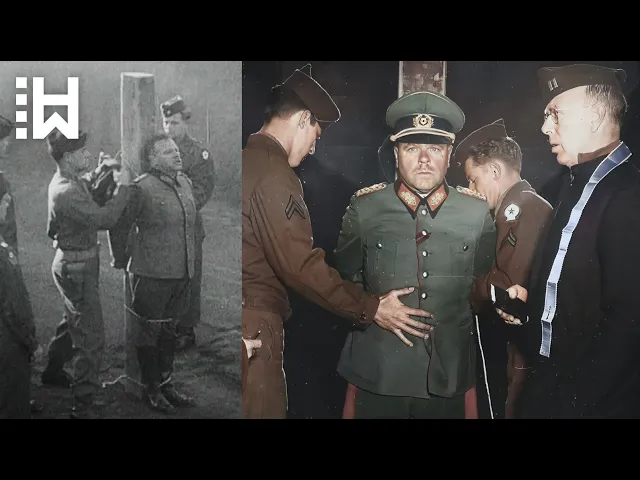
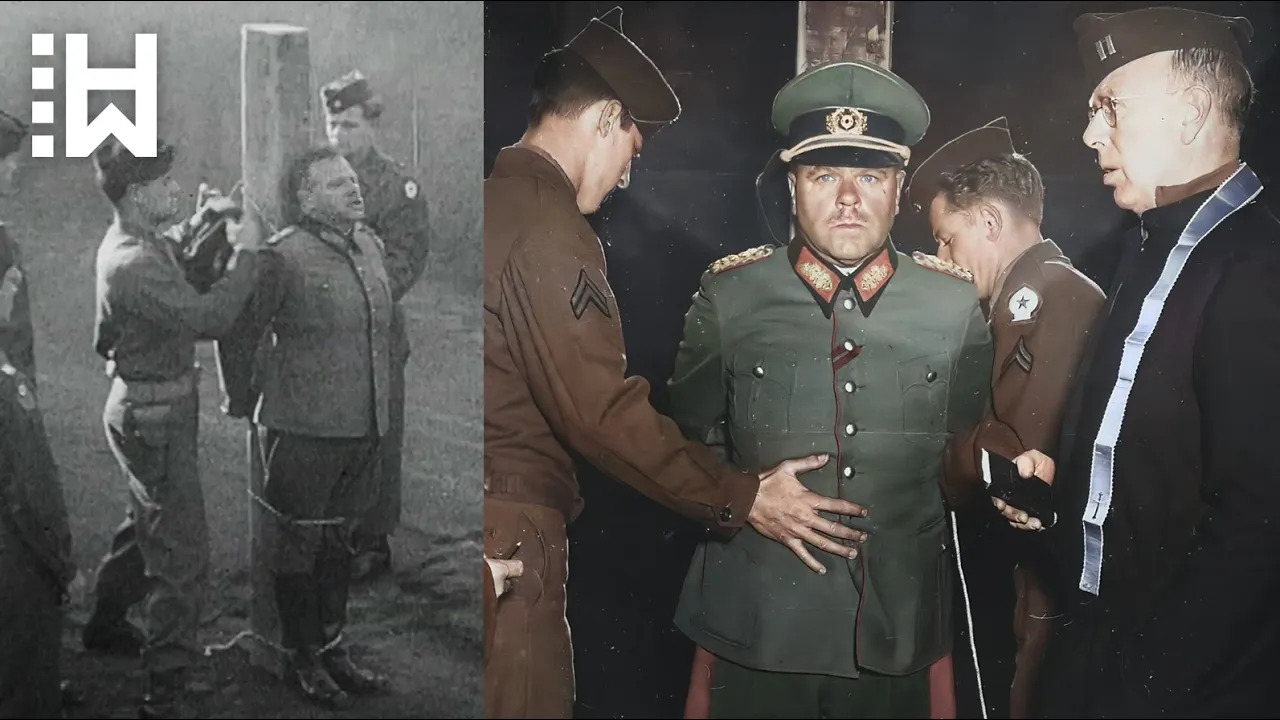
The court martial's denial of Dostler's defense set an important precedent for the trial of Nazi war criminals several months later at Nuremberg because it did not allow the accused to claim in their defense that they were only following orders. On the 12th of October 1945, the American military tribunal found General Dostler guilty of war crimes and sentenced him to be shot to death by musketry. Anton Dostler was 54 years old when shortly after sunrise on the 1st of December 1945, the prisoner guard delivered him to the execution party.
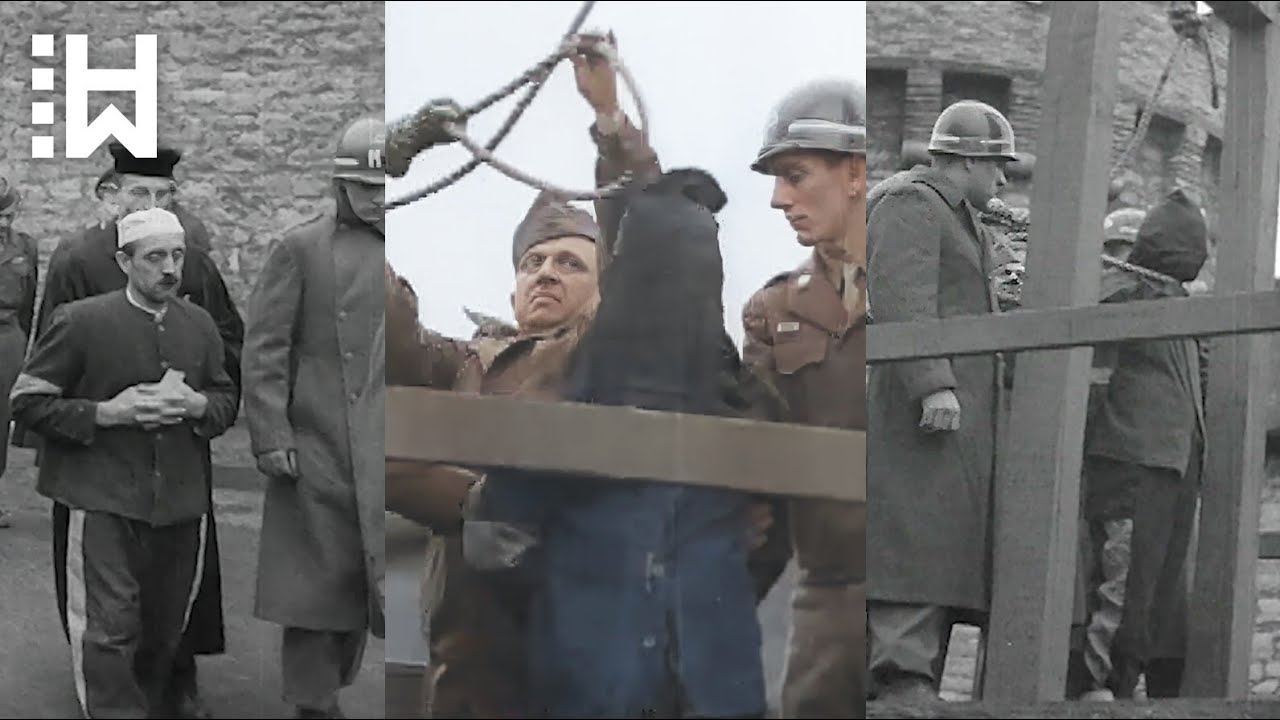
The officer in charge then read aloud the charge, the finding, and the sentence and granted Dostler a brief moment with a Roman Catholic chaplain. Afterward, things moved quickly. Three soldiers tied him to a post with his hands behind his back.
Next, a medical officer placed a black hood over Dostler’s head and attached a four-inch white target over his heart. After a 12-man firing squad took their positions from a distance of 50 feet from Dostler, the officer in charge gave the command to fire. After the shots rang out in unison, Dostler’s body slumped forward, dead.
The execution was photographed on black and white still and movie cameras. Immediately after the execution, Dostler's body was lifted. Onto a stretcher, shrouded inside a white cotton mattress cover, driven away in an army truck, and then buried at the German War Cemetery in Pomezia, Italy.
Almost immediately after the end of the war, the myth arose that the German military had merely fought their enemies, including the Soviets, in a conventional war and was not involved in the Holocaust or other genocidal policies. This legend began at Nuremberg, where the SS was deemed a criminal organization, but the military was not. Only the members of the High Command were tried as war criminals.
Further, legal prosecution of the military was almost non-existent in postwar Germany. However, ongoing research shows just how willingly and profoundly the German military supported Hitler and participated not only in the use of forced labor but also in the mass murder of Jews and other groups targeted by the Nazis. There were no tears shed for Anton Dostler.
Thanks for watching the World History Channel; be sure to like and subscribe and click the bell notification icon so you don't miss our next episodes. We thank you, and we'll see you next time on the channel.