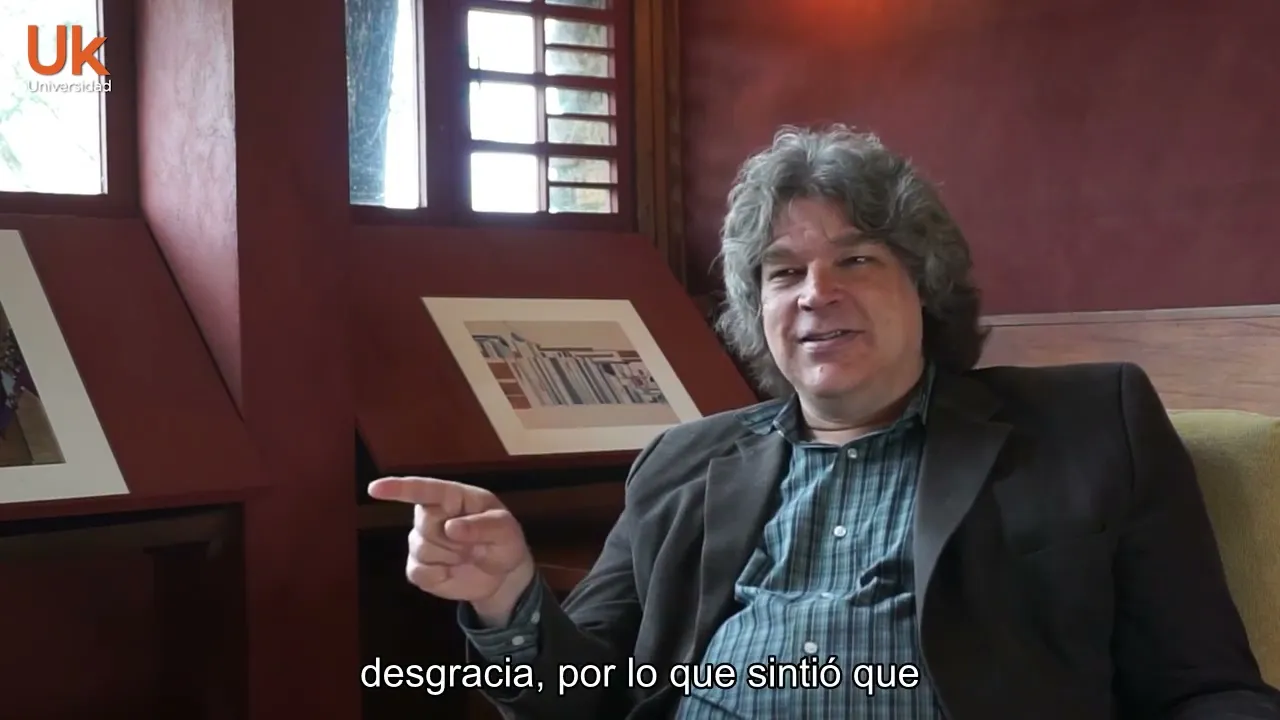
foreign most people are who are all acquainted with your work no the fact that your your work is organic and intimately bound up with the lives of people when did this idea first begin to take shape in your work well that's pretty difficult to say of course in my youth nothing existed in the sort that I wanted to see happen it didn't exist anywhere had to be made and it's happened out here on the western fairs of Chicago the first expression in Humane terms of what we call now organic architecture but you use the word
organic yeah is that any different from uh reminders of the word modern architecture in your opinion very different because modern architecture is merely may be built today but organic architecture is an architecture from within outward in which entity is the idea of we don't use the word organic as referring to something hanging in a butcher shop you know organic means in philosophic sense entity where the whole is to the part of the part is to the whole and where the nature of the materials the nature of the purpose the nature of the entire performance becomes
a necessity and out of that comes what significance you can give the building as a creative artists specifications architecture reviews [Music] this meant designing buildings that were appropriate for the space rather than just plopping four walls on a Hillside and right's eyes a coffee shop shouldn't be built like a greek temple nor should a steel beam be shaped into a flower in practice this idea looked like a functional yet seamless integration of its buildings into their natural settings or as Hamblin puts it again he was trying to really harmonize and connect with nature he talked
about buildings being a Grace To Nature our Grace to its surrounding rather than a disco and so you know he felt that you know almost any natural environment could actually be improved upon by an appropriate piece of architecture you can easily spot this idea in buildings like Wright's famous falling water Avery truffleman a producer at architecture and design podcast 99 invisible attributes this view of integrating nature and architecture to growing up in the hillsides of Spring Green Wisconsin this can condition with the outdoors was really formative for Wright he thought that architecture should help people
live harmoniously with their environment rather than Shield them from it the house could become part of nature if it was made with local materials and had big windows and was oriented for just the right amount of sunlight this philosophy is ingrained in the design of Rights architecture school Taliesin if you look at a lot of here at talieson and you have this Stone this Limestone material which is also the material and you'll see in some of the rock outcropping on the Hills so was actually built of materials that were right near the site as well
as rights designs for his usonian homes which were cheap on assuming homes constructed for the middle class American nestled in the suburbs of Madison Wisconsin you can find one of the later Built usonian Homes known as Jacobs 2. it integrated materials like local wood faced away from the street and towards the natural expanse behind the house and forced a less materialistic existence by doing away with spaces like a garage that tend to accumulate junk right even integrated an idea into the house called a solar hemicycle architect and usonian home restored John eifler explains that the
design positioned the windows of the house in a semicircle that would capture the sun and it was a way of keeping the heating costs down and all good stuff during the winter so the home works as both a highly functional sustainable place for its residents and also a structure that seems to blend in with its way










![UN VIAGGIO STRAORDINARIO NELL'IMMENSITÀ DELL'UNIVERSO! [Dal più piccolo al più grande] | DOCU 2024](https://img.youtube.com/vi/uUlPDF3mm68/maxresdefault.jpg)