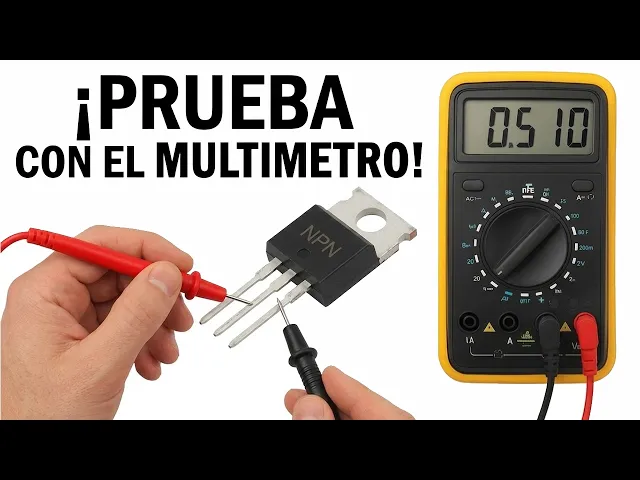
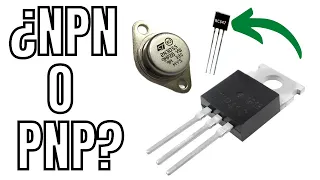
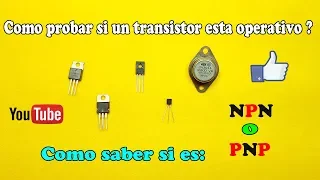
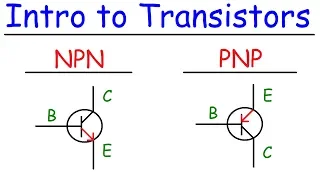
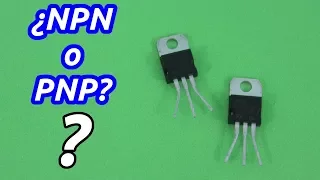
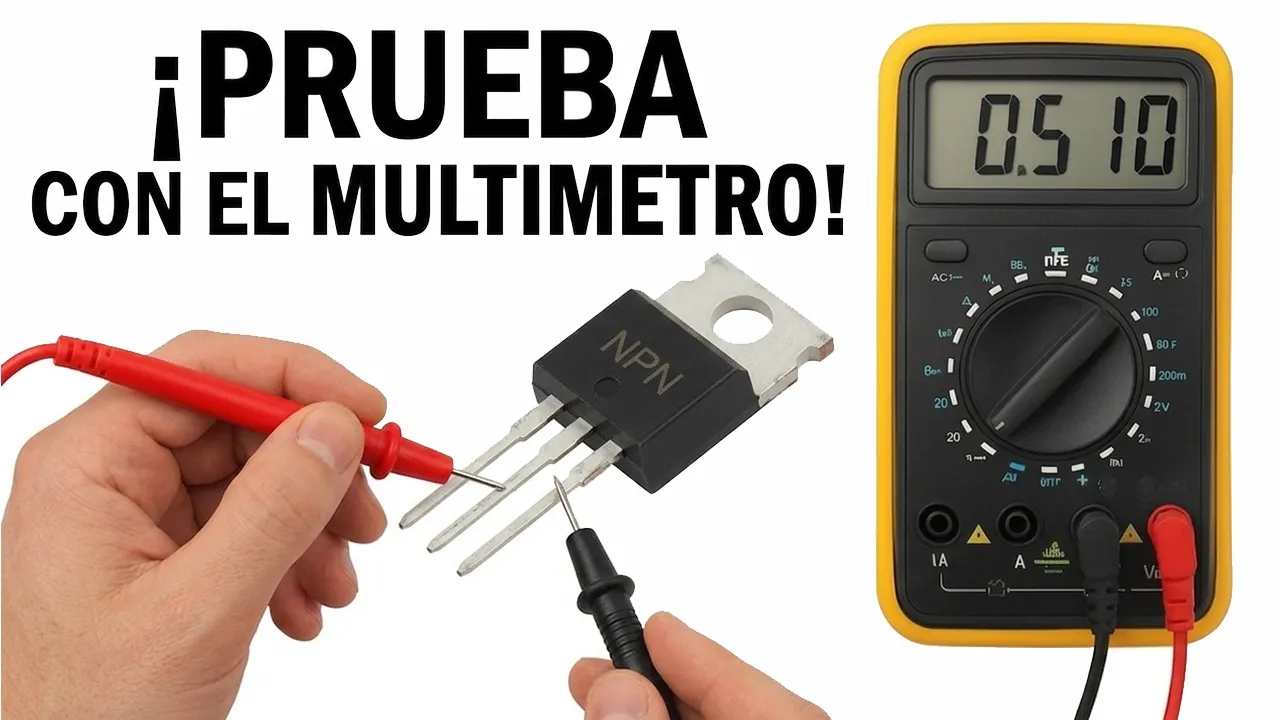
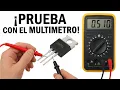
And now we touch the one in the center there we have a reading of 668 and now we touch the right 670 there we already know that this is a PNP transistor. In today's video we are going to see how to know if a transistor is NPN or PNP we are going to know it with the multimeter digital, stay until the end of the video since I have something important to tell you about transistors. Many times we have a transistor and we do not know if it is NPN or PNP since we cannot access the component sheet, either because we do not have access to the internet or because We don't directly have a computer so we don't know what type of transistor it is here we have 3 transistors the 3 are very similar they have 3 terminals each but in this case we have NPN type transistors and transistors that are PNP type so let's analyze one by one let's start with the TIP32C for this we are going to put the knob in symbol of diodes the black tip we leave it in the common and we leave the red one where it says V basically what we have to find there is the NPN transistor we have the collector and emitter base and we see this arrow that points outward which means that the current flows in this specific transistor from collector to emitter if we look at this transistor that says NPN which means that the base is positive so here we have to find in the transistors which of In them the base is positive and in this case we have a PNP transistor which means that the base is negative and here we see that the arrow points inward which means that the current flows from emitter to collector.
We are going to analyze the transistors and we are going to see which one has the positive base to know that it is NPN or if it has the negative base to know if it is PNP, let's put the red tip in the center and now touching with the black one it should give a reading there it gives nothing and here it gives a reading but it doesn't work Now we are going to put it on the right side now we touch it in the center it does not give anything and here 670 is not useful it has to give us 2 readings so now we place the quarter note in the center we touch it to the right it does not give anything and on the left it does not give anything now we place it On the right we touch the center it gives nothing and on the left it gives nothing and now we place it on the left and now we touch the one in the center and we have a reading 668 and now we touch the right 670 there we already know that it is a PNP transistor because the base is negative and now we want to know which is the emitter and which is the collector, the highest reading is the emitter and the lowest reading is the collector, so from left to right we have the base, collector and emitter, it is a PNP transistor, the base is negative and the The arrow points inward, meaning that we have a current flow from emitter to collector. Well, now we are going to analyze the center transistor. We do not know if it is NPN or PNP.
The first thing is to know what the base is and if the base is negative or positive. People think that the base in transistors is the center leg, it is true that it can be the center leg but we can also find the base in any of the other legs. Let's place the red tip in the center and now on the right we have giving a reading doesn't give anything and here another reading 671 but it doesn't work it has to give us a reading on each side we pass it to the left we touch the center leg it doesn't give anything and right it doesn't give anything we go to the right we touch the center it doesn't give anything and here it gives us a reading that tells us that at first this transistor is not NPN it would have to be PNP since the base is not positive now we are going to put the black tip in the center here on the right it has to give us a reading it does not give us nothing and here another reading gives nothing we are going to place on the left center a reading nothing left a reading and it gives nothing and now here on the right and we have center 671 and here we have 673 we already know what the base is the leg on the left and We already know that it is negative and now we want to know which is the collector and which is the emitter.
The highest reading is the emitter and the lowest reading is the collector. From left to right we have the base, collector and emitter. This is the transistor that we just analyzed.