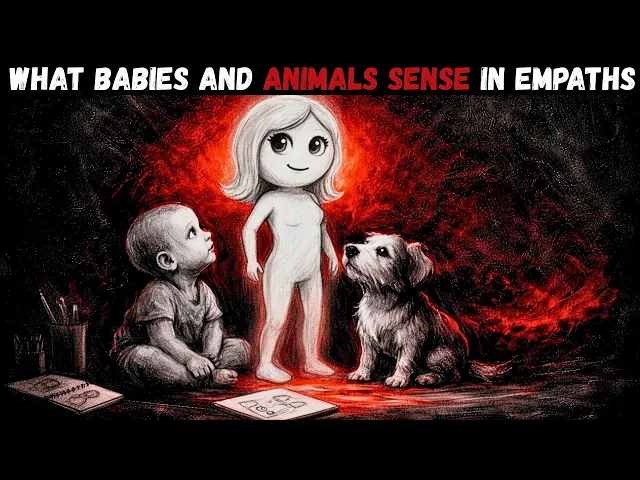
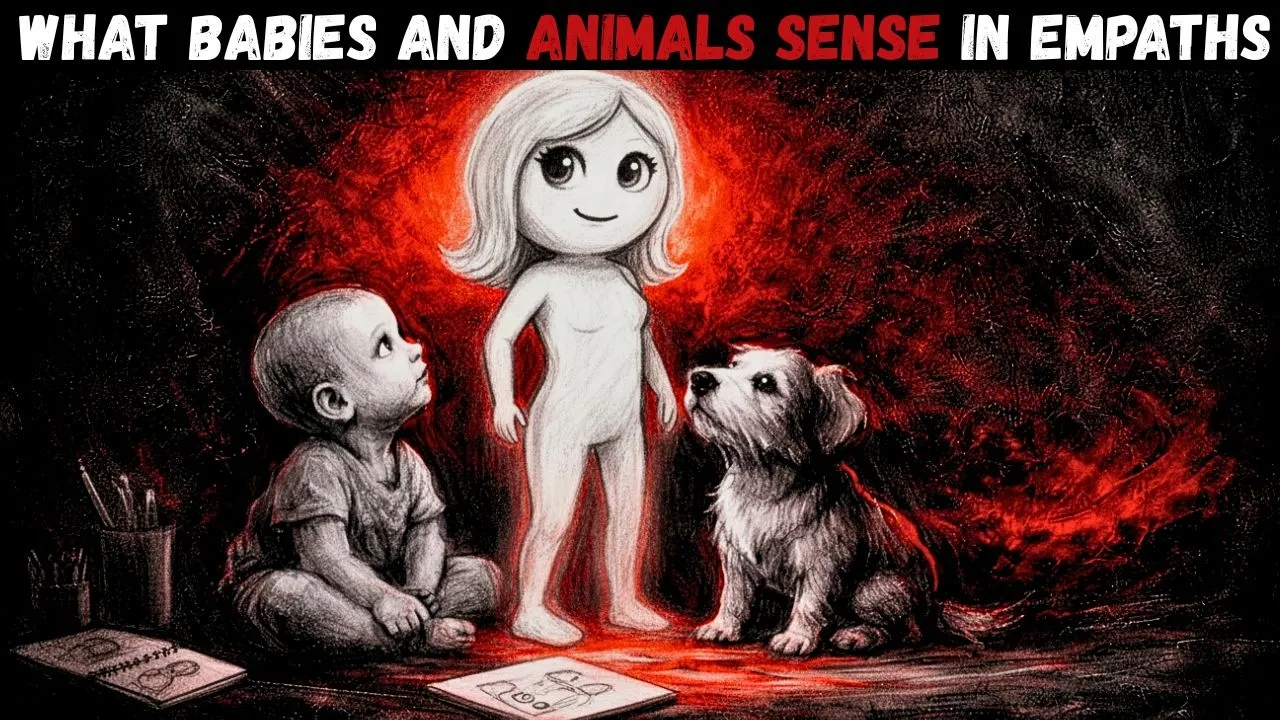
What if I told you that before you ever say a word, before you even smile, babies and animals already know something about you? Have you ever noticed how a baby stops crying when you hold them? or how a dog that ignores everyone suddenly sits beside you and just stares. That's not random. Babies and animals don't read your job title, your clothes, or your confidence. They read something deeper. They sense emotional safety. They sense calm. They sense truth. Carl Jung believed that the unconscious mind speaks louder than words. And some people carry a presence that feels
grounded, warm, and real. In this video, we're going to explore what babies and animals actually sense in empaths and why their long silent stare might be revealing more about you than you realize. Stay with me until the end because one of these signs might completely change how you see yourself. And if you've ever had a baby or an animal react to you in a way you couldn't explain, comment I've noticed this below and subscribe because we're diving deep into the psychology most people never talk about. Before words, before personality, before someone Decides who you are,
there is something much older at work. The nervous system. Long before a baby understands language and long before an animal responds to commands, they are reading signals that most adults have forgotten how to notice. They are not analyzing your clothes, your status, or your confidence. They are reading your breathing, your muscle tension, your eye contact, and the subtle rhythm of your presence. In simple terms, they are reading your nervous system. Carl Jung believed that the unconscious mind communicates more powerfully than the conscious one. And in the presence of babies and animals, it is the unconscious
that speaks the loudest. An empath, often without realizing it, tends to carry a regulated and balanced internal state. Their breathing is slower and more steady. Their eye contact is soft rather than sharp or dominant. Their facial expressions are relaxed, not forced. Their posture is open, not rigid or defensive. None of this is performed. It is simply how their body rests when they feel internally aware and emotionally connected. Babies and animals are highly attuned to survival cues because for Them, survival depends on accurate reading of energy. An infant cannot fight or run. An animal cannot rely
on polite conversation. [music] They must instantly detect whether someone is safe or unpredictable. They scan for tension in the jaw, tightness in the shoulders, sudden movements, and inconsistencies between expression and emotion. If someone smiles but carries anxiety underneath, the body still leaks that tension. If someone speaks gently but feels irritated, the nervous system reveals it. [music] Babies may become restless. Animals may step back or avoid eye contact. They are not reacting to what you say. They are reacting to what your body communicates beneath words. Empaths often send a different signal. [music] Because they are used
to sensing emotions, they also tend to regulate their own. They are comfortable sitting in silence. They do not rush to dominate space. Their movements are slower and less abrupt. This creates a state of nervous system regulation known as co-regulation, where one calm body helps calm another. When a baby locks eyes with an empath and stares, it is not random curiosity. It is the infant's nervous system sensing with a stable rhythm. The baby senses there is no Threat here. The same happens with animals. A dog may approach quietly and sit close, not because it was trained
to, but because it detects steady breathing and relaxed muscle tone. A cat may settle nearby because there is no chaotic energy to guard against. From a jung perspective, this exchange happens beneath consciousness. The unconscious mind recognizes patterns of safety and coherence that have existed throughout human history. In early tribal environments, survival depended on detecting who was emotionally stable and who was volatile. That instinct still lives inside us. Empaths often carry emotional congruence, meaning their inner state matches their outer behavior. [music] There is no strong mask. There is no sharp contradiction between expression and feeling. This
alignment creates psychological coherence. And coherence feels safe. Babies and animals are especially sensitive to coherence cuz they do not operate through social performance. They operate through instinct. Safety at its core is magnetic. It draws attention without demanding it. When a nervous system feels secure, it becomes curious Instead of defensive. That is why a baby may stare deeply into an empath's eyes without fear. That is why an animal may relax its guard and lie down nearby. The body recognizes something steady. And in a world where many adults carry stress, suppressed emotion, and internal conflict, steady energy
stands out. It feels grounded. It feels real. This is what people sometimes describe as an aura, but it is not mystical in the way it sounds. It is biological. It is psychological. It is the quiet communication between nervous systems. An empath's regulated breathing, softened gaze, and open posture send a clear message without words. You are safe here. And for beings whose survival depends on sensing safety instantly, that message is powerful. They are not staring because you are different in a dramatic way. They are responding because your body is not signaling danger. In their silent steady
gaze there is recognition and in that recognition there is trust. Carl Jung Believed that beneath our personal memories, beneath our identity and even beneath our individual unconscious, there exists something deeper that connects all human beings. He called it the collective unconscious, a shared layer of inherited emotional patterns and archetypes that have existed long before any of us were born. These patterns are ancient. They are not learned from school or society. They are passed down through generations as emotional blueprints for survival, bonding, protection, fear, and love. While adults often live through the conscious mind through roles,
titles, opinions, and social masks, babies and animals do not. They operate almost entirely from this deeper level. They respond to instinct, to energy, to archetypal signals that feel familiar at a level they cannot explain. When they stare at someone who carries empathic traits, what they may be sensing is not personality, but something far older and more universal. Empaths tend to feel emotions deeply and process experiences beneath the surface. Instead of reacting only through ego or social identity, they often respond through intuition and emotional awareness. They sense shifts in mood. They notice subtle changes in Tone.
They pick up on what is not being said. This way of being places them closer to instinct than performance. Jung would argue that such individuals are more connected to the unconscious layers of the psyche. They are less dominated by the persona, the social mask we wear to function in society and more aligned with authentic emotional states. [music] Because of this alignment, they may unconsciously emit archetypal signals that are universally recognized. Jung described archetypes as universal roles embedded within the collective unconscious. Among them are figures like the caregiver, the healer and the protector. These are not
job titles. They are emotional patterns. The caregiver represents safety, nurturing, and warmth. The healer represents restoration, calm, and emotional repair. The protector represents stability, grounded strength, and quiet vigilance. When an empath enters a room, they may not announce themselves in a loud or dominant way, but their presence can carry elements of these archetypes. Their body language may feel open rather Than guarded. Their gaze may feel attentive rather than invasive. Their energy may feel steady rather than chaotic. To another adult, this might register simply as kindness or sensitivity. But to a baby or an animal, it
registers as something far more primal. Babies are born into the world completely dependent on reading emotional cues. They do not understand social status or personal achievements. They respond to tone, rhythm, and emotional consistency. Animals function similarly. Their survival has always depended on recognizing who is safe and who is unpredictable. When they look at someone who embodies the archetype of the caregiver or protector, they are not thinking in words. They are experiencing recognition. It feels familiar in the way warmth feels familiar. Even if you cannot explain why [music] the stare is not curiosity in the ordinary
sense, it is a quiet scanning, a sensing of alignment between what they instinctively seek and what they perceive. This is why the reaction can feel intense. A baby may lock eyes with an empath and hold that gaze longer than expected. An animal may approach slowly but then remain close as if drawn by something invisible. From a Jungian perspective, what is happening is a meeting at the level of the collective unconscious. The empath's energy resonates with ancient patterns of safety and care that have existed throughout human history. Long before modern society, survival depended on identifying those
who nurtured, healed, and protected. That instinct has not disappeared. It lives beneath the surface of the mind, especially in beings who are not yet shaped by social masks. [music] So when a baby or animal stares, it may not be about your appearance or your actions in that moment. It may be about resonance. They are not analyzing you as an individual personality. They are responding to the archetypal energy beneath your persona. [music] In that silent exchange, something ancient is recognized. Something wordless is understood. The gaze becomes less about observation and more about connection. They are not
simply looking at you. In a very real psychological sense, they are recognizing a pattern that humanity has trusted for thousands of years. And that recognition feels both natural and deeply powerful. One of Carl Jung's most powerful ideas is that the unconscious mind is always observing, always detecting what the conscious mind tries To hide. We may think we are convincing when we smile through frustration or speak calmly while feeling anxious, but beneath our words, the body tells the truth. The unconscious communicates through micro expressions, muscle tension, breathing patterns, tone shifts, and subtle changes in posture. Adults
often ignore these signals because we are trained to focus on language and social roles. But babies and animals do not operate that way. They rely almost entirely on instinct. And instinct is a highly accurate truth detector. [music] If someone smiles while carrying anger underneath, an animal may stiffen or step back. If someone speaks softly but feels nervous inside, a baby may become restless or start to cry. They are not reacting to the performance. They are reacting to the contradiction. This is where the concept of emotional congruence becomes important. Emotional congruence means that what you feel
internally matches what you express externally. There is alignment between your inner emotional state and your outward behavior. Empaths Often have high emotional congruence because they are deeply aware of their own feelings. Instead of suppressing emotions or pretending they do not exist, they tend to process them. They acknowledge when they are upset, they allow themselves to feel sadness without masking it as indifference. They express joy without holding back out of fear of judgment. This alignment creates psychological coherence, a state where the nervous system is not divided against itself. [music] When someone lacks congruence, there is internal
conflict. The mind says one thing, the body feels another. This creates subtle tension. The jaw tightens slightly. The smile becomes strained. [music] The voice sounds just a little forced. Most adults might overlook these details, but babies and animals do not. Their survival depends on reading authenticity. For them, inconsistency can signal unpredictability, and unpredictability can mean danger. So when they sense contradiction, even if it is small, they react. A dog may hesitate before approaching. A cat may observe from a distance. A baby may search your face longer as if trying to understand what feels off. Empaths,
however, often present a different Experience [music] because their inner and outer states are more aligned. Their presence feels steady. If they are calm, their body reflects calmness. If they are concerned, their tone matches genuine care rather than forced politeness. This consistency creates coherence. Coherence feels stable and stability feels safe. To a being that relies on instinct, [music] congruence equals trust. There is no hidden tension to decode, no mixed signals to interpret. What you see is what you get. Jung believed that much of human behavior is influenced by unconscious material, including repressed emotions and unresolved conflicts.
When these remain unexamined, they leak out in subtle ways. A person may consciously try to appear kind while unconsciously carrying resentment. They may attempt to project confidence while internally feeling insecure. This split creates energetic noise. It may not be visible in obvious ways, but it can be felt. Babies and animals are especially sensitive to this noise because they are not distracted by social expectations. They are fully present in the moment, reading cues as they arise. When a baby locks eyes with someone who is Emotionally congruent, the gaze often becomes steady [music] and calm. There is
no confusion in what they are sensing. The emotional signal is clear. When an animal approaches an empath and relaxes, it is responding to the absence of contradiction. [music] The body in front of them feels predictable. The emotional tone feels honest. This does not mean empaths are perfect or never experience negative emotions. It means they are less likely to mask those emotions in a way that creates internal division. Their authenticity reduces tension in their nervous system and that reduction is noticeable. In a world where many people wear social mask to survive, emotional congruence stands out. It
is quiet but powerful. It does not demand attention yet it draws trust naturally. Babies and animals may not understand the word authenticity but they understand its feeling. They sense when someone is aligned within themselves. And when they sense that alignment, their response is simple and instinctive. They look, [music] they stay, they relax. Because at the deepest level, coherence feels like safety. And safety is something every living being Is wired to seek. Modern neuroscience gives us a fascinating layer of understanding that supports much of what Jung suggested about unconscious connection. Researchers discovered something called mirror neurons.
A system in the brain that activates not only when we perform an action or feel an emotion, but also when we observe someone else performing that action or feeling that emotion. In simple terms, these neurons allow us to internally mirror the state of another person. This is the biological foundation of empathy. When you see someone smile, your brain subtly activates the same pattern as if you were smiling. When you notice someone in pain, parts of your brain simulate that pain. Empaths are often believed to have highly responsive mirror neuron systems, meaning they pick up on
emotional signals quickly and reflect them back with surprising accuracy. They do not just understand emotions intellectually. They experience them in real time within their own nervous system. This becomes especially important when we look at babies. [music] A baby develops its sense of self through a process called emotional mirroring. [music] In the earliest months of life, an infant studies the caregiver's face to understand what it Is feeling. If the baby cries and the caregiver responds with a calm, compassionate expression, the baby's nervous system begins to settle. The infant learns, "My feelings are manageable." But if the
caregiver responds with anxiety, frustration, or emotional absence, the baby absorbs that state instead. identity is built through reflection. The baby looks into a face and discovers who they are through what is reflected back. Animals bond in a similar way. They may not build identity like humans do, but they rely heavily on emotional reflection to determine connection and trust. A dog watches posture and tone. A cat reads subtle tension shifts. They respond not just to behavior, but to the emotional field around them. When an empath looks at a baby or an animal, something subtle but powerful
happens. The empath does not stare with dominance or distraction. They soften. Their facial muscles relax. Their eyes become warm and attentive rather than sharp or invasive. They tune in. This tuning in is not dramatic or exaggerated. It is quiet alignment. The Empath's nervous system adjusts to match the emotional state in front of them. [music] If the baby is curious, the empath reflects gentle curiosity. If the animal is cautious, the empath responds with calm, steadiness. This is emotional matching and it happens almost automatically. The mirror neuron system is doing its work beneath awareness. For the baby,
this experience is deeply regulating. They see themselves reflected back calmly. Their excitement is met with warmth, not overwhelm. Their uncertainty is met with patience, not tension. The reflection feels stable. [music] It tells the baby, "Your emotions make sense. You are understood." That feeling is incredibly powerful for a developing mind. For the animal, the effect is similar. The animal senses emotional attunement. There is no chaotic energy to decode, no aggressive undertone to guard against. The empath's reflection communicates alignment rather than threat. In that moment, the animals nervous system can lower its defenses. What makes this interaction
so intense is that it becomes a feedback loop. The baby looks at the empath. The empath softens and mirrors. The baby senses calm and relaxes further. That relaxation deepens The empath's warmth. The loop strengthens. The same can happen with animals. A dog locks eyes briefly. The empath responds with gentle presence. The dog senses safety and moves closer. The empath's body language becomes even more open. The connection builds silently. It is not forced. It is not dramatic. It is biological synchrony unfolding in real time. This is why they do not just look and then look away.
[music] They lock in. The gaze lingers because something meaningful is happening at a nervous system level. It is recognition, regulation and reflection happening all at once. Jung spoke about deep unconscious connections between individuals and neuroscience now shows us one of the mechanisms behind that connection. Mirror neurons create a bridge between two beings. In the presence of an empath, that bridge feels clear and steady. The baby or animal is not simply observing a face. They are experiencing themselves being accurately reflected. And in that reflection, they find calm, understanding, and connection. There is a powerful difference between
awareness and aggression. And babies and animals can sense that difference instantly. Empaths Are often highly aware of their surroundings. They notice subtle shifts in tone, small changes in body language, and emotional undercurrence that others might miss. But unlike dominant personalities who use awareness to control a room, empaths rarely project threat. Their awareness is quiet. It is observational rather than overpowering. This creates a unique presence that feels both attentive and safe at the same time. In the animal world, a stare can mean dominance. Predators lock their eyes onto prey with intensity and control. The body becomes
still, the gaze sharp, the energy focused on asserting power. Humans carry versions of this, too. A hard stare, stiff posture, sudden movements, or tightly controlled facial expressions can signal authority or even intimidation. Animals instinctively recognize these signals because their survival has depended on reading them accurately for thousands of years. [music] When an animal looks at a human, it is constantly calculating. Is this person tense? Are their shoulders tight? Are their hands moving quickly or unpredictably? Is their eye contact invasive or calm? Even a slight forward lean combined with fixed eye contact can Feel like pressure
to an animal. Babies do something similar. They study faces and body movements carefully. Sudden loud reactions or exaggerated expressions can overwhelm them. Fast, sharp gestures can trigger discomfort. Their nervous systems are still developing, so they are highly sensitive to intensity. They do not need language to understand when energy feels forceful. Empaths tend to move differently because they are emotionally attuned. They often adjust themselves naturally in shared space. Their movements are slower, not in a weak way, but in a grounded way. They do not rush toward interaction. They allow space. [music] Their gestures are softer, less
abrupt. If a baby flinches, they instinctively ease their posture. If an animal hesitates, they avoid forcing contact. This is not calculated strategy. It is subconscious respect for boundaries. Empaths often understand without thinking about it that connection cannot be forced. It must be invited. This creates what seems like a paradox. Empaths have high awareness. They are deeply tuned [music] into what is happening around them. Yet they carry low threat. They are alert but not aggressive, attentive but not invasive, Present but not overpowering. For animals and babies, this combination is rare and magnetic. High awareness means the
empath notices small cues and responds appropriately. Low threat means there is no pressure attached to that awareness. The result is a space where another being can relax while still feeling seen. In contrast, someone who is unaware may accidentally move too quickly or invade personal space without realizing it. Someone who is dominant may stare too intensely or react too strongly. Both can create subtle stress in a baby or animal. But when someone embodies awareness without aggression, the interaction feels balanced. The animal senses, "This person sees me, but is not trying to control me." The baby senses,
"This face is watching me, but it is calm." That balance is powerful. There is also something important about predictability. Slow movements and steady reactions signal stability. In nature, unpredictable movement often signals danger. [music] Quick jerks, loud bursts of energy, or sharp changes in posture can activate defense responses. [music] Empaths tend to react less abruptly. They pause before Responding. Their breathing remains relatively steady. [music] Their tone does not spike suddenly. This consistency lowers perceived threat. Over time, animals may approach closer. Babies may maintain longer eye contact. The space feels safe enough for curiosity. This is why
the presence of an empath can feel magnetic without being loud. It does not demand attention yet it attracts it. [music] The magnetism comes from balance. High awareness ensures attunement. Low threat ensures comfort. Together they create an environment where instinct relaxes instead of guards. The stare you receive from a baby or animal is not about dominance or submission. It is about assessment followed by acceptance. They calculate the signals, sense the absence of aggression and choose to stay engaged. In that silent exchange, awareness meets trust, and trust naturally holds attention. Here is where the idea becomes deeper
and more powerful. [music] Carl Jung believed that every human being carries a shadow. The hidden side of the personality that contains pain, anger, fear, jealousy, shame, and all the parts of ourselves we were taught to suppress. Most people try to avoid this shadow. They deny it, hide It, or project it onto others. But Jung argued that true psychological strength comes not from pretending the shadow does not exist, but from integrating it. Shadow integration means acknowledging your darker emotions, understanding where they come from and learning to manage them without letting them control you. It does not
mean becoming perfect. It means becoming whole. And according to Jung, people who do this radiate a very different kind of presence. Empaths often go through deep emotional experiences. Many of them have suffered in silence. They have felt misunderstood, overwhelmed or emotionally burdened. But instead of shutting down completely, they tend to reflect. They ask difficult questions about themselves. They process pain rather than bury it. Over time, this creates emotional depth. Their kindness is not naive. Their calm is not empty. It is earned. [music] When someone has faced their own anger, sadness or fear and learned to
sit with it, their nervous system becomes more stable. They are less reactive because they are not afraid of their own emotions. Unresolved people often leak chaos without realizing it. [music] If Someone has suppressed anger, it slips out in small sharp comments or sudden mood shifts. If someone has buried fear, it shows up as control or tension. Even when they try to appear calm, there is an undercurrent of instability. Babies and animals are incredibly sensitive to this. They may not understand trauma or emotional repression, but they sense inconsistency. They sense when energy feels unpredictable. [music] That
unpredictability creates subtle stress. Integrated people feel different. When someone has faced their shadow, their presence becomes grounded. They are less likely to overreact because they are familiar with their own triggers. They are less threatened by discomfort because they have already explored it within themselves. This creates emotional steadiness. Their calm does not collapse under pressure. Their kindness does not disappear when challenged. [music] There is a quiet strength beneath their softness. Babies and animals are often drawn to this kind of stability, not because it is flashy or dramatic, but because it feels solid. A baby whose nervous
system is still forming looks for consistency. An animal whose survival depends on accurate Instinct looks for predictability. When they stare at someone who has integrated their shadow, they may be sensing depth rather than just gentleness. There is something anchored there, something balanced. The stare might not be about softness alone. Softness can sometimes come from avoidance or fragility. Depth, however, comes from experience. When you have known pain and worked through it, your body carries that knowledge. Your eyes hold it. Your posture reflects it. There is less inner conflict pulling you in different directions. Jung believed that
integrating the shadow brings a person closer to wholeness and wholeness feels powerful in a quiet way. It is not loud dominance. It is not forced charisma. It is stable presence. Animals often approach people who feel grounded. Babies often gaze longer at faces that feel emotionally steady. This may be because integrated individuals emit less internal noise. Their nervous system is not fighting itself. There is no strong split between who they pretend to be and who they truly are. That unity creates a calm field around them. And living beings who rely on instinct feel it immediately. So
when a baby or an animal Locks eyes with someone who has done inner work, it might not simply be curiosity. It could be recognition of emotional maturity. They are sensing that this person has faced darkness without becoming controlled by it. They are sensing strength without aggression, calm without suppression. In a world where many people run from their shadow, someone who has embraced it stands out in a subtle but powerful way. [music] The gaze lingers because depth holds attention, and stability invites trust, though quiet, speaks louder than words ever could. The word aura often sounds mystical,
almost supernatural, as if it describes something invisible and magical floating around a person. But when we slow down and look at it through psychology, the idea becomes far more grounded and far more powerful. What people call an aura may not be magic at all. It may simply be psychological coherence. It may be the result of a regulated nervous system, emotional authenticity, archival depth, shadow integration, non-threatening body language, and genuine attuned presence all working together at the same time. When these elements align inside a person, the effect is noticeable. Not because it glows, but because it
stabilizes the space around them. [music] Start with nervous system regulation. When someone has learned how to manage stress, their breathing is steady, their posture relaxed, and their reactions measured, they do not bring chaotic energy into a room. Then add emotional authenticity. This means they are not pretending to feel something they do not. Their expressions match their inner state. There is no sharp contradiction between the smile on their face and the tension in their body. That alignment reduces internal noise. Next comes archetypal energy. The deeper patterns Jung described, such as the caregiver or the protector. When
someone naturally embodies these qualities, others sense warmth and steadiness without needing an explanation. Add shadow integration, the process of facing one's darker emotions and becoming whole rather than divided. This creates depth and maturity. Then consider non-threatening body language. Movements are calm. Eye contact is soft. Gestures are respectful. Finally, there is a tuned presence. The ability to truly notice and respond to what is happening in the moment. When all of These come together, something shifts. The person does not need to dominate the room to be felt. They do not need to speak loudly or demand attention.
Their presence quietly adjusts the emotional climate. Conversations may soften. Tension may lower. People may feel slightly more at ease without knowing why. It is not dramatic. It is subtle, but it is real. And beings who rely on instinct feel it first. Babies whose nervous systems are still forming immediately sense whether the environment is stable or chaotic. Animals whose survival depends on reading energy accurately quickly detect whether someone is grounded or unpredictable. They respond to coherence because coherence signals safety. This is why the idea of an aura can be misunderstood. It is not about being special
in a mystical [music] sense. It is about internal alignment. When your body, emotions, and unconscious patterns are not fighting each other. Your presence becomes consistent. [music] Consistency feels safe. Safety invites attention. A baby may stare longer because your face reflects calm instead of conflict. [music] An animal may stay nearby because your movements carry no hidden aggression. They are not reacting to something magical. They are responding to stability. In a world where many people wear masks to survive socially, coherence becomes rare. People often separate who they truly are from who they present to others. That separation
creates subtle tension. Even when it is invisible to the eye, it can be felt. But when someone feels real, when their inner world matches their outer behavior, the effect is powerful. You do not just enter a room, you shift it. You lower defenses without trying. You create space without forcing it. So maybe the stare from a baby or an animal is not about you being different in an obvious way. Maybe it is about you being aligned. Maybe it is about wholeness. Maybe they are not staring because you stand out loudly. [music] Maybe they are staring
because something about you feels steady in a world that often feels divided. In a space filled with performance and pretense, coherence feels rare. And when something rare appears, instinct notices. Maybe they are not staring because you are unusual. Maybe they are staring because you are integrated. In a world of masks and hidden tension, you feel real. An Instinct before words always recognizes what is What if I told you that before you ever say a word, before you even smile, babies and animals already know something about you? Have you ever noticed how a baby stops crying
when you hold them? or how a dog that ignores everyone suddenly sits beside you and just stares. That's not random. Babies and animals don't read your job title, your clothes, or your confidence. They read something deeper. They sense emotional safety. They sense calm. They sense truth. Carl Jung believed that the unconscious mind speaks louder than words. And some people carry a presence that feels grounded, warm, and real. In this video, we're going to explore what babies and animals actually sense in empaths and why their long silent stare might be revealing more about you than you
realize. Stay with me until the end because one of these signs might completely change how you see yourself. And if you've ever had a baby or an animal react to you in a way you couldn't explain, comment I've noticed this below and subscribe because we're diving deep into the psychology most people never talk about. Before words, before personality, before someone Decides who you are, there is something much older at work. The nervous system. Long before a baby understands language and long before an animal responds to commands, they are reading signals that most adults have forgotten
how to notice. They are not analyzing your clothes, your status, or your confidence. They are reading your breathing, your muscle tension, your eye contact, and the subtle rhythm of your presence. In simple terms, they are reading your nervous system. Carl Jung believed that the unconscious mind communicates more powerfully than the conscious one. And in the presence of babies and animals, it is the unconscious that speaks the loudest. An empath, often without realizing it, tends to carry a regulated and balanced internal state. Their breathing is slower and more steady. Their eye contact is soft rather than
sharp or dominant. Their facial expressions are relaxed, not forced. Their posture is open, not rigid or defensive. None of this is performed. It is simply how their body rests when they feel internally aware and emotionally connected. Babies and animals are highly attuned to survival cues because for Them, survival depends on accurate reading of energy. An infant cannot fight or run. An animal cannot rely on polite conversation. [music] They must instantly detect whether someone is safe or unpredictable. They scan for tension in the jaw, tightness in the shoulders, sudden movements, and inconsistencies between expression and emotion.
If someone smiles but carries anxiety underneath, the body still leaks that tension. If someone speaks gently but feels irritated, the nervous system reveals it. [music] Babies may become restless. Animals may step back or avoid eye contact. They are not reacting to what you say. They are reacting to what your body communicates beneath words. Empaths often send a different signal. [music] Because they are used to sensing emotions, they also tend to regulate their own. They are comfortable sitting in silence. They do not rush to dominate space. Their movements are slower and less abrupt. This creates a
state of nervous system regulation known as co-regulation, where one calm body helps calm another. When a baby locks eyes with an empath and stares, it is not random curiosity. It is the infant's nervous system sensing with a stable rhythm. The baby senses there is no Threat here. The same happens with animals. A dog may approach quietly and sit close, not because it was trained to, but because it detects steady breathing and relaxed muscle tone. A cat may settle nearby because there is no chaotic energy to guard against. From a jung perspective, this exchange happens beneath
consciousness. The unconscious mind recognizes patterns of safety and coherence that have existed throughout human history. In early tribal environments, survival depended on detecting who was emotionally stable and who was volatile. That instinct still lives inside us. Empaths often carry emotional congruence, meaning their inner state matches their outer behavior. [music] There is no strong mask. There is no sharp contradiction between expression and feeling. This alignment creates psychological coherence. And coherence feels safe. Babies and animals are especially sensitive to coherence cuz they do not operate through social performance. They operate through instinct. Safety at its core is
magnetic. It draws attention without demanding it. When a nervous system feels secure, it becomes curious Instead of defensive. That is why a baby may stare deeply into an empath's eyes without fear. That is why an animal may relax its guard and lie down nearby. The body recognizes something steady. And in a world where many adults carry stress, suppressed emotion, and internal conflict, steady energy stands out. It feels grounded. It feels real. This is what people sometimes describe as an aura, but it is not mystical in the way it sounds. It is biological. It is psychological.
It is the quiet communication between nervous systems. An empath's regulated breathing, softened gaze, and open posture send a clear message without words. You are safe here. And for beings whose survival depends on sensing safety instantly, that message is powerful. They are not staring because you are different in a dramatic way. They are responding because your body is not signaling danger. In their silent steady gaze there is recognition and in that recognition there is trust. Carl Jung Believed that beneath our personal memories, beneath our identity and even beneath our individual unconscious, there exists something deeper that
connects all human beings. He called it the collective unconscious, a shared layer of inherited emotional patterns and archetypes that have existed long before any of us were born. These patterns are ancient. They are not learned from school or society. They are passed down through generations as emotional blueprints for survival, bonding, protection, fear, and love. While adults often live through the conscious mind through roles, titles, opinions, and social masks, babies and animals do not. They operate almost entirely from this deeper level. They respond to instinct, to energy, to archetypal signals that feel familiar at a level
they cannot explain. When they stare at someone who carries empathic traits, what they may be sensing is not personality, but something far older and more universal. Empaths tend to feel emotions deeply and process experiences beneath the surface. Instead of reacting only through ego or social identity, they often respond through intuition and emotional awareness. They sense shifts in mood. They notice subtle changes in Tone. They pick up on what is not being said. This way of being places them closer to instinct than performance. Jung would argue that such individuals are more connected to the unconscious layers
of the psyche. They are less dominated by the persona, the social mask we wear to function in society and more aligned with authentic emotional states. [music] Because of this alignment, they may unconsciously emit archetypal signals that are universally recognized. Jung described archetypes as universal roles embedded within the collective unconscious. Among them are figures like the caregiver, the healer and the protector. These are not job titles. They are emotional patterns. The caregiver represents safety, nurturing, and warmth. The healer represents restoration, calm, and emotional repair. The protector represents stability, grounded strength, and quiet vigilance. When an empath
enters a room, they may not announce themselves in a loud or dominant way, but their presence can carry elements of these archetypes. Their body language may feel open rather Than guarded. Their gaze may feel attentive rather than invasive. Their energy may feel steady rather than chaotic. To another adult, this might register simply as kindness or sensitivity. But to a baby or an animal, it registers as something far more primal. Babies are born into the world completely dependent on reading emotional cues. They do not understand social status or personal achievements. They respond to tone, rhythm, and
emotional consistency. Animals function similarly. Their survival has always depended on recognizing who is safe and who is unpredictable. When they look at someone who embodies the archetype of the caregiver or protector, they are not thinking in words. They are experiencing recognition. It feels familiar in the way warmth feels familiar. Even if you cannot explain why [music] the stare is not curiosity in the ordinary sense, it is a quiet scanning, a sensing of alignment between what they instinctively seek and what they perceive. This is why the reaction can feel intense. A baby may lock eyes with
an empath and hold that gaze longer than expected. An animal may approach slowly but then remain close as if drawn by something invisible. From a Jungian perspective, what is happening is a meeting at the level of the collective unconscious. The empath's energy resonates with ancient patterns of safety and care that have existed throughout human history. Long before modern society, survival depended on identifying those who nurtured, healed, and protected. That instinct has not disappeared. It lives beneath the surface of the mind, especially in beings who are not yet shaped by social masks. [music] So when a
baby or animal stares, it may not be about your appearance or your actions in that moment. It may be about resonance. They are not analyzing you as an individual personality. They are responding to the archetypal energy beneath your persona. [music] In that silent exchange, something ancient is recognized. Something wordless is understood. The gaze becomes less about observation and more about connection. They are not simply looking at you. In a very real psychological sense, they are recognizing a pattern that humanity has trusted for thousands of years. And that recognition feels both natural and deeply powerful. One
of Carl Jung's most powerful ideas is that the unconscious mind is always observing, always detecting what the conscious mind tries To hide. We may think we are convincing when we smile through frustration or speak calmly while feeling anxious, but beneath our words, the body tells the truth. The unconscious communicates through micro expressions, muscle tension, breathing patterns, tone shifts, and subtle changes in posture. Adults often ignore these signals because we are trained to focus on language and social roles. But babies and animals do not operate that way. They rely almost entirely on instinct. And instinct is
a highly accurate truth detector. [music] If someone smiles while carrying anger underneath, an animal may stiffen or step back. If someone speaks softly but feels nervous inside, a baby may become restless or start to cry. They are not reacting to the performance. They are reacting to the contradiction. This is where the concept of emotional congruence becomes important. Emotional congruence means that what you feel internally matches what you express externally. There is alignment between your inner emotional state and your outward behavior. Empaths Often have high emotional congruence because they are deeply aware of their own feelings.
Instead of suppressing emotions or pretending they do not exist, they tend to process them. They acknowledge when they are upset, they allow themselves to feel sadness without masking it as indifference. They express joy without holding back out of fear of judgment. This alignment creates psychological coherence, a state where the nervous system is not divided against itself. [music] When someone lacks congruence, there is internal conflict. The mind says one thing, the body feels another. This creates subtle tension. The jaw tightens slightly. The smile becomes strained. [music] The voice sounds just a little forced. Most adults might
overlook these details, but babies and animals do not. Their survival depends on reading authenticity. For them, inconsistency can signal unpredictability, and unpredictability can mean danger. So when they sense contradiction, even if it is small, they react. A dog may hesitate before approaching. A cat may observe from a distance. A baby may search your face longer as if trying to understand what feels off. Empaths, however, often present a different Experience [music] because their inner and outer states are more aligned. Their presence feels steady. If they are calm, their body reflects calmness. If they are concerned, their
tone matches genuine care rather than forced politeness. This consistency creates coherence. Coherence feels stable and stability feels safe. To a being that relies on instinct, [music] congruence equals trust. There is no hidden tension to decode, no mixed signals to interpret. What you see is what you get. Jung believed that much of human behavior is influenced by unconscious material, including repressed emotions and unresolved conflicts. When these remain unexamined, they leak out in subtle ways. A person may consciously try to appear kind while unconsciously carrying resentment. They may attempt to project confidence while internally feeling insecure. This
split creates energetic noise. It may not be visible in obvious ways, but it can be felt. Babies and animals are especially sensitive to this noise because they are not distracted by social expectations. They are fully present in the moment, reading cues as they arise. When a baby locks eyes with someone who is Emotionally congruent, the gaze often becomes steady [music] and calm. There is no confusion in what they are sensing. The emotional signal is clear. When an animal approaches an empath and relaxes, it is responding to the absence of contradiction. [music] The body in front
of them feels predictable. The emotional tone feels honest. This does not mean empaths are perfect or never experience negative emotions. It means they are less likely to mask those emotions in a way that creates internal division. Their authenticity reduces tension in their nervous system and that reduction is noticeable. In a world where many people wear social mask to survive, emotional congruence stands out. It is quiet but powerful. It does not demand attention yet it draws trust naturally. Babies and animals may not understand the word authenticity but they understand its feeling. They sense when someone is
aligned within themselves. And when they sense that alignment, their response is simple and instinctive. They look, [music] they stay, they relax. Because at the deepest level, coherence feels like safety. And safety is something every living being Is wired to seek. Modern neuroscience gives us a fascinating layer of understanding that supports much of what Jung suggested about unconscious connection. Researchers discovered something called mirror neurons. A system in the brain that activates not only when we perform an action or feel an emotion, but also when we observe someone else performing that action or feeling that emotion. In
simple terms, these neurons allow us to internally mirror the state of another person. This is the biological foundation of empathy. When you see someone smile, your brain subtly activates the same pattern as if you were smiling. When you notice someone in pain, parts of your brain simulate that pain. Empaths are often believed to have highly responsive mirror neuron systems, meaning they pick up on emotional signals quickly and reflect them back with surprising accuracy. They do not just understand emotions intellectually. They experience them in real time within their own nervous system. This becomes especially important when
we look at babies. [music] A baby develops its sense of self through a process called emotional mirroring. [music] In the earliest months of life, an infant studies the caregiver's face to understand what it Is feeling. If the baby cries and the caregiver responds with a calm, compassionate expression, the baby's nervous system begins to settle. The infant learns, "My feelings are manageable." But if the caregiver responds with anxiety, frustration, or emotional absence, the baby absorbs that state instead. identity is built through reflection. The baby looks into a face and discovers who they are through what is
reflected back. Animals bond in a similar way. They may not build identity like humans do, but they rely heavily on emotional reflection to determine connection and trust. A dog watches posture and tone. A cat reads subtle tension shifts. They respond not just to behavior, but to the emotional field around them. When an empath looks at a baby or an animal, something subtle but powerful happens. The empath does not stare with dominance or distraction. They soften. Their facial muscles relax. Their eyes become warm and attentive rather than sharp or invasive. They tune in. This tuning in
is not dramatic or exaggerated. It is quiet alignment. The Empath's nervous system adjusts to match the emotional state in front of them. [music] If the baby is curious, the empath reflects gentle curiosity. If the animal is cautious, the empath responds with calm, steadiness. This is emotional matching and it happens almost automatically. The mirror neuron system is doing its work beneath awareness. For the baby, this experience is deeply regulating. They see themselves reflected back calmly. Their excitement is met with warmth, not overwhelm. Their uncertainty is met with patience, not tension. The reflection feels stable. [music] It
tells the baby, "Your emotions make sense. You are understood." That feeling is incredibly powerful for a developing mind. For the animal, the effect is similar. The animal senses emotional attunement. There is no chaotic energy to decode, no aggressive undertone to guard against. The empath's reflection communicates alignment rather than threat. In that moment, the animals nervous system can lower its defenses. What makes this interaction so intense is that it becomes a feedback loop. The baby looks at the empath. The empath softens and mirrors. The baby senses calm and relaxes further. That relaxation deepens The empath's warmth.
The loop strengthens. The same can happen with animals. A dog locks eyes briefly. The empath responds with gentle presence. The dog senses safety and moves closer. The empath's body language becomes even more open. The connection builds silently. It is not forced. It is not dramatic. It is biological synchrony unfolding in real time. This is why they do not just look and then look away. [music] They lock in. The gaze lingers because something meaningful is happening at a nervous system level. It is recognition, regulation and reflection happening all at once. Jung spoke about deep unconscious connections
between individuals and neuroscience now shows us one of the mechanisms behind that connection. Mirror neurons create a bridge between two beings. In the presence of an empath, that bridge feels clear and steady. The baby or animal is not simply observing a face. They are experiencing themselves being accurately reflected. And in that reflection, they find calm, understanding, and connection. There is a powerful difference between awareness and aggression. And babies and animals can sense that difference instantly. Empaths Are often highly aware of their surroundings. They notice subtle shifts in tone, small changes in body language, and emotional
undercurrence that others might miss. But unlike dominant personalities who use awareness to control a room, empaths rarely project threat. Their awareness is quiet. It is observational rather than overpowering. This creates a unique presence that feels both attentive and safe at the same time. In the animal world, a stare can mean dominance. Predators lock their eyes onto prey with intensity and control. The body becomes still, the gaze sharp, the energy focused on asserting power. Humans carry versions of this, too. A hard stare, stiff posture, sudden movements, or tightly controlled facial expressions can signal authority or even
intimidation. Animals instinctively recognize these signals because their survival has depended on reading them accurately for thousands of years. [music] When an animal looks at a human, it is constantly calculating. Is this person tense? Are their shoulders tight? Are their hands moving quickly or unpredictably? Is their eye contact invasive or calm? Even a slight forward lean combined with fixed eye contact can Feel like pressure to an animal. Babies do something similar. They study faces and body movements carefully. Sudden loud reactions or exaggerated expressions can overwhelm them. Fast, sharp gestures can trigger discomfort. Their nervous systems are
still developing, so they are highly sensitive to intensity. They do not need language to understand when energy feels forceful. Empaths tend to move differently because they are emotionally attuned. They often adjust themselves naturally in shared space. Their movements are slower, not in a weak way, but in a grounded way. They do not rush toward interaction. They allow space. [music] Their gestures are softer, less abrupt. If a baby flinches, they instinctively ease their posture. If an animal hesitates, they avoid forcing contact. This is not calculated strategy. It is subconscious respect for boundaries. Empaths often understand without
thinking about it that connection cannot be forced. It must be invited. This creates what seems like a paradox. Empaths have high awareness. They are deeply tuned [music] into what is happening around them. Yet they carry low threat. They are alert but not aggressive, attentive but not invasive, Present but not overpowering. For animals and babies, this combination is rare and magnetic. High awareness means the empath notices small cues and responds appropriately. Low threat means there is no pressure attached to that awareness. The result is a space where another being can relax while still feeling seen. In
contrast, someone who is unaware may accidentally move too quickly or invade personal space without realizing it. Someone who is dominant may stare too intensely or react too strongly. Both can create subtle stress in a baby or animal. But when someone embodies awareness without aggression, the interaction feels balanced. The animal senses, "This person sees me, but is not trying to control me." The baby senses, "This face is watching me, but it is calm." That balance is powerful. There is also something important about predictability. Slow movements and steady reactions signal stability. In nature, unpredictable movement often signals
danger. [music] Quick jerks, loud bursts of energy, or sharp changes in posture can activate defense responses. [music] Empaths tend to react less abruptly. They pause before Responding. Their breathing remains relatively steady. [music] Their tone does not spike suddenly. This consistency lowers perceived threat. Over time, animals may approach closer. Babies may maintain longer eye contact. The space feels safe enough for curiosity. This is why the presence of an empath can feel magnetic without being loud. It does not demand attention yet it attracts it. [music] The magnetism comes from balance. High awareness ensures attunement. Low threat ensures
comfort. Together they create an environment where instinct relaxes instead of guards. The stare you receive from a baby or animal is not about dominance or submission. It is about assessment followed by acceptance. They calculate the signals, sense the absence of aggression and choose to stay engaged. In that silent exchange, awareness meets trust, and trust naturally holds attention. Here is where the idea becomes deeper and more powerful. [music] Carl Jung believed that every human being carries a shadow. The hidden side of the personality that contains pain, anger, fear, jealousy, shame, and all the parts of ourselves
we were taught to suppress. Most people try to avoid this shadow. They deny it, hide It, or project it onto others. But Jung argued that true psychological strength comes not from pretending the shadow does not exist, but from integrating it. Shadow integration means acknowledging your darker emotions, understanding where they come from and learning to manage them without letting them control you. It does not mean becoming perfect. It means becoming whole. And according to Jung, people who do this radiate a very different kind of presence. Empaths often go through deep emotional experiences. Many of them have
suffered in silence. They have felt misunderstood, overwhelmed or emotionally burdened. But instead of shutting down completely, they tend to reflect. They ask difficult questions about themselves. They process pain rather than bury it. Over time, this creates emotional depth. Their kindness is not naive. Their calm is not empty. It is earned. [music] When someone has faced their own anger, sadness or fear and learned to sit with it, their nervous system becomes more stable. They are less reactive because they are not afraid of their own emotions. Unresolved people often leak chaos without realizing it. [music] If Someone
has suppressed anger, it slips out in small sharp comments or sudden mood shifts. If someone has buried fear, it shows up as control or tension. Even when they try to appear calm, there is an undercurrent of instability. Babies and animals are incredibly sensitive to this. They may not understand trauma or emotional repression, but they sense inconsistency. They sense when energy feels unpredictable. [music] That unpredictability creates subtle stress. Integrated people feel different. When someone has faced their shadow, their presence becomes grounded. They are less likely to overreact because they are familiar with their own triggers. They
are less threatened by discomfort because they have already explored it within themselves. This creates emotional steadiness. Their calm does not collapse under pressure. Their kindness does not disappear when challenged. [music] There is a quiet strength beneath their softness. Babies and animals are often drawn to this kind of stability, not because it is flashy or dramatic, but because it feels solid. A baby whose nervous system is still forming looks for consistency. An animal whose survival depends on accurate Instinct looks for predictability. When they stare at someone who has integrated their shadow, they may be sensing depth
rather than just gentleness. There is something anchored there, something balanced. The stare might not be about softness alone. Softness can sometimes come from avoidance or fragility. Depth, however, comes from experience. When you have known pain and worked through it, your body carries that knowledge. Your eyes hold it. Your posture reflects it. There is less inner conflict pulling you in different directions. Jung believed that integrating the shadow brings a person closer to wholeness and wholeness feels powerful in a quiet way. It is not loud dominance. It is not forced charisma. It is stable presence. Animals often
approach people who feel grounded. Babies often gaze longer at faces that feel emotionally steady. This may be because integrated individuals emit less internal noise. Their nervous system is not fighting itself. There is no strong split between who they pretend to be and who they truly are. That unity creates a calm field around them. And living beings who rely on instinct feel it immediately. So when a baby or an animal Locks eyes with someone who has done inner work, it might not simply be curiosity. It could be recognition of emotional maturity. They are sensing that this
person has faced darkness without becoming controlled by it. They are sensing strength without aggression, calm without suppression. In a world where many people run from their shadow, someone who has embraced it stands out in a subtle but powerful way. [music] The gaze lingers because depth holds attention, and stability invites trust, though quiet, speaks louder than words ever could. The word aura often sounds mystical, almost supernatural, as if it describes something invisible and magical floating around a person. But when we slow down and look at it through psychology, the idea becomes far more grounded and far
more powerful. What people call an aura may not be magic at all. It may simply be psychological coherence. It may be the result of a regulated nervous system, emotional authenticity, archival depth, shadow integration, non-threatening body language, and genuine attuned presence all working together at the same time. When these elements align inside a person, the effect is noticeable. Not because it glows, but because it stabilizes the space around them. [music] Start with nervous system regulation. When someone has learned how to manage stress, their breathing is steady, their posture relaxed, and their reactions measured, they do not
bring chaotic energy into a room. Then add emotional authenticity. This means they are not pretending to feel something they do not. Their expressions match their inner state. There is no sharp contradiction between the smile on their face and the tension in their body. That alignment reduces internal noise. Next comes archetypal energy. The deeper patterns Jung described, such as the caregiver or the protector. When someone naturally embodies these qualities, others sense warmth and steadiness without needing an explanation. Add shadow integration, the process of facing one's darker emotions and becoming whole rather than divided. This creates depth
and maturity. Then consider non-threatening body language. Movements are calm. Eye contact is soft. Gestures are respectful. Finally, there is a tuned presence. The ability to truly notice and respond to what is happening in the moment. When all of These come together, something shifts. The person does not need to dominate the room to be felt. They do not need to speak loudly or demand attention. Their presence quietly adjusts the emotional climate. Conversations may soften. Tension may lower. People may feel slightly more at ease without knowing why. It is not dramatic. It is subtle, but it is
real. And beings who rely on instinct feel it first. Babies whose nervous systems are still forming immediately sense whether the environment is stable or chaotic. Animals whose survival depends on reading energy accurately quickly detect whether someone is grounded or unpredictable. They respond to coherence because coherence signals safety. This is why the idea of an aura can be misunderstood. It is not about being special in a mystical [music] sense. It is about internal alignment. When your body, emotions, and unconscious patterns are not fighting each other. Your presence becomes consistent. [music] Consistency feels safe. Safety invites attention.
A baby may stare longer because your face reflects calm instead of conflict. [music] An animal may stay nearby because your movements carry no hidden aggression. They are not reacting to something magical. They are responding to stability. In a world where many people wear masks to survive socially, coherence becomes rare. People often separate who they truly are from who they present to others. That separation creates subtle tension. Even when it is invisible to the eye, it can be felt. But when someone feels real, when their inner world matches their outer behavior, the effect is powerful. You
do not just enter a room, you shift it. You lower defenses without trying. You create space without forcing it. So maybe the stare from a baby or an animal is not about you being different in an obvious way. Maybe it is about you being aligned. Maybe it is about wholeness. Maybe they are not staring because you stand out loudly. [music] Maybe they are staring because something about you feels steady in a world that often feels divided. In a space filled with performance and pretense, coherence feels rare. And when something rare appears, instinct notices. Maybe they
are not staring because you are unusual. Maybe they are staring because you are integrated. In a world of masks and hidden tension, you feel real. An Instinct before words always recognizes what is