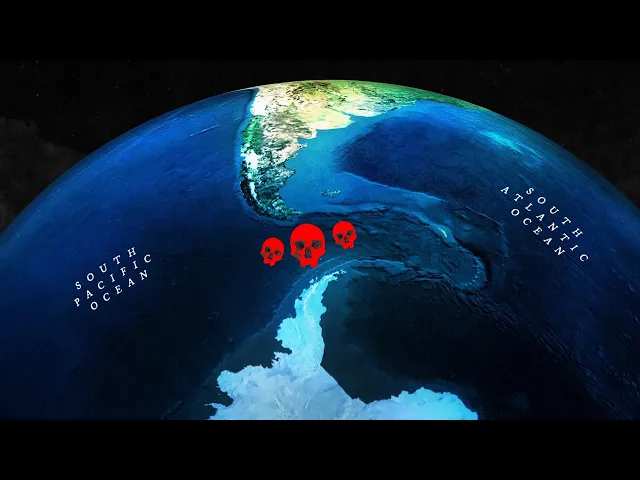
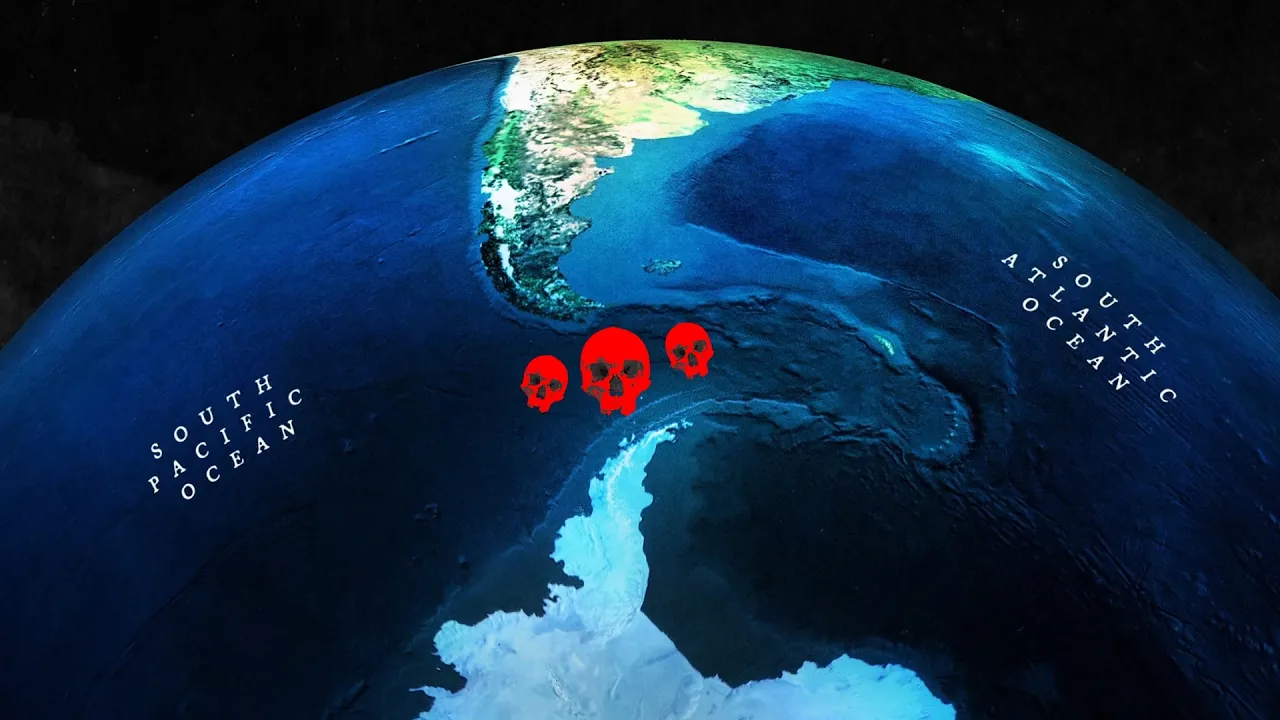
This is the Drke Passage, often referred to as the deadliest stretch of water on Earth. At its worst, its waves can reach up to 60 feet or 18 meters tall, but that is just the beginning. Storms can go on for days with waves arriving from all directions.
There are countless videos detailing the insane conditions here and the thousands of sailors who've lost their lives trying to cross it. And so you would assume there are countless stories of the ships lost here, but details are actually not as available as you might think. So in this video, we're going to over the Drke Passage and why it's so notorious, the few notable incidents here, and the role played by Antarctica in these stories.
And the somewhat mysterious reason why, despite thousands of lives lost, detailed accounts are hard to come by. As always, viewer discretion is advised. [intro music] On the night of November 29th, 2022, a cruise ship known as the Viking Polaris was partway through a treacherous crossing that every Antarctic voyage has to make called the Drke Passage.
The ship was heading northbound for Ushuaia, Argentina after turning back from Antarctica, and the reason hadn't been ideal. One day earlier during an excursion using inflatable Zodiac boats, one passenger was hurt and another had fallen into the water. The incident was serious enough that the crews had to be disrupted to arrange a medical evacuation.
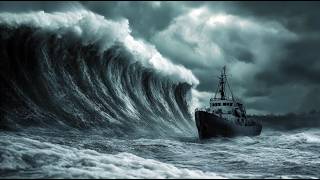
By the time the ship entered the open waters near Cape Horn in Chile, everyone on board knew the trip south hadn't gone as planned, but they had no idea that things were about to get a lot worse. As the Polaris continued on its way without warning, a massive wave slammed into the side of the ship. Inside several cabins, windows shattered inward, and glass flew across the rooms.
The ship also jolted violently, turning loose objects into projectiles before eventually settling back at an even keel. Inside one of the damaged rooms, a 62-year-old American woman was struck by debris and was hit with so much force that she actually died from her injuries. And in fact, four other passengers were also hurt but survived.
Crew members rushed to secure damaged areas and treat the wounded while the ship continued on toward Argentina. By the next day, the Polaris reached Ushuaia, and from the outside, the ship looked ragged in some areas, but inside, the damage was much worse. The wave that hit the ship has since been described as an infamous rogue wave, which is an ocean phenomenon that's still poorly understood.
Rogue waves, as you're probably aware, don't behave like regular waves or ordinary seas. They seem to rise suddenly and often tower well above the surrounding waves, sometimes by dozens of feet. Strangely, they also don't follow the prevailing direction of the wind or swell either.
And people who encountered them tend to describe them as steep, fast, violent walls of water. For a long time, stories of rogue waves were dismissed as exaggeration. It's only in recent decades that instruments have confirmed that these waves do exist and that they can strike with enough force to damage large ships.
Even now, they're hard to predict and nearly impossible to avoid if you find yourself in the path of one. What made the Viking Polaris incident so unsettling was the context. This happened aboard a modern polar vessel designed specifically for harsh environments and operating with advanced forecasting and experienced crews.
Yet a single wave was enough to break reinforced windows and kill a passenger in her cabin. She may not have known it, but this made her another on a long list of victims the Drke Passage has already claimed. The Drke Passage is the stretch of ocean separating South America from Antarctica and is a region that every vessel that travels by sea to Antarctica has to pass through.
There are no alternative routes around it, and once you leave the shelter of either continent behind, there's no going back. The Drke Passage has a reputation that predates modern shipping by centuries, and sailors have long regarded as one of the most difficult and stressful crossings in the world. The passage has earned this reputation because it's completely exposed to wind, current, and swells for hundreds of miles.
Storms and ice can form quickly, as can extremely dangerous rogue waves. It's also one of the most energetic bodies of water on the planet— and the reason for that goes back millions of years. Long before any ship ventured that far south, Antarctica and South America were once connected.
As the two land masses slowly drifted apart as a result of plate tectonics, a deep water channel opened between them. This created a powerful ocean current that circles the globe, which today is known as the Antarctic circumpolar current. And this current flows straight through the Drke Passage.
What makes it different than any other current on Earth, though, is that nothing blocks it. There's literally no land in its path. It moves west to east around Antarctica, gathering strength as it goes.
And when it squeezes through the Drke Passage, it accelerates. The sheer volume of water involved is also hard to grasp, and the amount that moves through this area every second easily towards that of the Amazon River. The passage itself is also massive, stretching roughly 600 meters or 966 kilometers across, and dropping to depths that average around 11,000 feet or 3,350 meters.
That depth also matters because it allows enormous waves to form and travel long distances without losing energy. Then add in the prevailing westerly winds which blow hard and consistently there, and you get a system that is constantly violently churning. The weather also only makes things worse as warm air masses from the Pacific meet with colder southern air, helping cyclones form that create havoc in the region.
Storms can grow quickly and move fast, sometimes catching ships in conditions that deteriorate far faster than the forecast would suggest. And sea ice adds another layer of unpredictability to the Drke Passage. During the summer in the southern hemisphere, the passage is usually free of ice, which is when most ships attempt to make the crossing.
As winter approaches, though, ice spreads northward from Antarctica, making the region almost impassable. With that said, though, even at the best times of the year, the Drke Passage is never really an easy crossing to make. Given all of this, it might seem logical to avoid the passage entirely.
Historically, sailors had other options around South America like the Strait of Magellan or the Beagle Channel. But while these routes offered some shelter from the open seas, they came with their own problems. These passages are narrow, wind shift frequently, the tidal currents are strong, and there's little room for error.
At least with the Drke Passage, captains would have the luxury of hundreds of miles of open ocean where a ship could maneuver. And this trade-off shaped centuries of decision-making. Also, if you were heading south directly toward Antarctica, the Drke Passage was just the practical route to take, and that's still true today.
Interestingly, for centuries, European map makers debated whether there was open water south of the Americas at all. Many believe that the southern seas were blocked by land or that any route through them would be impossible to navigate. That changed with the man the passage takes its name from— Sir Francis Drke, but he never set out to find a new ocean corridor.
In 1578, while navigating the Strait of Magellan during his circumnavigation of the globe, one of his ships was blown far south by violent storms. What Francis and his crew realized from this mishap was that there was open water just below the tip of South America. And further, this hinted at a direct connection between the Atlantic and Pacific oceans.
Francis himself never sold the route that now bears his name, but the discovery opened up the possibility of the passages of first crossing decades later. In 1616, a Flemish expedition successfully passed through the waters south of Cape Horn, proving once and for all that an open passage existed. Then, as global sea traffic increased through the late 1700s and early 1800s, more ships began venturing into the southern waters.
Before the Panama Canal opened in 1914, the Drke Passage played a key role in global shipping. And for vessels moving between the Atlantic and Pacific, it was one of the few viable options. Whaling fleets also began working farther south in the 19th century, adding even more traffic to the stretch of ocean.
And with that traffic came losses. Over time, and with enough maritime activity in the region, the Drke Passage accumulated shipwrecks at a rapid pace. One of its most famous tragedies occurred aboard a ship called the San Telmo.
Launched in the late 1780s, it was a full-size Spanish ship armed with 74 guns and built for war. By 1819, Spain was struggling to hold on to its colonies in South America, and the San Telmo became part of that effort. In July of that year, the ship departed Buenos Aries with orders to help reinforce Spanish forces in Peru, where independence movements were gaining ground.
The San Telmo was in the deep waters by early September, moving through the Drke Passage. This was no doubt the most dangerous part of the journey and somewhere in that passage, the San Telmo ran into severe weather. Exactly what happened is unknown as there were no survivors or eyewitnesses to the event, but the ship was last seen on September 2nd near the eastern edge of the South Shetland Islands just off the coast of Antarctica.
After that, it simply vanished. At the time, the assumption was that the San Telmo had likely been overwhelmed by a powerful storm, possibly a cyclone, and sank with all 644 people on board. In waters that cold, survival would have been just a matter of minutes.
For a while, this was the accepted story, but then evidence began washing ashore. About a year after the ship disappeared, sealers working near Livingston Island in the South Shetland Islands reported finding pieces of wreckage. Beams and other debris that clearly came from a large wooden ship started to appear on the beach.
This was important because Livingston Island sits close to Antarctica— far south of where most sailing ships were expected to drift after a wreck, raising the possibility that at least part of the San Telmo had made it to the Antarctic region. For more than a century, the ship's fate remained uncertain, but in 1960, an Argentinian expedition found more remains of a shipwreck along the coast of Livingston Island. The structure and materials matched what would be expected from an early 19th century warship.
And while debate still exists to this day, many historians and maritime experts believe that these remains belonged to the San Telmo. If this is correct, the implication is that some of those aboard may have survived long enough to reach land. This would have made them the first humans to set foot on Antarctica, only to die there cold and isolated.
However, there are no journals or evidence of a campsite on the continent, though, so what really happened remains speculation. Another important part of the history of the Drke Passage is Antarctica. By the time the wreckage of the San Telmo began washing up, Antarctica was already becoming a mysterious and dangerous destination.
The southern continent promised to push scientific discovery and the chance to push human limits farther than ever before. Getting there, however, meant crossing the Drke Passage every time. At the turn of the 20th century, this was still uncharted territory in a very literal sense.
Large stretches of the Antarctic Peninsula hadn't been mapped, and even basic questions about it remained unanswered. This meant that expeditions heading south were sailing into an environment where rescue was next to impossible, and communication with the outside world was nonexistent. One of the ships that would test those limits was a Norwegian-built ship aptly named The Antarctic.
Launched in 1871, the vessel started as a whaling ship and eventually transitioned into an expedition ship, joining the Swedish Antarctic expedition in 1901. The man leading the expedition was Otto Nordenskjöld— a Swedish geologist. And again, at the time, even seasoned explorers like Otto didn't fully understand what might lie ahead, but he planned to work methodically.
He'd land a small party to overwinter and conduct surveys while the ship under the command of Captain Carl Anton Larsen supported them by sea. The plan was ambitious, but it wasn't necessarily a reckless one. The crew was more than capable with a ship that had proven itself in southern waters, and Carl was no stranger to navigating through thick ice fields.
But even with all the preparation, the success of the entire venture depended on timing and conditions that no one could truly control. Once the ship made it through the Drke Passage and turned south, there would be no easy way back if things went wrong. As planned, Otto and a small party of crewmen were put ashore on Snow Hill Island in early 1902.
There they built a simple hut and prepared to overwinter while carrying out scientific work. The ship would leave them there, continue its work elsewhere, and return the following season to collect them. Once the ship sailed away, the six men on Snow Hill Island were completely cut off, and the winter that followed was a harsh one, even by Antarctic standards.
Storms apparently tore through the area, destroying part of the hut and carrying away one of the party's small boats. Several of their dogs were also lost in a blizzard. But even so, the men managed to stay productive.
They were well supplied, and when the worst of the winter passed, Otto and his companions set out on a long sled journey that would cover hundreds of miles as they surveyed the coastline. Afterward, they returned to Snow Hill, exhausted but successful and just in time for the date they expected the ship to reappear, but it never did. Unbeknownst to the land party, the ship had been fighting its own battle in the Drke Passage.
During the summer of 1902 to 1903, the ship attempted to reach Snow Hill, but found its path blocked by a heavy pack of ice off the northeastern coast of the peninsula. With no immediate way through, a risky decision was made. Carl left three men at Hope Bay near the entrance to the Antarctic Sound with instructions to attempt an overland journey to bring Otto's party back.
However, shortly after departing, the ice they intended to cross broke up and drifted out to sea, leaving open water in its place. Without a boat and unable to continue, they turned back toward Hope Bay only to discover that the ship was also no longer where they expected it to be. While the party of three struggled on land, Carl continued searching for another route at sea.
In doing so, though, the ship became trapped in ice. At first, there was hope that it might break free, but that didn't last long. Within weeks, the pressure of the ice on the ship became unbearable.
6 weeks after being frozen in, the crew was forced to abandon the ship entirely. Not long after that, the Antarctic was crushed and sank roughly 28 miles or 45 kilometers from land. Over the next two weeks, the crew hauled supplies across unstable ice floes as they shifted beneath their feet.
The currents threatened to pull the floes out into open water at any moment, but eventually, after a final desperate day of rowing their lifeboats through freezing seas, they reached Paulet Island at the end of 1903. This timing couldn't have been more lucky. A violent storm swept across the island the following day.
And had the men still been stranded on the ice, it's likely that none of them would have survived it. At this point, the expedition had fractured into three isolated groups. Otto and five others remained on Snow Hill Island, living in their hut while watching their supplies dwindle.
The party of three at Hope Bay built crude shelters from rocks, scraps of wood, and tarps. They even insulated the ground of their shelters with penguin skins. Then finally on Paulet Island, Carl and 13 crew members constructed a rough stone shelter of their own, roofing it with sailcloth and seal skins.
For all three groups, penguins and seals were eaten for their meat, and their fat was burned for heat and light. As months dragged on, there was no way of knowing whether anyone was coming to help them. Before leaving South America, Carl had left instructions with the Argentinian Navy that if the ship failed to return by a certain date, a search was to be organized.
The following season, ice conditions were far lighter than the year before, allowing a ship called the Uruguay to push south. On October 12th, 1903, Otto was out sledding when he spotted something in the distance. At first, he mistook what he was seeing for penguins, but when he drew closer, he realized that they were the party of three from Hope Bay.
Upon meeting, it took Otto a moment to realize who they were, though. The men were apparently so filthy from months of burning penguin blubber that he barely recognized them. That same day as well, the Uruguay reached Snow Hill Island.
As its officers were asking Otto if he had seen the rest of the crew from the Antarctic, Carl himself suddenly appeared at the hut with the others in his group, having just arrived from Paulet Island. After nearly 2 years of isolation, every surviving member of the expedition was suddenly and unexpectedly reunited. In all, only a single man died during the ordeal, succumbing to heart failure with the Paulet Island group.
Every single other member made it out alive. In November of 1903, they returned to Buenos Aries to an enthusiastic welcome. And the wreck of the Antarctic marked the first documented case of a ship being destroyed by ice pressure in Antarctic waters.
When it comes to Drke Passage shipwrecks in history, though, none loomed larger than that of the Endurance, which is maybe the most famous expedition in history. About a decade after Otto and his crew were saved, Irish explorer Ernest Shackleton launched the Imperial Trans-Antarctic Expedition in 1914 with the aim of being the first to complete a land crossing of Antarctica. Aboard a ship named the Endurance, Ernest left London with a crew of 28.
And after weeks at sea, the ship reached South Georgia Island on November 5th. At the time, the island was a hub of the Antarctic whaling industry, and Ernest used the stop to gather information and supplies. He also received repeated warnings.
Whalers told him that the sea ice in the Weddell Sea was unusually heavy that year and that conditions further south were likely to be brutal. Ernest listened but then chose to ignore the warnings and moved ahead anyway. Just days after leaving South Georgia, the Endurance encountered its first ice pack in the Drke Passage, and progress slowed to a crawl.
By early January of 1915, the ship was fighting its way through tightening fields of ice, but after 7 weeks of this, the Endurance could no longer continue. The ship became completely trapped and frozen in the ice about one day away from the expedition's intended landing point on the Antarctic coast. Locked in place, the ship drifted with the pack, moving south at first and then slowly back north as the ice shifted.
And this went on for months. Several months later, winter approached, daylight faded, and temperatures dropped. Ernest did his best to keep crew morale up by keeping his men busy, but the pressure on the ship kept increasing.
Many months later, by late October, the hull was no longer safe. Ice pressed in from all sides, warping beams and splitting the hull. Finally, Ernest gave the order to abandon ship, and all 28 crewmen made their way onto the relative safety of the ice.
Camp was set up on a floe nearby, and the men salvaged what they could as they watched the Endurance slowly get crushed. On November 21st, the hull finally gave way and slipped beneath the ice, vanishing into the Weddell Sea. With no ship and no immediate land in sight, the men camped on drifting ice floes.
In the meantime, as well, they hauled their lifeboats and supplies as the pack slowly carried them further north. Once again, this went on for months, and when the food began to run out, even the sled dogs were not spared. It wouldn't be until April of 1916 that the ice finally started to break apart again.
Out of options, Ernest ordered the men into the lifeboats, and after five strenuous days at sea, they eventually reached Elephant Island and set foot on solid ground for the first time in nearly 500 days. Their relief was shortlived, though. Elephant Island is basically as remote as anywhere else on Earth, offering no hope of rescue.
So realizing this, Ernest chose five men and took one of the boats, setting out on an 800-mile journey to South Georgia Islands. While this might have been the right choice and maybe their only hope of survival, every moment of the trip was an absolute nightmare. The boat was constantly threatened by storms, everyone was seasick, and at one point, a rogue wave nearly ended the voyage entirely.
17 days after leaving Elephant Island, they made landfall on South Georgia. However, they landed on an uninhabited side of the island, and their boat was too damaged to continue on. Ernest then chose two of the men to join him in walking across South Georgia on foot.
Along the way, they climbed mountains and navigated a terrain no one had ever met before. Finally, after 30 hours of continuous travel, they reached the whaling station in Stromness, and rescue efforts began from there to save the rest of crew. It would take four total attempts over the course of months to reach Elephant Island.
Ice blocked the first three tries, and by the time Ernest finally broke through on August 30th, 1916, the men he'd left behind were on the edge of starvation. Against all odds, though, every single one of them was brought back to safety alive. More than a century later, the wreck of the Endurance was finally located nearly 10,000 feet or 3,000 meters below the surface of the Weddell Sea.
Now, you might have gotten to this point in the video and are wondering why we spent so much time discussing events, that, well, technically began in the Drke Passage don't really get to the heart of the waterway itself. And the truth is that as far as detailed accounts go, this is all there really is. The Drke Passage is thought to have claimed hundreds of ships and over 10,000 sailors.
But the reality is that almost all of those ships went down without a single survivor. On top of that, many of the losses took place centuries ago in an area that is already sparsely populated today. Hundreds of years ago, it was just men in wooden ships and massive swells with no hope of rescue or even anyone to remember their names.
The stories that we do have are the ones where someone was alive at the end to explain what happened. In the end, even today, the Drke Passage is considered to be one of the most challenging sea routes on Earth. Despite advanced weather reporting and modern vessels, crossings are routinely delayed or cancelled entirely.
If you made it this far, thanks so much for watching. And a special thanks to everyone who supports the channel on Patreon or as a channel member. If you're interested, we offer early-access videos that are released roughly a week before the regular YouTube uploads.
Also, if you have a story suggestion, feel free to submit it using the form found in the description. Anyways, thanks again, and hopefully, I will see you in the next one.