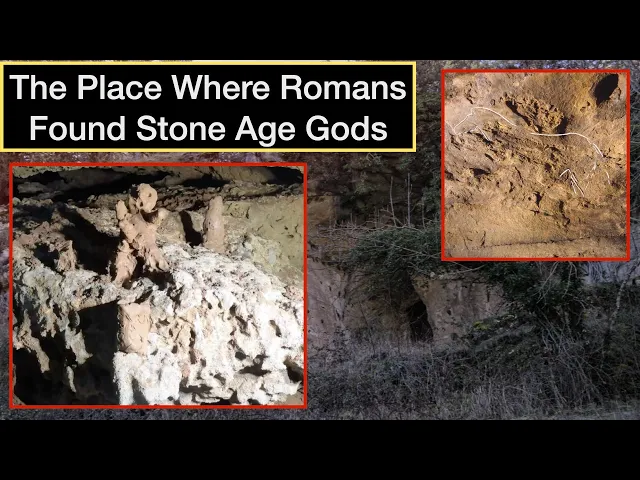
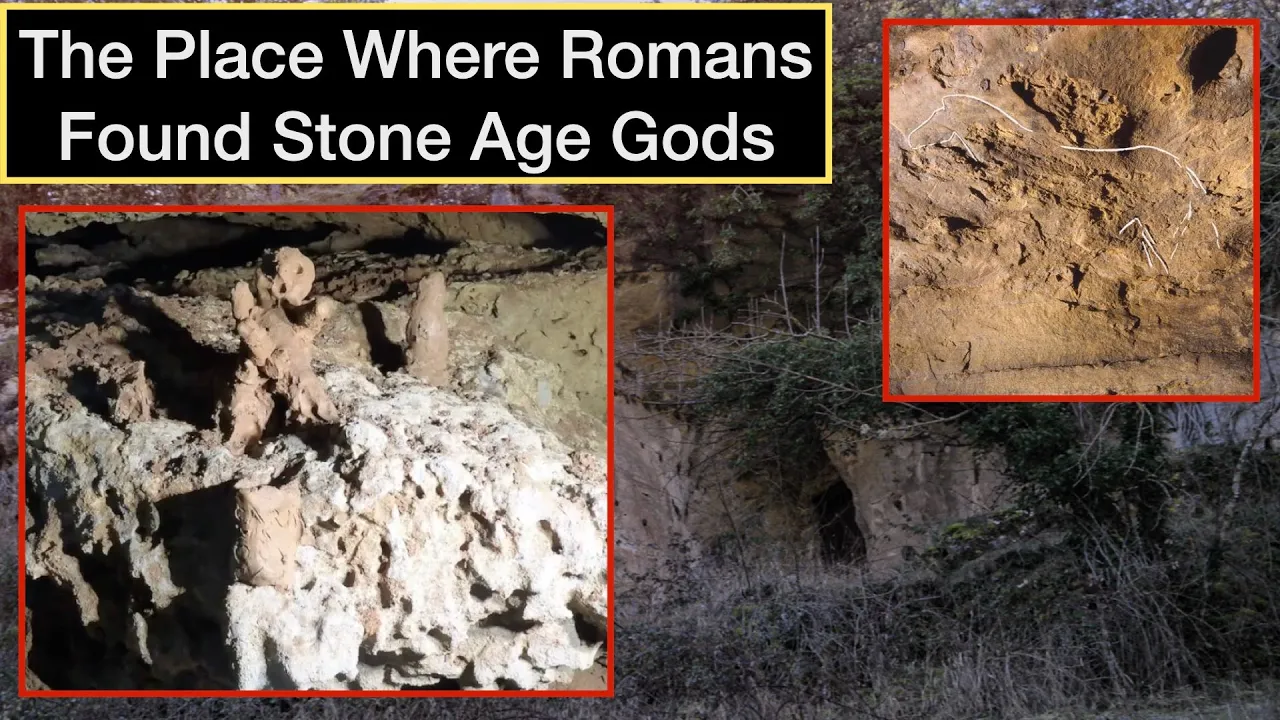
located approximately 50 m from the Left Bank of the Vio river near the city of Pedraza in Spain is the entrance to lria Cave one of a number of caves in the region carved into the Cretaceous Era Limestone that makes up much of the Region's topography the entrance is fairly narrow about 1.5 M wide but the overall system of tunnels runs for several kilometers winding in a Northwest Northeast by Southeast trajectory it has been explored and studied since the 19th century and it's famous for over 100 different depictions of Paleolithic cave art the study of
which really began in the 1970s but it also saw use in post Paleolithic periods with evidence ranging from the Iberian copper and bronze ages to the time of the Romans so essentially the Iron Age and then up until the viag gothic period in the 6th and 7th centuries ad and what's extremely interesting about the ReUse of this cave system is that this does not appear to be something along the lines of later people utilizing the cave entrance for habitation or burial like we so often see in British caves that have been occupied over the Millennia
especially during the Roman era instead here some Romans evidently journeyed deep enough into lria to have located the Paleolithic art in many cases they have left inscriptions next to those figures in Latin and in at least five specific cases the term God is written next to the Stone Age art and there is further evidence that in the Roman period this was some sort of a cultic site based around that Paleolithic art So based on the inscriptions it seems that at least to a degree Paleolithic art was reinterpreted by people thousands of years later in this
case the Romans and it was understood to be depictions of deities this is a topic I've wanted to explore for a while and I first discovered this while researching another video in the series I have going on this channel exploring what premodern people knew about the past and how they interacted with the remains of past civilizations so let's talk about this cave the Paleolithic art approximately spans between 16,000 and 11,500 years before present with a vast majority of the art belonging to the upper Paleolithic between about 13,000 and about 11,500 years before present for those
approximately 2500 years there are 119 documented examples 29 signs or what have been interpreted as signs and 90 figures including deer felines boar fish canines and anthropomorphic figures but Above All Else horses seem to dominate specifically horses account for about 61% of the upper Paleolithic art in lria after the Paleolithic so approximately until the end of the first millennium BC there are a further 311 different Works many of these are shapes like grids or rectangles including one that looks vaguely phallic in shape which considering that a stone phus has been found in a Roman context
in Stonehenge and that there was a temple full of phallic votive offerings dating to The Classical period probably just goes to show that humans have been doing this literally forever when the Romans conquered Iberia and evidently C discovered this Cave System they encountered all of this evidence of past human occupation and use so ordinarily the ReUse of something so ancient by a later people would be interesting in and of itself people throughout time have reinterpreted more ancient artifacts and artwork of which they had no proper knowledge and there's a great book that explores this exact
topic titled the past in prehistoric societies which is where I first encountered this particular site but what really makes this stand out is is that the reinterpretation of some of these paintings as being religious in nature might not necessarily be a religious reinterpretation at all what I mean by that is that we have plenty of examples of historical peoples like Europeans from the time of ancient Greece right up until the 19th century finding objects like stone tools and reinterpreting them as thunderstones objects that fell from the sky where lightning had struck the ground so a
totally different understanding of the items and their purpose from what they were originally intended to be cave art on the other hand is sometimes thought to be spiritual in nature and to be evidence of ancient humans first beginning to try and understand the universe and their place in it so because the Romans found this Paleolithic artwork and understood it as religious what we're looking at here could be a prehistoric spiritual area which the Romans then found and also engaged in spiritual activities there which when I first read about this just blew my mind as far
as I'm aware this is the only archaeological site of its kind that is to say a place where a potentially religious interpretation spans thousands of years although obviously the specifics of those belief sets would be vastly different so for the rest of this video I want to talk about Paleolithic art and then you tell me what you think about this idea if you want to be very technical about it modern people even professional anthropologists who study the subject are never going to be fully 100% certain about the exact meaning of cave art we know of
examples that date back several tens of thousands of years and very likely we will find more as time goes on but because our examples are from this long ago there are two major issues when it comes to interpreting and trying to understand Paleolithic art the first is that we lack written sources which tell us about the exact purpose of these pieces and the second is that because this is from the Stone Age and the paint was made from naturally occurring materials like plants we probably have a heavy bias in our evidence specifically because the examples
come from caves that is to say sheltered areas well removed from any sort of precipitation or other forms of weather it is entirely possible that there was more of this created on geological features that were exposed to the elements and thus do not survive so with that in mind how are we to understand this well there was a vigorous debate in the 9s about this and it sort of never stopped our evidence for Paleolithic art not just in caves but also what are presumed to be totems as well as Grave Goods appear to increase in
complexity between about 65,000 and about 15,000 years before present initially cave art was thought to be evidence of art simply for the sake of art This was later discarded following the publication of studies such as the mind in the cave which really kicked off this debate because it argued for an interpretation along spirit ual or early religious grounds shamans or other priests ingesting drugs and engaging in ceremonies in these places that sort of thing generally speaking much of this revolves around the concept of Behavioral modernity a line of thought which argues that humans began to
think abstractly about the world and their place in it only about 50,000 years ago and that this differentiated them from earlier anatomically modern humans this has been argued against on the basis of further archaeology which pushed the idea of Behavioral modernity back to 70,000 then 100,000 and then finally 200,000 years ago the evidence for this pushing back of dates is relatively recent archaeology Coming Out of Africa the point is that it's not like humans suddenly began thinking abstractly as we approach the upper Paleolithic there seems to be evidence for abstraction farther back in time but
in the upper Paleolithic the level and the amount of cave art and things of that nature does definitely increase that being said the cave art specifically is probably spiritual in at least some sense although very likely there's more to it than we will ever be able to understand artwork across the world does show animals that archaeologists know were consumed in their areas because they found bones with cut marks on them indicating butchering but the caves also feature animals that were not eaten and they tend to be in different places in these caves we also have
to keep in mind that the were not easy places to get to the animals in lria for instance do appear in the initial Gallery but they also show up much deeper in the cave Lasco is another example of the same sort of thing so because headlamps or flashlights did not exist you have to imagine how difficult this must have been to walk potentially several kilometers into a cave using only basic torches although there have also been finds of what looked like small oil lamps to then put this artwork on the cave walls what this means
is that this was intentional and it wasn't simply art for the sake of it add to this The Motif in folklore and mythology that caves often Serv as passages or portals to the other world and the argument then emerges that while there probably is an element of hunting and memory contained here the presence of animals not hunted or otherwise consumed like horses in cave artart probably represents in some fashion what upper Paleolithic man thought and believed about the world now whether that actually involves a shaman taking hallucina jins and crossing over to the other side
on a spiritual journey is not all that clear but this probably is associated with upper Paleolithic religion or spirituality possibly ancestor memory or worship to a huge degree though we don't know and we simply can't know but in prehistoric Iberia the horse seems to have had some sort of importance it shows up in lria and it shows up in another cave system quadon located near Valencia but it also shows up later in carvings on Boulders dating to the early copper AG which were incorporated into a Roman Fort near modern day salamona which the Romans then
imitated so what exactly was it that the Romans encountered when they entered lria well it's possible that this was a religious place or maybe an environment that was sacred to Upper Paleolithic people in some manner evidently horses were important in some capacity stretching back several thousand years in the end we'll probably never know exactly but the fact that the Romans found this prehistoric site felt some sort of importance was attached to it and then evidently used it makes it one of the more remarkable archaeological sites in Iberia and stands as a testament to the notion
that civilizations even as far back as The Classical period had complex ideas of their own past in the world in which they lived