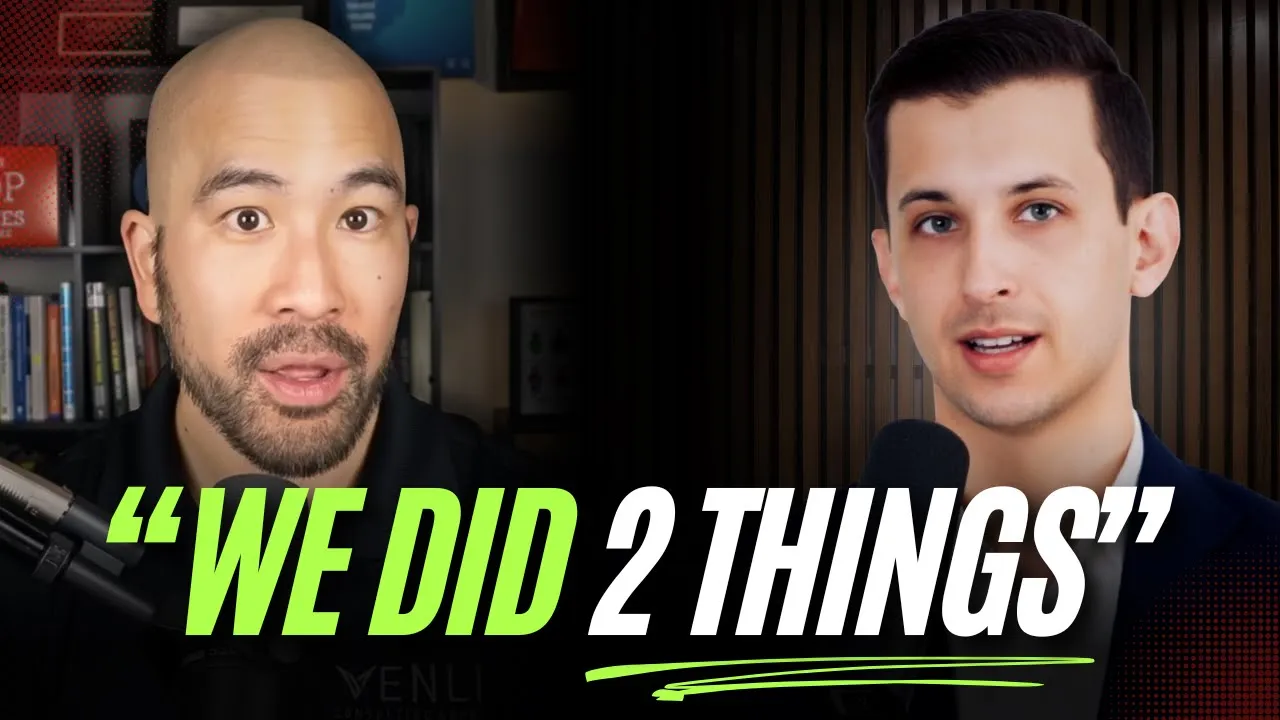
Monday they're establishing their strategy and their targets for the week. And Friday is did we get there? Yes, fantastic.
Let's look at that. If no, why no? Let's look at that.
And then specific coaching around those deals. I also inside of that weekly rhythm expect to see time for that professional development, which is one around the tools and understanding best practices and continuing to emphasize that. It's also time to have one-on-one questions.
We talk about career, talk about direction of the pipeline, overall strategy, things of that nature. For me, my FLSM are highly involved. And I think that having a highly involved FLSM team is the number one most important thing to the overall sales team success.
[Music] This is the Revenue Vault, the show built for unstoppable CRO's, VP of sales, and GTM architects who engineer revenue machines that obliterate quotas. Hey, I'm Mark Shan, CEO of Venley. If you're here to build bulletproof system at scale pipeline velocity at enterprise speed, you're in the right place.
Today we're sitting out with Tim Johnson, VP of sales at IFS and former top VP of sales at Salesforce and Xerox. Tim is a sales leader who compressed new hire ramp time from 12 months to just one quarter. That's a 75% reduction in time to productivity.
He's institutionalized deep qualification frameworks such as using Medpick and challenger methodologies. He's boosted CRM hygiene by over 70% and he built training systems so effective that his teams consistently hit presence club year after year. But here's what makes this conversation essential.
Tim reveals the exact weekly rhythm every frontline salesman needs to run, how he deploys the AI to eliminate 510 hours of admin work per rep weekly, and why he refuses to hire lone wolves. We dissect his systematic approach to deal qualification that scales across enterprise organizations, his controversial take on leading from both ends simultaneously, and the three tactical AI implementations every revenue leader should deploy this quarter. Here's the bottom line.
If you want to engineer a revenue or that operates like precision machinery, this episode contains a blueprint. Let's go. So Tim, what do you believe puts your revenue or in the very top percentile against other orgs?
>> Yeah, I think uh there's been a few things over my career that I've seen that has been really successful. At Salesforce, we really institutionalized deep qualification using Metapic and challenger frameworks, which is something that I actually put in place in my enterprise organization and embedded into our CRM deal progression and it really helped increase the qualification of those um helped with managing large deals, put us in president's club for a number of years following kind of the deep quality ification that we were doing. And you know, I I know you've really emphasized like a no fluff tactical execution and that's really what I centered our forecast around and our team meeting and and I think it's exactly what we need for full transparency and for everyone in the organization to be working coherently and and moving as one gear together instead of against each other which uh we see all too often.
Yeah, I love it. Right. And I think I'm a big fan of methodologies like, you know, medpic, right?
And one of the things though I've seen though is when some organizations when they deploy medic like in the CRM stages kind of match, you know, med pick, right? Is it's it becomes like a checkbox for some teams. So for you, how did you ensure it wasn't like just a checkbox for team like, oh cool, we we kind of hit each of these components versus actually fully utilizing as a qualification method?
>> Absolutely. So, I think that's so key and and one of the things that I'd like to um delineate here is that it wasn't that MedPic matched up to our deal pro uh uh our deal funnel. The the actual staging gates um had parts of Metapic, but it also had other parts um that were essential to the deal moving forward.
So, it was really part of the opportunity homepage. And the way that we used it is by um incorporating conversations the reps were having using technology like gone to pull out important parts and feed it directly into the sales CRM so that it wasn't the reps didn't just feel like oh this is something else that I need to put in but it gave real time visibility. um it automated the process and it allowed it to become part of the narrative of how we were coaching the reps and then how that was manifesting in reality within our opportunities.
And I think that feedback loop is absolutely critical for any second, you know, third line managers to really understand how they put a process in place at scale and get it adopted. I I love that so much. You said it so well, Tim, because you know there's a couple key components I think you you I want to make sure get really emphasized here, which is number one, you're putting the right tech stack into place, right?
So obviously you were at Salesforce, you use Salesforce as obviously your CRM. You had a more detailed deal funnel process, but also you had fields specifically in the opportunity that actually that aligned to the methodology as followed, but then you utilize a tool like Gong recordings and you automated the data to flow from Gong into there. So you're moving some of the minutia of trying to, you know, reps trying to write notes and they actually have detailed probably, you know, quotes or whatnot from the calls into there.
Does that sound about right? >> Yeah, absolutely. And I think when I started this project and and tracking it, we actually saw CRM um we called it CRM hygiene, but we actually saw it increase by over 70%.
>> Amazing, >> right? and the change that this means to deal forecasting, especially when you're going up multiple levels inside of a big organization like Salesforce and the ability for my senior leadership to see that territory and to see that book of business, it changed the conversation 180 degrees. And I can't emphasize that enough.
>> Yeah, I love that. And then I think in a big part right because um you we're talking about the tech piece and make it easier when we're talking about visibility from a leadership perspective but as you and I both know we can a company can invest you know a lot of money into deploying these type of tech resources but their team can't run a proper discovery or run the process to actually get the right intel to get into the system is is becomes useless. So, how did you as the leader develop your team teams to get to that point where they're not just running a transactional discovery, >> they're actually running a proper discovery where you can actually gather these elements.
>> Yeah. >> Yeah. I think training here is key.
And I think ongoing training in small groups with uh accountability is really the way that I started to set up training within my organization. You know, I come from a background of of um you know, I worked at the Y when I was younger, kind of helping developmentally challenged children kind of learn through different modalities. And so I think what we are missing in the workforce today is that it has all moved to digital self-paced doesn't matter when, where, or what.
And I think what I learned when I was younger is that you need that digital self-paced is fine, but you need that interaction with an instructor. You need an instructor who is asking you, "Hey, show me what I showed you last week and follow up and go that extra route. " And I think all too often sales leaderships put these kinds of critical tasks to the side and just say, "Oh, it's training.
" or oh, they checked the box on the on the digital uh training tool or whatever it is. And and so I think actually getting in here and saying to the reps, these are the top five, you know, what I want, what we want to ask to get the M, what we want to ask to get the E that you know, going through medic or even, you know, sometimes weaving in there like spin selling, also challenger selling is something that I'm a huge proponent of and even, you know, having my teams read things like fanatical prospecting by Jeb Blunt or even classics like you know Zigg Ziggler kind of helped you know add to that methodology and say what is one more question we can add to that list. So I think at this point we really have a defined set of questions that lead to opportunities that we enable in the early days of training that we then roleplay with our reps.
We hear them asking the questions. We use the technology like gone to uh analyze those customer meetings as well as being on them as supportive executive sponsors and then we circle back for that one-on-one coaching. And I think using again you got to have that that full cycle wheel to kind of get that that that feedback.
But using that I've seen training go down from when I took over the helm at Salesforce uh about four years ago. It was training was about 8 to anywhere 8 to 12 months depending on where you came in in the year and we got that down to a quarter. >> Yeah.
a quarter and and that you know and that I want to say is also augmented by relevant ongoing training and I want to point out the sales tools here in specifically because all too often you know we might give sales training on product CRM but I feel like it's pretty rare to get training on a Zoom info a demand base a six sense in outreach and it's kind of like hey we have these tools go use them and it's like how and where and what's the best right and so what I what I started to do was bringing in our direct support representatives from these organizations as direct connects with our new training cohorts so that they could be trained directly one-on-one and by that I freed up FTE time from within my organization I got the direct information and the latest trainings and my reps, my new reps were really able to work from here's what we do to start. Here's here's kind of medium usage. Here's advanced usage and go through that crawl walk run approach through all the tools, not just a product feature set or something to that effect.
>> You know, you said it so well, Tim, and I love the focus on you're creating a culture of like high performance what you're doing, right? I mean to compress a it's called 12 12-month ramp time down to a quarter, right? So basically 75% reduction is massive, right?
Because obviously it's speed to value, you reduce turnover as a result. There's always amazing benefits when they produce faster. >> Yeah.
>> But you're also leveraging subject matter experts from those companies. So even from the tech tool, tech staff perspective, they're not just giving a bunch of tech tools, which half them never been trained on, they're actually getting trained by those companies, which I love. Now I think one of the thing that's really really critical is um we tell the frontline sales leader so vital right to really ramp them up and to take someone from taking 12 months to ramp up to four months or 3 months or even less is it takes a a level of of having a strong manager rhythm to develop them properly.
For the ideal frontline sales leader, what do you see as the ideal rhythm they're running each week to to provide a level of training for their team to ramp their skills up? Yeah, I think uh a weekly rhythm is actually something that I've I've preached about a lot within my organization and you know the people who don't get it think that it's micromanaging and the people who do get it understand that being highly organized and strategic leads to high results. >> Right?
So, we go we go so far as to say, "Hey, you know, we want every new rep to have starting week two, literally now, is an hour in the morning and an hour in the afternoon blocked off for cold prospecting. This means you come with your list ready. It's not that we're doing research.
We're not doing this that. You come with your list ready. two or three talking points quickly synthesized by AI for each individual shouldn't take more than 15 to 20 minutes and you come ready with that and then kind of looking at what that takes to go from every stage of okay we've started here at this kind of interval of an hour here hour there what else do we need to be doing okay well now we've started to advance from being a new hire now we have our territory we need to have a specific specific strategy game plan I call it for it's a it's a really methodical document around identifying all the power players power messaging within an organization being able to map it out in real time being able to see where we're going within that organization and the centers of power around a specific opportunity and I think going through that weekly rhythm I want to see my FLSM do a few things include including weekly one-on- ones, >> weekly team meetings.
Right? The one-on-one should happen early in the week where the the AES are calling the their week. I want to hear what their uh I call it goals, hits, and misses, right?
So, Monday, they're establishing their strategy and their targets for the week. And Friday is did we get there? Yes.
Fantastic. Let's look at that. If no, why no?
Let's look at that. and then you know kind of specific you know coaching around those deals. I also inside of that weekly rhythm expect to see time for that professional development which kind of comes in two forms for me which is one around the tools that we kind of talked about and understanding best practices and continuing to emphasize that and it's also career coach.
But it's also time to have one-on-one questions, talk about career, talk about direction of the pipeline, overall strategy, things of that nature. So for me, my FLSMs are highly involved. And I think that having a highly involved FLSM team is the number one most important team, most important thing to the overall sales team success.
>> 100% agree. And um it's interesting right because you know I talked to a lot of sales execs to frontline sales leaders and you know what what you're describing the frontline sales leader I have found generally speaking most of them do not run the level of rhythm right where to be very specific they're inconsistent oneonone's very transactional the meeting is very much a very quick they're they're on a soap box it's not interactive they're not calling out what they're doing there's no real training there's no set prospecting blocks right I came from a field sales world very similar to you cuz you came from Xerox, right? >> And we had a we had we had a level a rhythm that was very intense that most people could not keep up.
But you know what? It drove performance. It drove results.
It got things done. And there's a reason why this company has been around for a long time. So when you when you take over, you know, a market or region and you see you have I think a frontline sales leader who is not executing these things, right, which I'm sure you probably seen that >> often times I found it's it's not because they don't want to do it.
it's because they didn't know, were never trained to do it, right? They're they're just kind of a a rep who got promoted, right? So, you if you have a a leader who's kind of like that, what's the first thing you do to help set the tone and develop them so they can actually run that elite routine or rhythm we just discussed?
>> Yeah, absolutely. No, I mean I think in cultivating leadership, I'm looking at not only AEES that are top performers, but AEES that are also go-givers, which is a term I picked up quite a while ago. Great book, by the way, for leaders.
Um, if you're interested, >> and I really find that you need to lead and train in two ways. And this is actually, you know, gets me when somebody says they lead from the front or they lead from the back. And and I always say, well, whichever one they say say, well, what's happening to the other end?
You know, I think you got to you got to go from both ends. So, for me, >> I'm doing everything from helping my team break into accounts. Literally, I'll I'm picking up the phone in an hour to make some cold calls to a few Seale executives.
And that's working in tandem with with somebody who said, "Hey, I'm trying to break here, here, here. I see you might have a contact or I see you might have some prior experience. Let's put that together and help break in.
" And and then also kind of leading from the back, you know, we need I need to help my FLSN understand the processes that they need to put in place, the systems that they need to put in place. And oftentimes, we're not even talking about tools or things of that nature. We're talking about how do you organize your team?
How do you orient your time? How do you look at your pipeline and prioritize where we want to spend our hours of the day? Who are those reps that really take that CEO autonomy of their territory and you really kind of just need to be there to bounce ideas?
Who are those reps that really are maybe coming from SDR land and we really need to help understand how to move that sales cycle forward or work multi-threaded with an account. So I I mean often times with my new FLSM I'm in their coaching meetings with my AEES. We're doing this together.
I'm giving some feedback. They're giving some feedback. Then there we're getting off the line.
I'm picking my phone up, calling my FLSM. You did this fantastically. Great way to drive that motivation.
Great way to explain that new spiff. Great way to orient them around the new product bundle. Now, we need to talk a little bit more about how they're working multi-threaded an account.
I see two or three opportunities where it looks like their primary decision maker is only uni threaded and we need to at least have my stats show that our biggest deals close when we have four to seven multi-threaded stakeholders. Right? So really engaging with my FLSM to hear that feedback and we do use gone on internal coaching calls as well.
is not only a deal intelligence tool, but it's a coaching intelligence tool, which is key. >> I love that. I mean, you dropped a lot of high value bombs right there, right?
I mean, and there's a couple things I think is really, really critical that you're doing super well. There is, you know, when I look at really elite leaders, right, who run large orgs, they they hang out in the what I call both the clouds above. They can see they look down, but they're also they're down in the dirt.
They do and they do everything in between, right? And what you're talking about here is not only are you setting the vision for your frontline sales managers and sales leaders, but you're also getting in and showing them. You're like also going in the deals, you're going into granular like looking at opportunities where it's there's pink flags, there's red flags, and you're showing them what's missing.
So, you're actually teach them how to actually coach through opportunities themselves. And I found because and some people think it might be a little micromanaging, whatever, right? But the people who really get it, they love it, right?
They love that level of coaching. I have found when when you are able to be able to be in the clouds and also in the dirt as a sales leader, you actually increase the accountability of your org across the board because they also realize like Tim's going to Tim's going to realize like you're not in the weeds and you don't want to be called not not a bad away, but it's more so like okay, I I want to make sure I look good to my boss, so I better be on top of my stuff, too. >> Absolutely.
Absolutely. No, I think that's so important and having that unification inside of the team where you know I I really do not hire lone wolves and that's one of the biggest things is that is that I want folks who are taking that ownership and when they win they take it to the next guy on the team or gal on the team and help them to be just as successful and take that learning away and more so than that they open up their success successful clients and customers to other reps to help them leverage not only those stories but those references. You know, I think all too often we see this kind of ownership of oh, I don't want to get my person on the line.
I don't want to this that and it's like if we're doing things the way we should be creating uh creating a sales approach that is customer centric and customer obsessed. I love those terms. If we're creating that approach, we should be having wildly successful customers, uh, which we do many times.
And those folks, we need to be elevating, not only helping them to talk with other clients, but helping to elevate their careers. And, and that's something that I talk about my FLSM about when it comes to executive connections is understanding what do you want from this project? Why is it going to matter to you?
Is it going to mean your shares get increased? Is it going to mean their shares get more valuable? Is it going to mean and being able to have a relationship where you're able to dive into, you know, the, you know, they always say sales is money focused, but I think jobs and careers are money focused.
And there's not an executive out there that doesn't understand their stock plan, their compensation plan. And if you weave that into your conversation as you're going up the totem pole within the enterprise organization, your ability to create real value inside of already what uh what a marketleading solution is doing is going to be exponentially higher than the next person. >> 100% right.
I want to double tap something you just mentioned just a little bit ago, which is the hiring component, right? Not hiring the lone wolves, right? And be able to hire that level of talent who is more of a go-giver.
So for you, how have you how like what are some strategies maybe you've implemented to do your best? It's not it's never perfect, but to do your best to have the highest likelihood that you're having the right type of future leader. >> Yeah.
You know, I think um some of the things that that I've really done to make sure that we're hiring the right leader is aligning culture with past experiences. So a lot of times when we're talking about you know accountability or customer uh centric approach or things that they've done I really like the star method and I found that to really be action and oriented based and I like to hear about what that leader has done to actually remove roadblocks for their team in real time. How did they move that deal forward?
What insights were they able to give and help? And and some of the things that I've that really have like stuck out to me that I've heard and just a little bit about me is that before Salesforce, I was in a procurement company for many many years. I really understand how that process procurement and legal works into the sales cycle.
So, one of the things that like kind of perked my ears is that I had an occasion where where someone was articulating the ability to organize a per a SAS perpetual license deal closing in this quarter when the customer didn't have their budget yet. Their budget was going to drop this the next quarter. Setting up milestones to align with that and then setting up multipliers if those milestones were missed, right?
to ensure that we had business continuity and there wasn't um added risk to the business and in that way was able to move the deal forward, got it closed with the client and also was able to have them come be like a speaker for them at the next conference was a few which was a few weeks down the road. And so I'm looking for those folks who bring that thinking that's outside of the box and you know kind of new and and different. I think one of the things that I've seen that have stalled folks in my in my um career is that they get into an organization and they don't understand where to go with the red tape.
They're not um making the internal connections needed to be able to, you know, ping the chief legal officer and say, "Hey, I have a client who's got the 12th hour. We got to get this over the line. There's just one or two things.
" And that's something that I really take to heart. So understanding how leaders make internal connections and how they help elevate their own brand to really make sure that I'm that I'm bringing people into the fold that can get things done and that have that good reputation. And I think lastly, I'm looking for folks who are interested in winning where they are today, but also having a future vision.
Whether that's becoming, you know, the best, you know, FLSM and and, you know, building out the biggest team or whether that's continuing to grow within my sales organization and the why behind that, right? I want to buy uh a pool for the kids. I want to buy, you know, take my wife to Paris for the first time.
whatever it is like those are the questions I'm asking people to not under not only understand their professional goals and experiences but understanding the why behind that and then helping them to empower that um and there's nothing that gives me more gratitude than you know someone on my team sending me a picture from you know Disney World of their team or you know I had one of uh one of my fans she took her kids white water wrapping down the Grand Canyon and and I got a picture of them in the Grand Canyon and and it's just like those are the things that that I love to do is to help people reach their goals, reach their dreams and then go even beyond where they thought was possible. >> Amazing. And I think it's really really powerful right because you hit a lot of key points from you know how you're asking star which star level questions which are you know situation task action result for those who are not familiar with that model right but getting them to be able to share very explicit detail creative ways that they how they work within internal organizations the external to bring deals to a close or develop people to the point that you've been talking about how ultimately when we bring in great great reps great leaders we're helping them achieve amazing things and I think you'll appreciate this one thing I I used to do I had a decent size sales or got like you know 100 plus employees and every uh every six months I would have my EA email every single person and say hey uh over the last 6 months just send us a picture of something you're super proud of that you've achieved.
It doesn't have to be you at President's Club or any awards dinner or winning a trophy or a leaderboard something that means something to you in the last 6 months. And we get a flood of pictures from like people going on these trips to having babies to attending graduations to paying their house off in cash to like donating time. And we take all these pictures actually and we put it into a newsletter of like an actual newsletter.
>> Yeah. >> And I would I would write a note and then we printed out copies and we would we would mail a physical copy to every single person in their family. >> Yeah.
>> Addressed their spouse. So that way they would look at it together. they can see everyone's photos and you know it'd be like you know we had another banner quarter or banner year or blah blah blah blah blah you know like we said excellent people present club here but that doesn't matter at all what's most important are these things that you see in here more time with your family picking your kids when you want to attend your kids ballerina recital I mean the just in the emotion they felt because I was so critical right because at the end of the day I found yeah hit the numbers important to a certain extent but if they achieve their personal goal quota is a byproduct Absolutely.
>> It's absolutely mind, you know. >> Um, as we look at your your current or what's maybe one challenge with your org, if it doesn't get fixed or figured out in the next 12 months, you'll be kicking yourself. >> Yeah, I think, you know, I think a a an AI platform that is streamlined, cohesive, flexible, and scalable.
I've seen us just in the last 6 months try three different things enterprisewide. Many many many millions of dollars have been spent and each one of them has kind of been put on hold or been put on the sideline and it it leads to countless hours of themes wasted. And the excuse that we get told is that things are moving so fast they don't know where it's going to be tomorrow.
And and my reaction is when in your life did you ever know what was coming tomorrow? >> That's right. >> Yeah.
I mean like right there's you know that's life. We know what we know today. We act with intention.
You know we're thoughtful about where it's going but we don't let the future >> hold us back from moving forward. >> Yeah. >> Right.
So I think that figuring this out, right? And it and again I'm not asking us to figure out what's coming tomorrow. That's that's not the question.
The question is we need we it's not even a question in my mind. It's let's find a a marketleading product, deploy it enterprisewide, have you know expectations and and and you know rules of of usage just like you would with a CRM or any other tool. Let's train to use it.
Let's train ongoing. Let's make sure that people understand. Let's see the time benefit.
Let's see the the benefit that it's bringing overall and let's continue to use it. Right? It needs to be like any other you know system where we sign up for 2 3 years and at the end of that we re-evaluate and if we need to move something different then we do.
But I think if we choosing a marketleading solution that's up in the right of that Gartner magic quadrant, how is is something where they see innovation that's being put into their product roadmap and that helps validate, okay, two or three years, we're good to go. You know, I don't think chat GPT is going to be gone in three years. Maybe, maybe so, but I I I don't see that.
>> Highly unlikely. >> Highly unlikely, right? Gemini is going to be here in three years.
co-pilot's gonna be here in three years. And so I and this is the thing that I I've talked to quite a few leaders about is that, you know, they can't get that strategy really cemented as much as everybody is talking about it. It I get the sense that what's coming tomorrow is holding everybody from moving into tomorrow and we need to dispel that and we need to move off of it.
And and that's what I'm trying to do from a cultural and in schools perspective. >> And you just sort of respond where it's it's called omission bias, right? As you probably familiar, it's like the the fear of like some making a bad decision outweighs potential gains you might be getting, right?
Or even the cost of it. And just so I understand, right, cuz you're looking to deploy and you change a culture, you deploying the right type of AI tool and then there's some uh resistance to it. What's like the number one like issue you're trying to solve with the AI tool?
Just so we have an understanding. Yeah, I think the two biggest things that I'm looking to solve is correct information and time allocation, right? And that means that when uh when an AE is using a tool and saying, "Hey, I'm selling to Pepsi, I want to sell this, you know, what what is the most important things that are going to resonate?
" It doesn't just spit back some, oh, they're working on sustainability and this. It's like, okay, well, I And that's the difference. Really good AES can read a 10K and there's one sentence that's going to get the chief financial officer's information, you know, attention and they find that and they're able and so I I I feel like being able to hone in on the correct information and one of the things that we're doing is creating a training function just around AI, right?
and and giving folks prepopulated templates and say what you need to do is enter the name of the organization here and here and press enter. That's how easy it needs to be for folks to really be able to adopt it and streamline it and that's that's the biggest challenge but the biggest opportunity as we generally see >> well Herson right because you're spawning right cuz this I think number one it helps uh minimize that paralysis analysis that a lot of them get when they don't know how to look at a 10k report or earnings transcript or whatever right or get overwhelmed by the tools then number two when it's almost like push a button easy they're more likely to do it Right. So it actually reduces their time at spending you know spinning their wheels.
Now in the way you're currently doing right now before you invest in having a tool are you building out like chat GBT custom GPTs for your team? Is that what how you're deploying it? >> Yeah um we do build out custom GPTs for the team using kind of our institutional knowledge having things like product SKUs already in there price pricing tables um you know playbooks things like that.
And so, you know, I think custom GPTs are are just a few months old. And so, but when that update came out, it really was a gamecher. Um, and that certainly has helped utilization.
Um, I still think that utilization is being done by folks that are in mine and your age cohorts and below. I'm still feeling a lot of kind of how do I use it and why should I from from folks that are kind of a little bit further removed from it and understandably so as we see with every technology. But I think the biggest thing is making it it needs to be as easy as it is to use Zoom Info as it is to use Outreach and and Salesforce, right?
with, you know, kind of buttons that easily kind of prompt you to the next thing. You know, a lot of times people are like, "Okay, well, I said do research on this company. " Well, it's not just that.
It's I'm selling this. My goal is to connect with them. We need to have a compelling message.
It needs to be best-in-class. I'm looking for a tone that resonates with Dint, right? it.
You still need to have the articulation and the ability to to give the AI what you're looking for. And I will say we've now enabled the audio feature um which is another you know kind of recent development from a lot of these tools and that has helped that has increased. >> Um it's still in its infancy.
I I find a lot of these tools are still inaccurate and don't quite understand the industry jargon to be able to pull in the most germanine information. So, I think that still needs needs some work there. But each one of these, the custom GBTs, the audio features, you know, they're they're penetrating that, you know, adoption bell curve just a little bit, a little bit, a little bit more.
>> Yeah, I I love it, right? I think um I'm a huge huge nerd in this type of stuff. I'm always like I'm a tinkerer.
I'm like the guys are randomly testing stuff to kind of see how well it works, right? And and I could tell you you're I think you and I are very very similar. Probably hang out just nerd on stuff for a long time.
>> And I'm sure there's going to be some CRO, some salesp out there who are listening to this and they're like, "Oh my god, like I'm definitely >> and they actually might be some of those who are a little bit like >> resistant to even like toy around. Maybe the best they ask like chat GBT basic question. They never reprompt anything.
They're not detailed at all. They treat someone like like a Google search. For someone like that who's like maybe overwhelmed, who's in your type of role, what would you tell tell them to help get them on the same page, you know, of the AI train, if you will?
>> Yeah. Yeah. I think, you know, that feeling of of feeling overwhelmed by everything in the market and all the different changes and updates is something that causes that paralysis.
Um, and and what I'm a big fan of is we think about our team and our territory, no different than usual. What are the biggest things that that we can do to make an impact on our team? Oh, it's, you know, enhanced deal qualification or it's, you know, we need to put a scorecard together for opportunities or whatever it is, right?
Pick I'm I'm asking my leaders, pick three of those per week and solve it using AI. So at the end of the week you have something that works. Last week was afteraction review cards, right?
And so now we have a standardized review card for the entire team with four simple boxes that we're able to click. It gives you prompts. It goes to the next, right?
And so it's a very succinct way to conduct that. What did we want to do? What did we do?
What was the outcome? what can we do differently? Write that process and now it's embedded into our process as part of marking a deal close lost.
It automatically takes you to this form to fill out with your manager and then for us to analyze. And so, you know, that's just an example. Uh that one action was probably collectively taking my FLSM anywhere from 5 to 10 hours a week throughout their team.
And we've now got that down to almost literally a 4-minute process. >> That's amazing. And so I want to see those three things a week, just three that we are doing that is moving the needle in a material way and we can see the time and the insights efficiency gains from those things.
I'm a big fan of checklists, but uh you know, people use all kinds of things from Microsoft notes to digital postits, you know, whatever it is that works for you on how you want to keep yourself oriented. I have a specific AI section in my weekly weekly to-do to make sure that it's a priority. Just like we should have in our weekly to-dos, prospecting time, time to get quotes out, demo time, right?
You'll never see a leader not have time in their weekly calendar to close deals. AI is literally that important. I love that.
And I think there's a couple key things you mentioned. I think it's really critical, right? Because you literally are inserting this level of deep thinking about AI and improving.
This is like cloud stuff, right? We're up in the clouds looking down into your calendar, your to-do list, right? And I think it's so vital for a lot of leaders because this is how you get ahead is not thinking about today, tomorrow, or this quarter.
You're thinking like 3 to 5 years in advance. What do we need to do now? How can we create the culture of it, right?
But I think a second thing is like then you're deploying not just the vision for your team, but you're also holding them accountable for also embedding that culture, too. I'm sure they felt awkward at first, but once they get a little bit of momentum like this, they're like, "Oh, this is actually kind of amazing, you know, and that progress is like the ultimate motivation for them, >> right? " Absolutely.
And getting out of the minutia and taking some of that, you know, the stuff where you ask your AE to do and they roll their eyes. When I see that and then I'm able to return and say, "Hey, I got that down to x amount. " Like you said, not everything is about compensation.
I've had people literally I I I remember this following me. I had someone cry because they were this this is how much time and energy they put into this task and to make their life so substantially easier was just like it was everything to them. >> Oh yeah.
Oh yeah. I mean I think we're in a completely different time now where people are actually leveraging AI as a true support function to their role. I mean, it's amazing what can be done, right?
That's that's just like if you're if you're not, dude, you're already being left behind. Now, we're going to pivot a little bit before we we wrap up because um I could tell you're very you're very tactical. You get very much in the weeds.
What's maybe one tactical move you borrowed or stole from another company or leader that you still use today? >> Interesting. Okay.
Uh so um I had a a leader talk to me about around forecasting around the tactics of being able to forecast based on p based on percentage in relation to the stage of the opportunity. >> Right? So if we're saying that a stage in an opportunity in stage one has 8% chance to close because it's in stage one.
If you look at all your opportunities in that stage and each stage has an increased uh relation to to close rate, you're able to look and to forecast based on stage gating. And that was uh an absolute gamecher. It actually came from um uh John um McConn, uh author of the qualified sales leader.
And it was something that my uh a prior SVP actually knew him personally and just drove that into my brain. And so anytime I'm looking at my larger sales funnel, I'm looking at that ability to close based on where the opportunity is in those stages. And that has allowed me to increase my forecast accuracy and increase my overall forecast value by talking to the customers in a way that matches that timeline of progression and being able to put little carrots and carrots and sticks in front of them to kind of keep them pulling and keep them moving forward.
So, that's something that I'd I'd recommend. And you know, I challenge anybody out there listening to write down one thing on your team that that people aren't willing to admit is a problem and put that write that down and talk about that on your next team meeting because that transparency I've found is so important to being able to understand where your team is going and how you can actually make a difference as an FLSM. I love that.
Both are fantastic. And I think a couple key points as you hit mentioned, right? Because I think it's like you do the deal probability based off the deal stages, but you subtly threw this in, but you're like that aligns to how the buyer basically buys like that.
That's a really key piece, right? I think and also the second piece of sharing the core problems of what's going on is amazing when you discuss as a team because sometimes the problem that's been discussed is symptomatic and not a root cause. And when you have other people talking about then you start realizing oh actually there's actually deeper root issue like instead of it's not that or we don't have good reps we're actually the wrong hiring profile right it's actually we're actually not interviewing properly it could be so many other systemic issues as a result amazing interview Tim if people want to learn more about you get a hold of you where can they find you on LinkedIn uh Timnson uh linkedin.
comtim Johnson please shoot me a message drop me a note I'd absolutely absolutely love to connect. Really appreciate your time today, Marcus. Appreciate your leadership, the focus that you have.
It was such a great experience and looking forward to continuing the conversation online. That's a wrap on this episode of Revenue Vault. Now, if you got value, here's your next step.
Go to venting consulting. com/teams to get a free performance scan of your sales or we'll show exactly where deals are still and how to actually fix it. And if this episode gave you even one insight worth sharing, send it to a sales you respect.
I'm Marcus Shannon.



![Muamma | Episode 07 [Eng Sub] Jahan Ara's Secret Exposed - 14 Jan 26 [Saba Qamar, Ali Ansari] HUM TV](https://img.youtube.com/vi/TYTkWQDFcCY/mqdefault.jpg)
![Aik Aur Pakeezah Episode 01 - [Eng Sub] - Digitally Presented by Happilac Paints - 14th January 2026](https://img.youtube.com/vi/_kOOCEOE5t4/mqdefault.jpg)




![Sanwal Yaar Piya Episode 36 [Eng Sub] Presented by Hello Hair - Master Paints & Nisa Cosmetics](https://img.youtube.com/vi/rkz3gnwQ_BI/mqdefault.jpg)