Historians point to a wide variety of causes for the French Revolution. But they all agree that the excess enjoyed by the ruling class was the major factor. Isolating themselves in a distant country palace, the king and his court made one out of touch decision after another.
Their increasing extravagance led the French people to question the role of the monarchy and wonder if the time hadn't come for a more democratic form of government. Today, we're going to take a look at 11 ways a corrupt and elite ruling class led to the French Revolution. But before we get started, be sure to subscribe to the Weird History channel.
After that, we'd be much obliged if you would leave a comment and let us know what other revolutionary topics you would like to hear about. OK. Vive la revolution.
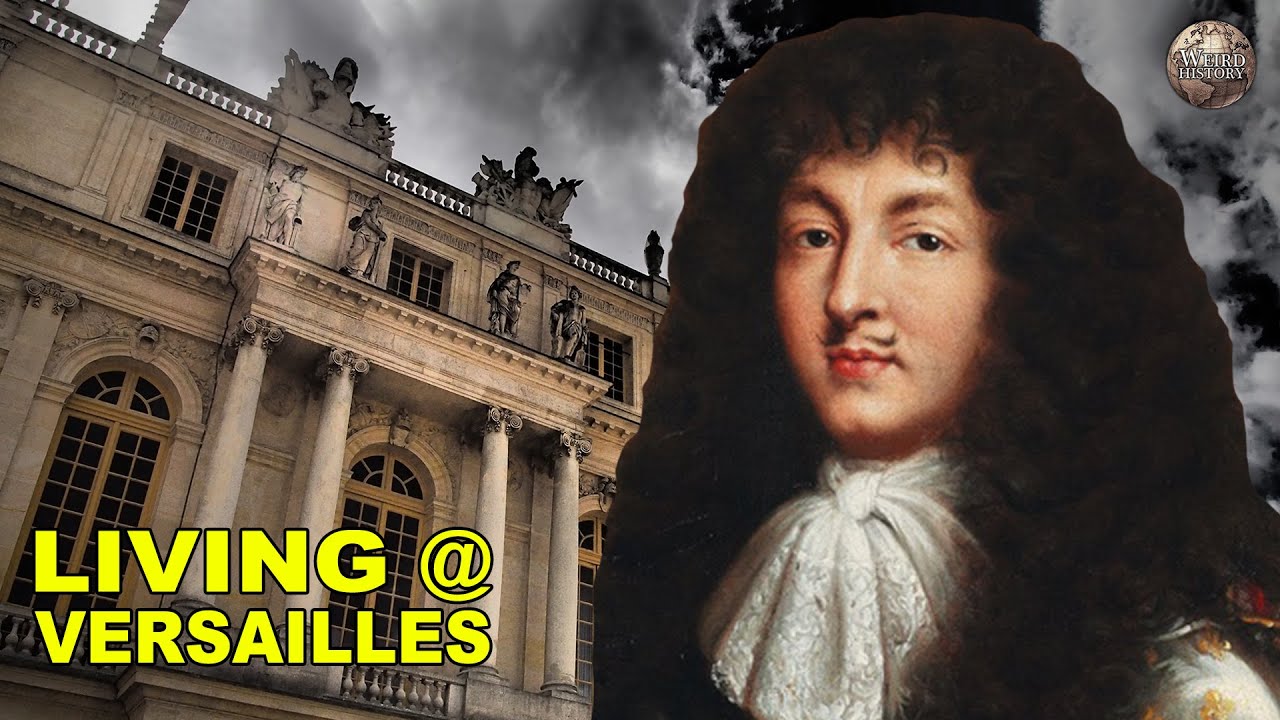
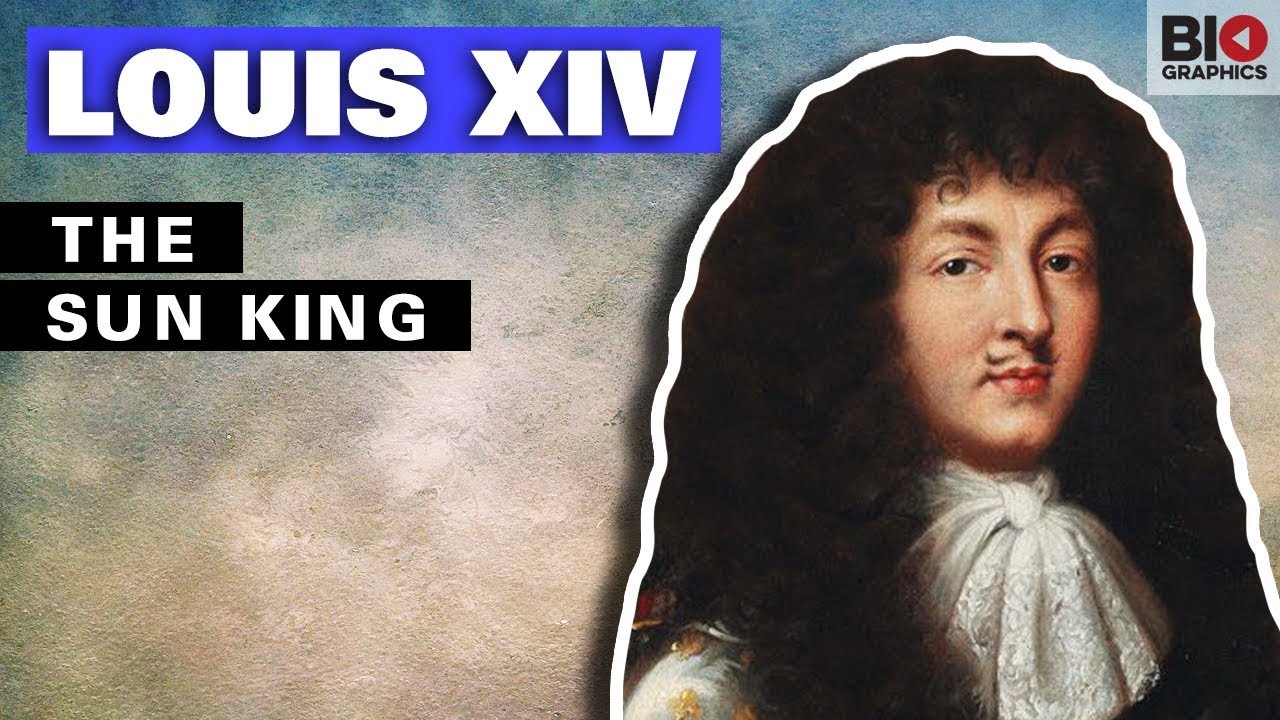
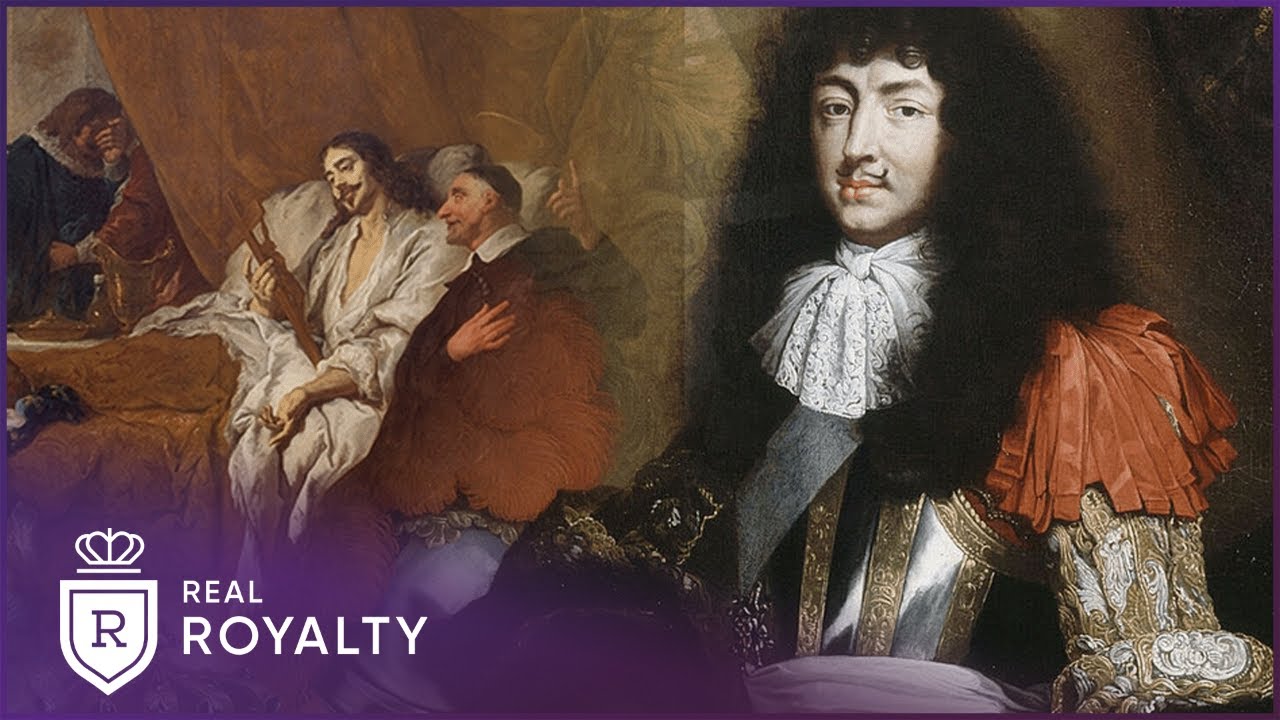
Louis XIV, known as the Sun King, ruled France by cultivating and controlling a royal cult centered around himself. The cult was carefully managed and, to no one's surprise, entirely excluded the nation's working class and poor. In fact, in 1682, Louis moved the capital to Versailles, a hunting lodge he owned outside of Paris.
It was from there that the monarchy would rule until 1789. At the highly isolated Versailles, the royals and their court became lost in a maze of protocol, ritual, and hedonism that almost completely cut them off from the day to day existence of regular Parisians. Finally, on October 4th, 1789, thousands of Parisian women marched the 12 miles to Versailles and demanded King Louis and the other royals returned to the city with them.
After 24 hours of protests, the king agreed to head back to gay Paris. Louis XVI was famous for being a faithful husband. However, his grandfather, Louis the XV, infamously, was not.
The French probably wouldn't have judged him too harshly for his infidelities, had these women been merely companions. But Louis had a frustrating habit of giving his mistresses official state power. One of those mistresses, known as Madame de Pompadour, became highly influential in Louis' politics and even advised him on several international issues.
In modern terms, it would be as if JFK made Marilyn Monroe the Secretary of State. The people of France saw Pompadour's undue influence as despotic. And their unhappiness began to ferment into a revolutionary spirit.
Marie Antoinette had some pretty expensive tastes. And to the people of France, their foreign-born queen became the personification of extravagance in the royal court. One of her pricey habits was a deep and abiding love of chocolate.
Many previous French royals were also chocolaholics. But Antoinette loved the stuff so much, she actually brought her very own chocolate chef with her from Vienna. He was given the title Chocolate Maker to the Queen.
And his entire job consisted of inventing new chocolate-centered recipes for her royal highness, like a French Willy Wonka. At the end of the 18th century, chocolate was becoming more widely available to the masses, but was still considered an elite treat. This is probably why it didn't do much for Marie's public image when it became known that she started each and every day with a steaming hot cup of cocoa with whipped cream.
Coupled with her expensive appetite for the latest fashions and a personal stylist whose sole job was to create over-the-top hairstyles, the queen became a public enemy. When Louis XVI ascended to the throne in 1774, he gave Marie Antoinette a small palace on the Versaille estate called Petit Triano. Sparing no expense, which seemed to be her typical MO, Antoinette had the palace, which had originally been built for Madame de Pompadour, completely redesigned to fit her own tastes and aesthetics.
Petit Triano became Antoinette's retreat from the confines of court life. The palace had an English garden and farm, where Marie could live out what she considered an ideal rural existence. Ironically, the very privacy and peace that she sought from her time at Petit Triano made her the target of even more criticism.
The public thought her retreats were tantamount to a rejection of her role in royal politics. They suspected she only wanted privacy, because she was likely up to no good. The behavior of the king and the royal family wasn't the only factor that brought on the revolution.
The overly favorable treatment of the French aristocracy, which was closely tied to the monarchy, was another contributing cause. In the centuries prior to the French Revolution, attacks known as taille came into being. And the responsibility for paying it fell on the shoulders of the peasants and the non-nobles.
While the specific laws and rules governing this tax changed over time, the one thing that never changed was that the aristocracy was exempted from paying it. It was a direct tax based on land ownership. But it was far from the only tax non-nobles were subjected to.
As for the aristocracy, all that money they saved on taxes was spent lavishly on masquerade balls, gambled away at card tables in casinos, and used to build magnificent estates. Not surprisingly, resentment towards the aristocracy grew and became a major reason for the advent of the Revolution. In 1778, the United States was deep into the American Revolution against Great Britain.
France, not being terribly fond of the British, recognized the US as a sovereign country and pledged to support them militarily. However, helping a disorganized band of upstart rebels take on the world's most formidable empire was not cheap. The continuation of the French and Indian War, a long-standing conflict with the British fought in the new world, cost the French 1.
3 billion livre, which today is equivalent to hundreds of billions of dollars. With the financial crisis of the 1780s still not over, support of the American cause sank France even deeper into debt. It became just one more grievance that led to revolution.
There were numerous reasons that led to the Revolution. However, not all of them were true. Conspiracy theories, gossip, rumors, and scandals were equally responsible for shaping public perceptions about the ruling class.
And by the late 1780s, those perceptions were anything but positive. One such rumor concerned the so-called Pacte de Famine. France had experienced frequent famines and food shortages.
And a conspiracy theory that explained it began to take hold. The theory held that the royal family was withholding food from the commoners and hoarding it for themselves and other elites. These chronic food shortages are perhaps what later led to the belief that Marie Antoinette had coldly dismissed the plight of her people with the words, "let them eat cake.
" However, while the hunger was real, the quote was not. It actually came from a book by the philosopher Jean-Jacques Rosseau, who attributed it to a young princess. Marie was only nine when the book was published.
So most likely, it wasn't her. Prior to the Revolution, France was a stratified society broken up into social classes known as estates. Built on the medieval era world order, there were three estates.
The first was the clergy. The second was the nobility. And the third was absolutely everyone else, from wealthy merchants to poor farmers.
When the king called upon them, which was admittedly rare, the three estates would convene as a sort of parliament. Such was the case in 1789, when a financial crisis finally moved Louis XVI to throw caution to the wind and call a meeting of the estate's general. It did not go well.
The third estate, who, don't forget, included the poor and downtrodden, attempted to seize more political influence and agency from the other two. The king, who was not having it, decided to do something incredibly petty. He physically locked the third of state representatives out of the meeting.
As you can imagine, they weren't happy. Their representatives reconvened at a nearby tennis court, where they vowed to write a constitution that would correct all of the wrongs that infected the ruling classes of France. While it's believed that Louis XVI had good intentions, he was not great at politics, often making decisions that were a bit tone deaf.
For example, take the case of Jacques Necker, the Minister of France, whom the king fired. The problem was that although Louis didn't realize it, Necker had become a hero among the common folk. The popular minister had championed several financial reforms and tried to communicate the state's financial situation to the populace at large.
The royals, for their part, decided to blame him for a mounting debt crisis. Marie Antoinette herself was one of his most formidable enemies. So when her husband dismissed Necker on July 11th, 1789, the French people did not take it well.
The move reinforced the growing sentiment that the king was corrupt. And just three days later, a group of Parisians stormed the Bastille, igniting the powder keg of revolution. When the revolution came, not every member of the French royal family was opposed to it.
In fact, at least one junior member of the royal Bourbon family was a very active participant. That man was Louis Philippe II, Duke du Orleans and Prince of the Blood. Prior to the revolution, Louis Philippe and his wife didn't have the best relationship with Louis XVI and Marie Antoinette.
At the same time, they were very popular with the common people of Paris. During the revolution, Louis Philippe and his wife threw their lot in with the revolutionaries and even provided direct aid to the infamous Jacobins. The loyalty Louis Philippe showed to the revolution and the people of France was, sadly, not enough to save him.
On the 6th of November, 1793, he would follow the rest of his family to the guillotine. Unlike his grandfather, who had a rep for being a self-interested hedonist, Louis XVI took his job as king seriously. Early in his reign, he showed great competence at the job.
But in the end, not so much. The only thing Louis proved to be truly effective at was motivating the people of France to end the monarchy once and for all. It is said that Louis, who was known to be quite shy, lacked the confidence in his own ability to make decisions and grew increasingly doubtful that he had what it took to solve France's complex problems.
He became overwhelmed and slowly withdrew from the political world. These characteristics are typical of depression, which has led some historians to suggest that Louis may have suffered from the condition. The people of France, however, didn't care much for the reasons behind Louis' failures.
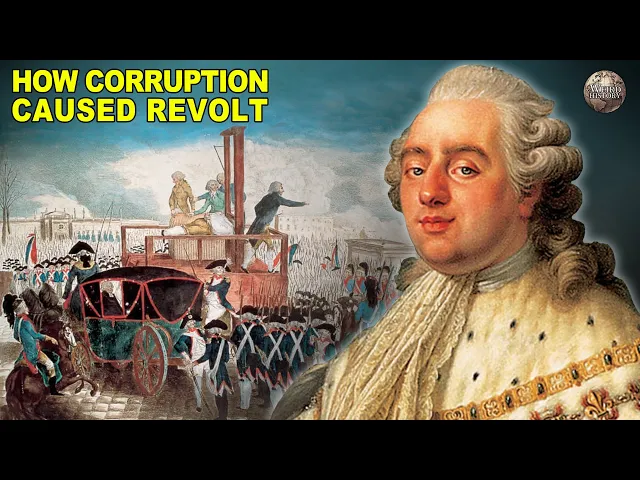
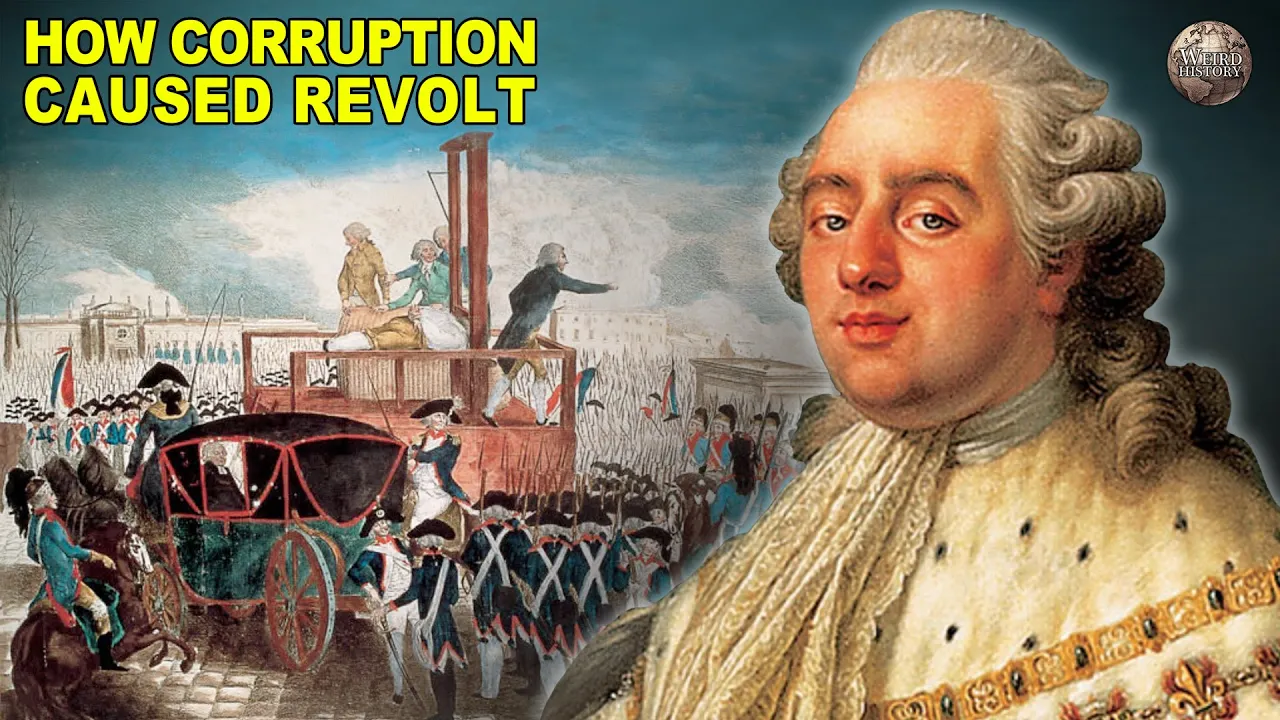
His introverted behavior won him few admirers and only convinced the public that he was unfit to rule. And on January 21st, 1793, Louis was beheaded at the Place de la Revolution. So what do you think?
Was the French Revolution worth the fight? Let us know in the comments below. And while you're at it, check out some of these other videos from our Weird History.