okay so welcome to this next video on uh coloral carcinoma where we are discussing the Vogal steam model for colon cancer okay so um so far we haven't even got past the first stage of the vogo steam model but that's okay because I want to explain uh the pathways involved in this in detail as well so that we can uh I want the video to stand alone basically I don't want you to have had to watch my other videos to understand it okay um so uh the dishevel um protein it when it's activated by wind
binding to the frizzled receptor and also this rrp45 receptor um that's going to um inactivate the beta caenan destruction complex and when the beta caenan destruction complex is inactivated beta cenin levels within the cytoplasma of the cell are going to go up beta cenin is then a what's known as a transcriptional co-activator so where should I write that transcriptional coactiv Ator and what that means is it's not a transcription factor in its own right instead what it does is it binds to transcription factors and Alters uh the function of those transcription factors so basically if
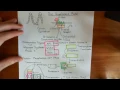
this is the nucleus of the cell let's say here I'll explain firstly what a transcription factor is give examples of transcription factors and then I'll show you how beta a transcriptional coact is going to alter the function of those transcription factors okay so basically in UK carotic cells uh Upstream of all genes you have what is known as a promoter region basically this isn't the case in Pro carots but in UK carots it is basically in front of all genes so let's say this is a gene here and we'll highlight it in green I think
so this is a gene okay in front of all genes or Upstream of all genes means is uh the technical term uh there is what is known as a promoter region so let's call this bit here the promoter region and we'll color that in Pink So Upstream of all genes there is a promoter region and the promoter region does not uh actually code for protein so it's the sequence of organic bases in this promoter region are not going to be used um to make protein from but the promoter region does affect the expression of this
Gene here meaning how much the gene product of this Gene do we actually make and the reason it does this well the reason it can do this is because in order to make the gene product of this Gene what needs to happen is that RNA polymerase needs to come bind to the promoter region and make its way along this DNA and copy uh the uh DNA onto a um complimentary piece of mRNA basically Okay so in order to get that to happen you need RNA polymerase to come and buy to this promoter region so if
the promoter region has high affinity for uh RNA polyas then RNA polymerase will bind here more often and you'll get more mRNA being produced and therefore if you get more mRNA you'll get more protein you'll get more of the gene product produced okay whereas if it's got a low Infinity for RNA polymerase you'll get less RNA polyas binding here less uh transcription of the and therefore less protein produced so uh the Affinity of the promoter region for RNA pimas controls the expression of this Gene basically and how much Gene product you actually produce so a
transcription factor is some molecule which binds to the promoter region here uh I'll do it in uh red and is going to alter um the Affinity of that promoter region for uh RNA polymerase basically and transcription factors can both increase the Affinity or decrease the Affinity I if they increase the Affinity They are promoting the expression of the Gene and if they decrease the Affinity they are going to repress the expression of the gene so this is a transcription Factor so transcription factors thereby are going to alter the expression of certain genes within um the
human genome basically and within that cell so they're very important therefore and can cause a lot of um a lot of Downstream effects now a transcriptional coactivator which is what beta CA is is something which can alter well which can bind to a transcription Factor like so and alter which promoter regions the um transcriptional sorry the transcription factor is going to bind to basically and also it can also alter um how it's How that transcription factor is going to affect those promoter regions are you whether it's going to promote the expression of the gene or
repress the um the um expression of the gene so basically transcriptional co-activators bind to transcription factors and alter their function basically transcriptional co-activators but they themselves without the transcription Factor they cannot bind to the DNA basically transcriptional co-activator right so beta ctin is what's known as a transcriptional coactivator so you might now wonder well which transcription factors does it bind to well it can bind to two transcription factors well two families of transcription factors namely it combined to t- cell factors which are a type of transcription factors usually abbreviated to tcfs okay and it can
also bind to uh lymphoid enhancer factors so lymphoid enhancer factors usually abbreviated to l e FS lymphoid enhancer factors uh SL lfs okay and basically when beta cenum binds to these transcription factors these tcfs or these lefs uh what it does is it Alters their function and now what's going to happen is those transcription factors with beta cium bound are going to uh make going to increase the expression of genes which are necessary to begin the process of growth basically so what this is overall going to do is it's going to promote the cell dividing
so this is going to promote the cell cycle so it's going to make the cell divide more rapidly so division is going to go up so that's overall what wind does now I didn't say that we were going to have a mutation in wind I said we were going to have a mutation in the denim matus polyposis coli now if we lost our fun all the function of this adenomatous polyposis coli here what would happen well you wouldn't be able to make any functional uh beta cium destruction complexes anymore beta cium would therefore not be
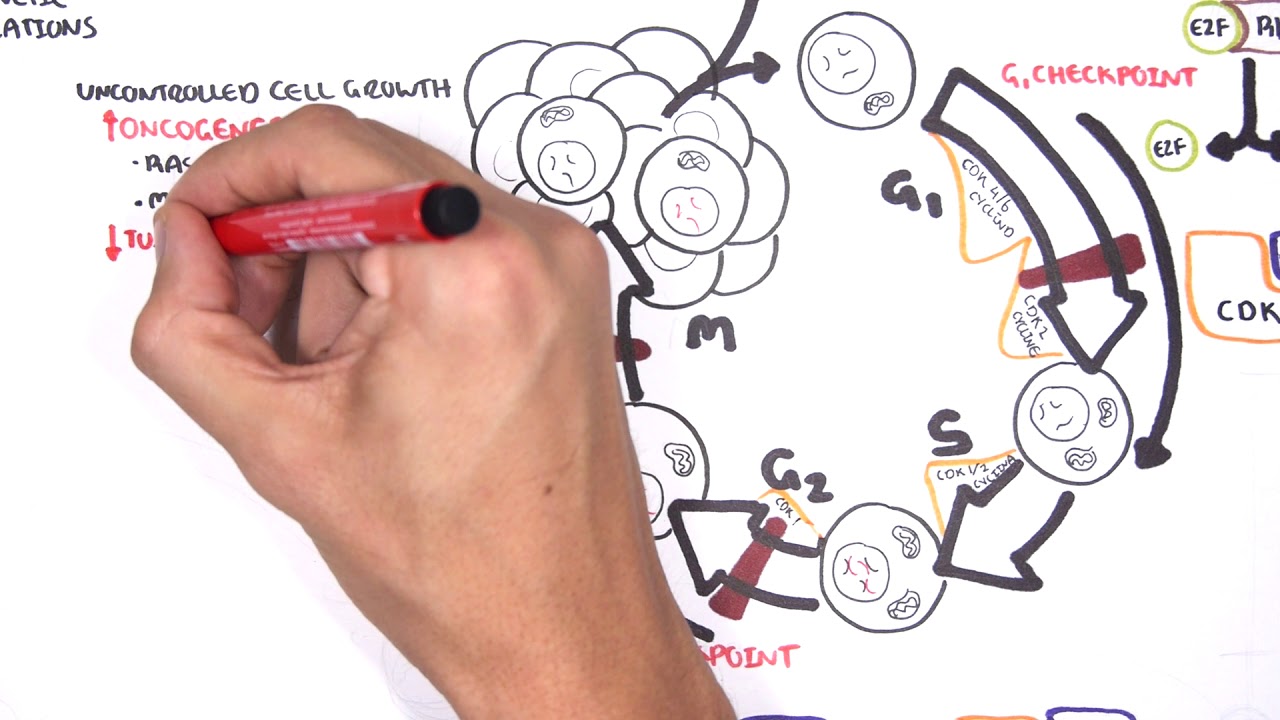
phosphorated and not be ubiquitinated and not be destroyed so beta cium would go up within the cytoplasma cell okay beta cium would then bind to its t- cell factors and its lymphoid enhan factors and increase uh the uh expression of genes which are going to move you from interphase of the cell cycle to the G1 phase so let me just give you a brief reminder of the phases of the cell cycle so a brief oh actually we're not we haven't got room down here we'll have to go on to the next page so briefly then
um interphase of the cell cycle is the portion where a cell is not actually dividing so it's not an active portion of the C cell cycle it's the portion where your colonic epithelial cell is perfectly happy basically and not dividing then when it receives growth stimulatory um stimulatory stimuli such as wi uh what happens is it moves into the G1 phase or the first growth phase of the cell cycle and in the first growth phase what is happening is it starts getting ready to divide so it produces a lot of the proteins associated with uh
replication of The genome uh and also it starts to produce uh a lot of duplicate proteins that are essential for the cell's metabolism so if you think about it if we're going to go from being one cell to being two cells then you're going to have to increase the amount of protein you have uh by two because uh you're going to have to have enough protein for both of the two daughter cells so uh the uh duplication of the essential proteins for life is is going to also happen in G1 phasee so you make a
lot of proteins in G1 phase you make proteins that are going to be needed by both of the daughter cells and you also make the necessary machinery for uh replicating the genome the next phase is what's known as S phase of the cell cycle and in this phase what happens is the genome is actually replicated so all the DNA within the cell divides okay well um it's replicated then the next phase after that that is what's known as G2 phase or the second growth phase and in this phase what happens is um you make more
of the proteins you that you're going to need for the two daughter Sal you you continue with the work of G1 phase where you were duplicating these um uh necessary proteins and also you're going to uh start getting ready for the mend phase of the cell cycle in which you're going to split the nucleus firstly and then split the cell and in order to do those processes you're going to need a lot of proteins and those proteins will be made in G2 phase then the final phase of the cell cycle is the m phase uh
which is the phase where firstly the nucleus divides into two because previously when you just copied the DNA what you had effectively was you had one nucleus with double the amount of DNA in so all of the chromosomes all 46 chromosomes have been copied so you've got a copy of every single chromosome well two copies of every single chromosome basically so what now needs to happen is first the a process known as mitosis happens in mphase and mitosis strictly means the division of the nucleus into two to produce two identical nuclei although people will use
mitosis to refer to the whole division of the cell to produce two genetically identical daughter cells okay and each of these nuclei will have a warmed copy of each of the 46 chromosomes okay and then finally the last phase of uh the M phase of the cell cycle is a process known as cytokinesis which is basically where the cell is going to actually divide into two da cells okay like so right and each of those daughter cells will have a single copy of each chromosome so that's the process of cytokinesis and what color should we
do M phase in and I've now run out of colors uh my blue pen has failed on me so I no longer have enough colors for all those six different phases so we have to have that in green again okay uh right so uh the activation of um the wi pathway basically moves you from interphase to G1 phase I it starts the cell cycle it kick starts the cell cycle and it's going to make the cell divide into two all right okay so we were thinking about what would happen if we had loss of function
of APC well it's going to cause uh AR rise in the level of beta cenin and then it's going to cause you to start you to move from this interphase to G1 phase which is what uh beta ctin in Bound to its t- cell factors or lymphoid enhancer factors are going to do so it's going to basically cause the cell to over divide basically okay uh so how do we get complete loss of APC well we'll talk about that in the next video