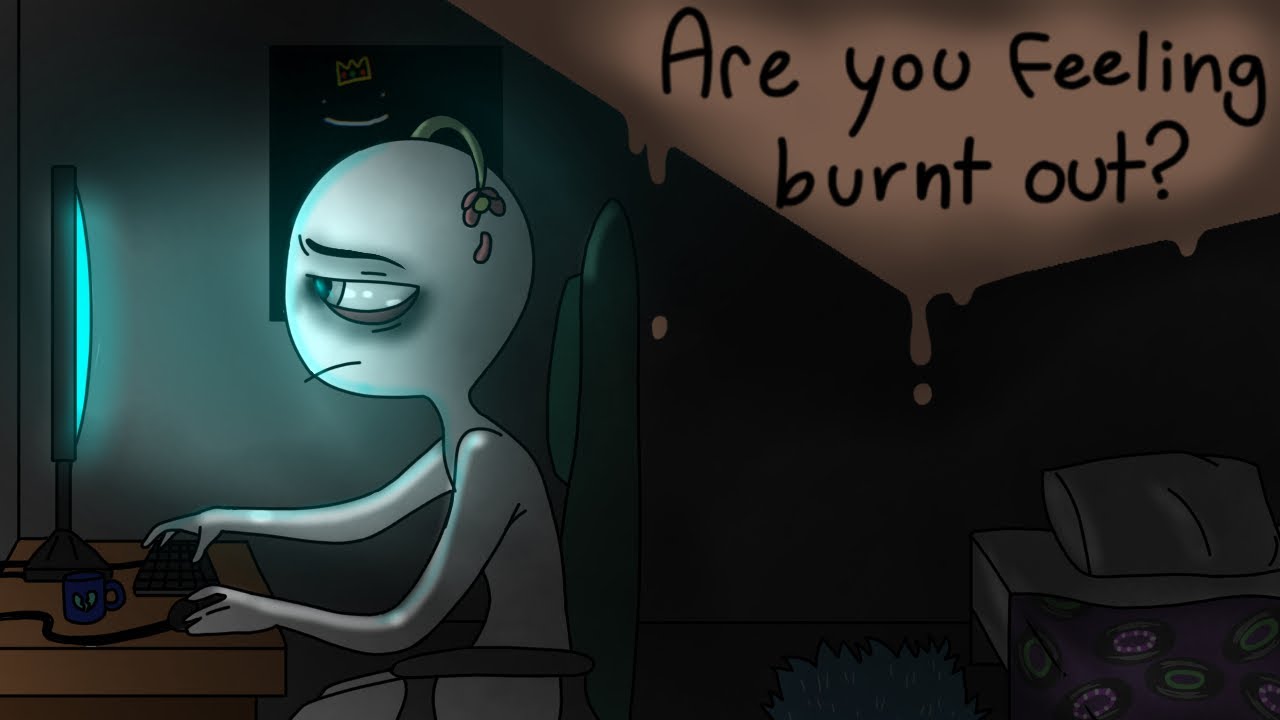
[Upbeat Music] Hey Psych2goers! Are you having trouble finding the drive to do things or feel that your energy levels are too low? With society becoming more fast-paced and productive, people are starting to normalize the habit of overworking.
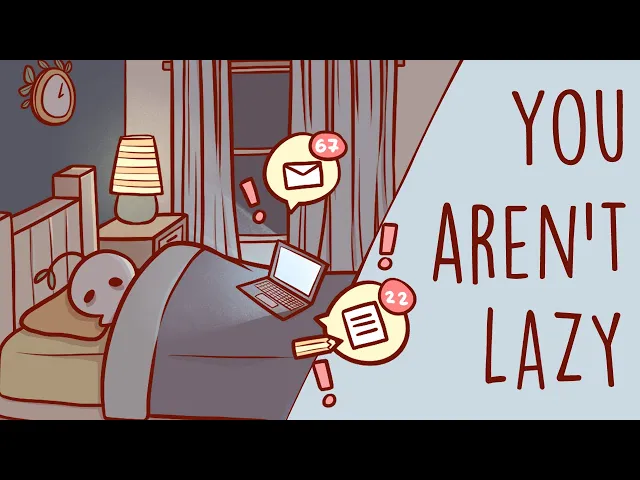
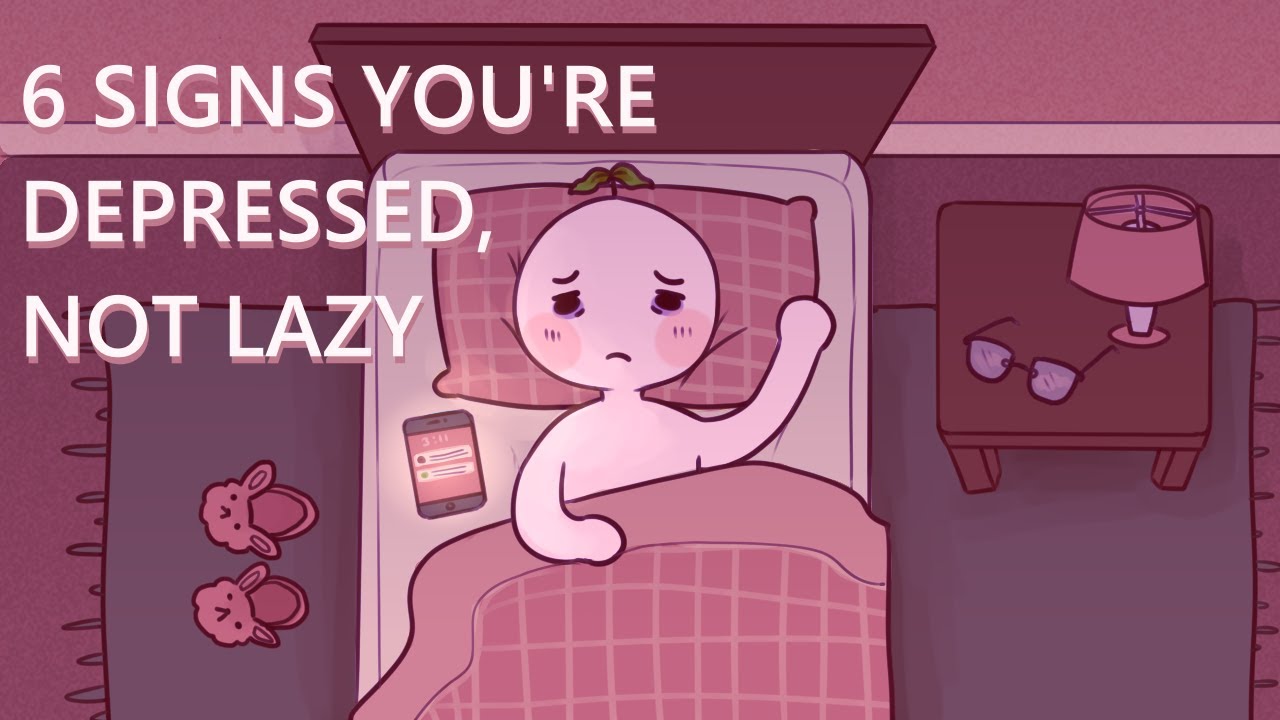
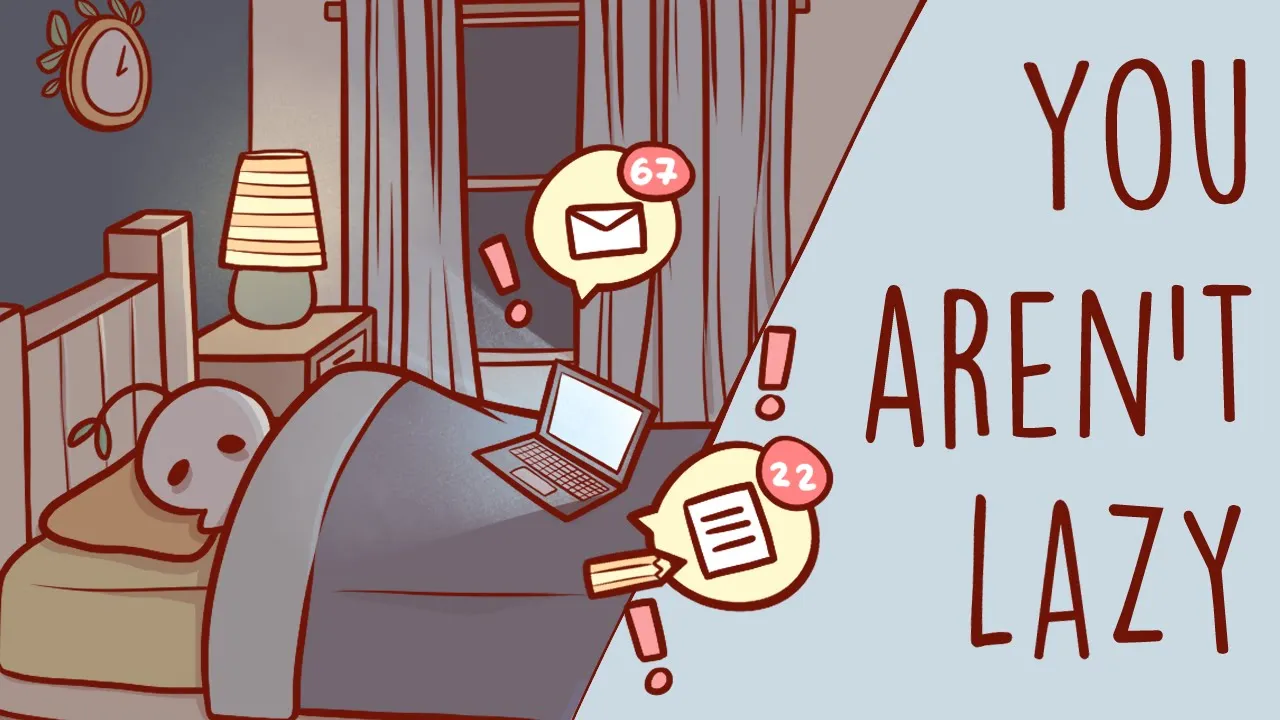
Because of this, people tend to confuse “mental exhaustion” with “laziness” since they both look similar on the surface level. But this leads to undesired interchangeability between these two terms that can cause people to inadequately address the issue, where people who are mentally exhausted feel guilty because they think they are just being lazy. So if you’ve been having a hard time concentrating and completing tasks, here are 6 signs you’re mentally exhausted, and not lazy.
Number One: You don’t feel motivated Do you get a feeling of hopelessness when thinking about the future? The main difference between someone mentally exhausted and someone who is lazy is that mental exhaustion feels numb and can make you start to not care about the consequences anymore. You may feel like the goals that you used to have and worked so hard for are no longer enough for you or struggle to get simple tasks or assignments done.
Unfortunately, this type of thinking and lack of motivation may end up affecting your studies or professional career in the long run. Number Two: You can’t focus or concentrate Have you been having trouble focusing when working on something? Perhaps you used to be very good at multitasking but now struggle to even read a book without having your mind wander around.
Or maybe you find it difficult now to complete a task that seemed effortless before. Having difficulty with concentration is one of the signs of mental exhaustion. By nature, the human mind has a limited capacity, and overloading it can lead to negative effects on the efficiency with which it performs its basic functions.
Number Three: Small tasks seem overwhelming Is it easy for you to get started on simple household chores? Another sign of mental exhaustion is when you start to find even small tasks to be overwhelming. You might struggle to vacuum the carpet, wash the dishes, or do the laundry.
The main reason for this, according to psychiatrist Margaret Seide, MD, is that simple tasks can sometimes feel like it involves a ton of steps. Your brain is simply too drained to do anything that takes even the slightest of effort. Number Four: You constantly dream and fantasize about a drastic change Do you often find yourself daydreaming about winning the lottery and taking a long vacation?
It’s safe to say that everyone has done this at least once. But, if you constantly find yourself fantasizing about a drastic change in your life, then you may be mentally exhausted. Constantly wanting to escape from your current situation may be a sign that you’re unhappy and unsatisfied with your reality.
Although this might seem harmless, the constant comparison that you’re making between that “ideal” scenario and your reality has the potential to worsen your overall mood in the long run. It may lead to thoughts that you’ll never be happy because of how far that ideal life seems, which may cause you to become unmotivated and unappreciative of the things that you have. Number Five: You get easily irritated Have you been feeling irritated by even the tiniest things lately?
This might be a telling sign that you’re mentally exhausted. You might find negativity all around you and constantly feel annoyed by the smallest things. The main reason for this, according to Seide, is that being mentally exhausted automatically puts you in a low-grade fight-or-flight mode.
As such, your mind and body are in a constant state of high-alert as it tries to fend off any potential dangers. This may be why you find even the smallest things or actions to be triggering and irritating. Number Six: Resting isn’t helping your energy levels Do you feel tired even after a good night’s rest?
This may be due to mental exhaustion. Good sleep is very important to ensure that you are physically and mentally well-rested. However, having a good sleep can only do so much for you when you’re mentally exhausted.
According to psychotherapist Joseph Zagame, LCSW-R, and clinical director of myTherapyNYC, the best way to deal with this is to set aside some time to process your feelings. This can be done by using a journal, a supportive friend, or a therapist, since they may be able to help make you feel better in ways that sleep can’t. Did you relate to any of the signs we’ve mentioned?
Let us know in the comments below. If you find this video helpful, be sure to like, subscribe, and share this video with those who might benefit from it, and don’t forget to hit the notification bell icon to get notified whenever Psych2Go posts a new video. The references and studies used in this video are added in the description below.
Thanks for watching and see you in our next video! Thanks for watching! Video by Psych2go.