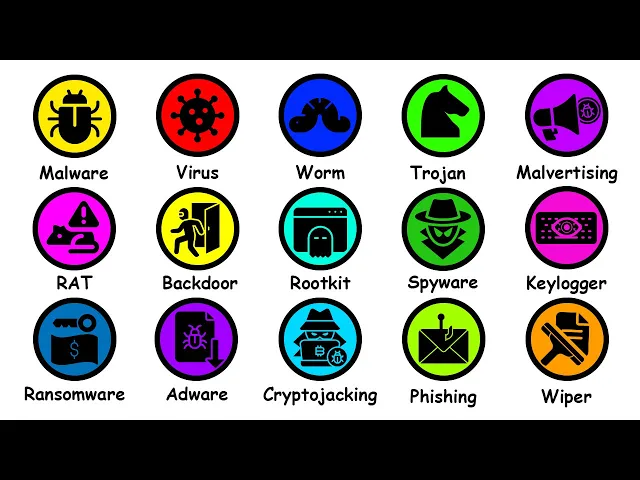
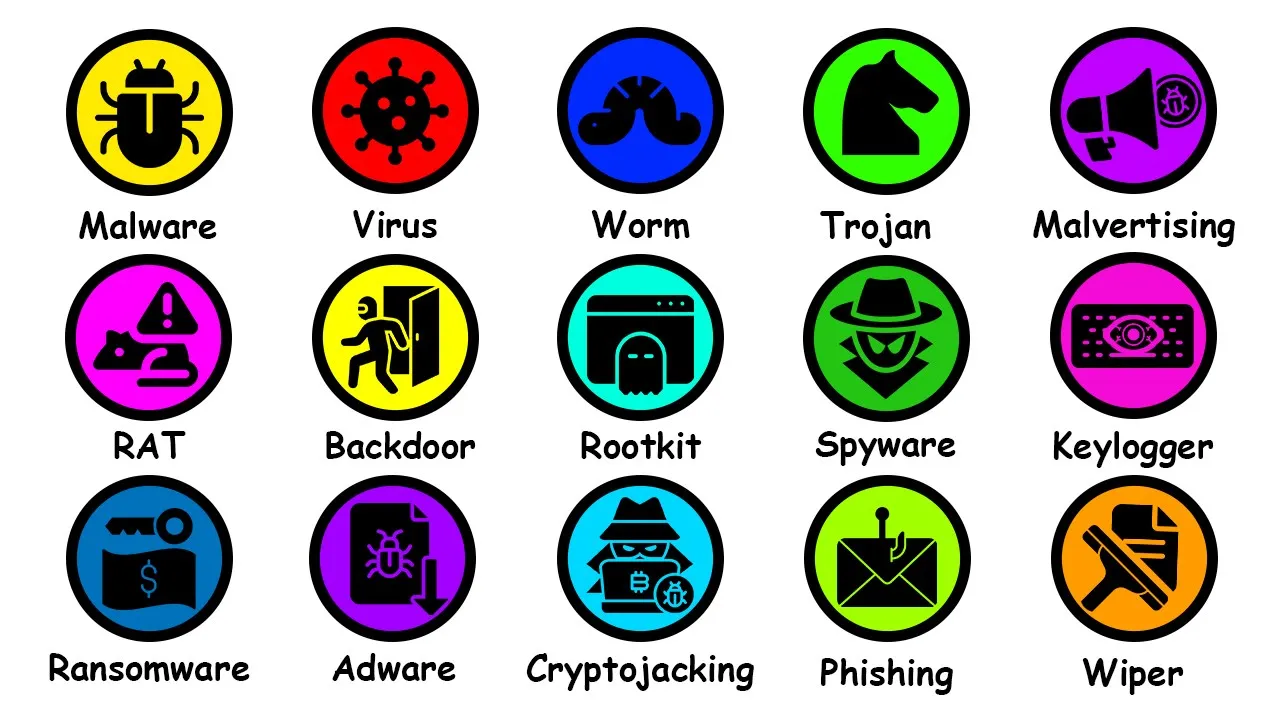
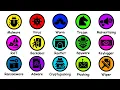
malware. Everything that is intentionally designed to cause disruption to a computer, leak private information, gain unauthorized access to information or systems, deprive access to information, or which unknowingly interferes with the user's computer security and privacy, is considerable as a malware. Virus.
A computer virus is a type of malware that when executed replicates itself by modifying other computer programs and inserting its own code into those programs. If this replication succeeds, the affected areas are then said to be infected. Just like with biological viruses, [music] viruses generally require a host program writing its own code into it.
And when the host program runs, executing its own code first, it causes infection and damage. It usually causes damage due to causing system failure, corrupting data, wasting computer resources, increasing maintenance costs, or stealing personal information. Worm.
A computer worm is a standalone malware computer program that replicates itself in order to spread to other computers. Most of the time, it uses a computer network to spread itself, relying on security failures on the target computer to access it. When these new worm invaded computers are controlled, the worm will continue to scan and infect other computers using these computers as hosts.
And this behavior will continue exponentially increasing its replication. Worms almost always cause at least some harm to the network, even if only by consuming bandwidth, whereas viruses almost always corrupt or modify files on a targeted computer. Many worms are designed only to spread and do not attempt to change the systems they pass through.
Trojan. A Trojan horse is any malware that misleads users of its true intent by disguising itself as a standard program. Trojans are generally spread by some form of social engineering.
For example, when a user is duped into executing an email attachment disguised to appear innocuous or by clicking on a fake advertisement. The damage done by a Trojan horse depends on the specific malware. As this term only explains how it enters a computer.
Unlike computer viruses and worms, Trojans generally do not attempt to inject themselves into other files or otherwise propagate themselves. Malvertising. It's the use of advertising on highly reputable websites to spread malware.
This is done to push their attacks to web users who might not otherwise see the ads due to firewalls or more safety precautions in general. They can be easily spread across a large number of legitimate websites without directly compromising those websites. The interesting thing about infections delivered through malvertising is that they do not require any user action like clicking to compromise the computer and it does not exploit any vulnerabilities on the website.
RAT it stands for remote access Trojan and it's a type of malware that remotely controls a computer through the internet. When your computer is ratted, the hacker can actually move your mouse, type stuff, look at your webcam, and record it, etc. Most of the time, however, it stays silent and acts as a key logger to gain your personal information.
Backdoor. A backdoor refers to any method by which authorized and unauthorized users are able to get around normal security measures. Once they're in, cyber criminals can use a backdoor to steal personal and financial data, install additional malware, and hijack devices.
Rootkit. A rootkit is a program or a collection of malicious software tools that give a threat actor remote access to and control over a computer. Although this type of software has some legitimate uses, such as providing remote enduser support, most rootkits open a back door on victim systems to introduce every type of malware or to use the system for further network security attacks.
Root kits often prevent detection by deactivating anti virus softwares. Removal can be complicated or practically impossible, especially in cases where the rootkit resides in the kernel, which is a program at the core of a computer's operating system and generally has complete control over everything. Spyware.
It's a type of malware that infects your computer, and secretly gathers information about you, including the sites you visit, the things you download, your usernames and passwords, payment information, and the emails you send and receive. After this information is gathered, it's usually sent to a cyber criminal who may sell it, use it, etc. Key logger.
A key logger is a malware that secretly records every key pressed on a keyboard and sends it to the cyber criminal. Data, mostly passwords and confidential information, can get stolen if there's a key logger on a computer. It's a type of spyware.
Ransomware. A ransomware is a malware that permanently block access to the victim's personal data and computer unless a ransom is paid. While some simple ransomware may lock the system without damaging any files, more advanced malware uses a technique called cryptoviral extortion.
It encrypts the victim's files, making them inaccessible, and demands a ransom payment to decrypt them. Fileless malware. It exists exclusively as a computer memory based malware, for example, in the RAM, so it doesn't write any part of its activity to the computer's hard drive.
This makes it harder to detect and leaves little evidence. They are used by hackers for quick and stealthy operations, such as gathering data quickly since most of them get deleted once the computer gets rebooted. Adwear.
This term is usually used to describe malware that installs itself on your system without your knowledge, often when downloading other software and displays advertisements when the user browses the internet. Some of them also act as spyware by collecting data to be sold or used for targeted advertising. The most recognizable ones open a pop-up in an unclosable window.
Ram scraper. It's usually used to describe the type of malware that installs itself on point of sale systems to collect personal information like credit card numbers and pins of consumers. DDoS attack.
It happens when the hacker tries to make a computer or connection unavailable, and it's usually done by flooding the targeted computer or resource with superfluous files in an attempt to overload them and prevent some or all legitimate requests from being fulfilled. In a DDoS attack, the incoming traffic flooding the victim originates from many different sources, which most of the time are other infected computers used as bots in a botnet. Browser hijacking.
It's unwanted software that changes a web browser settings without a user's permission to inject unwanted ads, change the homepage, or even the search engine as a whole, installing its own. Many browser hijacking programs are accidentally installed while installing other software that has them as a bundle in their installer. And they often come without uninstall instructions or are presented in a way that is designed to be confusing for the average user to trick them into installing unwanted extra software.
Cryptojacking. Cryptojacking is the act of secretly exploiting a computer to mine cryptocurrencies. Its goal is to stay as silent as possible and mine as many coins as it can for profit.
If your computer becomes a victim of this practice, it greatly slows down and risks breaking some of its hardware in the long run. Rogue security software. It's a form of internet fraud that misleads users into believing there is a virus on their computer and aims to convince them to pay for a fake malware removal tool that actually installs malware on their computer.
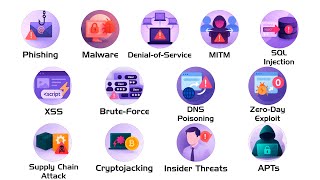
It's usually spread through malvertising. Fishing. It's a scam where attackers deceive people into revealing sensitive information or installing malware.
Most of the time, it's done by email where the attacker acts as a reputable source such as your bank and sends the victim to a website that completely mirrors the real one. Once the victim logs in using their password, it gets sent to the attacker. It can also be perpetrated through phone calls where the attacker spoofs his number to appear as if it is coming from a legitimate institution or through SMS.
Hybrid malware. This term refers to the contemporary use of two or more types of malware by an attacker in a single attack. Most of the time, these combinations consist of Trojans and worms or adwares and viruses.
Brute force attack. It consists of an attacker submitting many passwords or passphrases with the hope of eventually guessing correctly. The attacker systematically checks all possible passwords and passphrases until the correct one is found through automated software.
This attack is more efficient with shorter and simpler passwords, while longer passwords might take hundreds of years to be cracked. It's why on most websites, when you fail to enter the correct password, it blocks your account or system for a short period of time. Wiper.
A wiper is a class of malware intended to erase a computer's memory against the user's will, destroying all useful information in the process. Social engineering. This one isn't a technical malware or virus, but it's a very widespread method to install them or to gain confidential information without installing anything.
It's the psychological manipulation of people into performing actions or divulging confidential information. Fishing is an example of social engineering.