In 2023, China filed 1. 6 million patents. The United States filed 600,000.
China has been the world's number one patent filer since 2019, and the gap is widening. If you've been told the Chinese can't innovate, that they only copy and steal Western ideas, how do you explain this? How does a nation supposedly built on imitation lead the world in patents?
How does a country of copycats file nearly three times more patents than America? Here's the truth. Everything you know about Chinese innovation is wrong.
And I'm going to show you exactly why. If you want to understand the real story behind these numbers, hit like and subscribe because what you're about to learn will change how you see the future. Now, before we go any further, I want to acknowledge something important.
The stereotype that Chinese companies can't innovate didn't come out of nowhere. It has roots in reality. And if we're going to understand why it's wrong today, we need to understand why it felt so right for so long.
Let me take you back to the 2000s. If you walked through the electronics markets of Shenzhen back then, you'd see something remarkable and frankly a little embarrassing. Fake iPhones everywhere.
Not just cheap knockoffs, but phones that looked almost identical to the real thing, complete with an Apple logo. Louis Vuitton bags that cost $20. Rolex watches for 50.
This was the era of Shanzai, a Chinese term that literally means mountain stronghold, but came to mean counterfeit. And it wasn't just a few rogue factories. This was an entire ecosystem built on copying Western products and selling them at a fraction of the price.
So when people say the Chinese can't innovate, they're remembering this. And I get it. That image is powerful.
It's hard to shake. But here's what's interesting. This phenomenon wasn't unique to China.
Every single rising economic power in history went through this exact same phase. Let me give you some context. In the early 1800s, American textile manufacturers traveled to Britain, memorized the designs of British looms, came home and built identical machines.
Britain was furious. They called Americans pirates and thieves. Charles Dickens himself toured America and was outraged that his books were being printed without his permission, without any royalties.
The American government didn't care. They were too busy building their industrial base. Fast forward to the midentth century, Japan.
After World War II, Japanese companies were known for one thing, cheap imitations. Made in Japan was a joke, a label that meant low quality. Sony started by literally copying American transistor radios.
Toyota studied Ford's assembly lines and replicated them. But Japan didn't stay there. By the 1980s, they were out competing America in cars, in electronics, in manufacturing efficiency.
They learned, then they innovated, then they led. This is the pattern. Every major power starts by learning from whoever came before them.
The question is never whether they copy. The question is whether they evolve beyond it. Now, there's a second reason this stereotype persists, and it's more insidious.
intellectual property theft. Yes, it happened. Yes, there were high-profile cases, Chinese hackers stealing blueprints, employees taking trade secrets back to Chinese competitors.
And Western media amplified every single one of these stories. The narrative became China doesn't invent, China steals. And that narrative stuck even as the reality on the ground was rapidly changing.
The third reason is more subtle and it's cultural. In Confucian philosophy, there's a deep respect for learning from masters. You study the classics.
You imitate the techniques of those who came before you. In the West, we see this as a lack of originality. But in Chinese culture, it's the foundation of mastery.
You learn the rules before you break them. This created a fundamental misunderstanding. Westerners saw imitation and assumed stagnation.
What they missed was that this was preparation, not limitation. So, yes, the stereotype had truth. But here's what we got wrong.
We assumed copying was a permanent condition. We assumed it was cultural. We assumed China would always be one step behind.
And that's where we made our biggest mistake. Because here's the thing, every great power starts by learning. Then they adapt.
Then they innovate. Then they lead. America did it.
Japan did it. And now China is doing it. The only difference is the speed.
What took America a century and Japan 50 years, China has done in 30. But there's one more problem we need to address, and it's arguably the biggest one. We've been measuring innovation wrong this entire time.
Let me ask you a question. When you think of innovation, what comes to mind? If you're like most people in the West, you probably think of the light bulb moment.
Thomas Edison in his lab. Steve Jobs unveiling the iPhone. Elon Musk launching rockets.
The genius inventor. The breakthrough idea. The thing that didn't exist before and now changes everything.
We celebrate zero to one innovation. The creation of something entirely new. And that makes sense.
That's the story we've been told our entire lives. Innovation equals invention. If you didn't invent it first, you're not an innovator.
You're just a follower. But here's the problem with that definition. It's incomplete and it's caused us to completely misunderstand what's happening in China.
Let me introduce you to a different framework. Think of innovation on two axis. On one axis, you have breakthrough innovation.
Going from zero to one, inventing something that didn't exist. On the other axis, you have deployment innovation. Going from one to n, taking an idea and scaling it, optimizing it, making it accessible to millions or even billions of people.
The west is obsessed with the first axis. We worship the inventor. But China has mastered the second.
And here's what we missed. Deployment innovation is just as valuable and in many cases more impactful than breakthrough innovation. Let me give you a concrete example.
In 2011, a Chinese company called Tencent launched an app called WeChat. Now, at first glance, this looked like a messaging app. Nothing revolutionary.
WhatsApp existed. Facebook Messenger existed. But watch what happened next.
By 2013, WeChat integrated mobile payments. You could send money to friends, pay for groceries, split a dinner bill, all inside the chat app. In 2014, they added ride hailing, then food delivery, then utility bill payments, then doctor appointments, then government services.
WeChat became a super app, an entire digital ecosystem inside a single interface. Meanwhile, what was happening in the west? Facebook Messenger added payments in 2015, 2 years after WeChat.
Apple Pay launched in 2014, a year after Alipe made mobile payments mainstream in China. And even today, western apps are still siloed. You use one app for messaging, another for payments, another for ride hailing.
The super app model that WeChat pioneered in 2011 still doesn't exist at scale in America or Europe. This is deployment innovation. Tencent didn't invent messaging.
They didn't invent mobile payments, but they combined these technologies, optimized them for a massive market, and scaled them faster than anyone thought possible. And in doing so, they created something that functionally didn't exist anywhere else in the world. Here's another data point.
In 2023, 86% of smartphone users in China use mobile payments regularly. In the United States, that number was 29%. Let me say that again.
86% versus 29%. China didn't invent the technology, but they deployed it so effectively that it became ubiquitous. While the West is still fumbling with credit cards or look at electric vehicles, the West loves to talk about Tesla.
And yes, Tesla is an incredible company. They pioneered the modern EV. But here's the question.
Why does America have one major EV company while China has over 50? Why are Chinese EVs now outs selling Western EVs in markets across Southeast Asia, Europe, and Latin America? Because China mastered deployment.
They built the supply chains, the battery factories, the charging infrastructure. They scaled production at a speed that makes Western automakers look slow. This is what I call deployment innovation, and it's not less valuable than breakthrough innovation.
In many ways, it's more valuable because an idea that stays in a lab helps no one. An idea that reaches a billion people changes the world. Now, here's where it gets really interesting.
For the longest time, the West dismissed this. Oh, China is good at copying and scaling. We said, but they can't do the hard stuff.
They can't do breakthrough innovation. They can't go from zero to one. That was our comforting narrative.
We could stay superior in our minds even as Chinese companies were out competing us in market after market. But here's the thing, deployment innovation wasn't the end goal. It was the training ground.
And what China learned from mastering deployment, speed, efficiency, scalability, ruthless optimization is now being applied to breakthrough innovation. And that's where the story gets really interesting. If this framework is helping you see innovation differently, do me a favor.
Hit that like button and subscribe because what comes next is going to challenge everything you thought you knew about who leads in technology. So deployment innovation is impressive, but the real question is, can China do breakthrough innovation? Can they go from zero to one?
Can they invent something the world has never seen before? Let me show you the evidence. And I'm warning you now.
This is going to be uncomfortable if you still believe the old narrative. First, let's go back to those patents. 1.
6 million in 2023. Now, you might say quantity doesn't equal quality. Fair point.
So, let's look at quality. PCT patents. That's the patent cooperation treaty, the gold standard for international patents.
China filed more PCT patents than the United States for the first time in 2019. And the gap is widening. In AI alone, Chinese firms filed 30% more patents than American firms in 2023.
In green technology, it's 40% more. In battery technology, it's over 50% more. This isn't just volume.
This is leadership in the most critical technologies of the 21st century. But patents are just numbers on paper. Let me give you something more tangible.
Let's talk about algorithms. You know Tik Tok, right? The app that's completely dominated social media, especially among young people.
The average user spends 95 minutes per day on Tik Tok. Instagram, 51 minutes. Facebook, even less.
Why? Because Tik Tok's recommendation algorithm is better. It's not a little better.
It's dramatically better. It learns what you like faster than any Western platform. It keeps you engaged longer than any Western platform.
Bite Dance, the company behind Tik Tok, didn't copy this from anyone. They built something that Facebook with all its data and all its PhDs couldn't replicate. Or take Deep Seek, a Chinese AI lab.
In 2024, they released an open-source language model that performs comparably to GPT4, but it's more efficient. It runs on less computing power, which means it's cheaper and more accessible. Western AI labs are still trying to figure out how they did it.
This isn't copying. This is leaprogging. Now, let's talk hardware.
DJI. If you've ever seen a drone, there's a 70% chance it was made by DJI. Not 30%, not 50%, 70% they own the global drone market.
And it's not because they're cheaper, although they are. It's because they're better. Their stabilization technology, their camera systems, their flight controls.
No Western competitor comes close. Not even close. Or look at electric vehicle batteries.
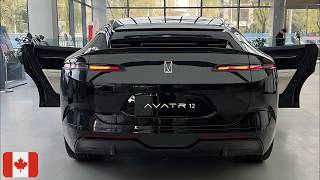
Everyone talks about Tesla. But here's what they don't tell you. BYD, a Chinese company, developed the blade battery.
It's safer than anything Tesla uses. There's a test called the nail penetration test. You drive a nail through a battery to see if it catches fire.
Tesla's batteries, they fail. BYD's blade battery passes. No fire, no explosion, and it's cheaper to produce.
KTEL, another Chinese company, is leading the world in solidstate battery development, the next generation of EV technology. Panasonic and LG, the old leaders, are scrambling to catch up. While Western companies were debating whether EVs were viable, China was building the supply chains.
While Western governments were offering subsidies, China was deploying charging infrastructure. While the West was arguing about climate policy, China became the world's largest EV market and the world's largest EV exporter. The tortoise didn't just catch the hair, the tortoise passed it.
And it's not just consumer technology. Let's talk infrastructure. 5G.
Huawei holds more 5G patents than any other company in the world. More than Nokia, more than Ericson, more than Samsung. And China deployed 5G faster than any other country.
By 2023, China had over 3 million 5G base stations. The United States around 200,000. That's not a typo.
15 times more quantum computing. In 2020, a Chinese team achieved quantum supremacy with a photonic quantum computer called Ju Jang. It performed a calculation in 200 seconds that would take the world's fastest supercomput 2.
5 billion years. Google achieved quantum supremacy first, but China's version was faster and used a completely different approach, proving they're not just following, they're pioneering space technology. China built its own space station, Tingong.
They've landed rovers on Mars and the far side of the moon, something only they have done. While NASA relies on private contractors and political budgets, China's space program is methodical, well-funded, and accelerating. So, here's the question.
This isn't about whether China can innovate anymore. The question is, can we keep up? Because while we were telling ourselves comforting stories about copycats and intellectual property theft, China was building.
They were investing. They were deploying. And now they're leading not in everything, but in enough places that we can't ignore it anymore.
And here's why this happened. It's not magic. Its strategy.
China has been investing 2. 5% of its GDP into research and development every year. That's half a trillion dollars annually.
They've built a talent pipeline. Chinese students who studied at MIT, Stanford, Cambridge, they're going home now. They're called sea turtles because they return.
And they're bringing Western knowledge, western networks, and Chinese speed. The Chinese government identified strategic technologies, AI, quantum, biotech, green energy, and poured resources into them, not through bureaucracy, but through competition. Hundreds of companies fighting to be the best, funded by both state and private capital.
This is not the Soviet model. This is not a command economy that stifles innovation. This is state-directed capitalism with Chinese characteristics.
And whether we like it or not, it's working. So the question isn't whether China can innovate. The data has answered that.
The question is what do we do now? Let's step back and see the full picture. We started with 1.
6 million patents filed by China in 2023. We explored deployment innovation and how China mastered scaling ideas faster than anyone else. Then we examined breakthrough innovation, the algorithms, the hardware, the infrastructure, proving China leads in technologies defining this century.
What does this mean for business investment policy? Three major implications. Three bombs most decision makers ignore.
Bomb one, underestimate Chinese innovation and you lose billions. Amazon tried competing in China and failed, underestimating Alibaba and JD. com.
Uber burned billions, then sold to DD. These were some of the world's most successful companies and they lost because they assumed Chinese competitors were second rate. Look at investment.
How many Western investors missed BYD, missed NIO, dismissed Chinese EVs as cheap Tesla knockoffs? BYD is now worth more than Ford and GM combined. Buffett invested in BYD in 2008 when everyone else laughed.
He made billions. Those clinging to the copycat narrative missed one of the decade's biggest opportunities. If you're a CEO, fund manager, or analyst still operating with a 2005 mental model, saying China can't innovate, you're setting yourself up for failure.
Competitors who update faster will take your market. Bomb 2. The innovation paradigm shifted fundamentally.
For years, the narrative was the West does breakthrough. China does deployment. We invent, they scale.
That made us feel superior. It's over. China now does both.
They deploy at unprecedented speed and pioneer breakthroughs in AI, quantum computing, batteries, green energy. Western companies remain slow. Bureaucratic approval processes.
Corporate cultures punishing failure. To compete, we must learn deployment speed. move faster from prototype to product and stop dismissing Chinese companies as followers.
The firms copying 10 years ago are pioneers now. Bite Dance didn't copy Facebook. Facebook desperately copies Tik Tok.
BYD didn't copy Tesla. Western automakers study BYD's vertical integration. The playbook flipped.
Bomb three. We're heading toward a bipolar innovation world with enormous geopolitical consequences. The US and China are technologically decoupling.
Two separate ecosystems forming. Different standards, supply chains, platforms. The global south must choose.
American technology with political conditions and higher prices or Chinese technology. Cheaper, faster, fewer strings. This is happening now.
Africa builds digital infrastructure with Huawei. Southeast Asia adopts Chinese mobile payments. Latin America imports Chinese EVs and solar panels.
The global south votes with purchasing decisions, choosing cost effectiveness over ideology. If the West doesn't adapt, we lose geopolitical influence. The risk of complete innovation, cold war, fracturing the world into incompatible systems is very real.
That's lose-lose for everyone. Here's the synthesis. This isn't China winning and America losing.
Innovation isn't zero sum. One side's success doesn't mean the other's failure. This is about updating our mental maps.
For decades, we assumed the West is innovation's natural center. Everyone else plays catch-up. That assumption is no longer accurate.
Clinging to outdated world views is actively dangerous for strategic decisions. Back to where we started. 1.
6 million patents in one year. Not anomaly. The new normal.
China isn't fumbling toward modernity. It's a technological superpower shaping the future in real time. Is China perfect?
No. Massive challenges, demographic crisis, mounting debt, environmental degradation, political risks. But to claim they can't innovate, data contradicts that evidence is overwhelming.
Final question. Who writes the 21st century innovation playbook? Will it be collaborative?
West and China competing but learning, pushing each other to solve humanity's challenges, or conflictual, two incompatible worlds barely communicating. That answer shapes the next 50 years. It's being determined now through decisions we make, assumptions we challenge, humility we bring to understanding a changing world.
If this changed how you think about China, innovation, the future, hit like, subscribe, comment below. What do you think about this race? Optimistic about collaboration, worried about conflict.
What should the West do differently? I read every comment. Respond to thoughtful insights.
This conversation is too important to have alone.