I always wondered to myself is there something that helps the entrepreneurs that succeed that they have which other entrepreneurs don't is it something they know is it how they run their businesses is it the people they hire is it where they went to school is that their socialization their background their education their mental spaces what is it that makes the entrepreneur succeed welcome to my master classes where I share with you everything you need to know about how to become a high-growth high scale entrepreneur I'm joined by guests we break down the myths the ideas
the lengths the legends everything you need to know to become a high-growth entrepreneurs Warren this is the high performance zone [Music] [Applause] yeah [Applause] [Music] discussion is this but secondly the very which mean I think for us especially to identify and consider Ponte having cattle wonder it's the processing of have a simple thing of just washing an orange or whatever comes from the soil packaging it having a packaging company then eventually moving it all the way through to retail those are things that and that's a new economy that can happen for black people when that
does happen but part of that and the big unlock has to come from the ownership of the land to be able to make it productive but also appreciating that that's not weight stuff and in that in fact the the the money can be made throughout the value chain and as the land is coming be prepared to either be a processor to be a distributor to be a logistics company owner whatever it is to your point drive so imagine imagine the mineral mining resource something something which is a transformation at first past I go back now
probably about 95 96 because they passed it actually before the B II Act was promulgated but when that law was passed what actually happened was a couple of guys went and got shares at mines which they did do yeah what didn't happen was nobody built a a logistics business to move the goods from the mine to Richards Bay nobody thought about how do we take call from Emily Haney to richard space you can export it because there's a business there makes sense this I think this whole thing about for me value chain is as an
entrepreneur you got to ask yourself if you know what the value chain of your business is yeah so if you're you know manufacturing a Jersey where'd you get the material from and the people who got the material where did they get that material from and the people who made the material that made the material what was the input where did they get that from who used vaseline this morning did you know that all of us are sole shareholders because Vaseline is petroleum jelly and sessile makes the input that goes into show you when you get
home and you use handy Andy sessile use jig Sasso you go and wash with that green paw you know the sunlight all of you here do don't act like you don't don't be out here in Sandton act like you know what I'm talking about you know you're not the one that you put out in the window then you wait for the side you like yes sir hi Camilla [Applause] well our furniture setting up I'm probably actually saw the best liver and the best chicken comment so hands up if you think you should give us a
free meal just a test I don't mind giving you're female because I know you're going to buy the next time so looking at it in terms of the value chain from my business perspective how do I create the value chain do i literally because of this is how how we work we buy from an abattoir that actually gives us four quarters we then turn the four coaches into force we pile liver and all that now does then the value chain say that hold on hold on so you buy four quarters from the abattoir from the
abattoir so you don't by force we don't by force we make up or you make the force we make the dude dude you you there man like you're on your way up yeah yeah but carry on carry on but now in terms of the issues the context of value chain does it mean now I need to go look for the land buy the cow no no no that's no that's no no no fights up come back look yeah the fight time has come back no look you will destroy your business if you don't focus right
so you guys know about the style of collapse right if you read the documentation about what steinhoff did is in effect steinhoff did it they did so this firstly this is called this vertical integration the reason it's called vertical integration is because you vertically integrate your supply chain up and your value chain down make sense right but what one of the things that style off did not it wasn't just the only comment one of the things they did is they started buying yeah vertically up and then the input pricing was the wrong input price it's
called transfer pricing in text terms where where where you produce something you produce it for a certain price and you sell it internally at that price when you report to the revenue authority you say no actually it didn't cost 20 bucks it cost 40 and because you run your own books the revenue Authority doesn't know so you minimize the profits you make which means you minimize the text you pay you know when they talk about profit shifting transfer pricing this is what they talk about base erosion is when you take what's happening at retail and
you spread it across country so you go we're in a hundred countries we made a hundred billion but there's one country that wants me to pay fifty percent tax and another one that wants me to pay zero percent tax so I'm going to assume eighty percent to my revenue came from the one that resurfaced in tax it's called base erosion and you wrote the base of the tax where they get the tax income from big problem right but the question you're asking in my game my my perspective would be focus so if I was you
I would think like luck in coffee do you know like in coffee or man this so cool Chinese coffee company they now at 2,800 stores listen to this okay three years old dude two thousand eight hundred stores they're three years old it's one thing y'all got to get this about the Chinese man and those guys say touching it's cool but now let's go you know very deliberate very focused right but luck in store has become a nightmare for Starbucks in China Starbucks is now 11 years in China they have 4,000 stores which means in 18
months time luck in store is gonna beat the terminal growth value of Starbucks you're not luck in store did they went in what they went right price convenience they built an app with the front in their business I wouldn't suggest you do that but that's what they did and they're worth the price just right and they started moving volume three years in they still not making profits so to answer your question do you want to own everything know what you want to have his own relationships yeah have you have you have you have you ever
received an order to do something and before you do it the place where you buy they say pay so much upfront yeah what that reflects is that you've got poor network capital that's what we call it your network you have a network but your capital is bad people don't know you they don't trust you so rather than go to I don't know Melrose Arch and have cappuccino meetings maybe what you do is you go visit the farmer and you spend some time with him at his house and you let him make your pokey and you
tell him all about she sang Yama and the growth and the urban growth in the black market the emerging middle class and how he can overtake cotton beef if he makes himself a strategic relationship with you but you've got to give me some sort of credit line make sense so I'll tell you guys a story I used to own anyone you know that I saw in the food services business yeah I got clubbed resin bomb resin yucca that was I want a proper guys and maybe this is something I so the first thing about me
is I don't tell people everything I do and and and I'm learning this the hard way now what I'm actually gonna start doing is I wanna start sharing as often where I fail as when I do succeed because I think it's I think it's a lie to just tell people when it's going well this guy's coining it yeah so I had a food service because I used to work in Africa's largest food distributor company called Metro cash-and-carry and I was a director there and when I left a part of my leaving the company I said
to them I want to take the whole unit I was running when I was running it was four hundred million four hundred sixty million and I entered into negotiations went met the board presented to the board net back net bank capital invested and a couple of other banks were major shareholders and I went and presented all of them so I presented to cost Solomon and Stephen classified net back and invested I went and met with at the time Mike was the CFO Tom Bordner still CEO I presented to order them my business model was actually
very simple very simple my big competitor I've never told anybody this but my biggest competitor was a company you may or may not have heard of called Boss Sasha true story so my very papa's ition was actually very simple Metro cash and carry owned trade center member trade center so the old trade center they owned the Metro store they owned the 7-eleven the IGA brand and then if you ever go to townships there were those brand called lucky 5 or lucky something something remember those doors yeah they used to have a private label called family
favorite with a two F's written like this Metro owned that business most people don't even know who Metro is 1996 Metro cash-and-carry was the only company in the Johannesburg top ten that wasn't a mining house in 1996 Metro cash-and-carry was larger than pic and paint shop ride combined so if you don't know who they are humble Zuma mock hobos and walk they definitely know who metrication Keri was right when I joined when I when I left there about 17 billion so they'd lost a lot of money anyway so so I'm leaving because the CEO decides
he wants to take a new direction and and I was running this unit and I said too much but I've been running this thing for like four years you can't just close it so I convinced him and then I as I said presented to the board presented to the funders so here well here was my pitch my pitch was the whole business unit where the customers give it to me I'll run it for September why as a standalone business day one I become the largest distributor of cash and care of the largest distributor of retail
goods to the government market day one who's black owned day one okay that's the that's the pitch everybody loves the pitch everybody agrees so I leave what do you think happened day one see when I was working there we got an order from bar iguana to supply a million rand worth of bread I took the order from Barack wanna I sent it to the Maitreya Trade Center store in South Gate they supplied it but it's set on my P&L as my revenue you guys get it now I get the order from bar iguana for a
bar I'll go to them and I said they won't work you you gotta pass no is the money we hear you but know that what is nice wisdom Miami guys a company what I worked my guy like I was there and just to be clear they didn't parachute me up that I started with everybody else and I worked my way up and I became one of two black people in the board one of the reasons I left is because I kept fighting this theme of being the only black like I don't want to be the
first black to only black the bad just just let's just get more people you not I mean so so so immediately I would cut off I went from four hundred and sixty million when I took over the business in my first year I did sixteen million that was the amount of money that business that disappeared because you know what happens when Sasha gives you a contract to supply food parcels in Kourou man yeah - a thousand pensioners at a thousand rand a hamper that's a million bucks and you don't show up on time sassa is
not giving you that order again so I I had to go back and go I'll take it back I lost I took a club the amount of money I bought that business over for from them and the amount of money I gave it I took a proper beating like a proper beating so a lot of the stuff I shakes kind of kind of like I've been here I know it yeah what I needed to do in hindsight was to make sure that I developed these relationships the mistake I made was I said I went to
spoke to Metro only what I should have done is gone to Metro gone to mass smart going to shop right going to pick and pay and gone to everybody and just develop my network capital so that if the one decides they're not supplying me I'll go to the next one you know it's but that's that you guys you guys know better than me that's the crime of entrepreneurship in this country right like when you're employed the risk rating you get is fantastic the minute you leave a job the same Bank all of a sudden says
you're higher risk but you're the same person good luck but nothing changed in a month they like goons no you like but nothing changed I'm the same guy touch me I believe is there another question on this before we move on yeah let me take the lady I'll come to you now know that yes ma'am man these are cool listeners get him in [Laughter] yes but how do I make sure that I don't shoot myself on it in case I find tool in order don't go stand there so the one about having too many orders
yeah you're not going to circumvent that problem so don't try to you yeah it's it's like um I race cars you know how you know when you're really really are pushing a car to the to the limit when the engine overheats you know so any of you here whose business is in a growth cycle one of the ways you know that your business in a growth cycle is when you're dealing with a problem that you didn't anticipate if you can anticipate the problems it means your business is lagging you're planning it should never be that
way your planning should always lag your market because then it means you've under projected market market potential make sense so get to the point where you have too many orders and you can supply them that's a great point to get to when you get there phone us you know not not because we can help but this is I I can probably introduce you to a couple of people who will know how to give you short term bridging capital to make sure that you can you can circumvent that problem right your second one about the value
chain was how do you integrate the value chain you kind of have it already cuz you're producing at source if I was you I think the question you've got to make is if you want to become a producer or a retailer my my inclination would be that I actually want to go further up the value chain so if I was you I'd focus on manufacture and rather than focus on retailing these hats I'll focus on finding amazing people to retail their hats then I create one concept store and that concept start create the brand experience
of what you should get when you use the hat think Matassa you get it yeah but if you want to buy it and you in Paris you ain't buying it from him he's got a distributor so that's what I would do I create a concept store that shows people what does it look like and what your idea and philosophy is behind the product then I focus on finding and empowering other entrepreneurs and get them to sell the hats for you you never give him the goods on consignment there got to provide some money up front
you provide them with the goods the money up front gives you working capital the concept store helps you build brand and you really control the manufacture that's what I do I'll come to you just now you wanted to say something they're always in the room by the way yeah and [Music] is it what should we think with tech entrepreneurs to effectively play in a receptive space that's really solving real issues for the South African context and as well as you know being in a place where we saw disruptive that we get your big you know
firms buying us and States right now was very disruptive business models disrupting you know they're very change the situation Coleman thanks doctor it's actually by the way of Cutler what I didn't plan it but the question he's asked is actually the next stage and in this process oh where is my pen so so you go you go so we everybody clear on product and product you go distribution distribution you go value chain the kind of the pinnacle of what you get to and and we see it if if entrepreneurs come in and start talking this
language at this level they are very seasoned they've been through business a couple of times and usually they've had a successful exit they built something and sold it and the reason they're answering a question at this level is because the business they sold before created value at this layer makes sense and that's up here it's kind of what you're talking about ecosystem here's what this means see business models don't compete with business models value chains compete with value chains the business model of making paper is the same so if you and I are in a
paper business who wins the one with a better value chain because the business model is the same I lost them let's take a step back taxi owners taxi owners business model is identical by the way I would love to write a book on taxi owners man I tell you I tell you why guys because I actually think there's more to learn from them than there is from MBA classes let me break this down for you think about the genius of these guys just let me wax lyrical a little bit I'm sit you're like my my
uncle so let me break it down for you these guys understand capex because they have to get capital upfront spend capital expenditure on a large asset called a taxi yeah so they go and they buy a large asset called a taxi they also understand depreciation because they know how long the test is gonna last for based on how it's driven which means they've got an algorithm in their head if you've never put it down in an Excel spreadsheet or macros it's there but they know the distance the taxi has to travel which means they understand
the cost per kilometer based on utility based on wear and tear but there's a whole model there and then they better integrate to go so the capital cost is X you're only following me your lines follow me I'm gonna break this down okay so so they go so they go the capex for the taxi is two hundred thousand yeah it's going to last me because it's a taxi ideas [Laughter] let's see what I did there have you ever gotten in a Texan plate you know that you play before I've been in a couple man have
you ever gotten in detection there's a hole in the middle and then you're sitting like this man look at my so so so this so they understand capex that the capital cost upfront to buy the taxi but they also understand utility to the timeline of how long to use the taxi but a taxi doesn't run on water so they need to understand the cost then over this period of time of fuel and they have to understand the cost of tires and they have to understand the cost of incidental breakdowns so think a shaft drive shaft
a gear a gearbox a clutch any of those these are incidental breakdowns they have to they have to project the cost of all this stuff then they have to know the cost running per kilometer based on other things how many fines it's going to get etc etc and the cost of paying the person who's going to work there the unit of labor they take all of these costs down divide them by the number of days that this text is going to run and then divide that by the number of customers per day and then divide
that by the number of trips per customer and then they give you the cost per write those the geniuses I don't care what any of you say most people just don't look at them like that so it takes you to attend run yeah but did you know 10 Rand that taxi driver knows he's making 80 cents profit every 10 Rand it's clever we don't write a book on these guys yeah panel ended calculate gloss right are you in the text again ah there you go what do you mean by also tell us what it what
do you what how would your uncle did in terms of calculate loss it's a smart guys I'm telling you there some of us who are just speaking the Queen's English we ain't got this figured out yet you know like a lot of these guys if you went to them we see I'll tell you guys a funny story we have so in our accelerator program we have entrepreneurs that we accelerate we're called a growth fund because we are good at growth not startup so the reason the firm's called my growth fund is because we believe in
three constructs first that the entrepreneur takes ownership not us my growth because that's the stage we're good at you come to us when you do four million and more anything below that I can't help you because the conversation we're having is academic when you get to four million there are problems you need answered we're I'm good at answering them I'm a growth car I'm not a start-up guy and in the fund because we believe that without money that the system doesn't run ok so and I'll tell you what we're doing there in a minute but
but to your point right we have an old man who runs a truck business a hauling business sixty-eight million rand in turnover he has no accounting system ok he does pricing on pieces of paper with his hand and he's been running this business for 32 years 68 million all of his trucks he owns how quality for cord all of his trucks he owns so he's been in the program for about a year and I've been saying to him we've got a you've got to automate your business yeah I said - you've got to take the
stuff in your head you've got to put it in a system he doesn't want to do it and then he fell ill and he was out of the business for six weeks and business stopped so now we're working with him on automating I said to him how do you because I was asking a simple question like when you get a delivery to move I don't know vegetables from Guagua to the borehole how do you price that and he's explained it to me and I think you have proven I'm fairly intelligent halfway down the conversation my
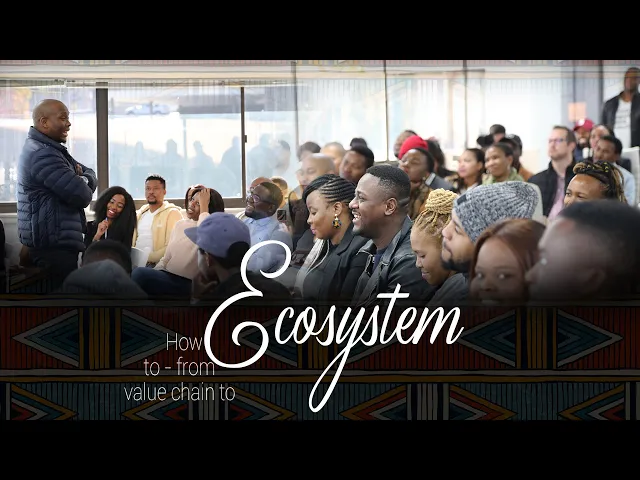
eyes just glazed it's not like I was watching but fun about finals it's like I don't I'm done yeah very intelligent it's you know never make never make the mistake of never make the mistake of misunderstanding education for intelligence there is all those subtle the critical difference there are a lot of educated fools in the world guys most of them anyway so you understand so this thing about the ecosystem what that simply means is the value chain is vertical okay the value chain is vertical the ecosystem is not the ecosystem tends to be a network
with you in the center and there'll be other vertical value chains so in the ecosystem you would be here yeah and then you would go let me think about the parts of my business can I use your business okay so in your business what would the ecosystem look like well the first thing is where the hats made in Lesotho which means there's an entire value chain you've got to think about on customs where the goods get made and where the goods get sold and this system is not just about logistics it's also about revenue collection
because if you have a cost base of people who work in Lesotho and customers who are buying in South Africa even though we're CMA a common monetary area as you move money from country to country their charges so you've got to think about what is my network value chain on customs let's imagine you make these hats and for whatever reason there is an issue between South Africa and Lesotho there hasn't been one since till as it was president for a week but you guys know the story people don't know the story so Nelson Mandela was
away I can't remember if I think it was a way of like a diplomatic trip and he left mimosa tube Tellez as the president the first thing mom was due to did was like wow he declared it was a war with Lesotho did you know that he said choose to the boarding is like take them I've always wanted this bastard my mother kind of adjudicate back normally Zulu the power you almost became another part of us almost so so the point is you so you were to think about the value chain in terms of customs
then you got to think about your value chain in terms of production and that value chain on production is similar to the one I showed here where do they get made where's the input coming from who gives the input to the input and how do I find the input and good relationships at source so that our control it all the way down makes sense then what you've got to think about is your is your value chain in terms of branding then what you got to think about is your value chain in terms of distribution this
is where I spend my time so if I don't want to own the stores where I'm going to sell this stuff cuz it's a fixed cost to sell the stuff if I own a store you know if you own a retail store you're in trouble because month one day one there's cost in the retail store you know people who work in the store don't not get salaries cuz there was no money you don't not pay rent because there was no money you got to pay those costs so those are fixed costs regardless of the variation
in your revenues and you've got to think about and this building all of this is how you see very seasoned entrepreneurs they build ecosystems so at the time they come to pitch yeah they go if you give us one round here the multiplier is across the entire ecosystem in about who here saw the press release that we opened up my growth fund office in New York yeah we started working on that a year ago in about six months you'll see why because the things I'm working on now I'm building the ecosystem for the fund when
it becomes clear to everybody what I'm building I'll be 10 years ahead of the game because everybody in my game they're our money managers you know they fund guys you know they think let me raise a billion and charge two percent to manage the billion that's not how I'm thinking I'm thinking how do I raise a billion charge one percent to manage a billion take only 10% of upside but own an additional 30 percent of the equity carry value and to do that I've got to build a network and by the way how do I
not do it in one country but how do I do it across countries without fate without facing the variation risk of those countries so what I'm spending my time on is I'm building this network you're going to write a book about me when I'm gone if you don't go write it myself I'll write it myself ok so your question was ecosystem because what you were saying is so what do tech entrepreneurs do tech entrepreneurs are you guys probably wanted very few industries well you don't have to worry about the value chain you just come in
and you disrupt the ecosystem you know Instagram didn't have to worry about how do they get the photos distributed they just built Instagram you get it and they immediately disrupted everybody who was working in the photography business you know today if you're a photographer you don't have an Instagram account you kind of don't exist make sense Instagram didn't think about how do we disrupt the fashion business they just built Instagram but were not for Instagram and Facebook fashion over wouldn't be doing what it's doing did you guys see the latest trade circular from fashion over
you'll see it 16 billion dollars in turnover fashion over some of you rather not heard of it those of you have you've never been to a fashion / store games changed guys 16 billion dollars is 200 billion rand fashion over seven years old it makes more money than shop right with the store and Instagram and Facebook guys like I'm telling the game has changed the game has changed the game has changed you know it's so I like jay-z when he says call me an expert never I'm a student of the game never be an expert
always be a student of the game stay humble keep you keep your we call it a low center of gravity keep your ego low always open to what's happening on what's moving [Music] you