So, you've got OpenClaw installed. You've heard that there are these things called sub aents. Now, most people are not using sub agents properly.
They'll tell their bot to deploy a sub agent, but it's not actually a specialized agent. It's still basically just an extension of your main agent. It's still taking all of your context from all of the system files, the agent MD file, the sole MD.
So, in this video, I'm going to show you how to actually define a sub agent so that each sub aent you have, you have him saved and deployable by your main agent. And each of these sub agents only have the information they need to do their job. And they will do their job a lot better than the main agent just deploying a replication of itself.
So, this is how I have it set up here. You can see I have Tar, that's his name, that's my open call bot's name. He's the main agent.
He's the CEO. He's the project manager. And under Tars, we have Hook.
He writes YouTube scripts. He's just basically an embodiment of Mr Beast. I gave him the PDF that Mr Beast wrote about how to go viral on YouTube and he knows everything about it.
Then we have Stack. Only knows code. He doesn't really know anything about my business.
He just knows how to fix bugs and ship quickly. You have Scout. He's a research analyst.
metric and pulse. So Pulse, he he's managing all social media channels for the most viral trending topics in AI and he's bringing that back to Hook. Hook also calls on Stack to Hook also calls on Stack to help him make thumbnails for YouTube.
Now, each of these agents have their own specialized skills as well, and they only know what they need to know. So, here's how most people use Open Claw. They have one agent and they ask it to do everything.
Now, this is fine. It works. But you know what else works is a butter knife to cut anything.
But is that the best decision to cut everything with a butter knife? No. So, what you need is to have each agent defined for their specific tasks.
You have the one main agent and it has all the context of everything you do and that's just too much for it to actually get good output on a single task. It's got one sole document, one agents document and these define everything that it does. So, you actually want to have this one main agent help you define what your sub agents need to be doing and then give them their own sole document, their own agents markdown document, and only allow them access to whatever info they need.
So, your main agent can give them info if they need it for their task from its context, but your sub agents don't need the vast majority of what your main agent knows. So, I'm going to get in how to do this in a second, but let me just illustrate this for you a bit. Tar knows everything.
Hook only knows how to write YouTube. Stack only knows how to code and tar can give them all that information they need if it needs the context from the actual main agent and the business knowledge. But these guys specialize and that allows us to get way better output.
Another cool thing about defining your sub agents is that you can actually give them individual skills that they will need to do their job. The skills are basically just instructions for how it should complete the tasks it's doing. You can even have them develop their own skills, but there's also a lot of skills online that you can find on a website like claudehub.
com and there's other sources out there for that. And I recommend just asking your bot, what skills should this sub agent have? So, I'll just show you here how I actually made Hook, who's in charge of my YouTube script writing.
So, here's what I did. Mr Beast has basically a white paper on how to make YouTube videos go viral. So, I took all the parts that are specifically about making a YouTube video go viral, and I fed that to my main bot.
At the end, I said, "Make a YouTube script writing sub agent that knows all of this and embodies Mr Beast himself. All his life experiences. His job is to write scripts only.
Stack can make B-roll for him. Stack is my coder. So Stack actually just makes these B-roll animations for my videos.
So I specifically said he doesn't know my business. He just knows how to go viral. All he knows about my business is that I make videos about the trending topics and AI, which right now is open call.
And I asked him what should we name him? Another thing you want to do is specify that they don't have a heartbeat. Your main bot has a heartbeat.
And this is one of the things that actually makes it proactive. tarp beats many times throughout the day and that actually just like triggers it to go through its context and see what it should be doing for you and what it should be messaging you proactively. But you don't want your sub agents to have heartbeats cuz that could just waste a ton of tokens.
You just want your main agent to be able to deploy these sub agents and your main agent is already proactive so it can deploy them proactively as they are required. And you want to also specify to make sure it makes the sub aent with its own solemn MD, its own agents. m MD.
And that way it's defined as its own sub agent. That sub agent always refers back to its parent files. So I'll just quickly show you Hook's agents MD.
So you can see how this is more powerful than just having your main agent do absolutely everything. So here is Hook's agents MD. The cool thing is that he actually put this into notion himself, but I guess my main agent got it off of him and my main agent put it into notion.
[clears throat] So it tells this is every agent's MD for open call. It tells it to read the sole MD and the user MD. So that's another thing.
The hook's user MD is not nearly as much context as my main agent's user MD. User is what it knows about you personally. And all Hook knows about me personally is that I make YouTube videos about AI and I need to go viral.
Whereas my main agent knows my entire business context, where I live, my stuff about my f like it knows everything. Hook doesn't need to know this stuff. He just needs to know how to make me go viral.
So here we have Hook's sole MD. You are the distillation of 30,000 hours of studying YouTube virality and got that from Mr Beast's document cuz that's what Mr Beast put in there. You're not a writer.
You're a retention engineer. Every word you write exists to stop someone from clicking off. Now it just goes through everything about going viral on YouTube.
Then we have hooks agents MD. It tells it to read the soul every time it's doing its work. You write YouTube scripts.
That's it. You don't do strategy, check emails, manage tasks. You write hooks that stop scrollers, structure videos for maximum retention, all this good stuff.
Now, if you had your main agent writing you a YouTube script, it's going to be using your whole business context, it's still going to be all right. But when you have these system files that are designed specifically for the job it's doing, it's going to do a lot better job, give you a lot better output. And making them is as simple as just talking back and forth with your main agent to define what that sub agent should be all about and then asking it to look for skills online that it can install on itself that will make it do its job better.
And yeah, it's that easy. You just have to discuss with your main agent to make a sub agent with its own sole MD and own agents MD. No heartbeat because you don't want it wasting tokens on that.
You see this? You have one AI do it all. It's got all these different things in it context that's not helping it do the task that's at hand.
When you have a specialist, it's only got that information it needs to do its job. So, another cool thing you can do with sub agents is you can have them talk to each other as well, cuz sometimes one agent's actions depend on another when it's doing something more complex, like putting together an entire YouTube video. Hook can write the script and plan the video but doesn't have the skill to actually make the thumbnail for the video.
It can give a prompt for a creative scroll stopping picture that AI can generate. But to actually put together a thumbnail with text and a cutout of yourself on top of the video, a sub agent like stack, a coding agent would be better at that because it can use code to just stick that picture of yourself on top of the video. So I allow hook to call on stack to make the thumbnail for the video.
So to summarize, what are the main benefits to defining sub agents and having them speak to each other and do their own specific tasks? So one is information isolation. My script agent does not need to know anything about my clients, my business strategy, my calendar.
Doesn't need any of that to write a script. Two would be token savings. So it's not reading all this extra context it doesn't need to make a video.
Three is better output. So because it doesn't have all this extra stuff affecting its decisions and the things it's outputting, it's going to give you more focused output. And for this parallel work, this is pretty important as well.
When you're using your main agent for everything, it can't really talk back to you while it's doing its job. But if it's deploying sub agents to do those specific tasks, you can still talk to it and get it to do whatever stuff you need your main agent to be doing. Now, I just want to show you something really cool that I I'm not sure it actually works right now.
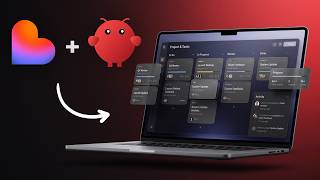
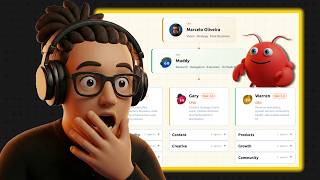
I only did it with one prompt. I'm going to tune it up a bit later, but I literally one prompted this entire dashboard that Stack made for us, which is a dashboard that I can visualize what my agents are up to. Now, right now, I I'm kind of doubting that it's actually hooked up and actually monitoring them because I only did it in one prompt and I haven't really tested it out, but thought it was a pretty cool thing to show off.
You can see it's even counting his tokens for each agent. Now, I'm actually not on the Claude Anthropic API. I'm on the Claude Code $200 max subscription.
So, it's not actually costing me $272. I just pay $200 per month. You can even see the agents talking to each other here and the files they're creating for me for my YouTube scripts and other stuff.
So, at this point, I'm sure you've already assumed this, but Hook actually wrote this entire script for me. Stack made the thumbnail that you clicked and they did that all automatically. actually had them design this entire YouTube pipeline where they speak to each other to automatically create the video idea, the script, these graphics they make, the thumbnails, the titles on the thumbnails, and at each point in this process, they are checking in with me to see if I want any changes made, and I just approve their actions, and they continue it on automatically.
They will send me Google Drve links to the assets they make for me. All I have to do now is film and edit the video and post. And I'm actually later on I'm going to get them to make a auto posting automation where once I've edited the video I put it on the Google Drve and they automatically take that and post it to YouTube with all the captions that we already agreed on.
So here's the move for you. If you have one task you keep asking your main agent to do, you got to make a sub agent for that. Give it its own soul agents document and other main documents it needs.
You can just ask your open call what it needs to do its job. Make sure it doesn't have a heartbeat because that's just a waste of tokens for a sub agent and allow your main agent to deploy whenever it's needed. And you can refer to them by name in your chat.
I love doing that. Like get stacked fixing this bug or get get hook writing the next YouTube idea. And then also set out frameworks for them to communicate with each other.
You can also chat with your main agent about how best they will do this. Like I told you, Hook talks to Stack to give Stack the information it needs to generate the thumbnail for the video, and Stack has the coding expertise to actually make that thumbnail really quality. There's endless use cases you can do for this.
Whatever you think of, you can create with Open Plot. So, that's it for this video. If you got any actual value from this, please subscribe to my YouTube and check out my ex where I talk more about this kind of stuff.
It's the same handle at Jessa Automates. I'm going to be dropping videos like this every single week. And if you want to go even deeper, check out my school group in the link below.
And I'll see you in the next one.