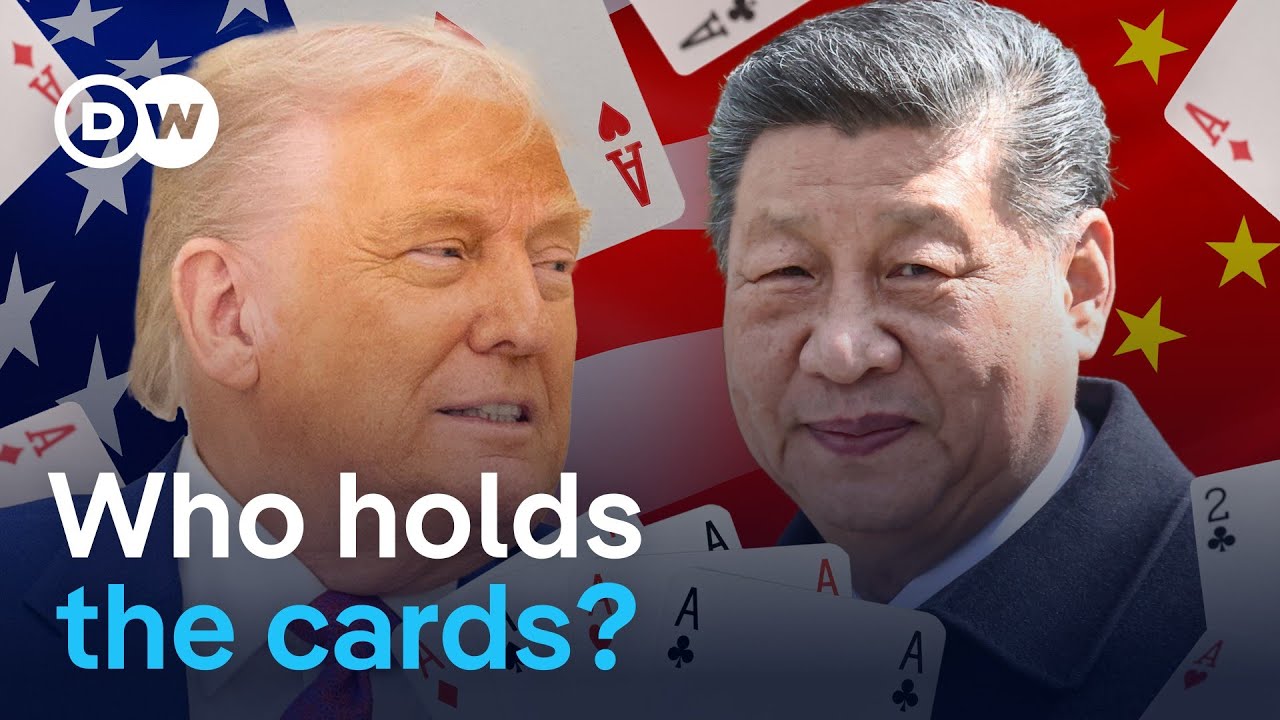
The world's biggest EV battery company, making an electrifying debut on the Hong Kong exchange and the world's biggest listing this year. All this despite being caught in the crosshairs of the US-China tensions. Live from Singapore, this is inside with Haslinda Amin, where we dive deeper into tensions around tech with crucial context and sharp analysis.
The US-China trade truce at risk as Beijing accuses Washington of undermining the Geneva talks with a warning that using Huawei chips would violate export controls. The S&P 500 is back near a bull market by JPMorgan's CEO. Jamie Dimon warns against complacency in the face of multiple risks from inflation and credit spreads to geopolitics.
My own view is, you know, where people feel pretty good because you haven't seen an effective curve. The market came down 10%, back up 10%. I think that's an extraordinary amount of complacency.
Bloomberg learns that India is working fast to hammer out an interim trade deal with the US before July, when Trump's reciprocal tariffs kick in. And we speak exclusively with the Indian online fashion retailer Myntra, which is owned by Walmart. We'll discuss the impact of increased protectionism as they look to expand globally.
You're watching INSIGHT. Asian shares are rising for the first day in four sessions. That's after a dip buying revised a loss on the S&P 500, sending it back within a whisker of a bull market.
Investors are now focused on the outcome of U. S. trade negotiations with India and Japan.
But tensions around chips and tech are putting at risk the trade truce between the U. S. and China.
Beijing is accusing the Trump administration of undermining the recent trade talks in Geneva, with it's warning that using Huawei's chips would violate U. S. export controls.
And as we watch those tensions arise again, Seattle, the Chinese battery giant blacklisted by the Pentagon and shunned by U. S. banks.
Making a blockbuster debut on the Hong Kong exchange with shares surging. For more on those big stories, our own tech, the China show co-anchor Yvonne Man joins us from the Hong Kong exchange. And our correspondent Anabelle Juliet is at Asia's biggest tech show, Computex in Taipei.
Let's get to the Seattle listing first, Yvonne. A blockbuster, a mega debut from a company that's not immune from tensions between the U. S.
and China. Investors seem to be looking past the Pentagon blacklist and the shunning by U. S.
investors when it comes to this battery giant. Yeah, the CETA listing certainly is a big news for Hong Kong that certainly needed a listing of this size. Right.
We're talking about the largest listing in the world this year. And you know, you talk about the trade tensions. It looks like investors are leaning away from that.
Right? They're focusing on that becomes a technological innovation, the fact that they are Seattle, the battery champion here with close to 40% market share as well. So that certainly is what investors are hoping for and really be overshadowed by, as you mentioned, of these US-China trade tensions with Seattle has been caught in all of it.
Right. You talked about the Pentagon blacklisting. There's also the fact that Seattle excluded U.
S. onshore institutions from taking part in this deal just to limit their U. S.
exposure. That certainly is a good litmus test, according to Bloomberg Economics, of whether they can actually rely and not rely, as you say, on U. S.
investors to seek global capital and to raise significant funds. But today, given the outperformance that we've seen, it seems like that strategy has paid off so far. That was really the woman.
This listing signifies our deeper integration into the global capital markets and marks a new milestone in our mission to drive the global zero carbon economy. Seattle is not just a battery component manufacturer. We are a systems solution provider and are committed to becoming a zero carbon technology company.
That was the founder, Robin Zhang. They're speaking about, you know, Seattle being in the forefront there of this strategic technology and really trying to it is mission for a carbon free world, zero carbon world, I should say. So they're planning to put Seattle as a leader of that charge.
Certainly there's a lot of talk about the US-China trade tensions. We talked about some of the the things that the company has been doing, but really ever more the reason for them to have the secondary listing, raising a $4. 6 billion in their international expansion, that's where the proceeds are going to be funding, especially those factories in Germany, in Hungary, that €7 billion one that's being built right now.
And as they also build up that battery material supply chain as well in Indonesia. So all of these moves in some ways to avoid some of the U. S.
, U. S. tariff impact and really focus on markets that they can actually be profitable and more profitable than their business back at home has.
And as you said, all this happening against US-China tensions. We know the likes of Bank of America, Jp morgan, were caught in the crosshairs. They were.
This was interesting. So leading up to this listing, we did hear from this U. S.
congressional committee basically calling these banks out and saying, you know, urging them to pull out of this IPO. In the end, they did not. They stuck with this deal.
So it just goes to show it's not just foreign investors that are leaning towards this. I mean, banks as well have been trying to get a piece of the pie right when it comes to the underwriting side of things here. So certainly that's one thing to watch.
And also, what does this mean when it comes to China's embrace of entrepreneurs and the private sector? Once again, the fact that this secondary listing happened here in Hong Kong. Ultimately, Beijing had to give approval of this as well.
There's signs here that potentially Xi's and his administration is warming up to more relations, better relations with the private sector and expecting it to help shore up growth here. Of course, this is a big, big shift from what we saw maybe just a few years ago when ant Financial that IPO was pulled down. Yvonne, thank you so much for that.
The Chinese show anchor Yvonne Man from the Hong Kong Stock Exchange on the simmering US-China trade and security tensions are a key concern at the Computex conference in Taipei. Annabel. China taking issue with U.
S. warnings over the use of Huawei chips. And in the U.
S. , there's also concern about national security risks being raised around the big deals nvidia struck in the Middle East. Are these being talked about at company tax?
Yeah, well, I think going into this event has one of the things that people were talking about was, yes, you've got sort of not just insanity perhaps this year, but certainly Jensen Huang is one of the key people to people that that's been watching this event. But beyond that, the other person really that's going to be discussed is Donald Trump and the rising tensions between the US and China. So, yes, it certainly is a talking point and really interesting.
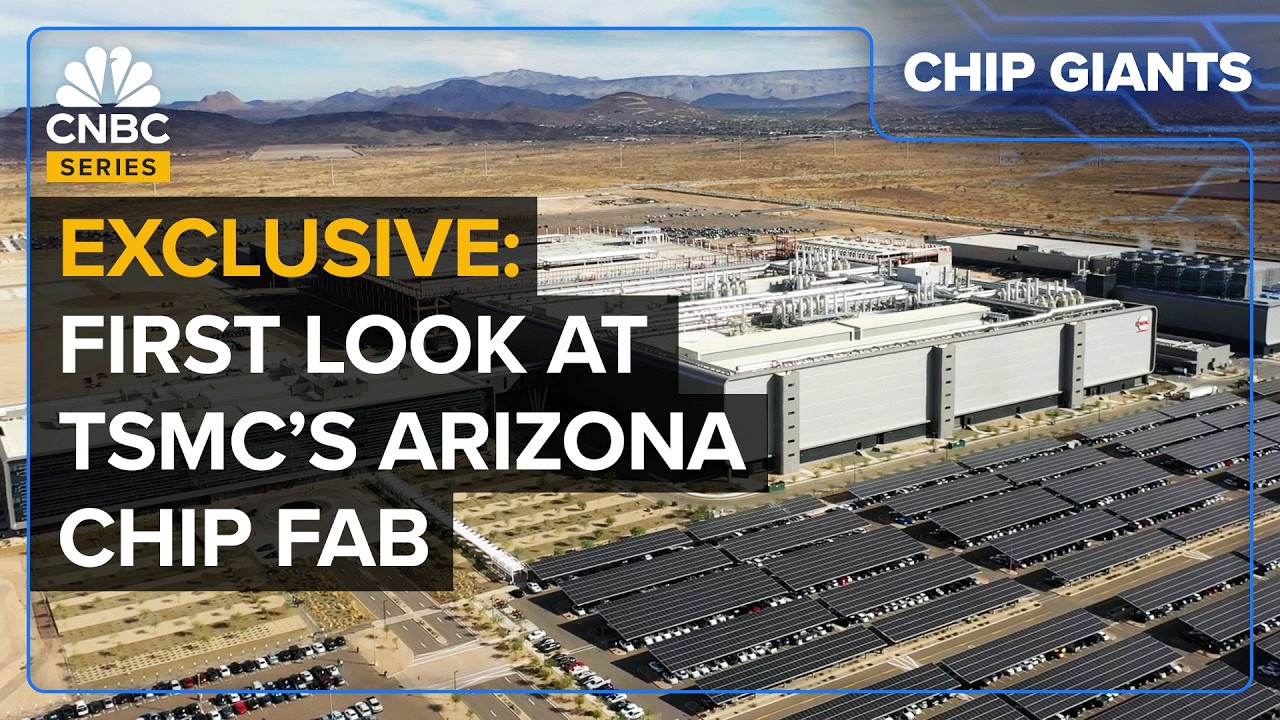
We'll get into a moment just the announcements that are coming from China today in the troops space. But starting off what we're hearing and copy text, we aren't getting a lot of different announcements that are coming through. For instance, we're hearing that Nvidia, TSMC, Foxconn, they're going to be building an AI supercomputer together.
You've got NVIDIA as well. That's saying that it's going to be using A. I.
chips from other systems or other companies are opening the door to that. But then at the same time that you've got this sort of backdrop that's building now, particularly when it comes to to while away and their technology because the US put out a warning last week that saying that any company anywhere in the world that was using quad chipsets, the ascend we're referring to here in particular would be in violation of US rules and so that they could face these companies any sort of criminal charges for choosing to pursue using that technology now. China has been pushing back on this and the US in response has sort of dropped some of their wording by saying, look, not anywhere in the world, but they haven't actually rescinded the warning completely.
And so again, we're hearing from Beijing on this, saying that all of the progress has been made in the trade talks so far could actually be at risk. At the same time as well. Just to note, we've been hearing from Democrats overnight, the likes of Elizabeth Warren, for instance, Chuck Schumer writing a letter to the White House, essentially, and at Trump, the Trump administration laying out their concerns about these deals that were signed in the Middle East last week that would send billions of dollars off of advanced US technology, saying that there are risks involved with that, that technology could end up in the hands of China.
Bell We know that Chinese firms are pushing the latest innovations at the conference. What have we seen so far? Have we been impressed?
Yeah, well, this is actually a way from coffee text, and that's one of the things that's really interesting to note about this. It's the timing. I don't think it's any coincidence that you've got a copy text here in Taiwan.
One of the biggest events on the tech calendar in the Asian tech calendar this year that you've got these Chinese companies that are unveiling their latest advancements as well. So, yes, show me is one of those. And we heard or been hearing even this morning from the chairman late June on social media talking about their own smartphone or mobile phones process of developing this thing that's already in mass production.
It's going to be unveiled later this week that they're planning to spend up to $7 billion or near about in that effort. So that is the latest from Shout Me, essentially doing what Apple's already done by replacing Qualcomm processors, going in-house. They're looking to do the same.
And then on the software front as well, while Wei is saying that they're going to be replacing the Windows operating system in the lineup moving forward, they've already done this with within mobile phones, but again, doing with processors. So continuing that shift away from US technology. Well, thanks so much for that, Annabelle.
Drll is from Computex in Taipei. Coming up on INSIGHT, Franklin Templeton will be joining us with their take on the volatility in bond markets and fresh signals from the Fed that they're in no rush to cut rates. Keep it here with us.
This is. Personally, I don't like making forecast stuff like that. I am not a buyer of credit today.
I think credit today is a bad risk. I think that people who haven't been through major downturns are missing the point about what can happen in credit. That was Jp morgan's CEO Jamie Dimon, sounding the alarm about risks in credit.
Well, U. S. treasuries and stocks have bounced back despite initial concern following Moody's credit rating downgrade.
Avril Hong is here with more on the markets. How quickly they revise. Really quickly.
I mean, a remarkable bounce back, right? I mean, it was really during the US session where we saw those dip buyers emerging that helped U. S.
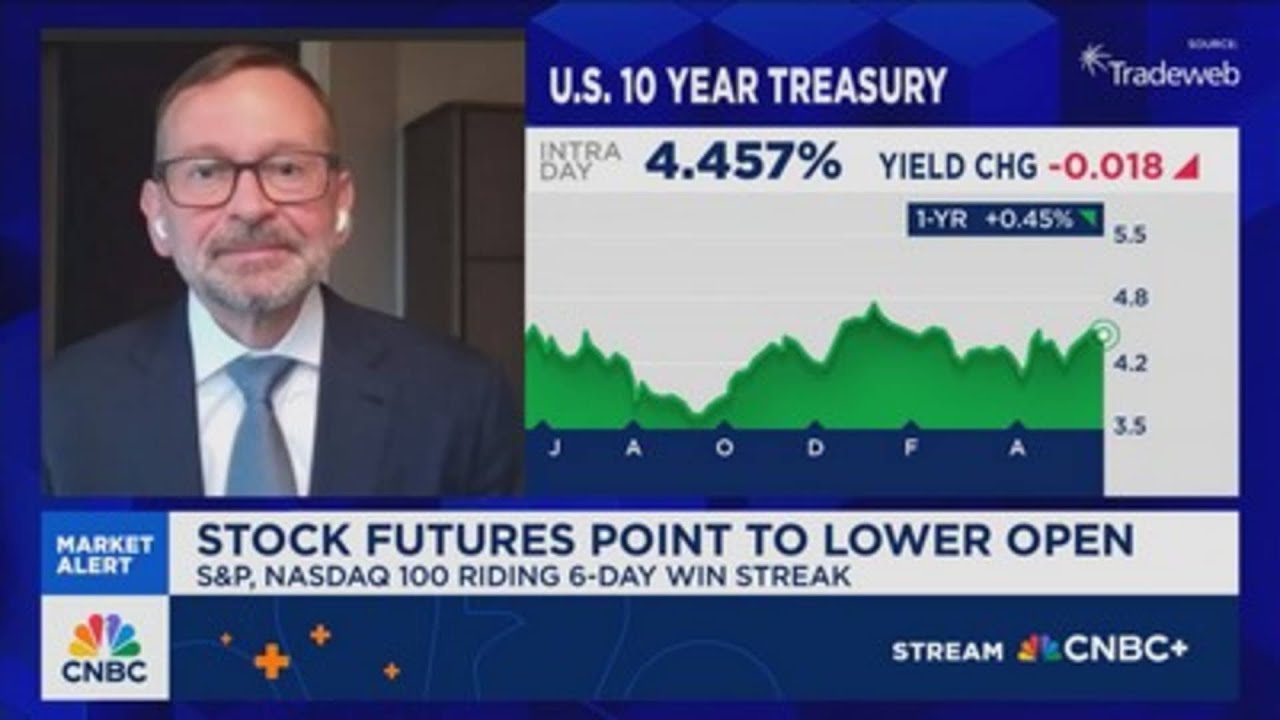
stocks to recover and the S&P 500, as you know, and the not far from a bull market, despite a bit of softness we're seeing in futures, even on treasuries, we saw that recovery across the curve and it extended into some points into the Asian session, although now you're seeing it a bit of a wavering at the moment. And I think the message from investors is still overall, they were looking at the Moody's, the looking at how Moody's highlighted the lack of U. S.
fiscal health, along with this debate raging on Capitol Hill about unfunded tax cuts. They look at all this and pretty much shrugged it off, tending to agree with Scott Bessant on how the cut was the sort of lagging indicator. But look, the board, because that is not to say that markets are not cognizant of the risks.
If you look at the yield on the 30 year, we saw it briefly popping above the 5% level and this is something we already saw in January and April this year. And indeed, it does give you the sense of markets really highlighting the perceived risks of lending to the government and that how the cost of money could continue rising for households, for businesses if the US doesn't get its finances in order. So overall, that is the message.
I think that investors are still sending a recovery overnight, but that's not to say they're ignoring a completely shrugging off some of the risks, they say on vigilantes by gay role. Thank you so much for that. Let's get more on the outlook for bond markets with Sonal Dhesi, CEO of Fixed Income and Franklin Templeton.
She joins us from Tokyo. So good to have you with us. We heard from Jamie Dimon.
Well, you know what? He's not a buyer of credit, even though we've seen credit revised losses, the deep losses that we saw in April. I think that, you know, it's too sweeping a statement.
Ultimately, as an active investor, you're always going to find pockets which are overvalued and pockets which are undervalued. And if I were to make such a statement on credit universally, I would say we do need to essentially be forecasting a fairly steep recession. And we're not.
You know, I was listening to the comments regarding the reversal of the losses on Moody's ratings downgrade, but Moody's is late to the game. S&P cut cut their rating. It was 2011.
And we've had I think even Fitch went in 2023. Moody's is kind of late to be talking about the fiscal incontinence in the US, which has been ongoing certainly for the last four or five years. Moody's maybe late in the game, but it is a different environment now.
We know that the chances of a recession in the US is higher, some say as high as 50%. We have a global economy that's actually slowing down or the terrorists which have yet to play out in the economy. Might you just be too complacent?
Might you just be under appreciating the risks? So, you know, here's what I'd say on the risks of US recession. I think we need to look at data more than sentiment at this point.
And I think, yes, ultimately, we don't know whether we're going to get a recession or not. If we get clarity on tax policy, we get clarity on tariff policy and we get some deregulation. And it's a it's a it's definitely a steep hill here.
But if we get that over the next 60 to 90 days. No, I actually don't think recession is a base case. I think the assumption, even on Liberation Day, that the imposition of these tariffs inevitably would lead to a recession in the US perhaps was overstated because in the end the US is a trade deficit country.
If it closes or reduces the size of its deficit, it's worse for the rest of the world. Honestly, everybody who is exporting to the US because exports feed into GDP growth. I would look, I wouldn't say that I was complacent.
There are definite risks attached to the US outlook and there is some slowdown coming. It probably needs to come. But what's fascinating is how much is in the hands of the US administration to either give us clarity, markets hate uncertainty or not, and therefore they created a lot of the problems.
They can also unwind them. And I repeat, over the last four years the US has been running $2 trillion plus deficits. We have been banging the table about this for a very long time.
It appears actually the market might be as well. A little bit late to the game of looking at the size of the US deficit at this point. So it all might there be ripple effects from that downgrade from Moody's?
I mean, some people are talking about higher refinancing costs, a possibility of defaults. How do you rate that happening? What are the chances of that happening?
You know, there are very few. There doesn't seem to be a genuine reason for the last ratings downgrade to trigger this entire slew of events. It's a single rating downgrade.
Currently, we would not anticipate the rating downgrade in and of itself to trigger such a dramatic move. It's it's been a long time coming. Moody's is late.
It would be crazy to imagine that it wasn't necessary to downgrade U. S. debt.
However, it's still not at the level that would trigger any wave of defaults. If we look at the advanced economies. Honestly, there's only a handful of economies which are triple-A rated.
Most economies, including in Europe, in fact, end up having credit ratings, which are less than triple-A. It's not that unusual, unfortunately, in the post GFC world, when governments around the world in the Western developed world have blown up their budget deficits. So where do you see yields heading?
We know that for ten and 30 years the yields have been grinding higher the last three weeks. And some say perhaps that grinding higher will persist. We'll likely see perhaps a five, ten, 15 basis points upside from here.
Absolutely agree. So this actually is something which I would anchor with my short term forecast, which over now I'd say well over a couple of years, I've been anticipating that the Fed really had within its gift a total of around 125 basis points in rate cuts to deliver absent a recession. That was based on a call of where Fed funds neutral was, which would be for me between four and 425, and that comes from inflation of about 2 to 25 and productivity growth for the rest, you get to 4 to 425.
And then if you don't have a recession term premium, especially in an environment like this one, but even looking at the last few years, term premium itself should deliver fair value for us ten years at closer to four, 75 to 5. Now, if we got a true blow out of the fiscal deficit, which currently actually it's not clear, we might see a continuation of what we've seen over the last few years, which is a fiscal deficit of a bit over 6% of GDP. That's not good news, but it's not the blow out that some with fearing when we heard some of the campaign promises where the blow out could have been even significantly more than that.
If we get an even bigger blow out, we could go north of 5%. But right now I think that seeing upside to US treasuries from where we are right now is fully feasible. I'm not talking about near term, but certainly by the end of the year, I don't see why we wouldn't be in that 475 range.
So we are expecting yields to grind higher from here. And typically higher yields would boost a currency. Yet here we are with with a USD that's expected to to go lower from here.
If your base assumption is that the US economy is intact. What's the explanation for the movements in the USD? Valuations we came into this year, Hacienda with the dollar at the second strongest level since the Plaza Accords.
You just need to go back. I think it's 2021 or 2022 and the euro was at 120 against the dollar and the yen was actually coincidentally at 120 against the dollar. So when you look at when you look at the dollar and the yen, right now, the dollar is actually still pretty overvalued.
So from a valuation perspective, that so if we want to think about what drove that overvaluation, we can come up with a whole bunch of different answers. It might be anything from the perceived exceptionalism of the Magnificent Seven, the Max seven, you know, a lot of inflows into equity markets, the reversal of those flows as European equity markets started looking more interesting in light of German expansion, there are many potential pieces of rationale. I think the general assumption that what we're seeing is somehow related to the dollar's role as a reserve currency overstates the case because I don't think a reserve currency necessarily is going to always been be on an appreciating path.
It's a floating currency, floating exchange rate. When it gets enormously overvalued, it's reasonable to assume that at some stage you're going to get corrections for a variety of different reasons. Perhaps the market has just started focusing on a fiscal problem which has been emerging in the US now for actually almost a decade, but has certainly been exacerbated over the in the post-COVID period in the general COVID post-COVID period, that fiscal deficit issue has blown up.
And perhaps this is the point at which focused what's coming around to the debt. If we did see a significant increase in US Treasury yields, perhaps you would you would start seeing actually some flows coming back as well, because I think it is premature to assume that what we're seeing is somehow permanent in the sense of something which will last for decades. Could it last for this year?
Absolutely. I mean, the strengthening of the dollar lasted for years. So we can certainly see a cycle where weakness persists.
Just to jump in here, what's fair value for the dollar, then? Okay, So that's a difficult one. Fair value for the dollar, I'd say, against the euro, at least historically, people have said on the basis of fundamentals, I'm not going to give you why, but I'll say against the euro, people have historically talked about something along the lines of 118.
Is that fair value? Will we overshoot? We will probably overshoot.
That's what that's what exchange rates do. But do I think that the euro at current levels is overly strong? No, not at all.
So now we have to leave it there. Thank you so much for your thoughts today. Sonali Basak CEO of fixed income at Franklin Templeton.
Still to come, we'll talk rba. Keep it here with us. This is bloomberg.
If it takes negotiations a longer time to settle things out. We have another 90 days on China, for example, that starts to push much further into the summer, in which case we won't actually know what the true effects are going to be for several months after that. If that's how it plays out, then that's then sure, I think and right now I would say in my CPI, I have one cut only for this year because I think this is going to take longer to resolve than it might have otherwise.
Atlanta Fed President Rafael Bostic with his outlook on rate cuts. Well, we're counting down to the latest rate decision in Australia, where the RBA is seen making a hawkish cut. The RBA is expected to lower rates for a second time this year on easing price pressures and a temporary reprieve in the US-China trade war, but is expected to keep a close eye on the looking risks.
Our next guest also expects a 25 basis point RBA cut with a hawkish tone about the future policy path. Let's get insights from Joe. Last is chief economist at Barrenjoey Capital Partners.
What's the base case? What's the reasoning when the Fed is waiting and seeing how it's going to pan out? Yeah.
So there's a very strong consensus for a 25 basis point rate cut here today in Australia. That's from economists and also market pricing. Now, a little bit like every economy around the world, there's obviously very elevated uncertainty given tariff policy, not just where tariffs might land, but the uncertainty coming from that.
But here in Australia, remember that we have a little bit behind in the rate cutting cycle compared to other global central banks. So we do think the RBA will deliver a rate cut policy here is still restrictive. And so really what we've got now is inflation that's printed since the last RBA meeting is now within the policy target band and on six month annualised terms, sitting in the middle of that 2 to 3% band.
So we think that opens the way for the central bank to slowly and cautiously bring the cash rate back to more neutral settings. We also still see risks from the global environment. Appreciate this being quite a material de-escalation between the US and China, but we're still talking about average US tariff rates little north of 10%, and that compares to 2% at the start of the Trump presidency.
So similar global headwind coming for a small open economy like Australia. We think those two factors are enough for the RBA to cut rates, as I said, edged towards neutral, acknowledging that there are some risks in the other direction, particularly the fact that the domestic labour market remains quite strong. Joe how closely is the RBA watching the Fed?
Look, the Fed obviously always important for global economies and for central banks around the world. But we have a number of points in history where the Reserve Bank has moved either not in lockstep with the Fed or in fact, in a different direction from the Fed and through this rate hike cycle in through 2022, in the rate cutting cycle that we've seen on the other side of that inflation surge. We've moved at a different time and pace from the Fed.
And so I think that continues to be the case. As I said, domestically, we still have restrictive monetary policy settings and we've only just got inflation back within that policy target band. Right now.
How are you assessing the Australian economy? We know that it is caught in the crosshairs of the US China trade tensions. Of course, China is its biggest trading partner, accounting for 30% of exports, with China showing signs of a slowdown.
You know, it's been challenging for it to revise its economy. How is that factoring into your calculation of Australia's economic health? So if we just take a step back to before Liberation Day in the imposition of material tariffs, the Australian economy was just past its low point.
We were starting to eke out some positive GDP numbers. Per capita GDP was rising. Population growth still strong.
Real disposable income for the household sector starting to rise. So we were projecting a gradual recovery back up to potential growth. Now we know that there are some global headwinds coming.
It's a little hard to be to have to high conviction on how big that will be until we see really where tariffs settle and also the response from China around stimulus. We have a below market consensus view on China, which we've had all of this year. We expect growth of only 4% this year.
That's baked into our forecast for Australia. So we've got GDP growth in calendar year 2025 for Australia at 2% and at the moment we're assessing the drag from tariff policies to be about 0. 2 percentage points.
And as you said, that's mostly related to trade with China and South East Asia. More broadly, the direct impact of tariffs on Australia is relatively small. We only send about 5% of our exports directly to the US.
But isn't it true that that impact might be felt the most? For instance, for the beef industry it imports? It's a major exporter to the U.
S. when it comes to beef, also pharmaceuticals. I mean, how might this, you know, shave growth in Australia?
So as you say, the exports that we do send to the US are relatively concentrated. It is predominantly meat and meat related products. Some pharmaceuticals and advanced manufacturing remain, but we actually run a trade deficit with the US.
So the US has a trade surplus with us. So our trade imbalance is very different from what we see from other economies. So whilst we think the tariffs will have a material impact on those specific sectors in aggregate across the economy, we're talking about 5% of exports.
So it's not nearly as big a hit as you see for countries like Canada, for the UK, for Europe or for Japan and South Korea, for example. It really is indirect impact coming through China and Asia more broadly. That is the bulk of the impact that we'll see.
As I said, our latest modelling suggests about a 0. 2 percentage point shave, which is quite material when growth is only running at 2%, but much less than you're seeing for those economies in South East Asia and in North America, which are much more directly exposed to tariffs. Hmm.
How about public spending? We're seeing the highest level since World War Two. And we've seen how the debt issue in the U.
S. is playing out in its bond market. How are you assessing the risk of that spending?
So far for the US fiscal policy very much in focus for markets this week. Obviously we've got the big beautiful bill coming through, passing the committee this morning, but still a number of stages to get through to the US Congress and also we'll get some data out later this week that will give us a greater estimate around tariff revenue that's being raised from the tariffs that the US has imposed globally. Look, if we just step back, what we know is that if we look at Trump's policies holistically, that we're going to see US budget deficits running at six and a half to 7% of GDP, even though we're coming off the back of pretty solid economic times in us, in the US.
And so we do see a continued deterioration coming through from the US fiscal side, and that's going to continue to put pressure on the long end of the US curve. And so I think we're in this interesting position actually for Australia where if US long term yields aren't able to fall much from the 450 to 5% level, that's going to anchor Australian long end yields higher than they would have been otherwise, even as we have pretty lacklustre growth in an easing cycle. Joe, thank you.
Joe Masters, chief economist at Barrenjoey Capital Partners. Still to come. Well, we have breaking news right here.
Japan's 20 year bond auction drawing the weakest demand ratio since 2012. Japan's 20 year bond sale drawing its weakest demand ratio since 2012. Now, still to come, one of India's top fashion e-commerce platforms will be joining us to talk about their business outlook and tariff worries.
An exclusive conversation with Myntra CEO Nandita Singhal is up next. Keep it here with us. This is Bloomberg.
Welcome back to INSIGHT. India expects to reach an interim trade agreement with the US before July, when President Trump's reciprocal tariffs are set to kick in. Bloomberg has learned the interim deal may cover areas like market access for industrial goods, some farm products, and addressing non-tariff barriers.
For more, Bloomberg City, Ron Johnson joins us from Delhi City. What do we know about how the trade deal could be structured? Well, I mean, what you're getting to here, I mean, and we've I mean, my colleagues and we have reported today is that it's going to be it's going to be structured in three tranches.
The first is supposed to be a very mini deal comes in July, and that is to keep in line or meet the announcements made by the two leaders. It's President Trump and Prime Minister Modi in February earlier. So that shows the intended both countries are very interested in getting serious about it.
The next one comes in September, which is slightly bigger in scope and size, handles more, some more tricky issues. Then India expects this to go to the Congress and next year in 2026, discussions keep on continuing. We are likely to see the bigger, broader and the final deal to come out.
That seems to be the structure of it and how India is looking at the timeline of the deal. It's all about intent, right? Judy, what does the approach show on the intent of the two countries?
Well, I mean, well, you know, it clearly shows that both of them are very, very serious about it. And it also also kind of shows and, you know, it's a proof that it's not a very easy thing to do because issues like agriculture, which India is never open to for any of its partners, no matter how good I mean, how close they are, is under discussion with the United States wanting some access to it, how the two to, you know, two countries manage it, which is mutually beneficial for both. That's one word that we very often get to hear from officials out here and from the United States.
So it just shows that both sides know the enormity, the difficulties of it. But at the same point of time, a very, very serious which is why this, you know, very staggered approach shows a lot of, you know, pragmatism on both sides, I would say. Judy, thank you so much for that.
Bloomberg Government report. A city run Giant Sin. And we also discussed the impact of those trade talks with Mahindra Mahindra, one of the India's biggest carmakers.
Automotive Division CEO. Now, Goller Gunter joined us exclusively on the China show earlier. While it will provide a level playing field for others to come into India and we're very open to that, we hope that it opens up for us opportunities in other markets.
Product proposition is what wins at the end of the day, and we believe the portfolio we have, especially with the newborn electric vehicles we put out there, the very strong proposition that we can take outside and compete against the best of the world. Let's discuss the impact of tariffs in a different space with our next guest, who runs one of India's leading platforms for fashion, beauty and lifestyle. Myntra is part of India's Flipkart group, which is owned by US retail giant Walmart.
Joining us exclusively, Myntra CEO Nandita Singhal. Nandita, good to have you with us. Talk to us about the impact of those U.
S. tariffs. We know that for your company you import, you export.
How is this playing out for you? Thank you so much for having me here today. And like we just heard, this is a developing story right now.
A lot of developments are going to happen in the next few months. For now, we are not seeing too much of an impact on the brands that we work with which are important. But we will continue to keep an eye on this.
And and it is something which will go through a few changes and a few iterations. So we will I think what we have learnt in the last few years is to be agile, to be able to manage all of the, you know, the uncertainties that happen. But this is a developing story and we will keep an eye on how it impacts for now, not seeing too much of an impact and focused on how to drive the consumption story.
A developing story, but we know that supply chains are being tweaked as we speak. I'm just wondering from where you were seated, what might that amount to more costs for for your business? From a perspective of a large part of our business actually is built around products that are made in India.
And that has been our story in terms of how we have built the business as we are expanding into Singapore also. That is one of the big levers that we want to kind of open, which is how do we take the Made in India brands, How do we take Made in India fashion to the world? So that part of the business actually remains very, very, you know, unaffected by these tariffs.
There is a certain part of our business which is about international brands, and there we lean on the brands to really work the best value proposition for the customers. So they are really trying to build a strategy on how do you build the best value proposition for the customers going forward for our business, the made in India, the made for India, the brands which are really rooted in India, they are largely unaffected by the tariffs that are currently being discussed. How much demand?
How much appetite is there for Made in India products and brands? We know that you're venturing out of India for the first time to a market like Singapore, for instance. What assumptions are you making?
I think the biggest, you know, as we started to this journey on what are the next opportunities for India fashion? I think what we realised is that almost ten, 15% of our web traffic was actually coming from international markets, which was largely guided by the Indian diaspora, which is, you know, which is spread across the world, which is growing and is growing in both its appetite for spending, but also its appetite for really embracing what India is all about, especially during occasions of either festivals, weddings or special occasions, etc. .
And that is the market that we really want to tap as we go into the next, you know, the next four years of what Myntra Global is for Indian fashion. We picked up a market like Singapore because of the six 50,000 Indians who live on the Indian diaspora, which is there in Singapore. We have almost 5% of them actually visiting us on a monthly basis.
So we know that there is an appetite for myntra, there is an understanding of what myntra as a as a platform. And the large appetite or the interest from consumers is coming for Indian fashion and brands which are really looked at in India. So we are really building our opportunity based on this space that we are seeing emerge, especially post-pandemic, especially with social media, especially with e-commerce becoming a way of life, which really opens up boundaries in a big way.
So this is our assumption. This is what the market we want to go behind and we hope that over the next few quarters we will get almost 12 to 15% of this Indian diaspora transacting with us on Myntra. So that's really the approach that we have taken as we foray into a market like Singapore.
I think also for us, this is a very, very important market because it's close to India. It allows us to really test what consumers want, what is the right product, market fit, fit and also build a system which is seamless not just for our customers, but for our brand partners also. So that's really where you you talk about growing your global footprint by tapping the Indian diaspora.
We know that there's a huge Indian population in the US, for instance, 2% of the population. In fact, we're talking about millions of Indians. Might that be a market that you explore or might you be hindered by the tariffs you know that we're seeing from the Trump administration?
Like us to it. And I think the first step for us is really about learning what the diaspora needs in a market, which is like Singapore, which is slightly closer to home. We like in our journey of learning, we have launched almost 100 plus brands, 35,000 styles.
We will take that up, 200,000 styles. We are shipping in 4 to 7 days and as we learn what it really means to be successful in this market, we will have a few opportunities to look at where expansion is. But for now, we are really focused on learning about what does the Indian diaspora want in a market like Singapore and maybe closer to home markets as we go forward.
But that's really our focus for the next few quarters, which is to really learn what does it mean to be a successful made from India platform for the Indian diaspora? And that's where we will keep our are energies focused on that not. How are you assessing the competition that you're facing?
We knew that there are homegrown rivals like Reliance's Jio. Talk to us about your strategy. Yeah, I think you're right.
I mean, India is a growing consumption market and therefore there is a lot of interest in the fashion e-commerce space. But I think our strategy has always been focused on the consumer. Oh, well, we have been very, very tech forced in the way that we have innovated to reach the consumer, the e-commerce or the fashion consumer.
Fashion is almost $200 billion market stated to go to almost 200 plus billion dollars over the next 2 to 4 years. And a lot of this consumption will be driven by younger consumers, by growing, you know, by growing affluence of the consumers and the growing e-commerce and the Internet penetration. We want to innovate across all of these ideas.
All of these features, we have different platforms which are meant for the younger customers that we have forward by Myntra, which is truly meant for building for the Gen Z customer. And we are seeing a lot of traction there. It is the largest Gen Z platform in the country.
The. Right. Looks like we've lost that detail with Nandita Singh, CEO of Myntra that well, it's been a rather confusing year for Indian investors as a historic bull run loss team due to a slowing local economy and a global trade war.
So what are market experts recommending as the best course of action? Well, we got some advice from wealth experts and a new US edition of our Where to Invest newsletter. They told us where best to invest ₹1 million or as they say in India, ten lakh rupees, which is around $12,000.
Let's bring in Bloomberg's Manika Doshi in Mumbai. Manika Tell us more. Where should we be parking that money?
Hi, good morning Haslinda Amin Let's maintain the shopping theme on this flag and off to show what Indian markets look very interestingly poised. No one could have predicted this at the start of this year. We've seen a remarkable recovery in equities across the board, not just in large cap equities, but also in the smaller and mid-cap space where risk had started to build up significantly over the past several months.
But there is a recovery in Indian equities. We're at seven or eight month highs as we speak, and block deals are back in that market. When it comes to debt again, we're seeing a falling interest rate scenario in India, at least maybe not in the US.
You know, lots more liquidity in the market thanks to the new RBI governor who took charge a few months ago. And therefore we are now, like I said, interestingly poised to see gains in both the equity and the debt market. And so we put that question to four experts where to invest ten lakh rupees, That's about ₹1,000,000 or $12,000, and that's what they recommended.
That still seems to be some caution when it comes to the equity market because we haven't seen the full play of the trade wars and it's tough to predict. So therefore the recommendations we are closer towards large cap stocks. The valuations were significantly beaten down over the last several months and where foreign investors tend to buy first when they return to this market and they are returning to the Indian market slowly but surely.
So that's one pocket of recommendations. The other is long duration bond funds to take advantage of a declining interest rate scenario. Now, I'd love to tell you more about their recommendations, but I'd much rather that you read the story.
We've spoken to four experts. Like I said, you know, they've laid out how to distribute your investments. Precious metals like gold are also in there.
So are some wild card suggestions. So right after the show, promise me you're going to log on to Bloomberg. com and read where to invest and like rupees.
And in America, the thing is, Indian investors have had phenomenal returns in the last five years. It's really about protecting those returns, isn't it? Well, absolutely.
I think, in fact, that's one of the top recommendations from one of the experts we spoke to saying first, take steps to protect those returns. And what does that even mean? Well, that means that and try and conserve the profits that you might have made in this market so far.
Don't shake the basket too much. Continue to be cautious because, after all, look at what a year this has been. Right.
We witnessed one trade war and one almost real war given the tensions on the border. So people like I said, experts are still very cautious about which way things could go. Medical Thank you so much for that lunchbox, Maneka Doshi in Mumbai.
And as Mallika mentioned, subscribers can get an insider's guide to the best opportunities for investors by subscribing to the new India edition of Where to Invest Newsletter out every quarter. Sign up via our bloomberg. com slash newsletters.
Now, before we go, here's a look at our show tomorrow. As HBS head of Asia Strategy, Eugenia Victorino will be joining us for a closer look at markets. We'll get her views on the Fed and, of course, on trade.
That is it for INSIGHT Horizon's Middle East and Africa is next. Keep it here with us. This is the.