Hi everyone. Today's episode is sponsored by the supplement brand Doctors First. Doctor First is a unique brand. First, it's clean label. What does that mean? Pure, safe, and transparent formulas. Everything in it is valid in the correct dose. Furthermore, it's certified by international laboratories. Can you believe it? Yes, you can guarantee that what's in it will work and be effective. Which laboratories is it certified by? Eurofins and IFOs. You can check that. In addition, the formulations are developed with doctors, in partnership with doctors and health specialists. It's not just anything; you have medical guidance for
the development of the formulas. Today I'm presenting three supplements that I consider essential. The Omega-3HA. Here you'll have 100 mg in two capsules. It's important to emphasize that this Omega-3 has more DHA, which is the fraction of Omega-3 that gives us better memory, concentration, promotes brain function, and also provides eye protection. The second, Golden Standard Magnesium, contains Three bioavailable forms of magnesium: glycine, dimalate, and citrate. Magnesium is so important, folks, fundamental for us women, but for everyone. Why? It promotes muscle relaxation, quality sleep, nervous system balance, and cellular energy. And it also has PEA Active,
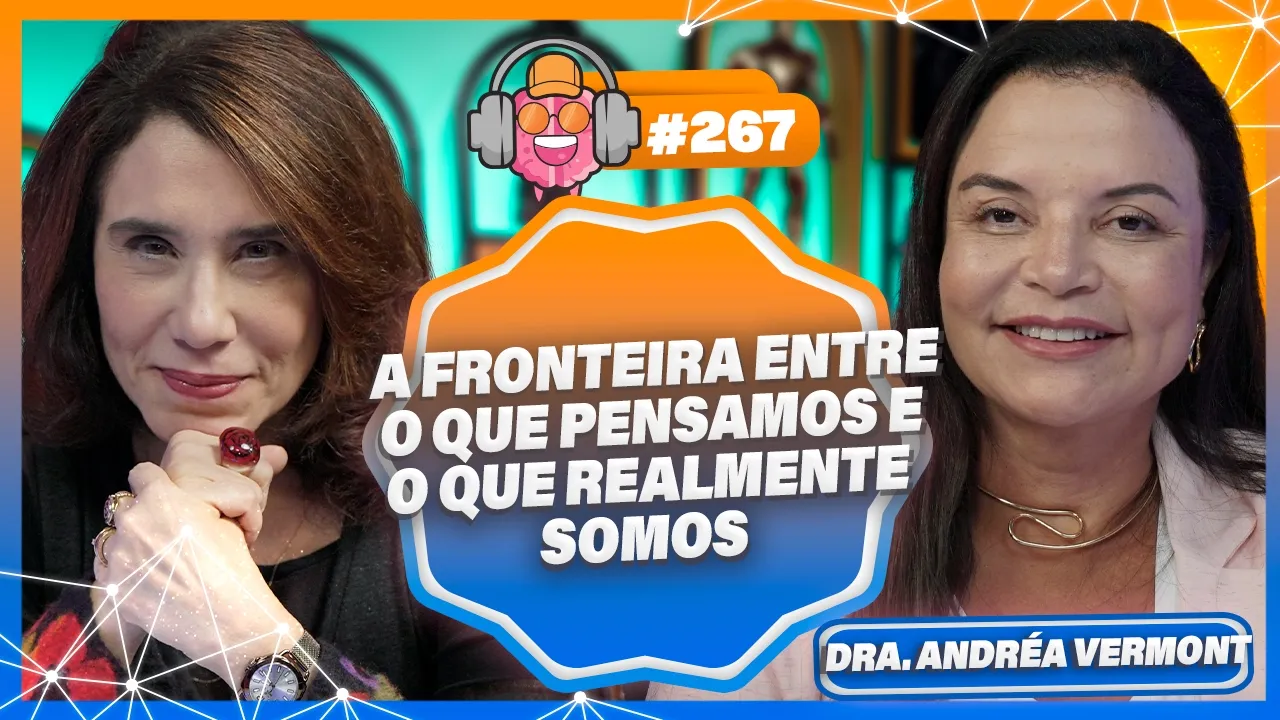
which is a powerful anti-inflammatory substance. So, it has an anti-inflammatory and analgesic action. For those who have chronic pain, it's the ideal supplement. And if you live with pain and stop having pain, your well-being improves significantly, irritability decreases, and you become much more productive. She traversed the corporate world with critical thinking, immersed herself intensely in psychoanalysis, and found in neuroscience the bridge between reason, emotion, and behavior. Today she trains psychoanalysts, creates content, writes books, and shares her knowledge with humor, empathy, and depth. With you, the psychoanalyst Dr. Andreia Vermon. Hello everyone, welcome to another episode
of Pod People, a place where we meet To see and hear people. People who do, people who make things happen, people who inspire. Today's question is very simple. What do neuroscience, psychoanalysis, and philosophy have to say about our deep voids as human beings? Well, to talk about that, we're going to welcome psychoanalyst and philosopher Andreia Vermon. How are you, my dear? How are you, my dear? Pleasure. What an honor to be here. A joy. What's this? The honor is mine. I want to hear you, I want to learn, I want to savor your knowledge. Oh,
let's go together, it's really, really good. I like your content, I like your Instagram. Wonderful. You deserve congratulations. Congratulations indeed. I do it with a lot of affection, with a lot of love. You can see that. And you are an inspiration. Thank goodness, my dear. You can't pretend to be normal, people. Bia is an inspiration, a sweetheart. That's right. But if we don't inspire, my daughter, it's not worth living, is it? It's almost time for us to stay, and you're inspiring so many people too. Yes, it has to be, otherwise it's not worth it. Our
episode today was chosen to be sponsored by Doctors Fuss, which is a wonderful supplement brand. And they sent you, my love, a little box that they didn't send me. I'm slightly illuminated. And the product we promoted and are promoting today is the omega-3 ultra DHA, which is a fraction of omega very linked to memory, focus, concentration, and brain health. It also provides a little bit of eye health, okay? To delay eye changes. There's also DDDD DK2 Plus, which is wonderful for preventing osteoporosis. You know that vitamin D is fundamental for immunity, especially immunity for many
other processes, and it has an antidepressant effect. Now, vitamin K2, my love, is what removes calcium from the arteries and puts it in the bones. Look at that. It's the satellite, because it's no use thinking, " Oh, I'm going to remove the calcium," if there's nothing to take it to the bones. You take calcium, but it ends up in the wrong place. God forbid. Instead of providing a shortcut, instead of helping, there's also creatine. I don't know if you take it, but if you don't, it's time to start, okay? I'll make my list for you
later. There's magnesium, there are wonderful things here, things that are a 10. The whole box is full of it. Yours. Oh, what a blessing. Thank you so much. Thank you for your kindness, my love. Let's go. I want to learn a lot from you. First, uh, I wanted to tell you a little about your journey. How does a successful woman in the corporate world decide to delve into psychoanalysis? Then she goes into neuroscience, she goes into philosophy and talks so much about our humanities. Well, actually, my career is very funny, isn't it? I say that
maybe the corporate world was a stumble in the middle of the story. It wasn't an end. It was the stone. And I really was very successful in the corporate world, but it happened because I was born into the humanities, right? I say that my career started at 8 years old. 8 years old. 8 years old. I was, actually, I started very early. I entered school at a time when there wasn't much of this business of starting at 7 years old. My siblings are all much older than me and my mother took my siblings to school.
In Minas Gerais, we say "temporona" (a term used in Brazil to describe someone who is born late). I was born late. Ah, late. Here we say "temporão" ( late). The youngest. The youngest. My mother had already had her tubes tied and got pregnant with me 10 years after mine. My Love, you had to come, right? Oh my. 10 years later. And then it was a struggle to be born. I was born by force, through a lot of chaos. I really had to come. Uh-huh. And then my siblings were already going to school and I was
a child. So my mother would drop you off at school and come back with me. So the house was empty. So every day at the school gate I would cry. I want to go to school, I want to, I want to, I want to go in. Then one day the principal felt sorry for her and said, "Mrs. Maria, let's give her an aptitude test. If she passes, bring her to school right away, because she keeps crying." I was 5 years old. So I started school in the first grade when I was 5. At eight, I
had to write an essay. The teacher puts on those inspirational texts, and we write an essay about what Cecília Meirelles meant with this excerpt from Cecília Meirelles' poem—I remember it like it was yesterday—with this excerpt from the poem. And I answered: "What did Cecília Meirelles mean? I don't know. What I can say is what I think about what Cecília Meirelles said." That was amazing, right? I was so cheeky. Philosophy starts there. It starts there because then she called my mother and said, "Look, She answered, she was bad, she was almost badly behaved." Badly behaved. Uh-huh.
And then my mother went to the school and I said, "Teacher, I wasn't badly behaved." It's because I don't have, I have difficulty saying what the other person said. The most I can say is my interpretation of what the other person said . And honestly, honestly, it wasn't right. And that's when I really became aware that I had a different perception of the world. I remember that scene like it was yesterday. Me becoming aware that I had a very interpretive view of the world. And that's where my story begins. That's when I started reading philosophy.
That's when I read Sophie's World. That's when I read Dante's Inferno, Sophie's World. Wonderful. Wonderful. Maria Helena Xi was my great companion during my childhood and adolescence. I started listening to opera. So I grew up in this way that was different from my siblings. Absolutely. And it's very interesting because we were very poor. My father, a military policeman, had to raise seven children. My mother had to look after those seven boys to get work. And then my father would say, "Maria, I can earn my salary, pay for lunch and Dinner, but breakfast and afternoon snacks
for the boys, my salary doesn't cover that." So the boys had to fend for themselves to get that, help out somehow, or stay at school all day. Yes. And there wasn't, right? Full-time schooling. And back in Minas Gerais, about 30 years ago, people would throw scrap metal on the street, oil cans, tomato paste cans. We would go out after school to collect scrap metal and sell cans on the street. Oh, okay. Me and my brothers, so we would collect recyclables and sell them. Then my brothers would take their money from the recyclables and buy bread,
milk, rolls for breakfast, for afternoon snacks. I would buy early to sell my share, they would get a little carried away. My mother would tell my father, Sebastião, you have to take that girl to the doctor, she has mental problems, she listens to opera, I don't know what. So, it's in that context that it begins. My story. So, that's where I fell in love with philosophy. At 18, I went to university to study philosophy. You applied to study philosophy? My degree, my undergraduate degree, is in philosophy. Philosophy. I graduated in philosophy. I started teaching as
a substitute professor at the university. It 's very funny because I was already married, I had a 6-month-old son, and I was saying: "Wow, this money isn't enough to raise a child, how am I going to manage with this, right?" Then you even felt sorry for your father. You said: "The poor father was right, poor thing." Especially because he didn't want me to study philosophy at all. He wanted to die if I studied philosophy, especially since my grade when I passed was high enough for any course in the university, including medicine. It was the best
grade in the university that year, in that entrance exam. And my father wanted to die. He wanted a daughter who was a doctor, a lawyer, white, his dreams were things like that. So I started, graduated, began teaching, and earning very little. I thought, "Guys, this is so funny." I tell this story in lectures, and people laugh their heads off because I say that we went to the beach for the first time in a hotel with a six-month-old baby, splitting the cost between Guarapari and Porto Seguro. Oh, okay. Different. It was different back then. I split
the cost into 24 trips, and I was always very restless. So we'd go to the beach, my husband would sleep with the baby, and in that interval I'd go down to the internet Cafe—remember those? I don't even remember—and I'd do research, thinking, "Guys, there has to be a different way to make money. It can't just be this, right?" And then in the middle of that research, I discovered a guy who had a degree in anthropology, who had an anthropology institute, and who provided consulting services to companies in the field of anthropology. I told the companies,
and I said, "Bingo!" I said, "If he does consulting in anthropology, I do consulting in philosophy." I said, "Okay, Bia," it was really funny because I got the computer at the beach, set it up, I knew absolutely nothing about the corporate world. I put together a scope, mission, vision, values, products. Hmm. I said, "Okay, I have a company without a CNPJ (Brazilian business registration number), no." I said, "Okay, I have a company, I'm going to give training in people management, I'm going to revolutionize people's lives, leaders with philosophy, with philosophy applied to the corporate world."
The beach break ended, the boy was already awake, I went back to the room. The next day, I went again, the boy was asleep, and I said: "Now what do I do? I need to present my product to companies. How do I get to companies to take the next step?" Then I said, I live in Uberlândia, I have to start in Uberlândia because I don't have money to travel. What if someone hires me from somewhere? Haha. No, but you were already thinking ahead, you were already putting your foot in the door. I did it. I
sent it to the three main companies in Uberlândia, the three largest. My name is André Vermon. I have a human resources consulting company in the area of philosophy. I revolutionize leadership, this and that, that and that, starting from a philosophical basis. The next day I go back to the internet café and a company replies: "Andreia, how are you ?" Send the email. Send the email. They replied to my email. How are you? We are from such and such company, we are going to launch 3G in Brazil. We are looking for a speaker. We really liked
your proposal and would like to interview you tomorrow at 8 am. Where was I? At the beach. I said, "Wow, this is the chance of a lifetime!" I sent an email, saying, "Look, unfortunately I'm on tour in the Northeast, I'll only be back next week, but it's not that bad, is it?" Then she accepted. Were you in the creative department? I was in the very core of the creative department. She accepted, saying, " Come next week." One of the biggest [jobs], I'm very grateful for that, because later I started my corporate career there, she scheduled
an interview for the following week. I say I didn't deceive anyone, because I had a truth, and I still have it, and everything I was saying really existed within me. She scheduled an interview, she said, "Look, we're about to launch." 3G was unprecedented, it was a telecom company with three final speakers, but what you said is so new that... People are rethinking putting four people in for the final interview. Are you coming to the interview? I went, and she said, "Sit down, the director." And there I was, in that beautiful, wonderful place, earning R$2,000 a
month. I had never even been inside a company before. Then you get there, and the chair must have cost R$0.00. The chair the director sat in, it was so thick. Those beautiful women, like us today, with their hair styled, their perfumes, I thought, where are these women I've never seen in Uberlândia? Tell me a little about people management. And I started with Aristotle, Sartre, Plato, Nietzsche. And philosophy is truly fantastic, people. Yes, of course. And what does philosophy really say about These perspectives? And I started talking, and so on, and so forth. And her eyes
widened. I said, "Wow, this is great because her eyes are wide open." When I finished speaking, she said, "Andreia, everything you're saying is wonderful. We've never heard anything like it here." I thought, "Neither had I heard anything like it." You talked about everything from the philosophers. You just hadn't talked about how you were going to do a training based on that. But I brought perspective because she wanted to understand how to lead people, and I brought perspectives on leadership according to the philosophers. It's fantastic. Then, Andreia, this is all very good. Let's schedule it for
tomorrow. We're going to talk to the company owner. We're going to have a panel with the company owner, the sales director, and me. She was the director of the corporate university. Do you have a lecture, a short presentation, just to show us how you present live? I said, "Yes, you said you did, right? But you went home to do it." I said, "I do." "You did what?" She said, "What topics do you have?" I said, "What topic do you want?" I have a bunch of topics there. People management. Bia, I sat at the computer, barely
slept. The next morning, I arrived at 8 a.m. The company owner and the company were celebrating their 100th anniversary that year. The father, the founder, was turning 100, he had passed away. I put together a PowerPoint presentation on how to lead people and leadership perspectives, and I included quotes and such. And she said, "You have 20 minutes." Twenty minutes to say everything. But what? That was the maximum I had, right? Oh, okay . I understand. Because today, giving an hour, two hours, two... Ugh, it's over. And I went on, and at the end I put
in a clip with the founder's face, it said "So-and-so 100 years," and the clip broke into pieces. Then I finished in my pocket. Everyone. Then the old man, the son, in his 80s, looked at me, stood up, did this, and left. I thought, "Either I did a great job or I'm going to leave here in handcuffs." One thing or another, but I had an emotional impact. The sales director also left, leaving only her, the director of the corporate university. When he left, he said: "André, my goodness, it's fantastic, it's unbelievable, your ability, you create a
kind of hypnosis, Your way of speaking is so simple, you know? Manu, it's the emotion that's most important. Hi neuroscientist. I was already doing my doctorate in neuroscience. You touched on emotion, that wouldn't be forgotten. I left there with 20 lectures booked to tour Brazil to launch 3D through the company itself. During the course of the 20 lectures, I already received offers to be hired by the company. I went as a consultant, as a speaker. During the tour they already sent me a contract. You're having a lot of impact, it's very good. Come manage the
corporate university, not just as a speaker. Then I enter the corporate world. And that was wonderful, but always from that perspective, you didn't change what you wanted, you just created another reality where you could apply your content. Yes. Yes. And there I had already completed my training in psychoanalysis and was already doing my doctorate in neuroscience." So I stayed at that company for a few years, I got along really well, the people there were wonderful to this day, it was a marvelous school. I left there, and I became the director of a university, of a
group, of a large educational group. I stayed, then I went to the financial sector, I also Joined as the commercial director of a banking complex, a financial complex and I've developed my entire corporate career here. But what always happened in that environment? I wondered, is this my place? And people wondered the same thing, because it was very different and I felt kind of like an onion in a fruit salad, you know? When I understood, like, I feel good here, I'm welcomed here, but I don't belong here and I felt out of place. Uh-huh. And I
got very sick there. I had anxiety, I had panic attacks, I started taking anxiolytics. Uh-huh. Because I had a perspective, because I say this, and I don't know if it's a criticism or a statement, but anyway, uh, mental health professionals in companies work for the company, independent mental health professionals work for the individual. Exactly. So, and I say this because I managed a corporate university, I created content so that people would fit into the company's style, not for the individuals themselves. So I experienced this dichotomy within the corporate world, and it made me ill. Philosophically,
it was contradictory Because I was looking at people, not training them for the company. I didn't want to fit people into the company's perspective. Uh-huh. And that always generated conflict, both with me and with them. Uh-huh, in various situations. I was called in for feedback that things shouldn't be that way. So, those were very good, wonderful years; they shaped me as a person. I joke that I was a philosophy professor in a tie-dye shirt, pajama pants, and leather slippers, and it shaped me, it molded me. I was in many places, I talked to many people,
I learned how to behave, and I'm very humble in saying this, it was wonderful, but I suffered a lot. I suffered so much that I had a burnout. When I left my last company, I had a burnout so bad I couldn't go to the company to sign my termination papers. I couldn't manage it, and it wasn't so much about the workload, it was about this division of ' which side am I on?' It was never about the workload. In that respect, I think, if I can say so, we're similar. Uh-huh. I work from 8 am
to 11 pm, just like that, smooth. Uh-huh. With the greatest pleasure in the world. I'd arrive at university at 8 am, the university would close at 11 pm, and I'd be there. Sometimes you were there. It was never about the workload, but about the absence, nor the conditions, right? The lack of conditions to work properly. It was about being divided. It was about the absence of purpose, a sense of purpose. I lacked, I felt I was transforming people's lives, I felt it made sense. I was working for someone else's purpose, and sometimes someone else's purpose
didn't align with my purpose. So, in some companies I was in, some purposes were totally contrary to my life's purpose. And then I had to convince people of something I wasn't convinced of, and that was making me sick. So when I left my last company with burnout, I made the decision. I always worked part-time, I never put all my eggs in one basket. So I was at the company, but at night I saw patients in my private practice. I was at the company, but I always gave lectures. I never stayed in just one thing. When
I had this burnout, and then I also had a boss, That's why I asked you about psychopathy, narcissism, I worked with a guy who, wow, within the company, within the company. Uh-huh. A horrible level of psychopathy. And so, I left destroyed, and your books at that time helped me a lot, a lot to understand, and when you say, get away as quickly as possible. And it's interesting, isn't it? You're saying something, André, that many times when I was seeing patients, they would say: "How do I cope with this job?" I said, "No, I think it's
better if we see how you can go somewhere else." Because sometimes people insist on adapting, and it's not their place. You get sick , and any human being gets sick. So there are people who say, "No, but I can't leave, and the security." I said, "What good is it for you to die feeling secure?" Because you're going to die anyway, you understand? So , there comes a time when sometimes we have to say, "Look, you're not the right person to be here." "You'll flourish somewhere else, not here." And this whole security thing is so crazy,
because I really believe in it. It seems like there's some kind of money that's cursed. It seems like I was earning, earning, Earning, but I didn't even have that financial security. It was crazy. I didn't have that financial stability, it was money that was leaking out, you know? It's the most... so much so that in the end, when I made the decision, I said: "No, I'm going to stay 100% in the private practice." And it's funny because when you brought up that question at the beginning, it made me reflect on myself, right? How do you
leave the corporate world so successful, etc. Actually, the corporate world happened because this story wasn't a goal, it wasn't a purpose, it was literally, I don't know if it was a stone, but I think it was a bridge, it was, right? It told you to say: "Wow, I can mobilize people with this, I can, I have things to say about this." And then it happened, it happened, it happened, it made me... It confirmed that you had this talent for managing people, or talking about people management. But it's funny because as we 're talking here, I
often see images of myself in my cubicle, right? I had a cubicle, a workspace , and I was there working extremely competently. I can say that, I really like a quote From Mother Teresa: "Humility is truth; if you are humble, you must recognize that you are." Everything I've done so far, thank God, in terms of work, has been very successful. Thank God . When I worked at Telecom, it was very good. When I worked at the bank, it was very good. I'm very serious about the things I do. I had results, but I remember looking
at the spreadsheet, looking at fantastic results and thinking, "I so want to make a living writing books, speaking to people, living my knowledge, being able to sit on a balcony like I did today reading a book through this, right?" I remember that image clearly. I would say: "God will give me the grace one day to be able to live from my knowledge." I say... My purpose in life is to acquire knowledge and distribute knowledge. I am a bookworm. I love it. My husband jokes about it. The other day, my daughter and I said, "Wow, I
love books so much." Then my daughter looked at me and said, "And us, Mom? We, I'm a little book, you like it." So, I love to read, I love to study, and I love distributing knowledge with the same intensity. So I remember myself in the corporate world thinking these things. When I joined the bank, it was so funny because I went to the bank to give a lecture too. Uh-huh. In Salvador. But during the briefing meetings for the presentations, the bank director said: "Don't come here, you're talking about things we've never even considered." When I
went, he said: "Andreia, take on the national commercial director position, a commercial role that had nothing to do with me." I said: "But I've never been a commercial director." And then you ran away even more, but you proved the power of the enchantment of your knowledge. Then he said: "André, it's not learning about finance, it's almost like training." "If I give you a book, if it's about that business you're talking about, managing people." And really, Bi, I took over the area delivering 5 million per month. 10 months later the area was delivering 27 million per
month. What a marvel. Without changing a computer, without changing a manager, without changing a process, just working on people. But it was like that, sitting next to them, understanding what was happening. For example, once a young man, 28 years old, was in Rio Branco, in Acre, I Was the national director, his results dropped. I called him, I said: "What happened?" "Hi, hi, André, how are you? My results dropped, right? You must be nervous." I said: "I didn't call you to find out about that. I want to know exactly how you are." He said: "André, do
you know what happened? Unfortunately, my wife was 2 months pregnant and she had a miscarriage. We lost the baby." I was transferred to Acre, we held my son's funeral, just me and her. And then, in this last one, without family, without anything, we are devastated, without a support network, and my results... They fell for it. I said, "I'm not worried about your results, I'm worried about you. Tomorrow I'm getting on a plane, I'm going to take over the management of the unit, you're going to stay with your wife for at least 20 days." André, are
you crazy? I said, "There's no discussion, I'm going there, I'm taking over the management of the unit, I'll stay there for 20 days, you take care of your wife, then we 'll talk about results." Bia, for six months he held back my results after that. My national results happened because of his numbers. So it was things like That, I say, and PR. No, because, uh, you reverse the rule, right? That usually the hierarchy here doesn't come here, right? And you did the opposite. No, I'm going there. No. And I say it's like this, and it
was like that, right? I, I, again, didn't change a computer, didn't change a person, and we went from 5 million to 27 million. Once, I was in Espírito Santo, in Guarapari, and there was a consultant out visiting some clients. We were doing agricultural consortiums, so consortiums of 10 million, 15 million for machinery, huge clients. I see this guy all day talking on his cell phone. I see this guy talking on his cell phone. He was a consultant. I said, "Hey, what's going on? Because we need to focus here." No, it's nothing, director. It's because there's
a situation happening at my house, you know. I said, "How long have you been in the operation?" "Oh, only two weeks." I said, "So you haven't received your first salary yet." No, I haven't received it because I saw he was talking about money. I said, "But what's going on? Be honest, because I'm also very objective." I said, "Be honest so you don't have to solve it." My wife is complaining because there's no money to buy milk for the boy today. I said, "For God's sake, I didn't send the Pix payment. Let's resolve this." That's all,
let's get to work. And then there are these people, because when you convince them through rules, you have to convince them every day. When you convince them through a truly human approach, you've created something through example, right? That's what inspires, right? So I didn't need to go to places twice. I went once, and from there I generated synergy, I generated affection, I generated commitment, I didn't just train them. So people committed to my numbers. So things happened. I was looking around at everything and I said, "Guys, I need to, I need to live off this.
This is what gives me passion, this is what gives me butterflies. My gift, this is my talent, right? This is what gives me butterflies in my stomach. And then I left the corporate world. Then I said, "No, now I'm going to dedicate myself 100% to the lectures and..." How old were you then? Oh, I was about 38. Yes. Then I focused only on the office and the lectures. And then? Then joy. Wow. Then it changes, right? Everything changes. Uh-huh. You were on the other side, right? Where you always are. Yes. Uh-huh. And I say this,
right? I quote Santos a lot because I was a nun, right? How long, Andreia? I don't need to laugh. I believe it. Sometimes in lectures I say, "Guys, I'm going to give you some information, but let's practice." When I To finish the information, you say: "Oh, and don't laugh." Yes. Say "nun" and everyone says it. I started my vocational journey at 22. You follow a path like that? Yes, yes. I did the aspirancy, then the novitiate, and then... So I stayed in that phase for about six years. But as a nun in habit, for two
years. It's also that you reach a point and say: "This isn't it." This isn't it either. I liked it. The knowledge I had access to is very good, but this isn't it either. This isn't it. I wanted to have a family. Uh-huh. I wanted to have a husband. I wanted to have, I wanted to have that story, you know? I understand. Children, house, dog, parrot, parakeet. That's it. Uh-huh. Again. I was living someone else's purpose. It was good, it was beautiful, it was wonderful. I say that the other doctorate I did was in the convent.
It was Wonderful. But it wasn't there, it wasn't. It was another passage. And Saint Thérèse of the Child Jesus, she said that... Saint Therese entered the convent very young, right? A girl enters the convent. She falls ill, dies, spends little time in the convent, a cloistered nun, but from within the cloister she revolutionizes. To this day we talk about her. And Saint Thérèse of Lisieux said: "If I take just one soul to heaven, I'm already happy. My mission is not for thousands." When I go to my office, that hits me. Because I say: "Wow, I
just need to inspire one person, right?" Wow. Then, then, then it really resonated, then it made a lot of sense, because then I saw the life transformation. I saw a teenager with a history of self-harm, and in therapy we managed to reverse that, and the boy started studying, got a master's degree, started dating. So, I saw life transformations, marriage transformations, and the same thing in the lectures. And I became absolutely passionate about it. I talked about that movement of yours, that exchange that came from you, your best self activating the best in the other. Yes,
that's it. My best self triggering the Best in others. And my husband says, "You're very restless." Then when I stop to look, really, you know? But everything was part of getting me to a place where I found myself. I think they were fragments that built up so that when things happened, I would be ready for the way I was, otherwise I wouldn't be there, you know? Or do you still maintain the practice today? No, because I can't anymore, because I think it's something you have to be able to do... I stopped, I stopped three years
ago. Yes, I can't because of too many commitments, too many courses, too many lectures. And what happened in the practice, which was something that hit me hard too, I kept increasing the ticket price, thinking the number of patients would decrease, but it didn't. It didn't decrease, it only increased. Yes. And today I say, Bia, honestly, that if I were quietly at home, seeing five or six patients a day, I would be rich at the end of the month. I would have a multinational director's salary. Uh-huh. But I would be seeing one person, and who can
pay me? Exactly. When I give a lecture, I do it for 1,000, 2,000, 3,000 people. And the people who pay themselves Pay a very low amount or don't pay at all because it's companies or schools that promote it. So I broadened the scope of my mission. For example, I could not travel, stay at home, knowing this reality, earning a very high amount per consultation and seeing whomever I wanted. But I thought that if I broadened it, I would do it in a much better way. And then I think it's also about creating successors, right? People
who will do that for a while. It's like a cycle. It's a cycle of nature. A time for everything, right? A time to flourish, a time to retreat, a time to expand. We are a bit like the universe, right? There comes a time when you no longer fit here because you have to inspire people. And it may not seem like it, but I notice that for many people, there will never be a therapist for everyone. Even in the richest country in the world, this doesn't exist. That number doesn't add up. Now, often what you say
opens up the possibility for that person to start self-taught in their search for knowledge and self-knowledge. And it's a silent revolution, but it's happening. And that makes me so happy because people say exactly that, right? Some people say, "You're my Daily therapy." Exactly. Just like you. You opened up a perspective on some issues that nobody talked about, for example, psychopathology, psychopathy, and so on, borderline personality disorder, things that awakened people and that they started to walk through. I think I play that role a lot too. Yes, yes. That's what I'm saying, that people say, "Oh,
you should be doing this." Everything has its time, right? And when you share knowledge with your truth, with your intention—it's not just truth, it's intention, because sometimes you don't tell the absolute truth, because not everyone is ready to hear it—but you share the intention so that it awakens when it's possible for them. Uh-huh. This is so interesting that you, as a therapist, also have to have that kind of thing, like, it's no use, it's not the right time. Right? Nit says that, doesn't he? Each person chooses the degree of truth they can handle. Can handle.
There are people who can't handle that "yet nothing against you." Because there are many therapists who are like: "Ah, "I'm doing everything wrong." The person continued with so-and-so. I said, "You're not wrong." But then this Therapist needs therapy. But many, we know that many, are like this: "Ah, the patient isn't getting better. Are you doing it technically right? Do you have the right intention? They have their own time. You have to respect that, you have to respect their time, right?" And this formula you gave is so interesting, it ends up helping us in our mission,
right? Because sometimes I question this, because you know, on the internet we hear billions of things, a lipstick you put on... you talking about this. Congratulations on the answer you gave to a gentleman whose name I won't say because I'm polite, who said you were giving a wonderful text, he just talked, he just forgot to do the root. I thought that because I've been told that too, but since I'm that kind of person, like, Dani, if the root is mine, you know? But I found your answer so philosophically correct, because gray hair is part of
our humanity, of our growth, it's about ageism, about a certain lack of elegance. And what I thought was cool was that it went viral, showing that there are many great people we don't see, right? How beautiful that is, because we talk about so many things, So many things. Oh, I didn't like your earring, my love. Wear yours however you want. Oh, I didn't like the way the subject was discussed. Then, open a social network and talk about the subject you want. Oh, I didn't like the guest. You invited them. OK, you may not like them,
but respect them. Invite whoever you want. Open a guest list if you want. Oh, I'm going to unfollow. Go ahead, you're free. The worst thing is that they don't unfollow. On the contrary. Say, when they say, unfollow now, and you say: "Oh, [ __ ] how good." Because it's not the person's place or my life. It's not the person's place. Because sometimes, you know, I see things on social media that I hate, but I'm not going to go there and complain, right? I just think, "Guys, this isn't my place," that's it, it's not mine .
Just today I heard a super sexist comment about that whole Virginia Vinícius Júnior thing. I heard a super sexist comment, I just went there and unfollowed. That's it, okay. I'm not going to pick a fight with guys like that, it's not about picking a fight, we have to stop because I think people think that thing about having 15 seconds of fame, people are thinking they have to have An hour, two hours, three hours and they miss the opportunity to stay quiet. But it's interesting, Bia, because social media has given everyone a voice, right? Nelson Rodrigues
used to say that, right? One day the idiots will take power. But anyway, it's over, but I think we have to have a minimum of education, because if I don't like your content, guys, it's democratic. I'll go there, look, I don't like your content, I don't need to say I'm leaving, because that's also narcissism, right? Because the person wants you to see that they're no longer following. People, let's not please everyone. Jesus didn't please everyone. We shouldn't, right? How did you deal with that? How did I deal with it? No, how do I deal with
it even today, right? I'm here now with my friend, future friend, who I want to be friends with, Bia, a psychiatrist, to take care of my mental health. Bia, what happened? Everything happened very quickly. I say that's how people talk, I find it so funny how people get married from their corporate life, okay, okay, and it went straight to the doctor's office. And then you also start, it was the time when social media was born. Yes. And then people ask me: "I love this question, how did you explode Overnight?" This wonderful question. Well, it's been
years. But what can I say ? I didn't do anything different. Only those who do illegal things explode overnight. It's not my daughter. Then the people who buy permits, buy this and that. Then you say: "No, that really happens overnight." I did what I always did. Every morning I went into the office, turned on my cell phone, and recorded some content. And now in January a friend invited me to a podcast , the Three Brothers podcast. I started the podcast from there. So, a few months ago, I traveled to the beach in January with 12,000
people in my network, just the beach. You see, the beach... It revolutionized your life. It's true. You're with me, my dream is to end my life on the beach. So you see, every time you go to the beach at some point. And the other day I was doing a podcast with my partner, the reverse, right, he's the one interviewing me. I love that it's this thing about being near the sea, how it totally changes you. You literally become a blue woman, my love. Because you go there. Today I was looking out the window, I said:
"Wow, I need to move to be in front of a sea like that. It's crazy." I'm going in January with 12,000 people now. 12,000. I'm almost at 3 million in 7 months. So my life has been like this, look. But it wasn't 7 months. You're telling a story, my love, that starts when you're 8 years old. That's it. That's it. 8 years old. That's it. That's what people... And that's it. I'll say something, I don't know if you agree with me, André. There's this: achieving success isn't that difficult, I don't think. Achieving consistent, sustainable success.
That's it, my love, because many people do that thing, that's it, it goes up and that's it. Being sustainable is being consistent, and it's being consistent with yourself, not with someone else. Because I see people like: "Oh, now I'm going to change this here because so-and-so is doing it that way, forget it, it won't work." It's funny. And then you gave such a precious formula, which is to do it correctly, technically correctly, and think about your intention. Intention and consistency. From there on, what are people going to do with that? It's not up to me.
Think about your technical competence and your intention from there on, because then it comes down to my question you asked earlier, how are you dealing with this? Because then, yes, Then we'll get a real beating. We'll get a beating, as they say in Minas Gerais, "the fubeca eats deliciously." The fubeca. Fubeca eats deliciously. I didn't know that one. Let's go. Wow, my mother used to say: "I'm going to beat the fubeca, not one of them will escape here." Fubeca, what does fubeca make? Wow, fubeca is a belt, a rope. Fubeca. Okay, now I get it.
Have you ever seen when you take a belt and hit it in the air, it makes this sound, it even makes a noise? That's the fubeca. The fubeca is that. It's the noise. Okay, you understand? Because it only makes the fubeca sound when you hit it hard, okay? Okay. So when I said the fubeca would sing nicely, you could get ready and the leather would be good. The leather would be good. The fubeca has been singing nicely for the last six months. Because I am this person. I say that what changed was my life, but
I haven't changed. I do n't think your life has changed either. I think your life is more exposed to a larger number of people. It's like you had philosophers who didn't use [their instruments] to give their uh classes, it wasn't in a public square. In a public square, it changed, you were put in a public square, that's all. But then the fubeca sings, right? I think it's because people worry too much about other people's lives and too little about their own. I 'm shocked at how everyone reacts. Look, I'm not going to open my mouth,
waste my time talking badly about someone who spoke badly about me, because everyone gives what they have, Andreia. Everyone gives what they have. You know the story of Dona Beija, Dona Beija, from Aracaju, Minas Gerais, you know, very close to my house. Dona Beija got a gift from one of the women whose husband frequented Dona Beija's house. She was very angry when she discovered that her husband was there and enjoying himself at Dona Beija's house. In a fit of rage, she made a box, a very pretty package with velvet taffeta, but it was cow dung.
And she sent it as a gift to Dona Beija. Dona Beija opened it, and out came that awful stench, that horrible smell. Then she said: "So-and-so, you go to the garden and pick me the most beautiful roses you have. Oh, okay, Mrs. Beij. Okay, okay, okay, okay. Now I want you to do this. Put a ribbon on it, I don't know what. Put this and that. P ppp pá. Oh, how beautiful. Where are we going to put it? We're going to have it delivered to this address that sent me this. But you 're saying no.
And the card, please, put it there. Everyone gives what they have. That's it. She sent the roses. That's it, Right? Because, what are you going to do? You convince someone otherwise. It's the awakening of consciousness, it's individual. But this going to the agora, this going to the public square, I say that you are my reference, my advisor, jokingly. Everything that happens, I say: "How did Ana..." "What would Beatriz do?" I always think about that. But today you sent an audio message that I'll answer, because I see that you're a very discreet person. You don't expose
much of your personal life. I always ask... I say, "Guys, my reference is always Ana Beatriz. André, this is happening." I say, "What would Ana do?" Why does my work have to be shown? You know, it's not my personal life, it never has been. You're absolutely right. Then there was a time when people were like, " Oh Bia, people want to see you brush your teeth." It becomes uninteresting. And what do I inspire someone to brush their teeth? Because if someone doesn't brush their teeth, they're dirty. So it's not a matter of inspiration, it's a
matter of education. Someone will have to go there and teach them. But this fetish that people have for our personal lives is so interesting. Don't you Realize that? I think so, but I think that at some point people are so needy, so empty, that they want an identity. Be careful that... It's warm. This is made here. Just be careful. Look at the smell. Wow, what a dream. We're trying to make the commercial formula, but it's not happening. Oh, not yet. You want to sell tea? Because everyone likes it, everyone... You're your customer, I drink tea
all day long. This one is made here and it stays in the water for 12 hours, decanting well. Wow. And it's thermogenic. Honey, how delicious. We're going to get thinner and smarter too. So, I think this thing is a fad, it comes and goes, right? Yeah. So this thing of, oh, want to see someone turn on the shower, oh, want to see someone? But do you notice this fetish with your life? I notice, I notice, but it's other people's fetish, not mine. She's too healthy, people. I'm drooling. Yeah, it's other people's, you know? You don't,
you don't get into it. No. The only thing I occasionally posted was doing physical activity. And that's where I think I 'm inspiring other people. It's different, isn't it? And with the casual clothes, you know? No crop top. Okay, okay, okay. I've always liked going to the gym in something nice and light. Yeah, because the gym is already a struggle. If you also have to look good, God forbid. Yeah. Oh, I remember once, about 10 years ago, I went into the gym bathroom and a girl, she must have been about 20 years old, I must
have been about 48 or 50. Then she said, "Can I give you some advice?" I said, "Sure, my love, please, because I'm always open to listening." "You should wear makeup like this, the kind that doesn't come off in water, that doesn't look good when you sweat." And I don't know if you should put on... I don't know... I looked at her, and she said, "I'm saying this because I like you." I said, "Then I'll say something because I like you too." I found you authentic. I found you cool. I love the way I am. You
know why? I don't live off my looks, I live off my mind. And it's so cool. If you could see it, she'd be a beautiful woman, wouldn't she ? She looked at me, I think she didn't quite understand, but from then on she passed by, it's okay, it's okay, it's okay, there was no problem. But I think it's interesting what people want to Give you. And it's funny that you said that, right? We really have to inspire. Like I said this week about menopause, it was wonderful. So many women messaged me. I said: "Guys, when
I found out I was going through menopause, my first thought was, I was ashamed." Really? Can you believe it? So much so that when I got home, my husband said: "How are your tests going?" I said, "Oh, it's okay. I didn't tell you I'd gone through menopause. I can't believe it. You didn't say, 'My FH and LH are through the roof.' I believe it. It feels like we're entering a period of decline, right? No, it's not. Look, I'd say menopause worked for me. More action and less pause. I swear, it's the most productive phase of
my life. After menopause, oh my goodness, now there's no more problem with menstruation. You can go to the beach, nothing will bother you. There are things we have to adapt to, yes, but it's not a phase of decline. Look how good that is. I'll tell you if you want tips, my dear. So let's do a live stream about menopause later. Let's. Oh, because the first thing..." It was the issue of ageism. Yes, people have this situation, you know, of thinking, " Now you're in decline, now women are... oh, because..." and you hear things like ,
"You're nervous, it must be because of menopause, you're irritable," but we've always had irritation. Well, for example, do you want to see something that deeply irritates me? I loved Fernando Yang with that "Irritating Fernando Yang" program. Yeah, something that deeply irritates me is when people talk to me about impossibilities and never about possibilities. My employees, I tell them: "Guys, don't bring me impossibilities, there's a problem, get everyone together and when you come, say: 'Look, we have a problem, but we thought of three possibilities, bring me at least three and we'll choose a third one,' everyone
together, but we make mistakes trying to produce solutions. Now, the trumpet of the apocalypse, you know those people, oh, I won't even tell you, this happened." I also get super annoyed by that. But now the argument is, "You're like this because you're going through menopause." That's nonsense, you know. It's always been like this. It's always been like this. Always. I'm even Feeling better, you know? Menopause brought me something. Oh, but you must be super medicated, on hormones. It's not possible. No, everything in small doses. My wonderful gynecologist, André Vinícius, is wonderful. Uh, I think he's
the guy who knows the most about menopause in Brazil. For sure. For sure. But I think he's one of the best. I was, I was getting better. Today, to get me angry, you'll have to try hard. Yeah, me too. Every now and then I'll try to hit someone in the face with Taber and even then I'll say: "Oh, stop with this Taber thing." People think I'm super agitated, stressed. I'm a well of calm. Because, like this, if I stop to fight with myself, I'll have to work hard. I stop so I don't fight. Two. Now,
people might get a little confused, right? Sometimes we say things like, "I'm the one who sends the audio," because when I have an idea, I have to send the audio to the team, but I say, "No need to reply, it's just so I don't lose it." Yes, it's just so I don't lose the idea. So people think you're demanding something, but no, you're just putting something on the conveyor belt, On the conveyor belt of things you say. This could be interesting, right? And you have a group of young people who have the energy to transform
that idea into something tangible and make it happen quickly, right? Absolutely. And that's good, right? It's good that we're surrounded by people like that, isn't it? It's not a good thing. I think good partnerships make life much better, they make it easier. You can't do everything alone, no way. But this story about things happening, they gave me a scare. Really? They did. Bia, but look, I'm very simple, I'm an extremely simple person. No, I also just love wearing pajamas. So, if I could, I'd dress up and I 'm authentic. So, for example, the other day
we were in São Paulo recording a podcast. I said: "Ah, the day's over, let's go to a bar to watch Flamengo? I'm a Flamengo fan. National Team. It was in Vila Madalena. In Vila Madalena. Which bar did you go to, woman? Pasquim. Ah, Pasquim is wonderful. Which one do you go to? A wonderful samba bar. I go to Pasquim, but to watch football there's another one whose name I forgot. I'll tell you later that I saw a couple Of games from that world championship that was just happening. Of course. Flamengo. And it was good, great,
people. The person is enlightened. It was wonderful. I was there, I sat normally, in shorts, a t-shirt, as I am. When I got a beer, a lady came up and said: "Do you drink? I'm your fan. " "I educate my children based on what you say." So, these things still scare me. Uh, but I think the following, something like that can't happen, uh, she could say anything if you were falling, right? Like, I once lived in Gávia and downstairs there was a really cool place called Bacalhau do Rei. King of, no, Bacalhau do Rei. That's
right, a traditional thing. And at the time I drank beer. You don't drink anymore? Oh, very rarely. Then there was this refrigerator at this place, Bacalhau do Rei, it serves beer, the original one. Hmm. Unless 4th. That temperature, my love, you'd take it. It's like it's from a seal's rear end. Whitish. That white stuff. Look, it would go down. There in Minas Gerais. We say, "It gave me a mouthful." No, here it's like a seal's rear end. And what happened? Sometimes I'd go down there and eat two little things, and I'd go down even More
on a cold day. Girl, what a wonderful thing. One day the owner of the establishment came. "Bia, whenever you want, you can ask me." Because the other day there was a woman who said, "What a drunkard, she comes here to eat a little cake." Because I'd sit on the thing and drink with the owner, and we girls, it was a little cup for each of us. Just kidding. You know? Then I said, "Look, no, I'm going to keep doing everything I have to do. But now that you mention it, every now and then, even when
I'm at home, she'd have the guy take her and I'd have to just hold her here so she'd come back all white. Doctor, that's affection, you know? That's the best kind of affection there is. Then I'll remember that, I won't remember the other one saying, but how does she sit here and have a glass of beer with the cashier? The cashier was the owner, not just a cashier's wife , and nobody was there, nobody tripped, nobody was talking badly about anyone. Yeah. No. So that's what I 'm telling you. But doesn't this harassment scare you?
Look, you must be super harassed. I am, but always with so much affection. Yeah, me too. So, people are very affectionate With me too. I can't really talk about it. Because we receive so much affection from all ages. It's impressive. There are children who say, "I want to be a psychoanalyst because..." "Because of you, ma'am." Oh, I think it's so wonderful. That's the Nobel Prize, right? It's the Nobel. It's the Nobel with an Oscar. The Nobel with an Oscar. That's not necessary. We don't need to, when we're children, say: "I want to be a psychoanalyst
because of you, then I'll go to heaven and back." Unbelievable. Unbelievable. And we don't pay attention to children, do we? One day I still want to do something for children, you know? A neuroscience applied to children. Let's think about that. It's true. I just had this idea. It becomes analysis for children and neuroscience, I think, it's easier, it's more materialized for them. Let's really think about it. Let's, let's do it together. Today I talked about, someone called me to talk about something in neuroscience, if it was possible to do an intervention with a child. I
even gave the formula, I said: "Do it like this, like this, like this and try it." Of course it is. Children are very playful. Totally. If you do it, you have to, and today the resources are infinite, right? I have a debt to children because The Children have been asking me this for a long time. Are you talking about that? Like, why don't you do the level for me of... I have a debt that I have to start paying because children are the only audience I haven't dedicated myself to. And I love children. I love
them. Do you like them? I love them. Yeah, me too. I love them. I couldn't have children, but I love children. I have eight godchildren. Look how wonderful. And it's like this, any baby on the street, in someone's arms, if I look, the little thing jumps. From the mother, you're bothered. It didn't do anything. I'm like that too. I pick them up, I love them. Let's do something for children. Let's do it. Let's not. Let's schedule the meeting. But let's come back here, my love. Otherwise we won't even eat. Yeah, we won't even eat. I
wanted you to talk a little about this thing of brain and mind, because I think people confuse them, people think they are your brain, when in reality they are not your brain. The brain is an organ like any other, Like the heart, like the liver. The mind is another story, and I 'll go even further. Consciousness is another. Yes, I wanted you to talk about it. When I was doing my Dr. AB, I wanted to choose a topic that was really original. And so, my advisor and I were exploring this. And then he said: "André,
there's a topic that only three people in the world talk about, that have studied, which is called the mind-brain problem." In neuroscience, it's called the mind-brain problem . I said: "So that's what I'm going to do?" He said: "You're crazy." I just started talking, and you said: "But that's exactly what it's about." And I ended up studying my doctorate. That's exactly it, about the brain, which I call the hardware, and the mind, which I call the software. Uh-huh. And there's a difficulty in understanding these two perspectives, right? It's what you said, people get confused, they
think they are their brain. Thank God we aren't. And neuroscience, in a way... And that's why my doctorate is in philosophy of mind and neuroscience, but there's a philosophy of mind behind it, because neuroscience, at least in my perspective, I believe it ended up strengthening this idea as it divided and showed it by areas. So, here is the area of emotions, here is the area of pleasure, Here is the area of gratitude. It seemed like we are the hardware. Exactly. Which doesn't happen, our mind is an entity, a separate entity. And then in the story
of the problem that needs the brain as a basis to be able to manifest itself, but it's something else. That's it. And there's also a discussion about whether the brain generates the mind. Did the brain generate the mind? I don't think so. That's my opinion. Yes, I also argue that in my doctoral thesis, that it didn't. So, the brain is the hardware, it's the machine we need. And the mind is the software. And that's where psychoanalysis fits in wonderfully well. People think it clashes, that psychoanalysis clashes with neuroscience. Quite the contrary. I did it precisely
because they are very complementary. Because when I think about the idea that the mind is software, I think I can uninstall some software and install other software. Absolutely. So, if I have a trauma, I can reframe that trauma by thinking in terms of software and then thinking about the Tourette syndrome. The first computer was born precisely from the idea of an analogy with our brain. So, If I have some issues, for example, a trauma, I can reframe that trauma or I can uninstall some issues and reinstall others. Or I can delete some programs thinking about
neuroplasticity and bring in other perspectives. So, for me, they are so complementary, and I find that so beautiful, because then I begin to understand that I am not a prisoner of it either. And I say this a lot, it doesn't limit you. That's it. So, think of your mind as software. So, again, to make it very easy to understand, our brain—imagine you bought a computer, it's there, virgin, but it needs to exist. The machine, the sockets, the processors, our mind—these are software programs. Some come pre-programmed when you buy the computer, already running. And you can
even choose what you want to keep running. And then I make an analogy about ADHD and autism. ADHD and autism, for me, fall under the same interpretation, and that's why it's considered a disorder and not a disease. Because I, especially the autistic person, run on a different system; it's an iOS and an Android. The world was designed for Android, but the autistic person Is iOS. If you try to make iOS run on Android, it crashes. And that's the story of the neurodivergent world. Why do autistic people suffer so much? Because our world was prepared for
a specific software, an iOS, an Android, and it's an iOS. So, I really like this analogy because it brings this explanation to everyday life in a simpler way. So, the mind is this software, some things come pre-installed, and psychoanalysis talks about the first seven years of childhood. These things that are installed, I can modify or uninstall, I can put them in the trash, I can reinstall new programs, I can rethink, remove viruses, put them back, viruses enter, so words that people say to you throughout life, situations you've lived through, traumas you've experienced, are the viruses.
I need to have an efficient antivirus all the time. That's where therapy, meditation, and BlueMind come in. Exactly. Like this antivirus that cleans up these viruses that can constantly come in. Someone sends you an email with a virus, sometimes someone says something to you, or in a relationship, someone puts that in your head, Making you question your self-esteem, your desires, your sexuality. So, for me, this analogy is wonderful. The brain is hardware, the mind is software, both are... Software and hardware are complementary; they depend on each other. One is not a product of the other.
Software didn't originate from hardware, but they are complementary, and both need to function properly for things to work. In my doctoral studies, I explored this extensively, and I was able to translate it into a programming language. That's when I started giving many lectures, because I began to apply this to various languages. I talked about neuromarketing, neuroleadership, and everything else you could think of in neuroscience within the corporate market; I could apply this language. For example, in neuroleadership, I talked a lot about programs—I discussed this extensively at CONAR (Brazilian Advertising Self-Regulation Council). What programs are you
installing for your team? Some leaders install programs that will ruin their entire business, especially if based on authoritarianism. That's exactly it. It will crash your Team's computers. Crash them. Another thing I talked about a lot, based on this idea of mind and brain, is cognitive dissonance. And at CONAR, people were wide-eyed. I said, you arrive at your company, that little sign with "mission, vision, values," you tear it all up and throw it away. Monday. If you don't live that, you're creating cognitive dissonance. And during cognitive dissonance, the brain chooses not to believe. So, if I
say I'm faithful and my children see a message on my WhatsApp about some situation, my children will choose, the brain will choose to understand. My mother cheats. That's not true, right? Uh-huh. My mother is unfaithful in what she upholds. In cognitive dissonance, the brain will always choose the negative, because it won't keep testing, it wastes energy on that issue. That's it. So, look how wonderful it is. I joked with your advisor. My professor , Gustavo, my professor used to say this during my doctorate. He would say: "André, I feel so sorry for someone when they
ask you a question because you like this topic so much that you're going to bore Them for two hours." Oh, come on? And this topic is truly wonderful because it explains the vast majority of issues we experience daily related to the mind, our emotions, and our mental health. So it goes through this perspective, the question of the mind and the brain and how the two connect and end up generating these conditions we experience. Anxiety, for example, anxiety is very much related to this understanding. Ah, I don't know your opinion, but I even took a course
on this a while ago, but we aren't born anxious. We are born with the fear system for survival. The sympathetic system, right? But we are also born with the parasympathetic system acting, right? Exactly. I use the analogy of an airplane. The airplane flies under normal conditions. If there's an emergency, it breaks down, and then things will happen. The sympathetic system, for me, is like that. The system that brings the issue of urgency and fear exists for adverse conditions. But what happens in an anxious person? This system shuts down. It doesn't function properly. The plane is
constantly flying with masks falling off, doors opening, windows Banging, and the flight attendant running around. That's an anxiety crisis. If you're anxious, then how do you get back to that parasympathetic nervous system? That brings us into this discussion about mind and brain. What kind of software has been installed in us over time that has interfered with our hardware, leaving the sympathetic nervous system constantly running, activated? I've experienced anxiety myself, especially during Covid, I almost died from Covid, and today I do this with great sensitivity, evaluating the software. So there are some moments in my life
when I stop and say, "Wait a minute, if I let this continue, I'm going to have an anxiety attack soon. So I don't want to go back to being anxious, I don't want to get into this again. So I need to identify the software that's starting to want to be installed first." So this reading, I think it makes things much easier, it brings us a lot of clarity, clarity and practicality. And practicality, exactly, for everyday life, so we can act on this. Exactly. And how do you... You mentioned the brain? I joke that the brain
is the lightbulb and the mind is the light. One doesn't work without the other. Good. If I have a bad lightbulb, but definitely the light coming out of it isn't the light source, so there's more life. How does this relate to the level of consciousness or the level of spirituality? Well, that's where the big question comes in, the thing about your faith, your... and it's a big discussion, right? Because it's another thing I studied in my doctorate as well, what is consciousness, right? Because we confuse consciousness with being conscious, which is different. Being conscious is
one thing, being aware is another. I used to say this a lot, animals have consciousness. Yes. They don't have consciousness of consciousness. Exactly. They know, they just don't know that they know. They feel, they just don't know that they feel. So, they don't have consciousness of consciousness. They don't have consciousness of consciousness. So, what is consciousness? So, even though I have a doctorate and post-doctorate, I'll allow myself to tell you that for me, this is a gap that still exists. Consciousness, for me, is a gap. I don't know, we went there, and it's no coincidence
that the mind-brain problem, the mind-brain problem, runs into that. And that's as far as we've managed to go. And three other researchers from the United States did their doctorates with me, and they only managed to go that far. We go there, but we reach a point where this consciousness, which we don't know what it is, we can't really talk about it. I had a case, Bia, that brought me a lot of practical clarity. I had a student who suffered an accident and went into a coma, and then he had a brain death. Zero consciousness. All
the tests proved zero consciousness. And then he stayed there, they did the tests, he was brain dead, they allowed the family to come in to say goodbye to him, because afterwards they were going to let it evolve, let it evolve to death. So, his mother, since he was my student, his mother and sister asked me to go to the ICU with them to say goodbye. All the tests showed no brain activity. The two of them started talking to him, and he was crying. Rivers of tears. So I ask you, what is consciousness? Because consciousness, the
consciousness that medicine measures , that the machines measure, but there it's a state of consciousness. He was in a coma, he was Brain dead, so, but more than a coma, right? Like, or if we were to say a deep, irreversible coma, right? Uh, I liked what you said, the consciousness of consciousness. It's that, it's another level, right? Because consciousness itself wasn't there. What was the consciousness that led him to cry during those conversations, that farewell? Is it that consciousness that science still doesn't answer? Absolutely. This awareness of... is what you spoke very well about, of
light, which is something we can't touch, something that... But it's what gives meaning. Yes. A lamp without light makes no sense at all. So this awareness of consciousness, this challenges me, because it gives me the feeling that it's something immaterial. I, funny enough, for me consciousness is immaterial, it has no material foundation. And it's not the consciousness that we measure, no. It's not because the consciousness that we measure is the consciousness of being conscious. Being conscious, being awake, recognizing, oriented in time, space, knowing who you are, blah blah. That's what we got to in doctoral
studies. That's all we go. What is this? This is being conscious. Being conscious is something that I think, before anything else, is philosophical. Yes, I also think it's philosophical. That's it. And it's so funny, I've already watched some people die, right? Unfortunately, recently, my sister passed away in front of me. The feeling is like it's something you want to grab, but it's not material. The person is there, and the next second they're gone. That's something that drives you crazy, I say at the same time. Wow, I think it's almost, almost, it's an almost palpable doubt.
Yes, but it's not palpable. It's not palpable. And it's this awareness that, for me, is the great challenge, the awareness of awareness. Awareness, the awareness of awareness, that light that's in the lamp, but that suddenly isn't there anymore. And when the lamp truly has no light, there's no signal anymore. It's over. One second it's there, this second it's not anymore, and now you can throw it away. It's interesting because, speaking about this, at some point it was with us, even in a material way, but that's fantastic, isn't it? The complexity is dazzling. Yes, but it's
this timing that also challenges me. Absolutely. This moment when it was there, where is that moment? Where is that moment? Exactly. Was it there? I think it always was. I think it ceases to be in material matters, but I think it persists. And you don't call that spirituality? No. I think it can be called that, there's no problem at all. I respect everyone's spirituality. I see mine this way, I feel it this way, but I'm not saying here, under any circumstances, that it's an absolute truth. Yes. It's a perception that consciousness remains, which is great.
And it's the first of everything. For me, it's the first of everything. I think everything else comes from it. Me too. It's true. It's not the other way around. It's not a brain that's going to form. No, I think it's the other way around. No, it is, me too. That is, that's maddening and at the same time dazzling. And that's what differentiates us from animals, right? Definitely. Some, right? Because there are some, you swear, you swear there are some human beings who don't have a consciousness of consciousness. The psychopath, for me, doesn't have a consciousness
of consciousness. He doesn't. I think he doesn't even have consciousness. I think he's so, so, so material. But he does, Bia. Who am I to argue with you about this? But he does. I'm putting it this way, he knows he's like that, but he doesn't have that thing of transcendence that moves us, which is the consciousness of consciousness. Exactly. Because, when you say, I won't be here anymore, but the fruits of my fruits will be. And that gives you peace? When I tell you, it's beautiful to see that there are a lot of people you're
inspiring, that you won't be here anymore, but you will be here. Right? In whatever way, whether I'll see it or not, it doesn't matter at all. I think material eternity is achieved like this, I think. Leaving this story behind, right? Leaving immanence and moving towards transcendence. Exactly. I think the psychopath doesn't care if he transcends or not. He doesn't want to, he doesn't even know what that is. He hasn't even considered that perspective. I think so too. I think so too. He hasn't even considered that perspective. For him, he's absolutely in immanence. Exactly. In this
world here, of matter. Exactly. He wants to be the God of this place. He's not interested. And his own God, Right? And his own God. Absolute. Everything revolves around him. Around him, right? And around childhood, right? Because you talk a lot about childhood in terms of this lack of love, this pain. What are the greatest pains of childhood? You're talking about the child itself, childhood, right? Because childhood isn't such a simple and delicate time, because people say: "Oh, children are pure, oh children, poor children." First, I think that the creator of the universe, whoever he
is, the designer, I call him the designer of the universe, he should have, a little, he should have forbidden some people from having children. That's right. Because I think that children should be the mechanism given to those who have this responsibility, this desire, this issue of not having ownership, but being an instrument of that life, uh, manifesting itself in the best possible way, right? Almost like being a gardener who takes care of his roses, his plants. I think that everyone being able to have children, I think it's a mistake. And I think that if humanity
persists, if we don't end everything, because there won't even be a need for fire or water, human beings... No, we're skilled, We're skilled at destruction. Wow, I joked about that. Now even methanol in drinks, people, I'm dealing with so many unnecessary things. Humanity is going to self-destruct. And soon, it won't take long. I think it needs a bit of maturity. I think the organism needed maturity, not just physical, because in reality we have a physical maturity that allows us, like a girl, her first menstruation, so you're free to... To have it. You would have to
have mental and conscious maturity. I joke that if God, the day I die, if I have the opportunity to talk to him, I want to discuss with him some parts of the project—not to discuss, never, because I'm going to argue with him, I want to ask, " Did you do some things at the time?" I wanted to give you a suggestion. Those people there without responsibility are not good. Those people who have children so they can put them into prostitution, to generate money. That's so horrible. And you have a wonderful saying, you say: "Childhood is
a territory that we tread on again, daily." And then psychoanalysis, I always ask about Lia Lufid's phrase, Lu, childhood is territory that we never stop treading on. That phrase is wonderful. Wonderful, wonderful. Psychoanalysis will talk a lot about that. And that's also something I say, that I joke about, that I want to talk to God about, right? Because how crucial those 7 years are. My husband is an architect, and sometimes we visit some condominiums, some houses he's building, and he says things like, "That house over there is just the foundation; they're going to build three,
three stories." Then I look at another one and say, "That one's going to go up too." No, that one only supports one story. It's a single-story house. Honey, but the land isn't that big, honey, but the foundation was made for a single-story house. There's no point in trying to build two stories. Childhood is that foundation. Exactly. Psychoanalysis determines how much the rest of the building will be built. And I think that's a real dirty trick, because I'm a sponge; in the first seven years of my life, I don't have much choice, I don't have much
awareness of awareness. Much awareness of awareness. Exactly. And then I'm there absorbing a series of issues that will determine my Entire life. The day I had this insight, I said: "No, what a rip-off, right, my dear? Even if you wanted to build that house that size, you couldn't, my dear, you just couldn't. Once you've built it, it might work, but it would collapse. It would collapse. Or you'd have to tear everything down and do it again. Again. Exactly. So, the other day a woman questioned me on social media: "Oh, someone who studies the mind saying
that human beings can't change." I said: "I 'm not saying you can't change, I'm just saying it's very difficult, the price is very high. And I'm talking about reinterpretation. No, you can change, but I think that reinterpretation, changing, you don't go back to the past, because changing would be doing it again. You can't. You can reinterpret, reinterpret, and deal with it in a different way. Bia, a person who was sexually abused in childhood, do you think that will at some point completely reinterpret them to the point of not influencing them? 100%, never." I never agree
with you. Listen, I was talking to a woman who even did my nails on Saturday. She went through a situation in her city with a relative. The little girl, six months old, Was raped by her uncle, suffering extensive lacerations to her vagina. I think a being that does that isn't a human being, it's something that's in another sphere. In another sphere. Yes. And do you think a person who goes through that condition will recover 100% from it? No, 100% no. So, the suffering needs to be protected as much as possible so that she can have
a reserve of re-signification, of support, of protection so that she can have the possibility of re-signification and even then, of re-signification. So, the sufferings of childhood, for example, people in my office often sought me out to see children. You don't like seeing children? I love seeing children, it's wonderful, it's playful, I just don't see them. And I didn't see them. Why? Because I don't know what their reality is like, I even want to hear from you. 90% of the children's problems weren't the children's problems, they were problems with their environment, with the family. And then
I would have to mobilize, involve the family. The family didn't want to. The family wanted to bring me a child with a problem for me to solve, and it was never, or most of the time, the problem wasn't the child's. That's why I say that being a mother, being a father should Be something triggered by a degree of maturity, something in the central nervous system that says: "Plim"M, that moment when it clicks and we say: "Wow, being a human being." "It's a huge thing, what a responsibility." There should be aptitude tests, like some college courses.
Music. Oh, you have to know how to play a few notes. Architect, you need to know how to draw the basics, honey. If you know how to draw a little house, that's just a preliminary step. It should be like that, shouldn't it? You have to see what the talent is. Wow. And that's exactly what caused my suffering in treating children. It was difficult. I dealt with situations. Once I treated a little girl with OCD. Her OCD was absolutely justifiable. Her mother invaded her world, her individuality, because her little sister had issues. And so, to avoid
further distressing her little sister's issues, she invaded her older sister's life and made it a living hell. And even to protect herself internally from this invasion, she developed obsessive-compulsive disorder. That's what really moved me. I couldn't separate that. And so I chose to treat her because she was already in the process, right? Yes. Now that's interesting. I've dealt with many cases of "I was a child, but I had a different experience than yours, because my children, who are all adults now, always send me messages saying, 'Look at your children,' and then they send me their
kids. Well, with me, I did it like this, depending on the children, even those who had been raised with the mother's consent. There came a time when I would say, 'I wanted to tell you so many good things, but I have to tell you something.' But this was when they were already around 12 or 14. Uh-huh. Before, I was the aunt who supported everything, who made the world magical. There came a time when I would say, ' I have a difficult truth to tell, but we need to live with reality. You don't have a mother;
what you have here is a person, but she will never be a mother. A mother in the sense of welcoming, of supporting. But I can say, if you are a girl with willpower, with determination, one day you will be your own mother, and you will be wonderful. You have to be wonderful for yourself.' And how did they receive this statement at first? 'But she won't change.'" I said, "No, it won't happen, and you're not going to wait around." I had teenagers whose fathers, when They turned 18, I told them, "Do anything, disappear into the world
and work, but work, work, work, and then you study, because you can't even be dependent on this family." And I'll tell you, when you gave them certainty that they could, and then you didn't, like, "Oh, poor thing, it would be good if your mother changed, oh, she would change, but she won't." If she ever changes, it will be a bonus. It's great. And everyone is ready for a bonus, right? Like, good news, no problem. Prepare to be the most fantastic person and don't wait. And don't wait, because if it ever comes, it's the icing on
the cake. I saw such a wonderful scene yesterday, I stumbled upon it, I turned on the television, I almost never post about it, and I was watching a scene of Odet Hoan with her son, wonderful. I thought her speech was fantastic, because her son must have been complaining about something about her, she There at the hospital, she said: "My son, let me tell you something. I never wanted to be a mother. In fact, I don't think I'm even a mother. I would perhaps be a good father, hardworking, a provider, one of those who are distant,
traveling, working, a father in the sense that she said: 'I think if I had been Born a father, and besides, you would adore me if I were a father, because I would be an excellent provider. I would live absent, like most fathers, and I would be an excellent father.'" She made a social critique, right? N. She said: "But Mom, I never was, I never wanted to be, and I don't think I look anything like a mother. It has nothing to do with a mother." A self-reading and a wonderful character that Débora Block nailed. We forgot
the other one, what was her name, guys, Bider. Bidel. Uh, no, not Bia. Beatrizal. That's it. Beide is another wonderful actress too. Beatriz. I thought she would never hit. The woman did something and she doesn't say no. She says, she doesn't say: "My son, say ' my dear'." It's true, it really is. It really is. She said 'my dear' to him. 'My dear', not me. You're complaining about the mother you have. I'm not a mother. I never wanted to be a mother. Actually, I'm at most a father. Ex. But that's what I'm saying. Nature couldn't
allow her to be a mother, right? Someday This will happen. But I also think so. I think this childhood is extremely difficult. But I'll tell you, if we don't empower these children, but really empower them, like, let's believe in a Magical power, like the hero's journey, you know that thing? But it's interesting, this... I've always done this. I've always done this. And the person says: "But I won't be able to." I said: "I'm sure you will be able to." And you realized that the illness came from the family? Those with whom I made this pact,
I made a pact. I would say: "I want to applaud you, I want to be at your graduation, I want this and that, I want to see you happy, I want to see you with whoever you want." But you have to be competent. And also because then I would joke like this, I'd say: "I won't be able to stand having an incompetent ex-patient." I say this, I used to say this to my patients a lot. I'm not vain, I'm nothing like that, but I won't be able to stand seeing you suffer. So, for God's sake,
my patients would say to me, "You 're not going to embarrass me." But I didn't say that because it was shameful, because I had to bring out the best in them. The pain was already on the table. Either we made a stew out of that pain, or we made a stir-fry. So we went to bed with the pain... And it's so funny when you talk like that, isn't it? There are people who shouldn't be mothers, right? And there are people who shouldn't be fathers either. The intro will talk about the "good enough mother," right? I
love that term, "good enough mother." And I sometimes wonder all the time if I'm being a good enough mother. A good enough mother. Because, as a "good enough" mother, she'll say things like: "You don't need to be brilliant, but you need to do the basics, otherwise you'll make your generation sick, which is comfort, protection. And another thing, let your children get frustrated. That's it. But be supportive of their frustration, but let them. It's the bare minimum, but it's the minimum, but the minimum you need to do. The minimum is already difficult, right? And being a
"good enough" mother is something I've seen very difficult. And perhaps my words resonate a lot, people love it when I talk about it. Because of that, security, affection, and frustration. Today people don't allow it. The cake, you have to put the ingredients in there just right. It's difficult. Doing the basics well is the hardest thing. It really is. I always say, you don't want that, I want the basics done well, right? I say It's like a risotto. I love making risotto and I love eating risotto. Risotto is one of the simplest and most difficult dishes
to make." Because there's a right time for it, you have to... Because he's the best, as my mother says, he's like a spoiled rice, but he's a really spoiled rice. It needs to be in that dose, the right time, the right dose, the right ingredient. Raising a daughter the same way. Exactly the same. The same way. My mother is a good Minas Gerais native. My mother is semi-literate, she only knows how to sign her name. And my mother has some wonderful sayings. I mean, I did a doctorate to understand what my mother says. My mother
says: "The hardest thing in the world is raising a child. God gave you a piece of meat that doesn't speak, that doesn't walk, that doesn't understand, that doesn't know what it can eat and what it can't." And you have to teach it everything. When I gave birth to my first child, my mother was wonderful, she was super motivating. She came into the room, she had just given birth, she looked at me and said: "Congratulations, from now on you'll never have peace in your life again." If you're a good enough mother, if you decide to be
a good enough mother, You'll never have peace in your life again. And it's a fact. It's true. Because motherhood generates this implication. I love that word implication, because when you're implicated, you're entangled in it. And you don't get out of it. Exactly. It's part of you, it's a satellite. There's no other way. I had a professor of psychoanalysis who was wonderful. She used to say: "I don't know if not having children is a blessing or a curse." She would say, she would say: "I don't know if it's a blessing." She would say: "Children are both
good and bad." And I agree with her. Children are both good and bad. And then one day she showed up pregnant. And that's where we fall into. Oh, professor. But the The lady was talking, and then she said: "Do you know why I want to have children? Because I want the right to spoil my own human being. I see people spoiling other human beings out there. I want the right to make mistakes with my own and others' children. Even doing the basics, you'll still make a lot of mistakes. Imagine not doing the basics. And you
have to do the basics with good intentions, because somehow it will work. Now, if the intention is bad, I see people talking about this Disaster. I say, oh my god. You know? And it's so interesting, isn't it? When you talk a lot about this, intention, I'm going to leave here thinking a lot about it. It's intention. I've seen so many things disguised as good intentions that weren't. Intention is genuine. I've seen so many things disguised as good intentions that weren't. You, at 8 years old, had the intention. You, at the beach, the first time, had
the intention. Intention. Take more to the beach to have more intention, to be really intentional. Let's bring the pictures we brought here. This is getting in the way." Rô, do you want me to lower the box here? Lower it a little? Yes, sir. You can put it here. Let's go. Some things we've gathered here. According to the World Health Organization, Brazil is the global leader in the number of people with anxiety. And it's true. And third in depression. Depression. What do you attribute this specifically to in Brazil? Because some people will say: "Oh, but it's
the problem of purchasing power, people. If that were the case, there are much more miserable places, right? Africa was panicked. Certain regions of Africa, of Asia, Right? It was totally, we just saw those demonstrations in Nepal, people setting everything on fire because they lost internet access, you know? No, I don't think it was that. I think that was the last straw against absurd corruption. But it's not just that, because some people say that, it's inequality itself. No, I wanted to see your point of view. I'll give mine later, I even want to see yours to
learn from you. No, but let's go, Bia. I think it's a series of factors. I believe it's very multifactorial. I think we have several conditions that put us ahead in this ranking. Social issues contribute, political issues contribute a lot to me. I think we live in instability, and instability greatly contributes to anxiety. Anxious people need certainty. Uncertainty accelerates this anxiety. Here in Brazil, I think we live politically, regardless of position, because I don't even have one, but we never know what the next step will be, we never know what next month will bring, we never
know what next year will bring. So, for Me, this contributes to and amplifies anxiety. The approach to mental health in Brazil, I think, is very deficient, very much so, and I've been talking a lot about this. I think mental health needs to be on the agenda, and I've been using my networks and being invited, including to political bodies, to talk about it. Investment in mental health in Brazil is 3.8% of the resources allocated to health. Mental health issues in Brazil are extremely complex. If you have a more complex condition, you'll have great difficulty accessing specialized
services. The situation is also very different with private health insurance plans. Speaking from a mental health perspective, in medical school curricula , the approach to mental health is negligible, considering that 70 to 80% of illnesses have emotional causes. So, if I have a situation where 70-80% of illnesses have emotional causes, I need a medical field that knows how to treat both body and soul. Today, I train doctors who only know how to treat the body, more or less. When I was the director of an educational institution, to get A medical course approved, Bia, it was
like this. I got a course approved, but the MEC (Ministry of Education) board would come, you'd spend 15 days with them, but you had to have a lot of things at the university to get a medical course approved. Today, in Uberlândia, a city of 3,000 inhabitants, a medical school just opened. Exactly. So we're neglecting the system, and soon the doctors won't know what they're doing. It's not really about treating the body, let alone the soul. So for me, all these perspectives combined, and also extremely contradictory discourses, like when we went through Covid, we didn't know
where to trust, right? With Covid, I had a very serious case right at the beginning. In 2021, I caught that Manaus strain, I was super well, I had 12% body fat, running 7 km every day, zero comorbidities. And I went, I ended up with 93% of my lungs compromised, I became very ill, and what happened? But it wasn't because I was very conditioned, doing a lot of physical exercise, my body held up well, my mind didn't. To the point that inside the COVID hospital I called a psychiatrist friend, she called a pulmonologist, and said: "If
you don't Let me medicate André, she's going to die." But it's from anxiety. She's dying of anxiety. They medicated me with everything and nothing for the physical part, nothing made me get out of the situation. While she didn't start medication, an anxiolytic, which gave me some peace of mind, I didn't get better. So, and then there are the speeches, right? To vaccinate or not to vaccinate? To do it or not to do it? To wear a mask, not to wear one anymore. So, for me, all these issues, this whole mix, this recipe, makes Brazil be
in extremely shameful rankings of mental health in the world. For me, from my perspective, this sum of things... I think that certainly contributes, but I think the issue of urban violence, you're losing the possibility of coming and going. Violence in Brazil is something that has already surpassed any issue that is comparable to war. Yes, today in Rio Grande do Norte you have 843 homicides last year, okay? In Canada, in the same year, Rio Grande do Norte has 3 million and a little bit of people. Canada has 40 million. In Canada you had 724. I didn't
know these numbers. So, we had the same number —uh, 40,000 homicides last year, violent causes. In Brazil, we had more or less the same in India, which is an extremely poor country, extremely poor, and has 1.5 billion people, that is, almost eight times our population. But it should have been eight times smaller. In India, you have 1.2 billion. So, I think urban violence creates this exhaustion of the sympathetic nervous system. It's true. It chronically doesn't sustain itself except with anxiety. We don't know if when we leave, we'll come back, right? So it's something that nobody—I
don't see anyone—40,000 homicides. Nobody says : "Let's have a march against violence, because it's not just in Rio, it's in São Paulo, it's in Fortaleza, we're going to give lectures, then you get to Fortaleza." The other day I arrived and said: "Oh, I'm going for a walk, doctor, I think it's better. What do you want to do?" " Walk on the treadmill." You arrive, João Pessoa is still better, right? But you get to the place, you say: "Can I walk?" "Look, ma'am you can, but only until 4 o'clock, don't go out with a watch, don't
go out with a cell phone, Don't go out with anything." You understand? It's something that's very much a part of Brazil, the violence the way it is. And when we were in Acre, I went to give a lecture in Rio Branco, Acre, 20 days ago at the airport. The woman came to get me with all my phones, with security, and said: "Wherever you want to leave the hotel, the man will be at the door the whole time." " The lady shouldn't go anywhere." The factions have taken over. That's what I'm telling you. I think that
's more serious. And I don't see anyone saying, 'Let's do it,' 'I didn't say, I didn't put it,' you know? So why do I keep looking at it like this, I said, people, living without security is living with the sympathetic nervous system activated, totally activated. I'm not, I'm not dismissing any of the reasons you mentioned, for sure. Now, uh, you go outside of Brazil, you find many Brazilians. It's very cute that the Brazilian here, they shut you out, they insult you. When you go abroad, it's all about longing for Brazil. Everyone wanted to return to
Brazil, they just don't return because of insecurity. And most left because of insecurity. So there's something very serious. When everyone is leaving the country, it's not because they don't like Their country, it's not because they don't want to work for their country, but because they've lost hope of coming back. Yes, I hadn't considered that factor, but really. Where do you live? I live in Uberlândia, Minas Gerais. Uberlândia is still more or less okay, but it also has some things like that. I was in Belo Horizonte, guys. Look, you're in the city, it's only open until
3 pm. Yeah, I don't know what, I don't know what there. I said: "No, it's a cell phone, you can, you go to the mall?" You can, you can put it there, I forgot which one it was. Di Diamond, can I order an Uber here? You can stay with Liquinho here nearby. But it's something that's everywhere. So much so that, for example, in Uberlândia it's difficult to live in a street house, the ideal is to live in a gated community, it doesn't exist anymore. So why live in a street house, I, for example, I travel,
I don't have security because I'm worried because we haven't been able to move, my children will spend the night, think. Car, that doesn't exist anymore. They're going to build an apartment building. It's true. You have to go to a gated community because it's not possible like this. Do you think that doesn't make a nation sick? Yes. Violence isn't something You talk about. I've never heard anyone talk about it. Let's have a national march against violence. That number of 40,000 is for a month, not last year, not the whole year. But homicides, deaths caused, not accidents,
but violence, that's the number of violent deaths. So it's crazy. In the Southeast alone there were 11,000. Wow, that's a war number. That's a war number. And everyone says: "No, there's the war in Ukraine." I'm very sorry. I suffer from war too. I suffer with all war, because I think every war is a loss for humanity, it's a declaration of our incompetence as human beings. Yes, I have no doubt about our ignorance, but I keep thinking, I mean, in any other country, everyone would have said: "I'm not paying taxes anymore because I have no security
. I have no rights. You don't have rights to healthcare, but that's okay, let the most needy people use the SUS (Brazilian public healthcare system), which is wonderful. It's wonderful. Now, in terms of public health, vaccines, prevention, what are you going to do about violence? It doesn't affect us, it doesn't affect us, right? We have to do our part, take care of ourselves. What's our part ? We take care of ourselves, there comes a point where you don't leave the house. I had a professor who talked about this in philosophy. He said: "You go into
a gated community, but at some point you have to leave." Exactly. And the moment you leave, you're vulnerable. So I think that specifically in Brazil, this issue, and in this respect, it's very good not to have had children. Yes. That's a blessing. It's that your... Yours is, because that's one of my biggest current concerns. I have to go to the hospital, I'm terrified when my children go out on the street. They'll come back in a condition where you have a house. It's a little calmer. It is, even compared to Belo Horizonte, right? But it's general.
It's general. Yes. So we're going to put violence into the equation too. We're going to put it in that equation. Next, Rô. Right in the equation. Data shows that in 2024 there were more than half a million people absent from work due to burnout syndrome. Do you agree? I agree very much. It's exhaustion, right? And then? And then it's intentional exhaustion, not work exhaustion. Exactly. And I think that in Brazil, and I can speak with great authority because I was in the corporate world and within a corporate university that Generated content, in Brazil we are
still very behind in terms of professional issues. NR1 hasn't been fully implemented yet. Exactly. Which is already in effect, but will only be punitive in the sense of fines from May of next year. Nobody creates laws for nothing. If it is Because the bill was getting too high. That's why they created the law. It's not out of kindness or empathy. It's because the bill was getting too high. But in Brazil, there's still a strong perspective in terms of work that leads people to emotional exhaustion. Because you have to be committed to the company, because you
have to dedicate yourself to XY, because you have to act like an owner. This emotional pressure, this condition that subjects people and doesn't create a sense of purpose, of "why am I doing this?", makes them sick. I see you here a lot with your team, and we do too. We have this perspective in our work of getting people involved, understanding, and ensuring that the purpose is everyone's purpose, that there's a perspective for everyone, that makes sense to everyone. Today, I think what makes us sick is exactly that, at least for Us, the lack of meaning,
the lack of purpose. Work has become a repetition of acts just so that at the end of the month you earn that salary. And when it's this absence of meaning, just for the money itself, it doesn't work. It doesn't work. Especially because the earnings end up not compensating, because you'll have to spend to be able to support it, right? There's no way. It doesn't give meaning. Money by itself doesn't give any meaning. You have to give it meaning. Otherwise, life has no meaning. We have to create and give it meaning. You are born a toothless
baby, like your mother, a piece of meat, you know nothing. Then you learn everything. Then you start to unlearn everything, lose everything, and one day you're gone. The logical meaning of life doesn't exist. It doesn't exist. That's what Rousseau, the English philosopher, said. He says that we are tabula rasa, that is, nothing. Exactly. We are the ones who give meaning to our existence. I say that life for me is like a great rat race. Imagine a rat cage, and you open it up and all the rats come running out. Each one running where? For what
purpose? You don't know That each rat, during the race, creates its own reason. The rabbit from Alice in Wonderland, right? Alice asks, " Where am I going to try?" "Where do you want to go?" And she says, "I don't know." For those who don't know, any place will do, that's it. The rats. I think burnout is very much like that. Yes, going through burnout isn't a crisis of tiredness, of exhaustion. It's an exhaustion of meaning, a lack of meaning. You work, why and for what purpose, and it also causes tiredness, but the origin of the
tiredness is different. Because life, Bia, it's just too silly. Every day you take a shower, every day you have to take a shower, every day you have to give it meaning, because otherwise every day you sleep, every day you have to sleep. Life is the silliest thing in the world. If you stop to think about it, we go into crisis. If there's no reason for it to be, if we don't do something good. And as my psychologist said the other day, I found it so funny, it's something you also say, we were discussing something there,
he said: "André, in a few days we'll be gone and this story still won't be over, it's still there." And it's true. Yes, indeed. Because we'll be gone and this will continue, this discussion Will continue. So, if there's no meaning, we'll be gone and this story will still be there. For sure. Yes, we'll be gone and this story will still be there. It won't have passed. Companies will spend a lot of money, they even needed an NR1, but they will still spend a lot of money until they understand that the crisis is one of meaning.
And you know what I find most interesting? This new generation that came in, it's very different from ours. They certainly won't stay if there's no meaning. They're different in that sense, but at the same time they're very immature. It's a contradiction. They have brilliant things, like the search for meaning, they don't do just anything for nothing, they want a balance between work and leisure, but at the same time they go to job interviews with their mothers. Yeah. So, there are brilliant creatures of Generation Z, they're giving up drinking, they're drinking very little. Yeah, yeah, it's
the first time that the number of people drinking has dropped, right? They really came to revolutionize, but they lack emotional balance. Yes, because they lack experience. And I think the pandemic also brought them this eye contact. They get in the elevator, Many of them say good morning, with headphones on, nothing. They're very good in the virtual world, not in the real world. That's why they take their mothers to real life. Mom, let's go to the interview with me, Mom. They can manage it, right? Folks, when I was the director of the college, a guy in
his 10th semester of engineering failed by half a point, and he brought his father to ask me for the half point. That's it. Graduating as an engineer. Next. Rô, this is yours. Could it be that our love, in its eagerness to protect, has become the first barrier between Our children and real life? The whole protection thing? It's because we created a bubble in the name of protection, but then we distanced ourselves, we created a real life, Plato, right? The world of ideas and the real world. We created a world that doesn't really exist, with non-existent
speech patterns, non-existent behaviors, non-existent rules. I say harsh things to my children, but I say: "It's because life outside will treat you like this. It's no use me raising them, you have to prepare them for the hard things." It's no use creating an Alice in Wonderland world, because life won't treat you like that, your job, your company, no, relationships won't treat you like that. So, In our eagerness to protect, we distanced ourselves from people. And with the explosion of the pandemic, with digital life, we were left with a generation that was extremely prepared, the most
prepared generation that exists in terms of information and technology, but emotionally with very low emotional intelligence, with difficulty socializing, difficulty obeying rules, difficulty coexisting. It's frustrating. If you go to the emergency room today, every day you'll find some teenager cutting themselves. My niece works in the emergency room of the Door network. The first time she called: "Auntie, what medicine should I give you?" Okay, okay, okay. I said: "What's the case?" This, auntie, it's not possible. Now every day. I said: "It's going to get worse, get ready because it's going to get worse." And that's exactly
it. In our eagerness to protect, we create a barrier with our children in real life. There's a clip of mine that went viral, a conversation I had with my son. He wanted to try out for Flamengo. Oh, why do I want that? I said: "No, darling, let me tell you. You're terrible at soccer. Hi, Mom. Am I? You don't have to say. I'm Mom. I said: "No, my son, you're awful. Did you think you were good?" U: I did. Why Did you put me in soccer? I said: "My dear, because we have to do sports."
So, during life you're going to do some sports. But it's not because you're good at soccer, no. Mom, what am I good at? I said: "Pen, study. Our family is bad at soccer and bad at playing the guitar, so if you focus on studying you'll do well." Protecting, not protecting from life. It's an act of love, right? Saying: "Look, you don't have this talent, maybe you'll have it here." My daughter came home crying one day . Oh Mom, I'm crying. They insulted me at school. What did they call me, Bia? Big-eyed. I said: "My daughter,
we are big-eyed, that's just how we are. " Our whole family is crazy and everything's fine. Are you going to stop because of that, my daughter? You're going to study one day. It's exactly about creating that objectivity in life, which is very much what you said: "Look, let me tell you, what you have outside isn't motherhood." Yes, those are hard truths to say, but the moment you have the truth, the support to deal with the truth, eventually it comes out open. There's a phrase, a phrase from Jesus, Bia, that's wonderful: "You will know the truth,
and the truth will set you free." The truth really does set you free, For sure. Because the truth gives you the freedom to see what you're going to do. Exactly. I always tell people this, don't lie to me, because when you lie you don't give me freedom. That's it. You don't choose that freedom. And the truth gives you that freedom to choose. So when you bring the truth to your child, my son, let me tell you, it works like this, like this, like this. You give him the freedom to choose even his future, what pains
he'll dwell on, what nonsense he'll get involved in, and then you set him free. Now you're trying to create a bubble. And I think that's an issue with this current generation. They think they're too special. But they don't have eye contact. They don't have oxytocin. Woman, he doesn't know what oxytocin is. You go and I see a young person on the street, uh, uh, Bia comes up, can I take a picture with you? Okay, okay. Then I joke, I said: "Excuse me, I'll hug you." You know I have this serious flaw, right? Hugging. Oh, okay.
There are some who are like that. Then some who have met me more than once, I said: "Today I'm ready for a hug." I said, "You're learning." I said, It's good. I found it so funny. A teenager hugged me, I think it was yesterday. Then he said, "Wow, you're warm." We, they don't have that feeling, and you see, they find it astonishing. It's because they haven't hugged anyone, no. And they haven't hugged anyone to the point of feeling that. Yeah. You understand? He spoke, folks, I even commented with my wife, he said: "Wow, how funny,
you're physically warm, thank God. Next, imposter syndrome is the constant fear that at any moment someone will discover that you're a fraud. Yes. And there's the opposite, right? There's that Daning Kruger effect. That's right. Daning Kruger. Kruger. Exactly. Which is also horrible, right? Yes, that phrase there, it speaks a lot about issues, including current life, right? There are two perspectives to this phrase. First, it's looking at yourself and asking yourself why so much insecurity, right? Because it's what I said, right? Humility is truth. If you are, why are you doubting that you are? Exactly. And
what kind of world are we living in where we can't be? If you're intelligent, you can feel intelligent and that's fine. Why is it wrong? We grow up Trained not to think that we are. We are trained, most of the time, not to Thinking that we are something special. And that's why this whole imposter syndrome thing is born. Am I really all that? Am I really that smart? Can I really do it? Is this natural? My daughter is getting her driver's license. Yesterday she called me, and I said, "Honey, super mom, the only problem I'm
having is with spatial awareness, I get confused." I said, "Honey, it's super normal. Anyone who's 18 and has driven a car for the first time, their brain hasn't yet incorporated the car as part of itself to perform those maneuvers. It's very natural to feel that way. So I don't have to destroy someone else's self-esteem, but at the same time, I should also say: "You're very good, you'll be able to handle some things, you deal well with this." So I think we're trained to doubt ourselves. And then you get to adulthood doubting, am I really all
that? At some point, people will find out, at some point, they'll prove that I'm not all that. So, look at that, at your self-esteem. But there's also The issue that today we really have a lot of imposters, right? Wow, I saw Samuel from Scan saying that, and I thought his speech was great. He said: "I'm from the time when a person first had to be something before they could influence others. What before becoming an influencer? It 's unbelievable. Before becoming an influencer, they had to have something. A person has a title option, and then you
say, 'No, but I'm self-taught.' No, okay, there are options for being self-taught, but we have to start the process somewhere. It's very funny, is n't it? And they create names like 'experts in unconscious processes,' okay? What is that? Experts in emotions in marriage, okay? But in practice, because again, right? A good enough mother, people who are influential enough to influence a cat, so in practice you need to start somewhere. You are the one who influences ethically, it should be a good influence, not an influence to do bad things. And that's what happened after social media
appeared, everyone has a voice, right? Yes. From then on, the imposter syndrome goes through Two perspectives. First, your self-esteem, looking at yourself and knowing how much you really are and..." How much you don't need to listen to those voices, but also by reading perspectives that currently don't exist, like Dan Krueger, who is the opposite, people who know nothing and call themselves the creators of the method, I don't know what, looking at it like, "What method, Bia, but this market is so dangerous." Then you'll see the method and things that philosophically have been around since I
don't know how many thousands of years ago, things that have absolutely no foundation . I was in a meeting with my team, I just stopped by because I want to get into your perspective. More and more I want to stay out of it, I want it to just be me and let them fend for themselves. But I went into a meeting to hear a little about digital products and... I heard a phrase that really caught my attention. The product is the least important thing. The guy said: "Don't worry about the product. The product is the
least important thing." Seriously, what does that mean? Yeah, that doesn't sit right with me, you know? Because if I don't have a product that brings freedom... and then he... and During the meeting he gave several examples. Look, so-and-so sold millions with that slimming tea, who knows if it even works. Another one sells millions selling courses on this and that, who knows if they even worry about that. You're too worried about that. In this market, the least important thing is the product. You... And then I heard something else. That touches on ethics, right? And that touches
on my side, which is a very serious side, very serious, which should be less so, actually, which was shaped by a military father and a very strict mother, that I'm very serious about my deliverables. And then I brought up the subject, and he said to me: "Yeah, but you should think about this: your role here is to understand psychoanalysis; you can leave the product to us." Yes, but I said: "So, you're not going to work with my product because I don't operate that way." Okay, let me tell you, I'm not going to because you produce
your own product, I'm not going to make money by deceiving others. Yes, you produce your own, understand? That's what they don't understand. I don't operate that way. If you are your product, the fruit of your labor, they can sell it, but they have to understand what Product they're going to sell. That's it. That's it. And that's where the partnership breaks down. But today there are many people who *are* the product, and that product isn't even a product, it's the opposite. Someone in marketing creates a product, fits it to that person, the person doesn't even know
what product they're making, which is the real impostor, the real impostor, and they earn millions and millions and millions. And it's something that leaves no legacy, it leaves anger, because one day these deceived people will realize they were deceived. And then, my love, the karma of this energy? I believe in transcendence, you understand? I believe in life going on, in the consciousness that doesn't... It dies. So, let it be, that energy will stay there, let it be, let it be, let those people with airplanes, with whatever, let it go, let it go. Let's go to
reporter Pipinho. Reporter Pipinho . Pipinho is the symbol of our podcast, this happy, Rio de Janeiro-born brain, always wearing sunglasses , even when it rains, right, because I only let him listen to good content, like this one you're showing us. Reporter Pipinho, we have a community called Sustainable Human Being. This community has about 2,000 people and we nurture It with good content, with articles, with courses, with everything, and they have the right to know who's coming 15 days in advance. Then we give them their Instagram, they go there and send questions they would like to
ask if they were here, okay? Let's go. Let's go. Let's go up. Let's go up. What's the difference between mania and mental disorder? We don't mess with the Questions, okay? The way they asked. The way they understood the train, as my mother says, to say what I know. To say what I know. Exactly. Mental disorders bring about inability to function, right? Manias don't, at least in my perspective, mental disorders will generate inability to function in some aspect of your life. So, it's something that needs to be seen more seriously with a mental health professional who
will say if it's a mania or a mental disorder, but in general it's within a timeline of inability to function. How long have you been going through that and how much does it prevent you from functioning? So, for example, I've had situations where patients questioned, do I have OCD? It depends on how much it prevents you from functioning . I had a patient who had OCD related to flights. He lived near the airport. If the Golda flight at 6:15 didn't leave every day, didn't take off, he wouldn't leave the house, he wouldn't work, he wouldn't
do anything, he wouldn't go out. He made an association that this is a difference between mania and disorder. The disorder will lead to incapacity. Mania does not. Mania is a behavior that is sometimes repetitive, but that does not reach the point of incapacitation. Some situation in your life. It asks for none, it's not so much in the social area, in the professional area, emotional area. Exactly. Next R. How does the dopamine addiction cycle work in modern addictions, such as online gambling and social media? How does the dopamine addiction cycle work in modern addictions such as
online gambling and social media? Dopamine, it's come into the circuit of a very current topic, right? Nobody talked much about dopamine. Dopamine is worn out. In what sense, Bi? In the sense that people want dopamine at any cost, so there comes a time when the brain no longer produces it, so it goes after addiction to produce it. And dopamine works in a peak very Similar to cocaine, right? It gives you a very high peak, but the drop is very fast. It's a cheap drug, right? You need to reinforce it all the time and then it
suffers a very abrupt drop and it brings a very depressive feeling, right? You end up with a very depressed mood. What happens in this dopamine-seeking cycle? It's that you start a new dopamine rush. You go from peak to peak, and generally towards worse rushes. So, for example, the issue of pedophilia, if you evaluate it, this person comes from a situation of pornography, from other dopamine rush issues that they have been evolving towards. I noticed this escalating. I noticed this a lot in my practice, an escalation of dopamine rushes, very similar to the behavior of cocaine.
So it starts with certain conditions. So, for example, I had a boy who came to my office with a debt of R$300,000 due to gambling from a family with very low socioeconomic conditions. The boy owed R$300,000 and was threatened. He didn't start with R$300,000. He gambled the first time, won R$300. And then he gambled R$10, won R$10. How does that happen? It just kept going, going, going. He said, "André, there were days when I won 30,000, but I would gamble all of that same 30,000 away." So it's noticeable that this dopamine cycle is ascending, and
it leads you to other conditions, and then what comes after is this hangover. So the dopamine cycle works from this perspective, and addictions are very much part of that, right? In that ascending pattern you're talking about. The people most dependent on online gambling today are from the lower class, and it's no coincidence that there's been a surge in loan repayments. And today, before, you had a limit, right, on loan repayments, it could only be up to 30%. Now it's not allowed up to 70%. And this story about dopamine in relation to vulnerability is also very
interesting. The more vulnerable a person is, the less they experience peak pleasure. So you think of a person in a situation of social vulnerability, economic vulnerability, and all these perspectives of vulnerability. But she's a victim, she can be a victim of situations like these, of sects, of churches, of ideologies, because any little bit of dopamine for her, who has nothing else, is addictive. Certainly any speech, so we see, For example, the growth of sects in slum conditions and so on. Why? Because the vulnerability level is very low. So it's a lot of what you said,
right? Today there's research showing that those Bolsa Família payments, I think 45% last year, were spent on online games, on online gambling. The vulnerability level. Freud will talk a lot about this, right? Freud will say that those who enjoy themselves are very selective in their enjoyment. No. And another thing you said, right? While the person is gambling, they're not betting on seeking meaning and purpose in life. And then, my love? There's no way around it. Human beings were born to have meaning, and if they don't have it , they either become depressed or they turn
to addiction. It's one thing or the other. And it's so funny that when that doesn't happen, we become empty. I was talking about this with my team this week. We've reached a certain point, so what's next? What do we want to do? What legacy do we want to leave? What change do we want to promote? Because when that doesn't happen, the journey itself becomes very empty. And that's why people get into this, Because it ceases to have meaning. Next, R. When therapy stops being a one-off treatment and becomes continuous self-care. Then, for me, we should
be born with a therapy voucher. Everyone should have the right to therapy. For me, therapy is never a one-off treatment, because it's not just putting on a bandage, it's not going to the doctor and taking a painkiller; it's an ongoing condition. I tell the people who listen to me, therapy is like taking a shower, only it's a shower for the soul. If you go many days without showering, you'll start having problems. Because, you change, and your needs change. Exactly. Your needs change. This week I have one. Next week it's another issue. Soon it's another matter.
But it's there. And you said something, this doesn't add up, right? The number of therapists doesn't add up anywhere in the world, and it won't. It won't add up. What are the possible resources so that I can have therapy in some way? I think the question also touches on this, and this becomes a service we offer to people as well. If you can't have a therapeutic service or Literally formal therapy, what do you do to bathe your soul every week? So I think that's very important. You need to bathe your soul every week, remove the
burrs. When we were little, we would go to the woods. Reading, right, my love? Contact with nature. Blue mind things. Blue Mind. Exactly. This thing of listening. Of course, there are people who won't be able to be near the sea, but the sound of a waterfall is already good. But sometimes it's so basic, you know, Bi. Sometimes, sometimes I say things like: "Ah, but I can't do that." You can and should do something, even if it's taking a shower, telling your family: "Look, now I'm going to take a shower and I want to listen to
music while I shower . I don't want anyone to bother me." It's not possible that within your reality you can't do something for yourself. When we were little, we would go play in the woods, that's all there was to play with. I'd go out into the woods for a walk. Then we'd come back covered in burrs. You know what burrs are? Yes, yes. The kind you have to remove all of them. My mother would say, she'd say: "Now I want to see, you're going to spend hours pulling out these burrs." I say that in life,
our soul gets full of burrs during the week. That's right. It's a conversation, it's a fear, it's something. At least once a week, stop to remove the burrs. The burrs are mental self-care, like a skincare routine, you do mental care, my love. You have to do skincare with mental care. There's no other way. I loved it. Mental care. Next. Rô. How to deal with the fear of growing up? Including the fear of having children, the fear of growing up, it goes through the fear of finitude, right? Actually, and I don't know if this person is
talking about the fear of growing up or of getting old. I think it's all together, right? I think it's about growing up. It's about maturing, because having children is a stage of maturing, I think. It's like dealing with the fear of maturing, including the fear of having children. First, you have to ask yourself why you're afraid of maturing. What are the costs of maturing? Because there's a cost to a child who doesn't want to move on to the next stage, right? Yes. What kind of child is that who's still in that stage? Because there is
a maturing process. There is a cost. That's an interesting question, very philosophical. There is a cost, a price to be paid. What price are you afraid to pay? My daughter Beatriz, she had a serious health problem when she was 6 years old, and then she had to stay out of school, and so she didn't learn to read and write at the right time, and she became infantilized. Bia didn't want to grow up, she didn't want to learn to read and write because writing and reading is for girls, not for babies. And she wanted to remain
a baby. A baby. So the burden of learning to read and write was becoming a girl with all the burdens of a girl. Of a girl. And she needed therapy to cope with this phase and bear the burden of being a girl. So I think the question is to look at yourself and ask yourself what price you're afraid to pay. What price are you afraid to pay for having children? Because having children really does have a price. Living always has a price, right? And not moving on to the next stages also has a price. I
really like my psychologist. He says things like: "André, "So, does living have a cost?" Yes. He says: "Look at the price, what doesn't have a cost is death. You die, you're Not there, your organism doesn't need to do anything else. The cost of death is life, right? Living is costly. Next. Oh, what do you recommend for someone who feels too vulnerable to the world, who I also think goes through the same thing from the same perspective? I found it from the same perspective. Do you agree? And also going through a therapeutic perspective, right? Looking at
this, feeling too vulnerable in the world. This phrase gave me a feeling of being free, you know? It's funny that it gives me a feeling, you know those people who, uh, they stop at a certain stage of life, usually in childhood, there, in pre-adolescence, and they can't get out of there. It's because they are so strong, too vulnerable in the world. Once I was traveling and I looked in the middle of the farm from afar, there was a single tree in the middle of that wilderness, just one tree." I said, "Wow, that's so idyllic," but
at the same time it gave me a feeling of anguish, it gives me this sensation. Alone, right? It opens by itself, there's no part of it, it gave me this feeling of being too vulnerable. It seems like everything, everything can be a danger. Yes, I understand. Too vulnerable in the world. It seems like everything Seems like a danger to that person. You need to look at that. You need to. For sure. It's a lot of fear, right? It's a lot of fear. And fear is anxiety. And excessive fear is panic. The accumulation of fear is
fear. You have to see. What are you afraid of? Yeah, speak like the Titans. What are you afraid of? Because the world is really full of issues, of dangers, of risks, but living is risky, right? And we pay the price for the risk. Otherwise, the other option is not to live this experience, whatever it may be. It seems extraordinary to me. Yes. You're very good, you're very objective. The only option to not go through this is death. Exactly. What's the other option? I think they told Fernanda Montenegro, if I'm not mistaken, when she was almost
75, and she's 95 now, "Oh, how's it going getting old?" She's been having a great time, because the other option is not being here. I've never forgotten that, and she sees me looking beautiful. I've never seen Fernanda Montenegro perform so much. It was always the other option not to be here, not to be here. So we're all doing great, right? They asked him in an interview: "Are you afraid of death?" He said: "I feel sorry for it." I think it's a shame that we die in fear. Exactly. Not fear, but it's a shame. Next. Rô,
how do you detect a narcissist before it's too late? Wow, the narcissist, psychoanalysis will say this categorically. He's a mirror; he doesn't see the other. The other is, he will only serve as a reflection for himself. And hugging a mirror is having the feeling that you 're not there. How do you diagnose, well, not diagnose, right? How do you detect a narcissist? It's about perceiving how much they are aware of the other person. The narcissist isn't very aware of the other person; they're aware of themselves. The other person is at the service of their demands,
of making them feel important. There's even a current situation that I won't mention, but it's a person who gives me the feeling that they do this a lot. They don't live situations; they create scripts. You understand, for them to perform. And there are many, right? The narcissist, then, even thinks that they are involved with you and that you are participating in their life, but you are not participating. They have scripted your presence, and you are part of this script. No, and in a script, you are the audience that has to applaud. Besides everything else, you're
the audience, you're the... Don't just sit there eating popcorn, because you have to... and if you deviate from the script, because if he realizes you've ruined the game and gone off-script, you become the target. So how do you detect a narcissist? Notice if you're in this person's life as an individual or as part of a play he's created. The narcissist, I lived with one, people, he's full of scripts, he creates a play, now he's the company director. Then everyone there has to perform, reinforcing this role. Now he's the wonderful man who loves this woman and
treats her well. You have to perform according to this role. So, the narcissist creates existential scripts. You are a... The character, who isn't the main one, you're the supporting actor there, the one who makes the connection for him to appear more. And after the story ends, it has a purpose. Even this story has a purpose. When it ends, the other person is disposable because they were serving a script, and now the script has changed. Now you're no longer useful. So, I have a question, and you, being A psychiatrist, might even be able to help me.
I have difficulty distinguishing between a psychopath and a narcissist. I know that every psychopath is a narcissist. Exactly. Science says that not every narcissist is a psychopath. I have doubts. I have doubts because I find the difference between a narcissist and a psychopath too subtle. For example, let's take something simpler to make it clearer. A narcissist, without being a psychopath, isn't necessarily perverse. Hmm. A psychopath is perverse. A psychopath will take your blood. The other one is just about applause. If you don't applaud, they'll look for another audience, you understand? Yes, he has a degree
of perversity, right? It exists, doesn't it? But it's not much more than that, but it's for him to feel bigger. He's a psychopath, he doesn't care what you feel about him or not. You applaud him, don't you? Honey, do what I want you to do so I can take advantage. You have to give me an advantage, whether it's power, status, or fun. If you don't give it to me, honey, he won't stay in your life. The narcissist dismantles things, he keeps sending messages, he wants to see if that self-esteem support is still there, he doesn't
Disappear from the person's life, he stays there, he wants many to nourish that ego. And the narcissist has very low self-esteem, right? He's worried about approval. The psychopath doesn't want to be approved. Even the psychopath who betrays you disappears. He doesn't want to come back. Even if you hated him, that's fine. He'll say: "You're absolutely right." Because what I did was truly awful , and she was naive to believe it. It's true. The narcissist, even while distancing himself, is worried about your perception of him. If you feel you're no longer that source of supply, he
comes back, almost as if he's still there. Of course, keeping an eye on things to see if that supply is still there. Next. R. Is it possible to be emotionally intense without losing balance? Yes, it depends on what you call intensity. Exactly. It's very personal, because intensity is very personal. What is intense for me might not be intense for you. Absolutely. It's possible to be emotionally intense without losing balance. It depends a lot on what you call it. We would have to know what that situation of intensity was. I 'm very afraid of this whole
intensity thing. I laughed so hard. There's a video of mine that went up on YouTube about three weeks ago, from a podcast I did, and someone wrote: "Stop praising Dr. Andreia, she's only mine. I'm going to teach you how to research other psychoanalysts. Use the search function, type 'psychoanalysis,' follow others, comment on others, praise her, but she's mine, I'm going to put her in a box." So, what is intensity to one person? That's very intense, very selfish, and certainly frightening. So, maybe if you just talked to that person, they would say: "I'm being intense in
what I feel." You'd have to give an example. Yes, I'm afraid of the word "intense." Because there are people who are intense, and I say that's rude. There are people who say: "No, but I'm authentic." But authenticity is what is intense to another, right? What is intense? There's a song by Vanessa da Mata that I really like, where she says: "Everything you want to give me is heavy, it's too much, not peace." Exactly. Maybe I'm an intense person, wanting everything I want from you and unrealistic, unfair expectations. Perfect. I'm Out. Oh, I'm intense, but I'm
asking for this intensity. I can't handle it. So, I can't handle it. Get out of here. Next. Rô, why does mental health still carry so much prejudice? For many reasons. First, because it's a very subjective issue. Nobody tells someone who broke their leg, "No, but that's a lack of willpower. Let's run the marathon." But tell someone with depression, "You need to get out of bed, react, you need to react, you need to." You It's a lack of God, you need to go to church. Mental illness still comes from a subjective perspective, from what we don't
see, we still think we can guess and offer billions of solutions that don't involve science, that don't involve mental health. Exactly. And I say that the first thing a person asks when they go to a psychiatrist and the psychiatrist prescribes medication is: "Doctor, will I become addicted?" No, how long will I have to take this? But you prescribe insulin, and the diabetic is overjoyed because there's a solution. Exactly. You prescribe antihypertensive medication, and the hypertensive patient is overjoyed because they won't have high blood pressure. They're not worried about stopping The antihypertensive. They're not worried about
becoming addicted to the antihypertensive. But mental illness has this fear, it has this fear. How do I stop taking it? I won't become addicted. First, let's think about cost and benefit. Between not having an anxiety attack and taking an anxiolytic, I prefer not having the anxiety attack. So let's start there. Everyone feels entitled to discuss mental health because it's something very subjective , and they discuss it in a very superficial and prejudiced way. I had depression when I was 18, and I remember my brother-in-law, very simple, poor thing, trying to help me. Near Uberlândia, there's
a city called Uberaba, there's a hospital in Uberaba, yes, Uberaba, the Penicillin Hospital, which is for a disease of sad people with a lot of pain, and I was suffering from depression, I couldn't get out of bed. He said: "André, if I take you to Uberaba, to the Penicillin Hospital, and you see people like that, won't you get better? You'll get better." I said: "Oh, honey, I'll get worse if I see that." Definitely. That's when you'd feel ten times the pain of those people. And blame for things being so bad, When people you start blaming,
take no for an answer, that I'm capable of trying to take my own life. So people feel entitled, from a prejudiced perspective, to give their opinion on something because it's so subjective. I agree. A study showed that Generation Z talks the most about mental health, but practices it the least. Oh, look how crazy that is, right? It's like, the discourse about mental health is on social media, but it doesn't correspond to mental health care. Look, it's like it's something that sounds good to talk about, but not to practice. Yes, this has been my current purpose.
So, I'm very, I don't know if audacious, if megalomaniacal, I don't know , but this has been my current purpose. I really want mental health to be on the agenda for discussion in this country. I really want it. And if I need to use my life, my networks for this, I want it to happen, because we need to talk about mental health, people need it. And I think you've done a wonderful job since way back then. I think you were the first person to bring this up for discussion, just like you're saying. It's talked about
so much, but Practiced the least. Mental health is so, so important, or I'd even say more so than physical health, because it's what leads to physical health. Absolutely. Most of the time, right? And even if it doesn't lead to it, it worsens it. The fact is, you'll always play along with Freud, who will say: "The symptom is what I can't talk about, what I can't elaborate on. The illness has an emotional basis. So we need to talk about it. We need to improve mental health, we need to raise awareness about mental health so that it's
not just a topic of conversation but also a practiced one. In the sense that people also act proactively to promote their mental health, because there won't be enough professionals to do this for everyone, nor resources, right? And not enough resources. This equation, as you say, doesn't add up. It does. So, we will have to have a responsibility to promote our mental health, perhaps not cure it, but to promote it so that we don't get sick, and once sick and treated, to maintain mental health on both sides. Next, Roll. When is burnout confused with productivity? In
the beginning. Only in the beginning. That's true. I say, I joke, that companies Love anxious people, they hate depressed people. But the anxious person will become depressed. Where? It's crazy. Anxious people and people with burnout, I'm speaking for myself, wow, in the beginning they produce too much when they're in the early stages of the illness, because you feel so guilty about everything you're doing. You want to realize that burnout is a productivity disease. In reality, in burnout, the numbers don't go away. What goes away is the soul. Exactly. The number continues. Someone with burnout syndrome
continues to deliver the numbers. What's gone is the soul. A person is already ill, so they will be mistaken for productivity. They will only not be when you're already in a state of depression, as you said, the anxious person will become depressed, then they become inactive. The same goes for depression, right? Yes, indeed. Then when they're already in a situation of withdrawal, then yes, it stops being confused with productivity. Exactly. Then they'll say: "Wow, and he was so wonderful, she was so wonderful, what happened?", right? As if all that output was normal. I say the
first sign of burnout is when on Sunday night You think, "Tomorrow I have to work." And you say, "Wow, I can't believe I have to go, I won't be able to handle it." And that starts to bring physical symptoms. Butterflies in your stomach, a tightness in your chest, or irritability. That's when you can sound the alarm because things aren't okay. Things aren't okay anymore . Things aren't okay anymore. Next. R. What would you say to someone who thinks they don't deserve love? Everyone deserves love, right? Who told you that story, right? That you don't deserve
love, because at some point in your life you came to believe that you don't deserve love? You're not worthy. That comes from some kind of trauma, right? Absolutely. Because it 's so profound. Someone believing they don't deserve to be loved. What perspective does that person have about themselves? Because when I think the other person doesn't love me or shouldn't love me, I don't love myself either. Exactly. I don't even think I'm worthy. I joke that it's like selling Coca-Cola and not liking Coca-Cola. It's impossible. You won't be able to sell it well. Oh, for sure.
How do you expect someone to love you? Do you think someone will see you, find you worthy of love, if you don't Think you deserve love? So, the first question is this: Do you think you deserve love? How much do you take care of yourself? How much do you love yourself? How much do you prioritize yourself? We are very bad to ourselves. I think. We are very bad to ourselves. We want to show mercy to others, compassion to others, charity to others, kindness to others. But we don't do that to ourselves. The basics, the very
basics done well. We have to do the basics well. We're tired, we don't respect tiredness. We're sleepy, we don't respect sleep. We don't respect it. It's true, we need to get sick to respect what we're feeling. So, how are you going to feel worthy of love if you don't do that for yourself? And love is a right, isn't it? It's a right that is often not given, and we almost have to create it within ourselves. But it's funny, my husband sometimes says things like: "You're cold, I'm not cold, but I think like this, I'm the
one who has to do this for myself." But that's what I'm saying. We have to create it within ourselves . Do you depend on others to love you? No. Oh, me neither. No. Wow, I also Find it extremely pleasant to love and be loved. Extremely. But like, I'm absolutely aware that I won't die because of it, right? And I joke like this, I'm fine. Especially because one day I might, the only person who will always be with you is you, my love. The rest is circumstance. And we are surrounded by so many people we love
and we continue because life imposes itself. It's very important to love yourself, Bia, because the only person to whom we are indispensable is ourselves, there's no other way out. With all the other people, life will go on. I say that the great lesson, I've read all the books, I've been through everything, but I needed to live it in the flesh. The great lesson. At my sister's wake, I managed to hold back the general emotion from my mother and everyone else, but at the burial I broke down. Because I felt immense anguish imagining that... Everyone else
was leaving, and she was staying. Yes, ex. My mother is suffering terribly, my sister is, we are all suffering terribly, her partner is suffering terribly, but everyone is living. Life only ended for her. You are only indispensable to yourself. All other people will suffer, but they will continue to exist. They will continue. And that 's the rule of life. That's the rule. It's the rule of life. So love yourself because life will only stop for you if you stop. It won't stop for anyone else. You can disagree with everything. Oh, death has help. Okay, but
the game of life on this material plane is like that. Yes. So it's up to you to play it with the best cards you have. With competence. That's the game. That's the game . There's no "oh, there will be later," it's not about that. But that's the game. Play the best game you can. And there's no point in dealing cards. There's no point in cheating. Life won't stop. It's game over, really. It's game over. Exactly. So, let's move on. Next. R. Ah, we've reached the "pipinho" moment. What's the "pipinho" moment? Now it's free association. Oops.
Whatever comes to mind, does she usually talk a lot of nonsense? No. Okay. So let's go. First favorite color. Blue. Currently. Currently I love it because it changes too. And life's slaps. It used to be red, but currently it's blue. How nice. Two. A happy childhood memory. A happy childhood memory. Got it, huh? Got it. Funny that I ask you the question and automatically I think I would say: My vanza wasn't nice. There's no memory, not even the burr. The burr was nice. The burr. Poverty. Funny. Now you said poverty was very nice. It was
very nice to be poor because you knew you were happy even being poor. How wonderful. Happiness didn't depend on you. It was, it was yours. It was nice. We played bet in the street. Uh-huh. I remember that roast chicken was fantastic. He'd buy it at the bakery. Oh my, so delicious! So delicious! When there was rice, beans, kale, it was whatever my mother grew in the yard. So, when a roast chicken appeared, it was fantastic. The material poverty, it was very fun. The games with my brothers. We played all the time in the street and
up the hill. Look at that. That was a happy memory. That was a happy memory. But then it comes down to your question about children, right? My family environment was very turbulent. My father and mother fought a lot, so that made it very unhealthy. That's why the carrapixo (a type of tree) was good, because you were far away in the woods playing. That's true. It was a moment of... it was my blue mind. It was your blue mind in the woods. Green mind. Green mind, right? Uh, three. What is happiness for you today? Oh, happiness
is life's purpose. Happiness is being here. That's how it is, the people around me know how happy today is, being a life reference for me, an intellectual reference, a reference in mental health. I used to joke, " I'm going to ace life the day I see Bia face to face." Seriously, today I aced life. So I think that's the whole point, to look and understand that we've built a story and that the result happens like that, it comes. I don't think the energies cross paths in any way, but for me, it's very important to be
sitting in front of you. My husband joked, saying, "Be careful, don't get too emotional or she'll think it's cheesy, that she's just a fan," but seriously, it's about mastering life like that, because I joke with him, he 's an architect, I said, "Think of an architect you really admire, so-and-so." I talked to my team , who in your marketing area do you admire that you say, "Wow, if I sit with this guy, I'll be so... like this." So-and-so said, "That's what's happening, I sit with Bia, I sit with the person who, for me, is a
reference in behavior, intellect, work, and way of conducting life." So, happiness is being able to reap these rewards, to say, life is worth it, you know? It's worth it. I think life brings together like-minded energies in some way, you know? In some way, for example, people I admired... When I looked, I was sitting with these people without having made any concrete move towards it, like, "Oh, I want that." It also happens here that people say, "Wow, I saw you on such-and-such program once and I thought, 'One day I want to sit with that person.'" I
still believe in that in some way. But you know what happens, Bia? Until a year ago I was very skeptical, because my whole life I studied a lot, I fought a lot, and I saw people with no substance succeeding, growing. And I became very skeptical. I thought, sometimes I'd write Something really cool, write a philosophical text, record a video, and it wouldn't amount to anything, and then the person would record a little dance and I'd say, "Wow, but was that your truth?" It always was. So, the intention was to spread that knowledge, but then you
see this happening. For me, it's happiness, it's wonderful. It's the fruit of your work and giving people hope in that sense. Giving them hope for exactly what you dream of, if you do it . With competence and intention, believe me. And I can tell you, it wasn't by chance, because it started this year, right, this rise of yours in 2025. Uh, I've been saying since the end of 2023 that the peak of futility on social media will be 2024. I said that, I said it several times on podcasts, I said from now on there will
be a reversal, those who have content will remain. Oh, what a blessing. I said that several times and people ask, but why are you saying that? I said it because the Middle Ages came after the Enlightenment. The Middle Ages are beginning to end on social media. And now it's confirmed, right, this movement of people seeking more content than performance. Nobody can stand performance anymore. There's a song by Titans that I think is by Nando Reis, He says: "The world is good, Sebastião". The world is good, you'll find it wonderful. So, this is the moment of
happiness I'm living, being able to look at people and say: "The world is good, Sebastião, you're taking advantage of it." "The beginning of the Enlightenment on social media resonates with those who have content." I 've been talking about this since the end of 2023, and it's working. Good people are winning, good things are happening, good things are happening. People who overdid it with their performance are starting to fall. And I'm not saying this because I want them to, I don't want anyone to fall. If their downfall is to transform them and allow them to rise
again with different foundations, that's fine. I don't like, I don't want misfortune for anyone. I don't want that karma. Nor do I wish ill on anyone. Nobody can call me anything. Even so, I won't say a word against that person. No, me neither. I say, do your thing. I don't want that energy with me. That's absolutely right, isn't it? I think we each need to do what we have, do our part well, think about the intention. Exactly. So don't worry, you caught the turning point. That's great. See? Four. An essential habit in Your daily life.
Talking to God. Perfect. Yes. You can. I can call God whatever name I want. People get very worried about my religion. I, I, I like God this way. I'm passionate about what I call the designer of the universe, because I'm also enchanted by the designer of the universe, by the trees, by the rocks, by the planets. I say, "I don't know what you do, how you did it, but I have to say it's admirable." That's it. And talking to God... Oh, me too. He must think some of the nonsense I say is silly, but whenever
I say something, I say, " Don't take the mistakes into consideration." You know why? Because I don't know exactly how you work, but I accept it. I accept everything perfectly, because you are very intelligent. So, I submit, but sometimes I complain a little, but don't take it seriously, because I also submit a lot. Today I was praying, looking at the sea, and I said this. I said, "At no point did I ask you why my sister left." Neither for what reason nor for what purpose. Because we don't know. I don't... We don't know, I greatly
respect his wishes. Exactly. I don't argue either. I don't argue with the owner of the universe. He doesn't have that competence or that audacity. Not even that audacity. Five. What are you afraid of? What am I afraid of? I'm afraid of inconsistency. Regarding people's inconsistency. My own inconsistency is included among people. Yes. Okay. Yes. I'm very straightforward and sometimes even very rigid about it. So, inconsistency is something that really gets to me, like, what you say, you need to live by. When I was in college, I studied Jean-Jacques Rousseau. Up until my fourth year, I
was studying philosophy. I studied Rousseau for four years. I knew more about Rousseau than Rousseau himself. My thesis was going to be on Rousseau because I liked the way he dealt with children, how he wrote Emile, and so on. In my fourth year, I discovered that Rousseau had seven children and gave seven children to the government to raise. He didn't raise his own children. That was it. I went to my professor and said, "Professor, I'm not going to write about Rousseau anymore, I'm going to write about Nietzsche." But you're crazy, you studied Rousseau for four
years, you're not going to be able to write a thesis in one year. I said, "I'm not going to write about Rousseau anymore, this, that, that, this, that, That." He said, looking me in the eyes, "You need to learn to separate the work from the author, otherwise you won't get anywhere in life." Even today, I can't separate the work from the author, because ultimately, we are what we do, not what we say. There are people who have said beautiful things and done horrible things. I agree with you. We have to stop, I don't know if
it's about condoning what someone says and does, but it's difficult because coherence is that, it's the pinnacle of realized humanity, of wisdom. A wise person is coherent. So, this is a fear I have. I worry a lot. So, for example, even with my motherhood, since I talk a lot about children, I worry a lot about my children. They need to have upright character, because that's what I talk about. I talk about motherhood, just like my daughter, the mother, you're going to arrive tired. I said: "It's okay, I need to do this, this and this with
you, because that's what I talk about. Yes, yes, I'm here on social media preaching this. You have to practice it." Exactly. Inconsistency is frightening to me and it's something that Drives me crazy when people are inconsistent with me. I understand. What is love in your view? Love is such a simple thing. Love is everyday for me. Love is a very ordinary little thing. It's a comfortable boredom. And love isn't feeling. Love isn't feeling for me. Love is acting. Yes. Love is a verb and it's an everyday thing, it's the basic, well-done thing, but if you
don't do it, everything goes sour. Exactly. But love is action, it's treating the other person as you would like to be treated. It's about looking into each other's eyes, it's about getting a glass of water and asking if the other person wants water, if they're thirsty. It's basic. It's basic. That's it. That's what I do, I try to do, you know, in my daily life, with my children, with my husband. Sometimes when I'm going to talk to my children, I ask myself how I would like to hear that, how would I be feeling at 18?
So, for me, love is that, it's understanding that you and the other person are on an equal footing, regardless of whether it's a mother, a child, a husband, a spouse, from a perspective of humanity, and treating the other person with respect from that perspective of humanity, right? That's so fundamental. Seven. A mistake that turned into a lesson. People, people, it's a mistake that turned into a lesson, especially a narcissistic one. I understand. Coexistence. I'm very gullible. I'm an extremely gullible person. And this was a mistake that turned into a lesson. I started to doubt. I
didn't doubt before. And my husband used to say, "Until proven otherwise, I distrust everyone." I was the opposite. Until proven otherwise, I trust everyone. That was a mistake that turned into a learning experience. Today I'm a little more cautious about some situations because I'm very whole and trusting. So that's a ticking time bomb. I went into projects, into stories with body, soul, and heart, without doubting. I've also been tripped up a lot. Quite a few, I'll tell you. It gets better after 50. It gets better. Beautifully. Beautifully. I can guarantee you that later if you
want consulting. I've had that too. Many disappointments because of things you wouldn't do. You couldn't imagine. That the other person took it out of my mouth. Because we judge people by ourselves, by our neighborhood. But I can tell you, after it's over, it's a good thing I'm not like that person, because I don't See those people after it's over. It's also good that I say, misfortunes are terrible to live through, but wonderful to talk about. Exactly. It becomes a wonderful storytelling, it becomes a great lecture ending, it becomes a good topic for you to talk
about later. I don't know where there are people who have done that. I don't see them much, but may they be well. Follow your star. May they be evolving. Follow your star. Eight. If the world ended tomorrow, what would you do today? If the world ended tomorrow, what would I do today? Yeah, I'd drink sparkling wine looking at the sea. Super cold, ice cold. Super, right? And I even asked the waiter to put ice, salt , and alcohol. Oh, yeah. Make that thing that chills quickly. And actually, I wasn't going to take just one. I
was going to take them all. Because the world was going to end, and I just wanted to be aware that it was going to end. I understand. I wish someone would say, "André, the world is going to end tomorrow." Say, "Oh, great, what time? 8." Oh, no. Then bring the lung-filled pills. I'm going to sit here. I understand. Go ahead. When it's over, I'll be sleeping soundly . I'm going to take them because I'm not going anywhere. And what am I going to do? Uh-huh. There's no time to go back home, there's no time for
a lot of things. So let's make lemonade out of lemons. Let's make the most of what we have. Let's be grateful. Yeah, and for what happened, and going back to the sea again, right? And going back. And it's exactly nine. If you could have a superpower, what would it be? What superpower? Superpower? Oh, I 'd like to have the superpower to change people's minds. If I had a little button like this, look. Wow, there are situations that I find so basic that I think God would hate them, Andreia. He was going to say: "Woman, I
made him learn. You've changed, you don't understand. You're misunderstanding the plots I created. Be quiet. There are those things where sometimes you want to help someone, you insist, insist, insist. Then that's the person who one day will trip you up, will create a problem in your life that you'll never have again. No, and what a delusion of power. This one of mine too, thinking I know what's best for everyone, right? Maybe. Funny, isn't it? There are many people who really wanted to be invisible, most talk about it. Oh, I wouldn't want to not see people's
thoughts . I wouldn't want that either. Thoughts are much worse than we are. No, and I'd see too much, hear too much, wanting that too. I'm not even sure if we gave up on humanity, right? I don't know either. I think I'd want to travel through time. Maybe I'd want to travel to the past. I think I'd say some things to my inner child, like: "Don't worry, you're crying about this today, but don't worry. You'll remember this, but you 'll still have a lot of joy in your life. Wow, going back in time. And when
I used to drink, I'd make toasts to my seven-year-old self. Look, this is for you who thought nothing would happen. Here's a toast to you, you know? Symbolically, this is for you at 14, right? Things I'm going to read. Why did you stop drinking, Bia? It's because I have a family history of alcoholism on both sides, you understand? It's not that I don't drink, I drink very little. So, for me to drink, it has to be, you know, among friends, never publicly, because the drink comes hot, it's not ice the way you want it. And
hot drinks are horrible, horrible, horrible. For God's sake. Go on, You're going to Germany to drink beer, you're an idiot. It comes, it comes with that huge, hot thing I mentioned, it's impossible for a person to like that." That stuff, that's for us to vomit, laxative, I don't know, something like that. So, and today it needs to make sense to me, it needs to make sense. Yeah, me too. It's not about having a baby at all. It's about meaning, it's a celebration of life. Yeah, me too. It's not because I'm sad, it's like crying. Most
people cry because of fear, despair, longing. Today I'm crying more tears of joy and it's been good like this, you know? I'm finding balance. The scale. And 10, to finish this moment, Pipinho, a phrase or thought that always accompanies you . Become who you are, by Nietzsche. Become who you are. It's the essence of authenticity, right? And you can't be anyone other than yourself. Perfect. And my beauty is being me. And nobody in the world will be you. Nobody. In 8 billion people on Earth, nobody is the same as anyone else. Not even twins. That's
beautiful. So we are an exclusive luxury product. So have the courage to be yourself. Become who you are. Try to understand who you are because you are unique. And you always will be, My love, I loved, loved, loved. My honor. And we have some little gifts here for you. Let's go. There's this book that's a collection of stories, of cases I've handled that have been fictionalized, okay? Which are wonderful, which people love fictional case stories. Yes, there's everything there, everything. The first story is perhaps the one that moves me the most. It's about a boy
whose grandfather is losing his memory, and he starts recording his grandfather's conversations on a computer— what today would be artificial intelligence—and he begins to talk to the computer when his grandfather is no longer around. Oh, how beautiful. That was a long time ago. No, that didn't exist back then. And there are things there that touched me deeply, based on real events. I was in Campo Grande last week, and a cardiologist discovered that he had a very serious heart anomaly, he was young, and he was going to have surgery. He told me this. He trained his
artificial intelligence for about 30 days and told his wife: "Look, in case I die, and his children are very young, the artificial intelligence is trained with my voice, With my thoughts." To give answers, so that the children retain mine. Exactly. I 'm doing mine. I'm serious. I'm doing mine. Seriously? Funny. I'm serious, folks. Nobody takes me seriously. This book, "Accompanied Loneliness," is a critique, right? I find modern life quite interesting, and in partnership with Laura, you're giving me the gifts I love most, right? Exactly. You said, "Happiness was the book I wrote during the pandemic."
Okay? This is an exercise book, I see you have one. No, and there's this one here. Oh, how lovely. This one is "Mental Care." I just didn't use the word "mental care" that I mentioned, people will think I'm being picky, or arrogant, because everyone talks about what they want and the mentor wants it. So I called it "Mental Care," "Mental Self-Care," the 10 minutes. It's divided into seasons, but you can open it any day. And they are phrases of mine that I get up early to talk to God about, and sometimes some phrases come to
me, I write them down because I have a notebook. And then you're going to break down this phrase, see if it makes sense to me, see if it makes sense to you, and Write down, literally write down, what made sense to you. Look how fantastic, wonderful. I loved everything, okay? But it's not over yet. Look, here you have your Doctors First box. There are wonderful things here. Wow, I need this. Today someone asked me about creatine. I said, "I don't have any, I need to buy some." So I didn't have any, right? Here it is.
And later I can find the products to buy? Of course, yes. Easy. And later if you want to ask me, what is this for? This is what you asked for, Axon, and Axon sent it to you. I said, "Guys, it wasn't the same, today it 's not sponsored by Axon." Then I excused myself. Then the other sponsor said, "No, if she asked for it," and Axon said, "If she asked for it, she'll have it." So here it is. Wow, I'm crazy. I saw the advertisement, I said, "Guys, I need this. Every morning, okay?" "I drink
green juice every morning. Does it give you a boost?" Yes, it does. That's why they keep saying, "Look, and this is a special little Axon bottle that you can put here and mix. You can then use it to make tea, use it however you want. Perfect. I loved it. You can leave everything there. How wonderful. It's not over yet, Okay? Here. Here are our little gifts from Pó de Pipo, okay? Here's our eco-bag with our motto: Make it happen and inspire. Those who don't inspire aren't fit to live. My daughter, the dinosaurs disappeared because of
this. They made too much of a mess. Nature got rid of them." Oh, this is so funny. Here's a notebook, because I believe we have to write, but write by hand, and it's coming back. It's going to be fashionable. LPs are coming back. Long plays are coming back. Liniker recorded an LP. Did you see? Generation. Exactly. Wonderful. Analog. It's coming back in full force. It's coming back. And Generation Z has this nostalgia for the time when things weren't fluid. Yes, they really were, the music of the 80s persisted. It's funny. You said they have this
nostalgia. My daughter, we're moving now. She asked to buy a record player. I'm telling you. But why? But let's go, André, in fluid times, what do we hold on to? Where are things eternal? Yes, it's true, isn't it? And here's a little mug for you to remember us, drinking your tea, drinking your Coca-Cola at your new house. Which she'll make time to move. I will, I will. I need to. My daughter, hire someone who does everything, so you just show up with your body, because if you don't do that, it's not going to happen, right?
It's not going to happen, okay? Do it, do it, right, darling? Now is the moment when I want you to be rude. Don't look at me, just look at that camera over there, take the little microphone and deliver all your messages. Go ahead. Messages. You don't need to look at me. Yes, ma'am. Whoever wants to meet you, your courses, your books, whatever you want. Now it's up to you. I wanted to invite you, if you don't already follow me, to follow me on social media. On social media, my Instagram is @andreiavermonte. We also have a
YouTube channel, André Vermonte. We have a psychoanalysis training course. We started the psychoanalysis training in July. We've already had one class. Today we are in 16 countries, we have managed to expand the course, we have opened training programs, we have centers in 16 countries, in Europe, in Japan, our training and psychoanalysis is spread all over the world. Now, on Black Friday, we are back with a training course in psychoanalysis. So, if you like my content, If it makes sense to you, if any of my videos resonated with you, and if you are interested in psychoanalysis,
now is the time. I say that psychoanalysis has several perspectives. First, it transforms us from within. So it's a wonderful tool for self-knowledge. Once you are transformed, your relationships will also be transformed. You will be able to be a better person, and it can even be a future profession, especially given the chaotic mental health scenario we are living in. If you prepare yourself and find that it makes sense for you, the psychoanalysis training at the Andreia Vermon Institute is an excellent opportunity. With all my heart, you will be my student. I say it's a high-quality
training. Hey Bia, we talked a lot about intention today, and that really clarified my purpose. Yes, I'm confident in the course I'm delivering. The technical skills are wonderful, and the intention is even more wonderful. Whether someone enrolls will depend on them, whether they want to take it further, to become a competent professional. But I guarantee that the deliverables During the course are fantastic. The course first takes you on an internal journey. So, in each class you'll learn concepts, for example, the Oedipus complex, and at the end of the class you 'll have some exercises to
look at yourself, to look at your issues. So the course is as therapeutic as psychoanalysis itself. I guarantee that at the end of the course you'll leave with many reflections, with many transformations. So this therapeutic viability in each of our lives and also the possibility of further training. So, training in Psychoanalysis, Andreia Verm Institute. In November or December, our book Freud Explains is coming out, and I'll be translating it. Very good, very good. Go ahead, Freud explains, and I translate psychoanalysis to transform your daily life. These conversations I have on social media that you all
enjoy— discussing daily life, reborn babies, whining, sexism, narcissism, is my mother to blame?—all these questions, and bringing about this resurgence of psychoanalysis. Psychoanalysis is 100 years old and is still a science that discusses... This engages with our daily lives, with our issues, with our questions. So, Freud explains, and I translate psychoanalysis to transform your daily life. The book should be coming out in November or December. Psychoanalysis training is now on Black Friday, starting November 3rd. Great gifts for the end of the year. Wonderful. Dear friends, we are finishing another episode of P de Pipo, and
today it was with the wonderful André Vermon. If you don't follow her, I suggest you start following her now @andréa, okay? Without the I, Vermon T, without the final e, okay? You'll understand a lot there. If you think you know about human beings, it's because you don't. Because when we know, we know that we don't know and have more to learn. Here in the Pod People community, we believe that only self-knowledge, knowledge, empathy, and generosity can make us better human beings. And let's remember that today's episode was sponsored by the supplement brand Doctors First. Doctors
First isn't just any brand; it's clean label. What does that mean? Transparent labels, pure, safe, and highly effective formulas. You get Purity certified by Eurofins and IFO. In reality, Doctors First combines science, innovation , and quality. And their motto is unforgettable, and you won't forget it: cultivating health to bring more life to your days. If you're not subscribed to the channel, subscribe and hit the bell to receive all the news. And do one thing: share this conversation, because many people deserve to know a little more about what it means to be a real human being.
Thank you very much, and until next time. Pod people.











![PARA De FALAR o Que Se Passa Na Sua Vida [Ana Beatriz Barbosa]](https://img.youtube.com/vi/1CZcfkejEAA/mqdefault.jpg)