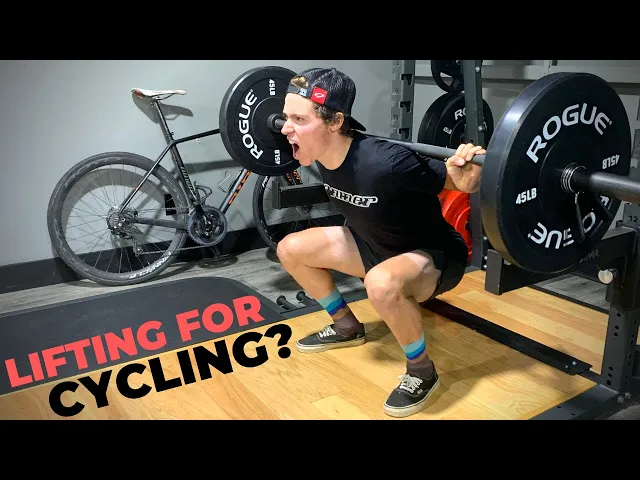
hey what's up everyone welcome to another video my name is Dylan and I'm a psychic coach at CTS and today we're gonna be taking a look at what the science has to say about how lifting will affect your cycling performance should cyclists be lifting would actually make you faster when should cyclists be lifting and what should a gym session for a cyclist look like including the amount of weight reps sets etc and what about core and upper body work all those questions will be answered in this video if you're new to this channel I make
weekly training racing and gear related videos going over tips and tricks that I've learned in my 12 years of training and racing experience that have gotten me to the top of the ultra endurance mountain bike game in the US and as a cycling coach at CES if you want to learn how to get faster or just more about the science of training in general then be sure to subscribe and if you have a training question or a topic you'd like to see me cover in a future video and be sure to leave it down in
the comment section below I do my best to get to all the questions in the comments I did two videos I'm lifting almost a year ago at this point and in fact they were the first two videos that I ever uploaded to this channel obviously the channel has grown quite a bit since then so seeing as the off season is coming up for most of us I figured it was a good time for a refresher cyclists can be a bit hesitant to step foot in the gym and there's some debate as to whether or not
going to the gym will actually help your performance after all cycling is an aerobic sport and lifting doesn't tax aerobic system and on top of that many cyclists want to be lighter weight and understandably don't want to bulk up by going to the gym even some athletes and coaches who recommend going to the gym just say that it's for injury prevention or improved bike handling or improve quality of life but it doesn't make you faster per say yeah that and have you seen the body of Chris Froome I mean I know it's almost Halloween but
I don't want to scare children by looking like a skeleton that's the main reason I go to the gym well let's not just make assumptions let's go ahead and jump into what the science has to say about how lifting will affect your cycling performance this study on the effect of strength training on cycling performance took a well-trained and competitive road cyclists and separated them into two groups one that incorporated strength training into the normal endurance training and one that did not what they found was that work fishing see empower significantly increase in the lifting group
and time to exhaustion at 70% of maximal oxygen uptake increased by a whopping 17 point 2 percent while the control group did not see significant improvements and it's important to note that all of this was achieved without waking which is a concern for many cyclists when hitting the gym so how did this happen exactly there's no way that strength training could be improving your aerobic ability and it appears that it certainly does not studies like this one that measure vo2 max and cycle peak via to find that strength training has no effect although even despite
this the weight training group in this study still saw a 33% increase in time to exhaustion while the control group saw no improvement so what exactly is going on here why is strength training helping with an endurance activity like cycling after all you only need the amount of strength that it takes to stand up out of a chair to perform a pedal stroke even at relatively high wattages you just need to be able to do it over and over and over again this review on strength training for running and cycling endurance performance confirmed what was
found in previous studies finding no effect of strength training on vo2 max but a positive effect on exercise economy anaerobic capacity lactate threshold reduced fatigue and endurance performance the reason adaptations within the strength train muscles including postpone activation of less efficient type ii fibers improved neuromuscular efficiency conversion of fast-twitch type 2 X fibers into more fatigue resistant type 2a fibers and improved muscular tenderness stiffness most of the strength that you gained in the first couple months of lifting isn't from gaining muscle but actually from your muscles learning to lift more when you start strength training
your muscles learn to fire more motor units and to stop fighting each other which has a profound effect on strength when you first get in the gym the rate at which you gain strength is staggering which is great for motivation for newbie lifters but it turns out that these neuromuscular adaptations also translate into more power on the bike as well going back to that review they even went as far as to say that importantly no negative effects of adding strength training to an endurance training program have been reported in fact study after study on liftings
effects on cycling keep coming to the same conclusion this study tested the effects of strength training on five-minute power output after a 185 minutes of cycling so essentially they're trying to mimic a road race where you might ride for a couple hours out of submaximal pace and then give it everything you have at the finish they found the power output during the five minutes increase from 371 watts to 400 watts in the strength train group while the control groups on no increase in the last five minutes of a road race this difference in power could
be the difference between first and 10th place the same has been found in women this study on women found a significant increase in 40-minute TT performance after lifting while the control group did not this was due to the change in muscle fiber proportion from type 2 eggs to the more fatigue resistant type 2a and this has even been found in older athletes and in fact the effects of strength training may be even more beneficial for masters racers this study on the effect of strength training on masters athletes found that strength training had an even greater
effect on the older athletes versus the younger ones study after study after study on lifting shows that it increases performance in fact an only research for myself the athletes I coach and three different videos on this topic now I've yet to find a single study that showed that lifting didn't increase performance or was detrimental to performance and we're talking about actual measurable performance here not injury prevention not improve quality of life not to look like less of a twig when you're hanging out with your normal-sized non cycling friends but literally more watts being produced this
is why you lift as a cyclist all those other reasons are just side benefits yeah whatever bro being the only dude with actual guns on the group ride to show off to ladies as the main reason I lift now a very important point has been made that mostly studies add strength training on top of normal endurance training instead of replacing some of that endurance training so of course subjects saw a benefit when they increase their training load and this is a very valid point to make and it's at this point that we want to talk
about when you should be lifting in your season but first let's see what happens when you replace your strength training with intervals on the bike this study on the comparison of Sprint training to resistance training on cycling performance took subjects and had them perform four weeks of preparation strength training before splitting them into either a spring training or strength training group unsurprisingly the Sprint group saw a greater increase in sprint ability while the strength train saw a greater increase in the amount of weight they could lift what was interesting was that the five minute power
power at four millimolar lactate and gross efficiency was not different between the groups now I'm sure that had subjects in the sprint training group done threshold intervals instead of Sprint's they would have seen a greater increase in lactate threshold over the weight training group however this is where we get into specificity of training and what time of year you want to do the majority of your strength training as you get closer and closer to your goal event you want the workouts that you do to become more and more specific to that event weight training isn't
very specific but it clearly shows benefits so you want to do it in the offseason before racing starts then as you get closer and closer to your race season you start to phase out lifting and start doing more focus on the bike work some may stop lifting completely and some may just bring it down to a maintenance level it really depends on how busy and demanding race schedule is the point that I'm getting out with this question of whether or not weight training is more or less beneficial than interval training is that it's somewhat irrelevant
because you focus on the two at different times of the year and you don't have to pick one or the other you can maintain your weight training while including intervals in your calendar two months of lifting should be enough to see the full neuromuscular benefits before reducing lifting down to a maintenance level you should start lifting six to seven months before your race season starts in those first two months you don't want to be doing any interval training while you're doing your lifting have the lifting that you're doing acts as the intensity for the week
if you're doing it right you should be too sore to get in any high quality bike work anyway just like with intervals - or on occasion three gym days per week is optimal and two days between each gym session should give you enough time to recover between sessions you're on the bike training during this time should be relatively low volume and low intensity but you don't have to be super structured about it in fact it's probably better that you take a break from structure during this time now let's get into what these gym sessions should
actually look like you may have heard that to lift for endurance you want to do low weight high reps but the research actually shows benefits using high weight low reps often close to max for the four to ten rep range this is because doing this shows the greatest benefits in all the physiological changes associated with increased performance of course lifting light weights is better than not lifting at all but this is why it's hard to prescribe a home strength workout like many of you have asked you need heavy weights to tax the muscle and doing
squats with your bodyweight in your living room just isn't gonna cut it if you refuse to set phone in gym or don't have a gym in your area then I recommend investing in a squat rack although the eventual goal is high weight low reps you don't want to start there because you don't want to injure yourself you want to start around the 20 rep range with a manageable amount of weight so that you can work on good form and then decrease the amount of reps and increase the amount of weight with each session you should
decrease the reps by 2 to 3 reps per session until you get down to that 4 to 10 rep range and once you get there you can focus on increasing the amount of weight you can lift in that rep range when choosing how much weight to use you want to choose an amount that's close to your max for that rep range you should finish your set and feel like you maybe had one more in you if you gave it everything you had this number will decrease throughout a workout for example if you're able to do
10 reps of squats on your first set of a given weight then maybe by the fourth set you're only able to do 5 reps once you're able to lift a given weight for more than 10 reps on your first set you know that it's time to increase the weight for your first gym session you only want to do two or three sets of leg focused exercises so that maybe two sets of squats and one set of deadlifts this may not seem like a lot but you'd be surprised how sore you are in the following days
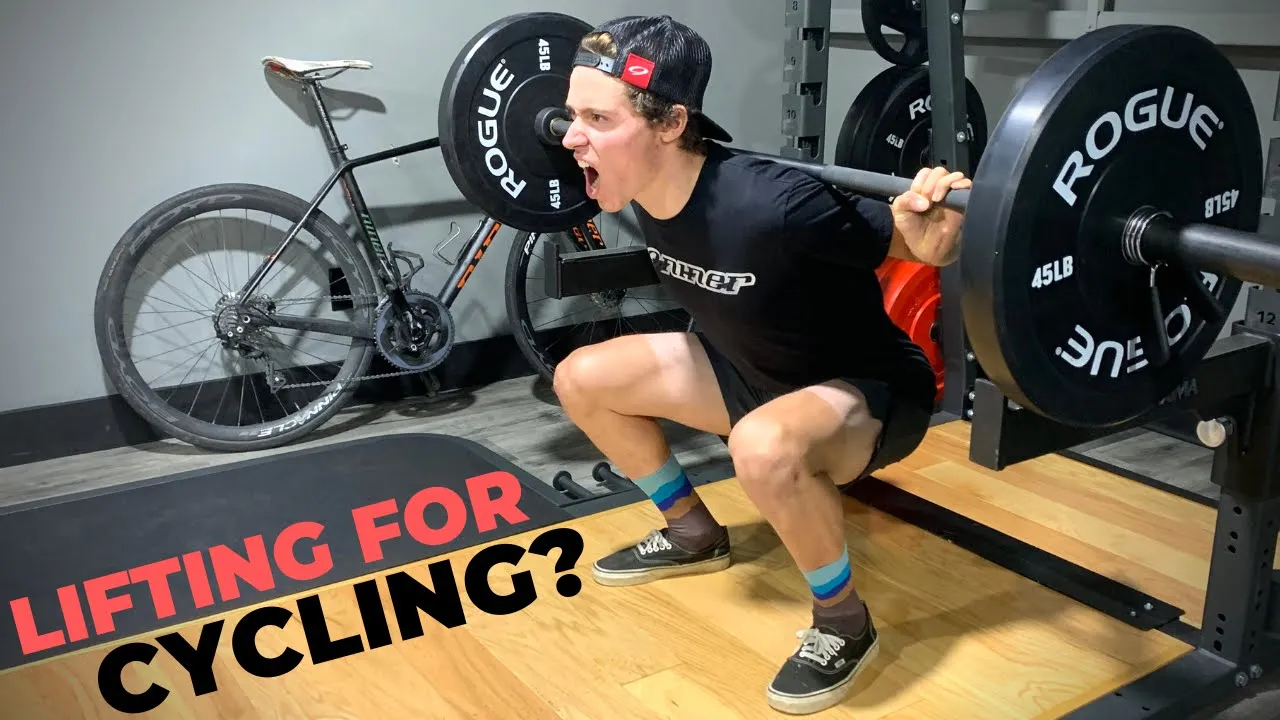
especially if you've never lifted before don't worry though because this soreness will become less severe with each gym session you can then add more leg focused sets until you get to around 10 total sets for the workout the first few sets when you're the freshest are the most beneficial so you want to do your heaviest lifts first so this would be the squat and the deadlift and then you can add in things like box steps box jumps lunges machines etc a full gym workout might look something like this start with a five-minute warm-up on a
stationary bike or treadmill then four sets of squats at 4 to 10 reps 3 sets of deadlifts at 4 to 10 reps a set of 15 weighted lunges a set of 15 weighted box steps and a set of 15 box jumps and be sure to rest for about 2 minutes between sets this is a good rough template but it can obviously change from session to session for example if you're trying to work on sprinting performance then you can work on how explosive you are by increasing the speed of some of your lifts and doing more
box jumps or other explosive jumping style exercises now let's get into core and upper body work these exercises are very much secondary to your leg exercises as a cyclist but that doesn't mean that they should be ignored completely after all core and upper body work may help with injury prevention and stability on the bike all of these potentially have peripheral performance benefits but may not actually manifest themselves as more power in a 20 minute test for example for your core and upper body simple bodyweight exercise is done at the end of your lifting session or
fine there's no need to try to develop maximum strength in these muscle groups so basically what you're saying is that every gym workout is essentially leg day yeah I'll be skipping the gym quite a bit then alright let's do a quick recap strength training has been shown to increase your cycling performance there's really no debating this when you actually take a look at the science with that being said you want to start your gym work in the offseason and then taper it off when you get closer to racing - or on occasion three gym sessions
per week is what you're shooting for and two days between each gym day should give you enough time to recover when you first get in the gym you want to start with low weight high reps and then work down to high weight low reps and you want to increase the amount of sets that you do each session until you get to around 10 total sets start with your heaviest lifts first and be sure to rest for about 2 minutes between sets lastly do your core and upper body work at the end of the gym session
using simple bodyweight exercises and when you're done lifting be sure to pick yourself up a jug of hyper gain beast mode masking or audition in the cupcake flavor of course to maximize those gains thanks for watching and I hope you guys found this information helpful if you like this video be sure to give it a like share with a friend and subscribe if you want to be notified every time I put out a video then be sure to hit the notification bell as well if you're looking for a coach if you sign up through CTS
be sure to use my code CCS DJ to save $40 by waiving the registration fee details are down in the description