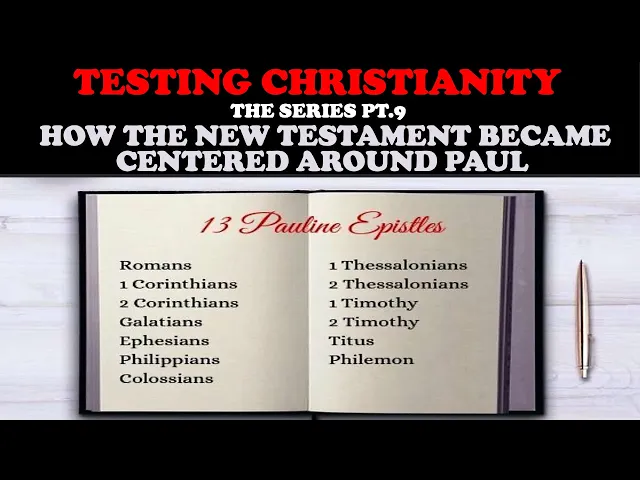
Okay, so you should be coming from part eight of this series. These videos are a part of a topical series and should be watched from the beginning in order if you're going to understand what is being presented. So please, if you have not watched from part one, stop this video and start back from video one.
Okay, so in part eight, we started dealing with the early church fathers and some of the beliefs of these men who were founders of the Christian Church. It's funny that for as long as I can remember, people used to talk about these church fathers and say they believed this and they believed that. But the minute I go in and speak about what they actually believed, many all of a sudden distance themselves from these men and say that they did not build their faith.
People do not want to deal in the truth; they say I was cherry-picking beliefs. Yes, I dealt with the beliefs that were the main problem that Christianity has today: replacement theology and hijacking the covenant. This has always been the main premise and problem that I have started with, and I use their writings to prove it.
It was their own writings, but people still say that these men did not start their faith, and that's absolutely just ridiculous. People really want to believe that they went from the assembly of believers in the book of Acts to now believing it 2,000 years later without any other influence. To them, it's basically the book of Acts, and then they skip over 2,000 years straight to them.
Absolutely ridiculous. There is a reason why you call yourself a Christian. There is a reason why Christian is the largest religion in the world, and if you want to ignore all that history, you only deceive yourself.
Now, here's the thing: through this period, from the 1st century to the 4th century, over a span of a little less than 300 years, the doctrines of Christianity were being built. When you review the writings from the early church fathers, you can understand how this religion came to be. I am not saying that I disagree with everything that they believed, because that's not true.
But you have to understand that that is why their tares look like wheat until they are fully grown and this faith was not fully grown at that time. The reason why these quotes were important is that they prove that their foundation was false. They were very clearly hijacking the covenant and speaking from a spiritual position of Esau stealing Jacob's blessing.
If you're honest with yourself, it's very clear. Now, my plan after that was to go to Constantine and how Christianity became accepted, but I realized I was rushing through some important facts that needed to be understood. There are things that need to be explained first before we get to the formulation of the Christian church.
Now, after part eight, we know what the church fathers believed, but when I went over this, I was just glossing over their beliefs so that it could be truly understood—the foundation of their beliefs—but things must be clarified. You can ask, "Well, what about the true believers? What happened with them?
" Because they, of course, were true believers. You also may ask, "What happened with the Yahudim that truly believed? " What you will find is that the religion of Christianity is the side of tares that won in greater influence, and they became the face and representation of the faith.
And though this Christian church acts as if they are just the stewards of the faith passed down from Peter, that is very much not the truth. For instance, let me read you a quote from Eusebius's book "The History of the Church. " This is from Book 3, Section 3: He writes of Peter, "One epistle, known as his first, is accepted, and this the early church fathers quoted freely as undoubtedly genuine in their own writings.
But the Second Petrine Epistle, we have been taught to regard as uncanonical. Many, however, have thought it valuable and have honored it with a place among the other scriptures. " Okay, so let's review that.
Eusebius wrote that of Peter's two epistles, it was said that his first one was widely accepted by the early church fathers. If you read this epistle, the things spoken here are not hard to dispute against. Okay, but then they say that his second epistle was disputed among them, and many did not want to attach it to their accepted doctrines.
I wonder why? Maybe it's because in this short epistle, only three chapters, as Peter was approaching death, he spoke against destructive doctrines as well as the doom, depravity, and deception of false teachers. He also spoke about us waiting for our Father's promise.
So in this epistle, he was warning against the doctrine that would come from these same men, and he was also telling people to continue to wait for Yah's promise, which these same men are on record saying that that promise no longer applies to us. These early church fathers accepted the writings of the Hebrew men that they agreed with and rejected the writings of those that they did not. And listen, for anyone trying to disagree with that, I am just reading from Eusebius's writings—that's not my own view; you could read it for yourself.
Now, what I want you to understand is that there were believers in Messiah that were from the Yahudim, but the early church fathers labeled them as heretics. One group I want to call out are the Ebionites, and apparently, there were different sects of this group. But as history is written, we know mostly about the heretics because this is the way that the.
. . Overall, the group is discredited.
Let me read from Eus again, still in Book Three under the heresy of the Ebionites. Eus writes, "The evil demon, however, being unable to tear certain others from their allegiance to the Christ of God, yet found them susceptible in a different direction and so brought them over to his own purposes. " The Ancients quite properly call these men Ebionites because they held poor and mean opinions concerning Christ.
For they considered him a plain and common man who was justified only because of his superior virtue and who was the fruit of the intercourse of a man with Mary. In their opinion, the observance of the ceremonial law was altogether necessary on the ground that they could not be saved by their faith in Christ alone and by a corresponding life. Okay, so this group known as the Ebionites are Yahudim who believed in Yahusha.
Now, as he begins speaking about them, he starts talking about the ones who are the true heretics—those who did not believe in the Virgin Birth and only looked at Yahusha as a man and not the Son of God. Okay, that's fine, but there was another part of this sect. Let me continue reading.
There were others, however, besides them that were of the same name but avoided the strange and absurd beliefs of the former and did not deny that the Lord was born of a virgin and of the Holy Spirit. Nevertheless, inasmuch as they also refused to acknowledge that he pre-existed—being God, Word, and Wisdom—they turned aside into the impiety of the former, especially when they, like them, endeavored to observe strictly the bodily worship of the law. These men, moreover, thought that it was necessary to read all the Epistles of the Apostle, whom they called an apostate from the law.
They used only the so-called Gospel According to the Hebrews and made little of the rest. The Sabbath and the rest of the discipline of the Jews they observed just like them; but at the same time, like us, they celebrated the Lord's Day as a memorial of the resurrection of the Savior. Wherefore, in consequence of such a course, they received the name of Ebionites, which signifies the poverty of their understanding, for this is the name by which a poor man is called among the Hebrews.
And okay, here it is: there were those of the Yahudim who believed in Yahusha, and they believed in the Virgin Birth, but they rejected Paul because they viewed his writings as being against the Torah. They called him an apostate, but they did believe in the Messiah. They also believed in keeping the Torah—not the sacrificial laws for atonement—as Eus writes that they absolutely accepted the Book of Hebrews, which explains that Yahusha's sacrifice took away the sacrificial law.
So they believed rightly in this; they kept the Torah and they stressed this, and they kept the Sabbath. And as you read from Eus, the early church rejected these men because they kept the Sabbath and they believed in circumcision. As Eus says, "Wherefore, in consequence of such a course, they received the name of Ebionites, which signifies the poverty of their understanding, for this is the name by which a poor man is called among the Hebrews.
" Yeah, they were called Ebionites not because they were poor materially—this is what the Hebrews use this word for—they were called Ebionites because they lacked an understanding according to their way of thought. That was a jab at them, calling them poor in understanding. So this leads me to a point that must be discussed.
I must address the elephant in the room that is pretty much avoided, but I cannot proceed without being fair and thorough here. There was a conflict with the Yahudim and with Paul. Many people of Yasharel today say that it is Paul who started Christianity, and from a bird's eye view, I can understand where this comes from, but I think it's important to review this.
So let's take our time to go through this. I stated this in Part Six: there are many who reject me because I don't reject Paul. I want to clearly provide my stance on this and then discuss it.
I do not reject Paul because I find it dangerous to go against the word itself. For me personally, I feel that at some point, the books compiled have made it to our hands through Yah, and Paul's letters were included. Now, I cannot deny that it is Paul who brings all the confusion.
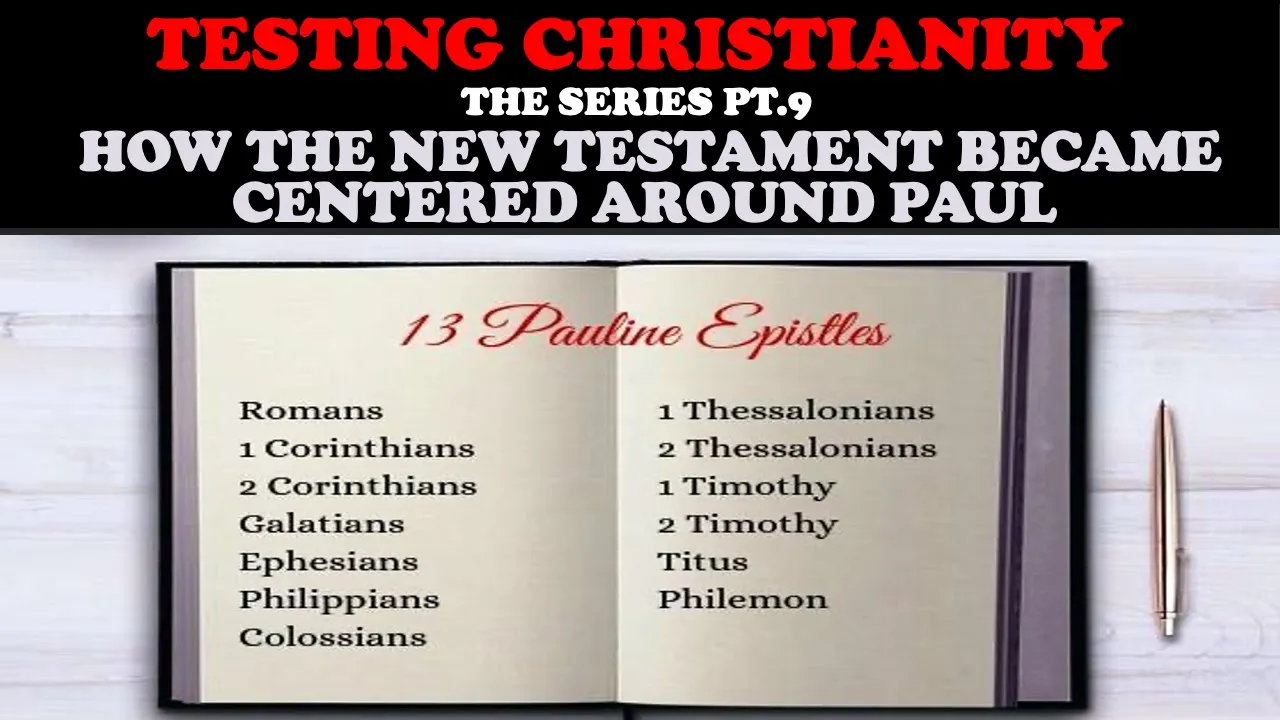
If the letters of Paul were not included in our Bibles, much of the excuses people use today would not be applicable. It's why, as Christianity was being built, there were other sects of the Gentiles that only wanted to use Paul's writings. For example, we must look at the sect of the Maronites.
According to the Dictionary of Early Christian Beliefs, in reference to Marcion, it writes this: "Marcion, who founded his own church, was one of the leading heretical teachers of the second century. His teaching incorporated many Gnostic elements, including the belief that the God of the Old Testament was a different God from the Father of Jesus. Marcion accepted only the Gospel of Luke and the writings of Paul for his New Testament canon, and he was forced to alter even these to fit his teachings.
" In the Britannica, it says this of Marcion: "Marcion is perhaps best known for his treatment of Scripture. Though he rejected the Old Testament as the work of the Creator God, he did not deny its efficacy for those who do not believe in Christ. He rejected attempts to harmonize Jewish biblical traditions with Christian ones as impossible.
He accepted as authentic all of the Pauline letters. " and The Gospel According to Luke, after he had expurgated them of Judaizing elements, his treatment of Christian literature was significant because it forced the early church to fix an approved canon of theologically acceptable texts out of the mass of available but unorganized material. Okay, so this man Marcion—whom the early church fathers disagreed with heavily—was, because of these disagreements, a major influence on the development of Christianity in the second century.
His church and followers were known as Marcionites. Now, Marcion was not a true Gnostic, but he considered himself to be a devoted disciple of Paul, whom he felt was the only true Apostle. Though he was considered a heretic, he still had an influence on the early church.
The reason why was because of his devotion to Paul; he brought renewed attention to Paul's writings. His theology was centered upon his conviction that Christianity was something wholly new. He was unable to reconcile the God revealed in Jesus with the God described in the Old Testament.
This is the same thought with many today who love the God of the New Testament but hate the God of the Old Testament, as if they are two different beings. Please hold on to that because this is an underlying problem of Christianity. Now, Marcion severed and cut the belief from the Old Testament with his newfound religion of Christianity.
It was not that the Old Testament was rejected as untrue; it was just a revelation of a different kind. He felt the God who was truly revealed was the God of the Jews, and he viewed our Father Yah as an inferior being who had fashioned the material universe, including man, and ruled it on the principle of law and obedience. He was powerful but not omnipotent; that was Marcion's belief.
He sounded like Satan. He rejected our Father because he didn't like that our Father desired law and obedience—the absolute nerve of him! The reason I bring him up is that he was the first to arrange a Christian canon.
Paul, with his focus on free grace, was by far Marcion's favorite apostle. As a result, he rejected the writings attributed to all the other apostles and relied on forms of Luke's gospel and ten Pauline epistles that he redacted. You see, the impact of Marcion's doctrines on Christianity was tremendous.
Because of him came the establishment of an Orthodox Christian canon of scripture, which we now know as the New Testament. He influenced the Christian church to specify what is considered to be canon. He spurred the debates about Paul's writings, and there were many different debates from the early church fathers, like Irenaeus, Tertullian, and Origen, as they rejected Marcion's beliefs and countered his teachings on Paul.
From this debate emerged a heavy reliance on Paul, who became the foundation of Christian doctrine. Basically, this man Marcion created his own sect of Christianity that rejected the Old Testament and the foundation that the Messiah came through. He only applied the gospel of Luke and the epistles of Paul and made this his version of Christianity.
You see, when reviewing his influence, he can be seen as more like controlled opposition by Satan because his approach was completely wicked. However, it brought about a debate on the doctrines of Christianity, particularly emphasizing the faith built around Paul. Paul was the one most debated.
Now, as I was saying earlier, without Paul's writings, much of the confusion regarding the law would not be there. There are no other writers that people use to speak against the law more than Paul. I consistently get messages all day about people advocating lawlessness because of Paul.
Going back to this early church history, the Ebionites, who were Yahudim, rejected Paul and said he was lawless and apostate. There are many in Yasharel today who hold this opinion as well, particularly regarding his view on circumcision. Now, we know that the apostles discussed the circumcision of the Gentiles and did not agree to impose this on believing Gentiles.
We know this, but this should not be a thought among the natural branches of Yasharel. For me personally, I absolutely believe in the circumcision of the natural branches of Yasharel. I don't believe this custom has ever gone away.
Now, do I think that a natural branch will be rejected because they were not circumcised, especially if it was not by their choice? No, I do not believe that, because Yah knows that our people are growing up in a culture that is without Him. Right now, it seems that the hospitals and everyone else are doing their best to avoid circumcising our children.
If you're a child of Yasharel, I do believe that you should be circumcised. I believe this because this custom has never gone away. However, it's possible that this has passed you by when you did not know who you were.
I do know the struggles with getting this procedure done today. For me, it was a struggle for both of my youngest sons to be circumcised. I had to get them done as an outpatient procedure for both of my sons.
It was something that I felt a tugging in my spirit that it had to be done—that was me personally. And you know what? Yah found a way for us to get it done.
I prayed about it, and He answered my prayer. I believe in circumcision for the natural branches; that’s just period. That’s what I believe.
It was an ordinance made with Abraham from the beginning. It says, "This is my covenant which you shall keep between me and you and your descendants after you: every male child among you shall be circumcised. You shall be circumcised in the flesh of your foreskins, and it shall be a sign…" Of the Covenant between me and you, Genesis 17:10 and 11.
This has never gone away from the natural branches, even when they discussed this in the Book of Acts. This was about the Gentiles that they were talking about—never against the natural branches. So I will never speak against circumcision, but with the writings of Paul, there is a lot of controversy that surrounds this, which is why many of Yasharel reject Paul.
So, I would like to address Paul as we discuss Christianity because we can't avoid it. You see, if I were living during that time, I would probably find myself among men like Peter, telling Paul to stop talking as much as he did. I personally think that Paul used a lot of words and sometimes was too deep for his audience.
Because of all those words, they're taken very much out of context. I don't think that Paul was a hypocrite; he himself was not a lawless man. He boasted in his knowledge and keeping of the Torah, as he was a Pharisee.
So I don't think he was a hypocrite. For me, I probably, like I said, would have been with Peter more than Paul, as we know they had a falling out. Again, that's just me personally.
My thing is that I cannot call Paul false because Yah allowed his writings to be read by us, and therefore, I will not outright call him false. I don't believe the problem is with Paul, but it’s the people reading Paul and how they apply him. I look at Paul as Peter spoke and warned.
He said, "And consider that the longsuffering of our Lord is salvation, as also our beloved brother Paul, according to the wisdom given to him, has written to you, as also in all his epistles, speaking in them of these things, in which are some things hard to understand, which untaught and unstable people twist to their own destruction, as they do also the rest of the Scriptures. " (2 Peter 3:15-16) And you see, this is exactly what has happened. We have found untaught and unstable people that have twisted Paul's writings to their own destruction.
For me, as I read Paul's epistles, I understand what he is trying to communicate and say many times. He is speaking about the condition of the heart—having a circumcised heart. But the way that the Gentiles use his words, this is what is wrong and what is dangerous.
I mean, for me personally, I see what Paul speaks about many times in our modern era when many Israelites speak about matters of their flesh, but they are not about serving Yah. But many Gentiles, many that are in these comments, focus on serving Yah with a pure heart. I understand many times what Paul was trying to say.
Like he writes in First Corinthians, "Was anyone called while circumcised? Let him not become uncircumcised. Was anyone called while uncircumcised?
Let him not be circumcised. Circumcision is nothing, and uncircumcision is nothing, but keeping the commandments of God is what matters. " (1 Corinthians 7:18-19) You see, those words right there could have definitely been a problem with the Yahudim.
I know he was speaking about the importance of keeping our hearts right to Yah and living as we were called. There were hypocrites who were, of course, circumcised in their flesh, but then there were ones who were true that were uncircumcised. But again, you can imagine that the Yahudim who heard these things from Paul were very much against what he was saying.
We know this by just reading the Book of Acts. When Gallio was proconsul of Achaia, the Yahudim with one accord rose up against Paul and brought him to the judgment seat, saying, "This fellow persuades men to worship Elohim contrary to the law. " (Acts 18:12-13) Another one: "And when he had come to Jerusalem, the brethren received us gladly.
On the following day, Paul went in with us to James, and all the elders were present. When he had greeted them, he told in detail those things which Elohim had done among the Gentiles through his ministry. And when they heard it, they glorified Yah and they said to him, 'You see, brother, how many myriads of Yahudim there are who have believed, and they are all zealous for the law.
But they have been informed about you that you teach all the Yahudim who are among the Gentiles to forsake Moses, saying that they ought not to circumcise their children nor to walk according to the customs. '" (Acts 21:17-21) And now, also in that same chapter of Acts 21, it says: "Now when the seven days were almost ended, the Yahudim from Asia, seeing him in the temple, stirred up the whole crowd and laid hands on him, crying out, 'Men of Yasharel, help! This is the man who teaches all men everywhere against the people, the law, and this place.
Furthermore, he also brought Greeks into the temple and has defiled this holy place. '" (Acts 21:27-28) You see, this is why the Yahudim were against Paul. And as I showed earlier, there were obviously people that believed in Messiah who did not reject the Torah.
I believe that Paul was given a ministry to the Gentiles and that it is very hard to do. I know it's hard communicating to both the natural and wild branches just in this ministry, so I can imagine the struggle Paul had. I do not believe Paul created Christianity, but that his writings were used to justify the doctrines of Christianity, and these are two different things.
But this is just as Peter predicted: "Some things hard to understand, which untaught and unstable people twist to their. . .
" own destruction as they do also the rest of the Scriptures. I personally believe that Paul's writings are a test for Gentiles because what does our Father desire from us? It says, "And you shall love Yahweh your Elohim with all your heart, with all your soul, and with all your mind, and with all your strength.
" This is the first commandment; that's Mark 12:30. When people only rely on Paul's teachings and do not come back to understand our Father, it exposes their heart. They don’t actually truly want Yah; they want religion.
You see, we have this complete Bible full of our Father’s words. The Old Testament is full of "Thus says Yahweh. " It contains all the words our Father actually has commanded His children.
From the mouth of Yahweh, our doctrines come, but most Gentiles ignore Yah's word and make it that Paul’s words are the authority, when Paul was just another man like me. His writings are powerful and deep, but they cannot be understood without understanding Yahweh first, and that is the test of the Gentiles. You see, if they truly love Yahweh, once they find that they have been granted the ability to be redeemed by Yah, they would receive this gift wholeheartedly, seek Him out fully, and come to know Him through the entire word, not just through Paul.
If you go back, you see this was the reason for the agreement in Acts 15, when they said, "Therefore I judge that we should not trouble those from among the Gentiles who are turning to Elohim, but that we write to them to abstain from things polluted by idols, from sexual immorality, from things strangled, and from blood. For Moses has had throughout many generations those who preach him in every city, being read in the synagogues every Sabbath" (Acts 15:19-21). You see, if the Gentiles learned these basic rules, they would learn the rest because Moses is read in every synagogue every Sabbath, and therefore they would learn about Yahweh and His way and what He wants from them.
You see, it was never about walking away from the Torah. As they said, Moses was read every Sabbath, meaning the Torah was read every Sabbath, and they expected these Gentiles to come to the synagogues and hear Moses being read. This is the reason why they gave that agreement; if they come around the word and hear it, they will learn it.
You see, I can’t tell you how many Christians I have spoken to, and they say, “Yeah, they read the Bible,” but then they say, “But they’re real heavy on Paul. ” Paul is the author of the many Gentiles' faith, but most people have not actually read their whole Bible first. You see, when I read Paul now, compared to how I read him before I read the whole Bible, I read him completely different, and I think that’s the determining factor.
I don’t think anyone can understand Paul without reading their whole Bible first. But this is what Christianity did and what they created; it’s unlearned and untaught people making doctrines of destruction. The church fathers proved Peter’s warning if you just read their writings.
Here’s a few: "Paul was after Jesus, the founder of the churches that are in Christ" (Origen), and obviously this is why people believe Paul started Christianity. Here’s another: "Now, with the view of branding the apostles with some mark of ignorance, the Gnostics put forth the case of when Peter and those who were with him were rebuked by Paul. Still, they would show from the circumstance which they alleged of Peter's being rebuked by Paul that Paul added yet another form of the Gospel in addition to that which Peter and the rest had previously set forth.
" (Tertullian). Now again, Peter himself wrote a warning about what men would do with Paul’s writings, and this is exactly what they’re showing. They’re saying that Paul put forth another form of the Gospel: “Untaught and unstable men” (2 Peter 3:16).
Here’s another one: "That best master builder of Christ, Paul himself, has laid our foundation; that is the foundation of the church, and he has put us in trust of the law, ordaining deacons, presbyters, and bishops" (Disputation of Arelis and Mains). You see, they said Paul’s writings are the foundation of the Christian church; therefore, this is why people speak against Paul because all the lawlessness is caused by his epistles. So what am I getting at here?
What I’m saying is that you cannot understand Christianity without understanding Paul. I believe that Paul is the main point of confusion and division amongst Yasharel and the Gentiles. I do think that without his letters, there would be much less confusion, but that’s not for me to say.
I don’t believe that this argument will ever be settled until our Father gathers us back to Him and sets us all right. As we discuss Christianity, it’s important that you understand that most Christians come from the spirit of Marcion. Although he was labeled as a heretic, they come from his spirit; they just don’t recognize it.
What I mean by that is that they only understand our Father according to the New Testament, mostly by the epistles of Paul. It should never be done this way, but this is the way many of them are. It comes from a spirit that is not about doing the Father’s will, which is loving Him with our whole heart, mind, soul, and strength.
So being that they only seek to understand Him through Paul, they don’t ever come to truly understand Him, and this is Christianity. I do believe that it is true there would be no Christianity without Paul, but can I blame Paul for that or can I blame those who took his writings and. .
. formed these new doctrines for me. I choose the latter.
There's much about this that we do not know, but this is what I do know: I know that it's important that, as you build your faith, you do not start with Paul. This is the era of most Christians, and then, after they read Paul first, then they read the Bible to formulate and fit their understandings according to Paul. You can only really understand Paul by reading the full Scriptures for yourself first, from the beginning.
Now, how can I say this with confidence? Because it's just what Peter warned about. He said people being untaught and unstable twist Paul's words.
You see, reading Paul when knowing nothing else about Yah is a person who is untaught, and that is exactly what the problem is in Christianity. So don't come at me because I said that! I'm using Scripture from Peter; I'm just applying it again.
At the end of the day, this is what I know with all assurance: when it comes to Yah, there is no tolerance for lawlessness. There is no tolerance for rejection of our Father's Torah. There is no example in the Scriptures of an apostle who was lawless; even Paul himself was not lawless.
So if you're trying to use Paul as an excuse for lawlessness, it’s only because you're not reading his words clearly, and you do not have an actual grounded foundation based on the Word. When our Father has prophesied that He will remember us in the covenant He made with us, it's because He said we will obey His voice. In order to be what He desires, we must obey His voice.
Even in the Scriptures where Paul is speaking about circumcision, look at what he writes: he says that circumcision is nothing, and uncircumcision is nothing, but keeping the commandments of Elohim is what matters (1 Corinthians 7:19). So he clearly believes keeping the commandments matters. Thus, people who advocate against the Sabbath and advocate against keeping the commandments are not applying Paul correctly.
The early church wanted nothing to do with anyone who taught keeping the commandments. Through Paul's writing, they were able to adapt a doctrine that they could use, but they do not understand Paul; they never really understood Paul because they never understood Yah. The point I'm making is that, though Paul's writings are the major source of confusion for Christianity, I believe that, in my teaching, I cannot reject Paul, but only how people have applied Paul.
I recommend that, as you understand this faith that we are in, you do not read Paul before you understand Paul's foundation, which means you must go to the Torah and start from the beginning first if you're going to understand Paul. The problem is that Paul's epistles are read like the Torah, and they should not be. These are letters—Paul's epistles are letters.
His epistles could be compared more to my videos than to what Moses wrote in the Torah. Paul was addressing different people in different circumstances that we do not clearly know; he was talking to people he was trying to teach. We do not have all of the circumstances that Paul was responding to in the letters; we do not have the correspondents back.
We don't have a lot of information on the exact people that were receiving these letters; we just have his letters. Christians use those letters to form a whole new religion. We know that not all the Yahudim agreed with Paul, and I'm talking about among the ones who actually did believe in the Messiah.
What people do today is that they take Paul's words and place them in emphasis before Yah's word. Even I will write back and say, "Thus says Yahweh," and people will respond with, "But Paul said. " That is an improper usage of Paul, and unfortunately, the Gentiles who took control of the faith did not have proper reverence for Yah to enforce the proper attitude.
They used whoever said what sounded better for them to enforce the doctrine that they wanted to have. You cannot put Paul over our Father; you do not use Paul in that way. We cannot get past Paul's influence.
There were many Yahudim who believed in the Messiah that were against him. The sect of Yahudim that were called Ebionites were later moved out of the picture when Rome made Christianity their religion. So when people ask, "What about the Yahudim who believed in the Messiah?
" you can understand what happened to the Ebionites. I will discuss them further in the next episode when we get to Constantine. What I wanted you to understand is a brief understanding of how Paul became the influence of Christianity.
People chose him as the most true apostle, and the debate and discussion about him made him the main focus of Christianity. His letters were approved more than all other epistles. As Eusebius writes about the compilation of the New Testament, he notes, "Since we're dealing with this subject, it is proper to sum up the writings of the New Testament which have been already mentioned.
First, then, must be put the holy canon of the gospels; following them, the Acts of the Apostles. After this, must be reckoned the epistles of Paul; next in order, the extant former epistle of John, and likewise the epistle of Peter must be maintained. After them is to be placed, if it really seemed proper, the Apocalypse of John, concerning which we shall give the different opinions at the proper time.
" These, then, belong among the accepted writings. Among the disputed writings, which are nevertheless recognized by many, are the extant, the so-called epistle of James, and that of Jude, also the second epistle of Peter, and those that are called the second and third of John, whether they belong to the Evangelist or to. .
. Another person of the same name among the rejected writing must be reckoned. Also, the Acts of Paul and the so-called Shepherd, and the Apocalypse of Peter; and in addition to these, the extensive Epistle of Barnabas and the so-called Teachings of the Apostles.
Besides, as I said, the Apocalypse of John, if it seems proper, which some, as I said, reject but which others class with the accepted books. Among these, some have placed also the Gospel According to the Hebrews, with which those of the Hebrews that have accepted Christ are especially delighted. All these may be reckoned among the disputed books.
And you see, these are the men who made the New Testament, and they are the men who chose what it is we know in the New Testament. I mean, there were disputes about the Book of Hebrews and the Book of Revelation, but what was not disputed was their decision about Paul, and that is something that we must understand. All of this is in reference to their religion, but Paul is not the author of our faith; Yahweh is.
For us, we are coming back to serving Yah according to His word, and that is what is most important. Anyone in anything teaching you lawlessness should be rejected, but I do not believe that that is what Paul has been preaching. I just think that he's misunderstood and not applied correctly.
I needed to get through that because you cannot skip over this information when understanding Christianity. I felt that in order to be thorough, I could not ignore it. Now that we've gone through that, in the next part of the series, we will finally discuss Constantine.
In the meantime, please remember: Christianity is a religion that, on the surface, seems biblical, but when you dig deep into the doctrines, it is not a doctrine of service to our Father but a doctrine of abusing grace, editing covenants, rejecting the way our Father actually chose to reach humanity, and making it only about the way Christians want to receive Him. It lacks the love, obedience, and reverence for our Father that He deserves, and in the end, it does not prepare those who follow it to be ready for what our Father plans to do in the last days. If you desire to be ready for our Father and His plan for us, you must come out of this religion of tears and come to our Father in truth.
Please move to Part 10 in this playlist and understand how Christianity became the religion of the Roman Empire. Click the link to the next video, and let's talk some more about it. Be blessed.
Hallelujah! Praise Yah. Okay, thanks again for watching.
If this has blessed you, please don't forget to like this and share this video with your family and your friends. This video series is highly important for those trying to be ready for our Father. This is Part Nine of the series.
Click this link or just move on to the next video in the playlist. As always, I want to thank all who donate and contribute to this ministry; this series would not be possible without your support. Thank you for your blessings; I thank you sincerely.
Be blessed! Okay, thanks again everyone for watching. See you in Part 10.
I love you all!