[Music] hi it's Mr Anderson and in this podcast I'm going to talk about ecological succession succession is simply a series of events by which life comes back and so what am I talking about well look here we've got a picture of a forest but this is a year after there was a forest fire and so you can see a lot of the charred um burnt Trunks and so basically a photographer came here and he came here once a year to the same place and took pictures and so this would be year 1 this would be
year 2 this would be year three year 4 and year five and so basically what you see is Life coming back and changes taking place and that is called succession and it tends to occur at a predictable rate and using a number of predictable species and so basically succession we could break into two different parts uh the first one is called primary succession primary succession occurs when you have bare rock in other on when there's no soil left and so if you look at this lava flow basically the lava flowed down here you could see
they've kind of cut a foot path here but basically Life is starting to come back life can't grow out here for the most part because there's no soil there we can't have plants that start to grow there and so we have to have erosion we have to have wind and rain and eventually we have soil and then we can start to have plants come back another example of primary succession is right here this is a picture of of Mount St Helens the day before it exploded after it exploded it looked just like this and so
here in Montana we had about that much Ash everywhere and that just came from the top of this mountain as it exploded well this would be primary succession cuz there's no soil left it's all gone it's in Montana not in Washington and so basically life has to reestablish itself and so this is a picture of Mount St Helens uh now a few years ago and so this is on this kind of on this Rim up here and so basic basically what's had to happen a series of events by which life has come back now if
you compare this to that uh Estonian Forest you can see that it's coming back slower and that's because we had to go all the way down to the Rock great example of this is the island of cery and so I think this is in 1962 all of a sudden off the coast of Iceland there's a huge volcano and a brand new island shows up they name it ceri which is some Norse god and so basically what scientists decided to do is to not go there uh a few scientists will go there every year just basically
to study how life comes back and so you can see all this vegetation on this island and there's been weathering going on you would just think this is a uh just a regular Island and it's really not that old um and so the cool thing is they can see what species are showing up first it didn't take long for vascular plants to show up and you might think how did they get there well a lot of them are blown by the wind or carried by birds um or float there and so it's pretty cool but
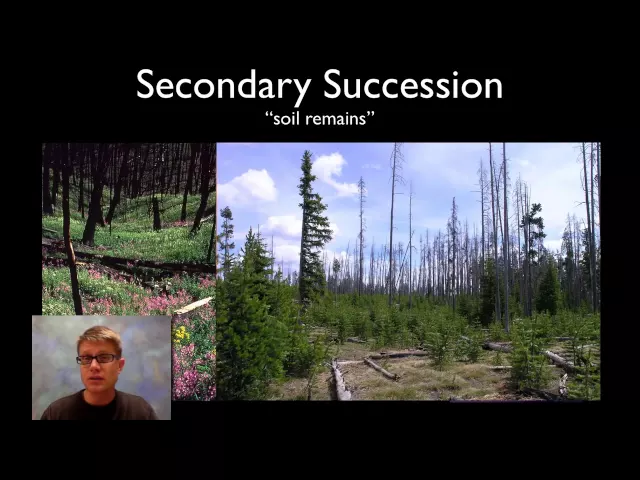
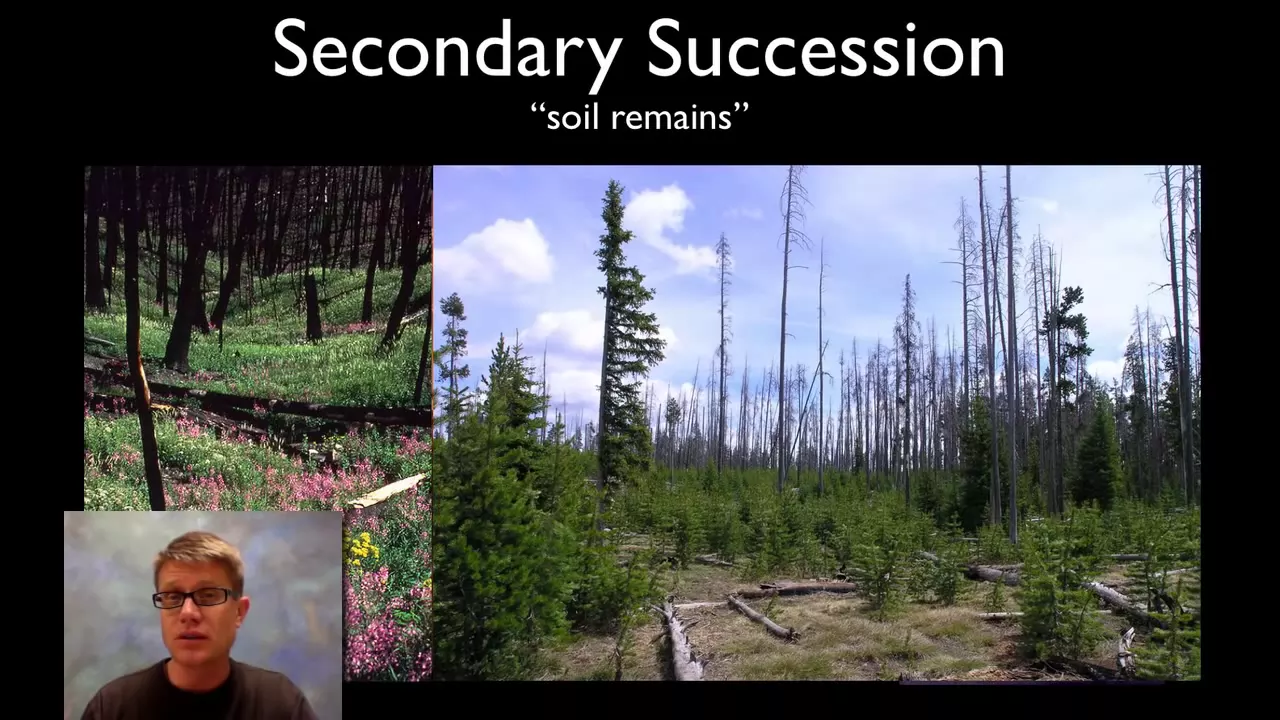
all of that again is Prim AR succession secondary succession and this is a gorgeous picture that was taken here in Montana during a forest fire secondary succession occurs when we have some kind of a disturbance but the soil Still Remains and actually the burning of fires is something that's really common in the mountains and so you can see this elk here after the fires in Yellowstone Park and there's no vegetation but what you should know is that the soil is sitting there and life is ready to come back and so basically this is what Yellowstone
Park looked like a few years later and then looks like now and so what were some of the first organisms to come in well we tend to call these things Pioneer organisms and Pioneer organisms are going to be organisms that tend to make their living by coming into an area after there's a disturbance and so two examples in Montana one would be Lupin Lupin is going to be a flower it's actually a legume so it's related to a pee and what's nice about Lupin is that it can fix nitrogen it has bacteria that live on
its roots and they can actually take nitrogen in the air and return it to the soil and then another example would be um Lodge Poole Pines Lodge Poole Pines are really skinny and long uh Conifer trees that we have here in Montana and basically what they do is they have two different cones they have certain cones that they use year to year to reproduce but they also have these really waxy what are called serotinous cones and they're just filled with wax and they never open unless there's a fire and if there's a fire then they'll
open up and then their seeds will come back and so basically Lodge pole Pine have evolved this knit their way to be a pioneer species to come in now eventually as that Forest starts to develop it's going to be replaced by more climax species and so that's another term that I just threw in there that's called the climax climax is basically what's going to happen after succession so on this side we'll have a disturbance so we're going to have a disturbance on this side so what are some disturbances we could have fire or human disturbances
or like a tsunami um a really cool disturbance is after Chernobyl the Meltdown there um All Humans had to leave and so it's a wild kind of a land but basically life can come back and how does it come back well let's look at this chart which is great so if we look at bar Rock Bar rock is going to be the first thing that you have and the amount of bar rock is going to drop off as vegetation of course starts to come in what's next well then we're going to have mosses and grasses
come why don't they come right away well lots of times there's no soil there and so we have to have weathering rain wind and then we start to get soil and then they can come back now you might think well why don't they just stay forever why don't they just have a huge amount of these grasses well if you think about it as other species start to take off they're going to be taller than those grasses they're going to start to take the sunlight and so they're going to be replaced by other species which is
eventually we're going to have some small wooded plants and then we're going to have some trees this would be like the lodge paole Pine and eventually we have some trees that come back like that and so what happens eventually everything kind of levels off and then we have these climax species at the end does it stay like that forever well it depends on your size so if you're like a redwood tree you're big enough that fire sweeping through an area is not going to affect you but most species are going to be killed by a
disturbance and then that whole process starts over again and so what is succession it's the series of steps by which life comes back remember there's primary secondary primary no soil secondary soil and I hope that's helpful