UFC analyst and commentator Laura Senko is making a passionate and strategically nuanced argument for the promotion to fully embrace the meteoric rise of Michael Morales, positioning the undefeated Ecuadorian as the prime candidate to challenge welterweight champion Islam Makashev next. In Senko's assessment, Morales isn't just another contender on a win streak. He is a rare talent whose performances are defying the conventional trajectory of a prospect.
What's crazy about him is that as the challenge gets steeper, I think he's only looking better, Senko observed, pinpointing what sets Morales apart. While most fighters see their margins of victory shrink as they ascend the rankings, Morales has done the opposite, culminating in a breathtaking first round knockout of the formidable Shawn Brady, a result that Senko admitted surpassed her expectations. Senko's endorsement extends beyond mere meritocracy into the complex art of star making and promotional timing.
She frames Morales's current moment as a precious commodity in the fight game. So much of creating stars in MMA is about seizing momentum and having really immaculate timing and matchmaking with that timing, she explained. From this perspective, Morales's highlight reel knockout has generated a potent but potentially fleeting wave of momentum.
to divert the title shot to another contender, even a legend and former champion like Kamaru Usman, whom Senko respects as a much tougher fight than a lot of people say, would be a missed opportunity to crystallize a new star at his peak moment of public fascination. I think it would be a shame to either wait too long or create an opportunity where you can't seize on this momentum, Senko argued, leaving no doubt about her preference. I think that Michael Morales is the guy.
Personally, this analysis presents the UFC with a clear philosophical choice for the welterweight division. One path leads through the established legacy defining challenge of Kamaru Usman, a superfight that carries its own immense weight. The other, as championed by Senko, is a bet on the future, catapulting the sport's most terrifying new force directly into a championship crucible.
Trusting that his blistering form and knockout power can translate to the highest level, Senko's commentary suggests that Morales represents more than a fresh opponent. He embodies the kind of explosive, forward-ing narrative the sport thrives on, and she believes the smartest move is to harness that energy immediately. transforming his potential into pay-per-view reality before the moment passes.
The brief but incendiary confrontation between Bone Nickel and Colby Coington at the RAF5 wrestling press conference has rapidly metastasized into a full-fledged campaign for a high-profile grudge match with Nickel now formally proposing a middleweight showdown on the year's biggest stage. Following the event where Covington alongside Luke Rockhold unleashed a torrent of verbal abuse targeting Nickel from the Deis, the undefeated UFC prospect is no longer content with a war of words. He is now actively pursuing a physical conclusion, explicitly calling for a fight against Covington at the historic UFC White House event in June.
Nickel confirmed that securing a spot on that landmark card is the primary objective for his next appearance and he views the fresh new manufactured feud with Coington as the ideal vehicle to get there. This situation came up organically because I never had Colby on my radar, Nicl explained. But him talking crazy in the presser and him saying he's going up to middleweight, I think it has to happen.
I think everyone wants to see me beat that dude up. It would be fun. It would be electric.
Nichols challenge is deeply personal and strategically crafted to undermine the very core of Covington's fighting identity. He didn't just call for a fight. He launched a scorched earth assault on Coington's wrestling pedigree, the foundational pillar of Chaos's elite MMA game, dismissing Coington as a joo bum who couldn't hack it in wrestling.
Nickel is framing the potential clash as a legitimacy contest, a chance to publicly expose what he views as a fraud in the purest form of combat. His predictions are not merely a victory, but of total careerending domination. I can just absolutely rip that guy apart, send him packing, and end his career, Nickel declared.
I'll embarrass you in front of the entire world. This rhetoric elevates the proposed bout beyond a standard fight. It becomes a narrative of humiliation and sporting truth set against the unprecedented backdrop of the White House lawn.
The feasibility of the matchup rests entirely on Coington's recent vague musings about a move to the 185 lb division. For Nickel, it represents a monumental opportunity, a chance to leverage a personal beef into a headline slot on the most unique card in UFC history, adding a massive name to his resume while delivering a form of poetic justice. For Coington, however, the calculus is fraught with danger.
It would mean jumping into a higher weight class to face a younger, larger, and arguably more technically proficient wrestler, far removed from the welterweight title conversations he usually inhabits. While the promotional heat and financial incentive would be significant, the stylistic risk is enormous. Nickel has effectively placed a highstakes, globally televised trap, daring Coington to back up his incendiary talk by stepping into a domain where Nicl is utterly confident he holds every conceivable advantage.
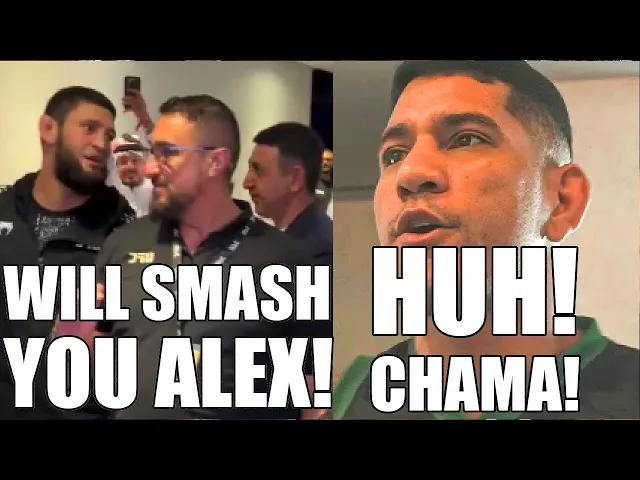
The ball is now in Coington's court to decide if his chaos persona can withstand the cold, hard reality of a bone nickel fist on the sport's most prestigious stage. The UFC's planned White House event is rapidly becoming the coveted destination for every champion seeking a legacy definfining super fight. And now, middleweight king Hamza Chamayv has thrown his name into the mix with a direct challenge to light heavyweight champion Alex Pereira.
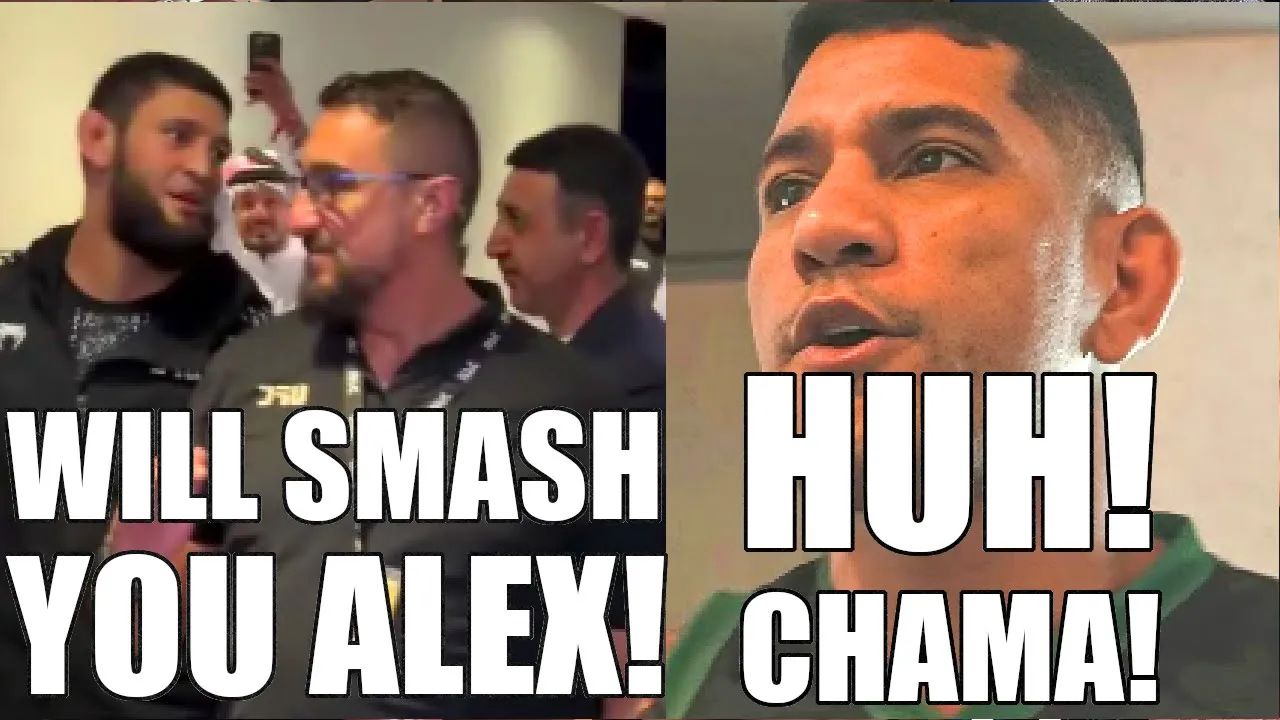
Fresh off his dominant title win over Drus Dup. Chamayv took to social media to reboot a rivalry that was briefly teased years ago, calling for a clash on the South Lawn. "Let's go, White House," Chamayv tweeted, followed by a characteristically bold promise.
"Don't worry, I will finish you fast, Alex. " Chamay's call out is layered with his trademark bravado and psychological maneuvering. In a follow-up post, he implored Pereira's fan base to pressure their champion, writing, "All Brazilian fans, tell this boy, if you're not scared, tell him to fight laughs.
" This move attempts to transform the challenge into a public test of Pereira's willingness, framing any hesitation as fear. The proposal reignites a storyline that began when Pereira first won the middleweight belt in 2022, though it never materialized. Now with both men reigning as champions in adjacent divisions, the stakes are even higher, offering a chance for one to become a simultaneous two division champion in a single historic leap.
The feasibility of this blockbuster matchup is the central question. UFC CEO Dana White has stated he will begin formalizing the White House card in the spring, and a champion versus champion fight of this magnitude would undoubtedly be a centerpiece. However, it creates immediate log jams in two divisions.
Chimayv has yet to make a single defense of the middleweight title he just won, and Pereira is expected to face the winner of the upcoming Magamemed Ankalv versus Jamal Hill rematch at 205 lbs. Furthermore, Pereira recently challenged Chimayv to a Brazilian jiu-jitsu match, suggesting his own interest in a non-title clash. Whether the UFC would prioritize this explosive superfight over the stability of two championship lineages remains to be seen, but Shamayv has forcefully inserted himself into the conversation, daring Poeton to meet him on the most unique stage in sports history.
The commentary from UFC broadcaster and analyst Laura Senko provides a clear and uncompromising vision for the promotion's new era with Paramount Plus, framing 2026 is the year the UFC will aggressively prioritize one core product, violence. In her assessment, the trend of cutting fighters deemed boring, which gains significant momentum in 2025 is not an anomaly, but a permanent shift in philosophy that will intensify. I think the trend is going to continue to be violence, Senko stated, pointing to a pervasive feeling in the atmosphere that with a new massive broadcast partner and a potentially wider audience, the UFC feels a pressing need to definitively showcase the essence of the sport.
Senko's analysis hinges on two interconnected drivers. First, there's the internal merit system. There is so much talk now around rewarding violent fighters and rewarding finishes in the striving for finishes.
This suggests matchmaking, bonuses, and contract renewals will increasingly favor those who pursue decisive endings, turning fighting conservatively for a decision into a career liability. Second, and perhaps more critical, is the external imperative of the new Paramount Plus deal. With the historic $7.
7 billion agreement bringing UFC pay-per-views to a streaming service without the traditional pay-per-view barrier, a fresh, potentially casual audience will be tuning in. Senko implies the UFC believes it cannot afford to present a diluted product to these new viewers. We need to show these people what fighting really is, she said, indicating a conscious move towards curating cards guaranteed to deliver action and finishes, ensuring the inaugural impression on Paramount Plus is one of relentless excitement.
This philosophy, if enacted, as Senko predicts, will have profound implications. It will accelerate the rise of aggressive finishers while putting immense pressure on grinders and point fighters to adapt or face release. It promises a fan experience defined by highstakes action, but could also narrow the stylistic diversity of the roster.
Ultimately, Senko frames 2026 not just as another year in the UFC, but a calculated relaunch, a violent reintroduction of the sport's core identity to a massive new platform where every fight is expected to be a highlight reel in the making. Alexander Vulcganowski is moving to decisively shut down the burgeoning retirement narrative that has begun to shadow his upcoming title defense, making it unequivocally clear that his focus remains on defending his throne, not bidding it farewell. The featherweight champion who headlines UFC 325 in a rematch against Diego Lopez in Melbourne directly confronted the speculation that this fight could be his last regardless of the result.
In a firm rebuttal, Vulcganowski outlined a conditional retirement scenario, one he fully intends to avoid. If I were to get beaten up, would I come back to fight? No, he stated, establishing a boundary defined by performance, not age or timeline.
But that's not my plan. Unless things go horrendously wrong, I'm planning on going back out there. Vulcganowski's vision for the immediate future is one of sustained activity in championship rigor, not a sentimental exit.
He expressed a strategic goal for the Lopez rematch, to not only win, but to emerge unscathed. The plan isn't to retire. I'm planning on everything going well, getting my hand raised, and hopefully taking minimal damage so I can have a quick turnaround.
This statement reveals a champion still deeply invested in the rhythms of competition, aiming to secure multiple defenses in a year. While he acknowledged the appeal of a future marquee fight, perhaps against an undefeated contender as a potential career capping event, he framed it as a distant possibility, not an imminent reality. For now, his motivation is rooted in dominance.
As long as Vulcganowski continues to win and perform, he doesn't see a need to retire. Furthermore, Vulcganowski is already mapping the division's landscape beyond January 31st, demonstrating the forward-thinking mindset of a reigning king. He identified the upcoming clash between top contenders Leon Murphy in Mauvaro as the clear title eliminator, bluntly stating, "I'll just fight the winner of that.
" This dismisses any notion of a veteran looking for soft landings. Instead, it confirms his willingness to face the most dangerous and fresh challenges the 145 lb weight class can produce. For Vulcganowski, the UFC 325 main event is not a finale, but a necessary chapter, a chance to correct the competitive but clear victory from his first fight with Lopez, silence the doubters who question his longevity, and set the stage for another major title defense against a hungry rising force later in 2026.
His message is one of continuation, not conclusion. The once amicable relationship between UFC CEO Dana White and boxing promoter Eddie Hearn has dissolved into open hostilities, marking the first major promotional feud ignited by White's ambitious and disruptive new venture, Zufa Boxing. With the promotion's inaugural event headlined by Callum Walsh versus Carlos Okmpo set to launch on January 23rd on Paramount Plus, White is executing his plan to impose a UFC style centralized structure on the famously fragmented world of professional boxing.
This aggressive incursion has not been met with passive observation from the sports established powers. and Hearn, the head of matchroom boxing, has emerged as the most vocal and surprising antagonist. A shift that has clearly taken White back.
White expressed his disappointment and bewilderment at Hearn's sharply critical stance, noting that among the good guys in boxing, Hearn was one he had long considered cordial. I was actually surprised, Eddie Hearn, I've been cool with him for a long time, at his take on me getting into boxing and his reaction to it. very negative, very confrontational, which I found weird because it's not his style.
This personal sense of betrayal underscores how White viewed their past rapport, making Hearn's opposition feel like a breach of an unspoken industry truce. The core of Hearn's criticism is twofold. First, he has aggressively challenged the Muhammad Ali American Boxing Revival Act, the proposed federal legislation that would grant Zufa Boxing the legal framework to operate as a league with its own rankings, championships, and exclusive fighter contracts, a model that directly undermines the traditional autonomy of promoters like matchroom.
Second, Hearn has publicly ridiculed the financial terms Zufa has reportedly offered to fighters, positioning White's model not as a savior for athletes, but as a new form of constraint with inferior pay. White interprets this not as principled critique, but naked protectionism. "Yes, 100% it's because we're coming to boxing," White asserted, dismissing Hearn's arguments as the defensive posturing of an entrenched incumbent.
He framed Hearn's promises to beat Zufa as hollow political rhetoric, asking, "You've been here for 25 years. What are you talking about? It's like the politician who's running for reelection.
Well, why didn't you do that in your last term? " This feud represents more than just a war of words. It is the first strategic clash in White's campaign to reshape boxing's economic and operational foundations.
Hearn as a leading gatekeeper of the old guard perceives Zufa not just as a competitor for dates and fighters, but as an existential threat to the promoter-driven ecosystem that has defined the sport for decades. By painting Zufa's contracts as exploitative and its model as a dangerous monopoly, Hearn is fighting to preserve the very system White aims to dismantle. The breakdown of their relationship signals that Zufa Boxing's launch will be met not with curiosity, but with fierce, coordinated resistance from the industry's most powerful players, setting the stage for a brutal promotional and legislative war that will define the future of both sports.
The UFC's highly anticipated foray into the glamour of the Golden Globes, intended to showcase its new era with broadcast partner Paramount Plus, culminated in a segment that was almost universally panned as an awkward and confusing misfire. In a bid to generate mainstream buzz, strawweight champion McKenzie Durn and fan favorite contender Brian Ortega were flown in, walking the red carpet in elegant formal wear before being thrust into a peculiar onstage skit. The premise saw an announcer introduce young actor presenters by quipping they were so popular they needed extra security from the UFC.
Dur and Ortega then emerged, clad in UFC tracksuits and gloves, performing a silent, stern-faced patrol of the stage before wordlessly exiting. Their sole purpose being to set up a punchline that never arrived. The execution was immediately met with a wave of criticism across social media with viewers labeling the moment cringe, bizarre, and painfully awkward.
The core failure was multifaceted. Firstly, it reduced two of the sport's most recognizable athletes, a reigning world champion and a former title challenger known for thrilling fights to the role of silent, intimidating props. They were given no lines, no opportunity to display their personalities and no meaningful interaction with the ceremony or the actors they were supposedly protecting.
This underutilization felt profoundly disrespectful, trading on their reputation as tough while offering none of their actual charisma or story. Secondly, the bits intended humor was entirely lost. The juxtaposition failed to land as clever or meta, instead reading as a nonsequiter advertisement that disrupted the flow of the award show for both the live audience and viewers at home.
For Durn and Ortega, the appearance became a strange footnote in their active careers. Dur who captured the strawweight title in October, is in a holding pattern, awaiting the announcement of her first defense. Ortega is deep in preparation for a pivotal move to lightweight against Ronaldo Moano at UFC 326, a fight critical to revitalizing his career.
While the red carpet offered a moment of crossover prestige, the onstage segment ultimately backfired, generating the wrong kind of attention, it served as a stark lesson in the challenges of sports entertainment integration. Simply placing athletes on a prestigious stage is insufficient. The integration must feel organic, respectful, and authentic to the athletes brands, or it risks alienating the core fan base while baffling the new audience it seeks to attract.
In this case, the attempt at synergy highlighted a disconnect, leaving two champions looking out of place in a moment meant to celebrate their arrival in the mainstream. In a career meticulously engineered around provocation where crossing lines is not a bug but the central feature, Colby Coington has identified exactly one instance where he believes his trademark vitriol missed its mark and ventured into genuine error. the former interim UFC welterweight champion who has built his entire public persona on delivering ruthless, often deeply personal attacks against opponents, their families, and their cultures without a hint of remorse has drawn a solitary line in the sand of his own making.
That line was crossed not with a remark about a fighter's deceased father or a jab at a nation's political strife, but with a threat made in 2018 against the most influential voice in mixed martial arts, commentator and podcast titan, Joe Rogan. This singular admission of regret reveals a calculated understanding of the sport's power structure and the rare figure whose goodwill is too valuable to permanently sacrifice even for a professional heel like chaos. The genesis of the incident was Rogan offering Coington unsolicited counsel on his podcast, cautioning him that his escalating verbal war with Jon Jones, Coington's former college roommate, could escalate beyond rhetoric.
In character, Coington fired back with a threat to physically confront Rogan, vowing to slap the out of him at their next meeting. Years later, reflecting on a career defined by no regrets, Coington made a stark exception. "If I've said anything that's wrong, probably going after Joe Rogan," he stated before clarifying his reasoning with a blend of faux contrition and cold pragmatism.
He's going to get a pass because I got a title fight and a lot of money to make. This framing is telling. The regret is not purely moral, but economic and strategic.
Rogan as the UFC's iconic voice and owner of the most powerful platform in combat sports represents a gateway to mainstream visibility and fan sentiment that Coington implicitly understands is unwise to permanently alienate. Covington's subsequent informal apology added a layer of personal networking to the calculus. He cited his friendship with renowned bow hunter Cameron Haynes, a close friend of Rogan's as a factor, saying, "It wasn't a smart move.
I let my emotions get the best of me. " This is perhaps the most revealing line from a man who claims to operate without emotion. It acknowledges that even within his carefully constructed world of limitless antagonism, some relationships hold tangible behindthe-scenes value that transcends promotional hype.
The Rogan incident stands as a fascinating anomaly in Coington's playbook, a rare tactical retreat. It demonstrates that his chaos is in fact not universal or indiscriminate. There exists a hierarchy of targets and at the very top sits a media figure so entrenched in the sports fabric that attacking him carries a unique risk of lasting careerdamaging backlash with little compensatory benefit.
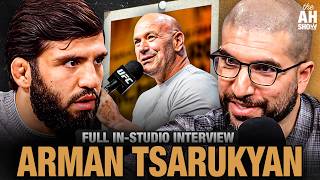
By singling out this one comment for regret, Cington isn't softening his image. He's displaying a shrewd understanding of the industry's real power brokers and proving that even the most dedicated villain knows when to recognize a king. Armen Serukian is watching the UFC 324 main event not as a neutral observer but as a strategist mapping the future of his own career and he has arrived at a definitive conclusion.
His interests are best served by a Justin Gachi victory. The topranked lightweight contender has explicitly and repeatedly backed the highlight to defeat Patty Pimblet, framing his support not as a matter of personal loyalty, but as a cold, logical calculation of fighter psychology and promotional politics. For Sukqian, the outcome will dictate whether the road back to a title shot is a straight line or a labyrinth designed to avoid him.
Serukian's reasoning is layered with a deep-seated belief in a fighter's code. He draws a stark distinction between the two combatants, asserting that Gachi represents the kind of competitor who faces challenges headon, while Pimblet represents one who would evade them. I want Justin to beat Patty.
Sirukian stated, "If Justin wins, he's going to fight me, but if Patty wins, he is going to try to avoid me. Patty is not a man like Justin. This isn't just trash talk.
It's a foundational part of his prediction. He trusts that a victorious Gai as a veteran and former interim champion would honor the competitive hierarchy and accept a fight against the clear number one contender. A victorious Pimplet in his view would use his newfound leverage in the UFC's desire to protect a rising star to sidestep the grueling grinding style that Serukian presents.
This endorsement is inextricably linked to Serukqian's broader, highly cynical critique of the UFC's decision to book the fight in the first place. He views the entire interim title setup as a carefully crafted star making project for Pimblet with Gachi serving as the perfect marketable opponent. Sukqian has labeled Gachi easy money for Pimblet, a revered and exciting name who is perceived to be on the downward slope of his career.
thus providing a credible but winnable hurdle. He takes his analysis a step further, arguing that the interim belt itself is a tacid admission by the promotion that Pimblelet is not a true future champion. They even gave him the interim title because he's not going to be a real champion.
Sukqian claimed confidently adding he can never beat Elia. Thus for Armen Serukian, the spectacle in Las Vegas is a highstakes preview of his own 2026. A Gatei win validates a world where merit and toughness prevail, opening a direct path to a highstakes fight against a respected interim champion.
A Pimpblelet win, however, ushers in an era he fears, one defined by marketable narratives over competitive merit, where the division's most dangerous contender could be permanently frozen out by a champion and a promotion aligned in their desire to avoid a stylistic nightmare. His rooting interest is therefore a plea for a particular version of the sport. One where the path to gold is earned through facing the best, not cleverly circumventing them.