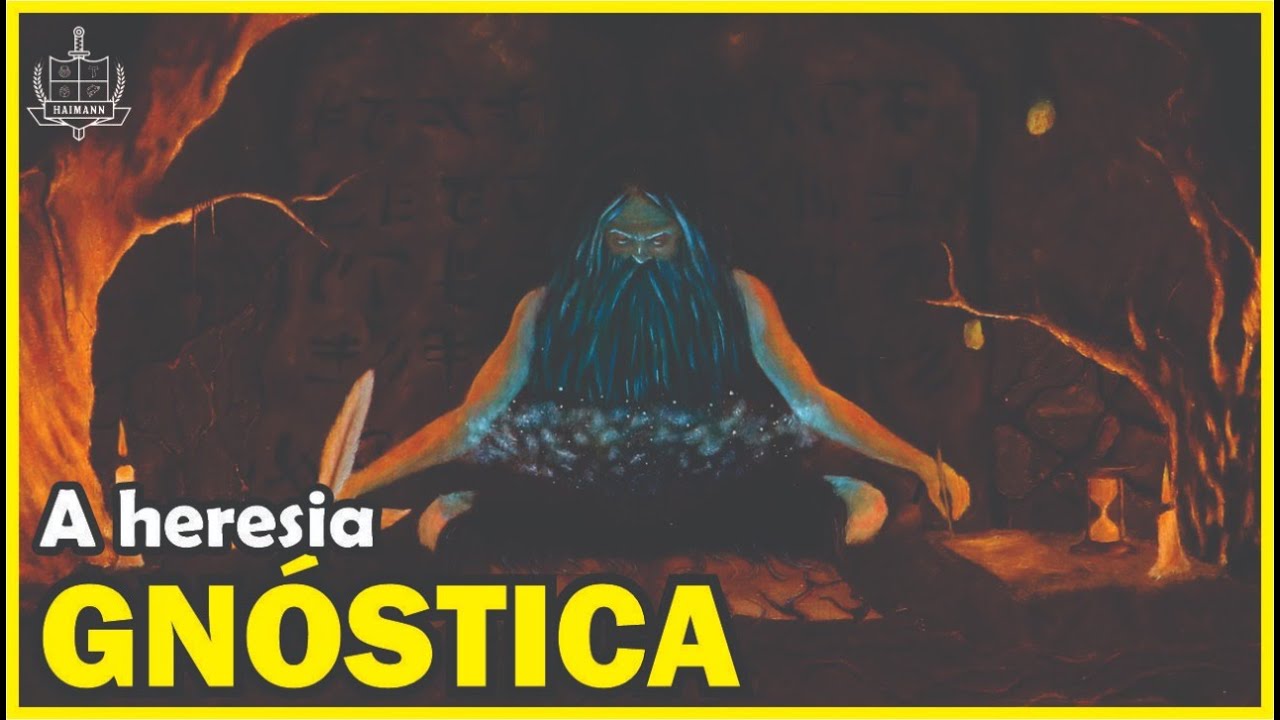
Imagine a universe where the very fabric of reality is an illusion created by an imperfect and arrogant being, hidden in the shadows of ancient traditions. A cosmos where the creator is not a benevolent God, but an entity born of a cosmic error, throwing our existence into an eternal battle between light and darkness. Welcome to the enigmatic world of Gnostic mythology.
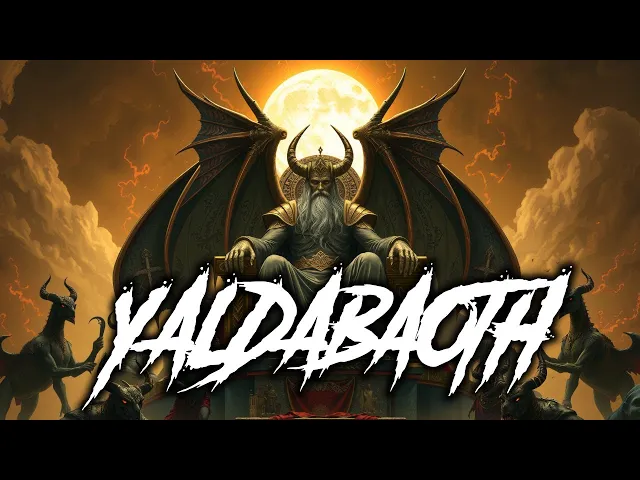
I am Nyx, the Goddess of the Night, and today, we will unravel the mysteries of Yaldabaoth, the Demiurge, and learn more about Gnosticism. At the heart of the Gnostic narratives, there is a deep and disturbing story. To understand Yaldabaoth, we must first delve into the origins of Gnosticism, an ancient philosophical and religious movement that flourished in the first centuries of the Christian era.
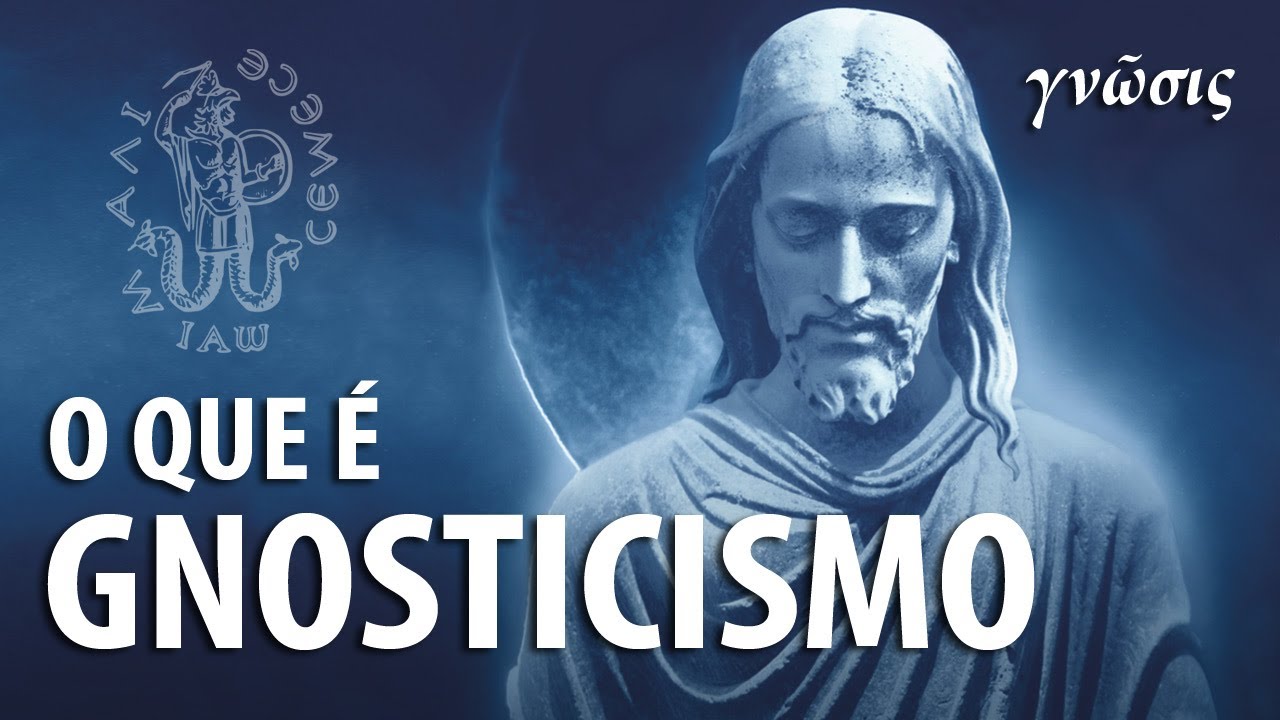
Derived from the Greek term Γνωσις (GNOSIS), which means knowledge, Gnosticism seeks an esoteric and deep understanding of divinity and reality. Believing that this secret knowledge can free souls from the prison of the material world. Long stifled by dominant voices, Gnosticism flourished in the early centuries of the Christian era, offering an alternative, esoteric perspective on divinity and reality.
However, these ideas were considered dangerous by religious authorities. Leading to relentless persecution that attempted to erase their existence, for centuries Gnostic teachings remained hidden. Until, in 1945, an Egyptian peasant discovered the Nag Hammadi library.
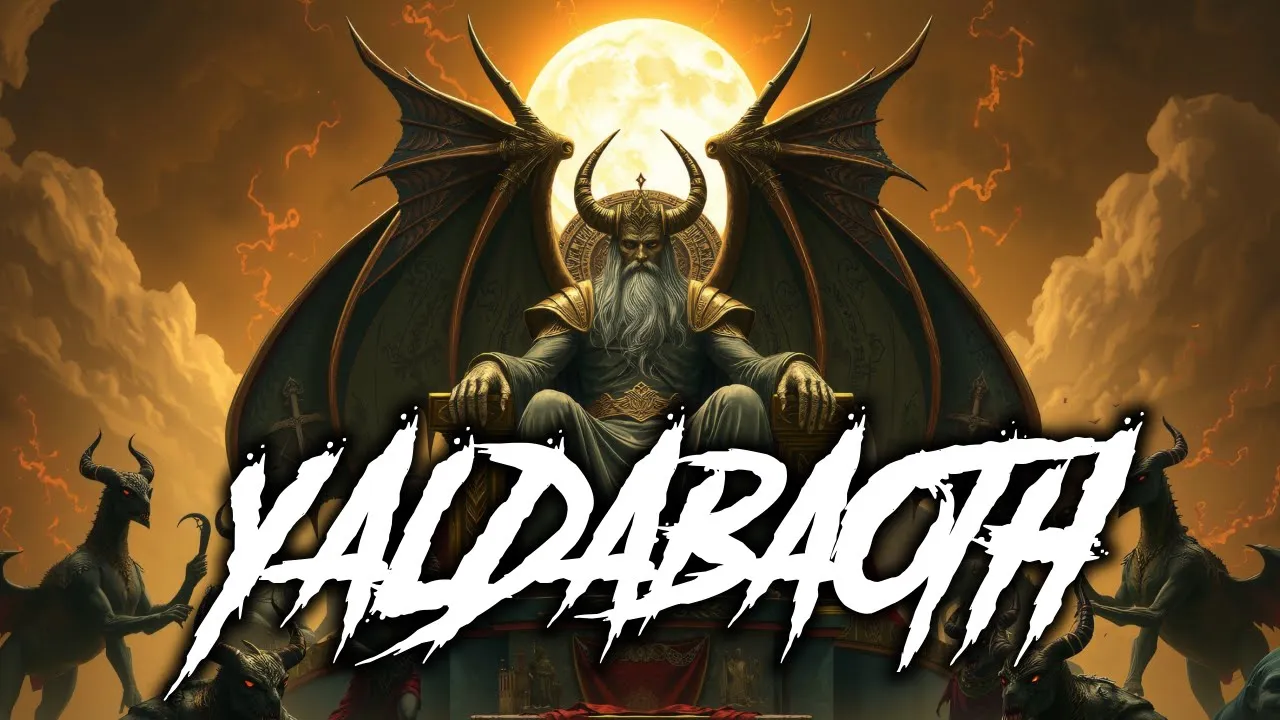
Buried in the sands of time, these ancient manuscripts revealed Gnostic texts that shed new light on these forgotten mysteries, including gospels and writings that had been suppressed by the dominant orthodoxy. According to Gnostic mythology, the universe was not forged by a God full of wisdom and kindness, but by Yaldabaoth, an imperfect and arrogant entity. In the depths of the Pleroma, the realm of divine plenitude, Sophia, one of the emanations of the supreme being, the Monad, in her desire to understand the unknowable, generated Yaldabaoth without the consent of the other divine entities.
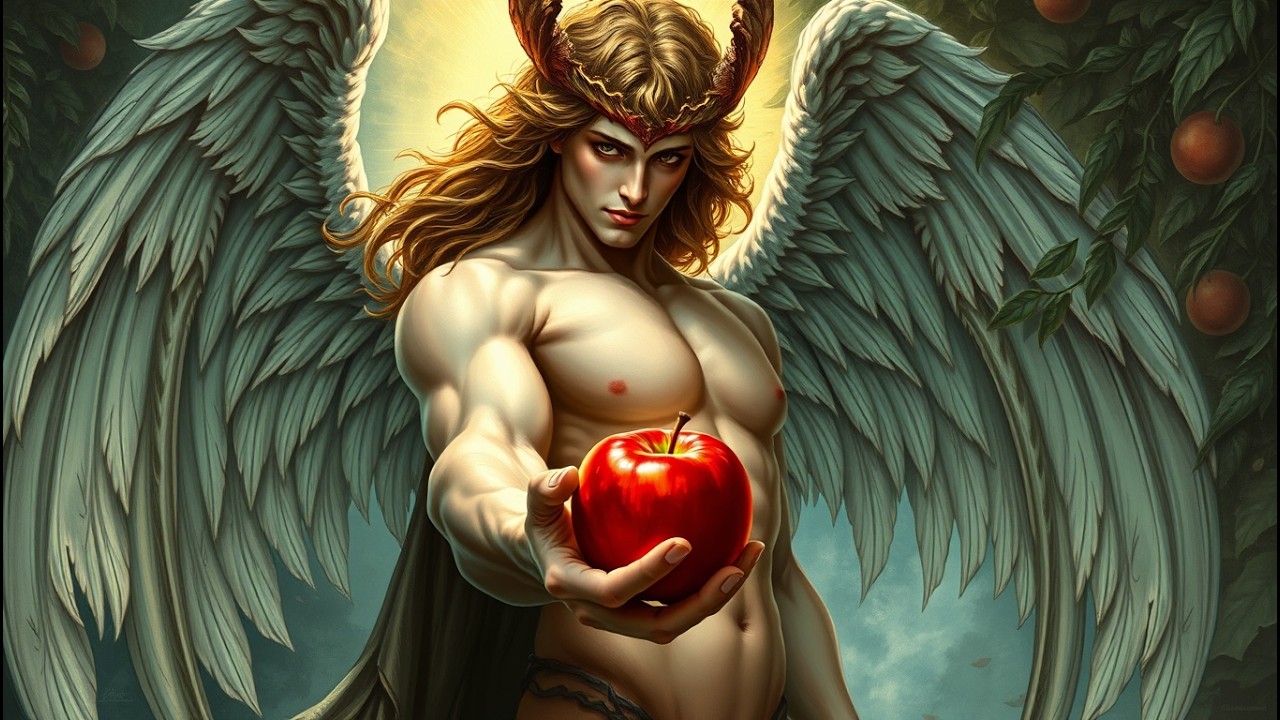
This solitary act resulted in an imperfect creation filled with ignorance. Isolated and unaware of his true origin, Yaldabaoth proclaimed himself the Supreme God. With his limited knowledge, he shaped the material world, our reality, full of imperfections and suffering.
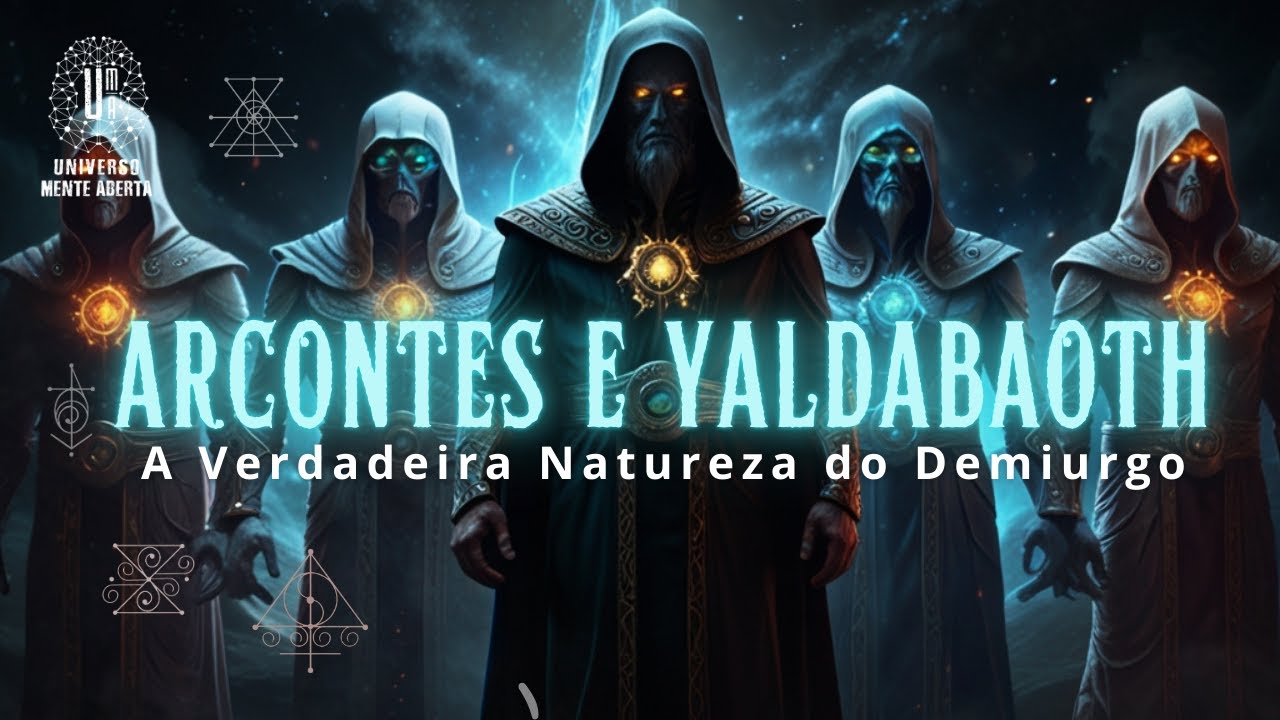
Assuming the role of the Demiurge, he created the Archons, beings who govern aspects of the physical world and keep souls trapped in material illusion, moving them away from their true divine essence. Unlike other creation narratives, where the creator is benevolent, the Gnostic myth presents a striking contrast. A universe created by a defective being, highlighting the constant tension between the material and the spiritual.
This perspective challenges our understanding of reality, inviting us to seek hidden truths, beyond the tangible. Yaldabaoth is often represented as a lion-headed serpent, a symbol of power and corruption. His arrogance and ignorance make him a tyrannical ruler, keeping humanity under a veil of illusions.
The Archons, his servants, reinforce this domination by influencing and manipulating human perception to keep it away from the Gnostic knowledge that could free it. But how to escape this maze of deceptions? Gnostic teachings offer a path.
Through the search for secret knowledge, Gnosis, we can awaken to our true divine nature. This awakening requires deep introspection, overcoming the illusions imposed by the Demiurge and its Archons. It is a journey back to the Pleroma, reconnecting with fullness and light.
Under the Veil of the Ages, different Gnostic paths intertwine. Each revealing unique facets of the search for hidden truth. Let's look at some of them.
. . Founded by Valentine in the 2nd century, this Gnostic school is one of the most prominent and influential.
The Valentinians developed a complex cosmology, where the Pleroma is inhabited by 30 Aeons, pairs of divine entities, which emanate from the supreme Monad. The fall of Sophia and Yaldabaoth 's subsequent creation of the material world are central to his teachings. They emphasized the importance of inner knowledge for salvation and believed that only a spiritual elite could achieve complete gnosis.
This tradition centers on the figure of Seth, the third son of Adam and Eve, considered by Sethians as the progenitor of a special spiritual lineage. They saw Seth as a savior and bringer of wisdom, destined to guide humanity back to the Pleroma. His texts deeply explore Gnostic cosmology, the nature of divinity , and the structure of the celestial and material realms.
Founded by Basilides of Alexandria, this Gnostic lineage developed a complex cosmology involving 365 heavens, each governed by an order of angels. Basilides taught that salvation came through secret knowledge revealed by Christ, who was seen not as a human being, but as a divine manifestation, who did not actually suffer on the cross but only "Appeared to Suffer. " The name derives from ophis (Ὄφις) a Greek word for serpent.
The Ophites revered the serpent as a symbol of wisdom and enlightenment, reinterpreting the narrative of the garden of Eden. For them, the serpent was the bearer of knowledge that would free humanity from the ignorance imposed by the Demiurge. Their rituals and symbols were deeply linked to the figure of the serpent as an emblem of revelation.
Following the teachings of Marcion of Sinope, although not always classified strictly as Gnostic, they shared similar ideas. Marcion proposed a radical distinction between the God of the Old Testament. seen as a vengeful Demiurge, and the loving God, revealed by Jesus Christ.
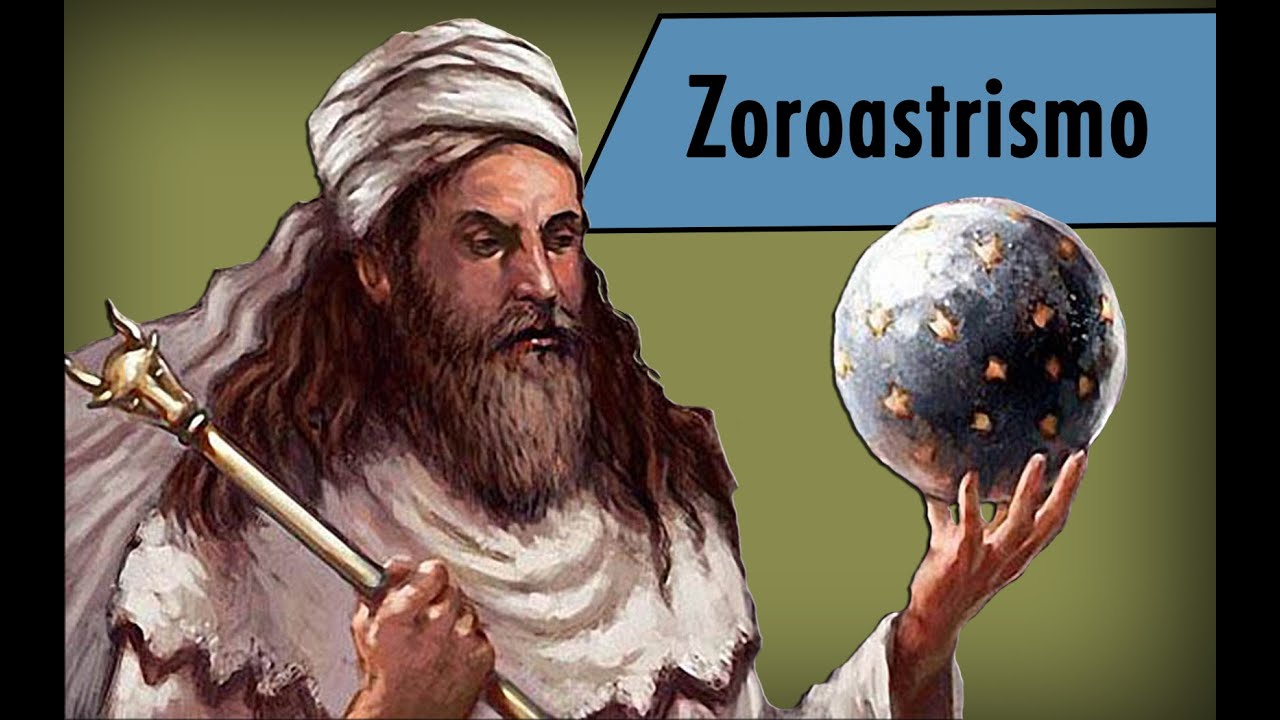
He completely rejected the Hebrew scriptures and crafted his own canon, emphasizing grace and divine love. Founded by Mani in the 3rd century, this syncretic tradition combined elements of Gnosticism, Christianity, Zoroastism and Buddhism. Manichaeism presented a cosmic dualism between the realms of light and darkness, with humanity caught in the struggle between these forces.
Salvation was achieved through acetic knowledge and practice, releasing the inner light from material prison. A Gnostic tradition that survives to this day in small communities in the Middle East The Mandaeans reference John the Baptist as their main prophet and emphasize purification rituals through water. Its detailed cosmology describes a series of celestial worlds and luminous beings, and the human soul is seen as a divine spark seeking to return to the realm of light.
by Samael Aun Weor In the 20th century, Gnosticism found a new expression through the teachings of Samael Aun Weor, pseudonym of Victor Manuel Gomes Rodrigues. Born in Colombia in 1917, Samael founded the universal Gnostic movement, seeking to revitalize and make accessible esoteric knowledge for the contemporary public. His syncretic approach integrates elements from diverse spiritual traditions.
Each of these Gnostic lines offers a unique path through the labyrinth of existence. Revealing different aspects of the spiritual journey towards the Divine. While they all share the idea of a material world created by an imperfect being, the narratives vary in details.
The number of Aeons, the nature of the Archons , and the histories of entities such as Sophia and Yaldabaoth differ between traditions. The ways in which salvation is achieved (Soteriology or doctrine of salvation) vary. Some schools emphasize esoteric knowledge, others highlight acetic practices, specific rituals or the intervention of savior figures.
Rituals could include baptisms, sacred meals, hymns and invocations. Each line had its own texts and gospels, many of which were discovered in Nag Hammadi. These writings offer distinct views on the nature of God, the universe, and the human soul.
During the first centuries the Gnostics faced intense persecution. His ideas, considered heretical by emerging religious authorities, threatened the budding Christian orthodoxy. Texts were burned and followers of Gnosticism were "silenced" or expelled, but the flame of occult knowledge was not completely extinguished.
Fast forward to the Middle Ages and we find the Cathars, a group that flourished in southern France and parts of Italy. Also known as albigências, the Cathars shared beliefs similar to those of the ancient Gnostics. They promoted a dualistic Christianity, believing in two fundamental principles: a good, spiritual God and an evil principle, responsible for the creation of the material world.
For them, the physical world was a prison and the human soul sought to return to the spiritual realm of light. This view directly challenged the doctrine of the Catholic church, which saw the material world as the creation of a benevolent God. Considered heretics, the Cathars became the target of the Albigence crusade in the 13th century.
A military campaign launched by the church to eradicate heresy in southern France. The conflict was brutal and relentless, resulting in massacres and the almost complete destruction of the Cathars. the famous phrase: "M@t3 all, will God recognize his own?
" echoes the severity of this persecution. The story of Yaldabaoth and the Demiurge is not just an ancient myth, but a powerful metaphor for the human condition. It represents the internal struggle between ignorance and wisdom.
The Ego and the Divine essence. It invites us to question appearances , challenge the structures that imprison us, and seek the truth hidden in the depths of ourselves. Moral of the story: "No truth remains hidden forever.
For if the sands of time tear down even mountains, what about the walls of lies? " Nyx Let's move on to today's Mystery Letter: If you answered. .
. Congratulations! With his theory of ideas, he believed that the material world was just a shadow of the true reality, which is accessible through knowledge and reason.
This idea profoundly influenced Gnosticism. I hope you enjoyed this reissue of our first video about Yaldabaoth, the Demiurge and Gnosticism. If you would like to know more about these myths, the various ramifications of these teachings, or have any observations, Leave it in the comments.
I would like to thank all the contributions we received from you, especially Marco Silva for his generous help. Thank you very much! I would also like to thank you for the letters I receive in the evening mail PO Box: 48343 CEP: 03512-970 São Paulo - SP Marcos also sent me his very interesting work with Sacred Geometry and we will soon have a video on the subject.
I look forward to more correspondence from you, friends. I'm very happy ^_^ If you want to contribute to the channel, read the QR code up there or click on the links in the description and the first pinned comment. You can also use the "Thanks A Lot" button here on YouTube.
And, you know, subscribe to the channel and turn on notifications so you don't miss any videos. Here are two more special videos about Gnosticism for you to explore. And, as always.
. . Stay safe.