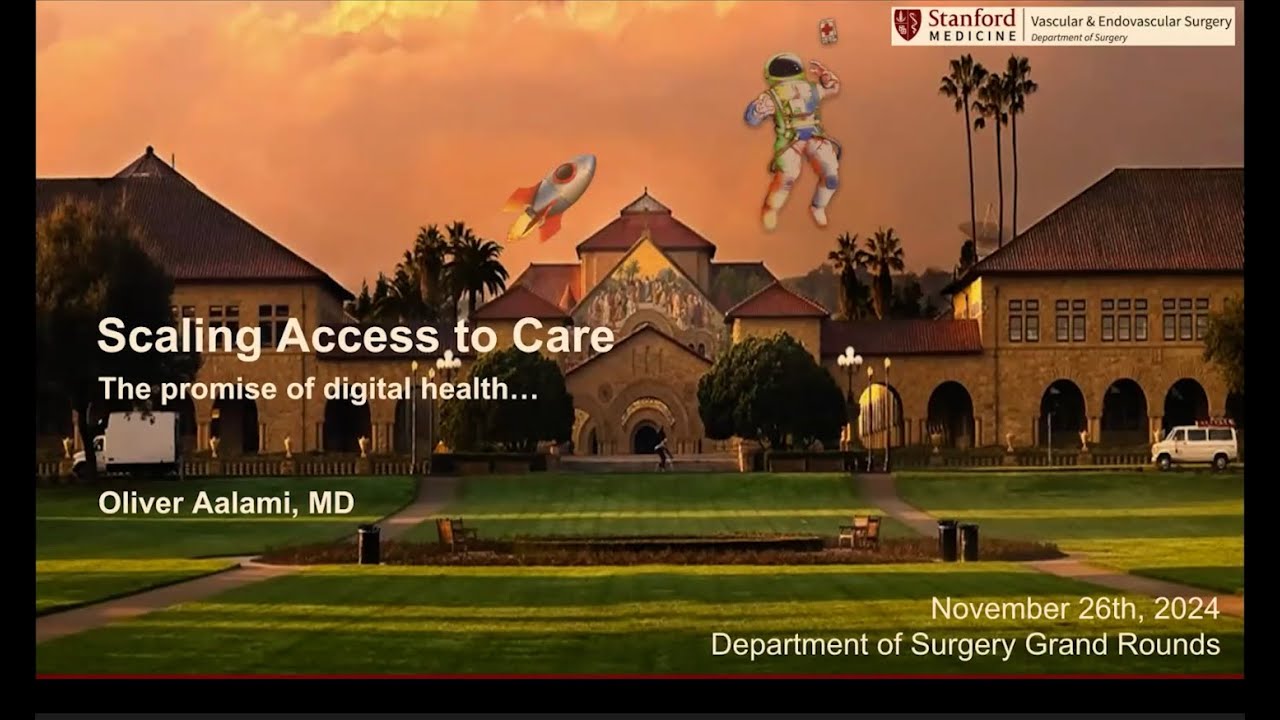
First of all let me just start by saying just how much of a um honor it is to be back here to come back home uh to come back to this program to see so many friends and supporters and mentors and teachers over the year I mentioned at dinner last night that I am a product of all the teaching that I got here this was my surgical program so it really is a great honor but I just feel content and for that I thank you um to be able To experience this is really a very
special moment um so let me just start off very quickly um I do want to just say how much of an honor it is to be giving a named lectur ship let alone the George armanini lectureship as well today um I saw the list this morning and I'm glad I only saw it this morning because I certainly do not belong on that list of um um surgical Legends um but uh this really adds to just the profoundness of this Experience as well um as you all know Dr armanini especially between 1974 and 1978 um during
untimely death at that time had spent a lot of time dedicated to the surgical residency staff um at Stanford and um it's just a great honor uh to be able to give this lecture today therefore quick word about Dr Han uh your hospitality here has just been Second To None uh you are incredible um you are among the most prominent names in surgery across the United States in All time and um your invitation here really has meant the world to me and thank you for everything that you've done and thank you for everything that you've
done for this program in particular as well I just want to give a quick um shout out to my class of 2014 as well we had an interesting class it was a fun class I'm sure there are some fun memories U but I also do want to mention dror crumel who at the time in 2010 took A chance on me um as an international medical graduate no less and uh to come to this program and graduate from this program something that I hold dear to my heart um you'll all see that I let the sub
interns at Harvard know that they should look at the Stanford program which Keith Lio I think puts up with sometimes so with that I do want to thank all the uh residents who I worked with in particular my co-residents the senior residents the junior residents I Mean I remember even coming in there was a class of superstars of pgy 5S graduating in Robin Cisco and Moren Tesco and that special group of people Venita Chandra um and it was really an incredible experience being here um a shout out obviously to Surgical Oncology here at Stanford when
I was here it was Dr Norton Dr Greco Dr pides and Dr bisser and um under their care I learned about Surgical Oncology develop this Strong interest that I have today and for that I thank you but again it's really important to mention and this is something that's unique to this program is the residents get a very special experience at multiple sites with fantastic teachers and it really makes you a a broader more Diversified product when you come out knowing about the different models of healthcare and it's something that has served me well in my
system today I just want to honor my father for a moment he passed away of metastatic coloral cancer in 2018 actually developed the cancer in 2011 was taken care of by two expert surgeons here um but the importance of that is that not only did I trust Stanford as not just a home for surgical training but also for care of my family members um but it also allowed me to pursue my interest in metastatic colal cancer and Pilar and pancreatic diseases as well so I give This lecture in his honor as well and I am
hopefully his legacy moving forward and then a special mention of the important group who I work with at the Massachusetts General Hospital uh we have an incredible group out there that has always been Innovative and in all ways possible trying to move the needle forward uh but a special shout out to Keith Lilo um Keith has just been an unbelievable supporter and uh the line is that if you ever see a turtle on a Lamp post it didn't go up there by itself uh he spends every waking hour of his day advocating for people and
I've learned to pay that forward through him and that really is a very special trait um in in some people so I thought I would start just since I'm an Alum of this program just tell you a little bit about my current Focus so obviously I'm an HPB surgeon and uh through my work I basically try to highlight some of the things that I do of course first and Foremost as a surgeon but I also have involvement in clinical trials some that I copi and others that I just participate in um I M institutional National
databases and have an outcomes program uh that is basically uh driven by some incredible folks who I've recruited over the years whether it's residents research fellows from abroad or students and it's basically a self-sustaining machine at this point I have a very modest basic science effort And then I've been really involved in uh pretty heavily involved in developing uh cancer programs we've set up a hepatic arterial infusion pump program we've set up a cyst program once you learn to set up a program you then can set up multiple programs and uh it's been a special
interest of mine and something that has been um highly welcomed and needed for our patients but in terms of my non-hpv career Focus obviously I manag the cancer center and I've spoken To a lot of you about that yesterday but I also have a hand in Train E Wellness at the gme I manage the sub internship program at Harvard um probably the toughest job but if you can do this you can do anything as managing the surgeons at Eminem and that's something that I do as co-director of our morbidity and mortality conference at the MGH
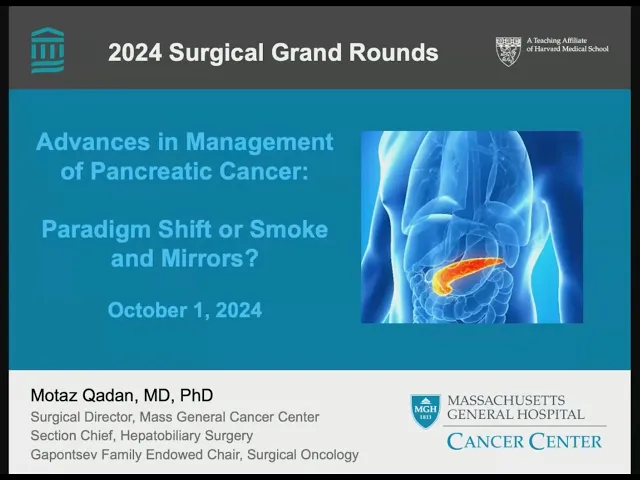
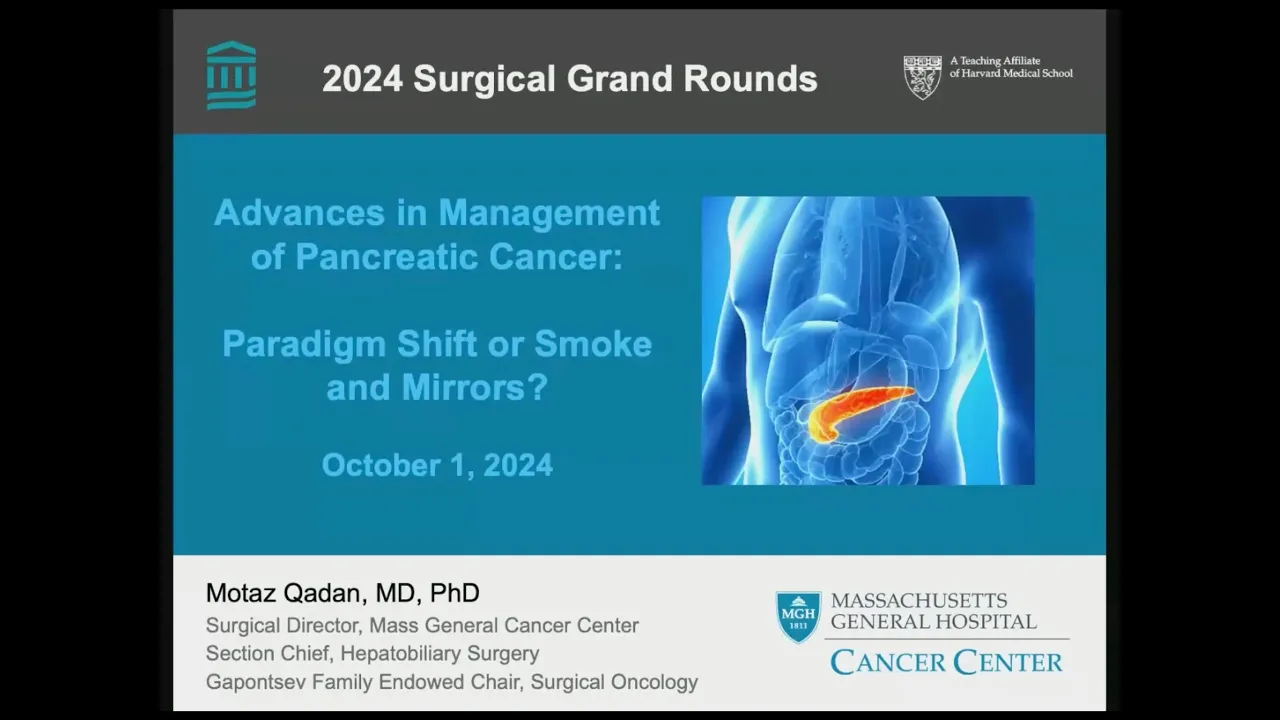
which is now a lot Tamer than it used to be uh but I'm involved in National societies and then fundraising is really a special Aspect of my uh career so without further Ado I'm just going to get started on pancreatic cancer this is going to be a pancreas cancer lecture but I'm going to try and tell you a little bit of a story today uh so that I can share with you and hopefully you can translate into your respective Fields a little bit of what we've learned and how we've done this um the crowd here
probably needs no introduction to this that pancreatic cancer is now the second Deadliest cancer and the incidence continues to rise and the interesting thing about pancreatic cancer is because of the nature of the smv and the SMA the vasculature that run underneath the pancreas um there are various levels of involvement of these tumors uh with the vascular Supply and so you can see here uh you have things like Venus involvement Venus encasement arterial involvement arterial encasement and generally what we would call either Upfront receptable borderline receptable or locally Advanced unresectable disease and in general we
don't tend to get very involved in distant metastatic disease although with a exceptions these days the group here needs no introduction it's always like bringing coals to Newcastle as they say um pancreatic cancer at Stanford um almost a you know um world-renowned um um experience with the management of some of these more complicated tumors as well Especially the borderline receptable and just want to acknowledge some of the great work that's been done by also Dr pedes with the fluorescence gued Imaging surgery as well so the Story begins with this this is the 1985 to 2006
experience of the MGH this was before I got there and what happened here was in a group of selected patients the overall survival was analyzed and among 499 respective patients the 5year survival was 19% and the 10-year survival 10% and so this Again the emphasis is in a selected group of patients who had no metastatic disease with a fiveyear survival of less than 20% and so at the time uh we looked at patients who underwent what we call an r0o negative margin reception which is wide margins greater than a millimeter and compared them with patients
underwent close margin resections or positive margin resections and no surprise median survival is 35 months Versus 16 versus 14 so really the only thing that made a difference here was having a negative margin resection that was important that was imperative and that had implications for borderline receptable disease and locally Advanced disease you can't just shave these tumors off or try and debul them the patients do not do well if that's the case in fact when we compared patients with an R1 I.E microscopic puzz positive reection to locally Advanced patients Who were not reected at all
the median survival is actually very similar 11 months versus 14 months in fact there were several studies this is around the 2010 2011 era that showed the importance of margins on predictors of survival and so at the same time what was happening is there was some great work that was being done in the metastatic setting now traditionally jeem sine single agent is what was used To treat metastatic pancreatic cancer and at that time there was a proposal to try this new triple regimen what's known as modern systemic therapy now with 5fu oxal PL and Aran
or ferox and this became the standard of care for pancreatic cancer because of the Improvement in overall survival and disease free survival or progression free survival and what those refer to is recurrence and you can see here there's a big separation of the curves Especially for pancreatic cancer that's considered a pretty wide separation there and so the question then that came to mind is well if we can do this in the metastatic setting why not do this in the borderline recal in the locally Advanced setting and I'm going to focus my efforts a little bit
on those and can we use ful furox in a Neo adant setting and Neo adant means giving the chemotherapy before surgery all right as opposed to adant which means giving it After and the case for giving Neo adant therapy would be that this would allow us to do a negative margin resection and would help with tumor and node downstaging but importantly it would also ensure that patients are getting their chemo therapy because about 25% even 50% in some series of patients cannot see chemotherapy because of complications from operations like Whipple that have an inherently High
morbidity rate it could be anything up To even things like surgical s infection that could delay the receipt of chemotherapy but we know that pancreatic cancer is also systemic disease and that made sense and there are a lot of other more minor um advantages of doing NE Neo andrin therapy so this was one of the first cases that was attempted at MGH and this is a 41y old Pati who had a 3.6 CM tumor incasing the SMA and you can see here this is a tumor that's in the uninet that extends through the root of
The mesentary there and encases the SMA in this gray fuzz that you can see here and the ca99 which is the tumor marker used for pancreatic cancer is 985 and this patient underwent an hour regimen then full ferox for four months and then 50.4 gray of chemo radiation the ca99 dropped back to normal range 37 and this tumor came out it was a 1.6 CM tumor T2 n0 negative margins despite the fact that on the preop Imaging you continue to see the involvement here and What this was was just basically fibrosis that was left behind
from the chemotherapy and we started to see that more and more as we attempted these cases and I think this is probably one of the most important papers that came out I give credit to my partner at the time Dr Christina Ferron who's now chair at Cedar Sinai and she published this paper and the aim of this study was was to evaluate the accuracy of Imaging now in determining resectability because we Were taking those patients to the O and they were getting reected and how could that be and in fact what Dr Ferron described at
the time was that Imaging is completely unreliable in fact 92% of patients underwent an rzo rection despite being deemed unresectable in fact in 16% of patients there was less than one millimeter of residual tumor at that time and these nests were probably dormant and even when there is viable cancer they Probably couldn't grow back because of the alterations in the micro environment and so we analyzed at the time and compared with patients who did not receive neoag therapy ferox resulted in longer o times and these operations initially were harder there was higher blood loss but
one thing that was striking was that there was lower operative morbidity and I guess by frying the pancreas with radiation there were no pancreatic fistulas at all which Is the Achilles heel of this operation and so in 50 patients that were described in that series there was Zero pancreatic ful which was unheard of for pancreatectomy there is also a decrease in ly node positivity smaller size of tumors and other findings but essentially equivalent length of stay readmissions and mortality so here's a patient of mine having just come straight out of Fellowship to be faced with
this kind of Pati was definitely a little tormenting experience but you can see here a huge tumor that comes out of the uninet and extends across to the left side of the body there's the aorta you can see here the SMA and the smv and this patient under went neoag chemotherapy with the same regimen that I just described and there was some continued fuzzier around the smv perhaps but certainly around the SMA and you can still see this tumor extending over to the left and Importantly this tumor came out and what you can see here
is when we took this tumor out there is basically no evidence of tumor left behind on the portal vein in the smv or the SMA and you can see here that the right side of the SMA is divested and skeletonized and this patient had a YP t1c node negative negative margin resection tumor but the important thing that I want to point out here is we did not need to do a vascular resection we're able to shave off the Fibrosis essentially off these vessels and skeletonize the vessels and you can see here the pancreatic stump you
can see here the common hepatic artery and then the BCT is just up there we decided at the time to look at predictors of reability and survival and I became a lot more active now at the mgc and trying to get involved in research and we thought we'd try and explore and see what could help us predict if patients could be reected or Not so we compared those who were reected versus those who are not reected with respect to ca99 and tumor size and what we found actually not much difference not very helpful data in
that both reected and non-resected patients had a decline in their ca99 arguably a little bit more in the reected patients but also there was a decline in the size of the tumors again arguably a little bit more in the reected patients but both went down okay and so at this time We decided to start looking and we found that patient who got full F Nots seem to be living longer than those who didn't get any Neo adant therapy and that makes sense because at this point we're putting them through a tumor biology test and those
metastasizes are being excluded from an operation so you might say well this is all selection bias and the answer is yes this is actually what we need to be doing for pancreatic cancer and this was fine but now we were Starting to see survivals of 43.7 months median compared with 25 months in the non- Neo adant arms and this is probably the most important slide that I'll show which is one of the things that we got criticized for is that could it just be all the chemotherapy and the radiation that's doing all the work and
what are surgeons doing in this setting and the answer is something and the reason for that is when we looked at reected versus Unresected patients and again there is a little bit of selection bias in this you can see here there is some big separation in the curves and in fact reected patients had a median overall survival of 43.7 months like I just showed the unresected patients had 18.6 so about two and a half times improved survival and I'm going to come back to the slide in just a moment moment so at this point we
decided to run our first phase 2 trial in borderline recal Patients and tried to prove on paper that our regimen works this was ferox eight Cycles four months once every other week chemoradiation and then surgery and our negative margin resection rate in the borderline setting was 65% and reected patients median survival was not reached at the time of analysis and our two-year overall survival was 72% now at the same time the steel Laboratories at the MGH were looking at Lartin and Larin is an Angiotensin receptor blocker it's an anti-hypertensive drug and what they found at
the time was this inhibits collagen one production through the TGF beta pathway and that this would inhibit collagen the cancer Associated fiber blast production of collagen in breast cancer specimens and you can see here there was a lowering of active TGF beta and collagen one and what they found was that lar Actually decreased collagen one and with it the size of these tumors and improved the in intratumoral distribution of Nan particles so there would be more access through improved blood supply so the first thing that we did when we saw that is we went back
and looked at our patients since many of our patients are on arbs or Angiotensin converting enzyme Inhibitors and found a big survival difference retrospectively in those who got some of these drugs compared to the Patients who did not and immediately we noted the signal here so when you see a signal you try and move this to the perspective setting and that's what we did so now we pursued our locally Advanced unresectable trial and these are more active tumors that are larger and more geographically awkward in that they probably encase the SMA for example and so
we did intervention Again full ferox 8 Cycles same chemo radiation but we added lard for these more advanced Tumors and now we found that the rzo resection rate was 61% and this was remarkable because 10 years ago those patients would never have been considered for a reection with what they had and in fact our median overall survival for reected patients was 33 months and now the 2-year overall survival is 83% and in fact when we compared both phase two studies so when I say phase two I'm going to be referring to these studies We found
that there was actually a similar rection rate 65 versus 61% despite a more advanced stage and in fact there were three complete pathologic responses in the locally Advanced study over the borderline study and the median tumor signs was 4.9 centimeters in the borderline study but 1.8 in the bigger more advanced locally Advanced study um so we decided obviously that lart Warren's further study and I can tell you when we used to Go to the or you could tell when a patient had gone lar their tumors would be softer Pinker and they wouldn't be as hard
white and fibrotic and you could tell that they had improved profusion and they had responded much better to the chemotherapy at this point we launched the phase three trial which is a multi- institutional trial and again furox eight Cycles radiation and surgery in the second arm we had lartin and in the Third arm we decided to combine lartin with immunotherapy and it was a very um intentional designed to have the primary objective be a reection rate of greater than 65% to try and achieve a positive study and the results from this are actually just being
written up at this time the study is now officially closed and this was the first case on study happened to be my patient a 66- year old healthy woman who presented a vag R upper quadrant pain she had a history of Laparoscopic run y gastric bypass we're seeing more of those patients now present for Whip and she was a radiation oncology nurse at the brigam and this was her scan and when you look here you can see the 3 60° narrowing of the vein there all right and so she went on to get full ferox
chemo radiation lartin and immunotherapy and you can see here after treatment her vein just pops wide open again and this was the um picture from the operating room once again you Can see the skeletonized vessels the portal vein and the SMA you can see a left hepatic artery going over here and she actually had a right hepatic artery that was actually conventional not replaced but ran underneath the portal vein and the IVC in the left renal vein and again importantly we did not need to perform a vascular resection and her pathology showed a ypt0 n0
complete response at that time we're very encouraged by that and I Have a small lab um effort and we decided to go from bedside to bench and take a look and see what we're seeing with lar in there and my postto from China Dr Chia who I give him a lot of credit for this excellent work had developed an orthotopic Mouse model with pank One S line and we developed a radiation model that would Shield the mouse but leave the tumor exposed to the radiation and we decided to do radiation because the steel lamp had
done Chemotherapy and there was some other work on the chemosensitizing effects of Larin but never with radiation and you can see what we found here was with radiation sixth gray there was shrinkage of these tumors compared to controls and more so with 12 gray of radiation but when we combined with lartin the effect was dramatic and you can see here the synergistic effect of Larin plus the radiation is especially with 12 gray of Radiation we have an incredible Mouse MRI facility this is a skill that I'll probably never use for anything else in my life
but we learned to do it nonetheless I'm basically emitting about 100 slides of a lot of work that went into this to try and get to this Final Phase that we're at but you can see here with radiation a little bit of shrinkage of tumors when combined with the SAR more dramatic shrinkage add in 12 gray radiation some shrinkage of the tumor Combined with Larin the tumor was invisible at this point in fact we think we stumbled upon a little bit of an interesting finding in that what we found with radiation was Angiotensin receptor one
receptors were being upregulated with radiation and oh by the way that may have been the way by which radiation can cause um eventual resistance to treatment in that it can increase the fibrosis and this is what You would expect in the deposition of tjf beta but what lartin did at this point was actually mated that finding and this is probably why we're seeing some of these tumors be softer and easier to navigate in the operating room as well so another fellow of mine in the lab at the time decided to now go back and explore
the predictors of reection because this would be the most important finding that we could share and he Looked at tumor size reduction and ca99 kinetics after neoag full ferox and what we found Now with an increased sample from the original publication to 193 nead patients was that tumor size reduction was very important and the hazard ratio 1.02 actually means a 2% chance of getting the tumor out every 1% chance reduction in size so if a tumor reduces by 20% in size there's a 40% increase chance of being able to reect that and with it the
pathologic near Complete incomplete pathologic response rate as well and then the second thing that he found which was really important was that ca99 normalization specifically not just decline was strongly associated with reection and then subsequently obviously this makes sense that post offer to ca99 rises in those patients would correlate with recurrence of tumor so there's no question in my mind that we made a lot of progress when it comes to the borderline receptable and the Locally Advanced pancreatic cancer patients and again 10 years prior to that these are patients who were not even being considered
for reection and that the neoag strategy was a great one based on the metastatic data that has now allowed us to translate this into all kinds of pancreatic tumors and we think at the MGH that you should always combine those with lartin because it really has an impact the question is where do some of The controversies lie today and one of the questions is obviously NE agement for upfront receptable disease and there are some ongoing trials including the alliance in the Dutch trial that are looking at this but I'm going to share a couple of
slides of data the role of radiation and I want to talk just a little bit about the local approaches so in terms of neoag for receptable disease this is a very important study that came out in 2021 it was published by the um I Believe it was the Alliance Group at the time and what they did was they randomized 147 patients and they were comparing two systemic chemotherapy uh regimens ferox vers Gem of ring and what they were able to show first of all just to mention this was supposed to be a NE Adin study
but actually ended up being a peroperative chemotherapy study and what that means is While most patients got Neo Adin chemotherapy they didn't complete the entire course like we do Eight cycl but they actually did some on the back end so they did adant chemotherapy as well um and what they showed was that the rzo rection was the same between the arms but it was very depressing because suddenly we're seeing disease-free survivals of 10 months and 14 months with Neo andin therapy how could that be we thought we just revolutionized the field and it looked like
we've taken a step backwards and in fact their data then subsequently went On to show that the overall survival was only in the 20mon range for both arms but as they say the devil is in the details and when you look carefully here and this is a little bit of a problem with multi institutional studies is that only about half of the patients in each arm got reected which makes no sense for an early upfront receptable study and part of the problem with that is that it's really hard to control what surgeons do on a
multi-institutional Basis and who's willing to be aggressive in the new Adin setting versus not and it's really hard to control the standard of surgery that's being offered to the patients as well and so again if you go back you remember the importance of reection from that slide those who got reected versus those who did not and chances are those who did not diluted the sample significantly there so armed with these data we decided to go back and look at all our patients now with Z Van Fong who many of you may know is now and
attending at Mayo Clinic in Arizona um we looked at all our patients who got NE Adin F furox but in a non-clinical trial setting because we wanted to provide a real world analysis of what these patients look like so again the aim was to analyze on an intent to treat Real World experience and really the only exclusion criteria that we used here was that the patients are on an ongoing clinical trial so these are just All our patients including by the way at Satellite affiliate hospitals was really hard to go through all Pharmacy records to
kind of you know figure out who all the patients were because a lot of our patients get chemotherapy in the community and then come back for their operation but we did that and there were 254 patients at this point you can see our sample size continued to grow who were initiated on furun and of those 199 underw exploration 142 were reected and 129 of those were cleanly reected these are R zero resections so when we looked more carefully at those patients only about 16% of those were upfront receptable patients by nccn criteria and that makes
sense we do get a lot of borderline and locally advanced cases now case of be careful what you wish for when you start publishing data like that but you can see here our locally Advanced unresectable patients constituted 52% of this Cohort but we learned a lot of things from this study this turned out to be a really important study and what we learned first of all is that the majority of patients who started chemotherapy were able to finish it and by finish it I mean the eight cycles that we designated was the standard of care
our institution but again we're a very radi ration heavy institution and 86% of our patients got and completed radiation therapy now we found out that The reasons for not completing chemotherapy were poor tolerability and disease progression um in approximately 60% of patients and then we even looked at Frailty scores through ecog and found that the majority of patients did not change but some became frail in fact the significant proportion of people getting chemotherapy before Whipples for example were getting more frail we found that a significant number of patients had great three rate for Toxicities that's
a very high proportion over 40% about 30% of patients had to come back to the Ed for a visit during chemotherapy about 40% of patients got admitted at least once to the hospital for an average of four days some up to nine days half of the group was Viller stented for jaundice beforehand so they need the stent because they're going to get ne agement therapy but about a third of those patients required additional ercp and we always talk about the risk Factor of colitis and how that can impact the treatment so a third of patients
had developed colitis and needed repeat ercp what we found overall was that the tumor signs had trunk from 3.2 to 2.5 ca99 average 164 down to 36 and about 23% of patients developed Progressive disease and the rest with some kind of response surgical margins negative margins 90% of the group that underwent exploration 129 patients and we learned That eight of those patients had a complete pathologic response so our complete pathologic response rate is 5.6% with our regimen average number of lymph nodes examined was 19 average number of positive lymph nodes was zero with our strategy
and with it also we found Paran neural Invasion and lymphovascular Invasion rates that we documented and then came a couple of important findings now we found that patients who did not complete f furox For any one reason or another could not tolerate the treatment were not associated on multivariable analysis with worse overall survival but what we did find and not surprisingly from everything that I've just said that Pat s who did not make it to the operating room were associated with worse overall survival and again going back to that same slide if you get reected
you do well if you don't get reected you do badly and we looked at the predictors of Not undergoing exploration things like social factors receip of Prior chemotherapy and completion of Cycles itself can be a predictor of not undergoing exploration but itself did not have a direct impact on multivariable with worse overall survival increase in ecog score and locally Advanced disease were the predictors of of not undergoing exploration and then we also answered the question using this study and looked At over 75 year olds versus Under 75 year olds and how safe it is to
start chemotherapy in them and what we found was that while more of them approximately double did not complete the chemotherapy regimen they all made it to the r at roughly the same rates and so we deduced that it was safe to start chemotherapy even in elderly patients and octogenarians today who we see many of uh and you can pivot easily and go to the operating room as needed When needed or convert straight to radiation if they're not tolerating chemotherapy so from that study 254 patients 199 explored 142 reected 129 clean resections and despite 42% of
patients having a grade three or four toxicity and a third requiring additional ercp we could still get most of these patients to the operating room so we felt that Neo agement was safe and this was a real world analysis and we decided to push forward with this now People always say there's no data to support the use of Neo Aden therapy and upfront recable disease not true there might be data we don't like maybe because they're not from here but there are data and this is a paper that was done and published in the Japanese
journal of clinical oncology the full manuscript is still awaited but this is a phase 2 three trial of Neo adant chemotherapy in the Far East they use S1 with gem cabine uh versus upfront Surgery and uh Neo adrin versus upfront surgery 362 patients 182 in the neagent arm 180 upfront reection and the median overall survival was 30 6 months versus 26 months without any difference in secondary outcomes so there is benefit that has been documented in a prospective trial uh with Neo andin therapy the radiation I just want to talk about this a little bit
and we are a little bit different I acknowledge from many other institutions in our Heavy use of radiation now no pancreas talk is complete without mentioning copen which is a Dutch study that looked at chemar Radio therapy versus immediate surgery for receptable and borderline receptable disease and what the authors of that trial showed was that pre-operative chemotherapy compared with immediate surgery had a benefit on both overall survival and disease-free survival so what's the issue with radiation why don't we all use it well This is probably the most important study that has changed that and this
is the efficacy of pre-operative furox versus furox with radiation that was published by Matt KZ who I'm a huge fan of is a great person who does pancreatic cancer work MD Anderson and is the chair of surgery there in this phase two randomized clinical trial unfortunately showed this patients who got chemotherapy plus radiation compared to chemol alone did worse so radiation Impacted survival adversely so how could that be it's a modality that helps treat cancer yet those patients were doing worse once again this was the huge issue here in a multi-institutional trial the rzo resection
rates and the amount the number of people were reected in the full F Ox plus radiation group were substantially lower and once again back to this slide if you get reected you do well if you don't get reected you don't do well and it's Really hard to Run multi-institutional Surgical trials and control the standard of surgery that's being done at all these institutions fact when the preop authors went back and looked at the long-term survival data now what they did in this study intentionally is they excluded the patients who then had progressed and recurred in
the liver and other distant sites and looked at the impact of local recurrences those who got radiation Beforehand had a much lower local recurrence rate and with it a survival Advantage all right now the importance of that is radiation has only rarely ever been shown to cause a survival Advantage it reduces local recurrences aside from breast arguably I was talking to Dr wner about this yesterday she says it's plus minus prostate and short course retile but besides that radiation has not been shown to improve survival and this was one of the first times on The
long-term follow-up that we were able to see the reduction in local recurrences and with it improved threeyear and 5year overall survival so again the problem with most studies especially in pancreatic cancers we only look at the initial phase under five years and the analyses don't extend to beyond that but when we do we do see this uh impact of radiation there now there are some inadvertent benefits that we found with radiation at the MGH which Is that it provides an important tumor biology test between chemotherapy and surgery and it actually allows us to exclude some
of the additional patients who may have have aggressive tumor biology who as soon as you take them off systemic therapy May met out what happens is they get five and a half weeks of radiation there's a pause for 4 weeks so there's a nine-week window that we allow those tumor biology performers to declare themselves the other thing That we found is that it lowers pancreatic fular rates and again this is great because this is the Achilles heel of these operations and when patients have uh morbid complications it tends to be related to fistula but the
final thing that we saw and now this is something that we've experienced in our patients who get radiated is we don't see pancreatic cancer pain anymore and we have rarely had to perform Celiac axis plexus ablations for example with Alcohol and it's probably because we're um targeting the Celiac plexus with uh the radiation treatment that we offer as well so just a little bit about the uh local approaches arterial reection divestment automatic vascular resection and iart so I mentioned we love radiation we really love radiation by the way so we even give radiation in the
operating room at the time of reection what's known as intraoperative radiation therapy iort and I attached these Pictures only to show you what it's like to actually place the beam on top of either the surgical bed or the tumor and then we roll the patient back about 5 to 10 feet into the motron uh radiation machine in the operating room the clinical advantages of this um is it allows us to have direct visualization and allow for accurate definition of any Target volume a normal tissue can be removed or shielded from radiation since we're open we're
in the Operating room we can see exactly where we're targeting the beam and we use electrons which allows for adjustment of the depth of the radiation beam so the question is what do we use radiation for and do we use it on all patients and the answer is absolutely not but when we do use it is for these locally Advanced tumors and especially because I told you that we tend to not reect these vessels if we feel based on subjective assessment by the surgeon that there may Be threatened margins or tumors Left Behind where there
could be microscopic tumor cells on the vessels then we go ahead and deliver a 10 to 12 gray of radiation at the time of surgery but also for unresectable disease and so for example you get in there the tumor is still as large as expected the response has been relatively poor um can't create the tunnel sometimes we actually biopsy around these vessels and if the biopsies come back positive we declare them Unresectable at the time of Frozen analysis in the operating room we go ahead and combine uh this with a gastro josy because you get
severe inflammation at the site of the dudum from the radiation and we deliver a slightly higher dose of gray so just to put this into perspective the single dose of electrons at about 15 gray if we're talking about 50 Gray over 5 and a half weeks it's about a quarter to a third of the dose that's delivered over 90 Seconds in the operating room it's a pretty high dose of radiation so this was actually initially started by Dr warshaw Who was a big believer in it and this was the early analysis 1978 to 2010 of
unresected patients with locally Advanced disease and you can see here median overall survival was 12 months by the way I just showed you some incredible numbers of two-year overall survival of 72 and 82% here two-year survival of 16% but there was a small tail on the curve five years survival of 3% now you might say well that's not but those are patients who had a response without reception from the radiation alone so we looked at iort I give John Harrison some credit here I see he's the fellow here who we're recruiting back to Mass General
um who did this wonderful paper that was published in anal of Surgical Oncology looking at the modern era experience with iort and what we Found was that when you combined I with resection now we're starting to see survivals of 46.7 months um this is another important finding here we found that patients who got iort alone for unresectable disease had overall surviv median survivals of 23 months now the importance of that is compared with historic Whipple operations that is the survival from our tradition approach to Whipple followed by adant therapy at least followed by adant GEM
cidab so We've achieved that just by doing radiation and without reecting the tumor we're matching historic data from Whipples and adant therapy in terms of the summary for I it was well tolerated with minimal complications R alone was associated with similar outcomes to Historic upfront surgery and long-term survival for a small number of patients here and the addition of I to locally Advanced patients who undergone neagent therapy Is associated with the highest overall survival that we've experienced today and so this is our current Approach at MGH we do total Neo Aden therapy um full furox
for eight Cycles we try and do longc course chemor radiation for all our patients which by the way we prefer over s sprt or short course radiation the reason we do that is these short courses tend to be associated with more fibrosis and especially if you delay the operation Whereas this is a smaller daily dose for a longer period of time actually when we go to the operating room you're basically cutting through edema planes and you can bovy most of your way through the uh Whipple specimen coming out essentially so it creates this really nice
edema plane that you can cut through um and we've got it down where we basically try and operate at exactly the four-week window after radiation so chema radiation four week Pause by the Way the radiation continues to work during that time and then they have their operation and then afterwards they recover there's no further treatment on the back end so they're all said and done after their usually Whipple surgery for this approach in general um how we decide to go to the operating room if there's no progression we explore the patients that is the only
Criterion that we have absence of progression and we proceed With operative exploration um if we see a shrinking tumor size that's a very good prognostic factor for ability to predi to reset as is ca99 normalization and we're seeing that increasingly now since the publication of our paper that normalization is a really strong signal for being able to reect we perform intraoperative biopsies were possible especially if we see any tumor coming out through the infracolic compartment And extending down the root of the mesentary and if positive we proceed with i for unresectable disease but if negative
then we continue and proceed with resection and Vascular skeletonization of course are there times where we get in there and you can't explore the right side of the SMA and tell if there's tumor involved that is definitely the case and you can only find out once you've cut the pancreas at the neck and then we have iort backup For these locally advanced cases for margin situation as needed so looking back at our phase two data now so now we have some long-term followup and at 5.2 years here's what we found that the median overall survival
in reected patients now is 46 months and out of 66 patients who reected 23 remained with no evidence of disease that's a third of the cohort at 5.2 years followup and our five-year overall survival now is 40% for pancreatic Cancer now I just want to mention a quick about arterial reection and there are groups who perform arterial reection um all over the country as well and I would say that probably this publication from Mark Trudy Dr Trudy has probably done more of these than most at this point um but there have been many other sites
that now participate in this as well we don't have a problem with arterial rection it is definitely an aggressive local modality that helps Treat the tumor but I can show you here the one thing that we did see was in those patients who went to surgery first their fiveyear survival is 20% and in those who got near adate therapy with arterial rection 5year survival is 40% those are exactly the same data that are seem now to be going around despite the modality that is uh used for the aggressive local operation the only difference here is
when you look at these data and these are multiple series That have looked at arterial reection is in some instances the mortality rates can be really high and generally speaking nationally in most academic centers the mortality from panrec is about 1 to 2% so when you see things like five six and 13% those are very high mortality numbers and Dr Trudy then published this very nice editorial but what he showed was that in his hands after a lot of experience uh the mortality has now come down to about 5% In the last six years by
the way that's still about two and a half times higher than the national average or about three times higher and so the question is are we seeing a 3X benefit in survival and the answer is we're not so we have to be very careful I think in selecting patients for arterio reection there are also concern with using radiation in the setting of vascular reection especially the development of delayed pseudoaneurysm as well which can happen And it's really important to mention that a lot of centers that do this they will advocate for total pancre because a
leak can be highly detrimental uh to an Anastos artery especially in the setting of radiation as well and total pancreatectomy not a hard operation to do but very hard for patients to withand this is divestment and this has been popularized and described Des cribed by Marcus buer and Dr buer in Germany actually would take divestment Over neoag therapy and chemotherapy in The Upfront setting um and has described basically skeletonizing both the right side and the left side of the arterial trunk we certainly divest routinely the right side of the artery but we don't divest the
left side of the artery and 360 degree arterial divestment the one problem with divestment when it's like this is because you destroy the autonomic nervous plexus around these arteries those patients have severe Refractory d that can be really debilitating and when we occasionally do that we really suffer with the patients with this but there are no good long-term uh data from investment as yet and I'm sure these will come in time really important to remember this whatever I said today is that the majority of patients still recur in the distant fashion and we've looked at
this over and over again and we've found that it's about 80% distant recurrence rate And about 10 to 20% local recurrences and this doesn't matter whether we do neag therapy or not and doesn't matter whether we do node negative or node positive patients for comparison so the question then that comes up is does this local operative approach matter and really much of the benefit I think is still from the systemic Neo Aden therapy the biggest change that we've had is from better chemotherapy I think that we still need Some form of a local aggressive therapy
whether it's arterial reection or divestment or iart I think we do need to be aggressive in the bed in some way and beyond that I would say outome are largely similar maybe some differences in morbidity and extent of reection and how the patients will perform afterwards but the benefit is only seen from these local approaches once the distant metastatic patients have been excluded and trials need longer followup For us to start to appreciate some of these effects that we're seeing in the bed of the tumor reection it's always great when you present your best case
I thought I'd actually give you my most recent case that we did with locally Advanced tumor here and again one of those cases that you look at initially and just looks like a total bear locally Advanced tumor huge unate tumor extends over to the left side and cases the smv in cases the SMA this patient again 10 years ago had no business getting reected ca99 of 560 and here's the dramatic response from chemotherapy some continued fuzziness around the posterior aspect of the vein still some substantial involvement around the artery again we don't automatically reect vessels
here we go in and try and see what we can do and explore the situation this patient definitely deserved an exploration ca99 had Normalized in this setting which again is a strong predictor of resecting and here's the smv cleanly reected and underneath it here the SMA which was divested on the right side as well pancreatic stump B duct there and this tumor came out cleanly and this pathology actually just resulted um in the last couple of days it was a negative margin reection with minimal residual tumor as well but we need to as surgeons even
Though I'm talking about chemotherapy being probably uh the best therapy that we've offered patients in the last 10 years to continue to optimize the operation and have patients do better we need to continue to study and improve our outcomes minimize operative blood loss reduce pancreatic fular rates I think we need to prehabilitation I think I made a good argument for that earlier when I showed you that 25% of our patients became more frail as the uh Chemo therapy deconditioning occurred and then we need to follow some of these enhanced recovery after surgery protocols that could
help us expedite the care of these patients and I just want to mention that I'm proud of having this study that has been delayed a little bit because of covid of course but it's a multimodal prehabilitation phase 2 trial that I'm running and it involves an individualized fitness program and nutrition optimization Program I'm happy to talk to people who are interested in prehabilitation about this but it's an interesting program because it's a tiered program that allows people to be selected into different groups based on their Baseline abilities and then we developed a prehabilitation teley medicine
program during the covid-19 era as well that involves exercise nutrition smoking sensation and mindfulness and with that I'll come back To the question that I asked in my title paradigm shift or smoke and mirrors and I think it's probably a combination of both unfortunately so we have definitely done a better job at selecting patients and excluding those with bad tumor biology and I think that might be the best that we could do with pancreatic cancer if we can identify appropriately patients who will not benefit from an operation then we will start to see the numbers
That we're seeing 5e survivals of 40% and more but that is the challenge and I think that's still a win I do think that we need some form of important um local aggressive modality to help us resect those patients cleanly and prevent local recurrences those are really debilitating when they occur and then the final thing to the residents is while you're always taught to specialize and become really super selective in your Academia and it's hard to compete And things like that I'm not a pathway person I not pursued one pathway of my life that I'll
go down for being known for but what I decided to do was attack pancreatic cancer and try and do it from all aspects that I could we did this a little bit with basic science and you saw some of the work that we published we have a rigorous machine for analyzing and updating our ins institutional data and then I'm proud to be a participant in a lot of the clinical trials and with That thank you so much again for having me back today [Applause]