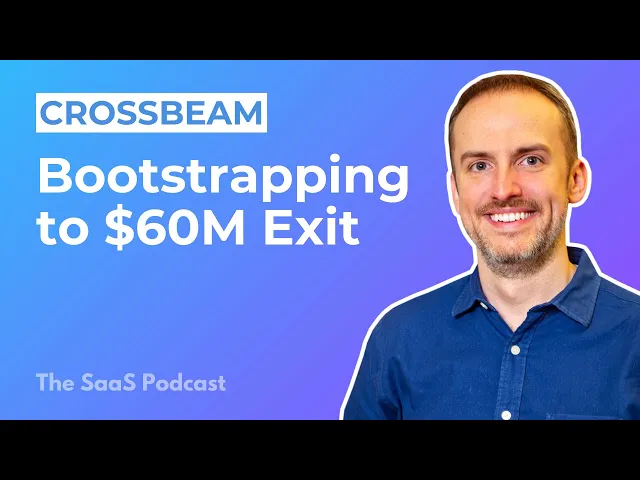
Bob welcome to the show great to be here thanks for having me my pleasure do you have a favorite quote something that inspires or motivates you that you can share with us this kind of rotates over time my favorite thing right now that I think I say more than anything is um two things are allowed to be true at the same time uh I don't know where that came from I didn't come up with it but I think a lot of times particularly in in Business and in life people tend to exist in these absolutes
CU it's easier but very very few things are absolute and if you can kind of identify the two truths that coexist uh at the root of an argument then you can kind of pick which truth is the more important one and and that's a good way to resolve it rather than kind of like dogmatically disagreeing um so that is a you know I could put that on a bumper sticker these days how often I Say it I like it I like it so uh tell us about Cross Beam what does the product do who's it
for and what's the main problem you're helping to solve yeah crossbeam is a ecosystem Le growth platform and really what that means is that we're a piece of software that sits in between companies who are collaborating with one another and it allows them to figure out where and how their data intersects um a practical use case for that is uh something like Account mapping where you have a partner and you want to say hey partner how many customers do we have in common and who are they uh or are my sales reps currently trying to
sell to any of the same companies as your sales reps um it's an incredibly common motion that exists between companies within their partner ecosystems but historically there's been a lack of data transparency and data fluidity and because of that it's really hard to build scalable plays On top of it we solve for all of that um by almost serving like an escro service for data that sits in between those companies um and uh it's it's a very kind of viral mechanic inside of the product because once you have it working with one partner the value
is very evident and uh you know companies get motivated to bring all their Partners on so we've we've gotten up to just over 19,000 companies um as of recording here that are that are on the crossbeam Platform uh yeah basically using it for co-selling co-marketing account mapping kind of cross compan collaboration uh for go to market in all the forms that it takes so the business was founded 2018 can you give us a sense of the size of the business where are you in terms of Revenue customers size of team that sort of stuff yeah
uh so we're a little over 100 employees uh we're in the the low eight figures of Revenue uh we have uh uh a small international team um as I Mentioned about 19,000 companies on the platform a lot of those are on the free tier but um pretty sizable percentage of those now uh now pay us and we kind of run a plg model so there's a uh a large Universe of companies that pay through a self-served model where you kind of plop a credit card down and buy seat by seat um we have a sales
assisted mid-market function for what we call our super node tier which is kind of a you know call it a 20 to 50K ACV depending on your usage And then we've got uh Universe of Enterprise customers that can pay you know upwards of a half a million dollars or more annually for for larger Enterprise deployments so it does kind of run the full spectrum of uh you know kind of different ACB and pricing models all right and I think you've raised uh just a bit over 116 Million by now right yeah I think that is
the the accurate count yes so what I really love about your story is that a lot of the times When I talk to Founders who are very early stage in building their SAS business they'll say to me yeah that that kind of interview was interesting but you know someone who's rais like a 100 million and it just seems like a completely different world you know miles apart and then when you and I were talking and we talked about your first company which we're going to go into in a minute you you were exactly there you
were like hey we were bootstrapping we Were broke we were too early um and all the things that I you know I hear so many Founders talking about so that's what I think makes your story so interesting also you're a third this is your third company you founded co-founded two previous SAS companies the third one that went anywhere it's probably the eighth or ninth one that uh yeah we should clarify that too as well yeah um so why don't we start with that first business RJ metrics uh Which you found it back in 2009 so
just like where did the idea come from and what was that business all about yeah so um back in in late '08 uh I was working at a venture Capital firm in New York called Insight Partners um uh it sounds more impressive than uh than the reality of of the job because I was probably the most Junior person at the firm so uh my job title there was analyst and the job was basically I was basically a glorified SDR right I was Cold calling into CEOs trying to get those CEOs to share information about their
businesses and hopefully find good investment candidates for insight um it was actually a really really great job for a future founder because you get to meet a lot of Founders you get to hear about company stories good bad and ugly you get to see kind of the mental math that Venture firms do in evaluating companies um but what I found was the part of the job that lit my brain up the Most was actually the due diligence um you know after we found a company kind of getting our hands on their data and being able
to ask all these questions like you know who are the most valuable customers and where do they come from and you know what does the cohort analysis look like and um I really really leaned into that while I was at insight and and tried to pick up as much work as they would give me in that Universe um so uh by the end of 2008 I Kind of became convinced that a lot of that work that I was doing you could actually build software to kind of abstract it away like the ingesting of the data
and the standardizing the models and the hosting of it in a database uh even some of the writing of queries seemed like the kind of thing I could automate with code um and you know if you eliminate that 90% of the work that's like the scaffolding around the analysis you can spend all your time Doing the analysis so I had this idea for a company uh called RJ metrics that would effectively be that right a completely cloud-based full stack uh data analytics platform um so any business could plug in their backend database or wherever their
data lived and we would kind of take care of all the hard stuff we'll pull the data in we'll put the data models on and we'll let you build these awesome charts and dashboards that answer those questions Um bear in mind this is 2008 right like SAS doesn't exist that acronym is nonexistent um ASP application provider is what they used to call these businesses that um that kind of were fully delivered via the cloud and there weren't many of them like salesforce.com was like maybe the only like True full stack pure play endtoend like you
know Enterprise uh like Cloud delivered solution at the time um but uh I had a lot of conviction around this and I met A co-founder named Jake Stein who also worked at Insight who was equally as passionate about it and we kind of pulled our pennies together and we quit our jobs on a Friday in September 2008 and on Saturday LAN Brothers collapsed so we ended up out uh kind of on our own uh going after this business idea in a market where despite the fact that we had just worked at a venture capital firm
there was not a snowballs chance that we were going to be able to Raise Venture Capital anytime soon because the market was completely in gridlock and it kind of dropped us in this environment where we had to like eat what we killed um and the only way for us to Finance this business neither one of us had like you know a ton of money uh uh stashed away in the bank that could keep it alive for years that we could use to sell fund Revenue was the only path um and we this is like the
classic you know uh bootstrappers Mentality we kind of did the build measure learn build measure learn Lean Startup cycle for a while there because we were we were early to the market it it wasn't this thing where it was flying off the shelves it was a majorly complicated technical challenge to build the thing and that was what I spent the major started my time on and my co-founder Jake was out there selling it basically before it was built and you know we were able to close I think our First customer was paying us 200 bucks
a month and then our second customer was paying us 50 bucks a month right we were like kind of taking what we could get but it was enough to keep the lights on and keep us motivated and um you know between 2008 and 2011 we were able to get our first 100 paying customers which represented our first million dollars of AR we were able to grow to about a dozen employees and we did it profitably the whole way through um because we didn't Have we didn't have the buffer to go into the red at all
um and that was um yeah that was a real journey in you know the the that build measure learn cycle it's partly we found product Market fit eventually and it's always been a question of like did we find it by moving our product into what the market needed or were we just early to the market and we kind of were iterating on the same core vision and what actually happened is that the market itself moved Into a Zone where people were more comfortable consuming stuff through this Channel and we were there waiting with a product
that had three years of R&D already done on it right and I think honestly it's more it's more the latter than the former right right place right time so you said you were you were too early to the market and I earlier you mentioned that it took you at least a couple of years to feel like you'd found product Market Fit what were the the challenges of trying to get those initial customers yeah you got to the first million eventually in a few years time but what did that first year first 18 months look like
in terms of how easy or hard it was to acquire customers yeah it was um looking back on it it was like uh it was excruciating uh I think there was um you hear these these stories about uh Founders you know physically making themselves sick I had like I I remember It's like in February 2009 I somehow came down with this terrible case of uh uh uh bppv which is a a form of vertigo um so like you stand up and you're just completely disoriented and the room is spinning around you and there's only certain
positions that you can be in uh to uh uh to kind of stabilize everything and the only way that I could not be nauseous was to be basically like hanging upside down uh and I remember I remember the Timeline that it was February 2009 because we had just closed our first customer who was that company I mentioned who was paying us 200 bucks a month and we sold them the product before we had built it and we basically told them you know it's going to be a six- we implementation cycle well that sixe implementation cycle
was actually a six week let's build the product cycle and um we were on a really tight deadline for that and I remember I was Um actually moved back in with my parents during that time and I was like hanging like like laying on their stairs with my head toward the bottom with a laptop on my lap with like my knees folded up like writing code writing like you know terrible PHP code to to make this stuff go um but uh that was kind of the you know there's this like self-induced anxiety uh thing that
I'm sure brings on all kinds of uh other other challenges along the way and then There's like the economic realities of just kind of like scraping by um during during a time period like that and uh so yeah my memory of it is now it's like this weird glamorous like those were the Glory Days right but it's never like that when you're going through it um without kind of the benefit of time so yeah it was it was very rough and it was ad hoc uh and I think there was a lot of the the
shape that the product ultimately ended up taking had a lot to Do with who we could get to pay attention to us and this is where you know my that first customer by the way to answer your question more directly on how we got these customers that first customer was my um a friend of mine from college who had gone out and started a business and raised a little venture capital money so um I was able to kind of talk him into you know selling selling him the dream and getting him and his company to
sign up and then um Our second customer was someone that that we had worked with at Insight who had left insight to go to a startup um that startup by the way paperless post uh which went on to be uh you know quite uh quite successful um another one was a company that I had done some Consulting for in the past while I worked at Insight that uh kind of came on board and it it is the founder Le sale is a very real thing because I think in those days getting anyone who will kind
of uh Listen to you and get bought into the vision that you have who actually has any kind of spending capacity to say yes is a gift um and we accepted all of those gifts and um what was nice is that it did allow us to build something that actually returned pretty material value right and those most of those companies from those early days even if they started out at 50 bucks a month ended up eventually as RJ scaled paying us thousands and thousands of dollars a Month um because their businesses grew as our business
grew and you know the our ability to uh kind of justify a higher price point became stronger and stronger one of the things that I think often happens with Founders at that stage is you go through this roller coaster ride where you have a lot of enthusiasm a lot of belief in the product you land a customer and you're Like this is it and then things just kind of nothing happens and you the doubt starts to come in and the energy gets sucked out of you until the next customer comes along and when you're in
the early stages when this isn't happening that often what kept you going what what kept you showing up day after day to work on this thing so first just to acknowledge what you're saying it's extremely extremely valid and extremely true like The the the founder journey in those early days the challenge with the early days uh for me always you all three of the companies this was true is when it's really early you're lucky if one interesting thing happens a day right so you can be working really hard but it's kind of like you're doing
the core work that may span many months to build a product or build a market or whatever else but like the one interesting thing that happens a Day might be a sales call that you have that you've been looking forward to it might be that you release or ship a new feature in the product it might be an investor pitch meeting but like you know just the law of small numbers kind of says like you know you're lucky if you get one a day so then those things can go well and they can not go
well so like if the one thing a day is that you had a sales call and it was a total train wreck and you know you basically got Told that your product makes no sense and you know you're not going to get a second call with that prospect that was a bad day right so that that 30 minutes out of your your 12-hour founders day is just like soured by the one interesting thing that happened that happened to be bad then again there's other days where like you close a customer and it's like holy crap
we closed the customer today and even though that was just uh maybe it was months of work culminating in one Momentary thing that happened which is a contract got signed or credit card number got typed into your system it kind of colors that entire day it's like today was a really good day and as companies grow you get the benefit of a lot of things happening in any given day right uh and you might close five new customers and turn one customer and have 20 good sales calls happen by all your reps and six bad
sales calls and like you have to be a little bit of like a uh Like a weighing machine right to kind of understand the collective momentum of the business and how it's going and it just like kind of lessens the effects of the the big uh you know good days and bad days but in the early days you need to kind of apply a lot of that context in that way and yourself um and I I credit my my co-founder uh Jake Stein from RJ metrics um with being really really good at this he is
um he he meditates he uh is very um kind of very Aware of uh himself and who he is and what he's feeling and experiencing on the planet is very good at kind of you know navigating things that create anxiety and I've learned a lot of lessons from him in that and um he would occasionally say that you know if something bad happened you'd occasionally say you know well in a couple billion years you know the heat death of the sun is just going to consume the Earth and none of this is Going to matter
anyway right like just something that is just like maybe a hyperbolic way of putting it all in context and I think that's always been something that's that's kind of stuck with me um I think the other thing and this is so important in founding any of these companies is like at the end of the day I could get lost in the work in a really good healthy way like my version of Flow State in those early days of RG metrics was writing code to Like make this thing work and like I said before the stuff
that lit up my brain in my last job was doing this kind of analysis and like bringing these kind of answers to life and processing this data and like it it I was fortunate to be able to even if it was a day when we had a bad sales call or when we lost a customer or whatever else negative happened I could pour myself into the rest of the work and actually love the experience of doing that and and kind of Get lost in the code uh and and get lost in the Journey of trying
to create something that that I was proud of and that I knew that if I was a customer of it I would get value out of it and being able to stay really close to that I think was was a really powerful thing that that got me through a lot in those early days how did you learn to cach I studied engineering as an undergrad but I only minored in computer science um but that is you know I I went to Princeton as an undergrad um studied a weird major called operations research and financial engineering
which is basically a mixture of like statistics and economics and computer science um so it took just enough programming courses to be dangerous right I went through like 300 level programming courses um and uh I was always just kind of a hobbyist coder like it was very difficult to go after the hobbies that I wanted to go after if I couldn't Actually bring things to life through code um so you know I was kind of taught the fundamentals through college course work and then the the like implementation detail dets of how to actually like stand
up a web server and make all that work like there were no classes for that that was that was all very self-taught and kind of PA programmed with people I met along the way did you um ever raise any money for AJ metrics we did so this is the Interesting thing about that business right so we have this bootstrapping cycle from ' 08 to 2011 and then the the Great Recession kind of uh started to uh started to subside a little bit and the the particularly in the Venture markets they really woke up and there
was this wave of Capital that that flew into the markets kind of with like the SAS wave that uh that came right and um we were able to raise a seed round in 2012 and a series a that was A5 million the seed Round was a million bucks the series a was 5 million bucks in 2013 and then uh we raised a series B um in 2014 that I think was 15 million bucks um so in total we raised like a little over 20 million um in in venture capital for for the business um and
it was really a byproduct of like I remember from our series a deck we had a CAC ratio that was like you know 27 or something right It's like for for every dollar we spend on sales and marketing we get $27 of arrb back um and uh you know we kind of had um uh a really strong argument to make about being able to deploy incremental Capital very very effectively um and it made a lot of sense in that market and the capital was there uh so but it was talk about a talk about Whiplash
right and Incredibly transformational like I hadn't I live in Philadelphia we started this business in Philadelphia um I hadn't left Philly in like three and a half years and then all of a sudden I was flying to San Francisco for board meetings like you know every six weeks uh for like the next three years of my life and it was a real it was a bit of a culture shock and kind of getting dropped into that whole Silicon Valley Sand Hill Road scene um took a little adjusting so the Venture money started showing up the
market caught up with you guys And uh leads were flowing and the business grew much faster and none of that would have happened if you guys hadn't been able to endure the the pain for those first two or three years to get through some of those those hard times and and get traction and then you ended up selling the business in 2016 to magenta right that is right yeah um and it's kind of there's there's a really interesting and somewhat tragic like symmetry to the RJ metric story that That is always worth calling out which
is we um I mentioned before right we were early to the market um and I think we had this this vision of building this uh like cloud-based analytics platform that is Soup To Nuts it does everything for you just show up with your data and and we'll consume it and we'll host it and we'll model it and we'll uh build the charts and dashboards and then we'll serve you up these beautiful analytics on a silver platter and uh we were early For that in 2008 and man was it what the market wanted from 2011 to
like 2014 and then in 2014 2015 um something really really important happened in the landscape of analytics which is Amazon uh web services released this product called redshift and Amazon red shift is just a giant uh Cloud hosted analytical data warehouse it to say it simply it's a place to put all your data that is cheap and scalable and extremely fast at retrieving data when you ask it um kind Of analytical questions and um it it was kind of rocked the analytics Universe because these large cloud-based data warehouses um which by the way soon after
Google released theirs which is Big query and snowflake which is now kind of an iconic and enormous publicly traded company came along with you know an even better uh version of that mouse trap um these things kind of ripped the concept of how to do analytics right and what the best practices were for Analytics it kind of ripped them to shreds right and the the monolithic model which was the RJ metrics model where everything sits in one giant stack didn't really make sense anymore because um it would be way better to just throw all your
data into one of these warehouses and then put a bunch of different tools on top of it um that can kind of be purpose-built to consume that data for the different business stakeholders as opposed to just relying On this one completely full stack thing that really it's dashboard and everything are instrumented for like the marketing team uh which was kind of what our our target market was so what we started seeing was the first place that it happened was in like um in SAS companies and in gaming companies kind of these really fast growing like
early adopter folks we just started seeing our pipeline dry up and we started some seeing some churn come into play and um There was a company called looker that came out around this time uh and we kept losing business to looker and it was always a heads scratcher for us because looker didn't do what we do looker was just data modeling and dashboards and you had to bring your own data warehouse you had to like Drop looker on top of some kind of data warehouse well we were we were the data warehouse and we were
the data ingestor and we were the dashboards and We were everything so we always say how could we lose to looker and the answer was always oh it's because their engineering team already bought red shift and all their data is already in red shift so they just need to pop looker on top and they don't need rjmetrics at all they can cut out all the rjmetrics stuff so this this Paradigm of like red shift with looker on top uh it expanded aot over time but it came to be known as the modern data Stack right
if you hear that phrase modern data stack that's um it's kind of this composable set of solutions that allow people to do the things they need to do with data to run their business better and it really put us out of product Market fit and just in the same way that we were just kind of heads down building this thing and that thing never really changed that much we just kind of kept making it bigger and stronger um we were early to the market the market Moved and we had a product Market fit window our
product didn't move the market moved and then the market kept moving and like we lost our product Market fit window and I think it was a big failure in kind of like understanding where the puck is going and kind of what the bigger like technological trends that that govern a lot of where demand comes from um uh like a lack of really being able to anticipate that put us in a spot where You know we had been growing like multi hundred% a year our our Revenue in that business and uh all of a sudden in
2015 we were almost flat uh like we we grew you know maybe 20 or 30% or something which um for a venture back business is is uh not good enough so um uh then in 2016 we'd had a long-standing relationship with the folks at Magento they had just spun out of eBay actually we knew the eBay folks fairly well because a ton of our customers were E-commerce companies and Magento if you don't know them they're the world's largest open source shopping cart basically e-commerce platform um and they compete directly with Shopify but it's if you
want to stand up your own uh uh and kind of have control over the codebase in a greater way um they've got a huge huge open source Community around them um but their analytics were really weak and they were interested in acquiring us to kind of make us the Magento analytics or Magento business intelligence um unit um to kind of make a little bit more of a cloud play and provide a stronger um analytics play which is a really appealing pitch to us uh and also we looked at the market and we started saying well
uh I don't know that we can beat the modern data stack and I don't know that we can pivot this company into the modern data stack without fundamentally disrupting a lot of what we've kind of built the fabric Of the business on so the Magento deal was um was a blessing in a lot of ways because the product to to this and by the way magenta was then very shortly thereafter acquired by Adobe for $1.6 billion and um you know some of the old RJ teams still works at Adobe and like the RJ metric product
still exists and it's part of Adobe Commerce Cloud um which is the old Magento which is kind of the old RJ metrics um uh so it it's kind of found its place there but I like The RJ metrics exit was not like a fund returning 100 exra home run for our investors right it was more like a you know get your money back or do a little bit better than that situation and a little bit of money kind of funnels its way back to the founders but um you know the for an 8-year Journey um
you know I think what uh the culmination that thing was a whole lot of lessons learned um a little bit of financial upside that kind of Justified the time spent on it but Certainly not one where we could stop um and I think it was one where you know now we had this this muscle memory and this Scar Tissue uh that we had kind of accumulated and uh you know it was time to it was time to go go again uh and and make it better this time and then you told me we'll talk about
your book uh a bit later but in your book you talked about the AJ metrics exit as being potentially what your $2.6 billion dollar mistake thanks for bringing that Up so uh I mentioned looker earlier right we we started losing deals to this new company looker and uh it's kind of like who are these guys uh uh thing and we ended up selling selling RJ metrics and um a couple years later uh I opened up Tech Crunch and looker was acquired by Google Cloud platform for $2.6 billion so this is like a company that we
were at one point in time neck and neck with and kind of going head-to-head on deals and we were earlier in the Market than they were right like going after our North Star of like the value we wanted to create for people was was effectively identical but it was a difference in technological approach and then um you know I think they a they knew how to execute really well and were really experienced Founders B I think they had a a better handle on where the market was going and C they had an ecosystem um which
was really you know this is the ultimately a Lot of this stuff ends up becoming an input to why I got so passionate about the problems that Cross Beam solves but I think one of the reasons looker did so well is they won together with a lot of other products like looker was only valuable if you could put it on top of a data warehouse and frankly data warehouses were only valuable if you had a product like looker on top that could convey the value and throw in a whole lot of data warehouses in a
comp Competitive market and you know a bunch of other layers in that modern data stack that would eventually emerge that were complimentary and drove a combined value proposition alongside looker that was really compelling and all of a sudden uh as soon as something is in any of those companies sales pipelines it's probably in your wor too uh because the way that buyers were buying was changing the buyers were not buying these individual siloed products anymore they Were buying a stack um and the evaluation of one product was this incredible indicator and buying signal that there
would be a need for all these other products as well that coexisted in the stack and the coordination and alignment of all these companies that partnered inside of that modern data stack ecosystem allowed it to grow radically radically faster um because they could win together they could sell together and uh the buyers benefited Greatly because it meant that um it lowered the friction to them getting up and running with exactly the right tools for the job um and that was a big aha moment and I think you know Cross Beam it's not a coincidence that
Cross Beam fits directly into that Paradigm right uh kind of is fed by that so RJ metrics not necessarily A life-changing exit given you spent eight years working on this business most Founders maybe would take A little bit of breathing space to think about what they were going to do next before they go and you know invest their heart and soul into another startup and you did that it took you two years to get to cross beam to found Cross Beam but you had this weird period in between this this kind of 2-year window from
where you sold RJ metrics to where you founded Cross Beam and in that time you founded another SAS company and sold it For significantly more than the RJ metrics acquisition yeah so this is a this is one of those things where you look back on it and it kind of makes sense but uh you also like think about the logic on any given day and it's like how on Earth did this all come together um so Stitch data the important thing about Stitch to know is that technically speaking Stitch was a spin out from RJ
metrics so uh when we cut the deal with Magento they were very very interested In the analytics platform and the dashboards and the way in which we could help Magento customers analyze Magento data like that was really the key thing but one of the pieces of tech that we had built at C at RJ metric that actually was one of the newest pieces of tech that had the most recent investment in it was what we called the ETL platform uh we didn't make that termo there a term of Art in the industry extract transform load
and it was this Library of 70 connectors that could go and talk to the apis of all different SAS tools and pull the data out of those SAS tools and then put it into RJ metric well Magento didn't particularly need that to achieve what they wanted and we saw it as valuable uh with a potentially different application than it had been being used for inside of of RJ so when we cut the deal with Magento one of the pieces of negotiating that we did was we got them to actually allow us to retain Ownership of
the code and the IP of just that ETL part of the RJ metric stack and they took the pieces they needed to make it kind of bolt on to Magento as a Magento analytics product but we kept the ETL product which um at the time we were calling RJ metrics Pipeline and RJ metrics pipeline became Stitch what we ultimately did with Stitch was we redirected where that data would flow uh instead of it Landing in RJ metrics which is where it had been for some time Um that data ended up being pointed at whatever the
customer wanted it pointed at and uh the places where they wanted to point it was Amazon red shift it was snowflake it was go Google big query it was all these data warehouses that had basically disrupted us inside the RJ metrics business we went and joined the very modern data stack that had destroyed us with our own technology that had kind of been broken apart by it um and ironically one of our biggest Partners in all that became looker right so the company that just ate our lunch um you know in the previous business became
the one that helped Propel us uh in in this new company um the other thing that was going on during this whole time is there was an earnout at Magento so I had to go work for Magento uh for 18 months after the deal so at Stitch Jake my co-founder became the CEO I was the executive chair while I was employed by Magento uh as uh The head of their uh Magento business intelligence unit um and uh we actually had offices in the same exact building in Philadelphia on two different floors right so there was
kind of like this this 18mon period where Stitch was getting you know getting going and really working um and I you know I had responsibilities and obligations inside of Magento so it was like you know working hours grinding it out you know doing the right thing for Magento and Then nights and weekends doing everything I can to help push Stitch forward but my co-founder Jake really deserves all the credit for like the incredible execution on Stitch during during that time period and then yeah to your point we got like 18 19 months into this thing
and uh this company called talend uh which is a publicly traded uh uh data infrastructure company um came along and they offered us $60 million for for Stitch um which uh Was just relative to the outcome we had just had at RJ metrics especially divided by the amount of time spent on it was just like a a mindboggling sum um and it kind of represented like uh something really really appealing as as an outcome for two Founders who'd been kind of grinding at you know uh this idea over the course of of a decade or
so um so um you know in effect they they made us an offer we couldn't refuse and by the way it's a really smart smart Acquisition for them the the business grew inside of Talon pretty significantly and consistently and you know it's it's certainly worth a whole lot more than what they paid for it these days um but they were willing to pay us for quite a bit of uh unearned future credit at that point because of how strategic it was to some stuff they wanted to do so um so ironically yeah here we are
in 2018 we've basically sold the same company twice uh yeah it's a Second bite of the Apple it's the um our investors Eric carlborg who was on our board from uh uh from August Capital now he's at Lobby Capital uh he called it the triple Lindy uh it's just like this this very weird thing that no one ever seems to be able to pull off somehow we did it which is we uh you know we we sold that same company twice and um it was uh it was really fortunate for you know that that was
the outcome that finally allowed you know employees that Held stock options right to get liquidity on those options and for me and Jake to um uh you know kind of realize a lot of The Upside but I don't really call Stitch like a 18-month like flash in the pan crazy success story really stitches like the culmination of 10 years worth of work um but really just finally figuring out how to position it in the market so it was it had a lot of value attached to it all right so then we get to 2018 Cross
Beam how did that get started yeah so I had seen inside of RJ inside of Magento inside of Stitch uh little glimpses even inside of talent this this problem that came up all the time whenever we wanted to collaborate with a company that was outside of our own company's walls and um it was almost like this prisoners dilemma problem where if you wanted to answer questions about where and how your data intersects or your knowledge intersects math is Working against you like you you cannot mathematically draw a VIN diagram unless you have all of the
data from both of the sets of data right so if you want to know uh hey where do our sales pipelines overlap with a partner the only way to do it is to show your partner your entire sales pipeline including the stuff that doesn't overlap so that they can run that math that is a non-starter right like I don't care how good of a partner uh you are uh companies are are Careful about how information does and doesn't kind of leave their walls and you know what's what's what makes it worthwhile right to to collaborate
in that way so um what I did discover is that many companies participate in this age-old practice called account mapping which is basically an exercise where you email spreadsheets back and forth that have some kind of uh you know uh obfuscated or other wise um uh you know redacted version of your customer list In them um that are are filtered down to just the ones that maybe would be relevant if they happened to overlap and you know people do these very manual painful things to try and approximate where they might be able to collaborate with
Partners it's a terrible process um and you do still end up oversharing data that you shouldn't share and uh the data accuracy is low and uh it's very hard to do it on a regular and frequent basis um because the mechanisms for exchanging And analyzing the data it was just terrible uh but it was the only thing that existed and the the the the realization was that there's basically a missing data layer that that that has historically never existed which is all of the data that sits in the middle of all of those N squared
fin diagrams that exist out there um at the intersection of every company's data set with every other companies and um the um you know I certainly wasn't the the first one to Make that observation plenty of people come up to me and say I thought of the Cross Beam idea back in you know uh 1997 um this problem has existed for a long time what was actually new is the the how to solve it part and the answer to how to solve it was Stitch um because what we did at Stitch was this ETL concept
where you extract transform and load data it allows you to communicate with all these apis for all these systems of record pull data out that Might look or behave very differently across a lot of different companies or systems but then transform the data into a unified enough data model that it can be deposited into a data warehouse and the the novel idea for crossbeam was well with Stitch we would take somebody's data and then put it in their own data warehouse it's like within your own data Silo it's just like a different place that it
lives the idea for crossbeam was what if we had one big Effectively like Data Bank in the middle that was functioning uh like I said like an escrow service for data right it'll take care of all the hard stuff suck the data in cleanse the data transform it into this Universal model allow people to be able to to compare it Apples to Apples across company lines but then most importantly provide this extremely extremely uh tight trust and security layer that sits on top of the entire thing that allows every company to have Confidence that they
retain ownership in their own data and they can completely dictate who can see what when and under what circumstances and if you could do that then that is the only way you could actually construct this data layer that did not exist and if you unlock that data layer you unlock so much value that you can build on top of it and that was the vision for Cross Beam and um uh uh I felt like there was such a compelling why now to this that made it that if I Tried to do it three years earlier
the API economy wouldn't have been mature enough and the data warehouses wouldn't have been powerful enough and it just like wouldn't have worked and if I waited three years later somebody else was going to do it um um and it just felt like this might be my last my last my last big one so we we decided to give it a go so I can see a number of of problems with this first of all the trust issue that wait a minute I'm going To give all my data into some central place that you can
use to run your business that's the one thing you got to overcome the second thing is it's kind of like selling a telephone to the first person in the world right if there's no nobody else on the other end what's the point and so you've got a you mentioned this earlier where you said it's like bringing together like Landing two Jumbo Jets at the same time because you've got to have both sides of this equation Working for this thing to happen and then it's got to happen at the same time it can't be like yeah
come on to our platform and then we'll find somebody in 3 months time and you can do this thing and then H H how easy is it to repeat and scale right so it just sounds like a just a complete nightmare to manage so how did you navigate through that yeah I mean it was a total lunatics Endeavor right so the you're you're dead on on all those points so the the first thing You mentioned which is like the trust and security piece I should note that we um you know we founded uh Cross Beam
only shortly after gdpr went into effect right so like every company in the world is scrambling to tighten down uh their security practices and the way in which data gets used inside of their uh their companies and where and how it changes hands with subprocessors and things like that uh and here I am showing up with a PowerPoint deck about how I'm going to Build a startup for data sharing across company lines right like maybe the most contrarian thing you could possibly do and I I did get laughed out of the room in a couple
of the early Venture Capital pitches for that um but the important thing to realize about the trust and security piece is there's two layers to it right there's a layer you mentioned which is like can I trust this thing in the middle do I trust Cross Beam basically well Cross Beam be a good Steward of my data keep it safe keep it secure do all the things they promise to do in terms of partitioning it so that no one can access it except for who I say can access it that's actually really easy to overcome
like anybody that uses Dropbox or box or or Google drive or uh even Salesforce itself right you are relying on exactly that you are you're you're transmitting your data into a hosted SAS product that has everybody's data that has to keep these wall Gardens Up and and make sure that nothing ever bleeds through uh that's not supposed to bleed through into other accounts we know how to do that right we been doing that for for 15 years um across across all these companies um and there there's a lot of a lot of stuff that you
can do to um Inspire confidence in that and document that it's done well and we do all those things the second piece though is the more Insidious one which is like do I trust my partners um like even if Crossbeam functions exactly perfectly and does exactly what I tell it to do what are the decisions that I get to make and need to make about how I actually do allow other companies to know things that exist inside of my CRM and this is where part of what crossbeam is and crossbeam is not becomes really important
because crossbeam is not a data Co-op right a co-op would be everybody throws their data in it goes into a giant pot and then everybody gets That data pot back out right uh and maybe it's abstracted or anonymized or something like that but it's like kind of a free-for-all like we're all just going to toss our data in um that would have a whole host of problems that would just be kind of non-starters and like we're we're not in that business cross be is also not a Marketplace and what I mean by that is like
we are not in the business of helping connect partners with each other um if you don't have a Partner already that you have a real world relationship with and likely a legal partnership agreement with and ndas with and uh you know kind of code of conduct and uh like terms of Engagement with around how you go to market together build products together create value propositions that are are you know shared among your customer bases together then you really don't have a reason to connect on crossbeam yet um you know you don't go to Crossbeam to
like horse trade data or buy and sell data um you go there to create this enabling layer on top of the go to market function in a partnership that already exists and already has kind of those Rules of Engagement built around it so with those constraints in place it really really really Narrows the scope of where and how you have to think about these security challenges that come into play and a lot of the things we realized early on was one of The best sales pitches we could do is we could ask about their current
account mapping process which very often was oh every 6 months we email a bunch of spreadsheets around with all of our partners with a bunch of customer data in it and um we could always show people demonstrably how doing that via Cross Beam would actually radically change the uh kind of level the surface area of exposure and risk associated with with those kind of collaborations right um And doing that actually took people into a more secure place that was more compliant where you could have a central administrative Authority like overseeing all those the enforcement of
those Rules of Engagement and and things like that um and that is kind of the journey that that we've always been on right and for early stage and mid-stage startups they they don't think a ton about that stuff but that stuff is there and it's protecting them by virtue of being there For large Enterprises they care a lot we've gone through exercises with with companies around where they've like entirely written their partnership agreements right to Envision the use of a tool like Cross Beam and and kind of specify what's appropriate not appropriate what will and
won't kind of change hands and under what circumstances and that's actually built into like the legal agreements between these companies Um people have done very real work to kind of make this this solvable from a trust and safety standpoint um so but even in solving all that the other point you bring up is true which network effects sound great and they are great when you have them but they are almost impossible to get started um Andrew Chen a partner on Andrew and harowitz wrote this book called the cold start problem it's an entire book about
this issue which is um uh in a true Network effects Business like Cross Beam there is no single player mode so if one company just signs up and attempts to get value out of the product they will not get value out of the product um there there will be no way for them to derive value until a partner of theirs also signs up also connects with them also connects their data also configures everything and you get these kind of like very challenging almost like race condition things where if you don't have two Partners that want
to collaborate arriving at the same exact time in the product um then the the you know they never match up with each other in a way where they're actually able to collaborate and the first two years at crossbeam was like really really painful for that reason like it it was it took us those two years to get our first 100 people on and it really was solved by realizing that we could only create value in a situation where two people Signed up at the same exact time together and we started only uh onboarding customers if
they had a partner that they brought along with them for the onboarding call there was no such thing as getting signed up all by yourself on crossbeam and getting walked through it by a CSM we did these things called Joint Jam sessions we still do them to this day um but they they kind of were pioneered in the earliest days of the company where we Would basically onboard two companies at the same time and that's where the two Jumbo Jets side by side on the same Runway at the same time comes up because one might
be using HubSpot for CRM and then one is using Salesforce right and uh you know they may have very different kind of security requirements very different onboarding experiences but um they have to be onboarded at the same time and together because they will never see the value unless they're both There and energized and present at the moment of the uh of the unveiling of hey here's here's what's at the intersection there and when those calls were run well the first half of the call was all of that onboarding junk and the second half of the
call we could have we could have left because the two partners had this aha moment right where they finally were able to see how those data sets intersect and there was so much for them to do that they had always wanted to do Now that they finally had this visibility and that that was a big deal so two years of that and and the virality kind of tipped and we got to a point where it was working for enough companies that they invited you know all their other partners on and then they could conduct their
own joint Jam sessions because all those Partners had a partner to start with it was the person that invited them on and and then the virality loop really kicked in in a Bigger way yeah I think when we were talking earlier you talked about that the first couple of years and getting those first 100 customers use words like painful grueling pushing a boulder up a hill because it sounds like it wasn't just you couldn't just put a platform out there and say here you go it was like it had to be this whole kind of
concered service to find these people that kind of bring them together like a date and Then help them get onto the platform at the same time realize the value it's like talk about doing things that don't scale it is um you know I often say that Cross Beam could have never been uh firsttime Founders company like it it basically had to be founded by a repe Founder part of it is you know the pattern recognition from the RJ metrics and Stitch both on the product and the market side right that kind of led to the
idea but the other part of it is if You remember from the RJ metric story that first 100 customers there it was a bunch of my friends and contacts but back in that part of my career all my friends and contacts they were just people at companies that were tiny right that like they didn't really have any customers yet and like you know paperless post was like two people and they had 50 bucks to give us at RJ metrics and that's who we got at crossbeam if I had signed up a bunch Of companies like
that it wouldn't have gone anywhere because the other thing about crossbeam is it's not all that valuable unless you're actually a going business concern that has some kind of scale to it um that uh where you're actually able to you know make hay out of the those Vin diagrams I describ so the the the first time founder effect um came came into play there at crossbeam all my friends and contacts thankfully were all the people that I've been Dealing with for the last 15 years at these previous businesses right so the the first company that
ever signed up for crossbeam was Stitch um duh right uh the second company that ever signed up for cross was looker um so once again right my old arch nemesis comes into play as as kind of the hero in the parade of of the later business um and you know we ended up with a really big cluster in the e-commerce technology category because of all those Magento Relationships that came into play um and that's not a coincidence like solving the cold star problem it was founder L sales but it was also spending every last ounce
of relationship capital and Social Capital that I had pent up over the Journey of the last couple companies asking people to take a shot on this this crazy idea and it had to be people where that Social Capital was hard to come by um because they were like running big companies that had something Going on they weren't just Scrappy startups um so it all it all really had to come together in that way and um you know there was a lot of the privilege of being a repeat founder came into play um materially yeah so
did you say it took about two two and a half years to get those first 100 customers on board yeah I think that math is about right probably closer to two um it was kind of the thing where it was like you know we might have gotten uh you know 60 people And then 200 people and then a thousand and then it's 8,000 and then you know uh um but it took you know the beginning of every exponential curve kind of looks linear and it looked linear for a really long time and then eventually the
network effect kicked in and and you talked about the plg kind of motions and so I think in the last four years you've gone from what like a 100 whatever like what you're at like 19,000 now on the platform yeah we are uh we are any uh Any week now we'll cross over the 20,000 companies on crossby Mark yeah what a great story it is wild and hopefully hopefully still just getting started uh I uh I do think there's a lot there's a lot more to do here uh and you know there are unquestionably hundreds
of thousands of businesses out there that that would benefit from uh from what we we bring to the market so um you know I think uh uh we're still in act one in a lot of ways how how long do you see Yourself working on this business if I'm still doing this in another 10 years uh that's great news uh because it means that like uh a it still exists and is alive and is a viable company that's worth existing B my board hasn't fired me for uh poorly executing on it and C it continued
to light up my brain right like all all three of those conditions need to be true like I would not be doing this if it was not something that I like really genuinely on the whole Uh enjoyed doing and got a lot of like my own self-actualization out of uh you know out of out of going in and working on every day um and uh uh and you know if it stops working companies die because they stop working right so I am I don't have a deadline um I think what I have is those conditions
right um and I I you know I've been through enough glass chewing that you know if we hit a downturn or something ever I can chew enough glass to to see the light at the End of the tunnel but um you know this is uh uh in a lot of ways this is my life's work right and I'm I'm excited to be working on it and not really thinking about the end love it all right we should uh wrap up now let's uh get onto the lightning round I've got seven quick fire questions for you
great what's one of the best pieces of business advice you've ever received I think really my co-founder Jake Stein from my first two companies um is like a Wellspring of These um he uh he's a natural skeptic and I think I'm a natural Optimist and um uh every time I would read a Business book and I talk about all these great things that I learned about it and how we should apply to the business he'd always say what did you not agree with in that book uh and it would often throw me for a loop
because I I get so like hopped up on you know everything that I just read has to be the truth that it really forced me to like scrutinize and Be critical about stuff that even I get really excited about and that sticks in my head right and it's a weird to frame it as business advice I guess would be to say that like um uh in that Spirit of like uh two things can be true at once um everything deserves kind of a skeptic's eye and an optimist's eye uh and you know knowing the difference
is is is critical uh in keeping these things alive that's great what book would you recommend to our audience and Why oh this is great um this oper this is like the most Shameless thing to plug my own book right now is this the uh we haven't gotten to that part yet uh I did write a book called ecosystem like growth uh which Wy published back in March um which really tells a lot of the stories that I've shared here today and also the the playbooks that uh you know the best most successful folks who
are on that Cross Beam graph are using to grow their companies um a less Shameless Version I love the sales acceleration formula by Mark Rober definitely worth checking out um uh really he was the early go to market leader at HubSpot who I think cracked the code on a lot of very nonobvious growth playbooks that ended up working out in their favor and uh I think it's kind of inspirational to read at taking a non non-traditional look at some things that are uh you know often thought of as as kind of rote in startups an
engineering approach to Sales yes it's an engineering approach to sales precisely what it is yeah great well congrats on the book we'll include links to both those books in the show notes um what's one attribute or characteristic in your mind of a successful founder I think like intellectual curiosity is just a must have uh that gets back to like why I didn't quit in the times when things have not been fun uh uh is has a lot to do with being able to find pieces of the Experience that I was intellectually curious about that kind
of kept my mind working and active and you know anytime that I felt like that was true I found myself in a place where I didn't feel like I was wasting my time even even if I was maybe not reaching my full earning potential in that year right I was learning and I was growing and I cared about what I was learning and I think that that intellectual curiosity is why what's your favorite personal Productivity tool or habit um I'm an inbox Z guy I use superhuman I also have a bunch of I use zapier
pretty extensively to create automations between the various systems that I use so um my my favorite like micro optimization in that whole scheme is I have a zap set up so that when I'm in slack if there's a message I want to come back to later I um I I tag it with like the save for later flag and what that does is it actually copies that Message and sends it into my work email inbox and that makes my inbox like a universal clue CU that is inclusive of slack so I don't have like these
two cues which is like my inbox que and my slack Q I kind of single stream it down into one thing and every night when I unplug my inbox is at zero right i' I've tried things or I have had them set to come back the next morning or in a week or whenever um and man that gives me a lot of uh sense of uh mental Clarity Right when when I unplugged for the night you are a nerd after my own heart we I I swear we could do do a whole episode just on
ideas on like that how to automate stuff it's just yeah oh there's so much there's so much there yeah what's a maybe I shouldn't ask you this question but what's a new or crazy business idea you'd love to pursue if you had the time oh man with everything going on with AI it's like hard it's hard to even think about or pick um but I I'll tell you like a I um I love escape rooms uh I think they're super fun and interesting I also am fascinated by them as businesses which is like you know
they typ exists in this really really really uh kind of Remnant real estate right like in the basements of buildings or like you know up a long walkway in some random place that no other business would ever go and somebody some Puzzle Master like geeked out on building like a really cool Puzzle three years ago and now every single night they just bring in groups of people and make a couple hundred bucks that's probably almost entirely profit and it's like seem like kind of a cool thing um and not quite lucrative at the scale of
uh uh you know Cloud software businesses but um has a little bit of that fun intellectual curiosity thing and like a business model that I think kind of makes sense so um something in the escape room world I Think is where I would do like a a passion project yeah well what's an interesting all fun fact about you that most people don't know I was on an improv comedy team for five years professionally um so we were the Saturday night house team at Philly improv theater um which is a um it's the largest uh Improv
uh organization in Philadelphia um probably did you know hundreds of hours on stage with that Improv team good bad and ugly uh and I could talk about that for an hour as well but I I credit a lot of um uh you know my uh uh my my personality and also my my uh comfort with doing stuff like this to to that experience and finally what's one of your most important passions outside of your work oh great question uh my kids got a 2-year-old and a four-year-old uh girls um who are uh uh you know
the the apple of my eye um that I uh never hesitate to um you know Take a break from uh from the day to day and and spend time with and I only hope I'm I'm doing it enough uh but doing everything I can to uh uh to do that but yeah uh all love to them thank you so much for joining me it's been a pleasure really enjoyed the conversation there was so much to unpack I hope we did your story at least some justice and and gave uh our listeners some some insights and
some inspiration that they can go and apply to their own businesses if people Want to check out crossbeam they can go to cross beam.com and uh if folks want to get in touch with you what's the best way for them to do that yeah um finding me on LinkedIn is probably the the place where I spend the most of my time just on there is Bob Moore um and uh beyond that uh if you want to check out any more info on the book my personal website is robertt J more.com uh there's book excerpts and
other things you can get There along with books of uh the retailers that carry it perfect we'll link to that as well in the show notes Bob thanks it's been a pleasure cool uh yeah I've love this uh really great conversation hope to do it again sometime yeah it's awesome uh I wish you the best and uh uh maybe there will be another conversation if you're still working on Cross Beam in in a few years time let's uh let's see where you are then and uh continue the story cool Sounds amazing thanks again thanks so
much cheers