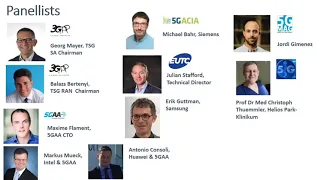
good afternoon and welcome to today's webinar covering uh details of 3gpp release 16 and an introduction to release 17. my name is joe bush and i'm the managing editor at electronic specifier and i will be your moderator for today's session release 16 also referred to as 5g phase 2 is focused on improving the gaps in release 15 and has a key focus on industry verticals release 16 specification will be due for completion in june of this year and this webinar will present details of this release uh whilst also providing an introduction to 3gpp release 17. so key takeaways from today's session will be an understanding of the details of 3g pp release 16 new improvements in standards focused on industry verticals details on 5g v2x details on industrial iot and ultra reliable low latency communication enhancements and an introduction to key contents of release 3g pp17 your presenter for today's webinar will be vikas chauan from has over 18 years experience in the wireless telecoms and test and measurement industries and having led industry testing and strategies in 2g 3g and 4g he is now driving 5g activities across the industry for aniritsu following on from today's presentation we will also have time for a brief q a session session so please feel free to submit any questions you may have as we go through today's webinar so without further ado uh please enjoy today's session and i would like to hand over to today's presenter vikas thanks a lot joe for the nice introduction hello to everybody and welcome to the webinar so today's webinar as joe mentioned is about details of 3gpp release 16 an introduction to 3gpp release 17.
so here is the contents uh slides where in the beginning we talked a bit on the standardization update on release 16. then we go through uh details of the key features that have been introduced in 3gpp release 16 and then in the final part we go through the introduction to 3gbp release 17. what we see here is the release 16 and release 17 standardization timeline on uh release 16 part uh when we look at the q4 of 2019 when the last uh ran plenary meeting was being organized in december this was ran 86.
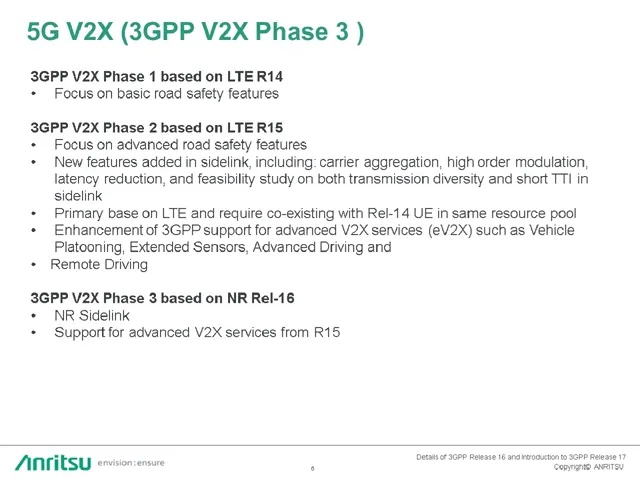
so at this time frame all the release 16 ran one was frozen and agreed so when we look at release 16 from past already the stage one the requirements and the stage was finished in december 2018 then uh stage two was frozen in june 2019 and now we are getting into the ran uh ran one freeze which is done in december 2019 in ran 86 and now we are looking into a future uh future development of standardization finally getting on to release 16 asn 1 freeze towards the middle of 2020 so there are a lot of features that are already matured and there are some which are being fine-tuned so moving on to the key features in release 16 here so in release 16 there are basically there are two parts in which we can divide the focus area of release 16. the part one where the release 16 addresses the use cases of 5g beyond the mobile phone or just mobile broadband so getting into industry verticals and the second part is where there are old features that are refined and the new features introduced improved so this is on the generic system improvements and enhancements so when we look at the first part the industry verticals the focus is on three distinct pillars the first uh pillar is uh related to 5g v2x and this is uh more focused on the automotive uh industry vertical where the target is to it to address advanced use cases beyond lte v2x um primarily focused on low latency we will see this in more detail in coming slides then the second uh pillar is the industry industrial iot and urlc announcement this is uh covering the industry 4. 0 requirements so basically adding the 5dnr into smart factories and the features have been introduced to help this integration uh of 5g then uh the third pillar is on expanding the deployment of 5g where 5g nr operation is not just in the license plans but it goes beyond license plan and similar to lte like we have got lte unlicensed with licenses assisted access similar to that nr can also be deployed more more freely more widely and in addition to that there is also also a standalone uh unlicensed operation that is being also defined then moving on to generic system improvements and enhancements so improvements to location and positioning capabilities then we have got mimo enhancements especially in the fr2 area where the technology is still getting matured then on the power consumption side where we address the power consumption of both the network and the device this is one of the critical areas also mobility enhancements to improve the uh the reliability of the connection enhancements in dual connectivity and carry aggregation to uh have more uh effective deployment of 5g then uh the final one here is integrated access and backhaul this is uh more related to utilizing the 5g not just to communicate with the devices but also utilizing 5g in more integrated way to uh connect to the back end of the network but there is more detail in the coming slides so we will move to uh the next slide but in summary release 16 is a big release and it has got lots of new features and lots of enhancements to the old features the first one is a 5g so just going back into history of v2x so when 3gpp introduced v2x for a vehicle communication it was introduced in release 14 and it was called as ccpp v2x phase one which was focused on basic road safety features then uh in release 15 the lte based p2x was evolved and this was called as 3gpp v2x phase 2.
this was focused on advanced road safety features having some more features inside link which are related to increasing the capacity reducing the latency then uh basic idea was that this was around lte so it was using the release 14 ue along with release 15 v2x enhancements in the same resource pool using the same resource in the in the protocol stack then uh also some advanced use cases were supported and this was done as a overall network enhancement to it to support advanced v2x services such as vehicle plating extended sensors advanced at advanced driving and remote driving then uh after 3gpp v2 x6 v2 x phase 2 uh in release 16 this evolved into 3gpp v2x phase 3 where it is evolved into a v2x based on nr so nr based side link has been introduced and also all the existing uh v2x services that were developed in release 15 to support the advanced uh v2x use cases uh are also carried forward into 3gpp to xbase 3. then if we look at uh key features in release 16 specifically the nr set in our site link as i said is a is a key feature here which is adding the capability of new radio for side link communication it supports uh adlink unicast group class broadcast along with as per the previous uh lte based v2 v2x in nr also there is in coverage in network coverage and out of network coverage and partial network coverage so different uh scenarios are there but eventually uh it's possible for car to car communication based on nr v2x and both nrv2x sidelink and lte v2x side links are supported and both can be supported when it's in coverage it can be supported by using the nr g not p or eutron enough b as we see in the picture there we can see that both 5g core with nr g not b and 5g chord with eutron e note d is supported for both nrv2x sidelink and ltev2x sidelink also in the picture on the right hand side we see that both the scenarios are covered where ue is connected to the network which is inside the brand coverage or ue is out of coverage where there is no network to support the resource allocation then from v2x we move to the second pillar which is uh industrial iot and ur llc enhancements for release 16. so release 15 was designed with basic ur llc features like uh low latency features like mini slot multiple scheduling request ue configured grant ue processing capability also it's it was it had high reliability with uh urlc specific uh capabilities and uh it was possible to multiplex embp and url case cases and prioritize urlc over embd but in case of release 16 there have been more features for even reducing the latency for example uh multiple hard hacks within a slot uh compact dci format for high reliability increased pdcch monitoring capability mini slot based pusch repetition enhanced pdcp duplication multi multi prp based pdf ch this is all to increase the reliability of the link then uh improvements to intra ue embp embn you are llc multiplexing so it's possible to have two hark code books on and multiple active configured drawn also inside a ue there is a prioritization of uplink data and uplink control and uh also there have been additional enhancements on uh uplink cancellation and uplink power control in the same area then a new area that has been introduced is about time sensitive communications so here there is more efficiency introduced where there is ethernet header compression downlink semi persistent scheduling enhancement and this includes shorter periodicity and multiple downlinks semi-persistent scheduling looking at the physical layer enhancement on for eur llc there have been enhancements in pusch where it's possible to configure grant or it's possible to have a dynamic grant and there is possibility of repetitions for pusch within a slot and also it's possible to have two or more previous repetition across cloud boundary in consecutive slot by adding more reliability also out of order pusch scheduling is possible out of order archaic is possible tsn support for industrial iot so here uh one key factor for integration between industry requirements and 3gpp 5g is time sensitive networks primarily in a manufacturing environment inside the industries the uh time sensitive networks are deployed for ultra reliability and low latency and these protocols are defined based on ieee 0 2.
1 so to get a 5g uh wireless capability to replace the ethernet based the the industrial ethernet which is based on tsn needs the integration or support of tsn into 5g so for that enhancements have been done in physical layer to cover the uh urlc cases then uh there are in general there are three main objectives to deliver industrial iot one is time sensitive communication then at the higher layer to increase the reliability by using pdcp duplication and also addressing the intra-ue prioritization multiplexing so this slide is uh not from 3gpp but this is a good introduction on existing time sensitive networking which is used inside manufacturing industry which is using the connectivity with industrial ethernet so for these components inside a factory they are all connected by industrial ethernet and in industrial ethernet the core protocol for ultra reliability low latency is based on this 802. 1 family of protocols for time sensitive networking so if you look at the tsn components they are synchronization reliability latency resource management in in effect the 5g does not replace the uh existing time sensitive networking inside a factory but what 5g does is that it adds capability so that the ultra reliability low latency aspect of time-sensitive networking that was existing in a factory can be can be used over 5g so 5g replaces in the industrial ethernet then it must have the capability for synchronization reliability low latency so that it can effectively replace the wired industrial ethernet with wireless 5g to make the industry 4. 0 a reality in terms of smart manufacturing and beyond that into multiple other domains so the key idea was to explain here that this is a bit of a history from a vertical of industry which is a factory and 5g when it's been designed has it has been inherently designed so that it can take these attributes it can meet these attributes which are required by a factory moving on to the next slide this slide explains the idea of time synchronization between a uee and a time sensitive network so on the top here in the yellowish orangish color is the industrial network the below in the blueish color is the greyish color is the 3gpp network so both these networks have got two different clocks and as you can see on the left hand side we have got the ue which is no longer connected inside the industrial network by a cable so the ue is connected to industrial network via 3gpp network which means that we have to get 3dpp network and the industrial network purely synchronized for time sensitive networking and this shows how the time synchronization is done as you can see in the upf the the the synchronization is done between the grandmaster t1 uh and so this uh 3gpp network can be synchronized with the industrial network and uh eventually the ue the cgpp network and industrial network are all synchronized so that we can meet the ultra reliable and low latency use case and whatever we are trying to achieve in a smart factory we achieve that precisely and with accuracy reliability in that action also uh the below picture shows the solution for the synchronization between the ue and the upf where uh this is for the tsn time and it shows how the pdu is time stamped each time it's flowing from one entity to the ue for example here the entity is upf from upf to the ue and then when it comes back the synchronization time is calculated based on the offset the in the local time so it's uh it's a flow of messages with timestamping on these messages and then eventually the synchronization is achieved by knowing the difference in time and receiving the message moving on to the next slide this is a non-public network description here so in nr one key feature that has been introduced is a non-public network which is very closely related to uh smart manufacturing or industrial iot because what this means is that there is all the features of the core network and all the features of the radio network can be used in isolation when we deploy a 5g based smart factory so a factory with uh with uh production could be used with 5g um effectively when everything is contained inside that factory including the core network the radio so this is a example of having a non-public network where it could be deployed in variety of use cases it could be that operator provides some kind of services like part of the core where the radio access network can be connected to the core of an operator or if a particular enterprise or a factory decides that they want to have everything managed by themselves and they could deploy by themselves manage the network on their own and already in different parts of the world there is a lot of initiative on this there have been spectrums that have been uh allocated for non-public network uh which is dedicated spectrum where nothing else happens no operator runs its services but it is primarily for non-public networks in some countries or some parts of the world it's also called as private 5g and in some parts of the world it's also called as local 5g so there are two different models as i explained one is standalone non-public network which is deployed by a npn operator which could be a owner of a enterprise or a factory and then there is public integrated npm which is deployed with the help of plmn which is a public operator then a mobile telecom operator then on the rendu side so there is information about both s and c n and p and p npn in sib 1 so that the device can understand what kind of network it is going to camp onto and there is a limit in the number of npns that can be broadcasted moving on to the third pillar of 5g it is based on nr unlicensed so nr unlicensed is primarily focused in fr1 and release 16 and the key reason for having nr unlicense is to maximize the advantage of 5g by deploying it in maximum possible area of spectrum and for this there have been a lot of interoperability introduced for example carrier aggregation between nr and nr unlicensed the world connectivity between lte and nr unlicensed also there is standalone and are unlicensed and then we have got standalone nr selling license where downlink is in unlicensed and uplink isn't licensed so different combinations also dual connectivity between uh license plan nr and in our unlicensed a variety of combinations to each deployment some more details on nr unlicensed for elite 16 so there's a improvement in the frame structure switching points where it's possible to switch between downlink to uplink and uplink downlink single or multiple multiple times then this is the acronym one acro name that has been used here is lbt requirements which is a listen before talk and this is the key technology used in nr unlicensed so also nr unlicensed can support a mode of operation where for a carrier all dl channel signals and all ul channel signals can be operated with same numerology nrl license has a discovery reference signal which contains a combination of sscbcs and csirs rmsi coreset plus pdsch osi srs has been made more flexible in configuration then we talked about lbt so there has been a new feature which is random access in two-step so there have been enhancements to handle the two-step wretch and also it can move to four step if there is a failure in uh lbd so both can be supported but it it's just a more to reduce reduce the time to connect then there have been implementating heart rlm and rram extensions especially in the unlicensed spectrum um also inactive in idle most mode procedures have been uh enhanced for and are unlicensed access priority has been introduced for control signaling so if for example if there is a lde along with nr unlicensed then which which is a higher priority lte signaling or nr unlicensed so all these uh signaling radio bearer priorities have been introduced also support of mobility paging and system information acquisition in a nr unlicensed g note b has been introduced the next slide is on uh general enhancement uh of 5g release 16.
this is now moving on from the key pillars of enhancements to a key improvements and key features that have been added as general so if you look at here if we compare mimo between release 15 and release 16 the release 15 already had a lot of key features basically it was based on high number of antenna elements type 2 code book was introduced which was useful for providing the better throughput in comparison to release 14 lte also flexible csi acquisition reference design [Music] for scalability of future enhancements and nr mimo was designed to operate in high frequency bands via beam management although it was not optimized so there have been improvements in release 15 to to make these make the mimo more effective for psi the type 2 code book based csi is extended for multi-user mimo in case of release 16. this was not supported in release 15. then uh the limitations with multiple trp and pain operations on at least 15.
so this was causing a lack of reliability so there were features improv features and enhancements done for improving the multiple crp transmission reception point and multi pane operations on release 15. so there was improvements in downlink control signal enhancement also there have been enhancements in uplink control signal and reference signals and addition of multi-trp techniques for urlc requirements in addition there were enhancements for multi-beam operation which is more focused on fr2 so enhancements on uldl transmit beam selection also ul transit beam selection for multi-panel operation which is a new feature so multi trp of course we have seen that in 2015 but multi-panel is a new feature which helps the panel specific beam selection also beam failure recovery for sl uh with downlink and uplink as well as downloading only then there was more possibility to specify measurement and reporting it could be based on either l1 rx rq or l1 fi finr another feature is about ue power saving in nr so in case of release 15 there were some power saving schemes like drx and bwp bandwidth bypass which helps the ue power saving but in case of uh release 16 pdcch based uh ue uh power saving uh was introduced or has been introduced so it's possible to send a wake-up signal using ptcch and the monitoring occasions of uh of the power saving signal is outside the active time is indicated to the ue by gene g not b with with an offset before the drx is on also cross slot scheduling power saving techniques have been introduced also there is a feature on power saving techniques of ue adaptation to maximum number of mimo layers where it's possible to define bandwidth part based on for mimo configuration also it's possible to indicate by the ue about its preference to tell the network what are the parameters that are used in rrc connected state so that the so that the network can make sure that if the parameters with which the ue is configured if they are not optimized enough and it can reconfigure the ue also there has been relaxation on the rrm measurement so that if the ue is not mobile or not moving then the network is smart enough to configure the ue not to do those measurements so that the power can be saved this slide demonstrates the uh nr mobility enhancement so the key focus here is to reduce the interruption time or the failure rate of handover so the background is it's very easy to experience the signal degradation in high frequency if the ue moves and because there is communication based on line of sight and known line of sight also so there is a different channel conditions so in case of uh release 16 what has been done is that in ideal situations it has been designed to achieve high handover performance with zero millisecond interruption and with low latency and higher reliability what this means is that there is handover or secondary cell group change with simultaneous connectivity with source cell and target cells so that there is no drop of the call and another feature that has been considered is make before break using dual active protocol stack and the third feature for reducing the interruption time is less and over so these three features are to reduce the interruption time and then there are features introduced to improve the handover robustness which is conditional handover and fast and over failure recovery uh this slide uh shows the multi-rat and dc and ea enhancement for release 16 as a as a key summary um in case of uh existing release 15 dc nca it's it's deployed based on synchronous uh nr to nr dual connectivity while the feature in release 16 focuses on more flexible deployment of nr nr dual connectivity by not worrying about the synchronization between the two genotys and they can be asynchronous also there are features for fast access to nr and increasing the robustness so it's possible to i have a early measurement reporting and efficient and low latency serving cell configuration activation and setup so that there is less signaling overhead past mcg link recovery this is applicable for both mrdc and nr2nrdc so sdg link can recover very fast from mcg failure this is done using by utilizing the split srbs during mcg failure and then there is a cross carrier scheduling introduced but this is applicable for ca only for dc cross carrier scheduling does not work here so it's possible to schedule pdsc edge on the second carrier from the first carrier even when there are multiple numerologies another feature of early 16 is integrated access and deck all where the access and deck hall are accessed anyways using the capabilities of multiple antennas arrays and communication via beams but also it's possible to share the part of the radio or the antennas to communicate at backhaul which can become more effective for deployment and network architecture for load balancing and flexibility of deployment another feature here is srvcc where there is handover from 5g system to 3g this is uh to support the possibilities where there is no uh volte supported by lte network or there is a direct upgrade from 3g network to 5g network where there is no lte so it's quite similar to the srvcc from 4g to 3g it's just from 5g system which is from 5g core and 5g radio to 3g just the signaling is different but the concept is exactly the same primarily to support the voice call nr positioning so in case of release 15 the positioning was primarily based on um lte based positioning but in case of nr the positioning capabilities was introduced inside the nr technology where nr downlink and uplink reference signals were introduced for positioning also ue measurements and genod measurements based on the uplink downlink reference signature positioning were introduced and uh different functional interfaces in the network and signaling and procedures were introduced to help the ue to report nr rat dependent positioning also the extensions were done to lpp and nrppa protocol for nr positioning moving on to 3gbp release 17 here so in case of 3gb release 17 uh sorry there is a bit of a delay because i have to switch between the the presentation and my browser because of the quality but i think we will manage we have got little short time also so in case of release 17 in ran 86 in in december 2019 the the rand package for ran one two three was approved and the study items were defined and decided so this is the stage one which is finished stage two work has just uh started and this continues all the way in 2020 and then we get to run one freeze in early 2021 eventually uh finalizing the asn1 for release 17 in q3 2021 so it's around 15 months timeline from uh from now till the point when uh the release 17 will be chosen and agreed in in terms of all the specs so in stage two the work has already started uh in some areas some areas the work will continue to start in coming quarter and we will go through the next slide to see in more detail what are these areas so this slide gives a summary of the release 17 study work items where there are a number of items which have been introduced in release 17 but in reality none of them introduces any new technology they are all about improving the release 16 and adding new use cases to support more uh more applications of 5g for example there is a low complexity in our devices which is primarily focused on iot and which has got expansion of iot into uh video surveillance industrial wireless sensors variables there is there are enhancements for small data where it's possible to have uh more efficient small data and active data transmission for both uplink and downlink nr sidelink has been improved for power saving reliability and reduced latency power saving because in case of release uh release 16 nr siding was always on but it has been made more efficient now in terms of power saving also the number of use cases have been enhanced for v2x and into new areas like public safety and commercial use cases nr side link also moves moves to fr2 which is more than 60 guards and at least 17. extending the nr up to 71 gigahertz is another study item where it's being analyzed to reuse the existing waveform up to 71 gigahertz this is also under study so most of the items here that we see are either the study has been started or it will be started in next month then dynamic spectrum sharing enhancement so pdccs enhancements have been done for cross carrier scheduling also there have been a urlc enhancement or for industrial iot where there is header compression aspects and there is extra slide on on this and uh another interesting area that is being worked worked on in release 17 is nr and iot over non-terrestrial networks which is combining the uh non-terrestrial aspect uh using the uh nrnt and uef for leo and geo satellite and also using the npn for iot where it can be used for space bone and airborne vehicles then on nr coverage enhancement so this is to increase the coverage of nr because as we move from the use case of embb to massive iot the coverage becomes very important because if you want to deploy in all things everywhere then we need to increase the coverage here also we need to deploy things in unreachable areas where indoor coverage penetration is also important and there are usual nbiot and emtc enhancements which are not related to 5g but more about how to introduce the compatibility between the two and our positioning enhancements which are more uh adding more accuracy positioning in release 16 was up to tens of meter while when we move to positioning and release 17 we are looking at sub beater level point three meter point three meters or tens of centimeters and then there are power saving enhancements on the network side and the phone side so both have been uh quite important to make the uh the network and the phone more efficient than a multi uh radio dual carrier and carrier aggregation enhancement so this [Music] this feature is about efficient s cg and slb activation mechanism this is again about saving the network and ue power consumption that's the primary driver nr multicast has been introduced for v2x and public safety non-public networks have been enhanced then there are further enhancements on mimo so having more uh cases for mobility and better support for fdd so mimo is further improved and our side link relay this is more for improving the coverage when there is no network using a nr sidelink ue as a relay so this is a quite key feature to improve the network coverage then there are improvements to support multi-sim operation integrated access and backhaul enhancement to make it more seamlessly integrated and also on ram slicing where it's the whole network architecture has been improved to give the ue fast access to the cell that supports the slice that the ue needs to achieve the quality of service that it needs to use for its application and also in case of there is a handover then how to manage the service continuity if the target gnode b does not support that slide so all these all these advanced features have been worked upon in this place so i will be very quick because i'm already i'm sorry that i have extended the time uh nr industrial iot and you are llc enhancement i think this is more to improve the ue feedback and csi feedback enhancement and also to have the capability of supporting the release 16 with unlicensed band so expanding the use cases of industrial iot into one license and also there is intra-ue multiplexing and prioritization of that traffic and there are improvements in case of time synchronization so tsn as we discussed before there have been features that have been added for improving the time synchronization of the industrial network and the wireless 5g network also there have been enhancements to mimo where we discussed uh enhancement to multi enhancement on multi-beam operation where there is target on fr2 but also applicable on applicable to fr1 enhancement to support multi trp deployments are getting both fr1 and f2 also enhancements on srs esi so this slide is about the low complexity in our devices where there have been number of features introduced to achieve the nr light capability using release 17 so we can see there is a focus on reduced number of ue rx tx antennas ue bandwidth reduction release 15 ssb bandwidth should be reused and l1 changes minimized for ue bandwidth reduction half duplex fpd also relax ue processing time and ue processing capability um another aspect is about studying the ue power saving and battery life enhancement for reducing the uh capabilities wherever uh the cases are applicable depending on the the application of the device reducing the pdcch monitoring sending the drc the drx for rrc inactive and idle and again reducing the rram reporting for stationary devices also the key factors are that coexistence uh with release of penalty 16 ue should be ensured and the focus here for low complexity and our services is on standalone mode and single connectivity this is the last slide where we just demonstrate the enrique solutions for 5g and just to be very quick we have got a different variety of solutions for 5g but when we look at the relevance of the presentation today we look at the 5g signaling tester which is mp8000 which is used to test the different uh feature enhancements in in ram or core network and this is used uh to test different aspects of the device whether it's application or its advanced protocol r d or its rf or uh any other advanced features currently these platform mp8000 is supporting release 15 of 5g but it is on track to support uh release 16 and in future release 17 and we are closely working with the standardization and our customers and partners to make sure that we continue to evolve as the 3gpp is evolving in terms of standardization thanks a lot for listening and uh sorry about the delay and there was a little bit of a mix up with the technology also i hope it was useful joe if you are still there over to you thanks yes thank you very much for because and um thank you for everyone for listening today um we have do have a few questions to fire over um to uv cast um just uh conscious on on timings so perhaps we could um quick fire through them um the first question is um what are the release 16 enhancements for industrial iot so release 16 enhancement for industrial iot i covered it in one of my slides so this whole section is uh on release 16 enhancements for industrial iot where we are looking at physical layer enhancement in including the low low latency for heart neck higher reliability using compact dci increased pdcch monitoring capability mini slot based pusch enhanced pdcp duplication multiple trp based pdf ch also we are looking at enhanced intra ue embb and urlc multiplexing also we are having the enhanced support of time-sensitive communications ethernet header compression fps enhancement and also to have the details on a specific feature there's few sch enhancements which are about out of order uscs and out of order act and also there is a time sensitive networking support for industrial iot where the integration of the industrial industrial network is done with the 5g technology and we are replacing the industrial ethernet with 5g release 16.
okay thanks because uh the next question is um in massive mimo the ue is not mandated to support two simultaneous beams in release 15. typical ue implementation in release 15 will have a single panel does this change for release 16 in terms of mimo the release 16 supports uh mimo 2x2 mimo if you look at the fr2 but when we talk about the multiple panel multiple prps are supported in case of release 16 but multiple panels have been introduced in case of release 17. this is uh my understanding okay next question is what are the key verticals for applications of 5g and release 16 the key verticals are as we discussed before the key verticals are automotive and um the industry 4.