Big news. The Duolingo English Test just officially announced its 2024 annual updates with three new question types being added to the test on April 2. So if you're taking the test soon, you need to know about these changes.
In this video, I'm going to show you these three new question types so that you're up to speed know what to expect and have nothing to worry about when you take your own Duolingo English Test. So let's get right to it. Okay, then well, let's start with the most important change, in my opinion, and that is that the read and write question type is going to be replaced by a brand new interactive writing question, and it looks like this on the test.
First you read a prompt and write your answer within five minutes, just like you've always done, but what's new is that after you've written your first answer, you will be given a follow up prompt with an additional three minutes to expand on your answer. The follow up prompt will be on the same topic as the original prompt, but it will allow you to dive deeper and elaborate on your ideas. And this is a great opportunity for you to showcase your English writing ability.
When you're writing your follow up prompt you are able to see the original prompt and your first answer in case you need to jog your memory. So to give you a basic overview of the structure of this question type, you first can expect to see a 32nd planning screen. Then you'll be given your first prompt and five minutes to write your first answer.
Following that, you'll see your follow up prompt for which you get three minutes to write. So in total, you have eight minutes and 30 seconds to complete this interactive writing question. The current practice test on the Duolingo test website has already been updated with this new interactive writing question for you to practice.
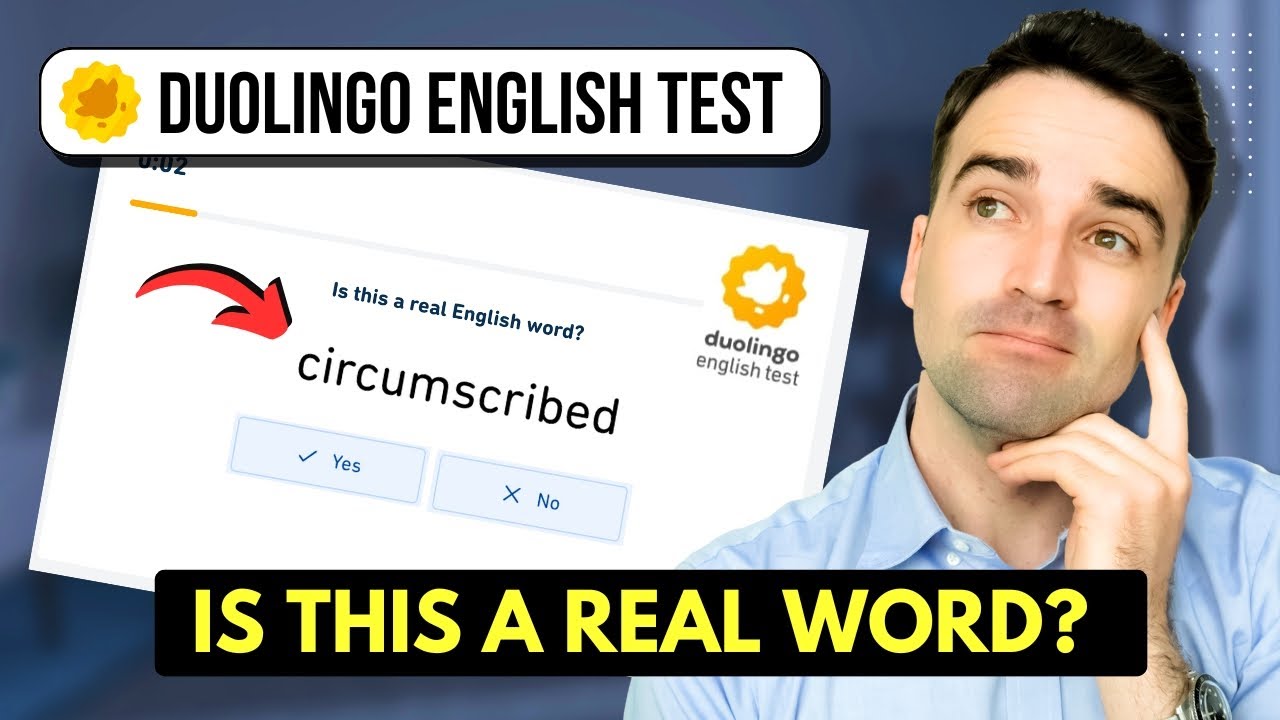
Okay, moving on to the second change, and it's all to do with the read and select vocabulary question type. One of the most iconic questions on the Duolingo English test is the read and select vocabulary question type this one here, and I'm sure you're already very familiar with it. However, this question type is having a major revamp from April 2 onwards, and is going to look like this.
The concept of this question type remains the same, you have to identify the real English words. However, from April 2 onwards, you will be presented with the words one by one and asked to decide whether they are real or not by selecting yes or no, just as you can see here, you will have five seconds to decide whether the word is a real English word or not. And you can expect to see between 15 and 18 of these words, there could be any number of real words within the 15 to 18 words you're given.
So don't worry if you think you're hitting yes or no too many times. Okay, now moving on to the final change, which is all to do with another new question type and it's called fill in the blanks. Last but not least, we have another new question type.
It's called fill in the blanks and it looks like this on the test. On this new question type you will be shown one sentence with one missing word for you to fill in. And you simply fill in the blanks by typing the missing letters of that word in total, you can expect to see between six and nine sentences and you have 20 seconds per sentence to complete the word and you've probably noticed that this question type looks very similar to the read and complete question type that you can see here.
However, this new fill in the blanks question is not replacing the read and complete question type, so you can expect to see them both on the exam. This new fill in the blanks question type will test the depth and breadth of your English vocabulary as it tests that you not only know the word, but you can use it correctly in the right functional context. So those were the three Duolingo English test updates taken place on April 2 of this year.
If you don't like these new question types, or are simply more comfortable with the current version of the test, make sure you take your exam before the update takes place on April 2. Another piece of news you might be interested in is that the Duolingo English test team is holding a webinar on March 6, going over these new question types and sharing some useful tips. If you would like to join that webinar, there is a link below in the video description.
So that's it for this video. I hope it clarifies some of your questions. And don't forget to try out these new questions using the official practice test on the Duolingo test website.
And of course I will be updating our practice platform and courses on di t ready very soon for you.