Do you ever wonder how amorphous lumps of material are turned into the everyday products which surround us? ! Let's find out!
In this video we're going to talk about manufacturing processes. There are six main categories of manufacturing processes, which are forming, casting, moulding, joining, machining, and additive manufacturing. Each one of these categories contains a large number of different manufacturing techniques.
There are a lot of different factors which need to be considered when selecting the right manufacturing process. This includes the material you are working with, the geometry of the object, the number of parts you are producing, tool and material costs, and required levels of automation, to name just a few. Let’s look through each of the six categories in detail.
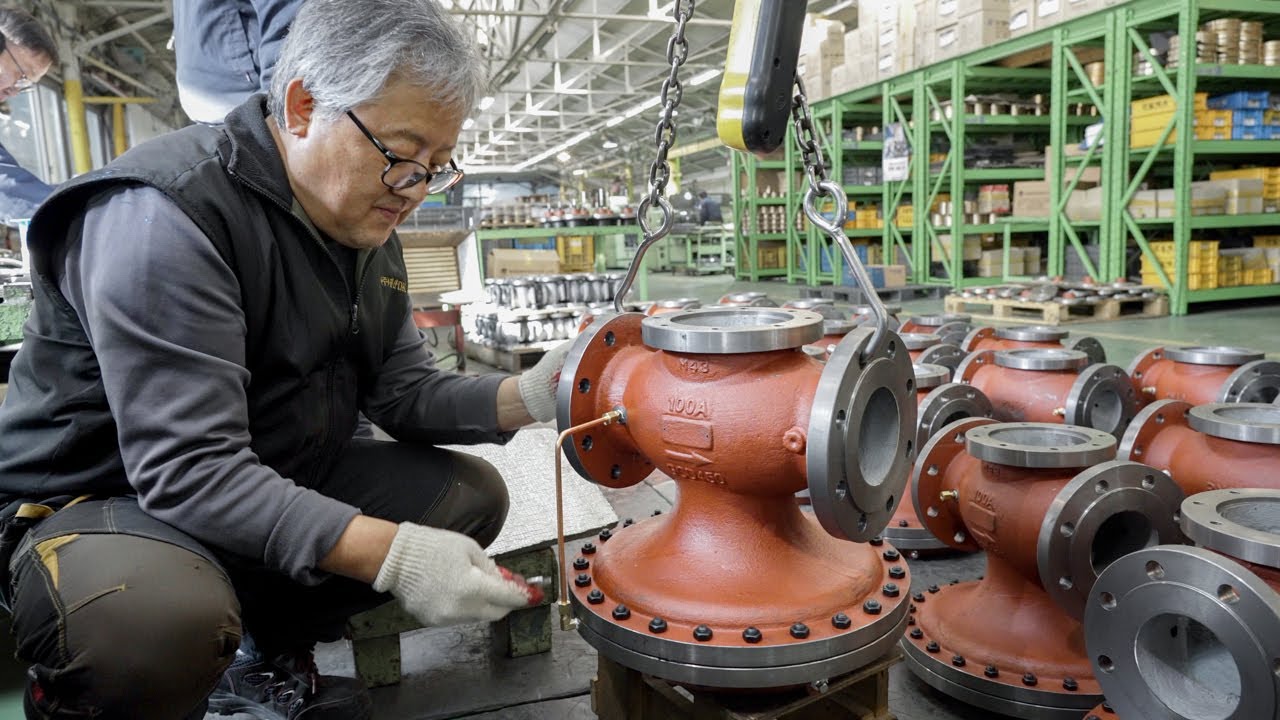
Forming involves applying forces or pressure and plastically deforming the material to produce the desired shape. It is typically used for metals. Most forming processes can be done when the metal is either above or below its recrystallization temperature.
This is known as hot or cold working. Hot working makes it is easier to plastically deform the metal. But cold working causes strain hardening, which increases the strength of the material.
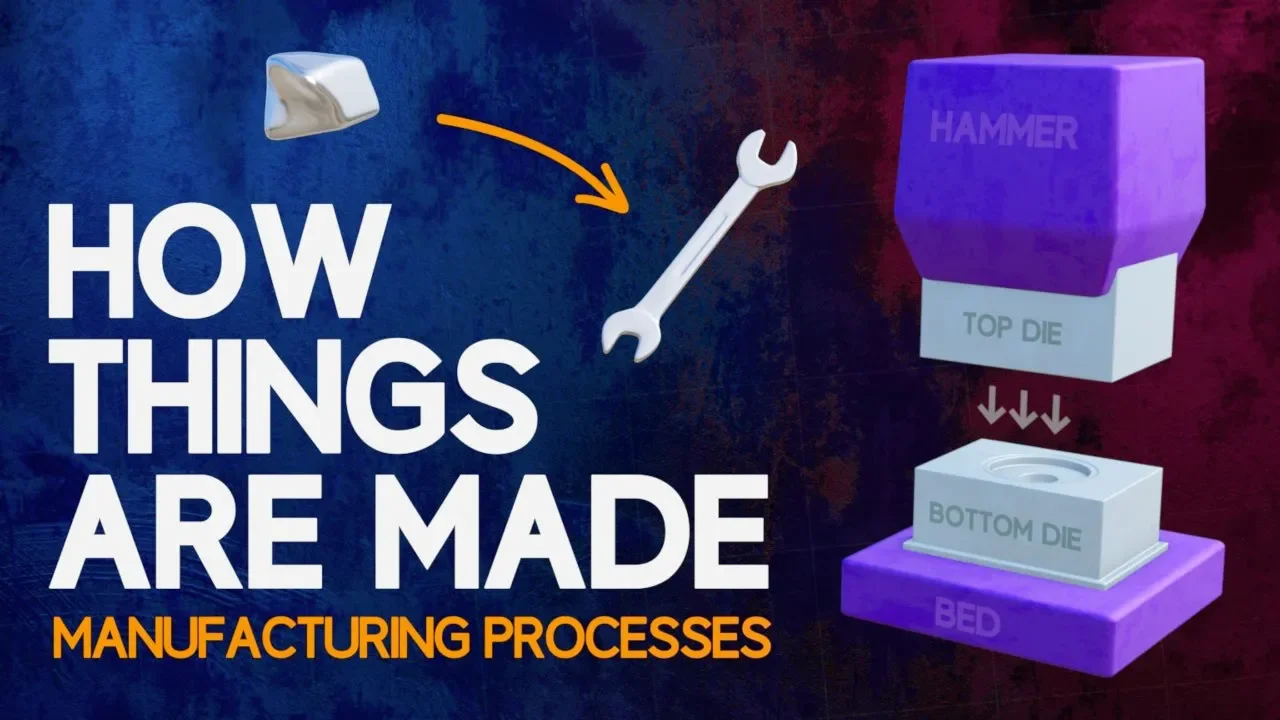
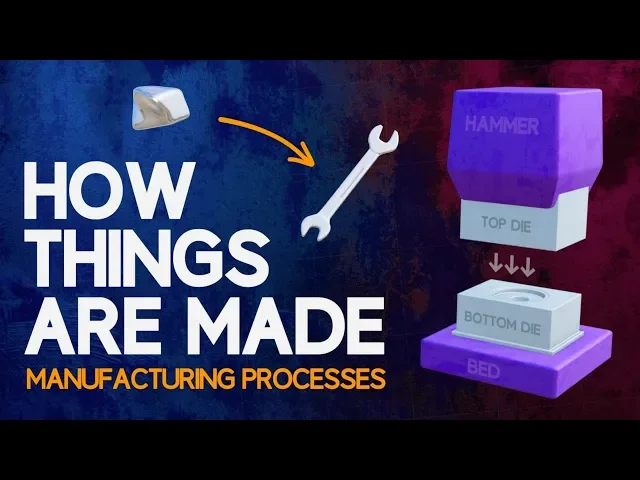
Three common forming processes are forging, rolling and extrusion. Modern forging is done using machines. In closed die or impression forging, the metal is placed between top and bottom closed dies.
Repeated strokes from the hammer are used to cause the metal to flow into the shape of the dies. Objects produced using forging can have improved mechanical properties compared to objects which are cast. But it can be difficult to achieve tight tolerances using forging, and the required equipment can be expensive.
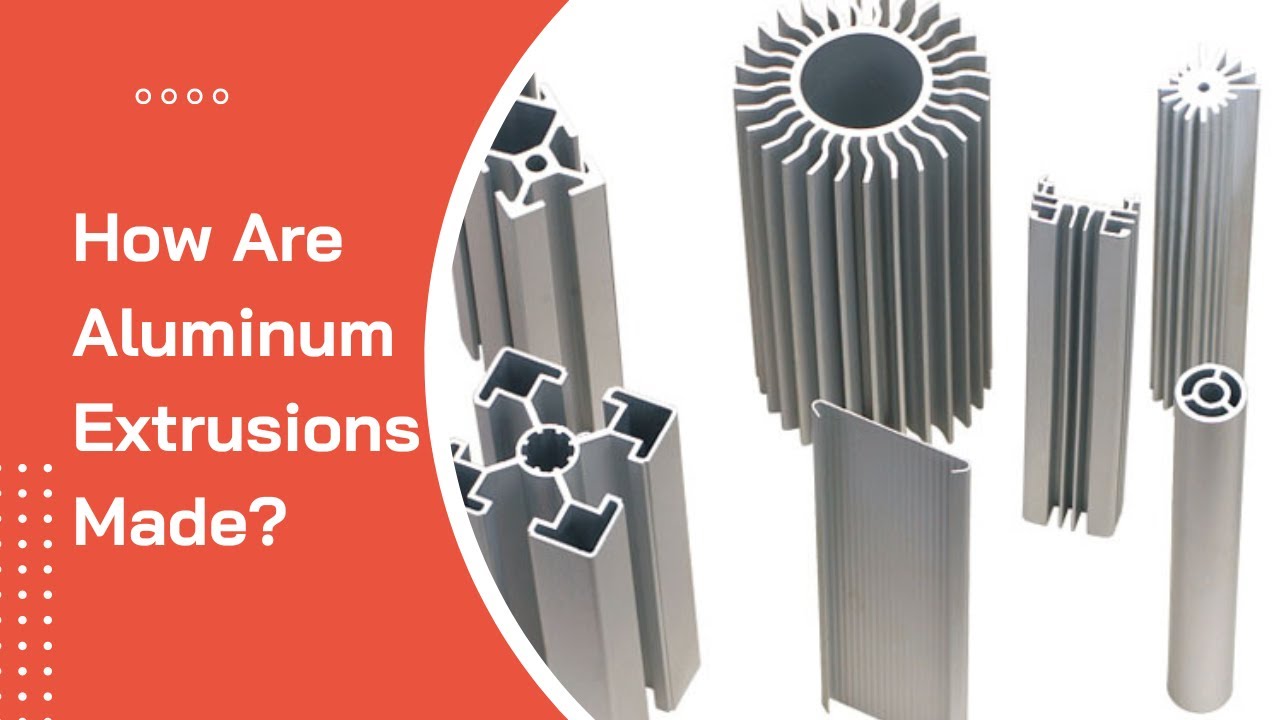
Extrusion is a continuous process which involves placing hot metal in a chamber and using a ram to force it through a die, producing a long object with a constant cross-section. Extrusion provides an excellent surface finish and can achieve very tight tolerances, but it is only suitable for producing two-dimensional shapes. Rolling is probably the most commonly used forming process.
It involves passing metal between two or more rollers which apply pressure and reduce thickness. More complex products like I-beams can also be manufactured by rolling. Rolling can result in improved mechanical properties, and can be automated, which makes it good for large scale production.
But tooling costs tend to be high and it can’t be used to produce very complex shapes. Let’s move on to the next category of manufacturing processes - Casting. Casting involves pouring molten metal into a mold and allowing it to solidify.
It is what we call a primary shaping process. A secondary process such as machining is typically needed to achieve the desired surface finish. Like forming, casting is most commonly used for metals.
Three common types of casting are die casting, sand casting and investment casting. In die casting, molten metal is forced into reusable metal dies at high pressure. Once the molten metal has solidified, it is removed from the mold.
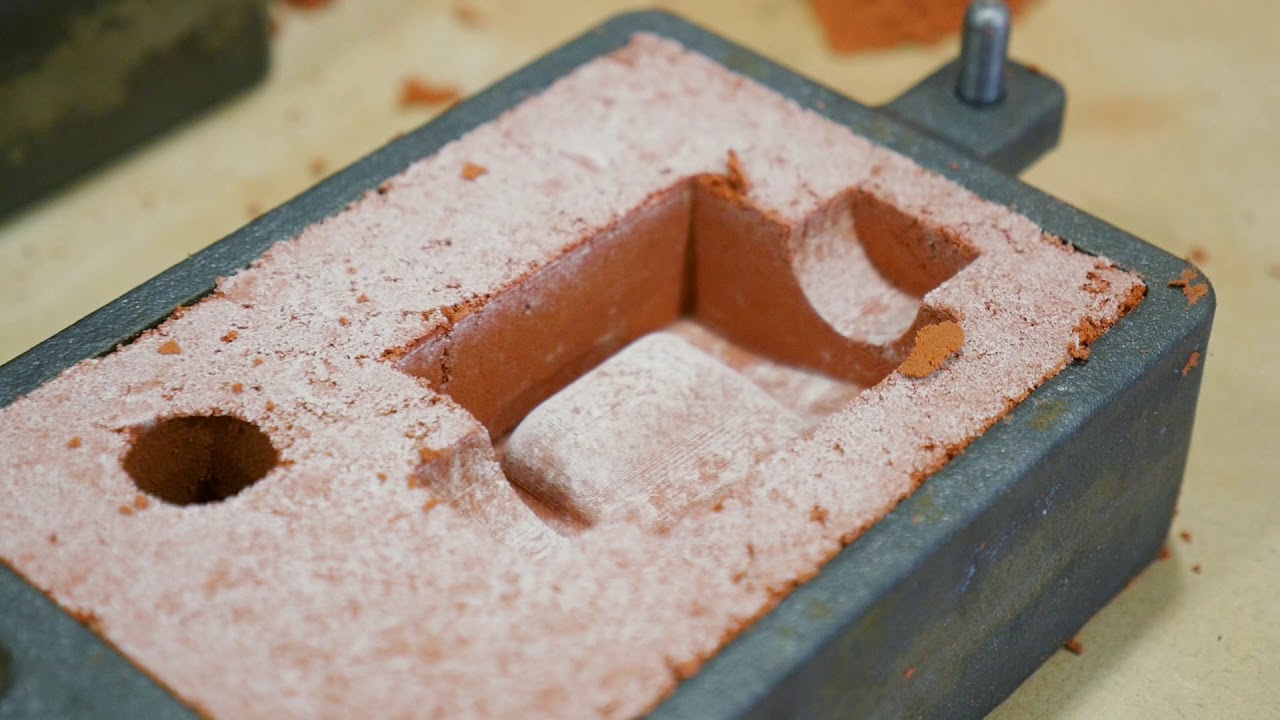
Die casting is mostly used for non-ferrous metals like aluminum and zinc, which have low melting temperatures. It provides an excellent surface finish, and can achieve very tight tolerances, but start-up costs tend to be high, so it is only really suitable for large production runs. In sand casting, a pattern is used to create a single-use mold from damp sand.
The sand is typically contained in two mold boxes called the cope and the drag. Molten metal is poured into the mold through a channel formed in the sand. When the metal has solidified the cast object can be removed from the sand.
Sand casting can be used for a wide range of metals, including those with high melting temperatures. It can produce large and complex parts, and initial costs are very low, making it good for small production runs. However it provides a poor surface finish, and is not as accurate as other casting processes.
The last casting process we will look at is investment casting. Several wax patterns of the same object are created and attached to a sprue. The wax tree is dipped into a slurry to create a ceramic mold.
Heat is applied to melt out the wax. Molten metal is then poured into the ceramic mold, and once the casting has cooled the mold is broken off. Investment casting is good for parts with complex geometry, and can achieve tight tolerances.
But it is an expensive and time consuming process. Molding is very similar to casting. It involves shaping a liquid or pliable material using a mold.
Most of the time molding is used for forming plastics. Typical molding processes are injection molding, compression molding and blow molding. Let’s look at the first two.
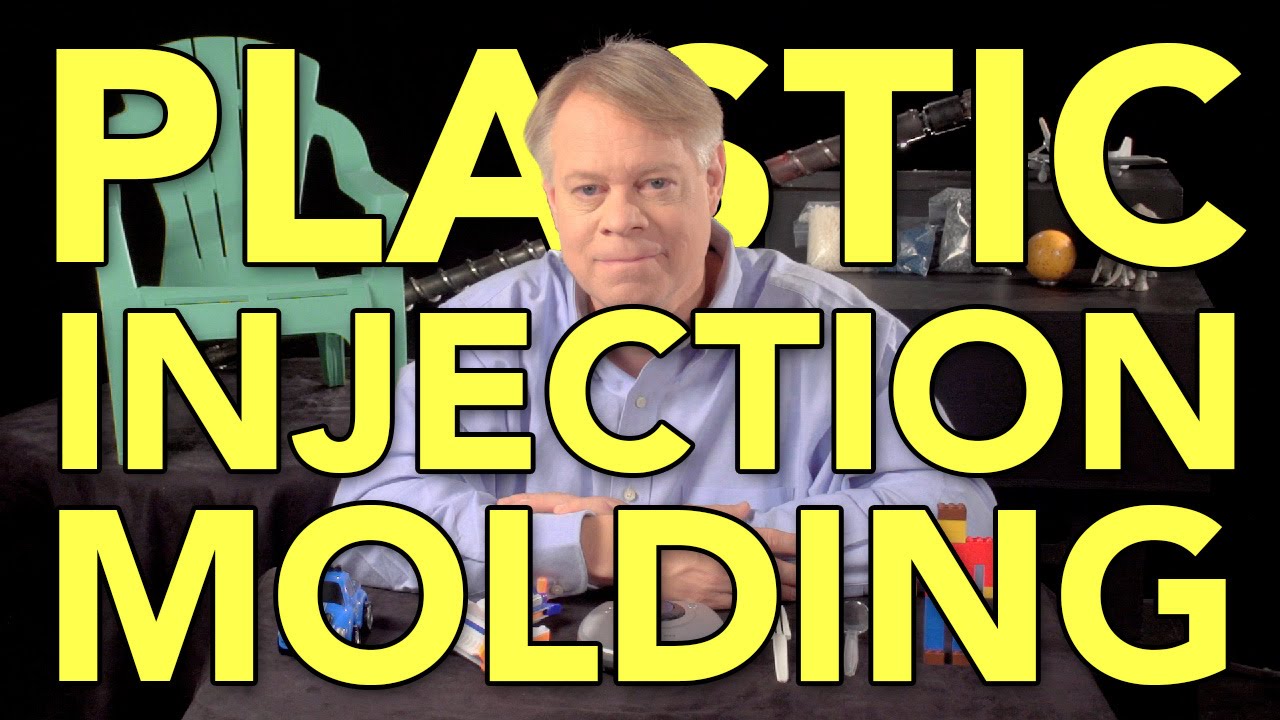
Injection molding is the most commonly used manufacturing method for plastics. Polymer granules are fed into the hopper and a screw is used to pass the material through a heated cylinder, before it is forced at pressure into the mold. Injection molding is mostly used for thermoplastics, which are polymers which soften when they are heated and harden when they are cooled.
It is a very fast process, and can be fully automated, meaning labor costs are low. But start-up costs are very high, due to the expensive molds, so it is really only cost-effective for large production runs. Compression molding involves placing a precise amount of material into a mold.
The mold is closed and pressure and temperature are applied. Compression molding is mostly used for thermosets, which are polymers which irreversibly harden when heated. Tooling costs are relatively cheap, making it good for small production runs, but it is quite a slow process and is not well suited for complex designs.
So far we have only looked at material deformation processes. Machining is a material removal process, where a tool is used to remove material from a larger object. It is often used for secondary shaping, when the part has already been formed using a primary process like casting.
Machining can be used for a wide range of materials, including metals, plastics and wood. Examples of machining include drilling, turning and reaming. Drlling is the cutting of a normal circular hole by pressing a rotating drill bit through a solid object.
And turning is the use of a cutting tool to shape a rotating workpiece. Let’s move on to the next category. Joining involves combining multiple separate components into a larger assembly.
Like machining, joining is a secondary process. Welding, riveting, brazing, soldering and fastening are all different types of joining processes. Welding uses extremely high heat to fuse distinct metal parts together.
Unlike soldering and brazing, the base metal melts during welding. The final category is Additive Manufacturing, which involves adding material to build up the desired object, typically one layer at a time. 3D printing, selective laser sintering and vat polymerization are examples of additive manufacturing techniques.
For 3D printing a computer is used to successfully build up an object layer by layer. 3D printing is a slow process and the range of materials which can be used is limited. As a result it tends to be used for prototyping rather than for mass production.
That’s it for this introduction to manufacturing processes! Please leave a comment to let me know what you think! And don’t forget to subscribe if you haven’t already!
![Intro to Manufacturing Operations, Technology, and Processes [The Most Important Things to Know]](https://img.youtube.com/vi/zR36urTYC4k/maxresdefault.jpg)