This always pisses some people off. A lot of times, optimizing your content for going viral is actually completely useless for your business. I built a content system that generated over 2.8 billion views, 11 million plus followers. But the most important stat that I want to share is the 650,000 leads that we generated in just 2 and 1/2 years. In this video, I'm going to help you build a content system just Like the top 1%. Now, the first thing that I want to immediately flag and qualify is saying that there is a lot of nuance to
this viral verse trust conversation and debate. Just for the sake of time, I'm going to make the assumption that you have a high ticket offer that you're selling to a very specific and fairly narrow group of people. Okay? It's not like you have a probiotic soda that you're selling or uh an anti-aging cream, right? For those Kinds of brands, going viral is a lot more effective. It's actually kind of a biggie that you really want. But if you are selling a high ticket offer to a very narrow group, well, I think it's probably the case
that maybe going viral is not as useful as some of your local gurus on Instagram will have you believe. So, what I want to do is I want to break down what optimizing for going viral typically looks like, like how it actually goes based on my 17 years of Experience. Now, I'm not saying this is always the case. There are obviously outliers. And this is to be clear when it goes well, when you do it really, really good. When you optimize for going viral, you start getting more views, a lot more views, and you start
gaining a lot more followers, which is wonderful. You're seeing everything move up and to the right on all the social platforms. But here's what actually happens when you do this. When you optimize for Virality, inherently you have to make content that is wider. Okay? And typically what this ends up doing is diluting the message. Think of it like a shot of whiskey versus a whiskey and coke. Going viral and optimizing for virality is like having a whiskey and coke when you really want the foolproof whiskey that burns as it goes down. Right? That's what you
are looking for. Okay? And so in doing this, what you end up doing is you create wide content that Is vanilla and attracts followers and viewers off of that content. But what are they wanting more of? That same [ __ ] that you brought them in with. It's not like they're coming in from some really wide vanilla piece of content and all of a sudden being like, "Yes, I would love a very deep breakdown on how I can conduct my marketing funnel from Instagram to my email and then convert on the back end." like they
don't give a [ __ ] about that [ __ ] And so what I have Seen and I have been a part of a team where the creator wanted to do this. Okay? And what happens is originally you're building and optimizing your audience around solving problems for them. Taking the painful problems that they deal with and helping them solve them. But over time as you go wider, you no longer serve their need. So what do they stop doing? Consuming your content. So, what you're doing is you're bringing in all these people that are not Interested
in the high ticket niche offer that you have and they're coming in, but they don't care to buy. They have no interest in it. Meanwhile, the people that were buying from you are now tuning you out because your content no longer serves them. So, as views and followers are going up to the right, guess what sales are doing? Straight down. It suddenly becomes so clear. You end up alienating the people that actually want to buy from you. How dumb, Right? Yet, you are considering doing this. I've considered doing this. Many creators that I love and
respect and admire and look up to have considered or have done this in a season. You don't have to make that mistake. I'm sharing the mistake with you right now so you don't have to go down that road and learn this lesson the painful way. Because what I will tell you is it is extremely painful to wake up one day and realize the people that were buying from You no longer give a [ __ ] about what you're putting out. because what you're putting out does not serve them. It's kind of like how I tend
to gain weight. One day I wake up, I'm like, "Oh [ __ ] I put on 20 pounds." Right? I wasn't paying attention. I was just going living my life, doing things, and being busy. And then one day I'm like, "Oh, fuck." It's the same in this instance. You don't realize it as it's happening until one day your ideal customer, maybe Somebody that you know and previously had a relationship with or still do, they tell you something like, "I used to consume your content. I loved it. I haven't watched a single video in the last
six months because none of it has helped me. None of it has been helping me solve the problems and the painful problems that I have within my business or whatever use case you're making content around. Right? Maybe you were helping people lose weight and keep Track of their calories and, you know, get at least 15,000 steps a day, whatever. And suddenly you're starting to make videos where you're comparing candy bars. That's no longer serving your customers need. And so what's going to happen is they're going to start to tune out your content. Now on the
other hand, if you optimize for building trust, I believe that is going to provide insane results for your business. Why is that going to provide Insane results? Well, I think in order to answer that question, we have to define what trust is. And I have a very simple definition that I think will be very useful for you. I believe that trust is how much you believe that someone or something will meet your expectations in the future based on how they have behaved in the past. If I go out to start my Harley-Davidson, okay, I flip
the switch on and then I start it. If all of a sudden tomorrow I go out There and I press the ignition button and it and it doesn't start, it just peters and it just dies. Do you believe that the next day when I go out there, if I do nothing different that I am going to trust that it's going to start a little bit less? Okay, that I believe is a very simple version of how trust works. So then how do you optimize your content around building trust rather than going viral? Well, I think
it's actually very Simple. Do you need to identify what the painful problems are that you are solving for your ideal customer? What is your unique solution to that painful problem? How do you go about solving it differently than others? I'm not saying make [ __ ] up, but just look at what do you do a little differently than some of your competitors? And then the third thing, you need to set expectations of what the painful problem is that we're going to solve in this video. The next Step is you need to make it easy for
them to take the actions to go from here to here. What do they need to do in order to get the outcome they desire to solve the problem that they're looking to solve? And if you do that and repeat over and over, I believe that your audience is going to have a strong belief that you will meet or even exceed expectations in the future. This is a beautiful thing. Why? Because it means that they're going to continue to Believe that you will deliver. And if they believe that you're going to continue to deliver, when you
suddenly make them aware of an offer that you have, the likelihood that they believe you'll deliver on that offer goes up. So, the likelihood that they actually convert goes up. And the reason why they believe that is because they trust they're going to get more out of what you provide in your offer than what they invest. Why? Because that's what's been Happening for the last 1 2 3 4 5 6 7 8 9 10 12 months, however long you've been making content. Those actions on repeat builds that pattern of trust in your audience. It's incredible
what this can do. And so it takes this like wildly confusing thing of like how do I build trust and makes it very simple. These are the very basic actions that you need to take in order to increase this trust with your audience. Now something you'll hear a lot of people talking about is Who should you be listening to in future ideation on your content, right? Do you go to the comment section as your source? Do you go to your customers? Which one do I do? Well, it's going to depend on what your offer is.
If your offer is a mass market, not niche offering and it's low ticket, well then yeah, you can look at the comment section as inspiration. Why? Because you have more people in the comment section that are reflective of what your buyer Looks like, acts like, and who they are. On the flip side, if you're like me and you have a high ticket offering, well, maybe the comment section isn't going to be the best place for you to optimize off of because maybe those are people who are consuming your content, engaging with it. They're awesome. I
love them, but they're not the type that is going to actually end up buying my offering, right? My one-on-one service or even potentially joining one of our group Offering. Whatever group you want more of, that's what you should optimize for. If you want more followers, cool. Listen to your followers. Make the content they're asking you for. But if you want more customers, what are your customers asking for? I want to be clear. I care about what you, the audience, is saying in the comment section. That's I don't want that to get misunderstood. But what I
want to share with you is that the majority of my content that I put out, The customers that we end up working with, they don't, this is not a rule, it's an observation. Often times they don't comment publicly on the content. They will DM, they'll text, they'll email privately. And so I'm looking at those conversations and what are those people finding useful? What are their follow-up questions that they want more in-depth information on? This is how I'm optimizing my content and it's how if you have a high ticket offer, it's how I Recommend you optimize
yours. This is the source that you want to go to, your customers, not necessarily your followers. But the thing is is you're never going to get to the point of reaching your ideal customer because it's not like the first video you put out, boom, all of a sudden thousands of people are seeing it. That's not what usually happens. You have to go through the painful period of doing this for a while with very little results. And the Only reason that you're going to stick with it is if you build a system and a foundation that
is actually sustainable. Not trying to copy what your favorite content creator is doing. not trying to replicate what the guru on your Instagram feed is telling you you need to do by being on every single platform all at once, posting 10 to 20 times a day. That's ludicrous. I mean, there's a crazy stat that up to 73% of people who start making content quit within their First year. Within their first year, all the investment that you made, all of the uncomfy feelings that you went through and and being public and everything was for nothing. And
so you're watching this video because you want to build something that will last. So let's build a foundation and a content strategy that will do the same. So what does it mean to build a sustainable system and foundation? It means that your content strategy needs to fit within the Constraints of your business, your life, and your experience level. Now, I don't want to sound like I'm like one of those woo woo people. I'm saying you have realities based on the business life and experience that you have. You might only have one or two hours a
week that you can dedicate to content. Another person watching this video might have up to 10 hours a week that they can dedicate. Everybody has different constraints on their time and bandwidth, right? Like Energy bandwidth, mental bandwidth, not just the time. You need to reverse engineer what your work, your life, and the experience level that you have. And by that, I mean like how much content have you filmed on camera? You're gonna want to build a system that eases you into it. I didn't start off this year making content, putting out a video every single
week on YouTube. That would have been [ __ ] absurd for me. I was not used to being on camera. I had to Ease my way into it. Okay? And so that's what I mean by creating a sustainable system and foundation to work from. You'll get way greater returns doing 20-minute walks every day for the rest of your life than six months of Ronnie Coleman working out. It's the same with your content strategy. If you post a low volume but consistently for many years, you're going to beat the creator that tried to sprint hard for
a year and then burned out and gave up after 12 months. And and honestly, this is what kind of separates you, the business owner, from the average creator. You have a business that you are running. And so, your content strategy and system needs to complement what your business looks like and what your day-to-day in the business looks like, not some round hole that we're trying to jam a square peg into. I can't tell you how many different systems I've had to design based on the entrepreneur. I've worked with Entrepreneurs who are incredibly busy and they
literally have like at most 60 seconds a week where they can actually dedicate time to making specific content for the platform. The rest of their content is purely documented. It's just somebody following them around and filming them. I've also worked with individuals who allocate up to 12 to 18 hours a week for filming where they'll sit down for a full 12-h hour session on a Friday and film all [ __ ] day. There's all kinds of versions of this across the spectrum here, but it doesn't matter what others are doing. You need to look at
what your day-to-day looks like and then build the system from there. So, some questions that I would encourage you to answer in the workbook. And just a reminder, if you haven't downloaded it, download the workbook. There's a link in the description down below. All you got to do is click the link, enter your email, check your Email. We sent you the workbook. You can download it and go through all of these exercises along with me. And this exercise has some questions that I want you to answer. They're going to be like prompts. They're basically going
to help you develop and understand what does my actual capacity for content look like? How many hours a week do you actually have for content? Or what parts of the content creation process bring you energy? What [clears throat] parts drain You? What time of day are you most on? Where is your brain the sharpest? Or where do you communicate the best? I know for me, I am the sharpest and the best in the morning. In the morning is where I am primed. That's where I am my best. Okay? And so, we try to orient as
much as we can. Today, we've been filming all day, but we do our best to orient our film sessions to when I have the best energy and when I communicate and verbally process the best. Make sure That you go through the worksheet, answer these questions. It's not anything complex, but it's something that I guarantee you have not sat down and done. And so by putting this together, you are able to then build your content system, reverse engineering the amount of time that you have available rather than trying to keep up this unsustainable thing that you
know is just a ticking time bomb for you to give up at any point. Now, the next Thing that we needed to do after that we've understood like, okay, we have these foundations on how we're going to do content, we need to choose our medium. And this is really, really simple. There's four different mediums or ways of making content. There's video, audio, written, and graphic content. And instead of picking the medium that all of your favorite content creators are doing, or the medium that everybody online is talking about, pick The one that is most natural
for you. If you're already writing stuff, if you're really into the written word, well, then I would argue maybe the best way for you to start is with Substack rather than trying to do long form YouTube videos. Especially if the idea of being on camera makes you like shudder, I wouldn't push you into doing that. I want you to work your way up to doing that. On the flip side, if you want to communicate verbally, but the idea of Being on camera is scary, audio is going to be a great method for you. No matter
what it is, I want you to pick how are you going to communicate your ideas and thoughts and who you are as a human most authentically. That's the medium that we're going to go with. Now the clear and obvious reality here is video is the best as in you can get the most out of video. When you film a video you can then clip a short, you can take the audio and make it a podcast. You can Take the transcript and write LinkedIn posts, emails, whatever, right? Substacks. You are able to pull so much from
video. But again, if that's not what you [ __ ] with, if that terrifies you, then you're probably not going to stick with it. or realistically, you're probably not going to ever start in the first place. And so I would tell you, pick something that you can get momentum on and allow the momentum to guide you into the next medium that you choose. And now once we have our medium, we need to pick our platform. Oh my god, this is where I think so many people go wrong and they misunderstand a lot of messages that
people share online. Everybody talks about dominating all the platforms, being everywhere all at once, being omniresent. And here's the reality. That is a terrible strategy for you. You are not Gary Vee. You're not Gary Vaynerchuk. You're not Cody Sanchez. Okay? Trying to be everywhere All at once will cause you more harm than good. At this stage, you will make diluted [ __ ] content. I can tell you with absolute certainty. Rather than trying to focus on all of them, I think you want to focus on a very select few. Like let's say for example, I
all of a sudden tell my girlfriend I'm going to take up this new hobby of rock climbing. And all of a sudden, the first time that I'm going to go rock climbing, I decide to do the scramble up K2. Now, if you Don't know what K2 is, it's a extreme mountain that is very difficult to summit. Um, many people have unfortunately passed actually in trying to do it. I'm using an extreme example here, but that's what a lot of you think you can do with your content strategy. You think that you can get into climbing
and suddenly climb one of the most complex mountains in the [ __ ] world. You think that you can start making content and Make content at the volume and cadence that the best creators in the world that have been doing this for years that have teams of 10, 20, 30 people behind them are doing. And that is ludicrous. And so, if you're starting off solo just as yourself, what I want you to do is pick one primary platform and one secondary platform. Let's use the example of YouTube and Instagram. Okay? What you're going to do
is you're going to make pillar content for your primary Platform. Okay? That's YouTube. That's the main dish that you are making. A long form direct to camera video like this. That could be an example of the content that you're making as your primary platform pillar content. And so this is an example of my pillar content. It's a long form piece of content that I'm then going to use this pillar content from my primary platform in order to create content for my secondary platform. In this example, Instagram, Which means you might just take the direct to
camera long- form YouTube video and you might cut or clip moments for Instagram reels. Or you might get a little crazy and saucy and you mine a moment that you really love, you want to rewrap it as a carousel for Instagram. That would be another way of utilizing this process. See, your primary platform, that's the one that gets the energy and the innovation. Your secondary platform gets repurposed Content. It's not that you don't care about it, but it's that you're not putting any of your energy towards innovation on that platform. You're reserving that for the
primary. Now, if you're starting out or restarting and you have a team, I expect more of you. What I want you to do is I want you to pick three primary platforms. That's what we did when we set out to build my personal brand. And let's use me as an example. We picked YouTube, Instagram, And LinkedIn. Okay? And you're going to follow a very similar flow to the solo creator. You're going to make pillar content for one of the primary platforms. That's what this is. This is the pillar content on our primary platform. Then what
you're going to do is you're going to use the pillar content to inform platform native content that you create for the two other platforms. I kind of hinted at this for the solo creator. This could Look like taking a moment that you clip and post as an Instagram reel. A moment from the YouTube long form Instagram reel. But another version of this is you find the moment and then you rewrap it contextual to the platform you're posting it on. So maybe what that looks like is you mine a moment from your long form and instead
of just clipping it and posting that to LinkedIn as a short vertical video, maybe you take that moment and you do a written post with It. You recontextualize the rapper in order to perform best given what that platform wants natively. Not every platform prefers the same kind of content, not the same style, not the same way of communicating. There's many nuances to this. And so this is how you can behave in a dynamic where you have three primary platforms. One thing that I want to call out here is you need to apply the eye of
Sauron approach. I believe this is the most sustainable way To actually drive innovation on your three primary platforms but not all at once. And that's the key. In Lord of the Rings, there's you know the eye of Sauron and he's moving around and focusing on one area at a time trying to find the ring. Well, what we are trying to do is find innovation. And so what we are going to do is we are going to focus on one of the three primary platforms at once. All of the focus there. Everything else goes on maintenance
mode. And so That's what we've been doing in the first year of building my personal brand. We have had the eye on YouTube, Instagram, and LinkedIn have been on maintenance mode. What does that mean? That means that we're still posting on all three, but YouTube is the only platform right now that we're putting our time, attention, and money towards innovation. The other platforms, we're making content that we know works in formats that we know work. They're not Doing exceptionally well. Sometimes we have a breakout, but we're not optimizing for that. YouTube is our main focus
right now. And then once we get to a point where we feel like YouTube is really dialed, we will turn the eye to Instagram or to LinkedIn and then we'll move on to the next one. So you just get to here's the key. Once you go through all three, don't stop there. Turn your eye back to the first one. Let's say you go YouTube, Instagram, LinkedIn. By the Time you get to LinkedIn and get some innovation over there, you're going to need to innovate on YouTube because your audience has probably gotten fatigued. The preferences of
the audience on the platform are constantly evolving and that's why your eye needs to constantly be shifting. Hey, you're here because you're investing all of this time, money, and effort to build your personal brand and you're not seeing any results. You might be seeing your views going up, But often times sales aren't matching. It reminds me of one of the clients that we worked with this year. Highle media team, absolute gangsters, yet they hit a plateau. See, from a views and subscribers perspective, they were growing like crazy. But from a business perspective, all of this
new attention was not converting into leads. It's because they thought they were making educational content when in reality they were making entertainment content. So, We walked them through our principles and tactics of how to make educational content, not entertainment. Their previous average per video was 4 to 5,000 leads. This video got over 20,000 leads. And even though they weren't optimizing for this, that video ended up being their number three video of the entire year with over a million views. This is why we created Rson Select. Click the link in the description below if you want
more information. Now, let's Get back to the video. Now, what platforms do you pick? Like, how do you know which ones to go with, right? Like, how did I determine YouTube, Instagram, LinkedIn? Here's the first question. What medium did you pick? If you picked video, well, what platforms prefer video the most? If you picked written, for example, what platforms do really well with written? I'm gonna say if you chose written, YouTube might not be the best strategy for right now. Substack, LinkedIn, maybe Facebook. These are platforms that might better serve you and the medium that
you have picked. Now, the other thing that you can ask is, where does my ideal customer spend the most time? And the natural follow-up question that immediately comes is, well, how do I figure that out? You just ask. Okay? You ask around. It's not that complicated. Whenever you go to a new city and you're trying to find your favorite organic market that serves Non-GMO, you know, healthy [ __ ] you find somebody who looks like they only eat granola bars and go on hikes all day and you ask them. Find somebody who looks like or
acts like or seems like your ideal customer and ask them where they're hanging out and go from there. It's not that complicated. If you are complicating it, I'm gonna call you out right now. You are using it as a form of procrastination and that's some [ __ ] Just pick a [ __ ] platform and start. You can always evolve and iterate from there. You can change what platforms you do 5 months or 5 days into this thing. Don't debate. Pick a platform and let's start posting. Now, make sure that in this section you didn't
just listen to me share this. There's actually an exercise in the workbook that you should have downloaded. If you haven't, click the link in the description, enter your Email. We're going to email it to you. Go to your email, grab the workbook, and go through the exercise of determining your platforms. Okay? For the solo creator, you have an exercise. For the creator with a team, you have an exercise. Fill that information in. Now, even if you are being the most disciplined Dan out there and you [laughter] have done a great job of only picking, if
you're a solo creator, one primary and one secondary platform, or If you have a team, three primary platforms that you're going to focus on, great job. That's amazing. You can still [ __ ] it up by having an incorrect cadence, a cadence that you cannot sustain. Okay? So, just because you're disciplined on the platforms that you choose doesn't mean that you have a winning formula. You need to also be disciplined on the cadence that you choose. If you choose an output that matches your favorite creator with a Team of 30, you are doomed. As cliche
and [ __ ] ridiculously repetitive as this sounds, because you've heard so many people say this in so many different ways, it truly is a marathon, not a sprint. You can always increase the volume of content that you post, but what I have found is creators have a very tough time stepping back the volume. very easy to increase, but once you set an expectation with your audience, a lot of creators struggle to Walk that back. And so I encourage you start with something that feels very realistic now and increase over time. And in the true
sense of this being a marathon, not a sprint, a great example of what a sprint looks like on an extreme level is think of all those creators in the last, you know, three or four years that have had their 15 minutes of fame. They went wildly viral and then they disappeared. how much did they actually get from that sprint? Sure, there's a few individuals who were able to take it and run with it, but I would uh beg you to find somebody who had that 15 minutes two years ago and is still consistently showing up
[laughter] for their audience and is relevant in any sort of way. I'm sure there's examples uh and anomalies, but by and large it ends up being a very short sprint that is short-lived. If you don't stick with this for a long time, no matter how big you get, if it's for a Short period of time, there's not actually that much value longterm for you in it. You want to build a system that allows you to keep reaping the benefits of building a strong personal brand and putting out content that compounds in interest year after year,
not some 15minute moment in the spotlight. Now, for you who may still be on the climb of your career, and if you're watching this, you're probably that type of person. You you've never Reached your destination, so you're always climbing. And one thing that I will note from experience both for myself and a lot of people that I have worked for in the past, [ __ ] is going to get bigger. If you're doing this correctly and it's working, things are only going to get crazier. Make sure to build a system that is sustainable now so
that your future self thanks you. What I will tell you is when we started when I released my first how to build a Personal brand course back in April 2025 to now we're filming this December 2025. My capacity has changed significantly. I had a whole lot more time dedicated towards content at the beginning of this journey than I do right now. But lucky for us, we didn't build an output cadence that was optimized around the time that I had then. We built it in a way that was optimized around the time that I was going
to have in the future. I probably had the capacity at the Beginning to do a weekly YouTube video. But if we would have done that six months, well actually probably like four months into putting content out on YouTube, we wouldn't have been able to sustain that because I got way too busy running the actual business. And the whole reason why we're building this personal brand is to support the business. And so all of a sudden, if you don't do this correctly, you get to this weird place where your personal brand And your business are like
at odds and competing with each other when really they should be complimentary. So if you're wondering, well, okay, this is all nice and dandy, but how much should I [ __ ] post, Caleb? Well, here's what I would say. I'm not going to give you an exact amount because you are different from everybody else seeing this right now. Start with a cadence that feels doable. If I say, "I want you to make a video uh twice a week on YouTube." Does that sound doable? Are you like, "Woof, that sounds like a push." If it sounds
like a push, don't do it. What about weekly? What about bi-weekly? What about monthly, quarterly, yearly? Right? Like, you can chunk up as much as you want. Here's the key. It has far less to do with what you start out with and far more to do with the frequency at which you increase that cadence. So as long as you know that you're going to increase the volume Every two weeks, every month, every quarter, every year, whatever, then you are set. So even if in the first year of making content, you only put out one YouTube
video a month, you know, in year two, you could increase that volume if you wanted and that wouldn't be a problem because we are doing a marathon, not a sprint. And I've got two frameworks that will really help you in accomplishing this. First one is the accordion method and the second one is The 702010 framework. I recommend using the accordion method to figure out what the [ __ ] your audience wants more of from you. And I recommend utilizing the 702010 framework to help improve the performance and longevity of your content. The accordion method works
just like an accordion. You are expanding and contracting, right? You are going to expand the accordion when you are making more content in the beginning. Okay? So in the beginning you should have your Accordion fully expanded. This is your high volume content so that you can learn what your audience wants more of aka what they call quality. So you're using quantity to inform what your audience says is quality. And then once you have that information on what your audience says is quality, you're going to contract it and not make higher quality content per se because
I believe that quality is not something that you determine, but your Audience does. But what you're going to do is you're going to put the same amount of effort you were putting into the expanded amount of volume and put that same effort into less pieces of content, increasing the odds that your audience labels it as quality. And this is a neverending cycle because the moment that you think you know what your audience likes and you contract and you start making more of that, soon you'll get to a point where your audience is no Longer resonating
or responding to that content the same way they were previously. Which means we will have to expand the accordion again to do more volume to get more data and more information on what our audience is calling quality. Now, real quick, how do you determine when your audience is calling something quality? Well, if you've never posted a single thing on Instagram, let's start with your first 12 posts. If you do 12 posts over the Course of, let's say, four weeks, that's three posts a week. At the end of that month, you're going to notice that some
posts did better than others. And in the beginning, you don't have much you can go off of. So, I know this is shocking. coming from me, but you're going to look at the views. Okay, look at the views, likes, and comments. What content got more of those metrics, okay? That is probably a very good indicator that you should make more of that because your Audience clearly liked that more than the other content you made. You want to continue the expansion until you feel like you have enough information and certainty that you know, okay, cool. Every
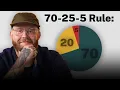
time that I share, like for me, like something that Trevor and I have figured out very clearly on my Instagram is when I share the brand journey framework, it seems to work really well. It does really well on Instagram specifically. We expanded the accordion Enough to get that information and then we can contract it and make more content specifically around that through Instagram reels, carousels, etc. The next one is the 702010 framework. It is extremely simple and wildly useful. Consistent theme with me. I like things that are simple and useful. 70% of the content that
you make should be [ __ ] that you know works from the accordion method, right? You expanded the accordion. You got information on what Works. 70% of what you're doing should be that [ __ ] You should know that this is going to work. I'm not saying, you know, it's going to be like uh, you know, 10x multiplier, as in do 10x your normal performing content. I'm not saying it's going to go crazy, but it's 70% should be content that you know is going to at least perform at benchmark, if not higher. The next 20%
should be iterations of that 70%. It's still the content that you know that works, but You're doing slight tweaks to either the hook, the setting, the delivery, the packaging. You're changing one little variable to try to improve the performance of what is already working to get better results. The last 10%, this is where you are most likely to [ __ ] up. They hear me say this and they get excited about the 10%. But in reality, once you start building a brand and having content that works and you have kind of a baseline performance, you
Have a high likelihood of falling victim to the trap of needing to always hit your benchmark performance and you start to get scared of trying anything new that may or may not perform as well as your standard. This is where people go wrong. You need that 10%. You need those big swings in order to figure out what the next thing is. A lot of people who make content for more than a year experience audience fatigue. And what 99.9% of creators do is they get to the Point where their audience is fatigued on their current style
of content and then they go into scramble mode. They are suddenly met with the challenging difficult process of needing to figure out what does my audience want from me now when it is needed. If you implement the 10% in the 702010 framework, what you actually end up doing is you find the next version of your content before your audience tells you they want it. Thus, you never go into a point where You're panicking and trying to figure out what do we do? Suddenly, our content isn't resonating. We got to figure this out ASAP. No, you're
going to be the intentional, thoughtful creator who actually ends up building a system where you're always trying to put your content out of business. You're trying to find the next style, next format, next version of content that you're going to make that your audience isn't fatigued over currently. The crazy thing is is Eventually they will. And that's why you always want to be prioritizing that 10%. Now, it's 10%. So, just to be clear, the majority of your content should not be these big swings that you have no idea whether or not they're going to work
or not. You should have some predictability in your content, and then 10% of it should be big, big swings. Cool. So, we have some clarity on how we're going to make content and how we're going to operate and all these things, but the Big question is, how do we come up with ideas? How do you know what to make? Right? I'm sure you've heard the classic guru advice, which is something to the effect of list out your top 10 favorite creators in your niche. Then, what you want to do is identify their top 10 videos
on YouTube. Then, what you're going to do is you're going to take the transcripts from those videos. you're going to put them into Claude, Perplexity, ChatgBT, whatever AI tool You use, and reconfigure the script for you. [sighs] It might be the the the little push that gets you over the barrier of entry of creating content. And if that's the case, I'm not here to judge you. I'm not trying to make you feel bad. But very quickly, I encourage you to change how you do this, okay? I am not the guy to teach you how to
rip off other people's ideas and make them your own. That's not me. To be fair, it is a strategy that Works as far as generating views and impressions. But if you're here, you want to learn how to build a brand around optimizing for trust, which means we need to start with the pain that our customers feel. And so, like I said earlier in this video, what you need to do is start with your customers in mind and the pain that they are feeling. What problems do they have that you solve? What are they afraid of?
What pisses them off and makes them frustrated? What Are they doing wrong? Maybe they think they're doing it right, but what are they actually doing wrong? Once you have that painful problem, like we talked about earlier, you need to take your unique solution and pair it together. I like to call this a beautiful gift that you're giving your audience. Their painful problem plus your unique solution equals gift for your audience. Now this gift gets multiplied by your credibility. Okay, ideally contextual Credibility. What do I mean by contextual credibility? Well, for example, some videos I will
give my credibility as a general credibility statement, which is something the effect of I've been scaling personal brands for 17 years to over 30 million followers. That is a general credibility statement. Sometimes, however, we will use a contextual credibility statement specifically for the video. So, for example, if we're making a video on Building a media team, I might reference as my credibility statement building a media team from 0 to 18 full-time members while increasing content performance quarter over quarter rather than my general 17 years to 30 million followers credibility statement. It's contextual to the topic
that we're talking about which increases the odds that your audience is going to believe what you are about to say because you have proven yourself worthy not in the General space but in the very specific space in which you are about to speak to. And so in your workbook again if you haven't downloaded it click that [ __ ] link in the description. What are you doing here? We want to be taking action. Click the link enter your email. Go to your email. Grab the workbook and let's work on this together. What you're going to
notice is in the workbook there's an formula that's listed out or laid out for you to be able to look at and Follow. The formula goes as follows. So the problem that your customer faces plus your unique solution times the contextual credibility that you have and a proven rapper. That is what determines the success of your content. If somebody's making a video on how to start your personal brand and their credibility is that they've built five different brands to 5,000 followers each, that's great. That's impressive. That's not easy to do, right? I'm I'm Not belittling
it. But you're going to take that information differently than somebody who has scaled personal brands to over 30 million followers. Or another example, someone who has built personal brands and had millions of followers, but they've only been doing it for the last 5 years versus somebody who has gotten the same amount of total followers, but they've been doing it for 17 years. And I I know this is sounding like I'm trying to put myself into this Like wonderful corner. Just roll with me here. Hear it through a humble tone. You might hear that person differently
because not only have they gotten a great result, they've done it through many different seasons and scenarios. And so you are more likely to believe that they're not sharing what worked in one scenario. They're sharing principles that you can apply into your specific scenario. The credibility that you have is a huge multiplier that determines the Success of your content. Make sure that the credibility that you're providing in the piece of content is contextual to what you're speaking to. The more contextual it is, the more your audience will believe what you are about to say. Now,
the exercise that I want you to do is you're going to list out 10 to 15 painful problems that your ideal customer faces. Then, for each problem, you're going to attach your unique solution to it. For each problem plus Solution, you need to write out what is your credibility or the contextual credibility that you are going to share. Or if this is a video that lends itself to your general credibility statement, label it as such. In your workbook, you can fill this out. you can actually identify your problems that you solve, what your unique solution
is, and what the credibility statement is going to be that you're going to share in that piece of content. This becomes wildly Effective. Now, the 2.0 version is maybe you actually identify these things, the painful problem and the unique solution, and maybe you write two or three different versions of what the contextual credibility is going to be. Why? Because you're not just going to make one video about this problem. You're going to make multiple videos over the next couple of years about this painful problem. And so you may want different versions of a contextual Credibility
statement to give for those individual videos. Now, what I want to focus on is your delivery. How you communicate these ideas that we just worked on coming up with. Right? Delivery is one of the three levers that I talk about in helping you stand out. You have your contrarian belief, your delivery, and your wrapping paper. I believe contrarian belief is the strongest lever you can pull. But I actually believe that the second Strongest one you can pull is not your wrapping paper, not the packaging, not the formats. It's actually your delivery. It's how you communicate
the information and ideas that you have in a different way potentially than other people in your space. I think a lot of people mess up their delivery because they think they need to be like this like content version of themselves. And I understand that that thinking, right? Like I understand that there's a lot of People out there that talked about how you need to be really animated. You know, there's the classic old statement that I remember on old productions that I used to do telling talent, you know, whatever you would normally do, turn up times
10 because it it shows up differently on camera, whatever. Essentially, what a lot of the industry has done is created this perception that you need to create this alter ego for your content. Now, if that's your Stickick and that's the brand that you're creating and you're intentionally creating this alter ego, by all means, you do you. But what I recommend is that your delivery should actually be the most authentic version of who you actually are as a human. Delivery is not about becoming someone else or building this caricature version of yourself. Delivery is actually about
removing all the things that keep you and are stopping you from being fully you. Delivery isn't this performance or performative act. And this is where you can go wrong. You start trying to perform. You start acting right. You do things that feel unnatural and not true to who you are. You start trying to match energy. This is a big one. You start trying to match energy of your favorite creator and you actually just become like a an off-brand version of them. You burn out because you've built a character, not a personal brand. See, I'm not
asking you to perform. I don't want you to act. I don't want you to pretend and become somebody that you are not. I want you to talk the way that you talk. If you're an extremely calm individual and that's how you communicate in real life, be calm in your content. If you're more intense in the way that you teach, be intense. If you're naturally dry and witty, I love those kinds of people. Bring the dryness and the witty humor into your content. It should be a natural reflection of how you operate and communicate and deliver
information in your everyday life. See, it's far less about being some charismatic character on camera, and it's far more about actually understanding the points that you're trying to communicate to your audience. The better that you understand what you're trying to say, the better the delivery becomes. It's not about being this crazy, charismatic character. It's About actually understanding what the [ __ ] are you trying to communicate so that you can communicate in a way that they understand. Something that I've noticed that you might be struggling with is communicating your points of view. And sometimes I
think this comes down to communication styles, uh, experience, confidence, all those things. But I've also come to realize that a lot of the times, and it's kind of embarrassing for for us to admit, but A lot of the times, the reason why we're having a tough time communicating something is maybe we don't fully understand the point that we're actually trying to communicate. Now, this might get a bit heady, um, so I don't want to get bogged down on it, but I want to give you something that can be very useful helping you communicate your ideas
when you're starting off with your personal brand and trying to get up and running. Here's how I think about it. You should be able to explain a concept to three different people in three completely different and unique scenarios. If you are able to do this, I believe you are at the point where you understand the concept enough to be able to communicate it in your content in a way that your audience is going to actually understand. And so even if you're the most dry, sarcastic, monotone individual, if you understand what you're communicating and you're Communicating
something useful, your audience is going to [ __ ] with it. You will build a following. It might not be the biggest following in the world, but it's going to be a following of individuals who trust you deeply. You don't have to be the most charismatic. You just need to be the most useful. If you optimize your personal brand around usefulness rather than charisma, you will build a strong personal brand. If you optimize around charisma over Usefulness, you will build a vanitybased brand. So the biggest thing that I want you to take away from this
section is that you don't need to get better at your delivery. You need to remove everything that restricts you or makes you feel unlike yourself when you are making content. And one way that I've gone about doing this for myself is actually implementing game tape reviews. It's like a quarterback Monday morning reviewing the game tape footage of how They performed on Sunday. I like to look at my content and see what is it that I'm communicating that was clear and what are the areas that are not clear. Trevor and I have been talking about this
a lot lately where I go on podcast and I'll watch how I answer a question to see how quickly am I able to communicate the important points without going down some crazy rabbit hole. I'm a verbal processor and so sometimes I can take a little bit longer than I need to To communicate a point. And so something I'm trying to implement with Game Tape Reviews is every time that I find that I'm taking a little too long on the spot, I'll pause the video and figure out how could I answer this question more clearly and
more concisely. Now that we understand how we're going to approach our delivery, trying to remove all the things that make us feel like we are not ourselves and not show up as we are, we want to move on to the third Lever to pull on standing out. The first two, like I said, are contrarian belief and delivery, like we just spoke about. The next one is your wrapping paper. Okay, this is the third lever that you can pull on to stand out in your space or your niche. Something that I hear so many times is
like, man, this was such a good piece of content. Why did it get no views? Nobody watched it. I think a lot of times, not always, cuz some of y'all are creating some [ __ ] but most of You are making really good content. And it's not necessarily that the content isn't good, it's that it doesn't have a good wrapping paper or wrapper around it to make it attractive to the audience you're trying to reach. Cuz here's the way that this actually works. When you make content on YouTube, for example, sure you have competitors within
your niche or space, but the way that consumption works is you're not competing with just your competitors. You're competing with everybody making content on YouTube. I'm competing on your YouTube homepage with whatever other channels you're subscribed to along with Mr. beast and a creator you've never heard of and 10 other creators that you love and admire and have watched a ton of videos from. Your rapping is the only competitive advantage you have before somebody clicks. The contrarian belief and the delivery that we talk about, those are Only able to be shared and communicated and engaged
with after they click. Your wrapping paper is what causes them to click so they can find out what your contrarian belief is. so they can experience your delivery. So, the way that you wrap your content determines how likely or unlikely someone is to actually consume it. Aka, it's really [ __ ] important. It's so important. It's why it's one of the three levers that you can pull on in order to stand Out. Your packaging, right? So, on YouTube, this is your title and thumbnail. It's also your hook. It's also the format in which you're making
the content. What do I mean by format? Well, you have like a direct to camera video here. Uh, we have our in the wild cinematic videos which on our channel are if you're struggling with making content, please watch this. Or if you're struggling in your creative career, watch this video. There are two videos That are wildly different format, right? And so that is how you can think of your wrapping paper. It's either your packaging, your hook, or your format. It's how you're wrapping the concept or concepts that you're sharing in the content. Back to what
we were talking about earlier, how you're taking the painful problem your customer faces, your unique solution, that's the gift. You need to wrap the gift in a way that your ideal viewer is going to want to Rip open, aka click on. Now, the exercise that we're going to walk through in your workbook, again, if you haven't downloaded it, download it. Click the link in the description down below. You're going to build a wrapping paper library. Okay? I like to think of this as I really love Christmas time. I'm obsessed with it. I love Christmas wrapping
paper. I have all different kinds. If I'm giving them multiple gifts, each of them should be a unique Wrapper. Okay? And so my vision for my future is one day I have a home where there's an entire room [laughter] dedicated towards wrapping paper. I know that's absurd, but this is how I like to think about it. You want to create a room where you walk in and there's all these different wrapping paper options that you can choose from. You know those screenshots that you take when you're scrolling through Instagram or you see a title thumbnail
that you like on YouTube? You take the screenshot and it just goes off into nowhere in your photo or your photo album and you never see it again. Well, this is something where you can actually house that inspiration and utilize it in the future. No longer are those screenshots just going to live on your phone. They're actually going to be utilized for the work you're doing. If we're thinking about just the lens of the packaging, right, the title, thumbnail for a YouTube video, for Example, if you're making a YouTube video, you've already filmed it, you're
in the edit, and you're trying to figure out how are we going to package it. What I have found, and what a lot of my friends in the industry have found, is when you need packaging, that is when it is hardest to find. And so what you want to do is you want to develop this in an evergreen sense so that when you have a video that you are wanting to package, you go into your wrapping paper library And you see what wrapping paper best fits this video or this gift that I am giving my
audience. What I recommend you do is you want to have a habit weekly, bi-weekly, monthly, whatever cadence you want. You want a habit of searching and shopping for wrapping paper. And the two best sources that I will recommend when it comes to YouTube are oneof10.com and YouTube itself. You want to set up a one of 10 account. And I recommend that on a weekly, bi-weekly, or monthly basis, you Scroll one of 10. And literally, you're not searching for anything specific. You are generally scrolling until something catches your attention. And when it catches your attention, you
need to screenshot that and add it to your wrapping paper library. You can do this in, you know, Google Docs, in notion, in whatever project management tool you use. Wherever you are going to actually access this and use it on a recurring basis, that's where you want to store This inspiration. That's the room that you want to house all your wrapping paper in. To be clear, when I say you're scrolling one of 10 and looking for things that stand out, I'm talking things that stand out that it's like, oh, you clearly immediately know, oh, this
would be a perfect video for me. But also, I want you to screenshot the absurd [ __ ] the [ __ ] that you're like, I don't know how I could ever turn this into a video of mine or or package a Video of mine with this. You would be surprised if you were able to see our wrapping paper library. There are some wild uh videos in there or packaging options in there that are absolutely absurd. There are some crazy things in there, but I guarantee at some point over the next 2 years, we're going
to use I'd say probably a good 50 60% of what we have in there. This becomes wildly useful and you'll be surprised. One example that I will share is I Remember we were scrolling through and we came across a video. It was like something to the effect of how I attract 10 out of 10 girls every single day. Trevor called it out and was like, "Wow, this is a great idea." I'm [laughter] just kidding. We were looking and we were like, "Oh, wow. It caught both of our attention." And then we were like, "Okay, let's
screenshot it, put it in. I don't know how we would use this, but maybe one day We can figure it out." A couple weeks later, we were talking with one of our clients. All of a sudden, I realized I was like, "Holy [ __ ] what we just discussed with them, we could turn into a video on how we attract 10 out of 10 clients every single day, week, or month, whatever." cadence. There's an example where an absurd piece of packaging that on the surface would never make sense for us suddenly made sense when we
had the right problem and Solution combination to meet that wrapping paper. So develop your wrapping paper library ideally with some diversity having all kinds of crazy different ideas in there. And then the next thing that you're going to do after you've built that wrapping paper library is you're going to wrap the gift. Remember that beautiful gift that you developed earlier? You're going to take that combination, the painful problem and unique solution, and you scroll Through your library to see what wrapping paper best wraps this gift. This is not just for YouTube, by the way. I
have a friend who he has been and logged into LinkedIn every single day, I think, for probably at least the last 5 years, if not longer. He has a photo album on his phone where he has, I think at this point, it's over five or 600 screenshots of top performing posts on LinkedIn. What he'll do is he'll put together his concept, his problem plus Solution, and then he looks at all of these screenshots of the way various LinkedIn posts that performed really well have been formatted. What was the structure? What was the hook? How could
I reorient this for my problem solution combination? And then he writes it in that context. You can also do this for Instagram, for Tik Tok, for Pinterest, for Snapchat, for LinkedIn, for any platform you can imagine. You can develop your wrapping paper library Because, like I said at the top, you want to share your contrarian belief and you want people to experience your delivery, but they're only going to know what your contrarian belief is and experience your delivery if they actually click on the video or engage with the post. And they only do that if
you have an appealing rapper that makes them want to tear it open. If you're trying to optimize for the short form platforms, they have a beautiful feature Called save. I'm not recommending that you just hit the general save button cuz that is basically like taking a screenshot and having it drop into your photo album and never seeing it again. We've all done that. I do it a million times to this day. What you do want to do is you can actually on a lot of these platforms, Instagram for sure, you can actually create different folders
that you save posts in. And so I would recommend you create an inspiration Folder that you can save specific pieces of content that you really like. And the cool thing about Instagram is you can really get that variety or really get that diversity that I was encouraging you to do because you can save reals, you can save carousels, or you can save singular posts. And so you can develop this beautiful diverse library of what good content on Instagram looks like. So that when you're trying to figure out how to share your gift, the problem, and
Solution with your audience, you can look at several or potentially hundreds of different versions of what a top performing post contextualized for that platform looks like. Now, in looking at these, you know, outliers and looking at packaging from other creators or an Instagram reel or a Tik Tok or a YouTube short that somebody made that you really admire that you're saving for inspiration for later. Look outside of your space and niche. Look at creators That are in completely different worlds. What's working for them? And then how can you borrow that from a first principal way
of thinking? What are the the elements that would work for my message, my gift, the painful problem plus unique solution? What could I take from a gardening YouTube channel that would work in wrapping my ideas in my lane? I believe this is the way that you can stand out even more. The problem that we are facing right now in all These different spaces and niches is everybody's copying each other in their own space and niche. So you all look the same. If you want to not look the same, don't do what everybody else is doing,
right? It seems obvious, but you are not doing this right now with your own content or the people you admire aren't even doing this. And so if you just look into other niches and spaces, I think you'll be blown away at how much your content stands out from your Competitors. You might be sharing similar subject matter, similar advice even. You might not have some strong contrarian belief even. You might not be at that point yet. But if you are borrowing your wrapping paper from other industries, this will help you do things fundamentally different than all
the other creators that are looking like each other within your niche or space. I don't know who needs to hear this, but that thing I'm talking about, Educational content, it's really hard to learn. See, everybody online is teaching you entertainmentbased tactics and principles. And that's why we created Rollston Select. We designed it specifically to be the one place that you go to learn how to do pre-production, production, post-production, and platform strategy through the lens of educational content. If you want to learn more, click the link in the description. Let's get back To the video. Now,
a big debate that you're going to see online around content strategy is, do you make deep content or do you make wide content? And here's the reality. It's not one or the other. See, so many people online are telling you to lean into just one of these. [ __ ] that. That's some [ __ ] It's It's like anything in life. There's nuance to it. You need a strong ratio of both and you need to inject something that's missing from this conversation, Which is a personal element. We are after all building a personal brand, aren't
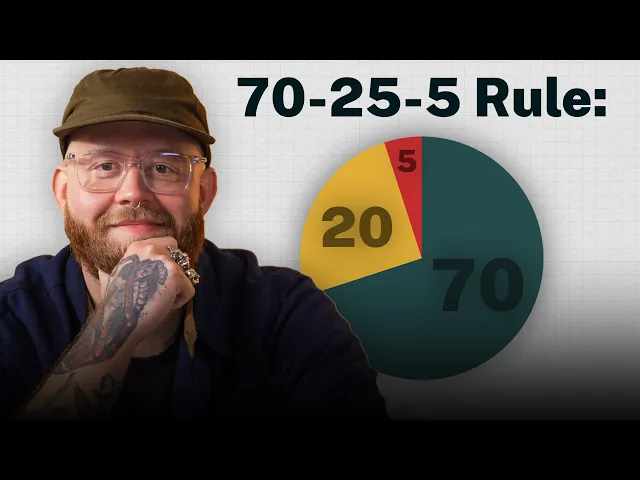
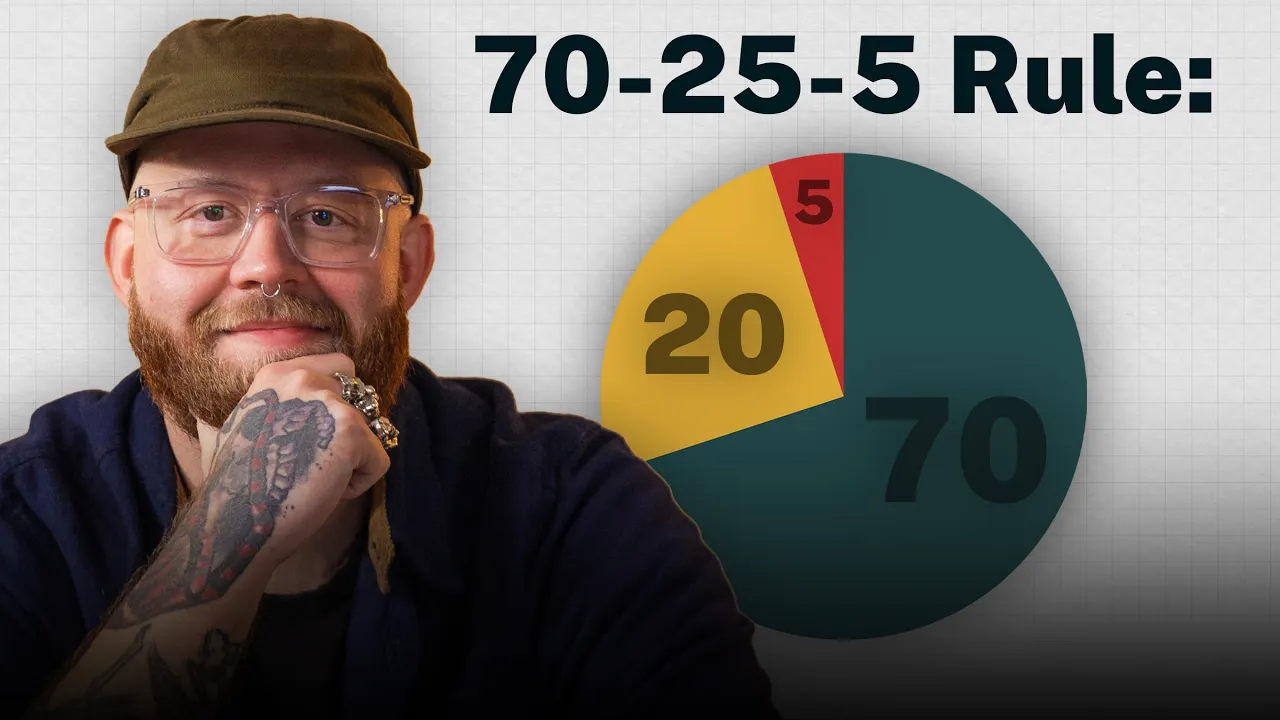
we? And so you want to make sure that it's not just deep and wide, it's deep, wide, and personal. And I have a ratio that I roughly loosely follow and recommend that you follow as well. You should be able to give or take 10 points roughly on this. 75% of the content I believe should be deep content. Solving deep problems for your ideal customer. 20% is nichewide content. Now, I'm going To explain what nichewide means here in a second. And the remaining 5% is personal. Now again, just a reminder before we break this down and
go into what the deep or the niche wide and what the personal content looks like. This is a very rough ratio to follow. It is not a rule. Please do not be one of those people that takes this wildly too literally. You need to eb and flow this and adjust it based on you and it's going to look different monthtomonth. But if you roughly loosely follow 7525, you will be in a really good spot. Now the 75% deep content, this is your educational content. This is the main source of the value from your personal brand.
These are the frameworks. These are the painful problems that are solved, right? These are the tactical nuggets that you're giving. These are the belief shifts or the point of view that you have on your industry, niche, or space. This is the content that is Going to establish the most trust in your ability to get results and it will reinforce your credibility. This is also the content that I believe is going to get you the most customers, the most highpaying customers because this is the content that increases the odds they believe that you can actually help
them solve the problem they are wanting to solve. 20% of the content being nichwide. This is what I like to think of as broad within your niche. These are the subtopics that serve your ideal customer still, but they also serve a broader base of viewers. An example of what nichewide content could look like if you're making content helping business owners leverage the relationships that they already have to create new business rather than trying to go out and acquire new customers. A version of nichewide content within this example that you could make is helping people reconnect
with old friends or Colleagues in general, right? Not just within the context of business. This is still useful for your ideal customer and the main audience that you are trying to build, but it also serves a broader audience and increases the odds that your content will show up to new people. But here's the key. Unlike making general random wide content, you're still attracting people that are interested in the general topic that you are talking about. This increases the Odds that the average person that comes in will have interest in your offer. They're not just a
random person that has no relation to the offer that you're actually providing, right? It's somebody that's still going to be at least adjacent to the offer that you have and potentially through nurturing them through your content may get to a point where they do become interested in purchasing the offer that you make available to them. Think of this like Your side dishes, okay? your nichewide content, that's the side dish. The deep content, that's 75%. That is your main dish. Okay? And the nichewide content is the sauteed spinach. It's the garlic mashed potatoes. It's your side
dishes. And the other thing that you want to definitely not miss out on is the 5% personal content. Okay? Again, you are building a personal brand. I'm not saying do that influencer [ __ ] that you probably are thinking of immediately. I'm not saying make content where it's like look at my lifestyle. Look at how awesome I am. What this is is sharing you the human in that personal brand. And I believe that this is what helps you stand out from the crowd because these are the only things that are truly unique to you. more
than likely the subject matter that you've decided to speak to, there's other people that are talking about it. And if we're being honest with ourselves, there are Probably other people that are teaching similar principles and even potentially, crazy enough, similar contrarian takes. There probably are. But what they definitely cannot replicate is the unique combination of all of your interests and preferences and hobbies and passions that make up you. the unique human that you are. Okay. So, for me, what I constantly try to inject as much as I can into my content and my brand is
my love for Harley-Davidson and The three Harleys that I have and obsess over. My love for metal, right, and all the different subg genres, the black metal, the hardcore, the metal core. I like it all. My roots in the fitness industry. I try to share that a lot. It's the combination of all of these things that create the lens that you view my personal branding advice and information and content through that makes me unique compared to the next person that you see off on the right Side of your screen here that is also talking about
a similar subject matter. Knowing that your deep content, the 75% is your steak and the nichewide content, the 20% are your side dishes, you can almost think about your personal content like it's the dessert. A quick note here is the 5% personal doesn't mean that 5% of your content should be a singular video or Substack article around your personal passion. I believe that the 5% should be sprinkled in to the other Content. You haven't seen me make a video in depth on my Harley-Davidson Roadk special build out, right? Going into detail on that. But what
you have seen if you've watched some of my content is you've seen that bike. You've seen one of my other bikes. I'm injecting it. I'm wearing a Harley-Davidson hat right now for God's sake. And so I'm not saying that you need to make specific content around your hobbies, passions, interests, but I Do recommend you inject those into both the deep content and your nichewide content. It gives your audience more at bats to connect with you. I wasn't planning on sharing this, but it's really important. The more of the interests and individual unique things that make
you unique and and wildly you, the more chances to connect with you. our relationships in our personal life, in our work life, the closer the relationship on the relationship sphere Or circle, the closer they get to you, more than likely you have more than one interest in common, right? That's typically an indicator of the closeness of your relationship. And so, if you're wanting to develop a close relationship with your audience, you want to identify more interests that you have in common with them. But if you never share those interests, you never inject that into your
content, how are they going to know what they can connect with you on other Than the core thing you talk about? It's really important to focus on the 75%, the deep content, that is where you're going to get the greatest returns. The nichewide content, that's how you're going to start to develop a more well-rounded brand and bring more people in and increase the odds that you can reach a newer audience. But the thing that is going to make you actually stand out is the 5% that is personal in your personal brand. Now, let's talk about
Structuring your content because we now know what we're going to be making, but we need to figure out how we're going to go through it in a sequential order to make it easiest for our audience to actually not only consume all the way through, but learn and take action on what we are saying. There is a ton of [ __ ] out there on content nerds talking about how to keep people watching your content. And this is affectionately referred to as the art of retention. These retention editing hacks, I'd say I'm going to make a
bold statement here. 98% of them come from the lens of entertainment content, not educational. They have this method where it's like every, you know, 13 seconds or whatever, you need to make sure that there's a graphic or a scene change or some new element on screen that might be effective for entertainment content. Uh, I know I hate watching it personally, but there's a lot of people that like That. I get that. But if you're truly making educational content, your actual goal is for the audience to take action on what you say. But if you're constantly
having all these graphics that distract from the actual message, you're inhibiting your audience's ability to be educated and you're actually just making entertainment content. I personally believe that within the world of educational content, the greatest retention hack in the world Without competition is your audience learning. The way that we like to structure our intros is actually fairly different than what a lot of people talk about. You've heard a lot of people talk about proof, promise, plan, and I think that is an incredible framework. We have created our own framework for how we structure our intros
to our videos and it's called the four C's framework. I I like the letter C. What can I say? The four C's are call out, credibility, Compass, and the fourth one, which I've not really heard anyone mention, which is core learning. If we believe the greatest retention hack in educational content is the audience learning, then why would we not try to get to the first learning as quick as possible in the video? And so, we have now wrapped this into how we conduct our intro. Now, real quick, the four C's applies to your wrapping and
your intro. We have a call out first. The call out can be in your Intro, but the call out can also be addressed in your packaging, in the wrapping of your video, aka on YouTube, your title and thumbnail. You might not need to do a call out in the actual script of your intro because your title and thumbnail already take care of that. The call out basically is addressing who the [ __ ] is this video for? The credibility, as we've talked about, is why would somebody listen to you on this specific subject matter? Sure,
you might Be successful in general, but are you successful within this subject matter that we're addressing in this piece of content? The compass, give them the overview of how we're going to get from the problem they are currently facing to the solution that they are seeking. What is the road map or the compass that is going to guide us along this journey? You're previewing what you're going to hit in the video. And I believe the most important one, the core learning, you Want to start off the video as quick as possible, getting to a valuable,
useful nugget. Now, I'm not saying you want to create or take the most important, biggest learning that you're going to share in the video and share it up front. That I'm not saying is the best thing. But you have this thing that a lot of people have been preaching for years now, which is bury the value. It's like put the the value and the learning deeper in the video so that people stay Longer to get it. And I think that did work for a long time, but we are at a point now where there is
just way too much content out there being produced that people don't have the patience to wait. And that's why I believe you need to get them to a learning as quick as possible. Why? Well, if I learn something in the opening 60 seconds of a video, my belief that I'm going to continue learning throughout the video increases. If I see Even a 20-minute video, in that opening 60 seconds, if I learn, I'm assuming that's not the only learning I'm going to get and the rest is going to be [ __ ] I'm assuming I'm going
to continue learning. That's an assumption that I'm making based on previous behaviors in other pieces of content that I've consumed. So, you need to optimize your introduction in your content, whether it's video or written. A lot of people talk about time to Value. You want to deliver value as quick as possible for the person that's paying for your service. Well, think of it the same way with your video. You want to give them value and usefulness as quick as possible. People's attention spans, it's not even their attention span, actually, it's their level of patience. They're
less willing to wait for value from you because they know there's another creator that they could get it from quicker. Now, from your Intro, you then have the rest of the structure of your content. I could probably make an entire course just on this alone. definitely could talk at least for an hour or two just on how you structure your video, but for the sake of time, I want to give you something valuable that will be a great starting point for you that you can begin to adapt and evolve for yourself. And I recommend that
you follow loosely a structure like this. You have your Introduction, then you give context on what you're about to speak to. You share a principle, a story about that principle, the tactic or the action that your audience needs to take, and then an example of what it looks like to either do that correctly or incorrectly or both if you're feeling crazy. And then after that, you link to the next video. It's that simple. You can get wildly robust and complex. I have an entire YouTube course framework that I share with People in Rston Select that
is like absolutely insane and very deep and robust. It's many pages long. But this will give you a very very good starting point to get you rolling on creating this content. Rather than you sitting there looking at a blank page being like, "What the hell do I do? How do I craft this?" Use this framework to help you get started on making your YouTube content. Now, I'd like to talk about how to go about repurposing your content. And most business owners when they hear repurposing, they think that that means just reposting the same clip everywhere.
And that's one part of it. I guess that's a version of repurposing for sure, but that's not the waterfall method. The waterfall method is about taking one really good moment from your pillar piece of content and getting as much as possible out of it. This looks like one long form piece of content leading to many platform native pieces Of content, potentially many off of one specific moment. This is not copy and paste. This is not post the same short everywhere, even though that's what we are currently doing right now. We're working on getting towards this
point. This is platform native repackaging. Maybe you've heard me actually say in podcast, which is you want to take your long form, mine it for moments, repackage those moments in the way that the platform prefers. So now I want to Walk you through how we actually use the waterfall method in our content. We create one long form piece of YouTube content. Right now our cadence is once a month. We will go through and watch it back to mine for the golden moments. Now, these are moments where I'm giving an aha or we're watching it, we're
like, damn, that that was a good that was a banger line, right? It's a belief breaker. It's an oh [ __ ] moment. It's it's something where you're sharing a Story or a tactic that can change the belief of the viewer or give them the exact steps that they need to take in order to get the outcome they are looking for. These are the moments that get clipped. Not like some random moment, not random timestamps or arbitrary timestamps. Actually, useful moments. Something that you may have experienced before is if you hire a uh a less
than ideal editor, they'll go through your long form content and They'll pull 30 clips from it. They'll get you a lot of volume, but half to twothirds of those clips are not useful in any way. They don't exist or they don't work. sorry, on their own. They're not self-contained. They need the context of the moment that they exist within. And so what you're looking for is self-contained clips. Clips and moments that don't need the context of the surrounding conversation in order to make sense. And then number three, what You're going to do is you're going
to take those moments, those mind moments that you have, and you're going to turn them into platform native content. That's what we are trying to do more and more. Sometimes what we'll do is we will due to bandwidth we'll clip a moment and then we'll post that short that clip to all the different platforms. Sometimes what we'll do is we'll identify damn this was a really good moment from a podcast for example where I go back and Forth with the host and maybe what we're going to do is take that concept and turn it into
a written LinkedIn post or maybe we'll turn it into a newsletter that we send to people on our email list. And so what you're looking at is taking a golden moment and then figuring out how do I correctly wrap it using the wrapping paper. What format should I wrap this idea in in order for it to best serve my audience on the platform that I am sharing it to? All of those Moments are communicating the same message, right? It's the same source material, but you're using a different rapper to share it with your audience. And
again, this is something that you're going to need to work your way up to. We are almost a year into building out my personal brand and posting content publicly. And we're not at the point of consistently doing this to the level that we want. It's Trevor and then half me. Not even half, like maybe like a Quarter or a fifth me devoted to the content and the rest I'm I'm running the business. And so as we expand our team, you'll start to see more and more of the content that we're posting on all three of
our primary platforms start to look more and more contextual and native to the platform we're distributing on. This is something that you can work your way up to. you don't have to tackle from the very beginning, but I wanted to share it with you because I think it's something That you want to start building towards rather than 2, 3 years, four years down the road figuring out this is a new operation that you have to completely steer a massive ship. Let's course correct while we're still a little speedboat and it's easy to correct and adjust
how we're operating. All of this incredible work to understand what kind of content we're going to make, how we're coming up with ideas, all of this amazing work has been done. You've been Going through your workbook cuz you downloaded that earlier, right? And you've been filling out the exercises and we have gotten a lot of clarity. We really understand what we're going to be doing. A pretty obvious question that you're going to be asking is what are the first couple of videos that I make? And so what I want to share with you is the
first three videos that I recommend you make. Now, there's a million different versions of your first three. I'm mainly sharing what my first three were and how you can go about doing this for yourself, your own version of it. So to be clear, this is not the end- all beall. I'm more just adapting what I did and sharing it with you because I think it was very useful and successful for us. So, the first video that I recommend you make is an introduction video. This is where you're sharing your story paired with lessons that your
audience can use immediately. To be very clear, What this video is not, it's not a brag reel. It's not a resume dump. What this video is is it's three to five key moments over your career or life that were pivotal moments. And each one is paired with a lesson that your audience can immediately benefit from. This is what makes the video valuable. It's not just sharing what you have done and giving the credibility that they can view your brand through from then on. It's also providing them useful value in The form of lessons that you
have learned along the way, both from doing things correctly and incorrectly. This is exactly how I built my intro video. It was every season or big seasons of my career along with one lesson that you could take away. It was not every single job that I've had and every little tiny thing that's happened. It's the biggest moments in my career that were pivotal turning points that I also had a very strong lesson associated with. That's What I recommend you build. Now, as far as what the flow of this video looks like, well, I think you
can start with why are you making content now? Why are you building your personal brand? What is the purpose behind this? And why now? Okay, that's how I started mine. That sets the frame. Then what you want to do is you want to share three to five key moments from your career and life. Again, they're not random moments. It's not like you're doing, you know, a full Biography or anything like that. These are three to five turning points in your career or life that shaped how you think and what you believe. And then you're going
to pair each of those moments with one clear lesson, a takeaway that your audience can act on. This is what most people miss. People don't want to just hear about the awesome [ __ ] you've done. They want to hear about what you learned in doing the awesome [ __ ] and how it can benefit them. So pair each of these Moments with a clear and valuable lesson for your audience. See, ultimately you need to connect it back to the viewer. The video is about you, but it is for your audience. So each lesson needs
to speak to their pain, their goals, the stage that they are at, the confusion that they are experiencing, and the clarity that they are looking for. Finally, you need to close with what they can expect from you going forward. What I try to do is share what I am Trying to embark on, which is this crazy wild journey of building my personal brand. And you want to set the stage for the kind of content that they can expect, who it is for, what you do to help, and maybe potentially you can start to inject a
contrarian belief into this introduction video so that people can start to know what you stand for. This is kind of setting the trajectory or the frame for the relationship that you're going to have with your audience In future content. Now, video number two is a positioning deep dive. This is where you teach the subject that you want to be known for through the lens of that contrarian belief. My version of this was psychotic. It was a 6-h hour and 22minute course that we put out for free on YouTube. This was a really strong and very
deep positioning video. I'm not saying that you need to do that, but I'm also not saying that it should be like a a quick little tips and tricks Educational video. It's not a highlevel overview of your industry or of your space. And it's definitely not something that's trendy or broad. None of the shallow end [ __ ] We want to go into the deep end of the pool here. And so what this video is is it should be a very deep useful breakdown of the core subject that you want to be known for. Mine was
how to build a personal brand. That's what I want to be known for. And so my positioning deep video was that And it needs to be taught through the lens of your contrarian belief. This video what it communicates to your audience is here's how I see this space differently and why it matters to you and then how you can utilize how I view it differently to benefit you in accomplishing the outcome you desire. That is the entire point. That is what my 6 and 1 half hour course was. Now again, it does not need to
be that long. Just make sure that you make it wildly Useful. It can be 30 minutes. It can be 45, 60, 2 hours, whatever duration you want. I will say I would recommend making it at least 25 minutes. And once you start creeping into this like 10 to 15 minute masterclass world, it just becomes almost laughable. Like it's not truly that indepth. A 10 to 15 minute video is not going to do what we are trying to accomplish with this deep positioning video. Now the flow that you can take in this video is one I
Recommend start or at least in the opening you know section start with your contrarian belief. Get this out of the way get this communicated to your audience so they view the rest of the video through that lens. The next thing is is you should probably define the subject that you want to be known for. In my course, I very quickly define what branding and brand is because that's something that I really want to be known for. It's also a wildly different Definition of those two terms than the majority of what the industry says. What this
does is it creates instant clarity for your audience. Then what you want to do is you want to teach the core belief through a few key breakthroughs. Okay? Not 20 surface level points, just three to five big useful mindset shifting ideas. Looking at my course, it's six and a half hours, but there's four core subjects that I speak to. Brand, content, team, and monetization. I Suggest three to five big things that you tackle within the core subject matter that you're addressing. A prompt that may help you is what are the few ideas that if I
would have gotten them earlier in my life, earlier in my career, would have changed everything for me. Once you have figured out what those are, teach those. That's what's going to make everything easier for your audience to get to the desired outcome where you're currently at faster than You ever did. And then you need to make it easier for the viewer to take action. Again, this is where trust happens. If you make it easier for them to take action on what you say and they get the outcome they want. If you do that consistently, they're
going to start to associate you with them achieving their desired outcomes. What a beautiful brand to build. And then you want to close by setting your point of view as their new lens. This needs to change their belief. Okay? You want them moving forward after this video to view everything that they do through this new lens. You are building the foundation for all the future videos that come. As long as you maintain a high value per minute, the more in-depth you go, the more material source material you have to help you and your team with
future ideiation of content. One of the big reasons why I did a six and a half hour course as my second [ __ ] video ever On YouTube within building this personal brand was so that Trevor would have a lot of source material to help him ideulate on future content ideas. And then the third video that I recommend you make is an experimental video. This needs to be completely an experiment trying something wildly different to discover what you enjoy making and what your audience enjoys viewing. The purpose of this video is a creative experiment. you
are trying something Wildly different as far as the style, the format, and the approach that you take. Even potentially the way that you show up in your delivery might be a little bit different. This exists to help you answer two extremely important questions. What do I enjoy making? And what does my audience want more of? See, if you're going to stick with this whole making content thing, you're going to be doing it for years, you should probably enjoy the formats that you make. Why not Try to find multiple formats that you actually enjoy making? So,
the flow of your experiment video could be as follows. Pick a format that you've been curious to try. Here are a couple of options. A vlog, a rant, a voiceover with B-roll, a scripted piece, a highly produced creative video, a simple talking head with a twist, a day in the life with an educational tie-in, a walkthrough or a demo, a storybased video. It doesn't really matter what Format you choose. It's more what one are you most curious about you trying. Then the next thing is you need to make sure that it is completely different from
the first two videos. It should almost feel in my opinion like a completely different YouTube channel. Your average YouTube guru will tell you you need to pick a topic and a format and consistently do that over and over so your audience knows what to expect from you. And sure, that is probably the Best way to get the most amount of subscribers and views on YouTube. But that's also a big reason why a lot of YouTubers burn out really quickly. And so what we're building here, like we've talked about, is a sustainable system that you can
actually stick with. The next thing that you're going to do is you need to anchor it to one useful idea. So my experimental video that I did, the third video that we put out on YouTube, it's called, if you struggle With making content, please watch this. The whole concept is me talking through the mindset shifts that I had to go through in order to go from being the guy behind the camera to being the character in front of the camera. And what we chose to do is a 100% scripted video where I am delivering scripted
written out lines over the course of a motorcycle ride throughout Las Vegas, Nevada. This was quite the experiment to be honest with you. I was just curious If I had the chops to be able to do a video like that. And so again, the format was new, but the value was consistent with the value that we were delivering in the previous two videos. It wasn't an entertainment video that we were making. Though I will say I I think based on the comments, a lot of people would say it was more of an entertaining video than
our previous educational content. But still the purpose for the viewer was to educate them on what Shifts I was making in order to be somebody in front of the camera. Cuz turns out you and a lot of other people have moments where you struggle with being in front of the camera. Good news. Me too. It's a crazy thing. And so that's how I conducted that experiment. What you want to do next is after you're done making the video, take note of how it felt making it. Did you enjoy it? Like a big thing for Trevor
and I was during the course of filming that video, There was a couple of, you know, stressful moments or whatever. We're in public in a gas station trying to film a scene and not piss off the gas uh station attendee and the customers that are in there. But the amount of times that we would both turn to each other and be like, "Man, this is so much fun. We're having a blast." Right? We did another video like this, like the first experimental video in London, and it was so much fun. And so what we learned
is Like, okay, we walked away with it. Like even if the audience doesn't really resonate with this, we really enjoyed making it. So we're going to continue to make these kinds of videos because we enjoy it. By increasing the amount of content that we make that we like, we increase the odds that we stick with it. The next thing that you want to do is in addition to paying attention to how you resonated with it, look at how your audience resonated. Here is the key. What you just heard me say is even if the audience
didn't [ __ ] with it, we would continue to do it. And now I'm saying pay attention to how the audience responds. Seems contradictory, right? No. Here's the reality. If the audience wouldn't have responded well, if you didn't care about that video and didn't show interest in it, but we really liked it, we would still continue to do it, just at a very low frequency, just enough to make sure that we are enjoying Making content, but not so much that we, you know, bore the audience. However, what ended up happening is you and a lot
of other people that were watching it were like, "Hey, we'd like to see more videos like this." So now we know that we like making it and the audience likes watching it. So we're going to do more of those videos. So within I think it was 7 months later, we released another video in that style. And probably 6 months later from that, we'll probably Release another one in a similar style because again, we enjoy it and so does the audience. And there's your first three videos. You now have no excuse to not get started on
YouTube. You have to take action. I have removed every bit of excuses that you have. So, stop procrastinating. Stop waiting for some perfect idea and get started on the first video, your introduction video. Now that you know how to make content and what content you're going to make, Click here for the next