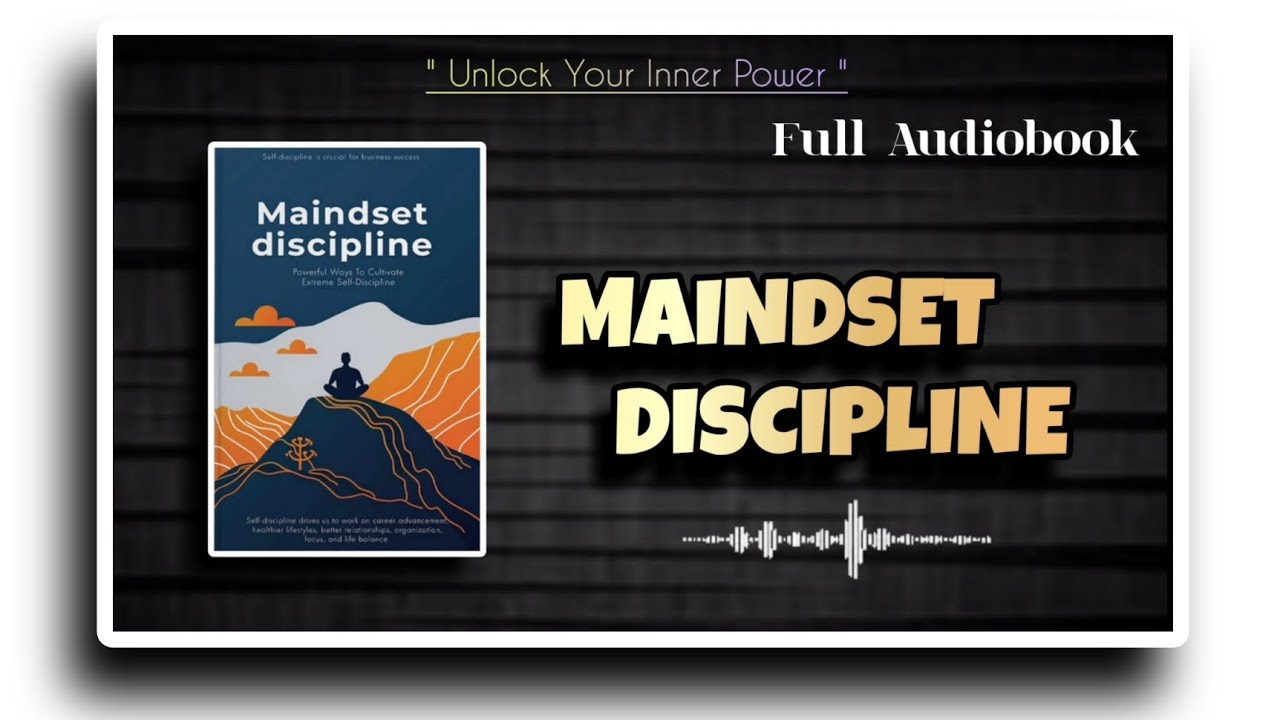
Welcome to an enlightening Journey this educational content offers challenging insights approach with an open mind the link for the study guide can be found in the description subscribe to join the exploration let's dive in without wasting time confidence Unleashed unlocking your inner power and achieving success chapter 1 introduction we want this book to be Used as a tool a tool that will help the reader make a difference in their own life and the lives of those who they share this information with we ask only one thing this book must be studied the skills must be
practiced in real life situations this is the key to building lasting confidence like a muscle your mind adapts to the demands placed upon it if the skills outlined in this book are practiced consistently an attitude change will occur this is a guarantee a Change in Attitude will lead to a positive change in life so we invite you to take the first step read and learn the skills it's now up to you to make a difference this book reveals the hidden potential of people who have never before questioned the importance of confidence many know they are
not as confident as they should be often people reach barriers in life that seem impossible to overcome they understand that confidence will help them achieve Their goals but they do not know how to acquire confidence in a a practical way this book allows the reader to become an active decision maker and take responsibility for who they are by learning the practical skills detailed in this book one can push their life in a New Direction a more positive direction a direction that will lead them to the unshakable conviction that success in any form is possible the
importance of confidence in Life confidence is an integral part of our Lives it is a necessary ele m in order to overcome challenging moments that will be faced when we are confident we are most motivated in pursuing our goals we have the belief that we are capable of facing a challenge because our abilities will help us control the outcome even when things do not go as planned a confident person will keep a positive attitude believing that in the long run everything will be okay a Confident person is willing to step outside his slasher comfort zone
to try new things he/ she is not afraid of failure because it is seen as a step to success unconfident individuals are unable to face challenges because they are anxious about failing they do not have control over their emotions and they are skeptical about whether a challenging situation will have a positive outcome often unconfident people view the glass As half empty this means that they do not have positive beliefs that things will go well in the future confidence is the view VI of the glass being half full and believing that later on it will be
completely full the importance of self-confidence in life cannot be stressed enough it is having belief in our abilities it is about knowing ourselves and what we are worth it's about being able to pick ourselves up in the face of adversity and continuing on A path that we have chosen for ourselves confidence is the key to many things it is the key to success to being happy and appreciating who we are confidence has been the topic of many studies in recent years and it is now said to have come from a Latin word theer which means
to trust confidence is a state of mind in it we trust in ourselves and our abilities regardless of the situation understanding the power of Self assurance self assurance is a powerful tool that can influence the choices you make in your life on a day-to-day basis according according to Ralph Waldo Emerson self-trust is the first secret of success exploring the depth of this quote it holds truth in many aspects of Life having confidence and self-belief will often guarantee success when those attributes are applied every person holds a mental image of themselves good or bad that is
Reinforced by the actions they take even if a person possesses other positive attributes such as clear communication persistent or knowledge these attributes will not be put to use unless the person has confidence in their abilities this is due to the fact that confidence in one area can be the determining factor of whether an individual will take the first step in a task or challenge if that individual has little confidence in their abilities it Is likely that they will not follow through with an objective because they feel that the result will be unfavorable he or she
will be hesitant and indecisive because they do not believe in themselves to take the right course of action should that individual take on the task they may find themselves giving up easier than if they were confident in their abilities due to a belief that the task is too difficult in essence low confidence equals low Success this is also mirrored by the fact that a person with high confidence will be more willing to undertake a more difficult task this can clearly be identified with research conducted by Rosabeth mosaner identifi that individuals with confidence have more chance
of success in the workplace and those that are lacking in confidence will hinder their careers in essence they may disadvantage themselves if a lack of confidence Prevents them from taking the first step into a new course of action confidence is also the driving force behind taking initiative and being a leader it has been identified that those who are in leadership roles are there because they had the confidence to take charge and not the other attributes commonly associated with leaders confidence is also an admirable trait and more often than not a confident person is highly respected
by Others chapter 2 overcoming self-doubt confidence opens new chances and makes new potential outcomes feasible it enables you to acknowledge difficulties and Conquer snags self- question be that as it may can represent a genuine deterrent to your future possibility of achievement this peaceful adversary can keep you from going after your objectives stepping up to the plate and assuming responsibility for your Circumstance at its most pessimistic estimate it can transform you into a pessimist in yourself feeling hopeless and useless when you run over an extreme errand you will be effectively disheartened and more disposed to surrender
scarcely consider get befuddled and lose enthusiasm for what you are doing with a constructive mentality and motivation strategy you can transform those negative stamping into a Triumph confidence Unleashed will assist you with perceiving self- question and teach you approaches to conquer it the initial phase in changing negative selft talk is to perceive it at the point when you become acquainted with the occasions where you lose heart and educate yourself regarding something that may ruin your Prosperity record the considerations or circumstances that lead to them at the point when when you have done this you may
begin to see Examples in specific circumstances you are bound to end up discouraged and slip into negative reasoning presently utilize the following rule as a chance to break these negative musings designs identifying and challenging negative selft talk with the L tysis Pacific Institute individuals seek to work on negative selft talk through learned optimism and visualization according to Ty this selft Talk is often termed as a parade of failures through learned optimism individuals replace pessimistic Thoughts with more optimistic ones Ty's visualization technique involves two steps firstly individuals are encouraged to recognize their negative selft talk during
certain times of the day or during well-defined situations next this triggers a time to identify and foresee what category of more logical reasonable approach to this Situation however this determination requires consistent practice coaches and mentors assist individuals to improve their confidence and conly generate a personalized development plan to battle negative self-talk this development plan should be focused on a particular procedure to approach situations analysis of thoughts and feelings during that situation adapting goals for a more positive outcome and lastly assessing the results From the situation for positive or negative results and conse consequences building a
positive mindset for the sake of building self-confidence a positive attitude means approaching life's challenges with a positive outlook it means being optimistic and resilient when encountering failure optimism has been proven to be a healthier attitude than pessimism the studies revealed that pessimistic people are more likely to Suffer from depression other mental health issues and physical health issues than optimistic people they also have lower immunity and more difficulty overcoming life's challenges this is because pessimists tend to believe that bad situations will last a long time that they are to blame and that the situation affects everything
optimists on the other hand believe that defeat is a temporary setback or a challenge that its causes Are confined to this one case this is exactly the mindset we want to have when building self-confidence optimists are also more likely to succeed at work in sport and have better physical and mental health this is due to the fact that a positive attitude leads to a can do mindset when we believe in ourselves and the successful outcome of our tasks we persevere and increase effort to make sure we do succeed success then Reinforces the positive attitude and
the cycle continues this is a high self-efficacy cycle which is highly applicable to the building of self-confidence while building a positive mindset may seem like a rather generic Topic in the context of this paper this stage of building self-confidence is crucial many people talk about just being positive or on the other end of the scale how it is impossible to be positive in this day And age the truth is everyone has their opinion on what a positive attitude means to them embracing your strengths and abilities we often find it easier to recognize the ability of
others and more difficult to recognize or accept our own partly this is because assuming an attitude of Pride or even just self-acceptance can be wrongly interpreted as arrogance or as putting yourself above others consequently we have the tendency to focus on the Negative in ourselves to downplay our strengths and skills and to maintain an almost obsessive mental list of our weaknesses and faults this self-critical mindset can have damaging effects on our confidence our ability to pursue the things we want and our willingness to take on new Ventures to genuinely embrace our abilities we need to
take a balanced look at our strengths and weaknesses and how they shape our Self-concept and then take active steps to reframe our attitudes and beliefs to better honor the truth of our skills and potential developing a growth mindset once I heard a young woman plagued with self-doubt venting her frustrations over her views on her own intelligence she proclaimed she would never be smart enough with limitations of abilities preventing her from Gaining a good education witnessing the girl I came to Realize the significance of our own beliefs in dictating our path to success those with a
fixed mindset much like the girl believe their abilities to be static and so have no incentive to further develop them this Outlook can be detrimental especially in the influence it has on educating the children of today what occurs is teachers and parents focusing on genius rather than hard work and Improvement they are crowning their Children with talented fixed mindsets and while this is a great confidence booster at first the child becomes paradoxically geared them away from taking on challenges to maintain the label of smart they may give up easily believing an effort to improve implies
a lack of true Talent the girl once told me it only appeared an injustice whenever something did not come easily to her as if the necessity of effort was a sign of Incompetence often it is those with greater intelligence who give it up as the fruits of a fixed mindset bring little to those already in possession of the traits being praised step by step they will become the ones believing they have something to lose a great tragedy occurs as strong potential goes to waste a lost to the individuals of society who could greatly benefit from
what they have to offer chapter 3 cultivating Resilience and so duek has shown that teaching people to have a growth mindset will increase resilience and goal achievement this is generally done through teaching about the malleability of the brain and its ability to form new connections through practice and experience this is effective because it changes the way we view learning and effort instead of only being a requirement for those who are not smart it is a means to becoming smarter an Important consideration to be addressed later so how does one go about developing a growth mindset
D's theory of self theories is a good place to start according to D motivation and resilience can be affected by what is called our self system this is the framework through which we perceive the world and our place in it this system is made up of self-conceptions of what one is like and what one is capable of these can be divided into Beliefs about one's fixed traits a reflection of the fixed mindset and beliefs about one's changeable qualities a reflection of the growth mindset this will in turn lead to a specific goal and an idea
of what failure means about one's abilities all of which will have an effect on one's motivation or resilience in contrast children who are praise for their effort and you worked really hard on that show higher levels Of resilience and tend to persevere in the face of obstacles so that they can continue to put forth effort this demonstrates a growth mindset the belief that one's abilities are malleable and can be developed through dedication and hard work as discussed earlier this does not mean that an individual with a fixed mindset cannot become more resilient by developing a
growth mindset beliefs can be changed this simply refers to a general Tendency in research done by Carol d a leading researcher in the field of Developmental Psychology it was found that children who are praised for their intelligence a you are so smart show lower levels of resilience and tend to give up more easily in the face of obstacles this is likely due to the fact that they feel that the obstacle at hand is threatening their label as smart and that is something that is defined by innate Talent not something that can be Changed this demonstrates
a fixed mindset the belief that one's qualities are set in stone and cannot be changed resilient individuals generally tend to have what is commonly referred to as a growth mindset the belief that change is possible and that one can improve themselves through hard work and dedication this belief is a critical aspect of resilience if one does not believe that Improvement is possible then there is no Reason to put forth effort and one will be less resilient in the face of obstacles developing a growth mindset learning from setbacks and failures when facing adversity low-confidence people tend
to overreact and underestimate their ability to overcome problems it seems that they are unable to identify the problems and they interpret their negative beliefs as facts either the setbacks are in skills and competences or interpersonal Relationships they expect to fail and interpret failure as a lack of ability on the other hand high confidence people see the adversity as challenges that they could overcome they keep a clear head and have a strong belief that they are able to identify and Implement strategies to solve the problems high confidence people perceive difficult events in a way that they
have something to gain and are able to Improve both themselves and the situation confidence people who possess self-efficacy traits tend to recover faster they will take on harder tasks have a strong interest show strong commitment and put in vast effort to be able to handle them before they consider themselves failed self-efficacy is crucial as it serves as insurance when dealing with failure and setbacks confidence traits also can act as a buffer to protect them from Discouragement and quitting too early when facing difficulties confidence people tend to take failed events as negative feedack feedback to build
up learning experience and acquire knowledge to master the desired skills and improve themselves they are more willing to take another shot to solve the problems a confident person's ability to handle failures and setbacks is attributed to their optimistic thinking about the future Positive interpretation and adaptive control of self-regulation confidence people are more at ease in doing self-enhancing attribution to maintain and sustain confidence in future tasks but not too satisfied and taking too much self-protective attribute that might lead to negligence and laziness confidence attributions on skills and success are protected from learned helplessness and prevent them
From quitting on later difficulties building emotional resilience you must first understand the philosophy of positive thinking this is not about wearing Rose tinted glasses or pretending everything is fine when it isn't positive thinking is taking a balanced view of the situations you encounter defense mechanisms are automatic responses to difficult situations and are often a way avoiding reality the issue with such defensive Mechanisms is that they are counterproductive in the long run for example in the short term it may be easier to avoid a difficult situation so you feel better temporarily however the issue you are
avoiding isn't going to go away and will make it even harder when you are eventually forced to confront it negative thoughts and emotions are often difficult to avoid on such occasions but will ultimately destroy your confidence With a balanced thought pattern you will acknowledge your negative thoughts but challenge their validity identify and analyze your thoughts in difficult situations ask yourself what you were thinking and feeling at the time and look at what you can learn from the situation what could you do differently next time did you jump to a conclusion or let your emotions get
the best of you with greater self-awareness you will be Able to change the way you react to difficult situations and take them in your stride as opposed to being overwhelmed or pretending they never happened this is an invaluable life skill and very important in developing resilience a resilient individual will be able to keep a level ahead in high pressure or adverse situations whereas someone without resilience will be likely to come undone this can often determine whether or not someone will be Successful in a given Pursuit chapter 4 setting and achieving goals Focus goals direct our
attention to the task in hand well-defined goals help us stay focused and allow us to stay on track in the pursuit of that goal setting goals is an important aspect of life many people feel lost and down because they do not have clear goals in Psychology there is a Viewpoint that half of success lies in setting the next goal and taking the first step this Tells us that a person can only take more steps forward if they have a clear goal Direction otherwise we may Wander from one task to another without achieving anything this can
leave us feeling frustrated at not achieving anything worthwhile this in turn can affect our self-confidence if we don't achieve our goals it's usually because we have failed to take action or there may have been external factors that have Prevented the goal from being attained by having a well-defined goal we will know exactly what the desired outcome will be this in turn will help us identify what it is we need to do to bring about the desired result defining your vision and values this section talks about the importance of having vision and values in life and
the positive impact they have on our self-confidence to have a vision is to have a clear idea of something that we Want to achieve in the future future a person with a Clear Vision will know where he wants to go and what the best path is to get there this person is often viewed as a motivated and self-confident person when we are truly in touch with our values we put a lot of our energy into activities that are in line with our values this gives life a sense of authenticity and satisfaction when we are not
in touch with our values it can be very difficult To have confidence and motivation often you're taking action to do things but are not achieving anything this is a source of frustration and will harm your self-confidence an example of this is a person who is very passionate about the environment but works in a job that involves doing things that cause harm to the environment in order to earn a lot of money this person will feel a sense of conflict and lack of confidence in Their actions creating Tes error to goals many people are put off
goal setting because the goal is something that they do not want to do however the goal should always be something that is desirable and something that you are willing to work for this is why it is important to first think about what your long-term goals are and what you want to achieve in the end if the goal does not contribute towards these then it is Probably not worth pursuing a smart goal is defined as one that is specific measurable attainable realistic and time bound with these CR IIA in mind you can ensure that the goals
you set are goals that you can accomplish furthermore you will know when you are making progress and when you have reached your goal in turn this will enable you to stay motivated and Achieve what you have set out to do setting goals is a common practice among people who hope to Improve upon some aspect of their life in the near future however it is not uncommon for people to give up on their goals or fail to accomplish them this usually occurs because the goal was too vague unrealistic or the person was not ready SL willing
to accomplish it at that time goal setting is a skill that can be learned and once perfected it can enable you to accomplish many things throughout your life to Be an Effective goal Setter It is essential for you to know how to make semar goals taking action and staying motivated positive self-talk and negative thought stopping are methods that can be used to avoid such barriers as procrastination and excuses methods of doing this and focusing on effective problem solving can be undertaken through books for assertiveness and attending assertiveness and time management Courses find a suitable support
system for your objectives this may involve working closely with people with similar goals or informing and gaining support from friends family or work colleagues finally success and failure experiences can maintain or undermine behavior and can affect the way in which goals are approached next time the difference between the two can often be the way in which a goal or random task is appraised it is therefore important To maintain the belief that you can successfully carry out the task even if this means coming at it from a different angle or altering a longer term goal it
is important to have a plan and the ratios of time spent for taking action to the amount of talk should be 50% this is particularly important as too low a proportion will lead to stagnation while any higher is often a sign of avoidance behavior if you feel uncomfortable that your goals and Activities that need to be done are not achievable this is an indication that you may be anticipating failure if these goals are broken down into manageable tasks and activities you will be able to build confidence through completing them chapter 5 enhancing self-image and self-worth
practice iing self-compassion and acceptance to improve self-worth it is First Essential to become more compassionate towards oneself and understanding of human Imperfections research by nef 2005 has shown that individuals who are higher in self-compassion have better emotional well-being are better able to achieve their goals and avoid the extremes of narcissism and self-pity she has defined self-compassion as having three main components self self-kindness common humanity and mindfulness the first involves being warm and understanding towards oneself When feeling pain or failure rather than ignoring one's feelings or being critical the second is recognizing that suffering and feelings
of personal inadequacy are something that is shared with all human beings something that is part of the human condition mindfulness is having a balanced awareness of one's negative and positive thoughts and feelings without being over over identified with them it is only with self-compassion that individuals will Give themselves the freedom to fail and make mistakes because they know that they will not lose the acceptance and esteem of others it is important to recognize the difference between self-compassion and self-esteem the former does not depend on a self-evaluation it is a way of relating to oneself regardless
of what is happening in your life whereas the latter is often contingent on success And social approval nef 2005 as a self-compassionate attitude paves the way to higher self-worth it is important to eliminate all self-criticism to do this there are a few simple techniques the first is to show understanding to the inner self-critic recognizing that it is a learned response stemming from past experiences where self-criticism was used as a motivational tool by understanding this individuals can begin To distance themselves from their self-critical thoughts and see them as a means to avoid taking personal responsibility for
failure or an ineffectual strategy for self-improvement the next step is to actively question the veracity of the self-critical thoughts what is the evidence that this thought is true would you say it to a good friend if they were in a similar situation this often leads to the Realization that the thoughts are irrational and unjust the final step is to challenge and replace the self-critical Thoughts with a more forgiving and understanding attitude with effort and repetition this process will lead to a change in internal dialogue practicing self-compassion and acceptance in investigating these questions we began by
exploring the role of self-criticism in our lives Mindfulness and the inner critic and now branches into a more focused way of enhancing our self-image we have been surprised in this research about self-compassion and mind to find that many participants initially feel averse to the idea of not being hard on themselves they feel that in order to make any significant change they must be uncompromising taskmasters issuing Stern Self-re reprimands and pushing themselves on through self-doubt and stress to the point of exhaustion the idea of the critic being a harsh but helpful Taskmaster is a common theme
such an ingrained attitude can be a barrier to making a change most of us have EXP experience the futility of trying to motivate ourselves through self-castigation we all know how much more pleasant it is to learn or do something difficult when We are doing it because we want to not because we have to how much more full of life we feel when our Spirits are high and we are free to Bumble about in experimentation without fear of reproach over the course of history the great empathic Traditions have taught the art of self-compassion to their followers
what a challenging Journey Journey it is to learn to be on our own side to care for ourselves in the same way we care for others but it is Revolutionary once we begin to change our underlying attitude toward ourselves the entire landscape of our experience begins to shift imagine what it would be like to live a life that wasn't underpinned by the subtle torment of needing to be different if we like those compassionate others we rever or to Simply treasure ourselves imperfections and all what would it be like to be more at ease with ourselves
to take things in our Stride to feel more alive and unburdened building the healthy self-image another vital step in developing a better self-image is to replace self-deprecating inner dialogue with affirmations that support and encourage your efforts to change whenever an unflattering image of yourself enters your mind or you catch yourself engaging in negative selft talk stop immediately if you were your your own Worst critic then it is time for a change self-improvement is not meant to be an exercise in self- condemnation so go easy on yourself although it may seem difficult at first with persistence
you will be able to dramatically alter the way you think and feel about yourself now for each of the negative thoughts and images that you wish to discard create a positive affirmation that can be used to replace them for example if you have an image of yourself As a poor public public speaker then your affirmation might be I communicate my ideas with confidence and Clarity write these affirmations down and recite them daily flood your mind with their messages and make them a part of your new self-image a self-image based on positive qualities and success every
night as you lay in bed close your eyes and picture yourself feeling vibrant and energetic see yourself performing at Your best successfully mastering those difficult tasks and feeling proud of your accomplishments as you envision these events also see your body being filled with vitality and strength picture your immune system becoming fortified easily repelling illnesses and leaving you healthy and happy the more vividly you can imagine these scenes the stronger the impact will be on your life with repeated practice you will begin acting In a manner consistent with the images you create this technique is not
fiction and it is certainly not wishful thinking it is just one example of the power inherent in the images you hold of yourself the value of mental imagery cannot be overstated it is a crucial component in building a healthy self-image use the power of mental imagery to build a healthy self-image what you picture in your mind is what you will strive to become if you Constantly picture yourself failing then this is exactly what will occur instead use the following technique to supply yourself with the necessary motivation to achieve success surrounding yourself with positive influences since
your immediate social environment plays a huge role in influencing your outlook mood and psychological frame it is essential to surround yourself with people who are Positive and supportive positive mental attitudes are catching in the same way that rampid negativity can be a destructive force positivity can be a healing and Curative one by associating with positive people you are more likely to view Life as a series of promising opportunities and you are more likely to feel capable of taking on the challenge when you surround yourself with encouraging friends you will have little room for Self-doubt and
their optimism will be reflected in your own life steer clear of overly critical individuals who make you feel inadequate you should also avoid taking on the problems of others or getting involved with those who drain your resources while it is Noble to help people who are in need if you are in no position to help them their problems will only become a burden to you choose your Company wisely and don't be afraid to end toxic relationships your well-being is at stake another influential factor in self-image is the media chapter 6 effective communication and assertiveness self-development
and the inner self- passive Behavior results from feeling feelings of inadequacy and self-worth and is often based on the beliefs that you have fewer rights than Others and that you are not equal to others the aim of assertive behavior is to express your rights feelings beliefs and needs in accordance with your values it is about being open and honest while at the same time considering the rights needs and beliefs of others people with healthy self-esteem and self-worth feel that they are equal to others and not better than others it is easy to be assertive when
you believe that you are worth listening to the principles of Effective communication and assertiveness are important tools for building confidence and self-esteem people are like mirrors if you believe that they are unlikable and disagree with your opinions you will approach them in a defensive and hostile manner you will then receive confirming nonverbal and verbal messages and the negative cycle will have begun based on false beliefs you will need to be open-minded to the possibility that your Beliefs about the other person are not true they are opinions and not necessarily facts the people who believe that
they are communicating dislike disapproval or disrespect are usually the same people who feel anxious insecure or inadequate and are seeking to defend themselves it is these very same people who have difficulty in setting and maintaining healthy boundaries with others they are afraid of alienating the other person and Making the situation worse to be assertive and to set boundaries means taking care of yourself developing active listening skills when we talk about listening we usually mean the more traditional form of listening I when somebody is talking to us we pay attention active listening however is a way
of listening and responding to another person that improves Mutual understanding you might think that this would be quite easy to Do however it's surprising how many of us are not very good at it we all have a natural desire to express ourselves and at times this can hinder our ability to truly be present with another person and understand what they are trying to say this is why developing active listening skills is particularly important for effective communication to be an active listener believe that the other person has a valid point of view even if you disagree
With the person do not use the time when they are speaking to form your argument against them instead try try to see things from their perspective from this you will often find that there isn't a correct and incorrect way of seeing things in most situations expressing yourself confidently and clearly try not to over apologize for things this undermines your self-confidence if the apology is necessary apologize once genuinely and Move on remember that it takes practice and patience to form communicational habits so having an awareness of what you need to to change is a positive first
step learn to express negative feelings constructively eye statements are useful here too when you're hurt or upset it's crucial to not attack the other person or judge and label their personality or character Express hurt or anger directly stating the feeling egg I feel angry and The reason because behind the feeling then say what you'd like by using a positive request egg it would really help me if you would this approach is often referred to as an assertive sandwich assertively expressing your feelings stating your needs then reaffirming your feelings age I get really frustrated when you
don't tell me you're going to be late it's important to me to be on time and I expect the same consideration from you Please call me if you know you'll be more than 10 minutes late I'll feel a lot better about this if we can come up with a solution use ey statements and take responsibility for your feelings and thoughts for example say I think or I feel that instead of attributing your thoughts or feelings to someone else taking responsibility for your ideas and opinions will help you feel more confident about expressing them setting Boundaries
and saying no when considering how to say no think of the most respectful and considerate way to communicate the message keep keep it simple and direct generate a list of possible ways you can say no and brainstorm the possible reactions from the other person and how you will respond if the other person does not accept your no remember it is their discomfort and you do not need to make it your own stick to your decision it Takes practice to learn to say no and the key is perseverance remember that it is okay to change your
mind and your boundaries Life Changes and we are constantly learning and growing saying no does not have to damage relationships respecting another person's no is an essential part of any healthy relationship we learn to take no as the answer when we become less reactive to it a change in reaction is a Result of a change in perception and a change in belief the more we work on increasing our self-esteem and internal sense of control the easier and less anxiety provoking it becomes to maintain our boundaries the first step in setting boundaries is knowing what our
limits are and being in touch with our feelings and using this information to make the best choices for ourselves it's important to know that It's okay to prioritize our well-being it can be helpful to prepare saying no beforehand to give yourself time to build courage and avoid falling back on a yes it's often easier to say no effectively in writing than in person email or a letter may be a good approach with the written word you are less likely to be put on the spot and can take your time to communicate a clear message this
can also be a useful approach for assertively saying no in Situations where a person asking has put you in a position where you feel you have to say yes a high pressure sales situations setting boundaries and saying no are essential if we are to lead healthy balanced lives often we find it difficult to say no we feel it shows lack of generosity Compassion or commitment to the relationship we forget that no is a complete sentence the inability to say no is closely linked to self-esteem and often fear of rejection For many the thought of saying
no a fear of displeasing the other person fear of conflict feelings of guilt and inadequacy and a fear of the relationship ending the more difficulty we have in saying no the more likely we are to be passive and agree to things we do not want to do when we are not clear on our own boundaries we can become angry feel used and experience a lack of control in our lives this can lead to a significant buildup of resentment which In the long term can damage our Relationships by learning to say no in a way that
is respectful and assertive we can build self-esteem and reduce feelings of anxiety and depression chapter 7 managing fear and anxiety what gives us power over fear and anxiety is knowledge by understanding the psychological mechanisms behind fear and learning to identify and challenge anxious thoughts we can reduce the Impact that fear has on our lives it is impossible to eliminate fear and it would not be beneficial to do so fear can be a helpful warning signal and can spur us into taking necessary action what we need to do is change the way we respond to fear
so that it does not prevent us from taking the next step we need to draw our habitual coping behaviors for anxiety and instead learn healthier and more effective ways of coping the following sections provide Information and techniques for achieving this goal fear and anxiety have a significant impact on our confidence and personal power they are often the reasons behind difficult or unpleasant decisions and they can prevent us from taking action altogether most of us deal with fear by grinning and bearing it pretending that we are not experiencing fear and soldiering on unfortunately attempts to stifle
or ignore fear are usually Unsuccessful it has a way of popping up at the worst of times fear can sometimes result in anxiety a more General and pervasive sense of unease anxiety can be paralyzing and influential and can seriously restrict our personal power understanding that the nature of fear the small self is controlled by fear and cannot truly experience closeness the real self in touch with the Beyond is fearless it knows the Power of love and understanding forgus Sater our goal in understanding fear is to transform the frightening aspects into positive energy in our world
so much of the focus with fear is about making it go away people will do almost anything to get rid of fear the problem with getting rid of fear is that it is a negative energy if we are successful in creating a life free from fear we are actually deprived to see this as an example someone who is afraid of Relationships isolates the Solitude feels safe since there is minimum threat of a relationship which will cause fear yet this person is deprived of a relationship that is possibly very fulfilling and loving here we can see
that aiming to get rid of fear actually caused more more deprivation this person will not feel truly full of life in the Solitude because he has deprived himself of love and relationships to escape from fear we Believe that fear should not be aimed to be destroyed instead it's an energy that needs to be transformed into a higher energy when meeting fear many people say they want to run away or make it stop they can even feel anger at themselves or others around them all they are managing to do do is create more fear in this
process we need to focus on our fear and inner limitations as a catalyst for growth and understanding we must work towards a change of attitude and See that facing fear is the best decision towards growth in ourselves and our relationships with others techniques for overcoming Anxiety techniques for overcoming Anxiety in the previous sections we discussed the relationships of fear pressure and anxiety with Peak Performance and highlighted the negative effects of anxiety in this section we will discuss techniques for managing and reducing anxiety both in the short and long term First a distinction must be made
between cognitive anxiety and somatic anxiety cognitive anxiety is concerned with worries and concerns with thoughts of fear and what can go wrong somatic anxiety is the level of physical arousal how nervous we feel usually the higher the cognitive anxiety the higher the sematic anxiety this is also best described by the U doson law which states that increased arousal anxiety being a high form of arousal will Improve performance up to an optimal point and then only cause a decline in performance and that this decline in performance of difficult tasks is more likely to occur at higher
levels of anxiety thus following this Theory the best way to deal with anxiety is to reduce the the arousal back down to the optimal level this is best achieved by countering the cognitive anxiety with relaxation there are many techniques to reduce cognitive anxiety the most Effective being rational or positive thought rational thought is trying to think in a more positive balanced way avoiding absolute thinking and always thinking in terms of success this could take the form of logical thought analysis analysis of probability and a matching coping statement an example of this could be a tennis
player missing a near and in The crucial point of a match who thinks I'm a bad player and becomes anxious this can be rationalized by Questioning whether it is realistic or true or whether he's making a big deal out of a small event likely to have little effect on his overall performance or outcome of the match the matching coping statement should be employed at such a time to quickly replace the negative thought with something more positive and task focused such as I'm a good player I can win this point positive thought is a simpler technique
involving creating and constantly Reinforcing a positive image of successful performance in the mind and choosing a specific word or phrase to set off a pre-planned performance routine and Trigger these thoughts chapter 8 building strong relationships trust respect and support are the Bedrock of strong relationships in both personal and in professional contexts relationships are an important necessary factor of life and love without them life would be empty lonely And dark attachment is the very essence of survival and the very reason why everyone craves a deep connection with at least one person practicing openness and honesty accepting
all emotions whether they are negative or positive and being considerate of one another are essential elements of achieving the closeness and deep understanding that build up a solid strong relationship one misconception about communication is that it is a matter of Simply speaking and voicing your thoughts to another person it actually involves three parts speaking active listening and response communication is a two-way Stree so as important to be able to exchange roles as the speaker and The Listener often times people only think to speak and forget the importance of hearing hearing and understanding what others are
saying it is very easy to become absorbed in other thoughts or to Become anxious about voicing your own opinion While others are speaking this inhibits active listening and it can lead to lack of understanding and miscommunication between parties similarly people will often develop a response in the midst of another speaking instead of waiting until they have finished this can result in rash responses and added conflict effective communication requires patience and Practice but the benefits of mastering it are a sure way to enrich any type of relationship another invaluable skill is being able to let go
of pride pride is the root of competition and segregation among people while it is essential to take pride in yourself and in your work there are instances where it is better to yield admit fault and avoid conflict the resolution of a disagreement is much less important than the manner in in which it was Resolved conflicts resolved through loud emotionally charged outbursts generally leave both parties feeling drained and upset the right to host an eraser in a backspace can no longer be denied there will be times when mistakes are made and offenses are taken recognizing and
admitting fault followed by a discussion involving active listening and composed responses will lead to a clear understanding and a resolution that will leave both parties s Satisfied cultivating trust and authenticity trust underpins any strong relationship since you attract people whose psychological issues match your own as each party's feelings are triggered it is likely that both parties will revert to their inner child's wounded self this is when issues arise since much of this wounded self is motivated by fear and is capable of irrational childish behavior if both parties are able to Consciously recog recognize and understand
their own and their partner's behavior in relation to their underlying psychological programming they will be in a much better position to foster a deeply fulfilling and successful relationship this will require effort from both parties and since it is unlikely that two people will have done the same or any inner child work it is not unreasonable for you to attempt to educate your partner to do so be wary of Criticizing your partner however as this is likely to cause the wounded self to manifest and in doing so damage the trust and security within the relationship an
effective way of educating your partner is to lead by example showing how your personal work has improved the way you react and respond to feelings triggered in your adult relationships explain how what you are learning is making you less reactive and Is improving your ability to solve problems in a constructive way by doing so you should find that your partner becomes curious and will in their own time seek to do some inner child work for themselves if they do not do so it is important not to force them further as this is likely to manifest
the rebellious wounded self instead accept them for where they are and focus on maintaining your own work the inner child work series healing your life has An excellent demonstration on marriage counseling between a couple and would be of great value to anyone looking to improve a relationship effective conflict resolution it's important to address the situation when a conflict arises do not ignore the issue letting it Fester or escalate until it blows up by that time it can become much harder to resolve Express why you feel the way you do without Blaming others or making value
judgments when expressing your concerns it is best to avoid making the other person feel like they are being attacked stick to the issue at hand without bringing up old arguments and do not start talking about other issues this will only confuse things and make it harder to resolve the original issue mistakes and misunderstandings are an inevitable and natural part of any relationship however how a conflict is Handled can either improve or damage the relationship by learning the skills of conflict resolution you can keep your personal and professional relationships strong and growing nurturing supportive connections our
ability to face the world with confidence is largely influenced by the quality of our nurturing experiences it is shaped by the extent to which we are seen and valued for who We are and the extent to which we receive positive regard these experiences will have determined our self- worth and what we feel we deserve from life it is likely that we are searching for something higher than what we received believing that our desire can be fulfilled nurturing supportive connections is about getting the support and encouragement that should have been given to us as children and
receiving Recognition for the person we are support and encouragement add fuel to our inner fire and belief in what is possible and give us the strength to step outside our comfort zones recognition feeds our hungry souls and provides us with external validation for the person we are striving to become all of these are essential for growth and change the first step in changing who and what is in your life and minimizing or eliminating unsupportive Relationships at some point it will be important to evaluate all of your relationships and to assess the value of keeping each
person in your life this may sound harsh but if you were to look at the amount of influence each person has on you seeing them as an investment in your time and energy are you getting a good return up until now it is possible that you have poured much more into some people than they into you or that their influence has been a negative One recognize that you deserve to have positive supportive relationships and being with people who enhance your life chapter n embracing failure and learning from mistakes there is no more Danning evidence of
the barriers to success that are created by negative self-talk than the effect of failure on self-confidence people who have a history of interpreting failures as evidence of their inadequacy respond with an immediate drop in confidence Because of their attribution style those who view failure as an opportunity to learn may be disappointed but don't experience a loss of confidence sure it's disappointing when you train for months and then run a poor race but if you see that as evidence that there are gaps in your knowledge about preparation the quality of your training or how to run
a particular type of race you won't lose confidence and May in fact increase your confidence Because now you know what to work on to get better when people learn to attribute their failures to something controllable and in a constructive way they won't feel they have to beat themselves up failure will actually cease to be failure for them and won't carry the emotional baggage that causes the lost and self-confidence such a learning process involves shifting one's perspective on the role of failure in fostering Success understanding the process of learning new skills and realizing that successful people
have failures too this is where it is useful to reflect on our high performance athletes and realize the approach they take to learning new skills within their sport they probably could perform to an acceptable level by sticking to their current skill level but they realize that learning more advanced skills will make them much more proficient in the long run learning any New skill involves a period of trying to master that skill and during this period the skill will be tried out in the context of Real Performance leading to an increase in the probability of failure
here but skilled people are those who have learned the skill that they failed at more times than others think of the implications of this with respect a failure and self-confidence if a failure causes a loss of confidence and subsequently an Avoidance of further attempts at the skill a person will never Master the skill and will most likely be in a worse off position than had they not attempted to learn it the skilled person attributes their failure to lack of experience with a new skill and realizes that it is a natural part of the learning process
so the person with an incremental view of ability will not be too harsh on themselves after a failure will see it as something that happens When you are trying to get better and they will not feel that their selfworth has changed they will be able to preserve their confidence and take a constructive approach to failure learning from the mistakes that led to the failure and using it to build their knowledge and skill set shifting your perspective on failure by understanding the positive side of failure you can begin to use the lessons it teaches to move
your life in the Direction of your deepest desires the change of perspective that allows for the positive stimulation of failure into your life can take place in four different areas the first is to recognize that failure is not personal you have failed at doing something but that does not mean that you are a failure separating your actions from yourself is the first step in taking failure and strive the second shift in perspective is to Stop seeing failure as a bad thing in our society it has been labeled with a big red X and in the
avoidance of it many people stop taking risks without risks there can be no great reward Ministries around the world are teaching that the Chinese symbol for crisis is also the symbol for opportunity this is exactly what failure is a Crossroads in life where you can continue to go on in the same direction or take the opportunity to make a change viewing Failure as an opportunity is a positive step towards success the Third change of perspective is to stop looking at failure as the opposite of success it isn't failure is a part of success you cannot
have success without failure and the only way to avoid it is to do nothing which in itself is the ultimate failure and last but not least in shifting your perspective Ive on failure start taking every failure as an opportunity to practice patience and to Practice perseverance when you can remain steadfast in your resolve and continue on in spite of apparent failure you can be sure that the desired result will eventually materialize failure is just a stepping stone on the way extracting lessons from mistakes another way to think of failure is as a learning experience failure
is nothing but feedback information telling us that our Previous decision was wrong so using this feedback we can improve our decision- making later on now if we think that all decisions are always right at the time they are made which is unrealistic then something going wrong will be taken as unpredictable uncontrollable forces working against us this will lead to a sense of failure an external locus of control and decreased self-esteem for example someone has a grand goal to get rich and they are Trying to achieve it through getting into the property market now with very
little experience he throws everything into Land Development not only does the Venture eat up his initial Capital outlay but it can also be very difficult to give up with little success over a long time he has failed to jeopardize his goal and left the industry now he should have gauged the method using a trial and error approach Taking smaller steps to achieve a greater probability of succcess and easier failure recovery to change our thoughts about failure we need to develop a more precise picture of it that means using failure as a grand strategy in itself
if you try to take on a Do or Die goal using one big step it is very easy for failure to kill the goal the more conservative the method is the higher the chance of success and the easier the Recovery from failure failure can can usually stop us from trying anything new sometimes it leads to something called learned helplessness at times failure turns into depression and anxiety using failure as fuel for Success one way to counteract the fear of failure is to alter your perception of what it means to be successful at something usually when
people evaluate their own worth they make a judgment About their Global qualities as a person success at a task is seen as a positive affirmation and failure as an indictment of their character what this does is cause people to engage in defensive strategies and self-handicapping behaviors in order to avoid the negative implications of failure on their self a better approach would be to define success and failure at a given task as simply the difference between the current outcome and the desired outcome Success and failure are events not Global judgments of your ability by defining them
in this way there is no reason why failure would lessen your sense of selfworth this is known as self-verification theory if you were someone who usually ties the outcome of a task to your selfworth this will take a lot of the pressure off and help dissipate the fear of failure most of us have heard the saying When life gives you lemons make lemonade in the same sense when life hands you failure use it as an opportunity to flourish one of the most successful entrepreneurs of the era Sir James Dyson is a firm believer in using
failure to be the Stepping Stones to success dson created 5,127 prototypes of his vacuum before finalizing the design when a reporter asked how does it feel to fail 5,127 times to which Dyson responded There are 5,127 steps to creating a best product look looking back on his own history Dyson says that he learned more from the 5,127 failures than the one success he was eventually able to make his failure a success this is the kind of attitude we must adopt to use failure as it's intended a necessary step to Success Through applying certain psychology principles
we can train our minds to no longer fear failure but embrace it as Just another part of the road to success chapter 10 self-care and well-being taking care of your health involves behavior and habit change Behavior change is best enacted through cognitive change inspiration and motivation to change one's Behavior usually come about as the result of a serious event heart attack diabetes or preventative education the preventative side is vastly underrated waiting until you cross the Line is not the best approach preventing health conditions will increase your quality of life now and in the future considering
non-smokers as an example common knowledge about the health risks associated with smoking usually prevent people from Ever starting this is behavior change through cognitive change preventative health education is the cognitive change to inspire non-smokers not to become smokers neglecting your health can be The first Corner that is cut when life gets busy fast food becomes a regular perhaps daily habit exercise gets replaced with there's just too much to do and social activities which involve alcohol intake increase all of these things negatively impact both your physical and mental health but it doesn't stop there the other
Prime excuse for neglecting health is I'm too busy SL tired to cook healthy food SL exercise after a long day at Work this likely doesn't sound unfamiliar at all and therein lies the downward spiral let's face it we live in a hectic World your inner power and confidence will certainly make you more effective and productive in all you do and this will often lead to being tasked with more responsibilities at work home or in your social life the fact that you can get more done with less effort really is a double-edged sword ask a busy
person What their most precious resource is and most will tell you it's time priority izing physical and mental health keeping in mind the consumerist image of success and power it is very easy to neglect one's physical and mental health in pursuit of one's Ambitions confidence Unleashed unlocking your inner power and achieving success encourages readers to take special care of their health as it is the very Foundation upon which their confidence And personal power is built the issue of prioritizing health comes down to an understanding of the Imp lications and realizing the effects of one's physical
and mental well-being many people don't even consider what health really is they simply think about it in absence of illness to do this is to ignore the importance of Health in a positive lifestyle good health is a state of complete physical mental and social Well-being rather than just the absence of disease or illness is a positive resource and an approach to Everyday Life a clear understanding of Health can provide an individual with the energy and drive to improve one's Quality of Life by understanding that ultimately everything one does is to improve their quality of life
they can understand the importance of Health in doing so energy stamina and a strong base of homeostasis both physically and mentally are the Tools to navigate the world and make positive changes improved quality of life often implies growth change and prosperity and taking this to the heart of confidence and power readers must understand the importance of Health in getting them to where they wish to be finally the effects of poor health on one's quality of life can be a deterrent if not a loss of Hope and ambition realizing that one's confidence and power are vehicles
To a better life they must also realize that without a strong vehicle they will be unable to make the journey this should Hammer home the importance of Health to any ambitious individual practicing mindfulness and Stress Management in the course of much buddhist-based mindfulness meditation the following principles are used to help assist you in cultivating positive changes within yourself practicing right mindfulness while staying focused on Your meditation practice staying focused on being aware of all of the actions that you are doing whether you are sitting driving walking or eating all of your actions can be observed
notice how you carry yourself when performing different activities when you meditate on any one of these subjects simply reflect on only the phrases themselves allowing them to resonate and form an understanding in your mind over time we may cultivate increased understanding of These Concepts allowing us to open our hearts to new outlooks and perspectives which is an excellent Aid in self motivation and self-change this principle is essential for mindful practice imagine a mental picture of our reality being right before us and we are trying to keep all things in Balance we are aware of the
world around us and aware of our own minds we constantly keep watch to make sure that we do not forget or distort Anything as it truly is this is a good way to increase our awareness throughout the day whether working sitting talking and even when socializing with other people finding balance and fulfillment in life according to Success magazine in order to discover what constitutes true happiness one must learn to balance work with other aspects of life to achieve a balanced life it may be necessary to increase time spent in areas outside of work this may
also mean addressing Personal issues such as health and implementing self-care strategies time management plays a key role in finding balance be sure to allocate specific time slots for different tasks to avoid avoid becoming fully consumed by work learn to prioritize and organize and make a commitment to leave work at a definite time high Achievers may find it difficult to disengage from work however those who are truly committed to Self-care will make the effort easier said than done taking work home and blurring lines between work and Leisure can have detrimental effects on mental and physical health
it is crucial to carve out time for relaxation in order to avoid chronic stress and adrenal fatigue we only have one life to live and one body to live it in so is essential to take care of both across these long-term Journeys step back and consider the things that truly bring Happiness often times when life is unbalanced areas such as health and family may get neglected make a commitment to change and become attuned to how time is being spent ask yourself if specific activities are moving closer to to or further away from the vision of
an ideal life maintaining a healthy lifestyle through incorporating self-care practices is imperative to sustaining confidence a crucial aspect of self-care And well-being is striving for balanced and fulfillment in life as an ambitious and motivated person it can be easy to slip into a routine dominated by work and neglect other aspects of life too much of any one thing can lead to fatigue and burnout it is important to pursue a balanced lifestyle and spread energy over a variety of areas including work Health fun relationships personal growth and relaxation