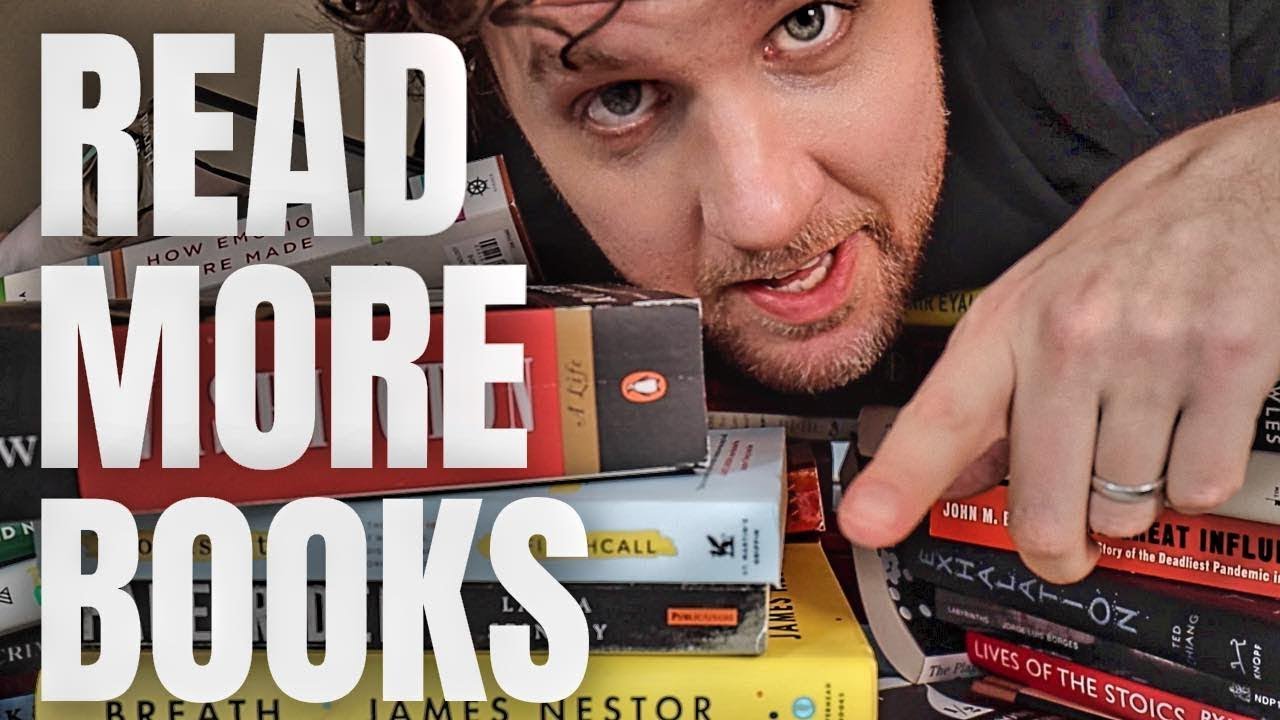
in this video I'm going to share 15 pieces of advice on reading that I wish someone had told me earlier so if you want to read more you want to read better and you want to grow your understanding of the world of yourself become smarter then this video is for you now before we dive in if you want my ultimate list of recommended books and resources you can hit the link in the description below and download that for free now tip number one is that you do not need to finish every book the number of
books completed is a vanity metric as you know more you leave more books unfinished Nar rant I used to power my way through every book even if I was bored or unimpressed with it I had this idea that I needed to finish everything I started and I wasted a lot of time doing this what I didn't understand when I started my reading journey is that there are actually many good reasons to not finish a book here three of them the first is that you got the point so in the case of modern best sellers which
quite often take an idea or a concept and repeat it chapter after chapter with subtle variation you can usually read the first couple of chapters and get the point like you get the idea and then further reading beyond that just leads to diminishing returns another reason is that you feel compelled to take action on what you've read so if one of your goals with reading is to Inspire and guide action then you should not ignore the inspiration to act and this especially applies to those of you who are reading self-help books or you know business
books the whole point of reading those books is to take an action that improves your situation or say your business and so if you feel inspired to act and then you keep reading instead of doing the action well you're kind of missing the point reading this kind of material without taking action is mental masturbation and the third reason is that the opportunity cost of reading average or below average books is extremely high there are so many great books in the world and there's so little time for you to read them and so every time you're
forcing yourself to finish a book that you don't like or that's just not that good as time that you could be spending reading something so much better a good frame of mind here or a good metric to have in mind is that you should focus on pages read not necessarily books finished I know a lot of people who don't finish that many books but they read far more than most other people they read a lot of pages but they don't finish everything they start the second tip is a bit of a push back on that
first one which is that you should finish some books even if it's a grind see some books are easy to read and finish you don't need to power through them because they take you on a ride that's hard to get off I'm talking about the Sci-Fi book that you just want to keep read even though it's 12:00 a.m. and you should be asleep or the non-fiction book that's giving you so many ideas and sparking creativity those books are easy to finish they're easy to read right other books are not like this at all sometimes it's
because they just suck other times it's not because they suck it's just that they're demanding but there's value and pushing your way through these hard books you're forced to apply greater Focus which leads to improved comprehension and retention you exercise discipline and commitment both traits that can transfer across other areas of your life you hone your ability to concentrate for extended periods of time so how do you decide which books to grind through and which books to abandon well that's up to you that's a personal thing but for me there are two characteristics of the
books that I want to finish and I really push myself to finish the first is that they're on a subject I'm deeply curious about I've learned by now that I can't for my way through something that I don't care about or I'm not curious about and I also believe that Curiosity should be the primary driver of what you read and so it would be stupid to not have this as a criteria the second is that the book is widely accepted to be worth reading for example books from the Western Cannon however you define it are
probably worth pushing through right because they're in the Canon for a reason continuing on the topic of hard books the third tip is is to dedicate intentional focused time to reading these hard books to use a good book as a sedative is a conspicuous waste to fall asleep or what is the same to let your mind wander during the hours you planned to devote to reading for profit that is primarily for understanding is clearly to defeat your own ends I remember a time where I took a difficult book and place it on my nightstand I
intended to read it that night before I went to sleep I lasted a few minutes before I gave up and started reading some fiction it was just too hot I did not have the mental energy to dive into it hard books are worth reading but they require active awake reading as Adler and voran expand on in how to read a book if your aim is to profit from it to grow somehow in mind or Spirit you have to keep awake that means reading as actively as possible it means making an effort eff and effort for
what you expect to be repaid if you want to tackle a tone if you want to tackle a hard book then you need to treat it seriously you need to treat it like work because it is a form of work tip number four is to read multiple books at once going back to the pages read over books finished principle an easy way to read more is to Simply keep multiple books on rotation if you only allow yourself to read one book at a time then you likely won't read much at all for example my current
big readed is a book called from dawn to decadence which is a 900 page history of the modern West now it's a great book and it's not particularly hard to read however I don't always feel like reading history certainly not in the morning before I start work and if it was the only book I allowed myself to read then I would spend less time reading because a lot of the times I just don't feel like reading that book but when you have multiple books going on at once then you can pick up whatever you feel
like at any given time and naturally you end up reading more you might be tired in bed and you pick up the fiction book that you're reading or you might have a few hours ahead of you on a Sunday afternoon and it's raining outside and you think I'll make a coffee and I'll push through this hard book that I've been trying to make progress on so read multiple books at once I wouldn't worry too much about the number of books you should have on rotation I've never really thought about that I think the best books
will draw you to them and so you don't need to try and like systemize that in any way shape or form unless you want to but I certainly don't all right next tip is to opt for older books over newer books time is the great filter and if a book has remained in print and relatively popular for decades then it's probably worth reading or at least it's not terrible this comes back to opportunity cost new books might be good but you don't know for sure because they haven't gone through the filter that we call time
and so you're taking more of a risk by purchasing them and reading them again you should quit average books as soon as you realize that they're average and you could be reading something better old books are pre-selected you can trust that they have a certain amount to offer you based on the fact that they're still around for example there's likely nothing novel about the latest self-help book that hasn't been been written about before in a better more Timeless Way Reading Aristotle's neaman ethics will likely teach you more about self help than how to be a
boss [ __ ] or whatever the latest best seller is titled now one reason people avoid reading older books is because they're generally harder to read but the fact that they're difficult is exactly why you should read them which I kind of alluded to before but I want to expand upon further which leads me to the next tip reading hard books grows you in ways that easy books can't tell someone to read ancient philosophy instead of the latest self-help book that poorly rehashes ancient philosophical truths and they might respond with yeah but that stuff's hard
to read this isn't now I'm not denying that there value in modern syntheses of old works I'm appreciative of it and I've learned a lot from such books but if that's all you read then you're missing out because there's a certain level of difficulty that forces you to focus on the text in a way that easy to consume books don't you have to engage with them you have to reread the same sentence or paragraph several times to really get the meaning it strains your brain it's hard it makes you tired but that process that difficulty
it provides you with something valuable to mental growth depth of understanding real knowledge it's with you because when you focus when you concentrate hard to understand what you're reading it attaches to you in a way that easy books don't next tip is to not feel guilty for buying more books than you can read now this might be me engaging in a bit of self justification because I certainly do this I have a bookshelf here as you can see I've got one in my lounge and then if you went down to the lounge you see all
these other books like scattered around often when someone comes to my house and they see this they see the book jobs they see the books they'll sarcastically ask something like so have you read all of these to which I'll sarcastically respond no I don't read they're just there to make me look smart but the truth is most of the books that I own in on the Shelf I haven't read and many of them will remain unread forever and I'm okay with that see unread books serve a purpose as Nim Talib points out in the Black
Swan they keep you curious and humble he writes a private library is not an ego boosting appendage but a research tool read books are far less valuable than unread ones the library should contain as much of what you do not know as your financial means mortgage rates and the currently tight real estate market allows you to put there you will accumulate more knowledge and more books as you grow older and the growing number of unread books on the shelves will look at you menacingly indeed the more you know the larger the rows of unread books
the just call this collection of unread books an anti- library now the next tip might be a little bit controversial but I'm going to put it in here anyway and that is that I think you should opt for physical books over digital books however a digital book beats no book at all now I don't care too much about this debate the physical versus digital book debate I think it's obvious that a physical book is better but if digital gets people to read more then that's great but given the choice I'll almost always take a physical
copy of a book over the Kindle version Aesthetics and Vibes matter a lot but also the ease of note taking marginalia uh true ownership of unchangeable material I think these things are important and I just like physical books more and I wish I'd spent more money back in the day buying physical versions of books instead of just Kendall versions also I don't know about you but I spend all day working on computer I don't want to like look at another screen I know it's e in I know it's not the same but like it's still
a screen I just want paper I want to return to tradition next tip is to write about what you read you don't have to start a newsletter or blog but you should at least write your own notes and your own words your own thoughts on what you've read you'll retain more of what you read and you'll also become a better thinker William Zer in his book writing to learn says writing organizes and clarifies our thoughts writing is how we think our way into a subject and make it our own writing enables us to find out
what we know and what we don't know about whatever we're trying to learn it also moves you along the Spectrum from consumption to production one of the traps that reading addicts like myself fall into is this endless learning and consumption without the output to match it and so you want to make sure that you're engaging in some sort of creative act with your reading habit now speaking of retention another piece of advice that I wish someone had told me which is that you will not retain everything and that's fine there's this Obsession nowadays with personal
Knowledge Management and notetaking to try and retain as much as possible from what you read and I think this is a little bit misguided because first of all it's impossible second books and reading shapes your mind in a way that you can't quantify and maybe you shouldn't even try to quantify see there are books that have profoundly impacted me but I can't quote them to you I can't quote passages it's just the general themes and Concepts that have stuck in my head which is the form of retention that I care about and there's some ideas
that I can't even articulate to you but they're embedded in my subconscious somehow and they affect how I act based on what I've read another way to take this advice is just to relax to trust that by reading more and reading deeply you will naturally retain what you need to retain you can't hold on to everything there's a great quote from Emerson which kind of sums us up which is I cannot remember the books I've read any more than the meals I have eaten even so they have made me the next step is to let
curiosity drive your reading I'm convinced that curiosity is one of the best filters and decision making tools that we have your subconscious self knows more than your conscious self and you should trust it this means going down the rabbit holes that interest you reading books from the bibliography of another book you just finished and enjoyed exploring new topics that seem out of LIF field and seem a bit strange some of the most productive times in my life both in terms of reading and writing have been when I'm deeply curious about the topics and these periods
are never planned they arise naturally out of what I'm already reading something grabs at me and pulls me in deeper and instead of fighting it like I used to when I was younger in wanted to like systemize everything and here's my book list that I need to work through I just let it pull me and I'm always rewarded for it next tiep is to read more biographies this applies especially if you're trying to build a business or you're ambitious you're career motivated biographies are high signal books because they teach you mental models in narrative form
there's a reason why so many entrepreneurs and investors read biographies religiously reading Titan which is a great biography about John D Rockefeller will likely teach you more than any tactical Business book or another book like Rudy fire aim the main Freight story which I'm reading at the moment will likely teach you more about how to fight stupid government regulation and cartel practices than any theoretical book can and the reason why is that they are so story driven that it sticks in your head it gives you like an actual Foundation to rest a mental model on
the thing is someone has likely dealt with a similar situation to what you're dealing with someone has had a similar ambition to yours and they've succeeded it would be unwise not to learn from their mistakes and their accomplishments as Charlie manga says you can learn a lot from dead people the next step is that you should read good books again and again the talb BR for those familiar with the idea of nonlinear effects from antifragile learning is rooted in repetition and convexity meaning that the reading of a single text twice is more profitable than reading
two different things once provided of course that said text has some depth of content if you read a book that has a profound impact on you then you should read it again and again and again there are books that I read every single year because I want to drill their Concepts into my head deeply and if I go too long without reading them then I start to forget those Concepts and I start to act in ways that I don't want to act the other interesting thing when you read books again and again or you reread
them is that they change because you change and so different ideas different sentences pop out to you in ways they maybe didn't in the past as you move through life and you wreck up experiences you read with they slightly different lens each time the best books are Companions and should be conversed with throughout your life this is something I talked about in my recent video on note taking if you have a low threshold for what you highlight and take notes on then your collection of passages your library of notes will be low signal there'll be
a lot of noise it might feel good to highlight a bunch of passages in a book and and it look makes you look smart when you've got all these like tags coming out of the pages but does it actually add value does it actually make you smarter does it actually increase your understanding and knowledge no it's noise you want to highlight what you can't avoid highlighting I can't find the source I was trying to find it but if I recall correctly Ryan holiday's assistant Billy Oppenheimer is's on a podcast and he talks about how he
places his pen or his highlighter all the way over the other side of the room when he's reading a book and so that if he wants to highlight a passage he needs to physically get up out of the chair walk over grab the pen and then highlight it and this adding of friction it creates a better filter for selecting only the best if it's kind of good but not great then you're not going to get up and grab the highlighter another practice shared by holiday and other writers is to let your highlighted or red books
sit for a week or so before coming back to them and processing the notes the reason why is that when you have just read a book everything seems interesting and just spend all this time with it you highlight more than you should uh but when you revisit those highlights after some time has passed then you can judge their quality more objectively and the final tip which is the most important one of all and you cannot leave this video without hearing what I'm about to say is that you should not read yourself into an action one
of my greatest struggles in life has been reading and consuming around the thing and instead of doing the thing and this applies especially to business and creative projects it's what I call the Learning Loop and I talked about it before in another video while there's immense value in Reading widely and deeply you must not let it get in the way of what you're supposed to be doing with work or with your creative projects or what have you you must not let it become a source of procrastination now one of the common ways this manifests itself
and how you can tell the difference between like important useful reading and procrastinative reading is that you find yourself reading a lot of generic stuff or you keep reading what you already know for example if you're working your way through an ancient philosophy book or history book or just something interesting that doesn't directly rain to what you're working on then you might be procrastinating but it's whatever it's not that bad but if you're reading the top 20 business books for 2024 while you're trying to start your first business then you are absolutely procrastinating and you
should really take action in the world and get feedback what I'm trying to say is that you should read for understanding wisdom and enjoyment don't read as a proxy for real action and tinkering in the world it won't work and it will leave you feeling incredibly dissatisfied and I know this because I spent way more time than I like to admit doing exactly this reading about stuff instead of doing that stuff and I regret it so that's it that's the advice that I wish I'd been given earlier on how to read better how to read
more and so forth again if you want my list of recommended books and resources you can hit the link down below and grab it for free until next time take care