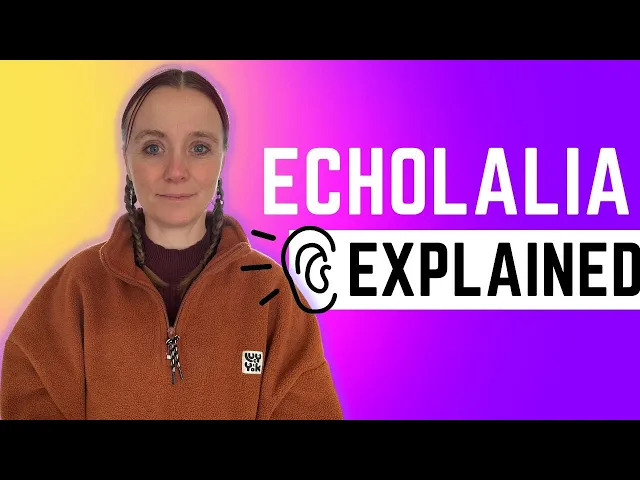
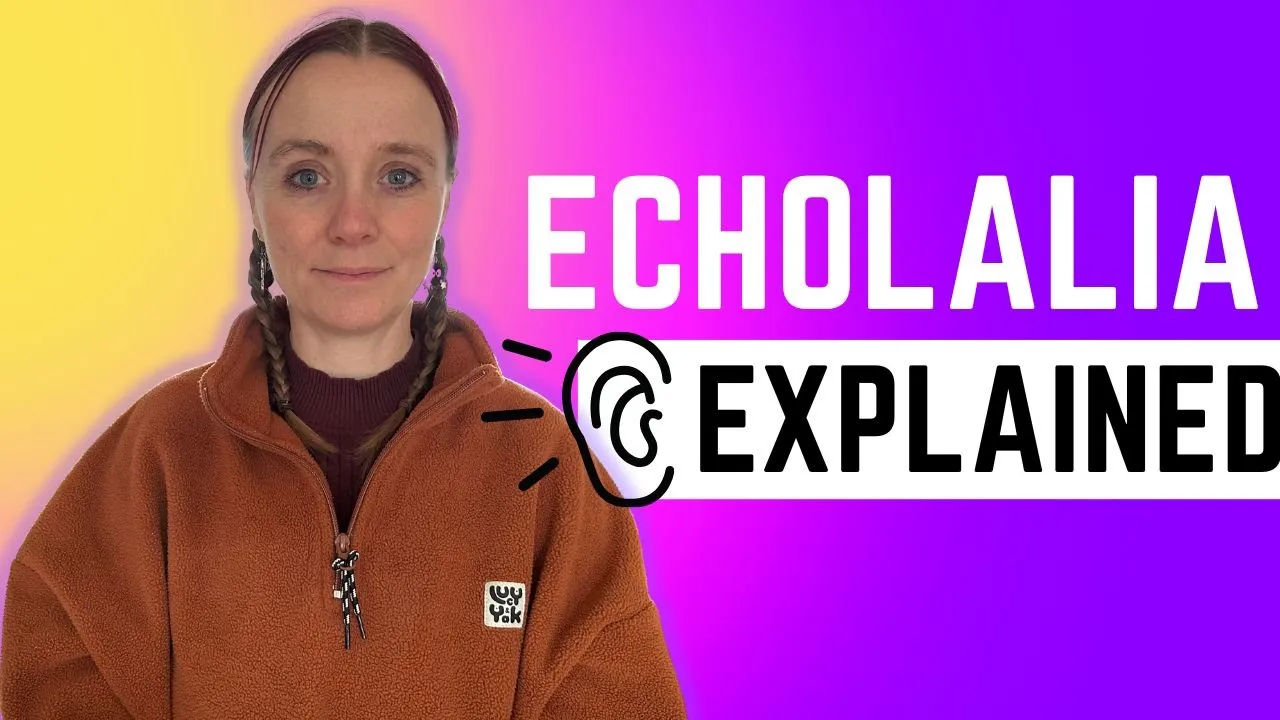
one of the Misunderstood behaviors in autistic people is the repetition of words and sounds this is called echolalia the misunderstanding comes because from outward appearances it might seem as though this repetition serves no purpose actually echolalia can serve a number of useful purposes for autistic people so that's what I'm going to explain in this video echolalia describes the repetition of words and sounds that an autistic person has heard elsewhere or mitigated which is similar but they might change some of the words or the order of the words when repeating echolalia can be immediate as in
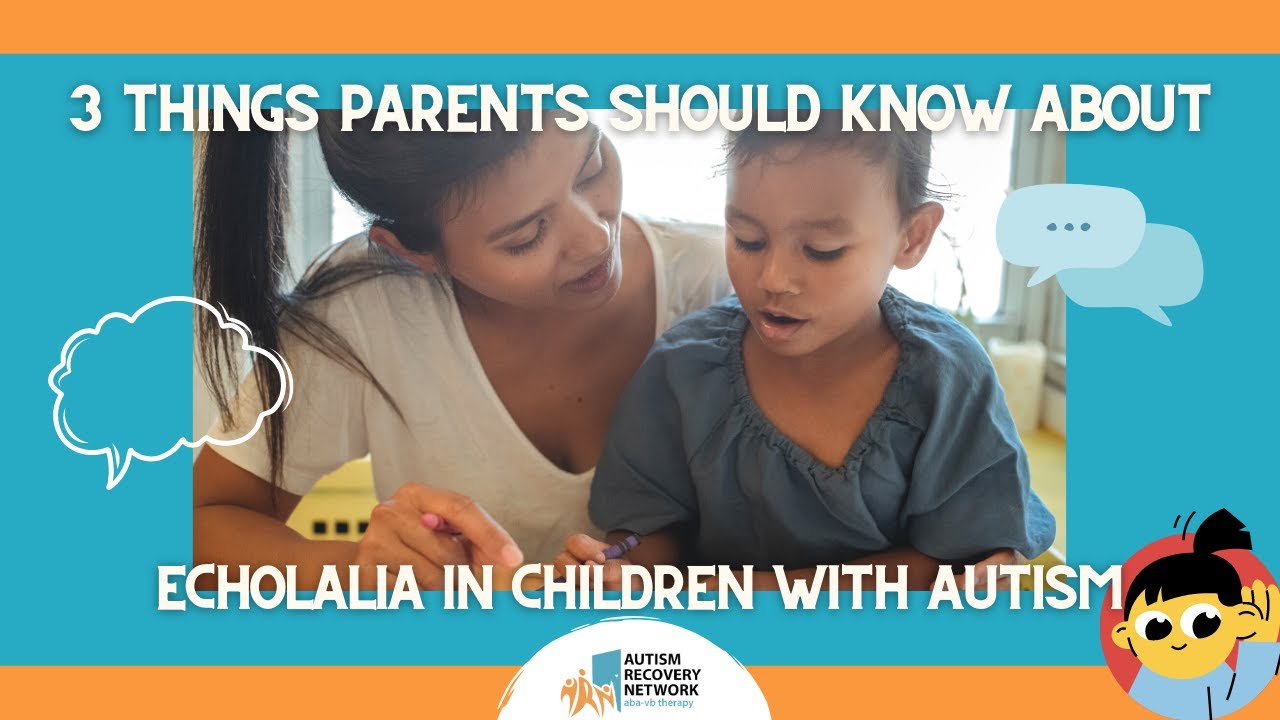
repeating immediately after hearing the word or sound or delayed which means that you would repeat the word or sound some hours or days later what many people don't realize is that echolalia is common amongst all children as they are learning to speak in early childhood development children often repeat words made by their caregivers as part of the process of learning to speak in typically developing children echolalia reduces as language is gradually acquired usually stopping altogether by the time the child is three past the age of three and going into adulthood autistic people might use echolalia
for a number of reasons sometimes multiple reasons at the same time you can divide these reasons into interactive echolalia and non-interactive echolalia I'm going to start by explaining types of non-interactive echolalia that is echolalia for the person using it not as a form of communication stimming can be verbal or physical and it's a useful calming strategy autistic people stem to cope with overload overwhelm and anxiety and we also can stim to process and express other emotions sometimes even positive ones like joy as an autistic adult I predominantly use echolalia as a form of stimming if
I hear a phrase or a sound or even a catchy chorus from a song I'll repeat it over and over again because it feels really satisfying nice and calming autistic people might also use echolalia to calm themselves in a different way as a form of self-reassurance by using a script to comfort themselves through a difficult task or situation I repeat it's fine is fine I'm totally fine out loud on repeat when I'm feeling overwhelmed or like I'm in a stressful situation or they might talk through the steps of a task as they have been told
them by somebody else for example saying take off my coat then take off my shoes take off my coat and take off my shoes as a reminder of what they need to do when they enter the house echolalia can happen when a situation prompts a particular Echo for example singing an advertisement for a particular product when they see that product in a supermarket or as a way of labeling and identifying an object or a place or a person for example seeing an apple and repeating an apple a day keeps the doctor away the next uses
of echolalia are examples of interactive echolalia that is to say that the aim of the echolalia is to communicate with someone it can be helpful to use repeated words or scripts as conversation when original words would be too difficult or would feel stressful or when the person doesn't have the language to express themselves by crafting words or sentences in using a original intonation the echolalia might be something they've heard on TV or an advert or it might be something that they've heard somebody else say that they then use to communicate a need or to initiate
an interaction for example they might say do you want a biscuit to indicate that they want a biscuit or sing a theme tune from a particular TV show to indicate that they would like to watch that show I also want to mention a few behaviors which are similar to but not the same as echolalia echopraxia which means repeating other people's movements and gestures it's not intentional it's often more like a reflex than the person doing it might not even realize that they're doing it and scripting which is similar to echolalia in that you might be
using words or sentences that you've heard elsewhere but it's different in that it's more like a plan script that's considered ahead of the interaction used as a way of mitigating awkward silences or navigating social situations before I finish I also want to mention internal echolalia looking at discussion questions about echolalia online by other autistic people some people are saying that they experience something that feels very very similar to echolalia but instead of being out loud the words and sounds are appearing inside their head to be honest initially I thought that this was just like what
happens to everyone like an ear worm but through learning from the autistic people who have spoken to me about this they tell me that it has a different quality to that and it feels much more like echolalia I'm not going to go into detail because this is something that I'm still learning about but if you feel that you experience internal echolalia I'd love it if you could leave me a comment explaining what that is like for you because I just love to keep learning about other autistic people's experiences because I feel like enhances the content
that I can make thanks for watching today if you like the video please do hit the like button and don't forget to subscribe to my channel if you'd like to support me as a Creator you can join my YouTube members club or my patreon see you next time goodbye