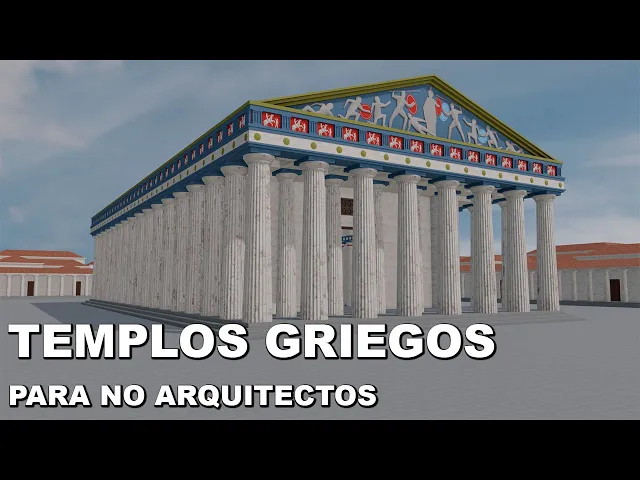
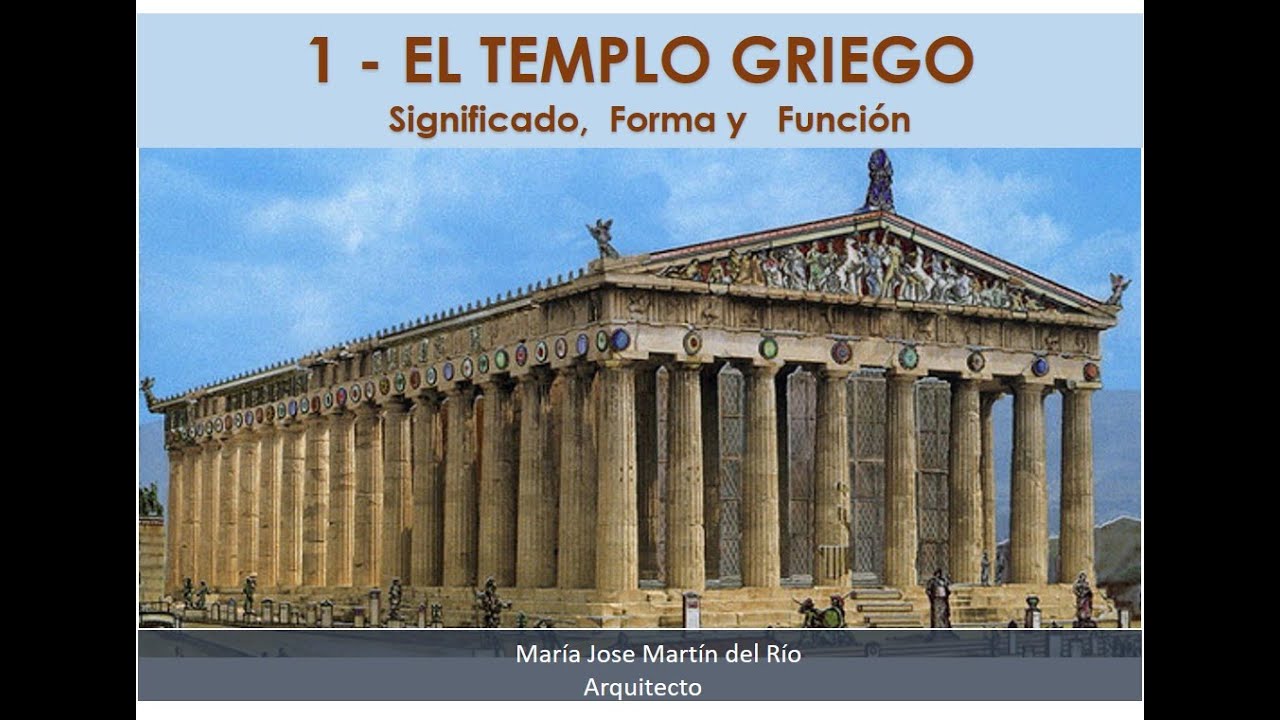
Hello everyone, this is Andrés Cervantes and welcome to my channel ArquiCultura. In this video we will see the Greek temples and their classifications. First, every Greek temple consists of a space called Cela or Naos, this last word evolved into nave, which is used to refer to the space between columns.
In a Greek temple, the naos contains the statue of the god to whom the temple is dedicated. Only priests could enter this area, so cult activities were carried out on an altar in front of the temple. This temple that we have just seen is quite simple, but as time passed, more and more complex temples were made, adding columns, which allowed the temples to be classified according to the distribution, number and style of the columns.
The classification according to their number is the simplest and the types of temples are: First we will see a temple without columns, this is one of the rarest to find today, since they appeared in a very early period in the Greek world, so many They disappeared completely or were replaced with one of the types of temples that we will see later. We continue with the Distyle, the suffix stilo means column, so a distylo temple is one that only has two columns on the front façade, generally framed between two walls, which we will see later, an example of this is the Athenian Treasury in Delphi, cases of disstyle temples without these side walls are not common, although in other parts of the world, in much later neoclassical works, it is possible to find them. If it has four columns on its front façade, it is called a tetrastyle; an example of this is the temple of Athena Nike on the Acropolis of Athens.
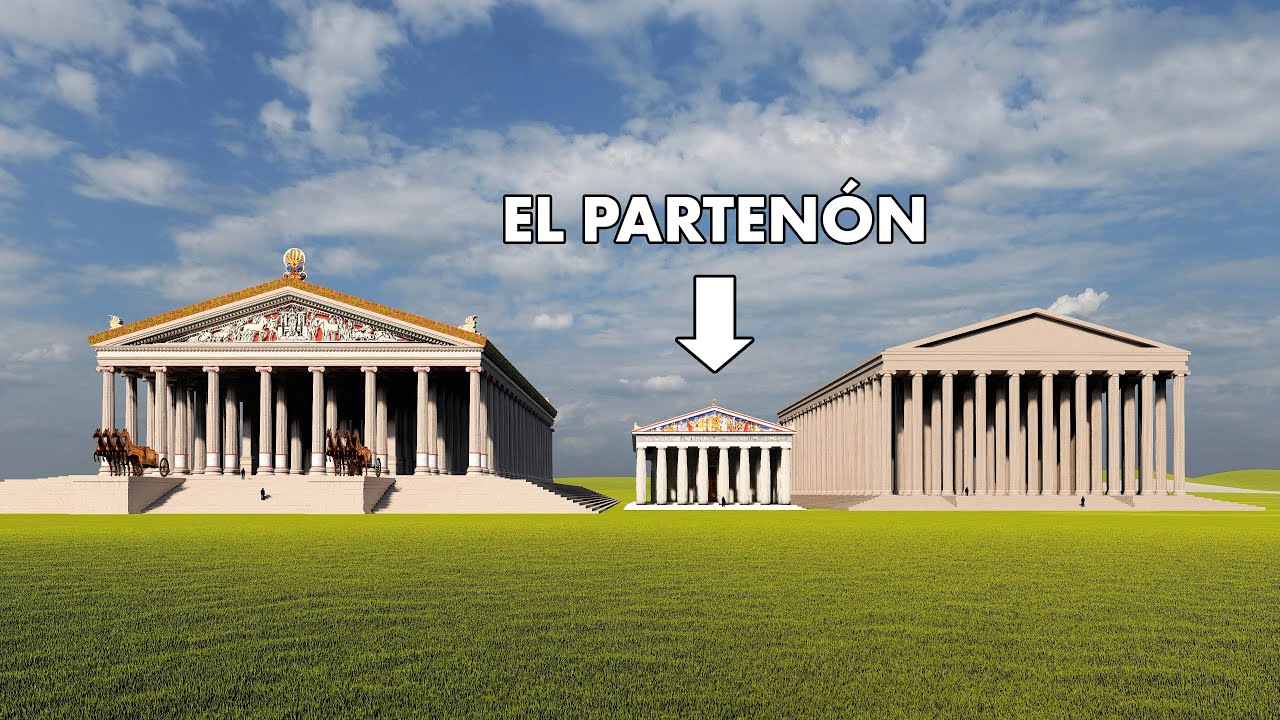
Temples with six columns are the most common of all and are called hexastyle, the best preserved of these is the temple of the ancient city of Segesta, which was located in Sicily, in modern-day Italy. The temple with eight columns is octastyle, the most famous of this classification is the Parthenon in Athens. It is called a decastyle if it has ten columns, like the temple of Apollo in Didyma, an ancient city whose remains are found in modern-day Turkey.
And finally we have the dodecastyls that have twelve columns, it is believed that this classification could be purely hypothetical, currently there are no temples of these characteristics, although neoclassical works, such as the cathedral of Buenos Aires, present dodecastyl porticos. Temples with odd columns are a real rarity, but they do exist, for example, the temple of Hera with 9 columns, located in the south of present-day Italy. Today there are structures with many more columns in their porticos, in this case they are called polystyles.
Now we will see the classification, according to the distribution of the columns, as well as some construction criteria based on the treatise on Architecture written in the 1st century BC by Vitruvius, who in his youth was the architect of Julius Caesar: We will begin with this temple without columns, that we will modify to see the different types of temples. The first is the temple in Antis, the extension of the side walls is called antis or anta , which protrude from the sides of the entrance, and in the middle of these, columns rise to support the pediment. This space between the columns and the entrance is the pronaos, a transition area before entering the naos or cela.
If a temple repeats the same façade on both sides, it is an amphitemple, the prefix anfi means "both sides", in this case, we have an amphitemple in antis, because the same type of porch appears with antas that are on the other side, this space is called opisthodome, which almost never has connection with the cela. Let's go back to the temple in antis, and we're going to modify it now to see another classification, this is the prostyle temple, here is the Greek prefix pro, which means in front of, in this case, prostyle means columns in front, so this temple presents a complete colonnade leaving the antas behind. This temple also has a version on both sides, this is the amphiprostyle temple, that is, it has a colonnade in front, and another behind the cella, generating an opisthodome.
Vitruvius calls the corridor that is formed between the columns and the cella, starting from This, we will see the next type of temples, the períptero, the prefix peri means around , this is a temple completely surrounded by columns, leaving an exterior corridor around the cella. The number of columns on the side façade used to be double that of the front façade, sometimes adding one or two columns. There are temples surrounded by pilasters, that is, attached columns, in this case, they seem to be peripteral, but the hallway does not completely surround the cela, in this case they are pseudoperiptera, these may or may not have a prostyle porch on both sides.
Let's return to the peripteran temple to continue with another classification. When the temple is surrounded by two rows of columns, it is called dipterous, as it is completely surrounded by two corridors. From this temple we can see the next category, the pseudodiptera, in this, the inner ring of columns is suppressed, preserving only the outer columns.
And it differs from the peripteral, in that the pseudodipteral keeps the columns at double distance from the cela, resulting in a much wider perimeter corridor. Furthermore, from the outside it gives the illusion of being dipterous, but saving the material of all the columns. internal.
We now continue with the monopteran temples, these have a circular shape and lack a cella, that is, they are completely open, the roof used to be conical and in some cases domes. A very similar type of temple is the Tholos, also called peripterous monopterus, here the cella appears again, leaving a corridor around it. These temples, like the monopterous ones, were generally covered by conical roofs and sometimes by domes.
Finally, in this category we have the Hypetrus temple, Vitruvius describes it as a temple that, due to its large size, was not possible to cover, leaving the cela in the open air, mentioning the temple of Zeus in Athens as an example of these temples, but The truth is that by the time Vitruvius wrote his book, this temple had had its cover removed. It is even known that larger temples, such as that of Artemis in Ephesus, could have been covered without problems, in any case, The term continued to be used to describe this type of open enclosure bordered by colonnades, for example, the Egyptian hypetra hall. Currently, the meaning of the word hypetro is summarized in "building or hall without a roof.
" These styles could also be mixed, for example, we can have a temple in antis and distylo, surrounded by a colonnade in this way, so It would be in antis, distylo and peripteral at the same time. Now, if we observe these two tetrastyle temples, we notice that proportionally they are not equal, this is due to a final classification, and this is according to the separation of the columns. First, the term imoscapo is key, in the Greek columns, this is its diameter at the lowest part, which is also the widest part of the column.
First there are the Pycnostyle temples, where the columns are separated by an imoscapo and a half, it is possible Note that the columns are quite close together. Then follow the Systyles, separating the columns into two mosaics, giving a little more space. Although Vitruvius in his book, says verbatim: These two types of Temples are defective, because when the matrons go to pray, having climbed the steps, they cannot enter.
through such narrow intercolumnias holding hands, but turning sideways. Also the multitude of columns prevents the view of the doors, removes the light from the statues and you cannot walk through the portico around the Temple. Next, we will see the Diastyles, in these temples, the columns are separated by 3 moscapes, resulting in the possible rupture of the architrave, that is, the horizontal stone that goes on the columns.
From here on, every temple with columns separated by more than 3 moscapes was called Areostylos. In these temples, the architrave was impossible to make of stone, and it was made of wood, resulting in a temple, which in Vitruvius' terms, It was heavy, big-headed, flat and wide, an example of this was the temple of Capitoline Jupiter in Rome. Lastly, in this classification we have the Eustilos, here the columns are separated into two and a quarter moscapos, this is considered the ideal, since it works correctly, no it endangers the structure and is aesthetically pleasing to the eye.
Furthermore, if the columns are not very robust, the space between the central columns could be Diastylo, since, having thin columns, the moscope is smaller and the final separation would be less, which does not endanger the architrave. This type of temple is attributed to the architect Hermogenes, whose temples are the oldest that meet this characteristic. Now, there are temples that cannot be classified very accurately due to their characteristics, for example, the Pantheon in Rome or the Erechtheon in Athens, so it must be clear that these works are a separate case.
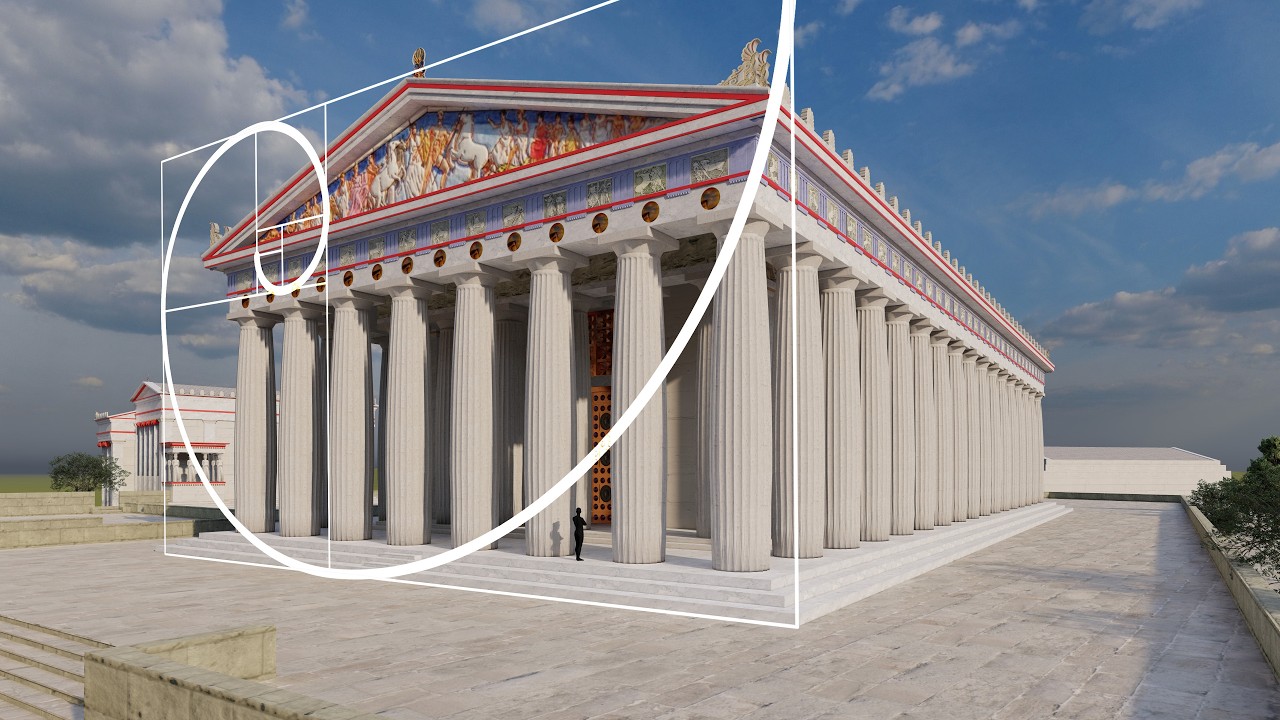
To finish, we will see the three main classical orders, which conditioned the aesthetics of the temples, these orders mainly affect the appearance of the columns and the entablature. We start with the Doric order, here the columns do not have a base, and the capital, that is , the upper decoration of the column, opens upwards, we continue with the architrave, this is smooth and Above it, is the frieze, where they appear triglyphs, which are a type of rectangular moldings, between triglyph and triglyph there is a space called Metope, where reliefs used to be placed, and above all this, is the pediment . We continue with the Ionic order, here the columns have bases and the capitals, They are decorated with volutes, which are those shapes that curl around the sides of the capital.
The architrave is covered with a stepped molding called platabanda and in the frieze, the triglyphs disappear, allowing the reliefs to extend over the entire frieze. And we end with the Corinthian, whose main difference with the Ionic is the use of Corinthian capitals, which It is decorated with shapes inspired by acanthus leaves. An element that I have not mentioned are the striae, which are the indentations that are seen along some columns.
These may or may not appear in the different classic orders that we have just seen, although in most cases they are present. . (oval square Ionic columns) Throughout history, new styles appeared from modification and fusion, such as Tuscan and modern Ionic, from Doric and Ionic respectively.
And the one composed from the fusion of modern Ionic and Corinthian. As I already mentioned, these are the most notable characteristics of the classical orders. Although these modify every last detail of the buildings, we have only reviewed the most recognizable ones, to more quickly identify the aesthetic order to which a building belongs, for example, Corinthian columns tend to be more slender, but for the purposes of the video, We saw everything in a standard proportion.
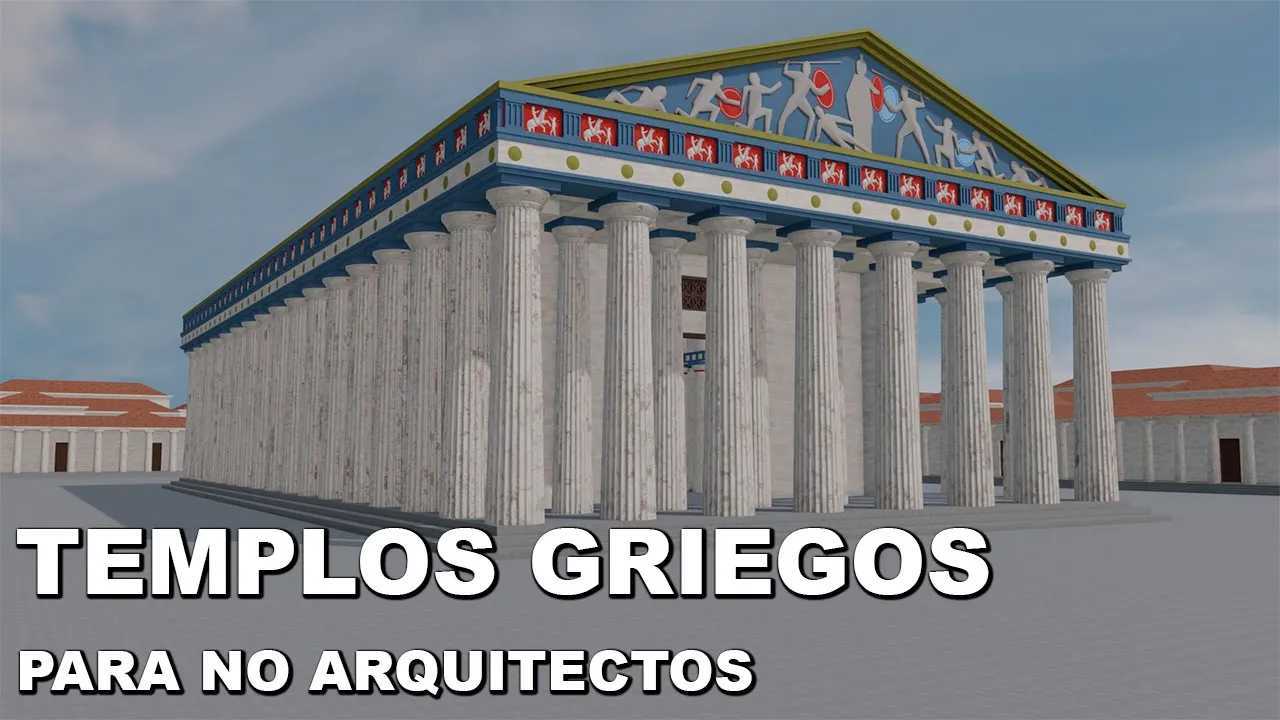
Based on the above, it is possible to observe a temple and recognize its classification, for example, the Parthenon. Its ornaments tell us that it is Doric in style. According to the number of columns in the porch, it is octastyle, and because it is surrounded by a row of columns it is peripteral, but if we look carefully, it has a second row of columns in front of both doors, which which also makes it amphiprostyle, and according to the separation of the columns it is apparently Pycnostyle, I say apparent, because it is well known that the Parthenon was built irregularly to correct the perspective with optical effects.
Thus easily and in five words, we can describe the Parthenon in great detail saying that: it is a Doric, octastyle, pycnostyle, peripteral and amphiprostyle temple. When seeing how different types of classifications coexist in a temple, it is easy to notice that there are hundreds of combinations that ancient Greek architects could use for their temples, and studying the existing temples, it is also possible to conclude that a large part of the possible combinations They cannot be observed by humanity. And well, this has been all for today, if you liked it, don't forget to like it and share with your friends, and so you don't miss out on future content, subscribe to my YouTube channel and follow me on the social networks of Facebook and Instagram .