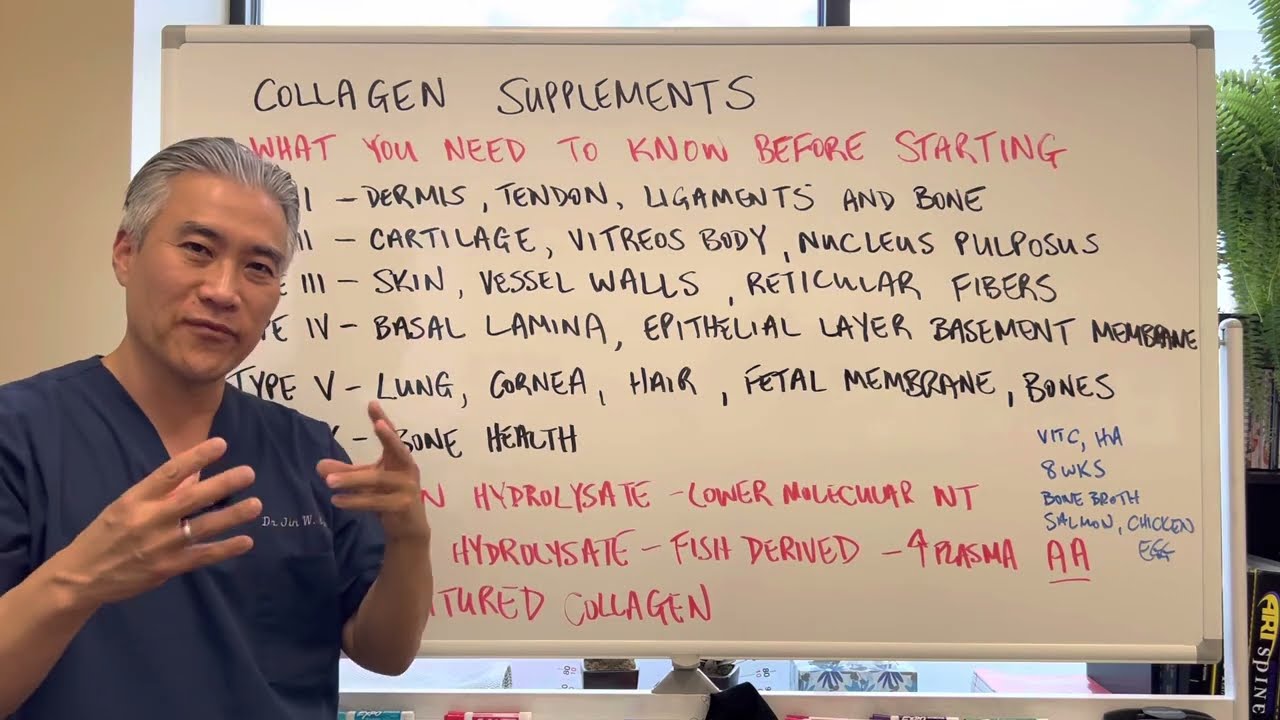
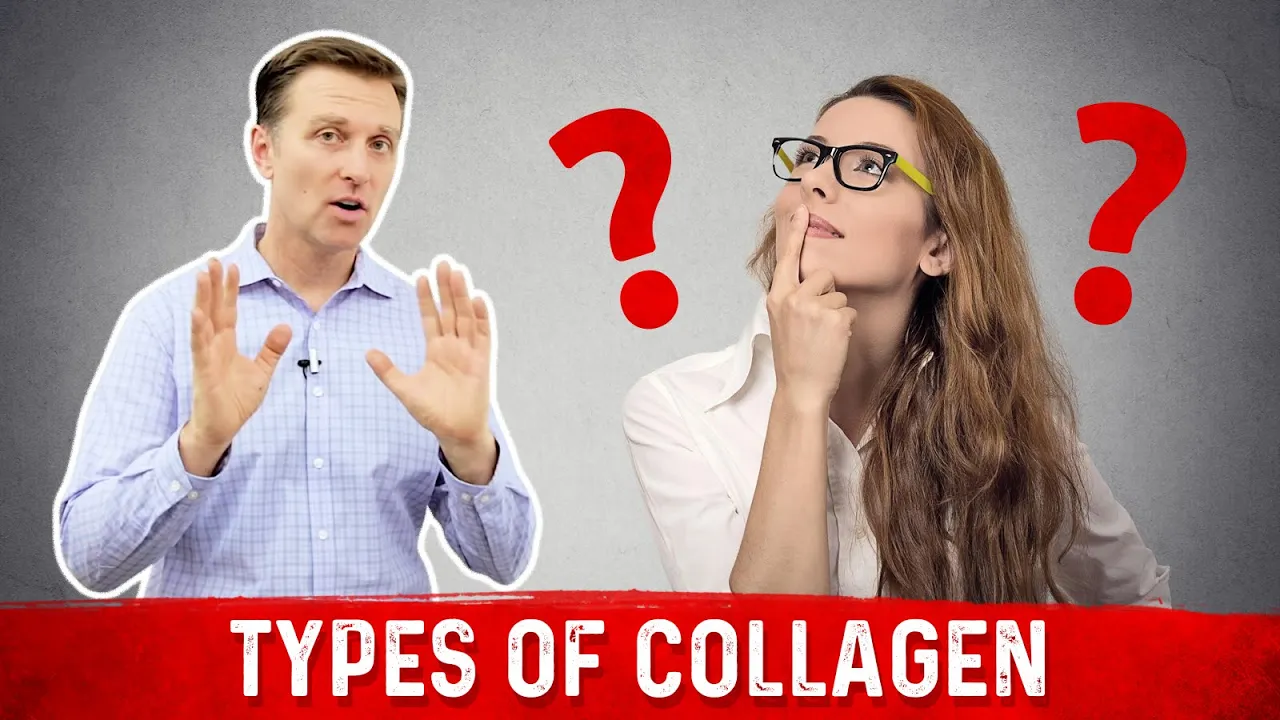
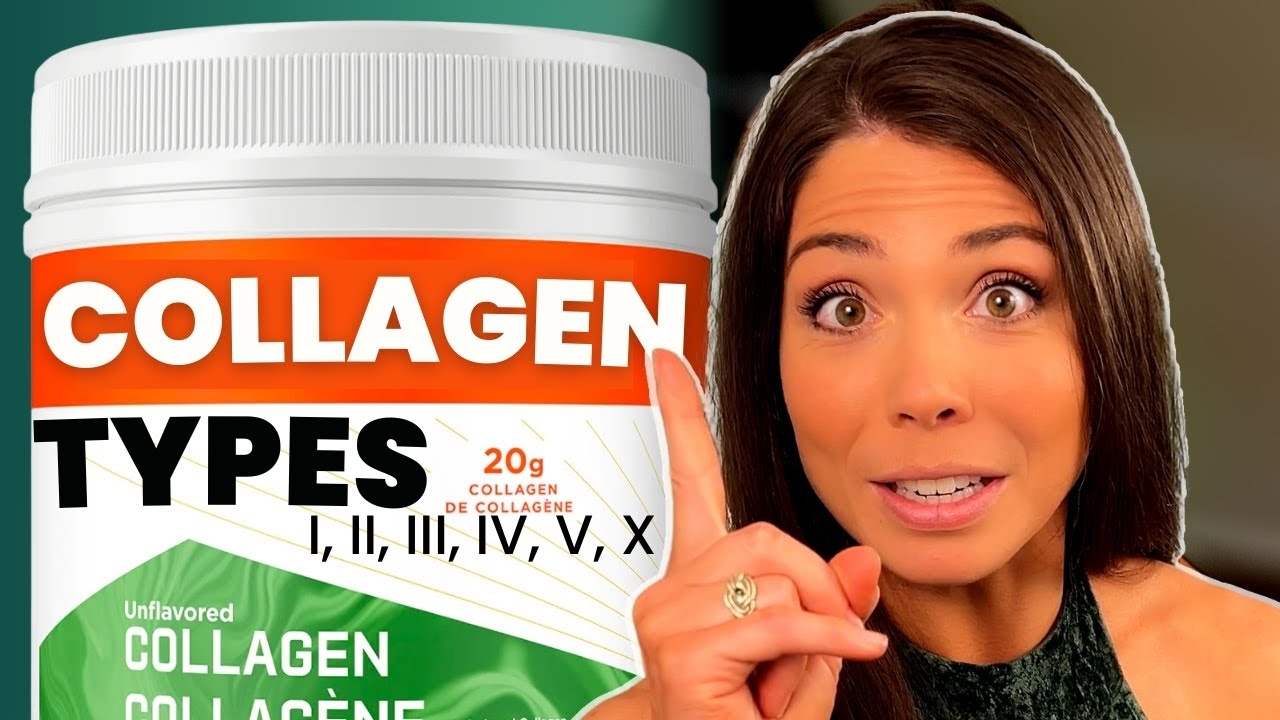
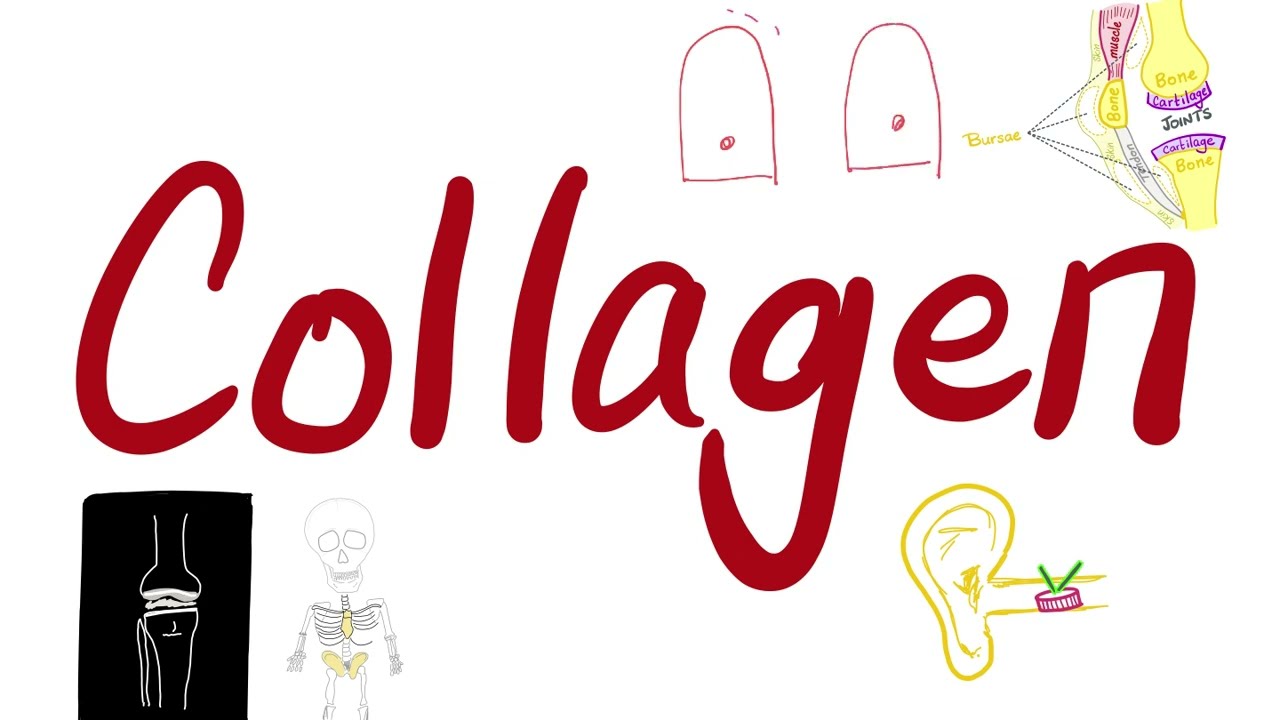
hey guys in this video we're going to talk about collagen and the types of collagen there's actually over 28 different types of collagen we're not going to cover all of them I'm gonna cover five of them okay now what is collagen it's the type of protein and it's the connective tissue it comes from the Greek word which means glue because it holds everything together as a mesh as a like a matrix of strands okay so number one the type one is the most abundant 90% of all of the collagen is this type and it forms
scar tissue it forms the tendons the ligaments the bone is made out of collagen with minerals to make it solid the teeth are also a lot of collagen in there certain parts and calcium and then we have skin in arteries okay that's type 1 tattoo is all the joint cartilage and their articular surfaces that connect on that joint so if you were to have a joint that's wore out you would want to probably take more of the two versus maybe weak ligaments that's a whole different thing okay Type three is the connective tissue the collagen
that is like the mesh around the liver inside the liver that separates the different things it's more delicate it's in the bone marrow it's in the lymph okay that's three okay four forms the respiratory tract and that's involved in the bronchial tubes the lungs the around the intestines the tissue around the heart the tissue around the intestines okay that's type 4 and then type 5 forms the hair and the cell surfaces okay those are the different types so anytime you're buying collagen there's different types you can you can buy it from different sources sometimes collagen
comes from chicken sternum sometimes it comes from bone marrow sometimes it comes from fish skin sometimes it comes from pig skin so it comes from many different sources now the question is is it just a matter of consuming collagen to put the collagen back not necessarily there's a couple really important things you need to know if your vitamin C deficient you will not be able to metabolize collagen collagen will not form in the body - Ella you're gonna have weakness within the ligaments the cartilage and just if you take a look at a vitamin C
deficiency called scurvy for example what's happening they have a lot of collagen loss they have bleeding gums their teeth are falling out what is that well what happens vitamin C is necessary to form the collagen very very tightly it's because if you don't vitamin C it can leak blood and that's called micro hemorrhaging it's the same exact thing that people have in their arteries so if they have like a clogged artery for example the first thing that happens is a micro hemorrhage hemorrhaging so you have the bleeding the cholesterol comes the calcium comes forms a
plaque that's because they have a small version of scurvy in the arteries so what happens is if you gave them type 1 collagen it might not work what they need is the vitamin C so vitamin C is very important and with collagen make sure that you get a natural version if you're using some synthetic it better come with a lot of flavonoids or other factors okay number 2 gastric bypass if you have a gastric bypass what's happening is you're not going to be able to digest the collagen as well because your stomach is not as
big and it's altered the physiology is altered so you might have loose skin it's hard to get the skin back lastly is low stomach acids if you don't have enough stomach acid you can't digest the collagen so you can't even pull it in to break down the collagen that is going through your mouth whether its food or supplement it's not breaking down at the stomach level so it never gets broken down to the small particles now how do you know if you have low stomach acids well you're gonna have gas maybe an iron deficiency b12
deficiency indigestion acid reflux and that could be a clue that you need more stomach acid and all of a sudden the collagen that you're consuming from your food is working ok so just want to kind of give you some insights and call it different collagen types and it might not be a matter of just consuming collagen you might have to look at these other factors alright thanks for watching


![Reversing Skin Aging with Collagen Peptides [11 Studies Later]](https://img.youtube.com/vi/qABmjdy-Y84/maxresdefault.jpg)