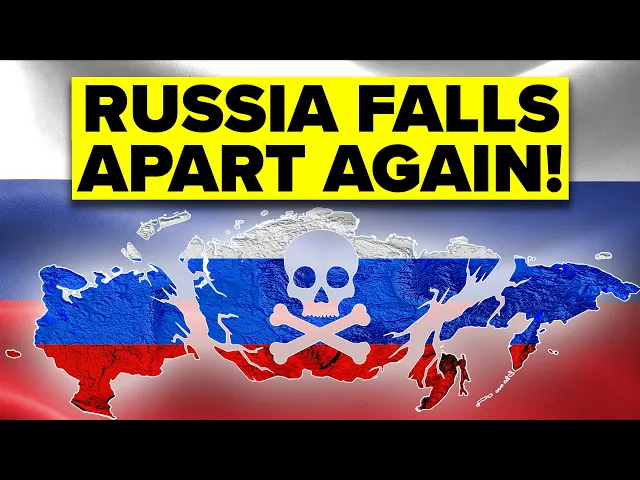
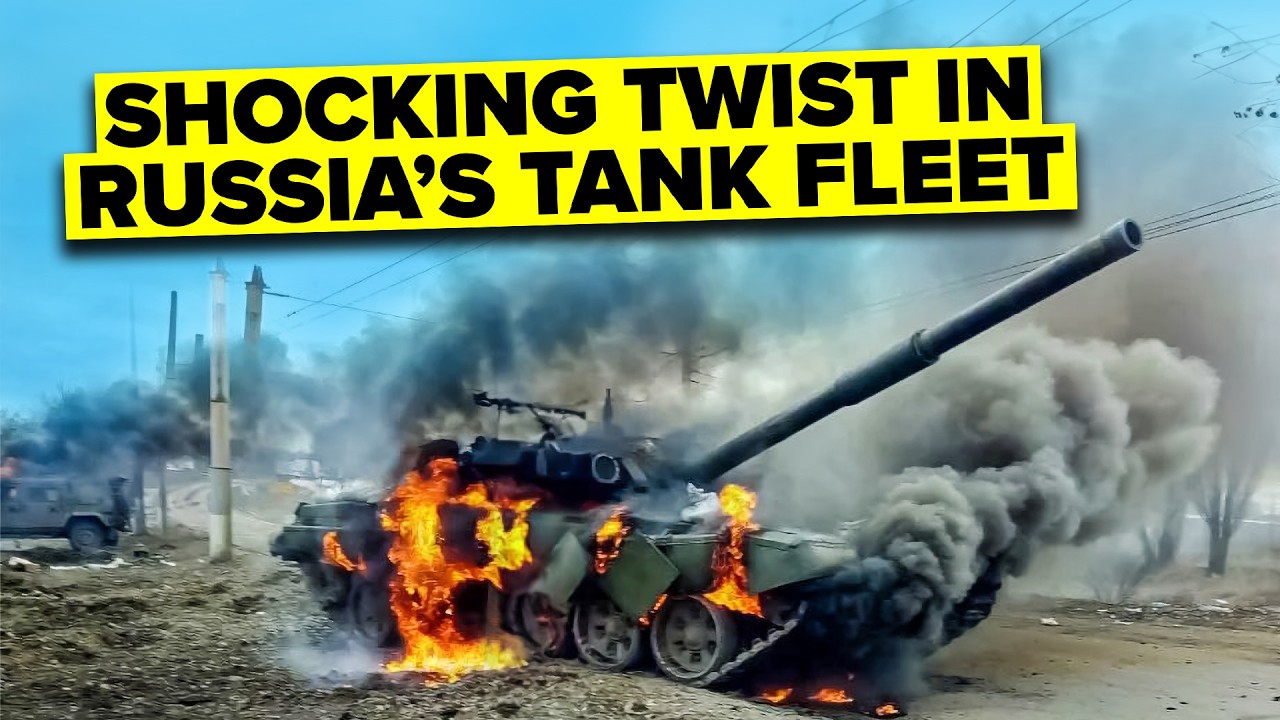
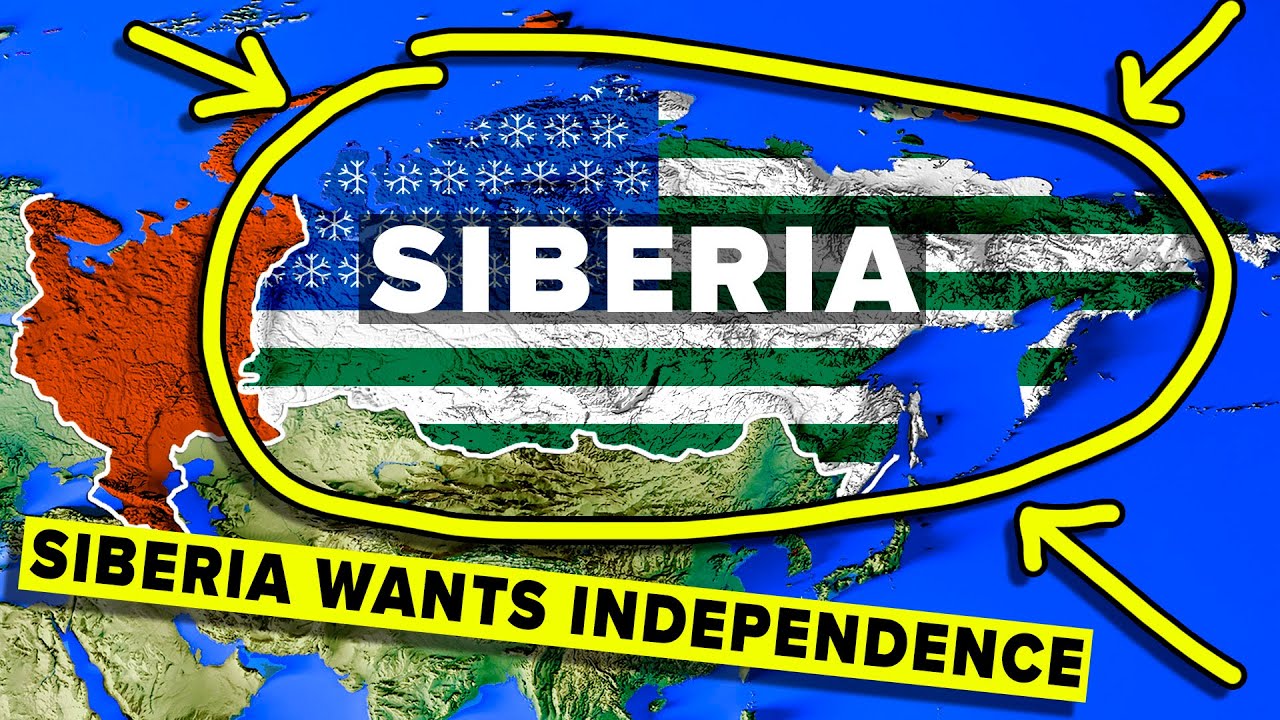
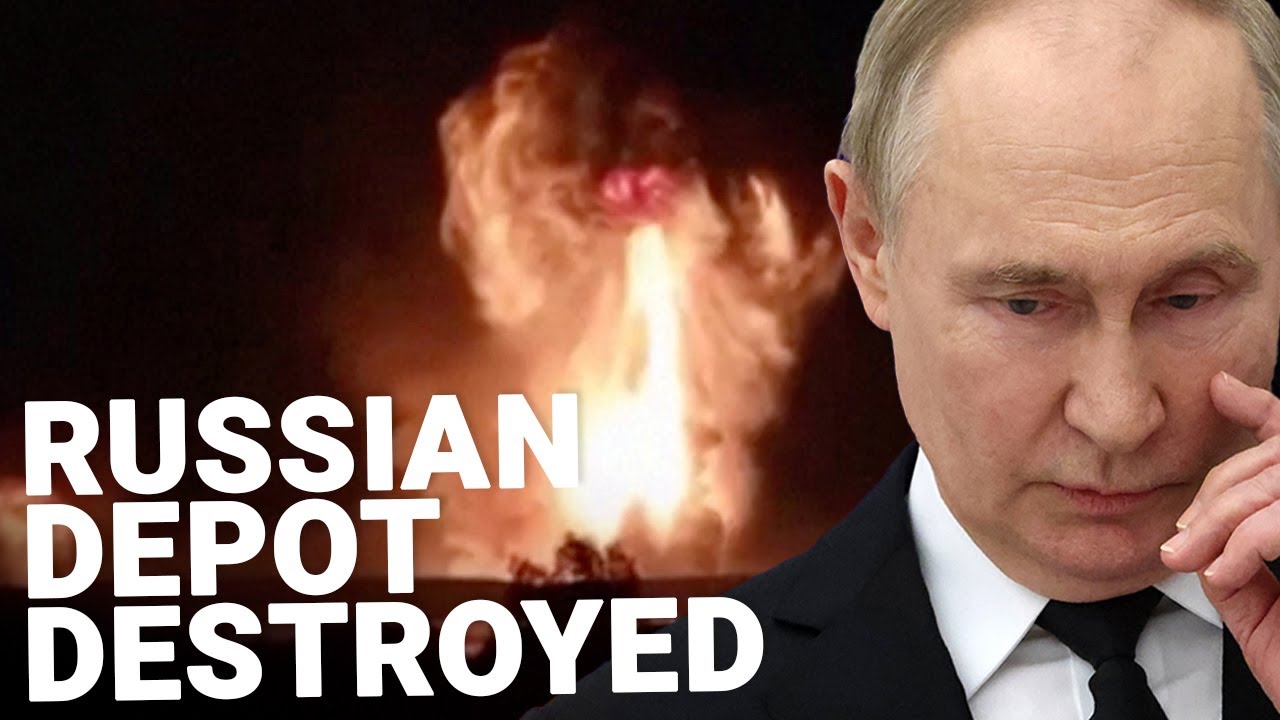
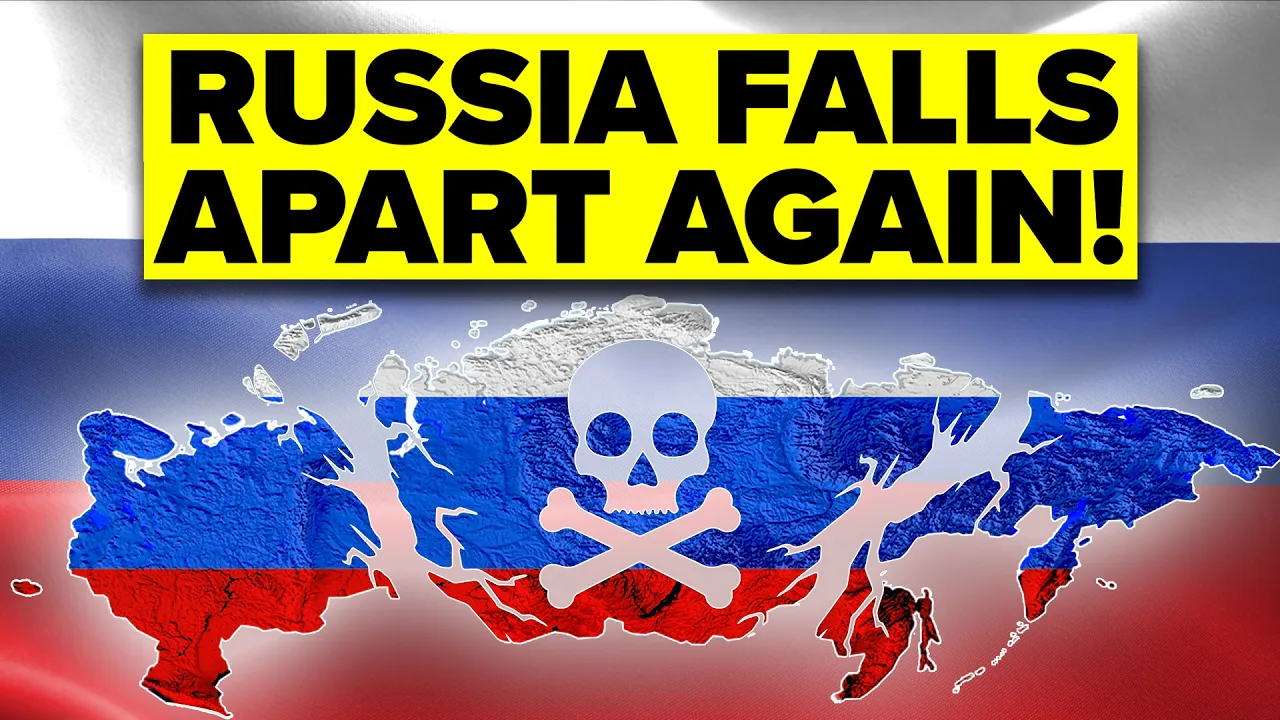
Putin’s burgeoning Russian empire is collapsing from the inside. To the man who has seemingly made it his life’s work to turn Russia into what it used to be, this is a horror story. For more than a decade, he has been trying to claim land for his beloved Russia.
The 2008 invasion of Georgia set alarm bells ringing. He followed that up with the 2014 annexation of Crimea and, in February 2022, he launched a full-scale invasion of Ukraine that continues to this day. He did it all – in part – to reclaim territory that he believes Russia should rightfully own.
But all he’s achieved is laying the foundation for the collapse of Russia as we know it as he has left his country on the brink of civil war. Putin’s citizens are turning against him. His position as the “strongman” of Russian politics is in serious jeopardy.
And the worst thing about all of this for Putin – we’ve seen it all happen before. The collapse of any empire requires a catalyst. That catalyst came on August 6, 2024, when Ukraine did something nobody believed it would ever do – invade the Kursk oblast.
Interestingly, the first news about the Kursk invasion didn’t come from Ukraine. It made no grand proclamations of its intention to take Russian territory. Rather, they came from Russia, with the country’s Defense Ministry announcing that a group of 300 Ukrainian soldiers had crossed the border into Kursk at 8 am on August 6.
Those soldiers apparently wore blue tape around their arms—making them distinguishable from their enemies—and were accompanied by a small number of tanks and armored vehicles. The initial attack focused on checkpoints across the border, where the few dozen Russian border guards, many of whom were young conscripts with little experience of actual war, were quick to surrender to the invading Ukrainians. At the time, Russia claimed to have repelled the attack.
The truth would turn out to be the exact opposite. Within a day of the invasion starting, Ukrainian armored vehicles were seen racing toward the town of Sudzha, which is just six miles from the frontlines. By the third day, Ukraine’s soldiers had reached Koreveno – a small village 13 miles inside the border.
More gains followed. Ukraine kept advancing, taking villages along the way. Ten days into the invasion, Ukraine had taken Sudzha, establishing it as a command center from which to coordinate future attacks.
This prompted Putin to promise that he would deliver a “worthy response” to the invasion. That response is yet to come. Instead, this initial week and a half of the Kursk invasion saw Russia being forced to evacuate around 200,000 civilians from the region while Putin was left scrambling to pull some of the 500,000 troops he had stationed in Ukraine to mount a proper defense against Ukraine.
Fast forward to the end of August—the time of writing the script for this video—and Ukraine now claims to control almost 500 square miles of Russian territory within the Kursk region. That’s according to its main military commander, General Oleksandr Syrskyi, who also adds that Ukraine has captured 594 Russian prisoners so far as part of the operation. For context, the amount of seized territory is roughly the same size as Los Angeles, according to the LA Times.
Further reports, this time from the BBC, claim that Ukraine now controls about 100 Russian settlements within those 500 square miles, each of which can now be fortified against the likely Russian counterattack. The entire invasion has been an enormous humiliation for Putin. For the entire war, he’s set himself up as the “strongman” of Russia – a role that many a Russian leader before him has attempted to play.
Authoritative. Decisive. Strong enough to do what needs to be done.
This was the image Putin hoped to cultivate, and a large part of his success in creating that image lay in his ability to portray Russia as impenetrable. The average Russian citizen wouldn’t have to worry about the Ukraine war, he could argue. The entire conflict would take place in Ukraine – at no point would war come to Russia’s collective doorstep.
The Kursk invasion proved that to be false. And that leads us to a question: Why did Ukraine invade Kursk in the first place? It certainly doesn’t intend to annex the region and claim it as part of Ukraine as Putin did with Crimea back in 2024.
Though Ukraine is pouring more and more troops into the region, with Forbes saying it has plans to send 15,000 soldiers along with a pair of air assault brigades, those soldiers aren’t tasked with turning Kursk over to Ukrainian hands. The taking of territory in Kursk does not signify the start of a larger invasion that will see Putin’s empire crumble as a result of him losing the country to invading Ukrainians. Zelensky’s intentions are a little more complex than that.
One interpretation is that the Kursk invasion is supposed to act as a diversionary tactic. Ukraine hopes that forcing Russia to divert troops to Kursk will relieve pressure on the beleaguered Donbas region in Ukraine, where Putin has focused most of his attacks in 2024 and where Russia is slowly gaining territory. In particular, Zelensky may have hoped to draw Russian soldiers away from Pokrovsk, which Forbes claims is one of Putin’s main objectives in his Eastern offensive in Ukraine.
If that was the intention, the invasion may have failed in its diversionary goal. On August 28, Forbes reported that Russia had taken the Ukrainian village of Novohrodivka, which lies just five miles outside of Pokrovsk. Putin is likely setting up for a renewed offensive and Ukraine’s commitment of troops to Kursk could mean that it is less able to mount a sturdy defense in response.
Other motives, put forth by Harvard University Ukrainian Research Institution fellow Paul D’Anieri, seem to make more sense. Speaking to the University of California, Riverside, he points out that it’s not clear exactly how the Kursk invasion will affect the key battles being fought in the Ukraine war. However, it serves other purposes.
The invasion’s initial success, he says, “is clearly a big morale booster for Ukrainians and a political problem for Putin and his military leaders. ” The latter issue is extremely important in terms of why Kursk could prove to be the catalyst for the collapse of modern Russia. As D’Anieri points out, Putin took the rare step of appearing on Russian television to dress down his military leaders in front of the entire nation.
His intention was clear – continue to project the strongman image that has served him so well as Russia’s leader. The problem lies in what the Kursk invasion has managed to achieve: the shattering of Russia’s aura of invincibility. Putin’s dressing down of his military leaders took place while Ukraine was taking more territory and thousands of Russians were being evacuated.
Putin can no longer hold himself up as the man to protect Russia. Drssing down his military leaders in public may also prove to be a mistake. After all, it raises questions as to why those leaders were appointed in the first place if they were incompetent enough to allow a Ukrainian invasion.
The Russian people may not be able to question Putin publicly. But privately, many are likely starting to doubt the decision-making capabilities of their leader. Therein we find what may be the true motive for the Kursk invasion.
Zelensky likely knows that Ukraine can’t hold Kursk forever. Russia will launch a counteroffensive at some point. Deputy CIA Director David Cohen says this is practically an inevitability, saying on August 28, “We can be certain that Putin will mount a counteroffensive to try to reclaim that territory.
” He notes that it will be a difficult fight for Russia, especially as Putin’s slow response has afforded Ukraine time to build defensive lines, but the counterattack is coming. Unfortunately for Putin, the response may be too little too late. Ukraine has already achieved one of its primary goals of rattling Russia’s faith in its militaristic leader.
The strongman image is shattered, not only for the Russian military as a whole but also for the man who leads it. And, if everything goes according to plan for Ukraine, the Kursk invasion will serve as both the turning point in the Ukraine war and the beginning of the end for Putin. Of course, that brings us to an obvious question: How?
How could the Kursk invasion trigger a civil war in Russia or, at the very least, lead to the burgeoning empire Putin is trying to build collapsing? The answer starts with something to which we’ve already alluded – the Kursk invasion showcases Putin’s military miscalculations. This starts with his failure to reinforce Russia’s northern borders with Ukraine, as Putin has poured all of his efforts into the Eastern offensive during 2024.
That led to the situation we saw on August 6, when Ukraine’s forces were able to easily overcome Russia’s border checkpoints. Putin has assigned recent Russian conscripts to those checkpoints, none of whom had the experience or ability to fight back against the incoming Ukrainian forces. Worse yet, as Retired Russian General Andrei Gurulev, who is a member of the lower house of Russia’s parliament, points out, those border soldiers had no intelligence.
“Regrettably, the group of forces protecting the border didn’t have its own intelligence assets,” he claimed on the Telegram messaging app. “No one likes to see the truth in reports, everybody just wants to hear that all is good. ” The truth in reports.
Those four words are a reflection of the fact that many in Russia, including some in its political circles, recognize that the information they get from state-owned media outlets is tailored to keep Putin in power. Russia’s leader isn’t telling his people the truth about what’s happening in Kursk, but his attempts to pull the wool over their eyes are failing. After all, they can see the evidence with their own eyes.
Russia has lost territory and the people of Kursk are being evacuated. All of this can be traced back to Putin’s military mistakes, both in terms of failing to secure the Kursk border and not providing his troops with the intelligence they needed. Putin made another mistake – he underestimated General Oleksandr Syrskyi.
Now Ukraine’s top military officer, Syrskyi commanded Ukraine’s forces in Kharkiv in 2022, leading the country to a victory over the invading Russian forces that played a key role in Russia’s failure to secure Kyiv in the early weeks of the war. Syrskyi is a man who had the call sign “snow leopard” and he’s also the man who took over from General Valeriy Zaluzhnyi after Zelensky ousted his former military leader in early 2024. Putin’s mistake lay in assuming that Syrskyi would take the same approach as his predecessor when it comes to launching attacks against Russian forces.
In 2023, Zaluzhnyi was the man responsible for organizing a Ukrainian counteroffensive against Russia. That counteroffensive failed, not least because it was so highly publicized that Russia had plenty of time to set up defenses that enabled them to hold the territory Ukraine hoped to retake. Putin got to look like a military genius in front of his people.
The man who organized Russia’s military to hold off the biggest offensive Ukraine was capable of mustering. But the reality was that Putin’s success only came because of Zaluzhnyi’s failings, with Syrskyi being a far different beast. Ukraine’s new military leader is described as an “obsessive planner with iron discipline” by Sky News, with Al Jazeera noting that some in Ukraine call him “The Butcher.
” He also favors quiet and precise strikes against his enemies over full-blown and well-publicized offensives. We saw this in his approach to taking on a Putin-backed insurgency in Eastern Ukraine back in 2014, during which Russian security official Dmitry Medvedev described him using “tactics that were similar to how this cat hunts,” in reference to his “snow leopard” call sign. So, the warning signs were there.
Any attack arranged by Syrskyi would be extremely well-organized and would not involve an all-out offensive at which body after body is thrown. The strikes would be small. Precise.
Scattered. In other words, exactly what we have seen in Kursk as Ukraine’s forces conduct tactical strikes against their Russian opposition by using small groups. Putin should have known all of this about Syrskyi.
He’d seen plenty of Syrskyi’s approach on the battlefield, yet he underestimated the Ukrainian military leader and, by extension, underestimated Ukraine’s ability to take Russian territory. Here, we start to see some parallels between Putin and his Soviet-era predecessors. After all, Russia has a history of underestimating its opponents.
In the 1980s, Russia entered Afghanistan believing that it would be able to quickly destroy the rebels in that country and subjugate it under Soviet rule. The Soviet Union failed. It wound up stuck in a quagmire of a war that lasted for almost a decade and led to the deaths of 15,000 Soviet soldiers.
Russia was forced to withdraw. Bruce Riedel, who worked on the CIA’s plan to aid the Afghan rebels at the time, points out that Putin seems “to have underestimated the Ukrainians today,” in the same way the Soviet Union underestimated Afghanistan. Milton Bearden, another CIA operative during the Afghanistan war, puts it more pointedly – “In setting out to reverse history, [Putin] may instead be repeating it.
” Patterns are starting to repeat. The Ukraine war, which was meant to be over in a matter of weeks, has descended into a quagmire similar to that seen in Afghanistan in the 1980s. Only this time, it’s a quagmire that’s costing far more Russian lives – 612,390 according to Ukraine’s Ministry of Finance and other various outlets.
The Washington Post says that Russia’s war in Afghanistan led to the end of the Cold War and the collapse of the Soviet Union. Putin’s underestimation of his Ukrainian enemy may be taking him—and today’s Russia—down that very same path. Underestimating his enemy isn’t the only way that Putin has undermined his own position.
The Kursk invasion is just one of several examples during his reign in which he has failed to protect the Russian people. The Conversation published a piece covering this toward the end of August 2024, noting that Kursk is just the latest puncture hole in Putin’s image of “protector” in a long line. It points out that the Ukraine war has seen multiple Russian towns and cities—including Moscow—be subjected to drone attacks by Ukraine.
It also draws parallels between the Kursk invasion and another famous “Kursk” incident – the sinking of the nuclear submarine that bore the oblast’s name. On August 12, 2000—around three months after Putin first became Russia’s president—the Kursk submarine experienced an explosion in one of its torpedo hatches. Most of the submarine’s 118-member crew died, though 23 survivors managed to barricade themselves in a compartment of the submarine, where they awaited rescue.
Here was an opportunity for Putin to solidify his reputation as a protector of the Russian people. Instead, he delayed. Putin refused foreign help for fear that doing so would make him look weak.
When Norwegian divers were eventually allowed to dive into the submarine on August 21, the 23 survivors of the blast were dead. Putin refused to talk about the incident, going so far as to not even cancel a vacation he was taking in Sochi when the crisis occurred. A pattern of behavior had been set.
On September 1, 2004, a group of 30 armed militants stormed a school in the Russian city of Beslan, taking 1,000 hostages that included children, family members, and teachers. Putin acted a little quicker this time. He ordered special forces to enter the building on September 3.
A bloodbath ensued – the chaotic battle led to hundreds of the hostages being killed, including 186 children. Both survivors and relatives of those killed sued the Russian government via the European Court of Human Rights, alleging that Putin had mishandled the entire situation. They won – the court ruled that Russia’s government had “failed to protect the hostages.
” What does all of this mean? More patterns are emerging. Not only does Putin regularly underestimate the situations he faces, but he often makes the wrong decisions.
These decisions have an impact on the Russian people, whether those be 23 who die in a submarine because he delays or hundreds dying in a school because he bungles. His mismanagement of the Kursk invasion is yet another example of Putin’s failure to protect his people, and it may be the final straw. Again, we see parallels with the Soviet Union in the sense that, as powerful as a leader may be, it’s the people who ultimately control the fate of their countries.
The fall of the Soviet Union was precipitated by mass protests, such as the April 1991 protest in Minsk’s Lenin Square and the August 1989 protest featuring two million people in the Baltic states of Lithuania, Latvia, and Estonia. The people were making their unhappiness with the current regime known. Putin’s failure to protect his people—a pattern he has displayed throughout his leadership—could lead to similar situations in today’s Russia.
After all, he’s already having to deal with fury amongst those people. On August 17, 2024, The Guardian published a piece in which it spoke to a Russian woman named Lyubov Antipova. The daughter of elderly parents who live in Zaoleshenka, a village in the Kursk region, she claims that she implored her parents to leave their village when she first started hearing rumors about an invasion.
Antipova’s parents didn’t listen. Why would they? Putin was in charge and Russia hadn’t seen any sort of invasion since World War II.
Then, the photographs started filtering through. One showed Ukrainian troops standing outside a supermarket near the offices of a gas company. Antipova knew the location well – it was only around 150 feet from her parents’ home.
“We were sure the Russian army would protect us,” Antipova says. “I’m amazed how quickly the Ukrainian forces advanced. ” Others in Kursk were similarly caught off-guard by the invasion.
Alexander Zorin, who is a curator in the city’s archaeology museum, says that the reports being given to them were inaccurate. “Officials’ reports were not scary at all: 100 saboteurs went in,” he says. “But then, it went up to 300, 800, it was impossible to get a clear picture.
” Zorin would wind up being one of the 200,000 people who have since been evacuated from Kursk. Other Russian citizens have expressed anger about Putin’s response to the Kursk invasion. Speaking to CBC, a Ukrainian soldier who wishes to be identified by the tagline Wolverine said that many of the citizens he encountered have expressed anger at the authorities.
“They speak about betrayal from the Russian government. They did not declare evacuation and immediately turned off water and light, so they created unbearable living conditions,” he claimed. He also provided CBC with a short—albeit edited—video that showed a Russian man complaining about feeling abandoned by Russian authorities.
Of course, none of these people mentioned Putin by name. To do so would be to invite repercussions. But the message is clear – Putin is the head of Russia and the man who put these authorities in place.
Once again, he had failed to protect his people. What’s more, that lack of protection was accompanied by a constant campaign of disinformation—again, much as was seen throughout the entirety of the Soviet Union’s existence—that led many in Kursk to fail to protect themselves because they didn’t understand the sheer scale of what was coming. Putin is on the verge of losing the support of his people.
And that’s not his only problem when it comes to his own people. A strongman politician like Putin relies on support from his country’s elite. It’s a “you scratch our back and we’ll scratch yours” situation, in which the elite use their influence to prop up the leader as long as they feel they’re getting something in return.
Those elites may also be turning against Putin. After all, many have been affected by the Western sanctions that have been in place since the beginning of the Ukraine war. Oligarchs and officials close to Putin have also felt the sting of the West freezing their assets.
In addition to the $300 billion in Russian Central Bank assets that the West has frozen—and are now being used to fund Ukraine—another $30 billion in assets owned by officials and oligarchs are also immobilized. Russia’s elite, though they’ll never see the war up close, are feeling its pinch in their pockets. Many have also been oddly silent about the war, with few coming out to express full support for Putin.
A handful even believe that Russia could lose. In June 2023, Pravda published a report—citing a Bloomberg article from the same month—stating that some of Russia’s elite are experiencing a “deepening gloom. ” Even the most optimistic among them believe that the best outcome possible now is a “frozen” conflict in which both countries declare ceasefires without actively ending the war.
The piece also quotes Kirill Rogov, a former advisor to Putin who left Russia after the invasion began. “They are afraid to become scapegoats for a meaningless war,” he says. “It is really surprising how widespread among the Russian elite became the idea of a chance that Putin won’t win this war.
” Bear in mind these comments came in June 2023. Over a year later, and those elites are watching as Putin has failed to repel an invasion into Russian territory. Where does all of this leave Putin when it comes to his people?
It would be inaccurate to claim that the general citizens are calling for the Russian leader’s head. They aren’t, and any who would like to would be restricted from doing so by Putin’s policies anyway. But there’s a clear feeling of discontent.
The people of Kursk are angry, not only with the misinformation Putin has spread, but his lack of a proper response to the invasion that once again showcases his pattern of failing to take decisive action in service of his people. Putin also appears to be losing the support of at least some of Russia’s elite, with discontentment growing and an ever-increasing feeling that Russia isn’t going to win the Ukraine war looming over that segment of the population. In short, Putin is losing the support of his people.
And as Russia’s own history has shown time and again, even an authoritarian strongman leader is at risk of seeing their empire crumble once the people turn against them. The Kursk invasion may prove to be the catalyst for rebellion against Putin. But could such rebellion lead to civil war?
While that may seem like an impossibility on the surface, it’s worth remembering that Russia came very close to experiencing a civil war in June 2023. That’s when Yevgeny Prigozhin, the former leader of the Wagner private military group, essentially declared an insurrection against Putin and Russia’s military leaders. Wagner had already played a key role in the Ukraine war, with the brutal group having been involved almost from the beginning.
German intelligence claims that Wagner soldiers were involved in the massacre of Ukrainian civilians in the Ukrainian town of Bucha in March 2022, with Ukraine also claiming that a trio of Wagner mercenaries were responsible for capturing, torturing, and killing Ukrainian civilians near Kyiv a month later. By June 2023, Wagner had grown dissatisfied with how Putin was leading the war, resulting in the force—under Prigozhin’s leadership—advancing through the city of Rostov on Don to surround Russia’s southern military headquarters. The coup quickly ended, with Prigozhin reversing his decision very soon after.
Still, it showcases just how tenuous Putin’s hold on power may be. If a group like Wagner is able to gain support from Russia’s rank-and-file military, according to The Australian Strategic Policy Institute, such insurrections would grow larger and far more significant. If those rebels gain the support of Russia’s people, whose collective confidence in Putin as a protector and strongman has already been shaken, the potential for a civil war that leads to Putin being ousted will only grow.
Add to all of this that Putin is making many of the same mistakes made by the Soviet leaders who came before him. We see this in his repeated nuclear threats toward both Ukraine and nations that have supported it during the war. Such threats of nuclear war were constant during the Cold War, though no Soviet leader ever followed up on them.
Putin is doing the same thing – threatening nukes without deploying them. Not only do these empty threats reinforce Ukrainian confidence when crossing “red lines” in the war, but they once again showcase Putin as a man who doesn’t back up his words to the Russian people. But perhaps most damaging to Putin is the potential for his people to start seeing him as a mirror image of Josef Stalin.
According to The Hoover Institute, Putin mirrors Stalin in many ways. While he may not have swept up millions in purges, Putin has never shied away from getting rid of his enemies. We need only look at Yevgeny Prigozhin for evidence of that – the former Wagner leader died in August 2023 when his business jet crashed over the Tver Oblast.
The likely cause of that explosion was a bomb placed on the plane by a Putin-aligned saboteur. Putin also mirrors Stalin in other ways. Both are militaristic leaders, even if Putin doesn’t wear his uniform as Stalin did, and both relied on projecting powerful images to remain in control.
Both also routinely replaced the people around them, with a specific focus on military generals who failed to achieve the outcomes they hoped to achieve. Hoover also points out that the two share motifs in their propaganda, with each calling for sacrifices in service of the motherland, with those sacrifices coming in the form of the blood of their people. You could even argue that Putin’s displays of callous disregard for the Russian people, as seen in the Kursk submarine incident and the bungled approach to the Beslan hostage crisis, are echoes of Stalin’s willingness to kill his own to maintain his power base.
Parallels among parallels, not just in personality but in approach. Ultimately, it’s those parallels that may spell the end for Putin and cause his Russian empire to crumble. He has failed to learn from the mistakes of his country’s past.
It’s Putin’s underestimation of his enemies—and overestimation of himself—that allowed the Kursk invasion to happen. As a result of that invasion, discontent is growing among his people, with that discontent only adding to that felt by many of the Russian elite. Putin has already had to fight off one insurrection during the war, and there’s a good chance more will come as his people grow increasingly disaffected.
Vladimir Putin is on shaky ground. Ground that is so shaky that it may be his own people who defeat him before Ukraine does. Which might come as early as 2025, if some strategists are concerned, but more on that in some of our other videos.
But what do you think? Does Putin stand on the precipice of losing his power or will he find some way to recover his strongman image? Share your thoughts in the comments and thank you for watching this video.
Now go check out The Collapse of the Russian Army or click this other video instead!