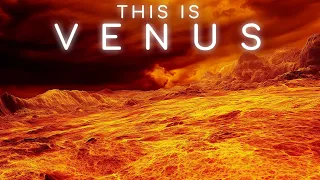
venus is not only the roman goddess of beauty and love but also designates the planet which depending on the definition is closest to the earth and which we can most easily see in the sky although venus is so close to earth it has long raised many questions even today many mysteries about this wonderful planet have not yet been fully clarified imagine that today venus is also called the hell planet because of its temperatures but that it also might have once been habitable and how is it possible that venus turns the other way around than most
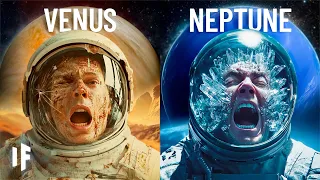
other planets in our solar system we have picked out 10 impressive facts about venus for you if you would like to leave earth with us to travel to the farthest reaches of the cosmos then show us with a thumbs up subscribe to simply space and look forward to the videos that will be waiting for you in the future let's begin the journey [Music] venus is hotter than mercury although venus is further away from the sun its surface is hotter than mercury in fact the temperature on the planet is 465 degrees celsius these temperatures have also
earned it the not very charming name hell's planet the reason for this enormous heat is a kind of greenhouse effect it is triggered by the fact that the atmosphere is covered by an almost impenetrable layer of carbon dioxide which can be seen in the form of clouds although this layer absorbs almost all of the sun's heat it also acts like a mantle as a result the heat accumulates and these high temperatures which would even be enough to melt lead are created by the way venus has virtually no day night rhythm as far as temperatures are
concerned it is almost equally hot during the day and at night venus rotates in a different direction than most other planets venus rotates the other way around than almost all other planets in our solar system while the others rotate counterclockwise venus rotates clockwise we call this rotation retrograde or simply retrograde this exception only affects pluto and uranus why this is the case has not yet been conclusively clarified as is so often the case scientists disagree on this according to some theories it is related to the fact that venus had to withstand an asteroid impact some
4.5 billion years ago such an impact may have caused venus to change its direction of rotation another theory says that venus once had a satellite that was split off by such an impact we can imagine this like a moon which is probably a satellite of the earth this satellite of venus could have bounced back to venus during a second impact by an asteroid and change the direction of rotation the atmospheric pressure on venus is extremely high on venus there is a pressure of 92 bar this is approximately the same pressure that can be measured about
900 meters below the sea surface compared to the earth this also means that the pressure is around 92 times higher than on the ground the gas molecules surrounding venus are responsible for this as the temperature increases so does the pressure by way of comparison deep dives were studied in the 1990s the maximum diving depth was 615 meters in a pressure chamber up to 70 barometers and around 700 meters were possible the strain on the human body is enormous allegedly the pressure compensation or decompression of the test persons lasted a full 550 hours venus is the
only planet with a female name the planets in our solar system as many of you probably know are named after roman deities venus is the only one of the celestial bodies that had the honor of being named after a goddess the reason for this could be that she is often visible to the naked eye in the night sky and the name givers have drawn a connection to their goddess of love venus is the roman equivalent of aphrodite the greek goddess of beauty as venus is the second brightest star in the night sky next to the
moon she is easily recognizable as a radiant beauty on a cloudless night the soviet union sent the first successful probe to venus between 1961 and 1966 several probes were sent to venus bonaire 1 and mariner 1 lost contact with the base and probably never arrived in 1962 mariner 2 a u.s probe managed to make its first measurements of the planet but venera 3 landed on the planet for the first time a probe of the soviet union investigations on venus have proven to be difficult until today because of the difficult atmospheric conditions venus is also called
the twin of the earth venus is considered the twin planet of the earth the reason for this is on the one hand the similar size but on the other hand also the similarities in mass volume and density however this does not mean that we would have a chance to survive on venus as just mentioned we would not survive the gases nor the extreme temperatures that prevail on venus apart from the pressure but the next fact is interesting in this context who says that venus has always been so hostile to life the climate on venus could
have been similar to that of earth venus is very difficult to study because of its atmosphere although it is the closest to earth it could only be explored and more detailed on the so-called venus express mission of 2006 and 2007. during this mission we succeeded in scanning it down to its surface the investigations revealed that venus might not have been so dissimilar to earth at one time climate models of the researchers from the godard institute of space say that it was possibly habitable 2 billion years ago it probably even had liquid water and a pleasant
climate something that is hard to imagine today although the theory is controversial no one has been able to prove otherwise one day on venus last 243 earth days since venus rotates very slowly around its own axis one day there lasts 243 earth days that's good to know to orbit the sun once venus needs just 225 earth days while the earth needs 365 days or our earth year conversely this means that a day on venus takes longer than one year this shows us that our definition of day and year is rather difficult to apply to other
planets their definition on earth was made in accordance with astronomical events which do not apply to the other planets time is and remains a relative concept in the universe venus has no magnetic field venus has no magnetic field due to its very slow rotation period a dynamo effect which normally results from the rotation of enormous masses cannot therefore occur on the planet although a space probe named magellan was able to detect a light magnetosphere this has other implications it is probably due to an interaction between the solar wind and the atmosphere fact is we are
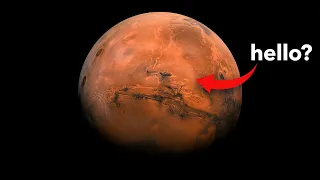
looking for a planetary magnetic field on venus in vain and venus is not alone in this on mars there are only local magnetic fields to be found which could indicate that at some point in time it had a global magnetic field this is also the reason why life on both planets is probably no longer possible today as magnetism acts as a protective shield venus is also called the morning or evening star already in ancient times venus was called both the morning and evening star people used to assume that they were two different celestial bodies as
venus appears twice a day at different places in the sky it was given these names because its orbit is between the earth and the sun because it moves faster than the earth venus appears once in the west and once in the east in the east we see it when the sun rises hence the name morningstar in the west when it sets that is how the name evening star came about you can read about this phenomenon in vespers and lucifer in roman literature and hesperus and phosphorus in greek literature incidentally there are theories that say that
venus was the star above bethlehem in the bible it could have risen again after a period of invisibility in the morning sky in other words as a morning star to this day the universe still raises more questions for science than are actually clarified and with every question that is clarified three new unsolved ones are added this is what makes astronomy so appealing to many researchers there is no doubt that venus itself still brings a lot of uncertainties but it also has a certain attraction which of the aforementioned facts were known to you and which perhaps
surprise you the most do you have any other amazing information about venus that we haven't listed some people think that in the coming years the earth could perhaps become a second venus if the greenhouse gases have reached their peak at some point what do you think tell us your opinion in the comments section