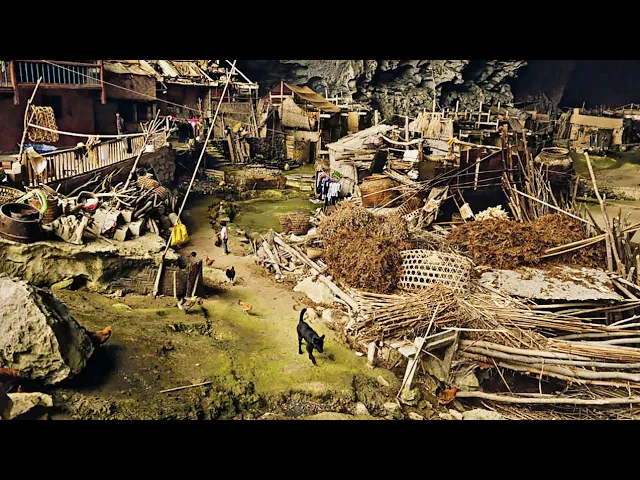
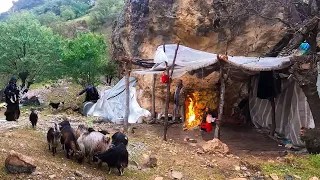
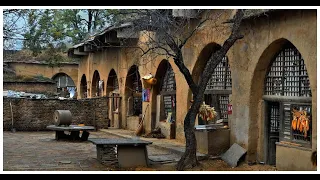
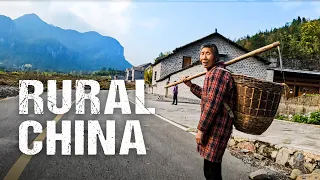
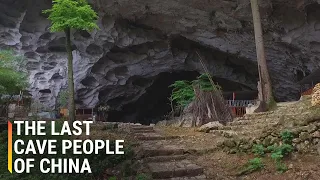
[Music] in a remote Meo Village in the guo province of Southwest China a small community of villagers refused houses that the government offered them and decided to continue living in caves in the mountains of Anan the meowo ethnic minority group has lived here for centuries and has developed a quasi tribal society and built roofless houses schools and a basketball court inside the 230 M long 115 M wide and 50 m High cave when armed Bandits prowled this remote mountainous stretch of the southwestern province of guo in the chaotic years before the founding of modern China
the ethnic meow villagers hid in the Region's enormous caves and there they have remained even after China was United under communist rule grinding out an existence of profound rural poverty and isolation the area is in one of the poorest provinces in China the only link to the rest of the country and the outside world is over a mountain footpath a Brisk 1-hour hike through a steep valley that leads to a nearby Road the inhabitants use the water falling from the Rock and grow wheat in the Hills near the Quarry the cave is conveniently warm in
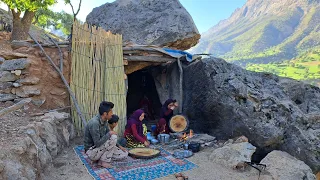
Winter cool cool and summer and dry all year long to take in enough Sunshine light and fresh air most of the houses squeeze along the entry of the cave benches beds and dining tables are the prominent decorations one peculiar thing here is that each house is marked with a door number and separated by bamboo fences considering the moderate size and Good Neighbor relationships both are more a token than a necessity the cave is conveniently warm in Winter cool in summer and dry all all year long to take in enough Sunshine light and fresh air most
of the houses squeeze along the entry of the cave benches beds and dining tables are the prominent decorations one peculiar thing here is that each house is marked with a door number and separated by bamboo fences considering the moderate size and Good Neighbor relationships both are more a token than a [Music] necessity in China they became famous after a China a daily article of 2007 which depicted them as modern trogloditas other articles claimed they were the last tribe who lived in a cave in Asia but that's not true since 2007 when the community counted about
100 members the cave is now inhabited by only 18 most of the people left the village in search for money and job opportunities and the remaining group now has to build a water reservoir to solve the issue of water supply rambling around you can hear the occasional cow mowing which resonates within the cave like a helicopter villagers weave the Fabrics grind the rice cultivate rice and raise pigs or cows although living in the Hills far away from the urban environment the group is not completely isolated from the rest of the world each week they will
buy Necessities in the market which is 15 km away on foot they have television and use the telecommunication signal of the Quarry their children have books and every once in a while somebody brings newspapers and magazines this cave shelters not only meow villagers livestock but also a school built in 1984 the only one of its kind in the world during its Heyday over 200 students studied here in 2008 the village met with a setback when the government decided to shut schools citing China is not a society of cavemen consequently children have to travel 2 hours
trekking back and forth to a tin School located outside The Village initially lacking proper infrastructure and recreational amenities The Village transformed with government efforts due to the increasing number of tourists a road is also being constructed in the village to improve connectivity though some residents have left there are still those who reside in the village alongside students who pursue higher education outside the village make weekly visits to meet their families luo dongwang a resident of jeongdong reflecting on Village Life admits to the hardships life's tough he acknowledges but the cave protects us from the bitter
winter cold and sweltering summer heat despite government officials making repeated visits the villagers stand unwavering in their determination to stay luo explains that villagers shifted to the cave back in 1949 near the end of the Chinese Civil War to hide from Bandits the majority of homes in the village are constructed from wood and bamboo and are located near the Cave's entrance [Music] in 2003 kyank bod an American visited jungong Meo Village overwhelmed by their plight he donated over 100,000 renman B to build the electricity wire for them since then knights in this cave are not
engulfed by Darkness anymore to improve these villagers life he dropped by three times later and gave each family the needy funds to purchase livestock The Peculiar life in Jan do Meo Village was documented and broadcasted in TV The Village Elders have been trying to Lobby the local government to build them a road linking the cave to existing infrastructure currently it is an hour's walk through mountain passes to the nearest Road the elders are insistent that if a road is built it would drastically improve the standard of living for those at jungdong crippled by inaccessibility the
farming community of jeongdong find it difficult to transport their sellable Goods to market the children could be driven to school on motorbike taxis instead of walking for 2 hours every morning and again every evening the adults would enjoy improved job prospects the whole Community would benefit from the laying of a road far more than they would have from the poorly planned and unwanted housing project had the local officials only listen to those they govern the hangar-like cave is so large that their wooden or bamboom made residences form a small Subterranean Village built along its undulating
walls during the day the cave is filled with the sound of cows and roosters on Friday afternoons the laughter of children Echoes and the smell of cooking fires permeates the Cave's cool damp air which offers relief from the heat of the valley below the remaining 18 families have held on stubbornly to their homes inside the cave they say that the new homes are too small that they fear losing access to their land and that they alone because of their historical connection to the cave should have the right to independently control its small tourism economy even
residents who are considering moving out seem to agree that $9,500 per person is too little money especially because many are elderly and speak little or no Mandarin meaning they could feel isolated if they leave the cave Community they still rely on their nearby land to grow the Millet and vegetables on which they subsist villagers have also complained about the quality of the new housing saying it's too small and poorly made