luis antonio go kim burglar was born in Manila on June 21 1957 hula analytic on Canadian after completing elementary and high school at the CIC Imran st. Andrew's School in Parihaka City he studied philosophy at the Ateneo de Manila University as a seminarian of San Jose major seminary graduating summa laude and as philosophy departmental awardee he obtained his degree in theological studies from the Loyola School of Theology in 1982 Chito as his fondly called was ordained to the priesthood on February 27 1982 and became associate pastor at st. Augustine parish in mendez cavite until 1985
during this time he also taught theology and Carlos Seminary Loyola school of theology and Divine Word seminary and was spiritual director then rector of the diocesan seminary of emos the hon anima booting past all in Tagaytay City he was sent to further studies his sacred theology at the Catholic University of America in Washington DC where he obtained a doctorate in sacred theology in 1991 in 1997 pope john paul ii now st. john paul ii appointed him member of the international theological Commission of the Vatican and in the following year an expert at the special assembly
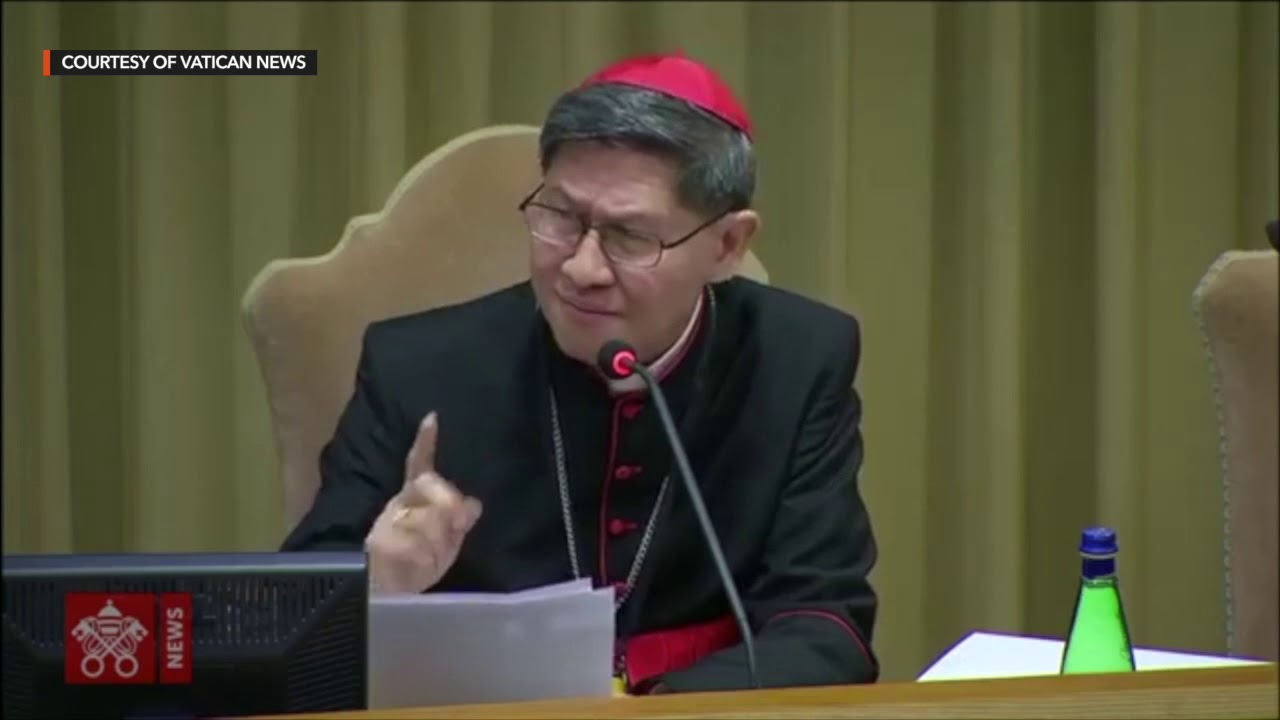
of the Synod of Bishops for Asia that took place in Rome the Pope then appointed him bishop of emos and was ordained to the Episcopacy by His Eminence Haim a cardinal sin on December 12 2001 Pope Benedict the sixteenth appointed him as xxxii Archbishop of Manila on October 13 2011 succeeding Gordon Shaw Cardinal Rosales he the name bishop Cheeta to the College of Cardinals on October 24 2012 the seventh Filipino admitted to the College both Benedict the sixteenth has appointed Cardinal Doug led to various positions including membership in the Congregation for Catholic education the 13th
ordinary General Assembly of the Synod of Bishops on the New Evangelization the Presidential Committee of the Pontifical Council for the family and the political Council for the pastoral care of migrants and in turn around people's since 2014 Pope Francis has appointed Cardinal Douglas to the Pontifical Council for the laity the Sacred Congregation for the Institute's of consecrated life and societies of apostolic life the Sacred Congregation for the evangelization of peoples and the political Council called unum for human and Christian development Cardinal cheetah was also appointed President delegate of the Synod of Bishops on the family
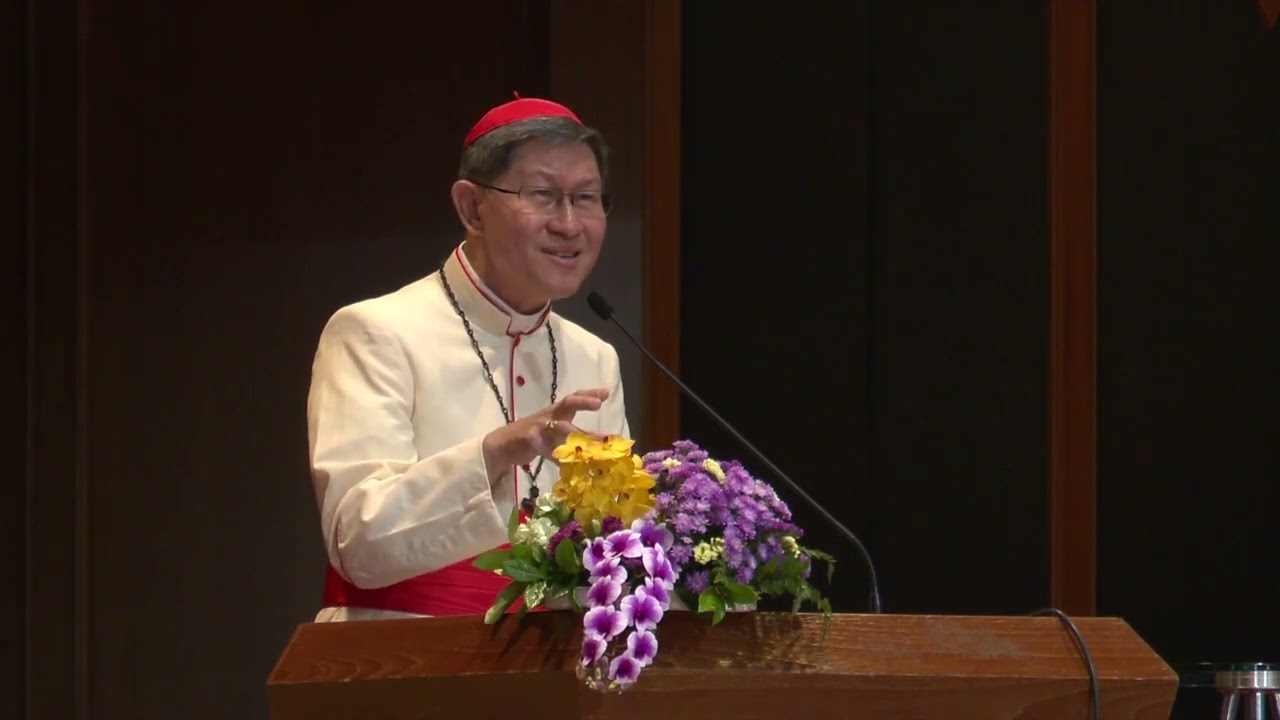
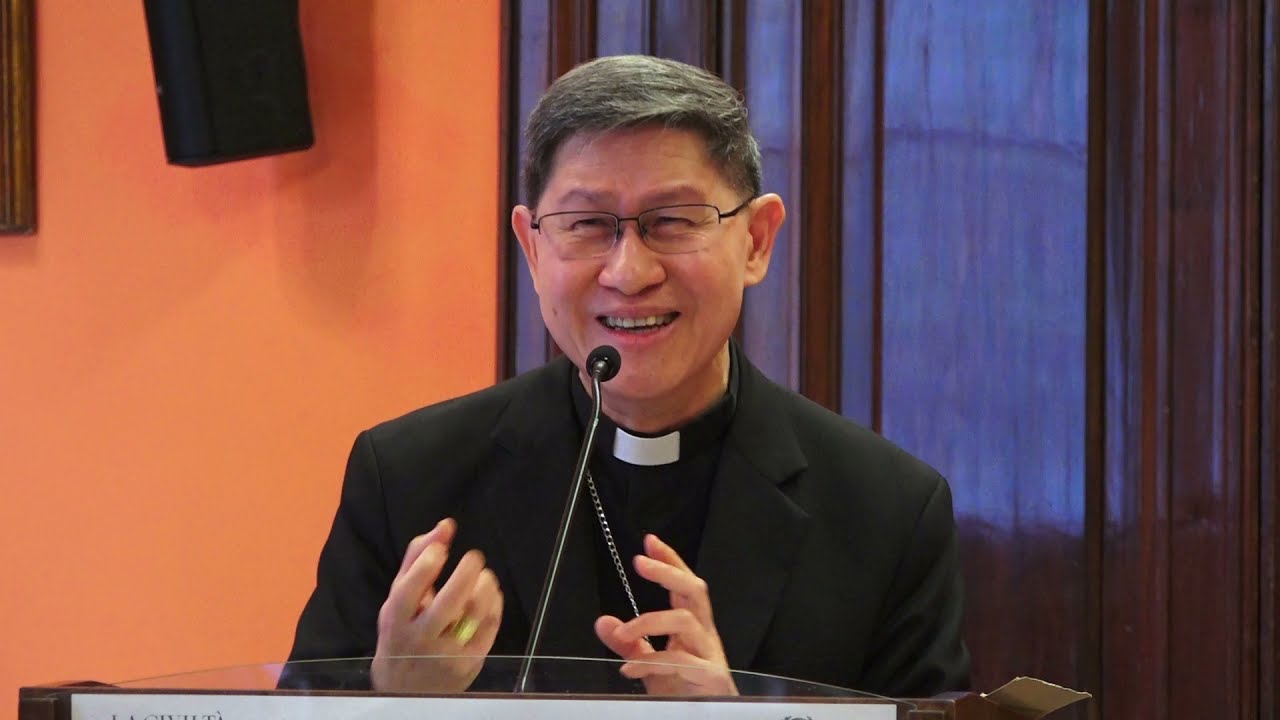
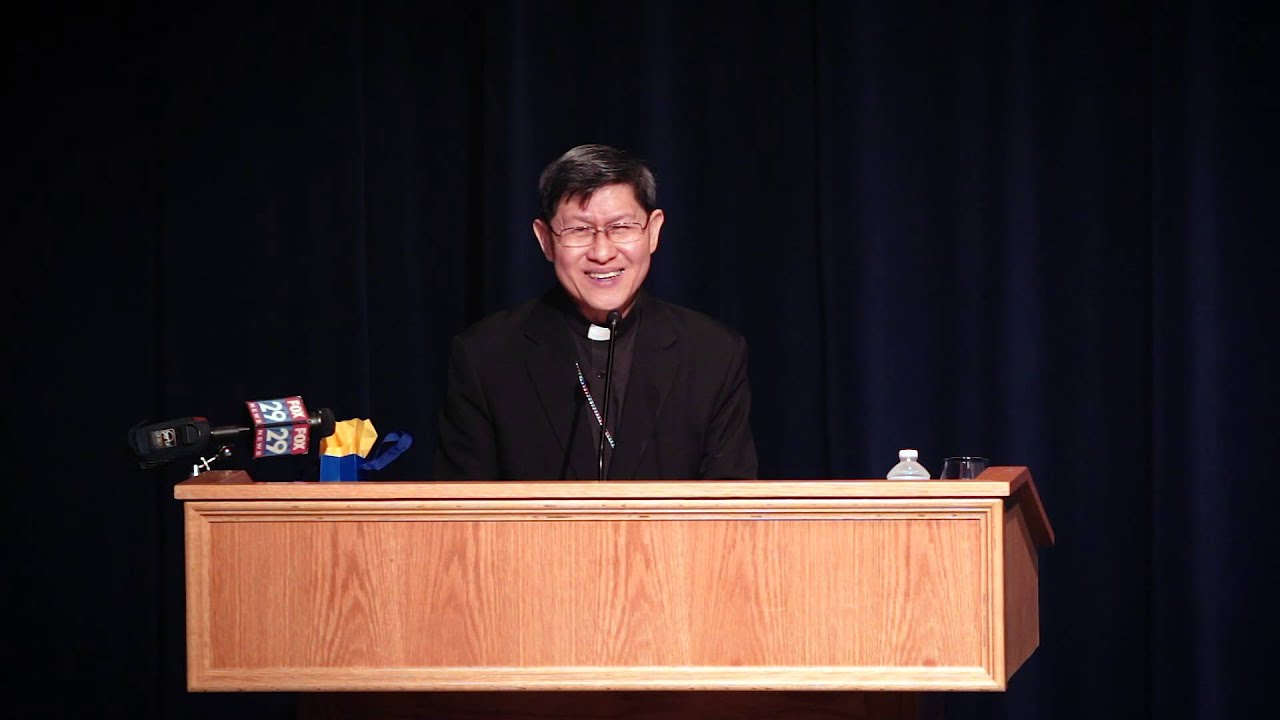
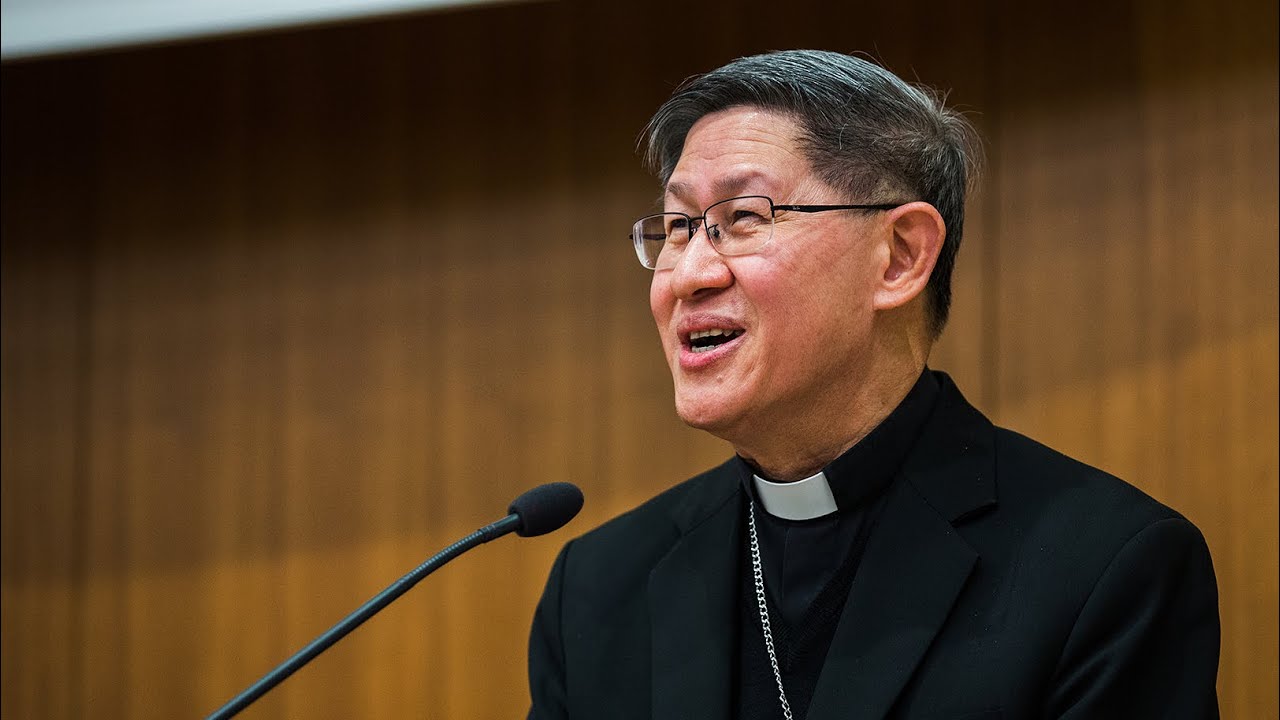
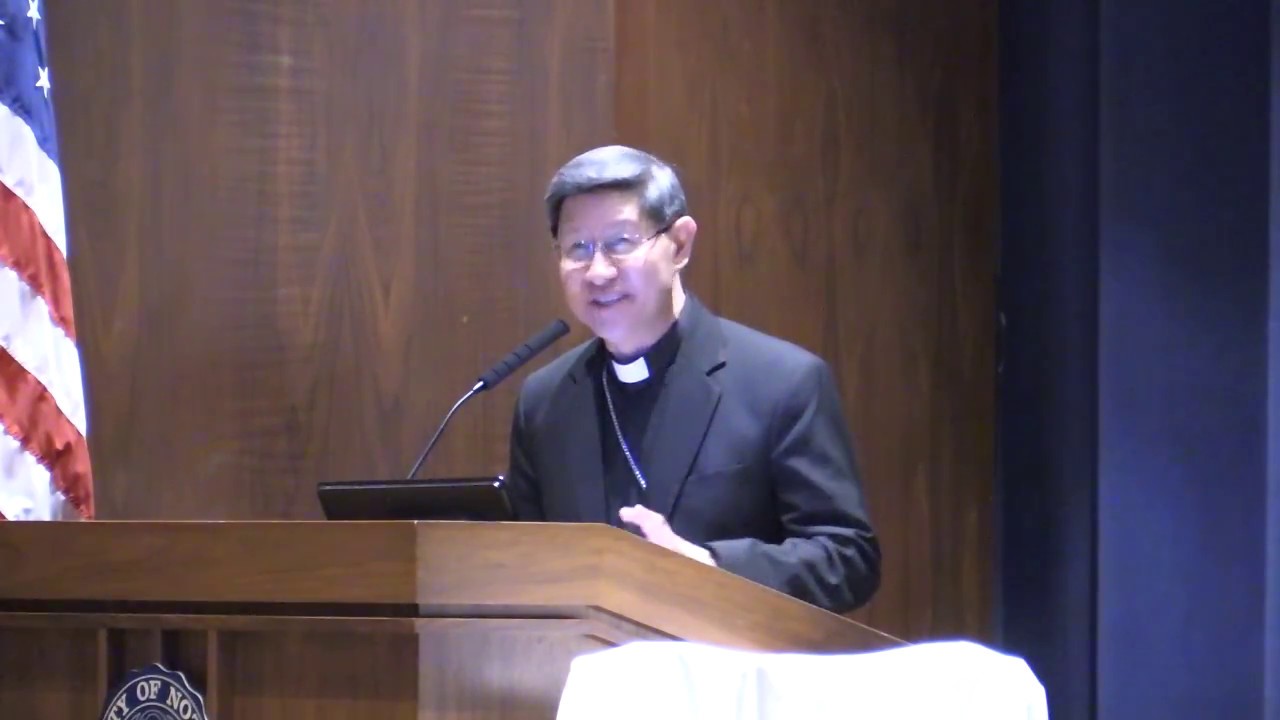
president of Caritas International and most recently president of the Catholic biblical Federation but perhaps what sets Cardinal tightly apart is the way he communicates to his flock open joyful compassionate caring as emeritus Archbishop Cardinal Riccardo Vidal wrote he is the bishop who can both laugh and weep with his people Carl Douglas a man truly in love with God and with his church the Lagaan laudato si and kin-yuen personality ladies and gentlemen His Eminence Luis Antonio Cardinal Douglas maganda Umaga Posen's aha maraming salamat father Jonah pakka ganda moon sinabi the longing Kulemin asana Toto Eden I
would like to thank father villa in and the Ateneo de Manila community and the Manila Observatory community for inviting me to give this keynote address as we celebrate the 150th anniversary of this wonderful institution at the service of science and faith and human development the manila observatory and we also celebrate this milestone of an encyclical from Pope Francis Joshua the Pope now that Aussie missing you're a praise be to you my lord my task this morning is to give you some sort of an introduction to the encyclical I could give that introduction in one minute
summarizing everything by saying please read the encyclical this talk cannot be a substitute to reading the encyclical itself but I have to warn you it is the longest encyclical so far written by a pope in the history of the church well I think the topic calls for a comprehensive approach and we thank the Pope and his collaborators for such a successful outcome in laudato si so after giving you a background of the encyclical I will indicate from my point of view a few things that I think married our continuing reflection and hopefully action this title
comes from the invocation of Saint Francis of Assisi the canticle of preachers when Pope Francis chose the name Francis in the Conclave that elected him I was there people started murmuring Francis who Savior after all he's a Jesuit but he was quick to clarify Francis the Poverello Francis of Assisi and true to form this Saint who is called also the patron of ecology becomes the inspiration of this encyclical the Pope reminds us of our common home our sister our Mother Earth sister earth who now cries out to all of us because of the harm inflicted
on her due to our irresponsible use or abuse of the goods God has endowed her and the response that Pope Francis proposes to all of us really comes from Pope John Paul the second a global ecological conversion we are happy that conversion is now linked to ecology and global event so the key concept that the encyclical proposes to us is integral ecology to articulate the fundamental relationship of the human person personhood is relationship we are related to God we're related to ourselves we are related with other human being we are created to the earth and
to the whole of the environment let us keep in mind that this is the key concept integral ecology now the different chapters of the encyclical can be considered as steps that we can take in order to enter this world that is being open to us the world of integral ecology so the first chapter what is happening to our common home now we can consider this as the step of listening viewing spiritually and listening spiritually to scientific research science and spirituality let us listen to the results of the best scientific research on environmental matters that are
available to us the Holy Father proposes this science as its best can help us listen to the cry of the earth what a beautiful way of putting the task of science science at its best can help us listen to the cry of the earth now the Holy Father did his own listening and his own seeing he pointed to the following things pollution waste premature deaths deaths of children the earth looks like a pile of Filth and he says the root of it is the throwaway culture we throw away anything that we don't find useful even
human beings elections are coming you see a lot of throwaway culture being manifested the climate the changes affect entire populations and in fact it is not just war ethnic battles that costs migration we have a lot of people who migrate because of ecological or climate changes water contaminated water and the poor deprived of access to water that's why there is a move to declare access to water as a basic universal human right the loss of biodiversity the extinction of plants and animal species an extinction that changes the whole ecosystem and the Pope reminds us that
species are not just exploitable resources as we tap into them we should be sensitive to the effects now on the whole ecosystem and life the decline in the quality of human life and the breakdown of society the Pope questions the growth model that prevails it does not always lead to integral development I'm very happy to know that here in the Philippines the past two years there have been a lot of fora dedicated to inclusive growth people are now asking how could growth really embrace everyone for the while there is growth being registered it seems that
it excludes many people how do we achieve growth that includes everyone especially the poor cities are becoming unlivable but they say 70 percent of the world's population now lives in cities and cities are expanding and in the cities there's very little contact with nature in fact in one meeting on evangelizing big metropolitan centers I raised that question the parables of Jesus Christ are agriculture rural based the fishes of the sea the mustard seed I mean when people live in the city mustard that's for the hot dog mustard seed that grows into a big shrub I
mean what does that mean to them you talk about the Sun the Stars do they see the stars they see illuminated LED advertisements we need to search for new parables and new mediations of God's presence that's not in the encyclical global inequality the Pope says the poorest the poorest people are the most vulnerable when climactic changes happen so the true ecological approach is also social in the line that was made famous by Pope Francis it says the cry of the earth and the cry of the poor they come together this are some points which the
Holy Father races in the first chapter so maybe we can do our own listening we can do our own looking at our own contexts and add to the list but the Holy Father has just given to us the segue to the second chapter is quite typical of Pope Francis's style he just avoids you know all of is convoluted diplomatic language he says he's not happy with leadership in the world right now especially with political leadership there is no willingness there's no determination to implement change and with that he leads us to the second chapter which
is the gospel of creation he picks up from the wealth of the judeo-christian tradition particularly the biblical texts and theological reflections on those texts he relies heavily also on not only his predecessors and their encyclicals home beliefs and teachings he uses a lot of the pastoral statements issued by Episcopal conferences all over the world so aside from talking about integral ecology the methodology that the employees in this encyclical is also that of collegiality he brings into the people Magisterium different teachings from the national and regional Episcopal conferences the bishops of the Philippines issued a statement
in the 1980's the Pope quotes that the Asian bishops conferences also had a study on ecology the Pope quotes from that document now the gospel of creation he directs the Christians to the wealth of our tradition he says while it is true that the ecological concerns require interdisciplinary approaches an interdisciplinary dialogue we cannot exclude religion faith spirituality faith traditions have a lot to share to the whole world about caring for our common home our biblical accounts we have a God the God who liberates is the same God who creates in fact historically Israel got to
know God first as the God who saves the God who liberates the God who uses the forces of nature in order to liberate God's people from liberation to creation those two should not be separated creation liberation into full human dignity that is what our God is all about and human life is grounded in relationships with God with neighbors and with the earth according to our judeo-christian tradition the earth is a gift it is not a possession God possesses it we are not the owners we are stewards that's why in the tradition of the church and
private property is never absolute when the common good requires it then you must be able to give up let go of private property for us the theological underpinning is that we are not owners so you know save yourself the trauma in the trouble when somebody borrows money from you do not think of it as your money so that when it is not returned you don't get angry it's not mine that's how I face it CPAC initial opinion in Newtons Arkin Londo can gallop forgive me signal demon our Union did not the unlearn shocked America NASA
hanyamane but do manage arcane Salama whom indeed well on the wireless arcade machine demon out in Union try it try it now Martin case Adam in your opinion a team called Odyssey that's not in the encyclical now each creature has a purpose very Franciscan very Franciscan even in the weeds Saint Francis would see beauty and purpose very christ-like and there is interconnection interrelatedness between creatures the earth is a shared inheritance that's why the goods of the earth are destined for all and not just for a few Jesus the Word of God through whom everything was
created in the fullness of time became a creature became matter became flesh and the incarnation of the Son of God blessed creation all the more he lived this earth he lived on this earth just like one of us he died here and was buried on the earth but brought the earth to the resurrection into the fullness of life in God a rich tradition that leads us to the third chapter of the third step after seeing both the situation and the richness of the judeo-christian tradition now the analysis the human roots of the ecological crisis the
human roots and the Holy Father is not content with symptoms he wants to go to the roots he identifies some and he invites us to converse with him to dialogue with him in his analysis and again for us to add our own inputs first he says a misuse of technology while technology is very good and we can all attest to the benefits that we are enjoying thanks to technology there is a way of using technology that becomes pride dominance economic political dominance he says technology needs sound ethics a technology a culture that will allow limits
and self-restraint he says part of the problem is that technology opens to us so many possibilities and one one direction of pride is if we can do it we should do it just thats pride is there no limit anymore is there no more self-restraint another root cause for him is this misguided anthropocentrism the view of the person as possessing full dominion over nature so he says we need to recover the sense of responsible stewardship we should protect life and here he says part of pride is the manipulation of human life especially in abortion that's pride
for him another pause practical relativism since I am the owner since I am the boss I disregard loss I disregard principles I disregard truth they are not upheld loss are avoided rather than implemented for the common good and he says that's rooted in this practical relativism everything is relative to me I'm the only absolute I am the owner then he says another root the loss of the value of labor we need to protect employment we need to protect the labor and work is not just for income word is for human development with work I grow
as a human being people ask me why do you continue teaching you're already late and with work listening to father joke didn't Elam enumerate my passage I felt tired I said Wow is that you cheat oh is that the story of your life you know but when people ask me why do you continue teaching you're already a bishop or a cardinal I said that's the type of work where I've experienced human development I don't find it tiring even if you don't pay me I will teach that's true but you have to take care of the
laborer but how many people work because they find joy development in their place of work how many I don't know but the Holy Father is alerting us to that new biological technologies genetically modified organisms he admits that there have been some gains but some problems remain and they need to be addressed so he is inviting all of us to abroad responsible scientific and social discussion even debate on these process these roots of ecological crisis the fourth chapter contains his proposal integral ecology centered on the human person let us find our unique place and we already
mentioned the human person is relational find your place in the world by rediscovering your relationships with God with yourself with other people and with the environment this integral ecology will provide a new paradigm of justice for how how do we conceive of justice when we are always connected what type of justice will it be what concept or notions of justice will arise if they are rooted in connectedness human connectedness with everyone so environmental social human issues are always related here are some elements of the integral ecology that he proposes first as I had already said
economic social human and environmental concerns are interrelated European singer see Joey Ayala diba Mary Jean Kanta an odd number guy I monk on ie yeah everything is connected all creatures form a network that will remain a mystery that we will never fully understand we will continue exploring that especially through scientific research but knowledge needs to be integrated into a broader vision that relates the ecosystem to social integration to institutional decisions for the common good and quality of life the second he says integral ecology includes cultural ecology remember the Pope's speech to the families when he
was here in the Mall of Asia he alerted us to what he called ideological imperialism or colonialization now it appears again here cultural ecology part of our ecology is the culture so he says what is proposing now in taking care of the environment is take care also of your cultural environment your cultural treasures the treasures of humanity and here he issues a special appeal for the protection of the rights of the cultures of the indigenous peoples whose cultures are neglected and destroyed in the name of so-called development the third the ecology of daily life says
look at the urban environment those in charge of urban planning is their public space is there sufficient space for housing how is transportation the relationship between human life and the moral law we don't have absolute power over our properties our bodies etc and he proposes again what is contained in the Catholic social teachings the common good he calls on everyone to make choices in solidarity based on option for the poorest and the most vulnerable bring the excluded into the center of our planning and our choices and finally integral ecology includes justice between generations we should
not look only at our generation and what we need we should look to the future generations what type of world will we pass on to them the poor of today and the generations of the future should be very much present in our planning in our decisions in our choice of lifestyle are you still with Pope Francis the fifth chapter will coming to a close here the fifth chapter now leads to action lines of approach and action for the renewal of international national and local policies he invites the business sector government sector to review the decision
making processes so here in this chapter he really invites the working together of those in politics those in business those in the sciences and technology and those in religion he says think of our world with with a common perspective or a common plan let us not let the destiny of the world be determined by a few countries and a few influential people politics and business should abandon short-sighted efficiency or profit orientation or short-term electoral success and anonymity netanyahu para la mi mejor modo and then ending a man man sustained no as a mannequin cartoon the
pope also calls for honest honest and transparent decision-making so as not to harm the most disadvantaged avoid corruption which concealed which concealed real intentions and deals mostly their own do makuhita banana Panamint paulo did now go long politics and business for human development he says the market forces cannot be allowed by themselves to dictate on us for market forces cannot safeguard invite the environment and human development maybe we should slow down production Sabeena so that people will develop human and let us review notions of progress and development ho t not analogue ene no our are
the models of progress and development that we propose to people are they are they the models that are really appropriate for them or that the models that they desire science and religion must work together they need each other and the various religions should also work together share their insights with one another you know the office of theological concerns of the Federation of Asian bishops conferences issued a study on caring for the environment but it included the whole section on what the other Asian religions say about caring for the earth what Hinduism Buddhism Confucianism Islam and
we discovered there's a lot that we can that we hold in common which could be a starting point for our common action to sew urine and the final the final section is about ecological education and spirituality guidelines for Christian now it's more for the Christians Christian spiritual ecological version and here the Holy Father breaks protocol not he enumerates lethal actions that could be done and should be done in fact some people were surprised they said that this last portion doesn't sound like a regular papal encyclical because he went he went to details like what's your
water consumption turn off the light if you don't if you don't need it if you do not use again now check your lifestyle no how about the attitude of gratitude is it still alive do people still give thanks says go back to praying grace before meals and go back to saying grace after meals as sobriety generosity happiness in simplicity daily gestures that will break the cycle of violence exploitation selfishness then says do you still find time to rest last Wednesday I mean yesterday I'm operating on different time zones I'm confused what day is today your
first day so yesterday the Holy Father mentioned that in his in his audience Wednesday audience said yeah don't become a slave of work work has become a god and we sacrifice everyone including ourselves we sacrificed our family we've sacrificed friendship and we offer all of them as burnt offering to the god called work capital and labor a certain sadhana that's why the Sunday worship the Sunday rest is good for the environment and it's good for the human ecology so he ends with that worship for on the seventh day God the Creator rested I know how
please read the encyclical hahaha may I be given one more minute just to indicate a few things no which some commentators have said and have the experts have also indicated or noticed in the encyclical very briefly Leonardo both these are one of the main exponents of the theology of liberation said reading the encyclical he noticed a very Latin American approach to the realities the methodology employed by the Holy Father see judge act and celebrate well that is not purely latin-american since Vatican 2 it has become some sort of a methodology but I am very happy
when he added that because even in Asian circles we always say see judge Act but the Pope would always add in the end celebrate celebrate for that will remind us that the horizon is that of gift rather than function only gift when you look at people do you see a gift or do you see someone that could be used when you see an object do you see a gift or do you see something that could be manipulated celebrate so after this forum there will be celebration then there is this a scholar from maples Alex Sano
tell me he reading this he said yes that the the challenges of the Holy Father are real and he affirms that the most original for him in the of the encyclical is uniting the cry of the poor with the cry of the earth integral ecology a total listening and he says the church is a privileged community to be able to do this to risk to respond to this but that will require for us in the church a meeting of faith and life the faith professed and the living of that faith we say I believe in
God the Creator I say it I profess it but my life my lifestyle might betray that I don't really believe in God the Creator maybe I believe in myself as God the Creator so he says yeah the challenge of this encyclical to the church is review the faith that we profess and how far are we from living it he even mentions Thomas Berry says Thomas berry once noted that we have already formulated a moral response to suicide homicide genocide now we need to formulate a moral response to by your side and G aside killing the
earth killing life Bhagu onion project nonk manila battery and sugar only on the School of Theology side side we have dial zero Joshua at the French Joshua he he is very happy that the Holy Father addresses this this encyclical to all peoples after all the earth is our common home and he says there is a growing awareness in Europe regarding the role of religion and religious traditions in participating in public discussions sharing their unique wisdoms and he says that maybe through this dialogue between politics and religion the politicians could have could acquire greater courage in
regulating no concerns and markets for the common good so let us draw resources from the faith and let us share that now there are two sociologists based in Milan and what they they stressed in the encyclical is the new humanism that the Holy Father is presenting to us it's not new in the sense that it has been compacted recently by Pope Francis it is rooted in the biblical tradition but it is being proposed and new a rediscovery of the person as relational and he says she's at both of them said if the person is relational
then human freedom must always be relational freedom must be exercised in responsibility for the others freedom cannot be invoked as an excuse for separating myself from others and even harming others no just because I am free if I am a person in relationship then even my freedom in my choices consider the impact or the consequences on others Chiara jacquard e-even quote sir an errant an errant said that there are two in our times two symbolic killings the killing of God the Father and the killing of Mother Earth so she asks the question if you do
not have God as father and you do not have the earth as mother then ha you are not anymore a child of someone you are just you you are not connected with anyone anymore so he said she Hannah Arendt asked the question what happens to gratitude what happens to respect what happens to sisterhood and Brotherhood what happens to tenderness when you do not have a father when you do not have a mother caring the Holy Father loves to talk about tenderness do not be afraid to care tenderly and for him caring is not being a
spy doing some surveillance work no it is an attentive look at the other because I am concerned it is a nurturing look so that I promote what is good and beautiful in the other and it is that look that regenerates the other and I must take care of myself to not to dominate others not to rebel not to destroy but to take care and to help others bloom and finally another Jesuit Giacomo hasta was the editor of Jordan Amenti so Charlie says for us Christians and educators as pay attention to this the little actions the
gestures that the holy father proposes remember in evangelii gaudium the holy father already said reality is greater than ideas so here is it you're always talking about ideas go to reality do something say grace before meals say thank you those are the things that will make that will make a dent not your beautiful ideas only it doesn't mean we don't need ideas but without the gestures nothing will change he says and then conversion and he calls for patience the Holy Father calls for patience just like any conversion if we need time and the Holy Father
believes in that time is greater than space so patience move through time but every time every moment in time do some little acts some gestures for that and rest Chito find time to rest I should say this to myself you know for resting in amoeba rest abandon rest please do not use this as an excuse you empower us in the Parana hello Hui na na ba ba honey no but resting here is not just for for mental and physical recuperation for we are part of a delicate world we are also delicate no but it is
also a spiritual act when you rest you let go and you really say the world is in the hands of someone mightier than I am I may disappear now and I'm sure the world we'll continue now thanks to the providential God I started by referring to Saint Francis of Assisi whose name Pope Francis talked but at the end of the encyclical I told myself after reading it oh come on Pope Francis you cannot hide it you are the son of Ignatius you are the son of Ignatius I could see strains of the first principle and
foundation the purpose of creation to glorify God and the whole of creation is given to you so that you could be of service to God and to God's kingdom and have the courage to that goal when you are misusing creation and creation is not anymore leading you to God be simple and everything moves in the horizon of gift la Hudlin it all Imola CEO mu Daiko mendoza hill hindi naman actively garlic naman Sahil so I could be free I am NOT attached I am NOT domineering because everything is gift just give me your love and
I have everything teach me to be generous Pope Francis you are the son of Ignatius through and through thank you very much for your patience


![Top 3 the next POPE candidates [ Who will be the next Pope ] Please subscribe to my Channel 🥰](https://img.youtube.com/vi/YzWbpawifZM/maxresdefault.jpg)