Hi, this is Dr Diane Gehart, and this is my lecture on Structural Family Therapy. It goes with my textbooks, Mastering Competencies in Family Therapy and Theory and Treatment Planning in Family Therapy, that are both published by Cengage, and you can get both hard copies as well as digital copies and copies of single chapters directly from the publisher. Structural therapy in a nutshell-- the least you need to know.
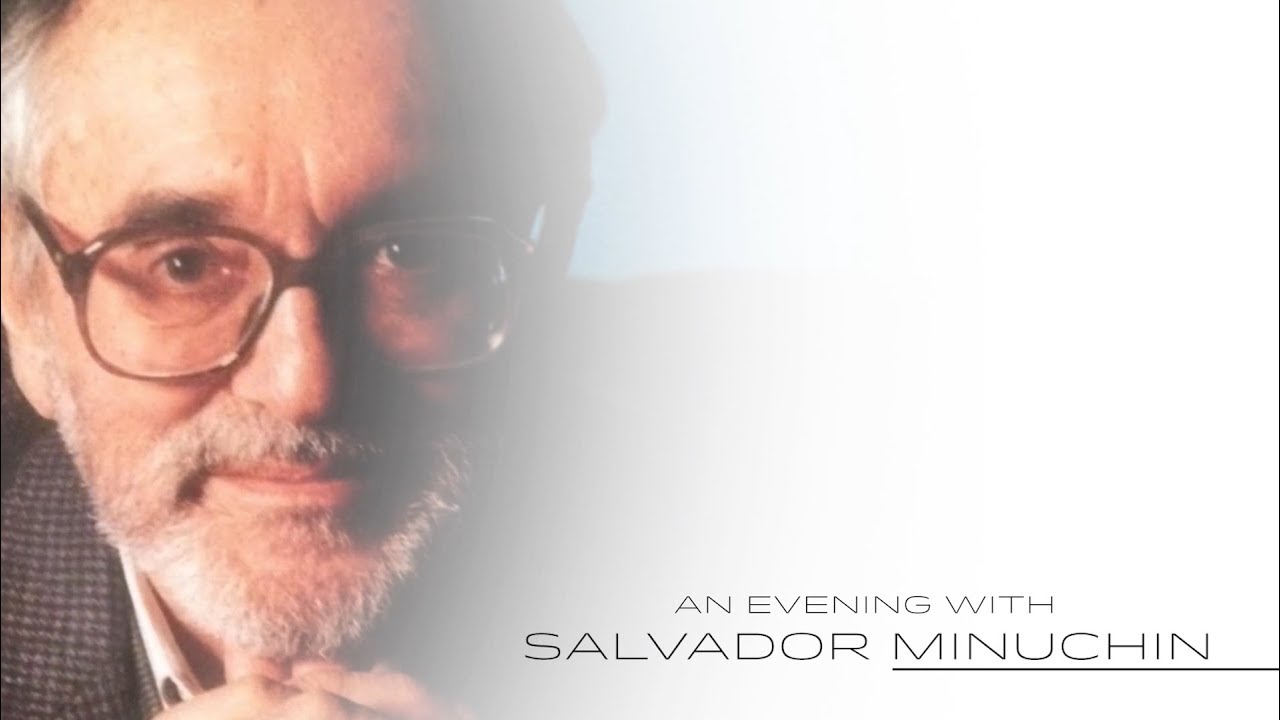
Structural family therapy is arguably one of the most influential family therapy approaches. It was developed by Sal Minuchin and his team at the Philadelphia Child Guidance Center. And I will say that it's always been like my students-- one of my students' favorite chapter because I think there's this intuitive-- like it makes sense when you get it.
Especially after you've been reading some of systemic family therapy, it kind of often makes a lot of people's head hurt to read [INAUDIBLE] and some of his systemic writing. When you get to Sal Minuchin's work, you're like, ah, this makes sense. And I think of it this way.
That the systemic family therapists are tracking-- it's much more dynamic. They're tracking the family interaction sequence. And so it's very dynamic and they're tracking behaviors across time.
Minuchin's structural approach is more like taking a photograph of the family structure. You're trying to identify that family structure. It's not truly like a photograph.
It's also dynamic, boundaries are always movement. But it's a lot more concrete and I think it's a much easier approach to learn as one of your first family therapy approaches. So if you were struggling with systemic, you'll probably find structural a little more-- it just makes more intuitive sense to most of my students.
So as the name implies, there is a focus on the "family structure. " And what does this mean? Minuchin looked at subsystems.
Subsystems-- we're going to go into more in-depth, but they include the parental subsystem, the couple subsystem, the marital subsystem, the sibling subsystem. There can be other sorts of subsystems. Those are the basic parts.
And then they look at the boundaries between those parts. Are they too close? Are they too distant?
They also look at the hierarchy. How does power move? So they're looking at the family structure, and making sense and interpreting and looking at how the problem-- the presenting problem is related to this family's structure.
And in terms of an approach, it's a very active approach. Minuchin talked a lot about joining family systems. You often hear this term used in family therapy throughout, and Minuchin had a very particular way that he joins the family system, he becomes part of and learns how to move, Minuchin had a very particular way that he joins the family system, he becomes part of and learns how to move, walk, and talk like the family rather than getting them to move, talk, and walk like you.
And then the structural therapists are very active in session. They do something called enactments where they restructure the interactions between family members. So they're very active in doing in part of the family system.
And there have been several evidence-based treatments. The drop on the concepts and structural family therapy- - for example, emotion-focused therapy, EFT, uses enactments-- very similar to Minuchin. Functional family therapy-- also we have lectures in this series on them.
Functional family therapy also does something very similar to enactments. So a lot of these concepts-- functional family therapy does conceptualization that draws upon the structural concepts in Minuchin's work. So Minuchin really was a groundbreaker in the field of family therapy and his approach is very much used today.
It's very accessible in many of the concepts that he first pioneered are definitely alive and well in the later and more contemporary evidence-based treatments for families. The juice in structural therapy-- significant contributions to the field. Well, structural therapy is so juicy, I actually could not choose just one.
I had to choose two. The first of which is boundaries. Because boundaries-- we even hear that talked about in everyday speech.
It's one of the few family concepts I think that you hear certainly in the popular psych literature, but you also hear everyday people now talking about boundaries. And Minuchin was one of the first to really focus on this and bring this language into the field. But boundaries are rules for managing physical and psychological distance between family members.
So how close of distance we are and how that's going to look in this family. And so, it really just defines closeness, distance, hierarchy, family roles, and everything. And these are organic-- they're living processes.
And it's very important to understand all boundaries are culturally defined. There are gender rules around boundaries. So it's not like all members of the family have the exact same set of rules, and boundaries vary very much.
So it's very important. You really can't separate out culture from what healthy boundaries look like. And so again, Minuchin doesn't have a definite idea as to what healthy boundaries should look like, but they need to be such that members of the-- they're regulating closeness and distance in a way that no member in the family system need to have a symptom is again how that would be defined.
And so, what's hard though in terms of assessing boundaries is that most of us use our own life and examples. So this is how my family did it, and so this is what healthy looks like. And so, depending on whether you're on a more come from a collectivist culture or individualistic culture, they can look very different.
And that's very important to understand when you are assessing family boundaries. So, types of boundaries. First, there are clear or "normal boundaries," and this is when there's close emotional contact that also allows each person to have a sense of identity.
And of course, as different-- as the family moves through the family life cycle and there are different developmental needs, healthy boundaries will look different across the life cycle. We'll talk more about that. They also look different across cultures.
And so depending on how the culture encourages its emotional expression or what forms of emotional expression are appropriate within a given culture, that's going to change what the boundaries actually look like. And you know you have normal healthy boundaries when no one in the family is having significant symptoms or problems. So it's very important to note the typically like if you're assessing the family that's presenting with problems, that typically you're going to have either [INAUDIBLE] disengaged boundaries because something's gotten out of balance.
So enmeshment refers to diffuse boundaries where the boundaries aren't strong enough. There's a very strong sense of connection and mutuality, but at the expense of individual autonomy. So typically when there are diffused boundaries, if one person has an emotion, the other person has to have the same emotion.
We're both going to be angry together. It's not like this person is going to be angry about what happens at the coffee shop today and the other person cannot be. There's expectations that everyone feels and thinks and does the same, and it can get to such an extreme that one or more [INAUDIBLE] people are having some sort of symptom are presenting problems.
On the other opposite end are disengaged and rigid boundaries, and this is when autonomy is emphasized at the expense of emotional connection. So there's too much distance between the members. There's not enough family cohesion.
There's not a sense of emotional connection, so those are disengaged boundaries. And again, there's a full range of healthy boundaries that can look more enmeshed or more disengaged, and they can still be healthy. And a lot about how they actually present and look can be-- depends on culture.
And it's when you get to extremes that we begin to see in individuals or family conflict erupting, and so those are the presenting problems. So in assessing boundaries, you need to be very careful not to just use your own template, but to really think about whether or not what the symptoms are related to the problem. And then to look at the function of what's going on and how they're negotiating closeness and distance, and where they're getting most likely stuck in therapy and presenting.
The other major concept that Minuchin presented is the concept of enactments, and this has been very influential. As I mention enactments, you will see them in many of the newer evidence-based treatments. And this is when a therapist prompts a family to reenact whatever conflict or problem interaction that they describe is happening at home.
So if they describe this conflict between the parent and the child arguing or the couple arguing, the therapist would ask them to actually reenact that. But that is not the end of the story. So I always tell my students, don't just ask them to enact the conflict.
Enactments begin with having them enacted to you-- typically you already have a basic map or sense of the family structure where the problem is. You're mapping, you're tracking the interactions, and then you redirect them, OK. You just don't let them argue in your office.
That's not an enactment. An enactment involves having them begin the-- engaging in the conflict and then helping them restructure the family, restructure, so that they can have healthier boundaries. For example, if this is a family that tends to have enmeshed boundaries, we'd assess that as the problem.
Then, when they're having their conflict, you would intervene to clarify the boundaries. For example, if they don't let each other finish each other's sentences, you would instruct one to wait and allow each person to speak. If they speak for each other, another symptom of enmeshment-- you know, you're thinking this and you're feeling this-- they would, again, intervene and say, hey, you can speak for yourself but not for the other person.
And so whatever it is that needs to be happening. If they need to increase engagement, you might have them turn their chairs and instruct them to look each other in the eye. You might even-- with couples sometimes you can instruct them to show them support and encouragement by putting a hand on their arm, or their knee, or whatever.
Improving the parental hierarchy. If a kid starts acting out, sometimes you have to do this in the waiting room. In fact, they don't even let you wait till you get to the therapy room.
You don't get the child to behave. Instead, you turn to the parent, and you say, can you please have your son sit in the chair? And there you've begun to-- your enactment, and you would help coach the parent through this.
You just don't leave them out there hanging. But you would say, OK, so he's not listening to you. What do you typically do?
What are some other options? Do you want to try a time out? Do you want to try this?
You want to try this? Can you say what you just said without being so angry? Whatever it needs to be.
So you're coaching the family in how to clarify boundaries, improve the parental hierarchy, whatever else needs to be done, but you're helping them restructure. And this can be very, very effective, and I always joke even if you don't plan to do enactments, it's good to know how to do them well, because often they don't wait for you to invite them to show you how they do conflict. They just start doing it, and so it's good to know how to respond.
Especially when you work with couples and families, you're likely to have conflict erupt even if you don't ask them. So it's a very important skill when you work with couples and families, at least in my opinion. The big picture and overview of treatment.
So in terms of the basic phases of structural therapy, the first is building the therapeutic alliance, which is joining the family and accommodating to their style and how they interact and relate. In the next phase, you're evaluating and assessing, which basically means mapping the family structure, looking at the boundaries, looking at hierarchy, getting a sense of where things are off. And then you intervene to address those problems.
So you're intervening to literally transform the family structure, so that the symptoms are diminished. And that's the basic process. It's a relatively brief approach.
So who attends therapy? Typically, the entire family's always preferred, especially for the initial sessions when you're trying to map the structure. In subsequent sessions though, they may invite only specific subsystems back, and specifically and particularly to help realign boundaries.
For example, if there's not sufficient parental hierarchy, you would often work with just the parents alone to help create a clear boundary and to help them work on developing an appropriate hierarchy. You can also do this to sever cross-generational coalitions that we'll talk about. So meeting with the subsystems individually-- so either the couple or whatever configuration, the kids alone-- is done in this approach in order to achieve specific structural ends.
Making connection-- the therapeutic relationship in structural family therapy. In structural therapy, the therapeutic relationship really focuses on joining the family system-- that's how Minuchin thought about it-- in that the therapist is accommodating to the family and its style. So if they tend to be jovial, they will match that-- talkative, outgoing.
If they're more quiet-- reserved. And so this also helps in terms of-- it's used widely with a variety of cultural-- with different cultural groups. And so again, the therapist would accommodate to those cultural norms and styles for expressing emotion.
They also talk about this concept of therapeutic spontaneity, and that is where the therapist is able to flow naturally and very authentically with a variety of contexts and situations. It's not like the therapist plays this static role. The therapist is very-- becomes organically kind of part of the family.
Part of is not quite accurate, but organically moves with, let's say, the family and their style. The therapist does use their sense of self, similar to what we sometimes hear in humanistic approaches. And so the therapist can be very highly involved and/or professionally detached just kind of depending on what the family needs and is comfortable with.
There is this concept of make it happen, do whatever it takes to make change happen, and whatever that might look like. And sometimes, especially in older videos, you'll see a little more drama out of the therapist. And in more recent years, there's a much softer style that Minuchin has moved towards.
So instead of being so-- such an active challenger to the family system and some of their ideas and norms, there's more humor, acceptance, and more supportive, a softer role, basically. And so that is a more modern adaptation of the therapeutic relationship in structural therapy. So the viewing-- case conceptualization and assessment in structural family therapy.
So structural family therapy has a very structured case conceptualization. And all these terms are explained in a little more detail in the textbook, and there is a case conceptualization form that also covers some of these in some detail. But we'll go through them here.
So the first is, just like other systemic approaches, the structural therapist always looks to kind of identify what the role of the symptom is in the family. Why, how is this, what is-- how does this symptom function within the family structure? So as part of this assessment, they're looking at the subsystems.
And you always-- there's a two-parent family I would say. You can almost-- there are always going to be at least three subsystems, if not more. And the two most important ones to distinguish are the couple subsystem or the marital subsystem, and the parental subsystem.
And in traditional families, these are typically the same two people in both of those subsystems. And often sometimes, the presenting-- or what it ends up being the structural problem is that the parents only function as the parental subsystem, and the marital subsystem or the couple subsystem has gotten way too weak. They don't have any couple time.
There is no couple intimacy or couple identity. So that's one of the first places I do look and that you'll see in the goals that'll be very important. So there's also the child subsystem.
Sometimes, you can have gender subsystems. In certain cultural groups, this is particularly pronounced and part of the culture, that there's very gender divides in terms of activities. There can be interests.
There can be the sporty people in the family and the non-sporty people, or whatever it might be. And so those are some of the typical subsystems. You can also have extended family members or other people in the parental subsystem.
In some cultures, it is part of the culture to have the eldest child in part of the parental subsystem. And so you also want to look at some of those variations. Now, there's one type of subsystem that is a problem, and it is referred to as a cross-generational coalition.
And this is when a parent and one child basically take sides against the other parent. And so this is a very-- this can take various forms. Sometimes, you'll actually have two teams like this.
Each parent has aligned with a different child against-- and they're kind of like two teams in the family. They always kind of agree and fight-- they're always on the same team whatever the problem is. And so those are inherently problematic, and so those will always be a target of something that would need to be addressed.
We've talked some about boundaries, so that's looking for enmeshed boundaries and/or disengaged boundaries. And often when you find enmeshed on one side, you might have disengaged. So a coalition is an enmeshed boundary between a parent and one child, and then there's disengaged boundaries with that other parent.
And so that's-- so that you would see that boundary alignment if there is a cross-generational coalition. And they also sometimes look at boundaries with the external world. So you could have an extended family.
You could have a family that has very rigid boundaries with the external world. There's very little contact with the outside world. Or you can have a family that doesn't have a lot of distinctions and boundaries, and everyone who walks in the front door is part of the family.
And that can also be a problem too. Then there is the concept of hierarchy, and you could have hierarchy-- and this is who's basically in charge. And this sounds simple, but sometimes it can be very complex, because sometimes one person is identified verbally as the head of the family or as the top of the hierarchy, but another person can actually wield a lot of power without it being verbally or addressed or labeled as such.
But you typically will need to have some hierarchy between the parents and the children. And, of course, as children-- over the development of the children, this hierarchy becomes reduced. And hopefully, eventually somewhere between 18 and 25, they will not need their parents to make good decisions, and they can make good decisions without their parents' help.
But there should be a parental hierarchy, and often in contemporary practice, the issue will be that there's an insufficient or too much parental hierarchy when kids are brought into therapy with behavioral problems. So that's something to assess. You can also have hierarchy between and within the couple.
That could be an issue. And you'll also find that hierarchy's very much culturally informed, and often times in immigrant families, you're going to see differences in expectations in the various generations as to how much hierarchy is appropriate between the parents and the children. So hierarchy-- just like boundaries-- hierarchy's very much influenced by culture.
Complementarity-- this is a wonderful concept. We also saw it in the systemic approaches. This concept of within a family system that very often people will take up opposite roles.
And in fact, the traditional family-- you know, stay-at-home homemaker and the breadwinner structured family-- those are complementary roles. And so they are not inherently problematic unless they become exaggerated. So the complementary roles are normally what you would note when you're doing an assessment.
Where have they become exaggerated or problematic? So one place we see that is one parent is the good cop. The other one's the bad cop.
Good parent, bad parent. When that becomes exaggerated and rigidly described as such, that typically is going to be a problem. You can look at sometimes within a couple, one gets labeled as the logical one.
The other one's the emotional one. Or you can have the pursuer and the distancer-- the one who's always trying to want more connection and the one who's always distancing from that or wanting more freedom and independence. And so you can have the good child, bad child-- the angel kid and the devil child, whatever.
And so that is also a problem. And so looking-- so some complementarity is natural, healthy within a family system, very traditional-- families have always had complementary roles, but when they become exaggerated and rigid-- you know, that kid's always a problem one, that's always the good kid-- then you're going to see symptoms and have problems. That's definitely assessed for and considered within the family structure.
They also look at the family development, life cycle of development. So you begin with the couple with no kids. You have young children, infants and toddlers, preschool-age children.
Then you move on to school-age children, adolescents, and launching. And in each transition point, it's that the family rules, the boundaries, need to be renegotiated at every single transition point. So very often, this is where families get stuck.
For example, parents who are really good with setting limits with school-age kids and got that going great-- they're like, yeah, I know how to parent. I set limits and consequences, and the kids just follow. And when you get there, they keep using those strategies when they hit adolescence.
Often, it doesn't work anymore because they didn't adjust the boundaries for the appropriate developmental level. So often when the parents with 12, 13-year-olds come in, they're like ready to tear their hair out. I'm like, so everything you were doing no longer works anymore.
They're like, yeah, how did you know? I'm like, yeah, because this is-- we need to renegotiate boundaries. Teens need more independence and learn how to manage that well, take on more responsibility, and balance that with their independence.
So that's where the family development is used to help also conceptualize the family and where they might be stuck. And then finally, they look for strengths. What resources and strengths does this family have that can enable them to deal with the challenges?
So maybe a sense of humor, maybe people do really care about each other. If you're enmeshed, normally everyone does care and there's love, and people feel like they belong. And so you would maximize that and consider that when intervening with the family.
Targeting change-- goal setting in structural family therapy. So unlike some of the systemic approaches that-- structural family therapy does have some pre-defined goals as to what healthy boundaries look like. So the first goal is that there need to be clear boundaries between all subsystems.
Now, of course, this is all culturally defined, and clear boundaries are not determined by what the therapist thinks looks good, but by whether or not there are symptoms. So if there are symptoms in one or more members of the family, they're looking for boundary issues. So that would be the first goal.
The second goal is that there should be a clear distinction between the parental-- the marital slash couple subsystem and the parental subsystem. So the parents need to be experiencing a marriage as well as just a co- parenting team. And often, especially in this world of dual career couples and children who've got like more activities than the adults for sure, it's very easy the way we raise kids in the 21st century and at least in the United States of America for the marital subsystem to get very, very weak.
And that can cause a lot of problems. And so this is kind of put up there as making sure that that is strong as well as having a strong parental subsystem where people are parenting together. And in cases where there is divorce and remarriage, the parental subsystem-- I always tell my families, the parental relationship actually goes forward.
You guys still have to figure out how to co-parent together in some way even though the marital subsystem is ending. So that can also be a place where it's useful to make that distinction. And then there needs to be an effective parental hierarchy, which of course involves severing any cross- generational coalitions between parents and children that are basically undermining usually the other parent.
So figuring out how to set an effective parental hierarchy for the children's developmental-- you know, where they are developmentally. And so each kid may have a very-- they may need to parent children differently based on their developmental needs, if it's a blended family and there's been remarriage. Again, the parental hierarchy needs to be carefully thought about and renegotiated in those systems.
And then finally, the goal is to have a family structure that promotes the developmental of and growth of the individuals as well as the family. So we need all the individuals to be thriving as well as the family unit as a whole to be thriving. So these are the basic structural goals that structural therapists use when working with couples and families.
The doing-- interventions in structural family therapy. I already described it earlier, but I just want to highlight it here, make sure you don't forget it, that enactments are one of the primary interventions that the structural family therapist will use. And they are used to both address spontaneous enactments of problems or when you ask clients to enact a problem and then help them restructure it.
And you're literally coaching the family through how to handle the-- how to handle their problems in a more effective way, to either clarify boundaries or to strengthen or reduce the parental hierarchy, whatever needs to happen for the system. But you're literally helping them, coaching them on how to do this in the session. So going into a little more detail as to what this might look like-- in the first phase, especially when you're doing this for the first time, you want to observe their spontaneous interactions, and begin to map their family structure, and have a sense of where the problem might be.
And so you don't want to go into this necessarily blindsided. Your goal with an enactment is to restructure it, the interactions. So you want to try to assess what's going on generally in a lower conflict situation, because often enactments are enacting the problem, the symptom, in session.
So generally you're going to use, you know, asking them about who does what and understanding what's going on. But first, you want to map that structure so that you have a sense of what you're going to change. Then you invite them to do it.
So can you reenact what happened last night? You were saying he refused to go to bed when you asked him. Can you show me what happens?
So you have them do that. And then in phase three, you're redirecting them. So you're stopping family members from interrupting or speaking for one another.
You can physically rearrange chairs to increase or decrease emotional closeness. You can direct them and say, can you say that again, but without being so anger? Or without-- can you say that while looking at your partner or your child?
Increase the eye contact, whatever it needs to be. But you're active, and you're directing, and you are having them practice new ways of relating right there live in session. So they are intense.
It's very real. It's very active. It's live, it's alive.
And so, but this can be very, very effective. But again, you don't want to just kind of slowly wait, just kind of walk in. Show me how that went last night, you know.
And because you will typically have some conflict erupt, and so you want to know where to go with it when it does and know how to direct them in the right way, in a useful way that will literally restructure them as they move forward. So similar to other systemic approaches, there's this emphasis on systemic reframing of the problem. And so the systemic reframing can highlight complementary relationships and helps people kind of piece together each person's description to reveal the broader systemic dynamics of what's going on.
And so this is very typical that when you do reframing in family systems work that you're often taking what they're blaming-- they see the other person either nagging, or withdrawing, or attacking, and they help the person see the interactional sequence around that. So yes, the more that you withdraw and ignore your partner or your parent, the more they seem to be nagging you, yes. And the more you avoid them and that action that they're asking you to do, the louder it gets.
And so yes, so there's this interactional sequence. So how to make the systemic reframe as you're assessing for the broader interactional patterns, like the complementary relationships or the hierarchy, boundaries, and then you re-describe the problem using those interactional patterns to describe what's going on and kind of piecing all the pieces together, so that again they begin to see how their behavior is influencing the behavior in the other person that they don't like and/or understanding what's going on in the system in a different way. So another technique that is used, and this can be used both in an enactment and just generally in the session, is what they call boundary making.
And so this is a special form of enactment that's targeting either over or under- involvement of various family members to help them either soften their rigid boundaries or strengthen diffuse boundaries. So in this, again, the therapist is quite directive, telling them who's going to participate and how-- you know, it's like, well, no, someone's-- if there are interruptions, you will say, please wait till your-- so and so is done speaking. So you would literally direct them.
You can actively set boundaries. Structural therapists are famous for moving chairs around. If there's a coalition, you would move the child-- the child would be the one moving to reinforce parental hierarchy-- move the child so that two parents sit together or something along those lines.
And so, again, the therapist is always-- the structural therapist would always begin, for example, by talking to the parents first. How did your week go? Not talking to the child.
Again, they're reinforcing parental hierarchy. And so this is where they're helping family-- they're actually helping to make those boundaries happen in session. So everything that the structural therapist does, from the waiting room to walking them down the room, to how they ask questions, who they ask questions to, they're thinking about how this is going to affect the family structure and to do so in a way that helps them kind of correct whatever underlying problem they're dealing with.
So challenging the family's worldview-- so another technique that structural family therapists use is this idea of when they identify unhelpful assumptions that are related to-- not all-- again, that are related to the presenting problem. They don't go attacking every single unhelpful assumption according to their own personal worldview. These really need to be related to the presenting problem, not just the therapist theory of life or the therapist-- and often that comes from our cultural, socioeconomic class background.
And so all of that needs to be considered. But if you have a family where it seems like there isn't a parental-- the marital subsystem has been sacrificed for the needs of the kids, the therapist in this case could actively challenge this idea that kids need to come first. You know, your marriage is falling apart.
This isn't good. You probably wouldn't do this in front of the children, but you talk to the couple and say, hey, is this working? Is this really working to put the kid's soccer needs in club soccer where you're touring all over the place when you're never together anymore as a couple?
You don't know each other. You're not having sex anymore. Is this really working for you?
And this is where us-- if you watch in the older tapes, structural therapists were often famous in some cases for kind of turning on the heat with these types of issues, but this is-- they don't do it with every issue. They do it for where the change needs to happen. So these sorts of beliefs will be challenges needed to help restructure the family system.
Some other interventions that are used by structural therapists-- and again, these are not used with all clients at all times, but only to achieve very specific ends that are related to the presenting problem. So one is using intensity, and this is using different levels and style of intensity as needed depending on the issue. And so this can mean turning up the emotional heat, using a tone of voice, pacing, word choice.
And it really depends on the clients and their-- and what they need to hear a message and/or what they need to help-- doing whatever needs to be done, make it happen. There's also something called crisis induction. So this is used when a family is chronically avoiding the problem.
So the therapist can actually help the family to develop new interactions and patterns by introducing the taboo subject and literally creating, introducing the crisis, and then again helping the family learn how to deal with this avoided issue. So this is not used with every family but certainly a possibility in terms of what structural therapists will do in order to help the family restructure to address the presenting problem, not whatever structure necessarily the therapist thinks needs to happen. Another technique that's a little more selectively used is only used in more extreme situations when one person, Another technique that's a little more selectively used is only used in more extreme situations when one person, the identified patient, is really being scapegoated, and the family is pretty hard and fast and really continues to blame that person even after all the systemic reframing and enactments.
And the family still very much blames the one member of the family. And balancing is when the therapist takes the side of the scapegoat or this person who is in a very weak position in order to have their perspective or voice have some validity. And it's only done very briefly with very specific goals to help realign, and only after more direct interventions, such as enactment or challenging assumptions, have failed.
So but this is again another technique the therapist can use when the family isn't responding to other more direct approaches. So expanding family truths. So sometimes rather than directly challenging a family's truth, it's more appropriate just to expand or have them rethink their worldview.
And so this allows the family to maintain some of their core beliefs but use them in new ways. So if a family really believes in standing by each other and family cohesion, the family can use that but maybe redefine that and how that might look different at different phases of the child's development and when they need more independence what that might look like. And so again, you're working within their world-- you're taking their worldview, but you're just helping them reinterpret it, add a few layers of complexity to it, often to adjust to a new circumstance such as children as they grow and age and need more independence and freedom.
So compliments and shaping competence. Structural family therapists are quick with complements to help strengthen specifically those behaviors that are going to help the families move in a positive way. So when you ask a parent to get their child to sit in the chair during the session, pay attention-- and if the parent does it, you would compliment them on that.
And again, you would notice small successes, so the shaping of confidence. So each time the therapist-- even if the parent does something small in session to help the child behave-- the problem is the child gets up and wanders away from their seat during the session-- every time the parent even maybe pats the chair to quietly remind the child to come back, you would actually comment on that, even if you were talking about something else, to help notice that. So-- and also during the enactments, because you'll be often doing multiple each time you can see improvements.
You would be quick to notice that and reinforce those steps toward positive change. Next, we're going to talk about working with diverse populations. Structural family therapy was developed working with a lot of families who lived in poverty and in Philadelphia with very diverse clients.
And Minuchin himself-- you can read about his background a little bit more in the textbook-- was very much exposed to multiple different cultural contexts. And so Minuchin, even though he does have some basic outlines of what healthy family structure looks like-- there's hierarchy, there are clear boundaries, there are clear subsystems, there's a marriage subsystem, and there's a parental subsystem-- these ideas are designed to adapt to different cultural norms. And they have been used successfully.
In fact, several of the evidence-based treatments and specifically the brief strategic family therapy and eco-structural family therapy has been specifically developed and adapted for use with Hispanic and African American families. So specifically the BSFT has developed two different protocols for these-- for different-- for two different ethnic populations. And so these concepts have been used successfully.
And again, it takes training on the part of the therapist to be very clear that you don't impose your own cultural, socioeconomic expectations as what a healthy parental hierarchy looks like. It looks very different even across social classes, across genders, and across cultures. And structural therapy has been used very successfully, and there are evidence-based treatments that are actually developed.
We're using these concepts for specific cultural groups. And so I encourage just to read further because there is a lot of work, and it's very interesting work in terms of looking at family structure across cultures. There has been work done looking at sexual identity, diversity with couples and families.
And so in terms of looking at gay, lesbian families with a gay couple or lesbian couple as the head of the family, they found that the family structural considerations do tend to be very similar, but of course, they have different social stressors on them as a family. Some of the common issues that they point out is looking at the kids defending their parents-- so that's kind of-- to their peers and others, so that's often comes as a reverse type of hierarchy, can be a problem there. There are times where kids are not able to openly share about their family or feel that they can't.
Dealing with parents coming out to children and parents feeling the need to be perfect in society's eyes, because everyone they feel is judging them as already not fit or this is not appropriate, and so they feel like they have to be perfect. And, of course, pursuing perfection in family systems and to never have your kid have a problem, to never-- to have everyone be perfect in the family creates its own kind of-- set of problems and stresses on the family system. So there is definitely work being done in terms of looking at family structure within LGBTQ families.
So finally, we're going to look at research and the evidence base for structural therapy. So although structural family therapy itself is not considered an evidence-based treatment, there have been some numerous evidence-- empirically supported treatment, evidence-based treatments. Those are treatments developed through clinical trials for a specific population that use many of the concepts developed by Salvador Minuchin.
So and, in fact, the ecosystem-- there's some ecosystemic structural therapy that is currently developed at the Philadelphia Guidance Center is directly built upon the work of Sal Minuchin. But there are many other approaches, such as brief strategic family therapy, multi-systemic, functional family therapy, emotionally focused therapy, that will have elements such as enactments, looking at the family structure in evidence-based treatment. So in summary, structural family therapy has been a very influential therapy model, both in the beginning of family therapy up into contemporary practices.
And what it does different is that it maps family structures looking at boundaries, hierarchies, and subsystems. And this is a very efficient, quick, easy to grasp way to deal with some of the very complex dynamics that go on in families. And so the focus really is to establish an effective family structure that has some basic components.
It's very important to consider cultural, gender, socioeconomic class, and religious issues when considering what is a healthy family structure, because it does vary dramatically what healthy family structures could look like across cultures and social class, and even each gender's role within all of that. But it's a very practical approach that is widely used. The concepts are widely used.
And I encourage you to read more. Hope you found this lecture helpful in getting you acquainted with structural family therapy.