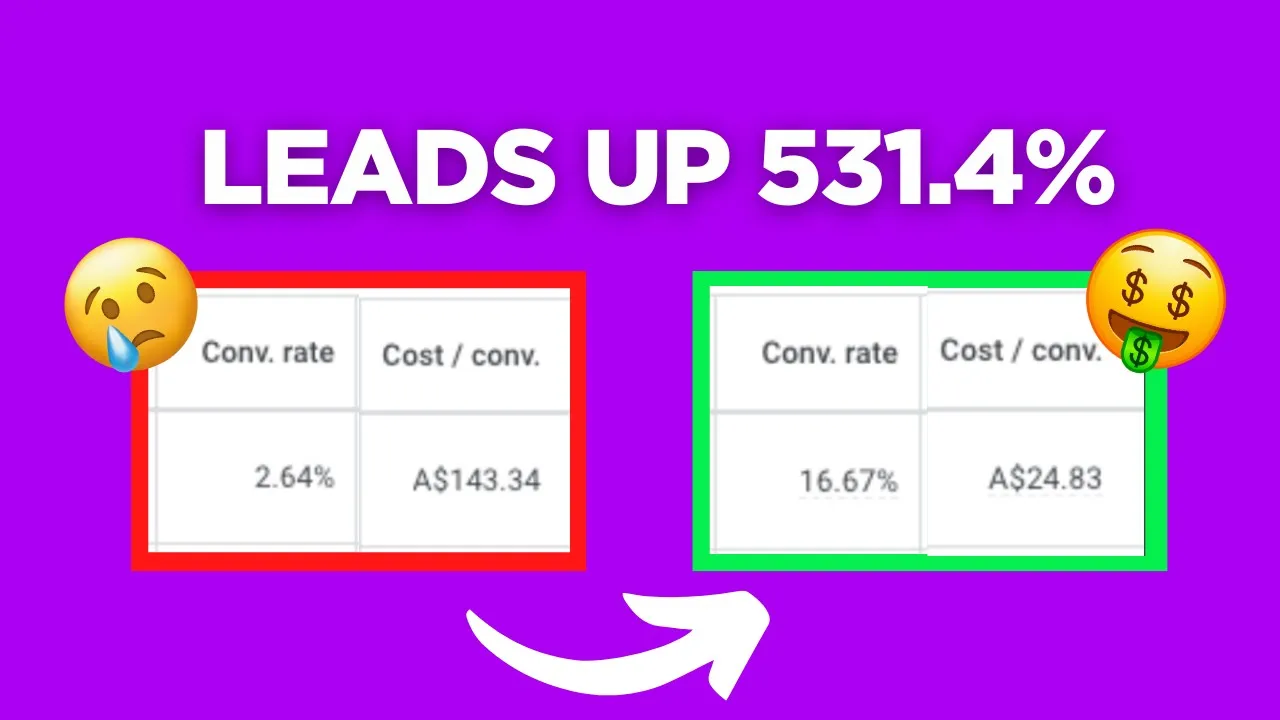
conversion rate optimization is often done with these AB split tests how can you actually make sure that you're converting more of that traffic coming in into high quality leads or sales pouring more traffic into your funnel or website is not always the answer when you're looking to scale you need to understand who your target market is brand messaging positioning key social proof they're not optimizing anything they're just mindlessly testing in today's video team I'm going to be walking you through what is cro should you even be running a split test what should you be optimizing
your split test for how to come up with split test ideas how to know what to split test once you've come up with the ideas the best resources for you to go to after this video and some of my final tips to make sure you can avoid the common pitfalls that most people fall into all right let's get into it so what is C well it's the process of increasing the percentage of conversions from a website a funnel or an app what does that even mean basically it's getting more people to take action so at
the moment let's say that you get 100 visitors to your web page right and 10 of them take the action that the page wants them to take well then you have a 10% conversion rate and so cro would come in and you would use that to figure out how you can make more of that traffic more of the users who land on that page take the action you want them to take for most businesses cro involves AB split tests or multi variate split testing now multivariate can mean that you're testing lots of little things all
at once this is what the big guys like Amazon or apple do right they can test multiple things all at once on the website because they're generating enough traffic that those numbers make sense for us M Mortals or for websites and funnels getting a lot less traffic we are typically running AB split tests so I'm going to be focusing on that today and cro conversion rate optimization is often done with these AB split tests which means that you are only testing one thing on either of the pages you're running a strong hypothesis and you're figuring
out which one of these variant so you have the control which is what you currently have and then you might have variant a which is the thing you're testing and that is how you do your ab split test basically your funnel is just what you have by default in your business funnel is not optional it's just every single touch point and so when it comes to cro what we're doing is we're looking at all of these touch points and we're trying to figure out where can we make the increases where are the best leevers so
that we can actually turn more of this traffic at the top end into Revenue which is the ultimate goal for all businesses so should you actually run a split test well let's think about what is C conversion rate optimization and the key really is in the optimization right optimization meaning you're taking something that's already working to the next level so when it comes to your marketing there's these foundations that you need to build you need to understand who your target market is you need to have your your brand messaging your positioning your your key social
proof and you need to have an offer you need to have the foundations so you have a control to even split test against what I see a lot of businesses getting wrong is that they don't really have a clearly defined product or service offering or they're not really sure on what makes them different from their competitors right and they don't really talk to their target market they don't really understand in the Target Market's words their pain points their hopes their dreams their fears and ultimately the dream outcome that they're actually selling so because they don't
know all of this when they start to do split tests they just split test random stuff they have no Rhyme or Rhythm to what they're actually split testing which means that they can't actually grow and scale they're not optimizing anything they're just mindlessly testing so you should not run a split test if you don't have those foundations down pth the next is do you have good data to come up with ideas I'm going to be talking a little bit more about how to collect that data shortly but with marketing it's just inputs and outputs right
garbage in garbage out so if you have crappy data or no data at all and the way that you're coming up with your hypotheses for your split test is because you think or you have an assumption or you're just making it up your split tests are never going to get you the results that you want and ultimately you really need to be clear on these things what are you testing do you even have enough traffic to test why do you want to test and what is your hypothesis so if you can be clear on those
things and they all are actually good answers and the answer is we have something already working and we want to figure out how to take it to the next level or maybe the answer is we're not sure what our messaging is but we're going to run a contained test with a strong hypotheses to see which messaging the market resonates with you always want to have a really really strong why before you go and do the how the tactics right you always want to know what problem are we really solving here so that's how you know
whether or not you should actually be split testing it and now what should you be optimizing for because the thing is you cannot take conversion rate to the bank let me explain so for example when I used to work in a company called founder this awesome company who has these really really good courses by practitioners and I ran the sales funnel and cro team so we would launch new courses and then we would move them to Evergreen and split test and improve them now when I was running the split testing there and I was running
tests to the masterclass opt-in page right so this is the page to sign up for a webinar effectively what it would be really really easy to do and to fall into the Trap of is improving the conversion rate on that easy right how to get more people to sign up for a free training but is that the problem that I'm really trying to solve no so what I have to be really careful of with these funnels is to think about the Northstar metric what are we actually optimizing for and what I was optimizing for was
not masterclass subscriptions or signups but actually students people who came through and spent money as a student so if I made the mistake and I was running split tests purely trying to increase the the signups on the masterclass page what you could see then is actually down the funnel further down the funnel when people actually purchase that could actually decrease so sometimes you can see a decrease in conversion rate at Topp of funnel but you can see an increase in conversion rate Downstream why because you might have adjusted your messaging or your copy or your
offer so that you're bringing in more high quality leads and actually filtering out the people that you are not for and that's not a bad thing so some people get really obsessed with conversion rate optimization yes of course cool obviously we all we all want more leads but do you no you want more buyers so you want to make sure when it comes to conversion rate optimization you're not exclusively looking in a silo at these metrics at the top of the funnel you're always looking Downstream to that norstar metric that is driving you usually Revenue
in the business and how can you come up with split test ideas now a lot of businesses that I go into and help they have these ideas they might randomly split test stuff but there's no process to what they're doing so there's two data sources that you can look at to come up with your split test ideas number one is the quantitative so this is the numbers right but when you're looking at numbers like in analytics or Shopify or hyos or however you do that then all that is telling you is the what quantitative data
only tells you the what is happening yeah it doesn't tell you the why and so when you are deciding which split tests to do this is called coming up with your hypotheses you also want to layer in qualitative data because the qualitative data tells you the why it helps you to tell a story what should you layer in you can layer in watching user sessions I've watched like hundreds of hours of those sometimes I'll watch user sessions and I'll just find ux errors and go oh my gosh that is so stupid that's a heuristic update
right a rule of thumb that's bleeding neck we don't need to split test that the button isn't clickable and I can see people rage clicking on something or sometimes I've watched the these user sessions and I've seen people clicking random parts of the design that was distracting them but you should also have feedback loops for really rich data so you should be having onboarding surveys why didn't you buy surveys you should be talking to the sales team you should be talking to the customer support team so you have these really rich qualitative data insights to
base your ideas on what to split test ultimately you don't understand your target market and you don't understand the ux and the UI then what are you making your decisions on to choose what to split test your data needs to tell a story so you can't just randomly pluck out some quantitative data and go boom makes sense I'm going to go do this you need to have deeper work and deeper reasons into what you want to split test okay so now you know how to come up with ideas how do you know which of these
ideas you should actually split test and the thing is not every test is created equal and if you are running tests in a company or for yourself you'll probably notice that everyone around you has an opinion about about what you should be split testing so how do you manage all of these ideas and thoughts not just of your own but often externally coming at you and a really easy way to do that is by using a pi framework which I'm going to show you on the screen now okay so this Pi framework is from a
book you should test that and you should read that if you want to learn more about split testing but effectively we made this after reading the book you have all of your ideas right and what I would normally do is when I was working client side was every quarter cuz split test take a while to run I would do a big ideation session with my team we would go through all of the data and we would come up with all of our ideas then this is where we come up with our good hypothesis right so
the formula you can use for a good hypothesis changing X into why will increase conversion goal because viewed evidence of what you've seen so you can use something like that but you want to have a reason behind your idea okay so once you have all of your ideas down into proper hypotheses then then you can score them potential importance and ease potential is how much potential does the task have to improve the bottom line of your business importance is how important is the task to your business cost traffic volume Roi and then e how easy
will the task be to complete and this can be complexity wise or time based technical or political and then the higher the score the higher the priority in the testing schedule and then that's just a really easy way to prioritize these things and so the next time somebody says oh can we do this yes maybe I'll put it into the split test framework and we'll see how it scores and it takes out the subjectiveness of it and makes it very black and white but ultimately you should be focusing on usually the things higher up on
the page right so if you actually look at the scroll maps on your pages you'll notice that most people don't get past the first few panels so what happens is a lot of people hide their good stuff down below so when you're looking at the qualitative data you might see where people are spending the most amount of time maybe you need to move that up you might see where people are reading the most maybe that's a really key message that you need to put into your headline or maybe it's something a bit confusing that you
could give further Clarity with some graphic design additionally when you want to come up with ideas what you can also do is go to your ads on the ad level hey what ads are working what Hooks are working what angles are working you can go to your content team hey what's gone off what's gone viral what's gotten a lot of Engagement lately you can go read the comments in all of these things as well and so often where we like to focus is in the headline that's an easy way if you want to be testing
messaging and getting quick wins right usually as David ogy says 80 cents of every dollar comes from your headline and that's usually a good place to start but ultimately if you have something not converting at all it's probably an offer issue and I have a video on how to create golden hipper offers you can go and check out because maybe you just need to totally change your offer and the positioning of the offer so let me show you a couple of examples so this is an example where the above the fold and the messaging now
we didn't just come up with this and then go o I think this will be fun this will work we surveyed the customers we surveyed the non-customers we distilled that down we translated that research into messaging we had the hypotheses that if we could change it from being so feature-based to talking into the words of the target market then that would improve conversion another example here is we changed the offer and the pricing and this took the client from a 5% conversion rate on purchase to8 % cold traffic Facebook right and again we didn't just
sit there and think hm this could be cute we came up with hypotheses we researched we spoke to customers we surveyed we researched the market and that's how we came up with good test ideas so I've already mentioned it but one of the best resources that goes through all of this more in depth the lift model how to come up with split test ideas is the book you should test that and now here's a few tips that I've learned along the way that are going to help you to run your future split tests and cro
initiatives number one is to always run something until statistical significance so you can use this tool by Neil Patel the AB testing calculator to see if you've hit statistical significance if you don't get that what happens is is you can keep rolling out tests that you think are winners and then you get this incremental degradation you keep making it worse and worse and worse because if you don't let a test run for the time it needs well then you aren't actually getting a inclusive test and I've watched so many split tests where the variant or
the control is winning for a really long time and and I think hm maybe I should just roll that out and then I think no eat my own dog food don't do that and once the test concludes either it's inconclusive which happens a lot on split testing you don't always get clear winners or the variant or the other control actually overtook at the end one when it reached statistical significance the next tip is to always keep a learning log and that's a really simple spreadsheet but you want to keep a log of the ideas that
you've tested and the results and when you made a change in case you ever need to revert back or you need to hand over the learnings and finally number three as I said earlier not all tests are created equal make sure you're focusing on the big opportunities and that's how that piie framework will help you now if you would like access to the pi framework template or anything else maybe that I've shown you just let me know in the comments and I'm more than happy to share it so that it can make it easy and
you don't have to make your own otherwise team thank you so much for joining me for another training I hope you enjoyed and you got something out of it if you have a learning page or a website or a funnel you're thinking about running some split tests to why not drop them into the comments and I'll see if I can find you some quick wins or ideas on what to split test otherwise I will see you guys on the next [Music] video