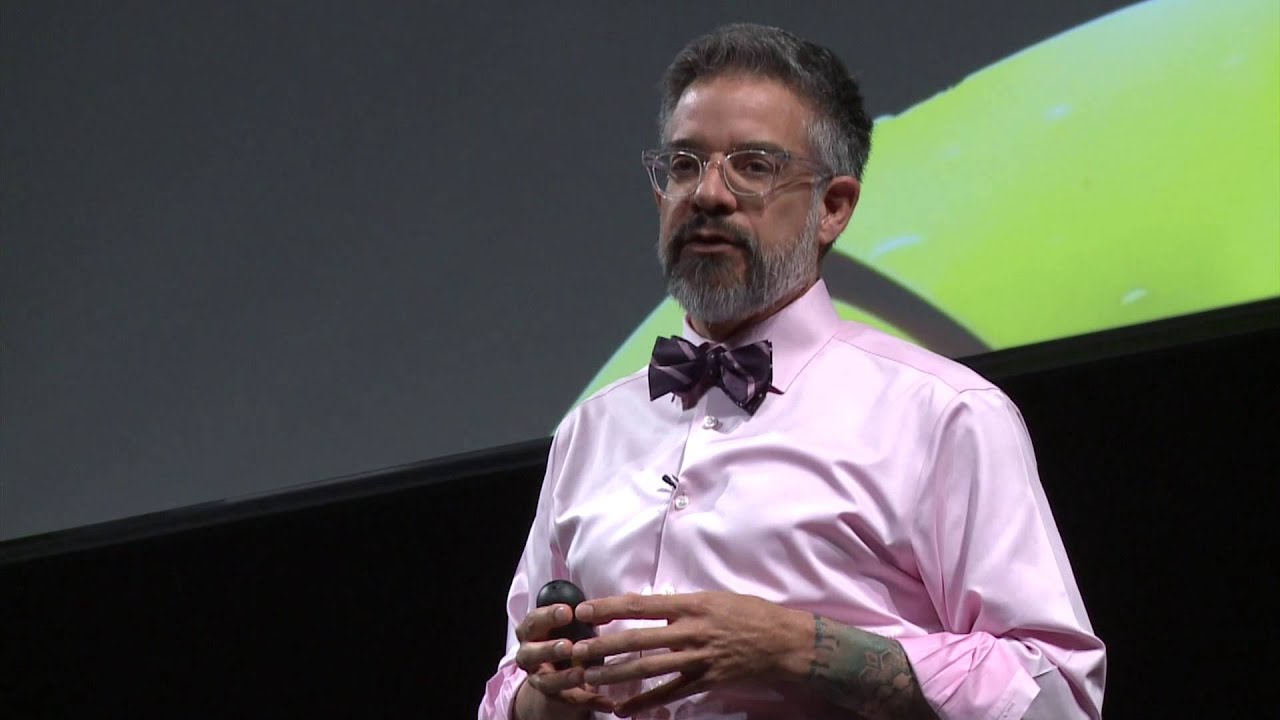
[Music] [Applause] hi my name is Jonathan Marx I am a lawyer and an ethicist which I'd like to assure you is not a contradiction in terms in fact I've spent most of the last 20 years working on both human rights and as you'll see institutional ethics opin polls constantly remind us that we have lost trust in corporations in Congress in the courts but is this a problem and if so what kind of problem is it well in order to answer that we have to make an important distinction between trust which as I think of it
is an attitude toward an individual or an institution based on your perceptions of that individual or institution whereas trustworthiness is an attribute or a property of that individual or institution why does this matter well because we should not trust those that are not trustworthy and institutions that try to build trust in the wake of a crisis while not addressing their underlying loss of trustworthiness are engaged in something highly unethical to put it in another way as the case study I'm about to share with you will I hope demonstrate trust is what gets us on an
airplane but trustworthiness is what keeps that plane in the air in October 2018 a Lion Air flight left Jakarta and 13 minutes later it crashed into the Java sea killing all 189 passengers and crew that plane was a new Boeing 737 Max 8 and in the wake of the crash the CEO of Boeing assured the public that that plane was as safe as any that has ever flown the skies but less than 5 months later a flight left at is Ababa in March 2019 an Ethiopian Airlines flight and it crashed into the ground at a
speed of almost 700 mph just 6 minutes later that plane was also a new Boeing 737 Max 8 and once again all 157 passengers and crew were killed in the wake of that crash the CEO of Boeing tried to blame foreign Pilots he called the US president and assured him the plane was safe and he wrote a letter to the public and to Airlines in insisting that safety is at the core of who we are and enduring value our absolute commitment our overarching Focus what Boeing was doing here was using tactics which come from what
I call the crisis Playbook among the tactics in that Playbook deny that you have a problem well that's difficult to do when two airplanes fall out of the sky so next cast out that it's your products or practices that are causing harm and deflect blame and responsibility onto others hence the foreign pilots and when that doesn't work localize or minimize the problem it's just a problem with software Boeing said and then frame yourself as part of the solution we know how to fix that so how did this strategy work out for Boeing well in the
wake of this crisis the planes were grounded for 20 months the CEO was fired the company had to settle lawsuits brought by the Department of Justice the Securities and Exchange Commission even shareholders and there is still a fraud trial pending over the company estimates at that time were the total costs would be in the tens of billions of dollars and then at the beginning of 2024 an Alaskan Airlines flight at 15,000 ft loses a door plug just to be clear this is a piece of metal the size of an airplane door which blew off thankfully
did not damage the plane as it flew off and thankfully did not kill anyone when it landed on the ground but it certainly traumatized the passengers on board that plane Boeing's new CEO in the wake of that incident said that it was quote a quality Escape but there were reports of loose bolts on many other planes rags and tools left in the fuel tanks of planes most recently holes misr drilled drilled in the wrong places of the fuselage of 50 737 Max planes among many other things when one animal gets out of the zoo that
is an escape but when your streets are filled with lions and tigers you have a systemic problem in order to understand the particular systemic problem with this company we can look to the history of the company and that's told by a congressional report resulting from an investigation in 2020 and that report reminds us that William Boeing who founded the firm in 1916 was a stickler for accuracy for facts and for Quality when he found some improperly cut wooden boards on the floor he walked all over them until they broke and he insisted did I would
rather close down shop than send out inferior work and that was the engineering Excellence ethos that held sway at that Corporation for the better part of a century until 1997 when they merged with McDonald Douglas and the CEO of McDonald Douglas became the new president and CEO of Boeing and he set about changing the culture in fact he told the Chicago Tribune that when people say I changed the culture of Boeing that was the intent so it's run like a business rather than a great engineering firm and that was the new ethos that held sway
during the development of the 737 Max series of planes the company outsourced the manufacturing of parts and then put pressure on its suppliers to cut costs there was a system on board that plane to prevent it from stalling the system would take information from One sensor and if it warned the angle of attack was too steep the plane would force its nose down but if that one sensor malfunctioned the result could be catastrophic as indeed a test pilot warned boing what did the company do instead of augmenting the system so it relied on data from
two or even three sensors in the case of a malfunction it simply took all reference to that system out of their manual when those Lion Air Pilots were confronted with a cacophony of flashing lights alarms a vibrating control stick desperately trying to pull the nose of the plane back up they were engaged in a futile struggle not only with their own plane but with a computer system of which they were completely unaware how could this have happened while Boeing down played the significance of that system to the regulator the Federal Aviation Authority because it knew
if the regulator fully understood what the system was they would have required simulator training and that costs money in fact Boeing had promised Southwest Airlines alone that it would give them a million back per plane that they purchased in the event that simulator training was required so their total exposure was between $200 and $400 million and yet at the same time as boing was seeking to cut costs and this and many other ways it was giving tens of billions of dollars back to shareholders in share buback schemes and dividends so the crisis at Boeing began
not when those planes crashed but when a culture of cost cutting Relentless profit seeking and maximizing returns for shareholders took over at that company indeed just a few months before the first crash a senior plant supervisor at the Boeing 737 Factory wrote to his boss and said he had quality and safety concerns he said all my internal warning bells are going off for the first time in my life I'm afraid to say I'm hesitant about putting my family on a boying airplane but the company did not heed the repeated warnings this employee gave and so
in the wake of the crashes when the CEO tried to assure us that the planes were safe what he was essentially doing was trying to build trust but he was further jeopardizing trustworthiness because the company was not doing what he said it was doing it was not putting Safety First in particular he was trying to build competence trust we know how to make safe planes while at the same time jeopardizing two important components of trustworthiness reliability and Fidelity reliability is when you do what you say you do but they were not putting Safety First and
Fidelity is when you put other interests ahead of your own but they were not not putting the interests of passengers and crew ahead of their own now I've just given you one corporate example I could give you many other corporate examples but I also want to emphasize this is not just simply a problem in the private sector think about government when we first saw photographs of the abuse of detainees at Abu grab in Iraq in 2004 the White House told us this is just a few American troops it then turned out as a result of
another Congressional investigation that there was a torturous detention and interrogation regime that had been approved at the highest levels of the Department of Justice and the White House or think about the Judiciary in the wake of recent Revelations about financial conflicts of interest of members of certain justices the US Supreme Court issued a code of ethics in which it essentially denied there was a problem and said instead they were trying to correct our misperceptions a religion the Catholic church just the most conspicuous of denominations shipping priests from one dicese to another where they could continue
their sexual abuse or universities and as much as it pains me to say it including my own for failing to address an former assistant football coach who was raping and sexually assaulting vulnerable children on campus all these strategies of so-called crisis management that harm vulnerable people and more than that harm the very institutions they're designed to protect lead me to the conclusion that we have to rethink what we mean by a crisis Boeing was in crisis long before those planes crashed just as a Catholic Church was in crisis long before the Boston globe's expose a
crisis is not always visible outside the institution so what do you do inside the institution how do you prevent those crises well first you have to ask yourself some questions what is it that you do what is it that you say you do what are you obligated to do by your founding documents by your for example in the case of a charity your tax exempt status or your contractual commitments what is it that Society needs you to do all four of these things should be aligned but let me say if what you do and what
you say you do are not the same thing you are not worthy of our trust if your internal Communications are inconsistent with your external Comm Communications you are not worthy of our trust and in either case whether you know it or not you are already in crisis and what should you do if you find your institution is in crisis well take that crisis Playbook and throw it away what you need is a crisis workbook and I call it a workbook because it is hard work it is much harder to fix the culture of an organization
than it is to tighten the bolts on a plane but here are a few suggestions first think about the longterm if you try to bury a crisis in the short term it will simply grow and indeed shortterm thinking is what creates or exacerbates crisis in the first place whether it's putting a clock in your boardroom to count down to your first test flight of your new plane or rushing to get planes off the factory FL floor or focusing on quarterly returns all of this is corrosive then acknowledge the problem before the problem becomes utterly undeniable
and take responsibility for that problem and then begin with internal reforms not external appearances that Congressional report in 2020 concluded that Boe needs to quote restore its reputation as a company squarely focused on quality and safety no it needs to become such a company and finally when you are especially when you are rightly distrusted you are going to have to verify what you say and what you do and that must be done by independent bodies so so I've spoken to you mainly now as Leaders of Institutions but I should add I think there are opportunities
for ethical leadership at all levels within an institution and I want to speak particularly to employees if you see something at your institution that is unethical especially when it might harm vulnerable people reports to your boss but if that gets nowhere report out whistleblowing often comes at serious professional and sometimes personal costs but sometimes it is the ethical thing to do as consumers the next time a company asks you to trust them ask them if they're worthy of your trust and as voters this is not just a case of a failed company it's a case
about a failed regulatory system so the next time a political candidate promises to cut so-called red tape regulation look and see which corporations are making contributions to their political campaign and think twice before you vote for them and finally to all of us whoever we are wherever we are let's stop talking about trust and let's start building institutions that are worthy of our trust thank you