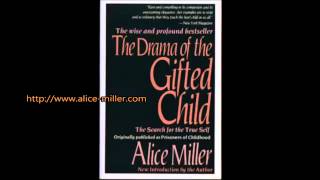
Alice Miller's the drama of the gifted child is a groundbreaking exploration of childhood trauma and its lasting impact on adult life published in 1979 this book has become a Cornerstone in understanding the complex relationship between parents and children and how early experiences shape our emotional landscape Miller's work challenges conventional wisdom about child rearing and offers a compassionate lens through which to view our own upbringing and its consequences imagine for a moment the last time you felt a surge of unexplained emotion perhaps a flash of anger in traffic or a sudden bout of sadness while watching
a movie Miller suggests that these moments might be Echoes of our childhood experiences reverberating Through Time her book invites us to embark on a journey of self-discovery much like an archaeologist carefully unearthing buried artifacts of our past as we delve into Miller's insights we'll uncover the hidden dynamics that have shaped our personalities our relationships and our very sense of self the term gifted child in Miller's work isn't about academic prowess or exceptional talents instead it refers to children who are particularly attuned to their parents needs and expectations these children like emotional chameleons adapt their behavior
and even their inner world to match what they perceive their parents want or need imagine a young girl who senses her mother's sadness and instinctively becomes the perfect child always cheerful never causing trouble in an unconscious attempt to lift her mother's Spirits or picture a boy who learns to suppress his own desires and emotions because he intuitively understands that his father values stoicism Above All Else these children are gifted in their ability to read and respond to the emotional climate of their family often at the cost of their own authentic feelings and needs it's as
if they've developed an emotional antenna constantly scanning their environment ment for cues on how to be how to feel and how to behave to maintain their parents' love and approval this gift while initially a survival strategy can lead to a profound disconnection from one's true self later in life it's like learning to play a role so convincingly that you forget it's not the real you Miller argues that this adaptive Behavior while initially protective can lead to a lifelong struggle to understand and express one's genuine emotions and need needs parents play a pivotal role in shaping
a child's emotional development often in ways they don't fully realize Miller emphasizes that it's not just overt abuse or neglect that can cause lasting damage but also subtle often well-intentioned parenting practices consider a mother who in an attempt to teach resilience consistently downplays her child's emotional pain saying things like don't cry it's not that bad over time the child learns to doubt their own feelings and may struggle to validate their emotional experiences as an adult or think about a father who burdened by his own unresolved childhood issues unconsciously seeks emotional support from his son reversing
the natural parent child Dynamic the child sensing this unspoken need becomes a caretaker for the parents emotions neglecting their own emotional growth in the process it's like a young sapling trying to support a full-grown tree the role are reversed and the natural order of nurturing is disrupted Miller argues that parents who haven't confronted their own childhood traumas often unknowingly pass these wounds onto their children it's a generational relay of unresolved pain with each generation handing off the Baton of emotional baggage to the next this cycle continues until someone often through therapy or deep self-reflection decides
to break the chain Miller's work encourages parents to look inward to confront their own past and to strive for authentic relationships with their children ones that allow for the full spectrum of human emotion and the genuine expression of needs emotional repression in childhood according to Miller is a survival mechanism that can have far-reaching consequences when children learn to suppress their true feelings to meet parental expectations they begin a lifelong pattern of emotional denial imagine a young boy who loves to dance but grows up in a family where tradition masculinity is prized above all else over
time he learns to hide his passion perhaps even from himself burying it so deep that as an adult he can't understand why he feels an inexplicable sadness when he sees others dancing or consider a girl raised in a household where anger is taboo she learns to smile through her frustrations bottling up her rage until it manifests as chronic headaches or unexplained bouts of depression in adulthood this repression is like building a dam to hold back a river it might work for a while but the pressure continues to build eventually the dam May burst leading to
emotional flooding or the river might find other less healthy ways to release its energy Miller argues that this suppression of authentic feelings creates a disconnection from the true self leading to a life lived on the surface devoid of deep genuine emotional experiences it's as if these individuals are actors in their own lives going through the motions but never fully experiencing the depth of their own existence the journey to reconnect with these buried emotions can be challenging and often painful but Miller sees it as essential for True emotional health and fulfillment the development of a false
self is a central Concept in Miller's work this false self is a Persona created to gain parental approval and love often at the expense of the child's true nature it's like wearing a mask that over time time becomes so familiar that the person forgets there's a real face underneath imagine a naturally introverted child who learns to be outgoing and gregarious because that's what her parents value as an adult she might find herself exhausted by social interactions but unable to understand why having lost touch with her innate need for Solitude or consider a boy raised by
achievement oriented parents who learns to equate his worth with his accomplishments as a man he might drive himself relentlessly in his career unable to find satisfaction or self-worth outside of external validation the false self is a chameleon adapting to the emotional landscape of childhood but it comes at a cost it's like living in a house where all the mirrors are distorted you never see your true reflection Miller argues that the journey to emotional health involves peeling away these layers of the false self to ReDiscover the authentic core beneath Miller's exploration of narcissism offers profound insights
into how early childhood experiences can shape personality in adulthood she argues that narcissistic traits often stem from a childhood where the individual's emotional needs were consistently overlooked or denied imagine a child whose parents were so focused on maintaining a perfect family image that they never allowed the child to express negative emotions this child child might grow into an adult who struggles to acknowledge their own flaws or accept criticism having internalized the message that only Perfection is acceptable or consider a child raised by a parent who used them as a source of self-esteem praising them excessively
for achievements but withdrawing love when the child failed to meet expectations this could lead to an adult who constantly seeks admiration and struggles with empathy Having learned that love is conditional and based on performance Miller suggests that narcissism is less about self-love and more about self-alienation a desperate attempt to gain the validation and admiration that was missing in childhood it's like trying to fill a bottomless pit of emotional need with external validation the narcissist grandiosity and need for admiration are actually defenses against deep-seated feelings of worthlessness and Shame by understanding these roots Miller offers a
compassionate view of narcissistic individuals and a pathway towards healing through reconnection with the true self and the buried emotions of childhood the importance of recognizing and expressing emotions is a Cornerstone of Miller's philosophy she argues that emotional honesty is crucial for mental health and Authentic Living think about the last time you felt a strong emotion but didn't express it perhaps anger at a coworker or sadness about a friend situation how did it feel in your body did you notice tension fatigue or other phys physical symptoms Miller suggests that unexpressed Emotions Don't simply disappear they Lodge
in our bodies and psyches influencing our behavior and health in subtle ways she encourages a practice of emotional awareness and expression that might feel foreign to those raised to suppress their feelings imagine keeping a daily emotion Journal where you take a few minutes each day to check in with yourself and name what you're feeling without judgment or consider the power of saying out loud even only to yourself I feel angry or I feel sad when those emotions arise it's like learning a new language the language of your own emotional landscape Miller believes that this practice
of emotional honesty can lead to more fulfilling relationships better mental health and a stronger connection to one's true self it's about giving yourself permission to feel the full spectrum of human emotions recognizing that all feelings are valid and worthy of acknowledgement the concept of poisonous pedagogy is one of Miller's most provocative ideas it refers to child rearing practices that while often well-intentioned can be deeply harmful to a child's emotional development these practices are often passed down through generations accepted as normal or even beneficial despite their damaging effects imagine a parent who believes that strict discipline
and emotional Detachment will produce a strong independent child they might withhold effect ction using love as a reward for good behavior not realizing that they're teaching their child that love is conditional and that emotions are dangerous or consider the common practice of telling children don't cry or be a big boy girl when they're upset while meant to be comforting these phrases actually teach children to suppress their emotions and doubt their own experiences Miller argues that these practices create adults who struggle with intimacy self-worth and emotional regulation it's like planting a garden with toxic soil no
matter how much care you give the plants later they've been poisoned at the root Breaking Free from poisonous pedagogy often requires a conscious effort to examine our own upbringing and the parenting practices we've internalized it might mean catching yourself before you automatically repeat a phrase your parents used or deliberately choosing to respond to your child's emotions with empathy and validation instead of dismissal Miller's work challenges us to create a new paradigm of child rearing one based on respect for the child's emotional world and recognition of their inherent worth in Miller's view the role of the
therapist in healing childhood trauma is not to be an all- knowing expert but rather a compassionate witness and guide she emphasizes the importance of creating a safe space where clients can explore their past without judgment and reconnect with their buried emotions imag imagine a therapy session where instead of being told what's wrong with you you're invited to explore your own narrative to piece together the puzzle of your emotional history the therapist in this scenario is like a skilled aism olist helping you unearth and make sense of the artifacts of your past Miller argues that effective
therapy isn't about fixing the client but about helping them ReDiscover their true self this might involve exercises in emotional expression such as as role playing conversations with parents or writing letters to your younger self or it could include body focused practices that help clients reconnect with suppressed feelings stored in their physical form the goal is not to blame parents or wallow in past hurts but to understand how these experiences have shaped us and to learn new healthier ways of relating to ourselves and others it's a process of reclaiming the parts of ourselves that we've hidden
away of learning to parent our child with the love and validation we might not have received growing up breaking the cycle of abuse is a central theme in Miller's work she argues that understanding our own past is crucial in preventing the repetition of harmful patterns with our own children or in our other relationships it's like being handed a map of a Minefield once you know where the dangers lie you can choose a different path consider a woman who grew up with a critical perfectionist mother with without awareness she might find herself nitpicking her own daughter's
appearance or achievements unconsciously recreating the dynamic she experienced as a child but with self-reflection and understanding she can recognize this tendency and consciously choose a different approach one that validates her daughter's worth Beyond her accomplishments or think about a man raised in a household where emotions were seen as weakness he might struggle to connect emotionally with his son but by understanding the roots of his discomfort with emotions he can work to create a more nurturing environment Miller emphasizes that this process of breaking the cycle isn't about blaming our parents but about taking responsibility for our
own healing and the well-being of the Next Generation it's a powerful Act of courage and love both for ourselves and for those we care about this might involve seeking therapy engaging in self-reflection practices or even having honest conversations with our parents about our childhood experiences the goal is to create a new narrative one where we acknowledge the pain of the past but don't let it dictate our future the search for the true self is a lifelong journey of recovery and Discovery Miller posits that many of us have become so accustomed to our false self the
Adaptive Persona we created in childhood that we've lost touch with our authentic needs and emotions rediscovering the true self is like archaeology of the Soul carefully brushing away layers of conditioning to reveal feel the genuine person beneath imagine spending a day following your genuine impulses what would you eat if you weren't worried about anyone's judgment what activities would you pursue if you weren't concerned about productivity or others expectations this process of self-discovery might feel uncomfortable or even frightening at first you might find yourself drawn to activities or expressing emotions that don't fit with your established
identity perhaps you've always seen yourself as a logical unemotional person but suddenly find yourself moved to Tears by a piece of music or maybe you've built your life around being the responsible one always putting others first and now you're feeling a strong urge to prioritize your own needs Miller encourages us to embrace these discoveries as glimpses of our true self-emerging it's like finally taking off a pair of shoes that never quite fit there might be some initial discomfort But ultimately it brings relief and allows for more authentic movement through life this journey often involves challenging
long-held beliefs about ourselves and our place in the world it might mean setting boundaries with family members changing careers or allowing ourselves to pursue long buried passions the reward Miller argues is a life lived with greater authenticity deeper relationships and a profound sense of inner peace Miller's perspective on depression offers a unique lens through which to view this common mental health struggle she suggests that depression often has its roots in childhood experiences particularly in situations where a child's emotional needs were consistently unmet or invalidated imagine a child who learns early on that their feelings don't
matter that they should always put on a happy face regardless of their inner turmoil as an adult this person might find themselves struggling with persistant feelings of emptiness or worthlessness unable to understand why they can't just snap out of it Miller argues that this depression is actually a delayed response to the pain and grief of childhood emotions that were too overwhelming to process at the time and so were buried deep within the psyche it's like a debt that comes due years after it was incurred the depressed person might not even remember specific traumatic events but
their body and subconscious mind carry the weight of those unprocessed emotions Miller's approach to treating depression involves not just addressing current symptoms but Excavating and processing These Old Wounds this might involve practices like journaling about childhood memories engaging in body focus therapies to release stored emotions or even having corrective emotional experiences in therapy that provide the validation and support that was missing in childhood it's a process of finally allowing oneself to feel and express the pain that was too dangerous to acknowledge as a child while this approach can be challenging Miller argues that it offers
a path to deeper more lasting healing than simply managing symptoms with medication or Surface level cognitive techniques the impact of childhood experiences on adult relationships is profound and often invisible Miller argues that the Dynamics we experienced in our early relationships with our parents often become the template for how we relate to others as adults it's like we're all walking around with invisible scripts unconsciously playing out scenes from our childhood on the stage of our adult life Liv consider someone who grew up with a parent who was emotionally unavailable as an adult they might find themselves
drawn to Partners who are similarly distant unconsciously trying to win the love and attention they never received as a child or think about a person raised by a controlling critical parent they might struggle with assertiveness in their professional life always deferring to authority figures out of a deep-seated fear of disapproval these patterns can show up in friendship ship romantic relationships and even in how we parent our own children Miller encourages us to become aware of these patterns as a first step towards changing them it might involve noticing when we're reacting to a current situation with
an intensity that seems disproportionate chances are we're actually reacting to an old unresolved hurt or it could mean paying attention to the types of people we're drawn to and asking ourselves if these relationships truly serve our well-being or or if they're recreating familiar but unhealthy Dynamics by understanding these connections between our past and present we can begin to make conscious choices about how we want to relate to others Breaking Free from destructive patterns and creating healthier more fulfilling relationships self-awareness and self-discovery are Central themes in Miller's work representing both the challenge and the reward of
confronting our childhood experiences this journey towards understanding our own history is not unlike being the protagonist in a mystery novel where the clues to solving the case lie within our own memories and emotional responses imagine keeping a journal where you record not just the events of your day but your emotional reactions to them over time you might start to notice patterns perhaps you always feel a surge of anxiety when you have to speak to authority figures or maybe you notice that you tend to withdraw when people get too close emotionally these patterns are like breadcrumbs
leading back to formative experiences in your childhood Miller encourages us to approach this self-discovery with curiosity rather than judgment it's not about blaming ourselves or others but about understanding how we became who we are this process might involve practices like meditation where we learn to observe our thoughts and feelings without getting caught up in them or it could include creative exercises like drawing or writing about our childhood memories allowing our subconscious to communicate through symbols and stories the goal is to become an compassionate Observer of our own inner landscape noting our reactions our triggers and
our habitual Thoughts with interest rather than criticism this increased self-awareness can lead to Greater emotional regulation more authentic relationships and a deeper sense of connection to our true selves it's like finally reading the user manual for your own psyche suddenly so many things that seemed mysterious about your behavior start to make sense in conclusion Alice Miller's the drama of the gifted child offers a profound and compassionate exploration of how our childhood experiences shape our adult lives her work challenges us to look beneath the surface of our behaviors and emotions to understand the Deep rooted patterns
that often Drive our lives without our awareness Miller's message is ultimately one of Hope by understanding our past we can free ourselves from its unconscious influence and create a more authentic fulfilling future this journey of self-discovery and healing is not an easy one it requires courage to face painful truths about our childhood and our parents it demands patience as we learn to reconnect with long buried emotions and needs and it calls for compassion both for our younger selves who did the best they could to survive and for our parents who were likely acting out of
their own unresolved childhood issues but the rewards of this journey are immense imagine living a life where you're no longer driven by unconscious fears or unmet childhood needs where you can form relationships based on genuine connection rather than old patterns where you can parent your own children from a place of awareness and love rather than unresolved trauma this is the possibility that Miller's work opens up for us as we close this exploration of the drama of the gifted child let's carry forward the invitation to curiosity about our own inner worlds each moment of self-reflection each
courageous step towards emotional honesty is a step towards healing not just for ourselves but for future Generations in understanding and healing our own childhood dramas we create the possibility for a world with less trauma and more authentic joyful living