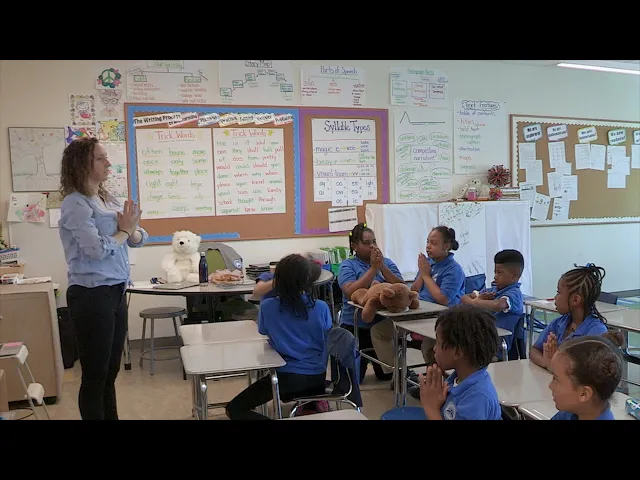
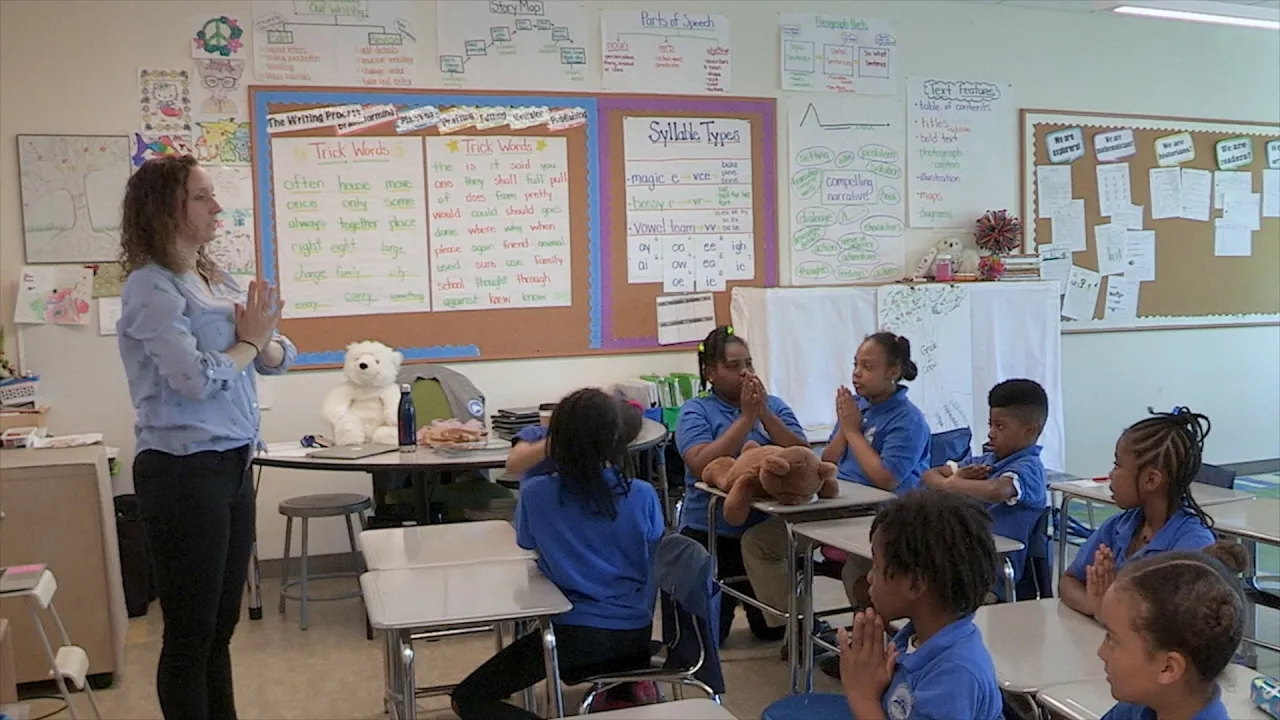
>>Lindsey: My body is so steady and calm because your bodies are so steady. >>DrDarling-Hammond: Being able to teach children how to manage their emotions is actually a very important pathway to intellectual learning. Because if you can't manage your feelings, it's hard to open up your brain to be able to receive the content that you're trying to learn.
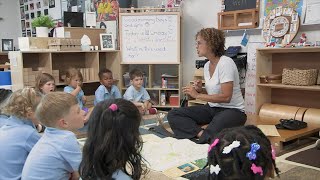
>>Lindsey: I do a lot of work around self-awareness, being able to name emotions and then make a choice around those. You have a large range of emotions during a school day, working with children. Some are completely joyful and so exciting, and some are really frustrating or incredibly disheartening.
>>Lindsey: When you talk when I'm talking, it feels like you're not ready to listen to me. >>Lindsey: So one of the most authentic ways for me to help them expand their own vocabulary is to use my personal experience with my own emotions in the classroom. >>Lindsey: Purpose.
. . >>Student: Purpose for writing.
. . >>Student: No.
That's. . .
>>Lindsey: When people start talking about other things while I'm still giving directions, it feels frustrating for me and I have to take a breath. Catch myself and say, it's okay. I'm going to try again.
>>DrDarling-Hammond: One of the critical features of learning is modeling. We learn by watching others. In this classroom, we see the teacher modeling her recognition of her emotions and also modeling how she deals with them in productive ways.
And that is the first step in helping children learn to manage their own emotions. >>Lindsey: Big breath in. Big breath out.
>>Sydney: Like, it's complicated, so we breathe. And that's how we-- so when we're ever going crazy, it helps us calm down. >>Lindsey: It's based on real-life information.
Can you make sure your body is sending a message that you're listening to me? Because it hurts my heart when you look the other way when I'm talking. Thanks, dude.
My heart feels much better now. >>Lindsey: Naming my own emotions and modeling for the students how I can attach a emotional vocabulary word to how I'm feeling and then sort of articulating how I'm processing that is a really authentic way for them to sort of pick up that same skillset. And for them to also see that I, as their teacher, am a real human who is having real feelings during the day, but I'm also doing my best to handle them in a way that is safe and kind and productive.
So they recognize that having big feelings are part of being human, but being able to name them and do something about them is really the work we're going to do together.