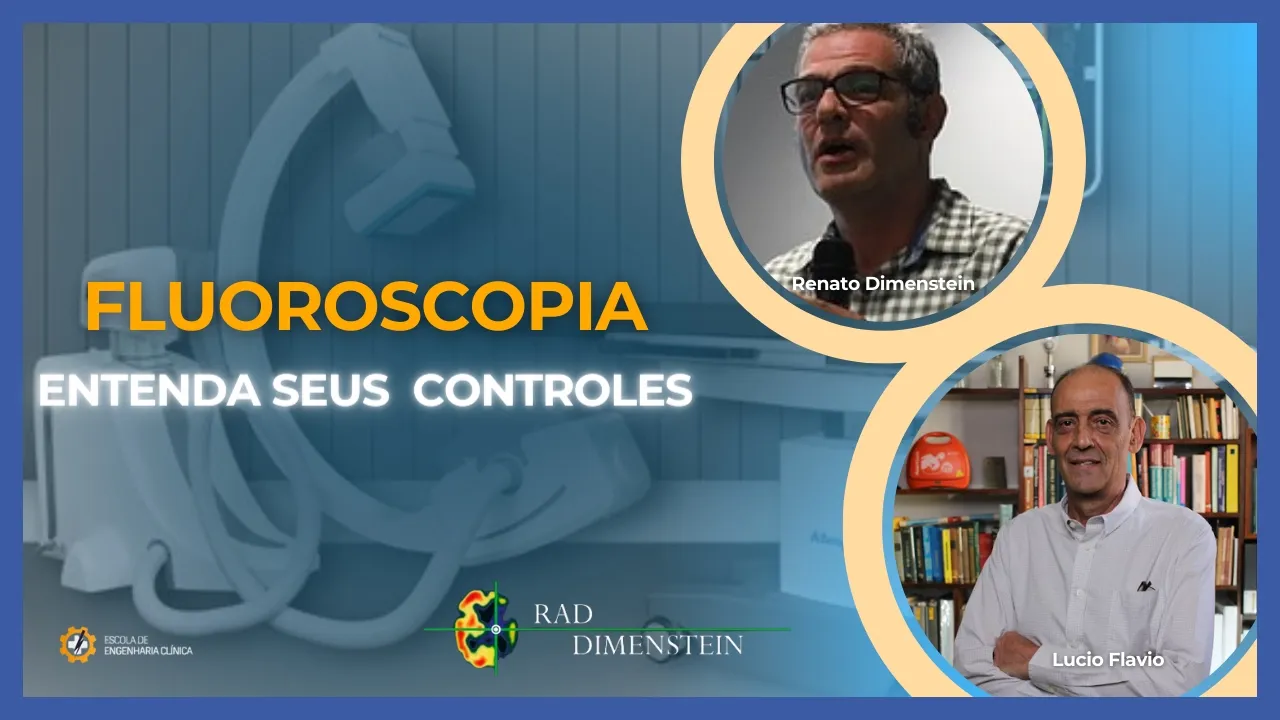
Hey guys who like clinical engineering today our first video of the year he will be the continuation of the video that was made by Radi Menin talking about fluoroscopy the video is very cool and if you haven't watched this video yet click here you go watch it because it's important to understand the second part and there in first video has a very interesting in fact all the parts are interesting but it has an aspect important for us in engineering clinical which is the study of detectors, right? the types of detectors how is the we make the comparison between the detectors spatial resolution efficiency of quantum detection are the fields of vision the influence of the size of the field of view in the resolution is the operational resources memory roadmap digital subtraction regulatory requirements not only Nema, which is an organization American Manufacturers Electrical equipment as well as danva and also general aspects such as efficiency of the radiation protection detector maintenance and control and one more news that Radim sty committed to help us make a video a month for us to exhaust the tomography topics computed x-ray mammography magnetic resonance nuclear medicine and bone densitometry So that's it, let's go watch the video and don't forget to share leave your like because this helps a lot to increase the relevance of Clinical engineering theme in the networks So Let's go to the video, welcome to the channel of Clinical Engineering This is the part two about the equipment of fluoroscopy H my name is Renato de bstar I am a physicist specializing in Radi agnostic Brazilian Association of medical physics ah in the first part eh we talk about the components of tube fluoroscopy equipment generator filtration collimation Diffusive Gradient Radiation Meter the image intensifier the flat panel electronic components technologies as subtraction and the regulatory requirements for equipment This was the first part to part two we will associate these equipment components to the modes operating in relation to the kilovolt to the but the collimation to magnification the automatic selection or Pulsed Fosfoper Equipment Manual oh Cinema and the magnification of the controls is continuous low dose rate medium and high dose rate of dose as a first step talk about the selection mode the automatic mode called AEC means it controls the generator it controls the exposure automatic image brightness Therefore it controls the filament current Mili and also controls the time, that is, the masses and there is a filament control there you control the equipment allows you use low medium or high rate Exhibition so I'll show you some examples This is the first example here is the flat panel equipment an equipment of geography geographer here are plates of PMA of a methacrylic acrylic mimicking an adult patient which what happens is that when you increase the patient's thickness will increase the operating controls in mode automatic then in yellow is the a pink current is the green filtration the kov here amplitude here is the size of the patient in eh PMA so if I have a smaller patient, that is, has less plates means the ma is low kv is kept constant the filtration is high is kept constant and this is the size amplitude of we put these parameters all down spoke in the first part of the course there in as milliamps increase, a time the dose increases means increases the patient increases the milliampere and then he reduces the ma just to see increases and filtration decreases and amplitude increase there continue increasing the size of the patient increases the ma and then falls again consequently the filtration either decreases or is removed increase amplitude and increase I'll see some practical examples of this aec mode selection automatic mode layout here is an example in mod mod do AEC a 2 cm thick plate of aluminum a block and then emits this type of patient and here is a detector of radiation and then when you have a plaque This is the technique when you put more a plate the automatic exposure system increases the Cave the but If I put a third plate below the radiation detector the technique increases by mimicking a patient's bigger dimensions if you put the three Pediatric adult and obese means I have Pediatric dose rate milig adult patient patient obese and what is important is ISO example is this similar but with a difference either say one aluminum plate two plates memeting the patient here is the image of the technical plate as a meter of dose here is the dose meter and I put it there here an element of greater density or what happens to the dose increase kv increase MA and increases the dose rate And that's what's important know another example of commands operation the second is magnification this focus of the wire or field of view in image of left without magnification means I has the collimator adjustment and here is the area here the image intensifier as we said in the first stage that adjustment of the electrodes, right? and here is the picture when I select the Dean field with minors areas that say there is a smaller Campa here I have better resolution of images an illustration scheme is more or less this one on the left here normal I mean these little tips on the collimator here Mag one and here Mag do means have a smaller area an example of normal magnification is when there is no magnification here one magnification three here ution of images and what I need from you understand this is what happens to show some other examples remote controlled equipment equipment Philips here mode normal again the PR irradiation test patients this is the technique it doesn't matter a lot of value what matters is that when you magnify the image increase Cave ma a 12 this is Mag 2 if i compare mag 1 without magnification with the Mag 2 what interesting this one has greater technique bigger This one has more noise in the image You can see that this one here watching has better image resolution than this one here and this is the important relationship another example is the selection of the Dean field with a surgical arch a C-arch image intensifier again the essay This is the kv ma pass the ms right I mean here without Magnification here is the dose you measured selecting mag 1 increase kv increase ma and increase rate of do and select Mag 2 increase kv increase ma and increase rate of do and that is the relationship that is important another interesting example it is with the equipment an Arc here is a flat p from GE the tube is underneath there is a radiation detector and here is a simulator is a phantom of pelvis mode normal mag1 and mag 2 means the magnification increases the radiation dose and this is important to associate also with the quality of the image with the quality of the image then showing this a question practice which is a control simulator quality flower copy is Here stop per line like the manufacturers express resolution called MT transfer modulation function here normal mode without magnification this is the technique This is the resolution calculated magnification mag 1 the pair that has higher kv is better image resolution and Mag 2 better margin resolution means there has to be a compromise between a satisfactory image resolution and selection of magnification for a dose suitable the third operation control of the fluoroscopy equipment is the mode continuous or pulsed or acquisition mode of margins continuous pressed pressed older equipment an geographers who were 30 15 7.
5 frames or frames per second show a practical example a surgical arch ge it is a piece of equipment one is not round because I picked it my image I can acquire in the mode continuous 15 frames per second This is a detector of radiation here I acquired in magn mode I mean 15 frames This is the dose selecting half the dose rate and so on onwards beyond continuous and pulsed mode I can select the equipment the mode the rate because when I reduce the frame rate reduces the dose But I can also set low rate mode low dose rate normal high dose rate when you selects high dose rate with the highest magnification you want to see small details or of vase normally the appropriate thing is to start from here and if you need you go to here and there you change the acquisition mode What is the difficulty that operators face? have this is one on the right is the equipment on the left is also a piece of equipment Philips has another way of operation and the difficulty is that in the block surgical has other manufacturers This is one Siemens the fourth operating command we we are talking about fluoroscopy collimation here is an image here a simulation with a phantom doll with open collimation this radiation secondary with collimation adjusted to dose is 1/3 smaller Sorry it is three times smaller a second example in a intervention and a smaller field a dose the smallest is possible for the equipment to have the fluor mode or Cine mode in fluor mode it is a presentation of the image but it does not record in Cine mode digital acquisition the multiple sequences and you select here but when you select Cine mode you have higher rate at willingness to show a difference important again that fatoma of pairs per line here in mode low dose rate flur This is the rate of dos then resolution of High contrast low contrast here I reach of no notice that it has better contrast and low dynamic range in Look at mode cup of dose that has this is the first difference This is an angiograph angiographer from here to radiate the patient I placed a anthropomorphic ghost detector radiation deag os with the action of this equipment low medium dose rate and high dose rate dose I put a radiation detector in front of the test so that the interventional physician could select the images and understand the influence of Cine mode flow mode on rate of dos then here in flow mode ah maintained the same low field of view download mode that's this oh this is the average kv ma dose rate increase dose the kv is the same but the ma rise high mode low kv below the ma but the dose rate increases this happens because those filters we talked about we talked about compensation in the first part they are removed Then it increases the interesting dose that teaches less om kv much higher m higher is the rate of d with second example in the same model here in the angiograph it means here is the mule of acquisition here the magnification with this magnification all in the same so that to say this is the dose rate D decrease the field size, that is magnifique increases the dose and so on before and here in cinema mode What is important to know are the factors that influence the dose to the patient and a theirs is geometric factors that is to say you have the patient below you have the tube and up here you have the flat panel the ideal is for you to keep the patient furthest from the tube since radiation varies with the square of distance and the image receiver more close to the patient to avoid shadows penumbras quality of immense that is this then during the procedures has to make adjustment of the table patient this is relatively important here is a simple example but which reports well the distance from tube to receiver with 1 m margins patient's love to the recipient 20 cm will give an arbitrary dose one mind you have a little bit of magnification is not leaning but there is a little when you lower the table 20 cm increases the dose increases the magnification and if you lower it further it increases the dose and increases the magnification so that you have to be careful with this here factors that influence the dose in a Cine means if it's here 1. 80 sorry 1.
10 m has a dose arbitrary a dose rate arbitrary if it maintains the same distance but lower the table add the dose and if you do both things increase the cup of dose factors there are certainly geometric factors here the same test done by physicists Plant Blan fer and Felipe receiving tube which is the anthropomorphic flat panel fan here to the radiation detector here to zero in automatic mode as far as CV has gone but this is the rate of dos measured with that same one sensor here at 45º has an area one slightly smaller interaction then below CV below ma and a little smaller but at 90º Here is the photon sensor diode Phantom receiving tube margins contrary receiver of margins and tbo and the dose here practically double increase of Cave and increase of m ah factors that influence the dose of collaborators now it really is a geometric question here is a tele I mean a phantom anthropomorphic if you have on the examination table if the rate of two if you have donated then difference factor of four if I have here oh in entrance and if you close the door the dose tends to zero and at the input here factor geometric This is the rate of base a second example of collaborators to left again the flat panel the tube detector the patient here is the meter secondary scattered radiation, right? here the operator does not import the value but there is one next to the table that has this rate dose per hour you took two steps to behind the dose decreases and two more for bring the lowest dose then the distance factors affecting dose is the ep personal protective equipment he is for secondary radiation removes 90% of the radiation secondary influencing factors is the geometry of this again the tube is here below the image receiver here our patient who is the phantom This is the secondary radiation meter wants say on this side here I have double of radiation than on this side oh but my penultimate slide movement control These are the controls here, I mean this one here when you select this here this is and here is the distance from the tube to the detector this one here is the collimation this here is the angle you want say CR left right caudal left This is the last slide H What are the personal challenges of engineering Clinic is certainly the standardization of exams along with physical and Company engineers can be start registering a studio low level cardio with low rate of the fluor not so minor magnification and is a process that requires do this for all exams some you may not even enable the use of the mode high to have to train the different teams then you train there you can here Low medium and high here you can with 25 MG per minute here 100 and here sorry here 50 here 100 is really important here an interesting one is a case of an EMC arc dedicated to cardiology means with 30 frames This is the dose rate if you want for 15 frames or let you select It has half the dose, very important. and this is really a question of important interface between physicists and Clinical engineering this done by Rogério Fachel means he succeeded map all operators today has algorithms that do this mean there are have some operators there in the block surgical who used angiographs with higher dose rate means operator Then you can train or modify the protocol is kind of important and this is the biggest challenge and what I think is the most important for Clinical Engineering is integration means that it is Rogério fachel physics Bruna and working with interventional radiologist Dr Felipe the two physicists also that work in our group Felipe Cavalcante BL doing simulation to be able to train the doctors hospitals and on the right is the Silas Carvalho who is a technical operator and did the simulations at Hospital Sabará and no Samaritan Hospital Ianopolis practical surgical and remote controlled means this is the important interface to be able to ar the use of these equipment phosphoper and angiograph to obtain the smaller image with an adequate dose with less exposure to doctors my name is Renato dein I am a physicist I'm participating here on the channel Clinical engineering people who If you have any comments or questions, how to access this platform Very Thank you for your attention, good Guys, I hope you liked it.