This week we've explored monitoring and evaluation of HWTS from a variety of angles, from the validation of specific technologies to understanding why effective and consistent use of HWTS is important for achieving health improvements. We've also examined how to choose among the many treatment and storage approaches, especially in terms of cost-effectiveness. During this module we'll look at how some of these important issues are being confronted within a rural water supply program in Nepal.
In this case study you'll see how drinking water quality goals were defined, how water quality data was collected in remote communities with very limited resources, and finally, how this information is being used to choose an effective and viable water treatment and storage strategy. The Water Supply Treatment group here in Sandec aims to merge research with development cooperation to improve the lives of people in the global South so our objectives are really twofold: we plan and implement water supply projects in cooperation with our partner organizations, and we also conduct systematic research and share our study results at conferences and also in peer-reviewed publications. We learned about the Helvetas Swiss Intercooperation Water Resource Management project, or WARM, in Nepal.
For many years now, Helvetas has been working throughout Nepal to identify water resources and foster effective, equitable and efficient use at the local level. This is mainly done through a participatory process which leads to a Master plan and this plan is then adopted and owned by the community members themselves. In the WARM project there's a specific goal to integrate household water treatment and safe storage, or HWTS to improve the health and hygiene of people living within the program area.
To ensure sustainability of the project, promotion and implementation of HWTS will harness local markets, and also focus on meeting household demand for these products. So now, Helvetas and Sandec are working together to conduct a study across the program area to better understand what sort of treatment strategy can work well in this setting. Overall, the main objective of the study is to devise one or more effective water treatment and safe storage solutions for the WARM project area.
This includes assessing drinking water quality at taps and in storage containers within homes. Often, in communities where households are extremely remote and where data on water quality is quite lacking. Water quality information was needed to understand the extent to which treatment was required, and also to assess the impact of possible water treatment intervention.
We also needed to understand behavioral aspects of household water management, such as individuals' perceptions about the quality of their drinking water source and also whether households are currently using any treatment or safe storage practices. Finally, since Helvetas is focused on a market-driven approach to implementing HWTS, we undertook a survey of local market conditions as well as customers' priorities for future investments, and their willingness to pay for water treatment technologies. A researcher is not a businessperson, indeed.
We also have to keep in mind that at certain times and in certain contexts, there could be alternatives that are more suitable than market-based interventions. Let us recall that our ultimate objective is the general health of the population. Are we replacing the role of government by placing priority on what sells?
In which context should one leave the provision of safe water to the government, with water quality as a subject of consumer protection? So what does this study look like on the ground? Mostly it's a lot of time spent collecting and processing water samples, sometimes under very challenging conditions.
We aim that a testing procedure that meets the WHO guidelines, suits the field conditions, and keeps costs for consumables at a reasonable level. The membrane filtration method performed best, but other quantitative methods like the Multi-Tube or Most Probable Number method are still several times more expensive. I think we have two challenges.
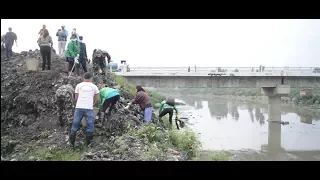
The main challenge from my side, first is the electricity because in the case of remote Nepal you don't have sufficient electricity. If you conduct this kind of analysis, you have to make sure you have 24 hour electricity for your incubator. The second one is the study area, because in the case of Nepal, you have hilly mountains, or sometimes you have to walk maybe two, three hours to reach the area, so that one is the most challenging for me.
It was necessary to build an incubator for the compact dry plates using a solar voltaic array, and also using special lightweight materials so that the incubator could be carried to communities across this mountainous terrain. For the behavior study, we held in-person interviews with hundreds of people to understand more about their daily life and their needs regarding water. We asked questions about their main priorities and concerns, because sometimes, as water researchers, it's easy to forget that there's more to worry about than a clean drinking water supply.
There's also employment, access to health care, electricity, food security and the list goes on. So the survey also looked closely at how people perceive the quality of their own water, whether they believed it presented a health risk to them and to their families, and also how they treated their water supply currently, if at all. All of this information is important for planning a viable HWTS strategy because if demand for a treatment product is very low, it can't really be expected that people will be willing to change their behavior and treat their own drinking water consistently.
We can learn from people's demand for similar products, services or proxies; their consumer preferences, and their general approach to health issues and other risks. Why don't they currently treat their water? We tried to find out whether they simply dislike the products currently available on the market, or they just do not perceive their water as risky.
How many times does one have to suffer from diarrhea before he or she starts boiling or filtering their water several times a day? To investigate the contextual factors, we interviewed doctors, pharmacists, merchants, NGO and government representatives, and also consumers, like patients and households. We combined these interviews with structured observations and data from health institutions and markets to understand the low priority that most households currently place on preventing diarrhea.
Pharmaceuticals are often available at no cost. People seem to prefer using them for severe sicknesses while overlooking minor digestive disorders and preventative options. Yet, exposure to pathogens also has long term effects like stunting, and can generally impair the immune system.
This is a connection that most households do not seem to make, and we can observe a similar attitude among Western city dwellers suffering from smog, but choosing not to wear protective masks despite the known health hazards. The results from our study are still coming out, but already we're seeing a very interesting story. We know that in many cases, the water at the point of collection is relatively free of fecal contamination but on the other hand, some taps have very high concentrations of <i>E.
coli and this presents a real health risk to the local community. This heterogeneity in quality is important because nearly all of the water points visited are classified as an improved water source according to the definition used by the Millenium Development goals. Yet, we see that this categorization is not enough to reliably ensure a safe drinking water source in this setting.
We're also learning that households generally do not practice water treatment or safe storage consistently. Most households perceive their water source to be relatively clean and the risk to health to be relatively low, so really, it makes sense that they're not motivated to treat their own water. The market study has also revealed that despite the availability of many HWTS products locally, they are not actually prioritized by households when they consider the many other things that they could spend their money on such as food, housing, soap and toilets.
All of these items were typically a higher priority investment among survey respondents. In the next phase of this study we'll work closely with Helvetas to develop a strategy for improving household water quality based on the results from this baseline evaluation. It's clear that a market-driven approach will need to confront many issues, including highly variable water quality at the point of collection, also relatively low demand for HWTS products among water users.
So, possible strategies could include an information campaign to raise awareness among water users, or maybe testing innovative technologies like passive chlorination at the tap, possibly even promotion of a really aspirational product of some kind, which households might value more. Finding a sustainable solution really requires constant dialogue with our partners, and especially, the potential customers who will be using these products. Our team is really excited to see how this project will unfold going forward.