Hand gestures, or mudras, have played significant roles in many cultures and religions throughout history. From Christian prayers to Hindu rituals, these symbolic postures convey unique meanings and evoke powerful associations. Among the vast array of mudras lies one particularly interesting and widely adopted: the Hakini mudra, often spotted in photographs of esteemed leaders, thinkers, and practitioners.
This striking hand gesture features prominently in both ancient and modern settings; yet, despite its prevalence, few truly grasp the underlying mechanisms and implications of the Hakini mudra. Today, we embark on an extensive examination of this enchanting mudra, exploring its origins, spiritual symbolism, and neurological ramifications. Before diving into the intricacies of the Hakini mudra, it is essential first to establish a foundational understanding of mudras themselves.
In essence, mudras represent symbolic hand gestures intended to channel subtle energies through the body. They feature centrally within numerous Eastern practices, including yoga, dance, martial arts, and music. Although frequently misunderstood as mere decorative accoutrements, mudras possess profound import, transmitting nuanced expressions of devotion, contemplation, and spiritual realization.
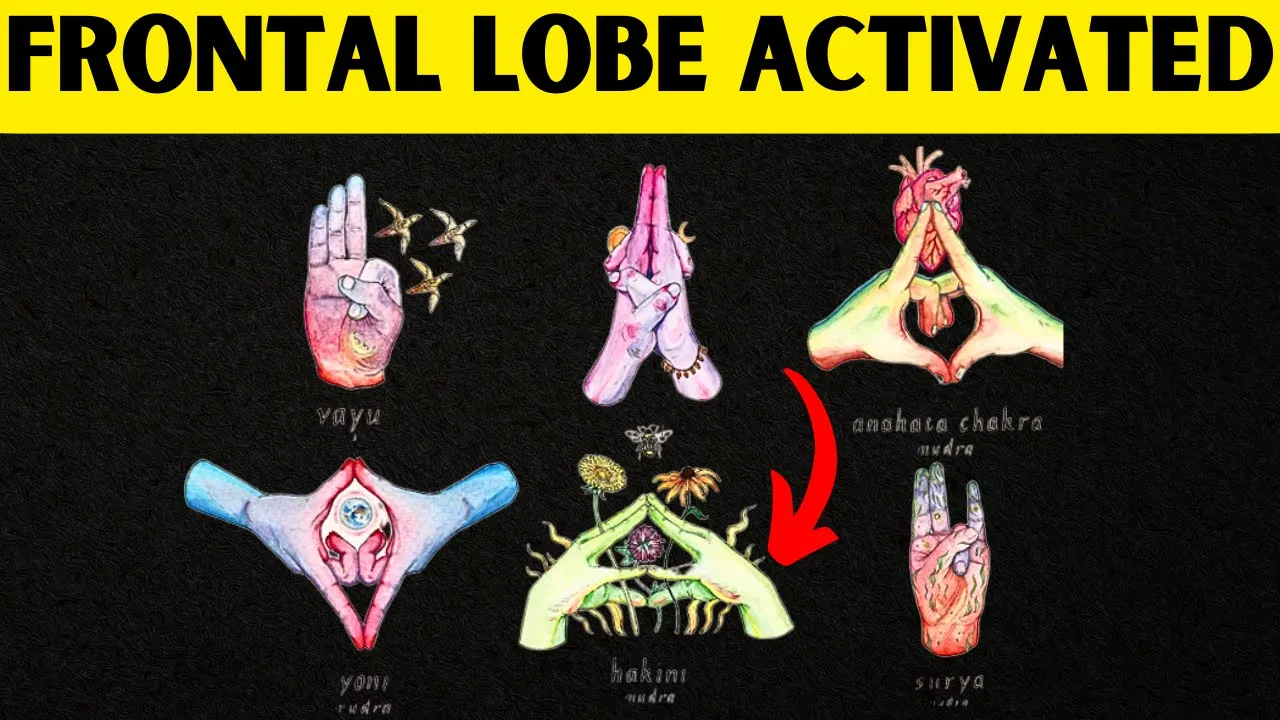
The Hakini mudra stands apart among mudras for its distinctive appearance and widespread usage. Forming an equilateral triangle, it simultaneously extends the remaining fingers upright while maintaining gentle tension in the palm. Typically performed with both hands, the Hakini mudra appears symmetrical and aesthetically pleasing.
If you're interested in us covering other mudras and their significance, then like this video and subscribe to our channel; it helps us out. Throughout history, countless luminaries have incorporated the Hakini mudra into their practices, whether formal or informal. Photographic evidence abounds, revealing notable politicians, celebrities, and intellectuals employing the Hakini mudra during moments of reflection, discussion, and presentation.
Indeed, even today, one need only browse Instagram feeds or surf YouTube channels dedicated to meditation, yoga, or spirituality to encounter abundant instances of this curious mudra. At first glance, the simplicity of the Hakini mudra belies its rich symbolism and profound significance, rooted firmly in Eastern philosophy. This mudra embodies several fundamental tenets common to Hindu and Buddhist traditions.
The name Hakini originates from a female deity venerated in Hindu Tantra, often personified as the consort of Lord Shiva. She plays a critical role in esoteric practices concerned with expanding consciousness and realizing the ultimate truth. Specifically, Hakini Devi presides over the fifth chakra, known as Vishuddha, situated in the throat region.
Associated primarily with purification and communication, this energy center emphasizes discernment, articulation, and creativity. The triangular formation created by the thumb, index finger, and forearms carries profound weight within yogic and tantric circles. Consistent with the geometry of pyramids, triangles symbolize stability, unity, and convergence.
More importantly, however, the triangle denotes a sacred container holding untapped potential waiting to be actualized. Finally, the upward extension of the middle, ring, and pinky fingers underscores the importance of aspiration, ambition, and expansion. Together, these elongated digits echo the peaks of mountains, towering above lesser summits and reaching skyward.
Combined with the grounding triangle below, the resulting configuration conveys a powerful message: steadfast determination tempered by restraint yields optimal results. Functional magnetic resonance imaging (fMRI) has revealed that practicing the Hakini mudra consistently engages multiple regions within the frontal lobes, notably the prefrontal cortex. This expansive region houses an impressive array of executive functions, managing high-level processes such as planning, decision-making, attention control, and inhibitory regulation.
Moreover, the Hakini mudra selectively targets the anterior cingulate cortex (ACC), a lyic structure nestled deep within the cerebral hemispheres. Notably, the ACC mediates interoception, or the ability to detect and interpret physical sensations generated internally. Given its involvement in monitoring visceral inputs, the ACC contributes substantially to emotional processing, error detection, and self-regulation.
Two primary factors appear to drive the neural activation induced by the Hakini mudra: proprioceptive input and tactile feedback. Proprioception pertains to the sensation of joint motion and muscle contraction, while tactile feedback entails cutaneous touch signals received from the skin surface. Both afferent modalities converge upon specialized sensory neurons housed within the peripheral nervous system.
Upon receipt of these inputs, the neurons transmit corresponding electrochemical signals to the spinal cord, eventually arriving at designated target sites within the brain stem and thalamus. From here, ascending fibers relay the processed information to higher centers within the cerebral cortex, initiating cascades of secondary and tertiary responses. Comment below if you knew about the connections between brain regions and mudras.
Armed with an appreciation for the historical and spiritual underpinnings of the Hakini mudra, we now shift our focus to the tantalizing intersection of ancient wisdom and contemporary neuroscience. Recent research suggests that performing specific mudras, including the Hakini mudra, impacts the nervous system, modifying electrical activity patterns in the brain. These modifications correlate closely with improvements in cognitive functioning, emotional regulation, and general well-being.
Research indicates that frequent practice of the Hakini mudra coincides with improved performance across several domains governed by the frontal lobes. Specifically, consistent users exhibit greater proficiency in the following areas: 1. **Focused attention**: Individuals reporting regular utilization of the Hakini mudra demonstrate enhanced capacities for sustained attention and reduced susceptibility to distractibility compared to less frequent practitioners.
2. **Working memory**: Studies indicate that routinely adopting the Hakini mudra correlates positively with mnemonic efficiency and storage capacity, suggesting that the technique facilitates encoding and retrieval operations. 3.
**Cognitive flexibility**: Users report fewer challenges transitioning between competing demands and shifting mental sets, indicating a heightened aptitude for cognitive adaptation. Across history, we find the Hakini mudra in those exuding focused leadership presence: Buddha meditating with joined fingertips, Aristotle gesturing philosophies, Oprah inspiring crowds, Einstein working through theories, Martin Luther King gathering courage before speeches, and Steve Jobs unveiling Apple innovations. The mudra builds confidence and clarity by sealing in and charging prana.
It sharpens concentration and strengthens vision; conscious use allows the directing of pranic currents deliberately. If you didn't realize these prominent people have been using this ancient mudra all this time, give us a like and subscribe for bringing it to your attention! It really helps the channel out.
Thank you! Now, on to the next [Music] section. Applying the Hakini Mudra in your life doesn't involve complicated procedures or expensive equipment, requiring nothing more than your willing participation.
The mudra's simplistic elegance veils a treasure trove of rewards for those prepared to invest their efforts. To start, locate a quiet, clutter-free space where you can comfortably settle into a seated position. Soften your gaze, focusing on a distant point or closing your eyes altogether.
Next, bring your hands into the Hakini Mudra, maintaining a loose grip. Continue to breathe naturally while concentrating on the sensations coursing through your fingertips and palms. Initially, commit to practicing the Hakini Mudra for brief intervals, gradually increasing the duration as your comfort level expands.
Over time, strive to incorporate the mudra into various aspects of your life, such as before beginning a study session or tackling a demanding project. During breaks, it refreshes your focus and resets your emotional state. Prior to engaging in conversations or negotiations, it helps foster empathy and rapport.
Before bedtime, it eases you into a relaxed meditative state conducive to [Music] sleep. Beyond the cognitive and emotional advantages outlined previously, the Hakini Mudra touts several ancillary benefits worthy of consideration. Some reported bonuses include relief from mild anxiety, headaches, and insomnia.
Despite these claims, it's essential to manage expectations and view the mudra as a supportive aid rather than a panacea. However, certain precautions warrant discussion: people with pre-existing medical conditions affecting the hands, wrists, or shoulders should consult their health care providers before attempting the Hakini Mudra. Likewise, pregnant women should err on the side of caution and steer clear of any unfamiliar practices without consulting their doctors first.
The Hakini Mudra offers an accessible, cost-effective avenue to improve cognitive performance, emotional regulation, and overall well-being. Rich in historical symbolism and supported by modern neuroscience, this remarkable hand gesture deserves recognition as a legitimate tool for optimizing personal growth and achievement. Now, the profound secrets of the mudras are available for unlocking your greatest potential in life and leadership.
Let the journey unfold.