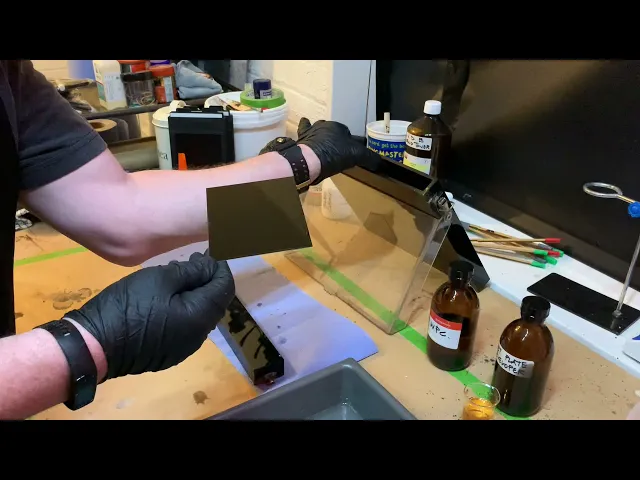
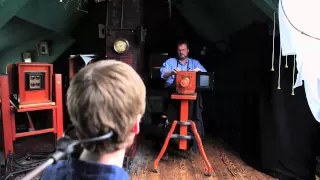
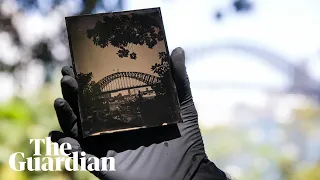
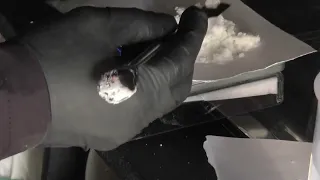
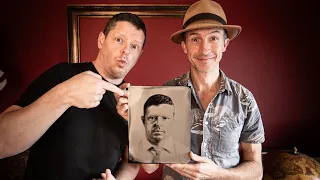
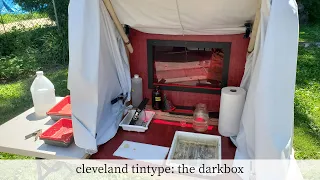
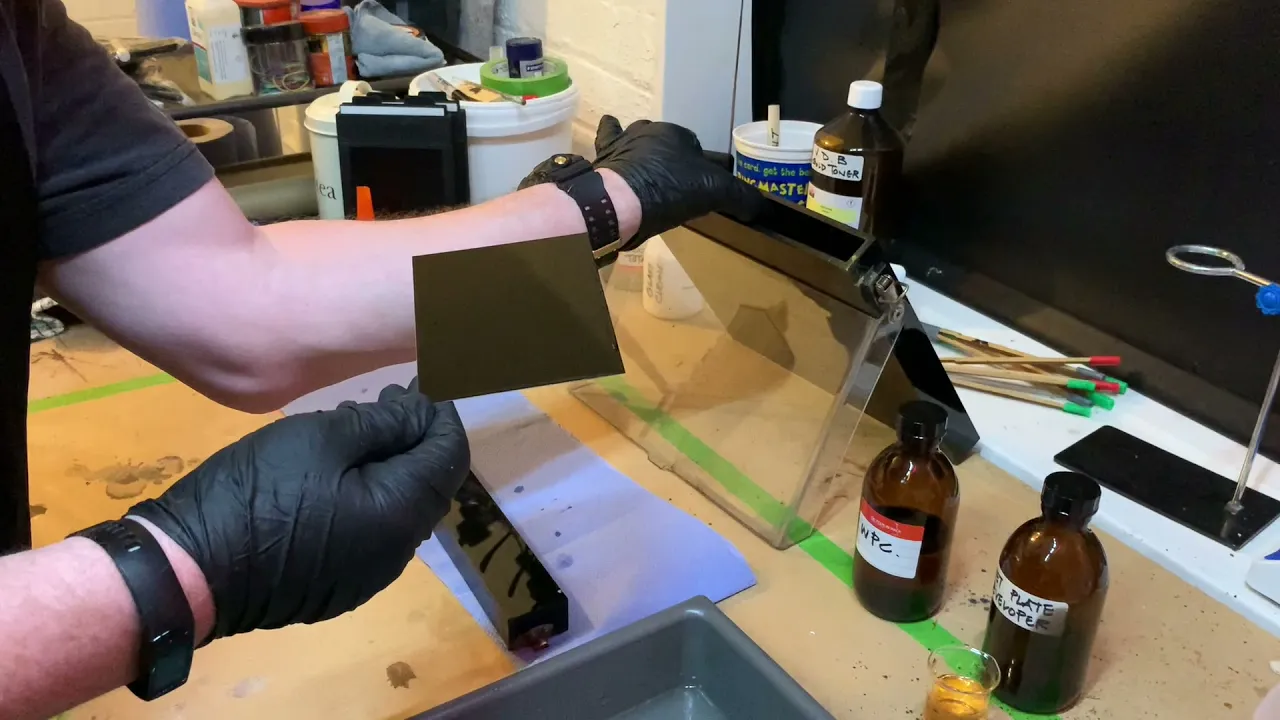
[Music] wet plate amber types are glass plates which can capture images when coated with an emulsion on the surface start by taking the sharp edges off the glass by using a stone or sandpaper [Music] make sure that the glass is squeaky clean to remove all dust and flakes of glass by using a mixture of calcium carbonate distilled water and denated alcohol in equal amounts [Music] we need to make sure that the edges are particularly clean [Music] albaman is coated to the edges of the glass plate to prevent shrinkage of the collodium when it's applied this
is simply one egg white to 300 milliliters of distilled water shaken and then the froth removed from the top of the mixture it's best applied using a clean cotton bud and only needs to be applied at the edges of the plate [Music] when the albumin has dried we can then coat the surface of the plate with our collodion mix you'll find a pdf data sheet on my website resource page when the plate has an even coating of collodion the excess is poured back into the bottle the plate is rocked to remove any rivulets or any
ridges caused by the setting collodion the plate is not yet light sensitive so all this can be done in normal daylight [Music] the drip corner is then tapped onto a paper towel and we only move on to the next stage when it stops leaving marks it's sufficiently dry to then go into the silver tank [Music] the plate is then placed in a nine percent solution of silver nitrate this is what actually makes the plate light sensitive and able to capture images it'll stay in the tank for about three to four minutes depending on the time
of year and the temperature [Music] making tin types is similar to the amber type process but doesn't require all the cleaning the plate is protected by a thin plastic film which is just peeled off the surface and then it's ready to be coated with the collodion everything else remains the same [Music] [Music] after the plate whether it be an amber type or a tin type has been in the tank for about four minutes three minutes in the summer then basically it's light sensitive and can only be brought out of the tank under a red safe
light the plate now has a milky appearance on the surface which is the silver reacting with the collodion to make it light sensitive the excess silver then needs to be drained off and the edge is dried before placing into the plate holder [Music] the back of the plate now needs to be completely dry to prevent cross-contamination in the plate holder the plate holder then needs to be light safe before it can be used in the camera [Music] the large format camera has already had all its settings made and has been pre-focused on the subject prior
to bringing the plate out [Music] once the plate holder has been placed in the back of the camera the dark slide is removed and then the image can be taken for the prerequisite time [Music] this can be as little as a few seconds or many minutes the dark slide is then placed back in the film holder and then it can be removed to the dark room for processing [Music] remember that the plate can only be removed under red safe like conditions image is processed with the ferrous sulfate developer and must be done very quickly over
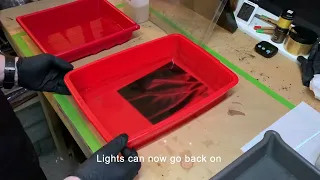
the surface of the plate it will only take about 15 seconds to develop [Music] we halt the development process by running cold water over the top of the plate just like we did with the developer after stopping the development we put it in a bath of sodium thiosulfate fixer because the development process is now completely finished we can turn the main lights on and have a good look at what we've produced this is the part of the process where the image reveals itself the fixer washes away all unresolved silver [Music] we continue the fixing process
until all the unexposed areas of the plate have cleared [Music] finally it's placed in a water bath to remove all traces of chemical from the plate [Music] once dry we heat the plate over an alcohol lamp to warm up the plate surface [Music] we then pour sandarack or shellac varnish to protect the fragile image surface it's important to wipe any excess of the back of the plate as this is highly flammable and could catch fire [Music] after pouring the sanderac or shellac varnish we heat the plate again just to seal it to the surface of
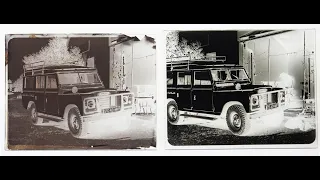
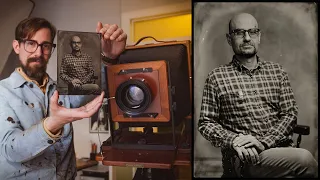
the plate [Music] the transparent image becomes visible when viewed against a dark or black background [Music] you