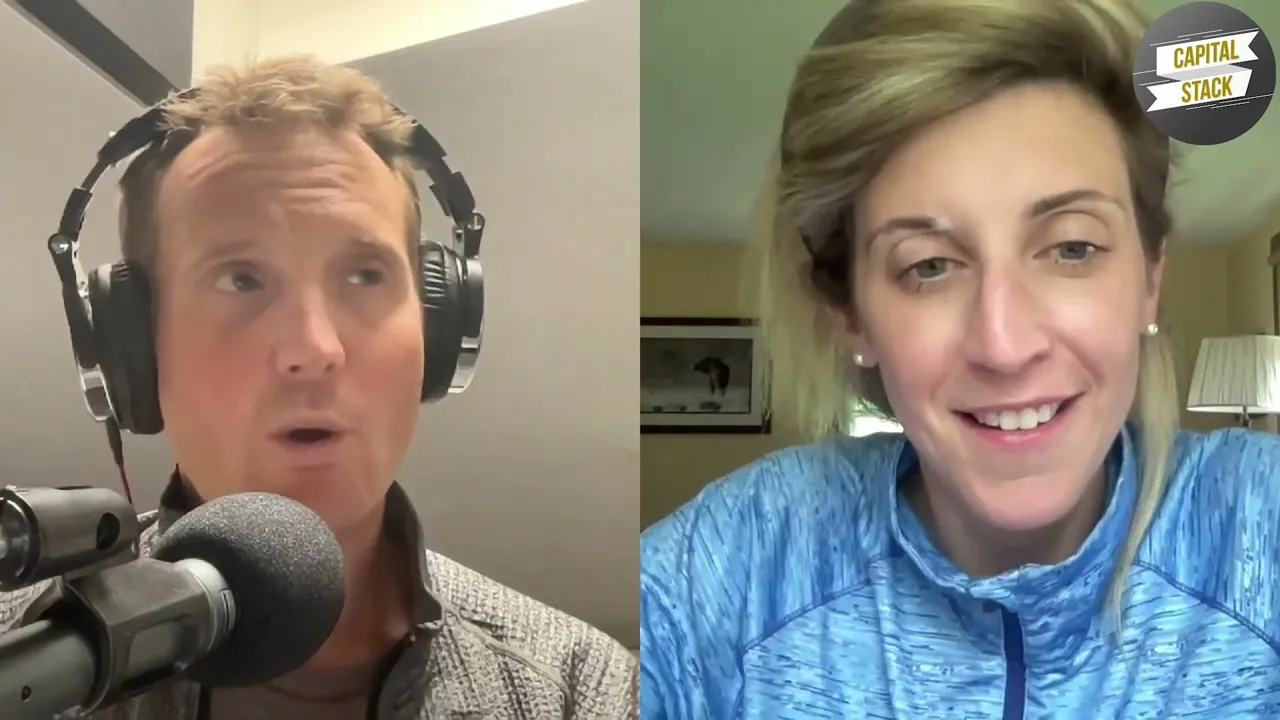
all CEOs me included we don't actually know what we're doing they're all sharks so all you got to do though is no shark bait I don't think we've ever talked about this before but we can capture all of the wall chair first place you start is with the product that's just the first nut [Music] this is the capital staff [Music] hey everybody this is David Paul the host of the capital stack podcast where I talk to Founders operators and investors about everything value creation and startups today I am speaking to Jen Abel who is the
co-founder of jellyfish which is a go to market agency and workshop and you know think trust that helps early stage companies scale and find that product slash go to market fit uh today I am super excited Jen is actually one of my favorite people to follow on on X is that what we're calling it now X uh for a second I was like yeah right sounds like like it's a porn site like yeah or an only fans yeah I was like oh exactly she's my favorite ax yeah um yeah I think that's exactly what we're
calling it I'm surprised I'm I'd be shocked how many other people have had to say that today um yeah it's uh I apologize I I do a lot of ranting on there so uh well it's a good message right and you know I want to go into what that message really is from you but just from a little background perspective I'd love to kind of understand a little bit where you came from before you started this sure um kind of customer Discovery slash go to market um you know what would you call I wouldn't even
call it an agency it's kind of like a it's kind of like a launch pad yeah it's um I don't even know the right word for it uh uh yeah launch pad like Compass just um Source like you know we I joke around I'm like we're the only place on the planet where Founders can get like the real raw truth exactly which is kind of a daunting thing at the same time but um yeah just a quick background on myself um was so lucky to be a part of the startup ecosystem you know back in
like 2010 2011 2012 when you know building a startup was all based off of first principles and the foundations right we didn't we weren't in like a zero interest rate Market at that time um and first started out at a company called General Assembly which was a was maybe one of the first New York City startup Darlings um I'm trying to think back um and was the second sales hire there um then went off to a healthcare Tech startup and then a YC back startup as the first sales hire and realize in those three different
stints the same exact thing which is founder you know hired me or the first few people and were like go out and figure out what the market wants to report back and we'll build it and I remember sitting there being like what like I mean what what constraints do I have um where do I even start who do I go after um I had so many questions and I remember saying hey until I can until we have a little bit of a bit more clarity around what this will look like will you join me in
these calls like they're going to want to hear from the only person I want to hear from is you they don't care about me this sales person they want to hear from the founder and because we haven't had this we don't have a structure or process or even just an entry point yet like can I have you involved and they said sure So I ran 90 of the you know follow-up the prep all of that and then they came in as the Visionary and I realized after doing this the first or second time the third
time I was like oh I know how to do this now I got to bring in the founder I'll I'll sit alongside them and act as the as the co-pilot and and the guide here when it comes to sales but like I need them to be the Visionary and that was kind of the the moment where where my now co-founder we met at our last job our last full-time job together and we were like wait a second every founder keeps reaching out to us being like Hey how do I hire someone like you to do
this for my organization and I'm like oh wait a second like this is this is an opportunity that hasn't really been take you know hasn't really been built out yet which is zero to one sales Talent does not exist that's the founder um so that's kind of like what got us what got us thinking in a little bit of my a track record but have always done zero to one I have no idea how to do one to ten um and absolutely love the ambiguity the just the the the murkiness of early stage sales and
you have to be crazy to want to do it correct absolutely This Is My Confession that I think I'm crazy so you yeah I could see it I can see it but you you're marrying two very very different skill sets personality traits disciplines you know where you know you have you know sales people that really are a series of interviewers that are obsessed and maniacally obsessed with getting to the truth and identifying pain and building trust and then you have Founders who want to build and solve problems and to ignore kind of that front end
piece yep um which leads me to a tweet or an X is it an X I think it I think it is it yeah it's an X these are tough questions I asked some hard questions right so this is a uh an Ax from you today that says for startups confidence before evidence is what leads to premature scaling so what does that mean to you yeah I mean you passion is a double-edged sword let's just start there like Founders who will go out and launch their own startup right you have to you're dedicating your life
to something right like you have to be somewhat biased but on the other hand you're filled with blind confidence because this thing is still an experiment so you have this I'm dedicating my life to something I'm going to make it work married with uh I I think I know what the market needs and I'm gonna go out and build it and I'm gonna will it to my world and that's the biggest mistake first time Founders make which is having an idea and having a product without knowing the specific problem or whom you're building it for
is the number one reason first-time Founders fail and or prematurely scale meaning they want to delegate sales as fast as possible because I don't know many Founders that love sales or will even admit to loving sales they want to bring in some sales Rockstar to take it over but they're not the Visionary right a sales rock star is great at you know getting told no thousands of times over and navigating you know a pulse check which is like I heard they didn't agree with this but I heard this right and finding those breadcrumbs but you
know if you don't have a Visionary it is near impossible to go from zero to one like I I've actually never seen and I'm curious if you've seen this I've never seen a startup where zero to one was not led by the founder and they've gone on to raise us so they've gone on to be successful I don't think so I think the just the early adopter curve has to be because they're buying the CEO most of the time absolutely just kind of pushing it and you're pushing money around and you know hopefully it works
yeah because yeah at the end of the day and for an early stage startup you're buying the vision of the founder you're buying the throat to choke of going right to the founder right you don't have to go through other people and you're buying the willingness to know that they want a case study from you and you're going to get there all like those are three big leverage points that that's the early stage startups can take advantage of but if in exactly so you know it's interesting I've always prided myself on you know really digging
into vertical SAS Solutions because generally speaking the founders have some domain expertise or their subject matter experts they really can identify the platform and the the product and solution set you know isn't we're not trying to appease a giant market there's generally less competition less Venture dollars going into it but I feel like the bias is you know are even stronger right um with these subject matter experts and generally these people come from their you know prospective Industries they've never built product before you know and um have you have you seen that in the vertical
construct that you know it's it's almost the better founder is it the subject matter expert or is the is it maybe the more of the generalist that um is a toonly you know uh able to listen to a market and build a product with yeah principles so I haven't really thought about that in like true depth but like my immediate reaction is if you can understand the problem better than the market that's what takes you from zero to one right like expecting to have a fully fleshed out built product at the zero to one stage
of the early stage how however I think that if you don't know how to build product that will absolutely block you from scaling and or you probably will have super high churn right because in the zero to one stage and we we were kind of just alluding to this in our previous question you know it's all about vision um you know direct access to the founder and the willingness to know that this startup is going to do everything they can to make this work for me knowing that they want a case study and a reference
that's what kind of gets you in that first early zero to one buy I've never let's put it this way I've never in the zero to one stage If You're Building um you know vertical SAS the problem is it's much harder to find like I think a lot of I think every startup starts out verticalized right like so I think every starter that I've ever touched is is it is inherently a vertical startup and then they grow horizontally organically um but in terms of like the longevity I actually don't know that answer do you have
do you have a thought on that well it's it's my it's shifting right you know because I was talking to a product manager of one of my old portfolio companies and you know he joined this particular company super early and my experience never lent to like hiring like real big product people like having product people in super early stage because I've always felt that that should have been delegated to the founder but like [ __ ] I'm open-minded right and um I I asked him I was like do you do you feel like it is
uh imperative for a product person to come in at the early stage or should that role sit in the founder and he said and he you know um I think referenced somebody famous and um you know very rich in Silicon Valley saying that every founder should be a product founder right or have some kind of product background in order to be successful which I think was kind of interesting yeah but then you look there's some pretty successful companies that have shitty products yeah exactly um do you so like you we keep talking about zero to
one so I mean obviously that that term was you know uh brought out of zero to one the book by Peter Thiel what does zero one mean to you yeah the one usually means how do I get to my first million of ARR um okay where I have that traction where I have that that ability to like go on and raise you know a series a got it okay zero to one to me is like precede to series a got it okay so you're not referring to like this is a new product that the world
oh no no I'm saying okay okay I'm glad you asked me to clarify that because I could absolutely see how someone would interpret that differently right um yeah because then it's like I mean I hate zero to one products because then you have to educate a market you know like that's I'd much rather you know ride on someone else's coattails yeah and you have to have a lot of money to do that yeah yeah yeah a lot of budget and you know talk about Vision you almost have to have a kind of a sociopath founder
that is just relentlessly like trying to change the world and you know I'd much rather have somebody where there's budget Authority and there's usually some kind of uh motion Motion in that in that general direction so tell me I mean so so what is jellyfish and you know like how I mean you kind of we talked about it tangentially that you're kind of marrying early stage sales process with founder Vision how is that executed how do you work with clients yeah dot dot yeah so um we specific I mean we are very focused in like
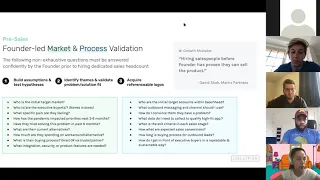
the stage of experiments we are running because a startup is just an experiment right every Venture around as you pass in the next experiment and moving moving forward so are we specifically support with the founder at sailing stage right um I think that so many Founders are technical in engineering Centric and don't have the right the sales reps maybe they've sold you know once or twice or for a year or two but they don't have the pattern recognition or reps um to avoid a lot of the common missteps so what we do is we embed
alongside Founders we force them to put their Vision on paper and then we actively go out and help them validate what part of their vision is most true directly with their ideal customers knowing that there is not a startup on the planet whose Day One Vision was the same vision that took them to product Market Fed so I always tell Founders I'm like listen this is not for the faint of heart knowing that if we are not invalidating parts of your vision we're not doing something properly because there's a zero percent chance you could be
fully correct about all of this um so again literally just structuring their thinking turning them into a laser actively going out and getting evidence directly from their ideal customers to help us understand how they're thinking about this problem keeping all of those conversations consistent because it's what what gets you to a level of repeatability is consistency and helping structure all of that call feedback and all of those conversations in a way to help Bubble Up what are those insights where are things validated and invalidated and then every single month refining the next experiment because as
a startup speed to learning is speed product Market fit right and there's so many Founders were I spoke to them the last quarter and I'm like okay well where are you guys today and they're sitting the same spot and three months have gone by um so what we want to do is force Founders to be like if you're not learning every month and Crossing things off your list or circling things on that's part of your vision and going deeper and deeper and deeper like there's something very wrong uh how much so how much of the
I mean from a tactical perspective yeah how how important is is the founder from your lens is it important for them to be on the call and to be a part of this process to narrow in the product vision and get them kind of like as a come to Jesus of what the market actually wants or is it more of um I I should say kind of giving them like the sets and the Reps to you know become better right it's both because um most of the time they get in their own why right like
they'll focus on something that I'm like why did you go down that track like why did you spend 15 minutes talking about this you don't even solve for that right um so a lot of them get in their own way a lot of them just want a race to sell because they think the demo is what creates urgency and I'm like no no no it's them it's the aha moment regards the problem has nothing to do with your demo um so getting them to um first understand how do I get to know the problem better
than the customer that's what wins right like oh wow like all of these things that you've just outlined those are symptoms this is the problem and this is why we solve it and this is how we solve it but if you can't get them to head knot around the problem and agree that that's the problem showing them how to solve for it is useless it's just a wasted exercise so um just helping the founders know how to push and go deeper and deeper and deeper um and then also most importantly helping them understand when to
when they have earned the right to sell because if you go out and sell on that first sometimes even second call like you can just kill that opportunity very fast because someone has to be prepared to ingest what you're about to say to them and you know fifty percent of the time they're probably not do you feel um you know because obviously you know you've come from a sales discipline and structure is important do you feel like there's one sales system that works better than the other you know it kind of like I felt like
just that line of um uh process I thought like the Challenger sale methodology I mean do you feel like that resonates more in the early stage versus you know like us what do they call it Stanford you know whatever kind of thing and all those different things right so there we've kind of boiled it down to three because there's so many variations out there and they all kind of get to the same point eventually um my favorite thing to understand is one of and this is again we try and simplify it for Founders too do
they agree that a problem exists like can you get a head nod right the second is is that problem currently being measured or managed meaning it's growing they understand the implications there is possibly an owner there is a number tied to it that everyone is looking out for like what kind of how does that play out within that organization and then the third R the third piece is have they tried to solve this previously meaning their historical intents of them trying to solve that problem if they agree it's a problem but those other two questions
can't get answered meaning it's not being measured or managed and there's no historical attempts it's a false positive they're just being nice so what we want to help Founders weed out or people that are just being nice um either because they want to learn more simply because they're curious um or they just are nice people and don't want to give the harsh feedback so there's so many false positives that pop up in founder-led selling because who wants to tell a Founder I don't care that's a really important thing and no one's going to say that
no one's going to say that so that's why we've structured that framework because it allows us to easily pick up false positives versus an easy thing to say or yes of course there's a budget like um of course this is a problem um of course this is a priority okay great quantify that yes or or back that up so that's really interesting is the problem measured or managed I mean my first think thought there is like just the healthcare industry where every where everything is broken but you know everyone's you know they can't find their
ass with both hands so would you say that you know I mean the house is on fire right they know something's a problem but they're not managing or measuring it do you still think that the problem doesn't have legs or if if it's being measured but they've never tried to solve for it historically right that third criteria that's when I would raise my eyebrow and say listen it's obviously a growing problem because you're measuring it it's obviously a growing problem because you have a leader literal individual overseeing it why haven't you tried to solve this
other ways before like why is and then they're like because it's good enough um and then you now know great not qualified right because there's like 50 because there's 50 other things that are more important exactly and so this is what this framework allows you to stay focused on unearthing a real insight and a real pain Point versus you know budget Authority need timing or hey like if I gave you back this time how would you use it that's future tense no one can speak to Future attempts we got to focus on past and present
and that's what that framework like Roots you in um so that's why we force Founders to kind of take that that that that view of uh needs analysis you know and it's funny because I you know I I was I think about paying points often and you know um when it came to to what you were just talking about generally these problems are not new problems there are problems that have been within an industry for uh a large portion of time but yet they're still unsolved and so like what is the catalytic event that's going
to make them buy the software today and you know generally speaking I mean everything's been digitized right do we do we need another SAS platform Excel works right I mean so you know is there like a fundamental technology shift that is going to make this problem go away right um or is to your point is this really not that big of a problem yeah and listen I think that's why the failure rate for startups is so high yeah no I agree and so when when you work with Founders yeah even you know you're giving them
this you know Ambrosia elixir of of self reality and Truth which I believe this this shit's gold right in my opinion there's probably still an ambivalence I would think right absolutely yes so like what's so once you give them this incredible like you know path and hand-holding concierge like you know program how many Founders are just still like you know sticking their head in the sand and building so the biggest misstep we see um and I always caution this the founders right so this is not this is very public amongst our customer base is they
take what we did together and they don't go any further so we'll spend 90 days maybe six months and they think okay in that very short period of time what jellyfish uncovered I'm gonna go build a business model around this I'm going to hire a team and we're just going to exploit that thing and I always say if we can uncover an Insight in 90 days wouldn't everyone be able to do that mm-hmm it takes two years two years to get to True product Market fed why are you stopping to experiment why are you hiring
people when you the founder still haven't pushed these things through the funnel yet they're sitting maybe in procurement maybe one deal one through like that is not enough to go out and hire a non-founder to take this over but again they just want to delegate as fast as possible and I understand like maybe in the last two years where speed was everything and growth was everything Maybe that was the direction they got but right now in this in 2023 you need to give yourself two years right of Runway and time to go deep to truly
understand the problem and very much understand who your early adopters are going to be it's not something that it gets accomplished in 90 days or six months I don't need I would even give the grace saying that you know speed was the Catalyst I think Comforts The Catalyst I'm disguised it's a great Point as as seen I mean at the end of the day we all just want our parents to love us right in any type of rejection it's like you know it's very no one likes that yes that's it you're absolutely right I mean
it's it is so hard to give sometimes this harsh feedback but I know I'm increasing their odds by giving them this harsh feedback so that's why we have to keep telling our team being like hard truths increase odds for these folks just it's a short-term pain but in the long run it's um this is what wins so the easier thing to do is to have a um I guess parallel process in the sales call founder with experienced sales person to do Discovery correctly right so you're so the the truth is being heard by force two
sets of ears four ears total right to kind of get to the truth um the harder thing for a Founder to do would be to grind out and to change their their way of thinking right or or or you know their lens so for the founder that you know is like hey like this this really makes sense I've got happy years my my lens is off what are some of the steps that you could recommend to them that they can take to maybe is it like as a discover like a list of questions like what
how do you like what how can someone do that without the assistance of the salesperson yeah um so the first is knowing that product Market fit is always found in an adjacent Market meaning wherever your initial vision is it's always going to be one step away from the ICP and or One Stop away one stop away from the use case you thought you were solving for right so just be prepared as a Founder to disprove yourself that is the most powerful thing you can do you're not wedded to an idea you are listening it shows
you're learning like invalidate is my question I sometimes say the founders I'm like if you're constantly validating yourself are you learning hmm right so like show me where you've learned and the only way to show a learning is to show some level of rejection otherwise you're not learning um I I get so much excitement of like oh yeah they're validating what we're saying and now like oh well [ __ ] we were really off there yeah exactly or or hey I was so wrong in the last month thinking this but here's how I changed that
that to me is like the leading indicator of someone that's gonna go find product Market fit right like they're not biased they're not wearing those Rose Colored Glasses now granted that's usually a second or third time founder which is why they're so coveted first-time Founders just don't know that game yet or that that feeling um but again it's it's all about earning the right to sell and you as a Founder you have a title and you have a vision that people want to learn from you they do you're interesting you have something to say you
have a perspective on the world you see the world differently and how it could be better so Embrace that people want to learn from you and hear from you but listen like to to sell well you have to pick up on these insights and the more insights you pick up and the and the more that you question and say why why why like tell me why this is important to you like that's where the nuggets live that's where the gold lives it's not in demoing your product like demoing your product does not create any sense
of urgency um so you know for for Founders it's it's just really embracing that and just don't delegate like you have a competitive Advantage right now in the role you're in to sell or sorry to go through the motions of selling and every Discovery call is is a customer is is a discovery call like you're not selling it on your first conversation with someone you're just trying to better understand their world and share a little bit about yours um and just question everything and always be learning month over month um force yourself to get rejection
like maybe come even come up with something that seems so far out there to be like they agree to that [Laughter] just keep pushing it yeah because again like the only thing that's gonna kill you is sometimes just like it goes back to that tweet confidence before evidence right right so how important is bringing in and this kind of goes counterintuitive to kind of what you've been building on but like yeah how do you how do you think about bringing in pricing conversations and and speaking about value in Roi and and getting to that getting
to that you know that number yeah Roi is tough especially if you haven't had customers go through yet and you can truly see the value you're delivering because otherwise how do you justify Roi if no one's actually like stayed on for a year right um so Roi is very tough in the zero to one stage but the value piece all comes down to understanding how is that problem growing because if they're measuring it and they want to solve for it the Intel is with them great month over month what are you looking at at this
number like how is this number growing how is it changing what is the cost every time that goes up by one what does that cost you because again if something is actively being measured why that's what I always want to dig into who asks for this measurement how are you measuring it who's in charge of reporting when this number goes over a certain point what does good look like in terms of changing this measurement sometimes it's just shifting it by two percent it's a big deal yet sometimes we go in selling oh we can reduce
your cost by 50 no one's going to believe that yeah it's all [ __ ] so it's always like if they're measuring the problem right and there's that's where I would really pull because that's where the insight's going to come from and all you're going to do is play that back to them be like listen on our last call you just told me that every every day that goes by that this is not solved for it's going to cost you twenty five hundred dollars right so since we last talked this car this problem has cost
you ten thousand dollars right right so like using their own language just to play it back and position it to them so they they just need that aha moment they just need someone to um maybe reiterate the problem back to them in a slightly different way for them to be like oh my God you're right yeah getting to the truth of this and this is just kind of affirms everything that you're saying is that like you could go out and get all this information and all this evidence and you realize that the problem that you
just built a [ __ ] ton of product on doesn't have legs and it's not really a problem just that sinking feeling in your gut that you get [ __ ] up yeah right yeah and I can see why it would be it would behoove a Founder from just survival mentality to just throw dirt on that yeah it's it's so hard I mean it goes back to that conversation we had about just passion right like I think Founders also are put on a pedestal a little too early right where they think that they are invincible
yep especially after a fundraise yeah they're on fire that's exactly that is when they are the hardest to crack it's usually and I always say this I go the thing that I sometimes struggle with is people come to us too late we're there hail Mary right and I'm like you've given me three months to turn a ship around that you've been with no money [Laughter] um but you're spot on it's the minute they raise Venture Capital that there's about a three-month Sprint from there where they are on top of the world sure and then all
the money is subjected to like a stupid tax right it's exactly it exactly it yes yeah yeah it's a stupid tax if it was their money they wouldn't spend it like that yeah so I want to shift the car I mean this is such good stuff but I wanna I wanna switch this a little bit into maybe maybe this is a little bit before zero to one maybe this is one to two or one to three or one to five but when the when the sales person or excuse me when the founder becomes a sales
manager um yeah and how that and that transition because those are two different obviously um uh personas and how can a Founder effectively go from you know being like dealing with these sales people that are you know essentially a lot of them are you know you wind them up and you let them go yep um founder minute managed cells is also the often most skip step too right because every founder they do founder lead sales and then they race to go higher ahead of sales so I'm glad that you brought in founder managed sales because
it is something that I actively like do not forget this step this is an important step um so first and foremost you also want to prove a non-founder can do it before you bring in a VP right because their job is to scale the team with body count so you can be spilling something that a non-founder is not even able to do yet correct so in founder managed sales I always say take baby steps right first and foremost can these two sales people that's a whole category by the way did you you should coin is
it coin is that like a jellyfish thing founder managed sales I don't know I just kind of call it that I don't even know where that is no one talks about that but that's like a real stage that no one talks about yeah it's because it's so unsexy yeah yeah but it's like it's that like everyone thinks this product Market fit to scale and it's yes right yeah yeah or maybe it was during zerp but um but uh in the founder it's it's you know I always say bring on two A's right because one of
them is usually not gonna make it right actually in nine out of ten sales people can't even punch their way out of a paperback so if you know how to hire a good salesperson that's that's also a good feat um right so we actually usually will if they if they want us to we'll enter start to help interview people just because um early stage sales Talent is so hard to know who's good versus who's not um because most sales people are are great at selling themselves but in the founder managed sales stage first and foremost
can these two sales people get to a similar maybe slightly less it doesn't even be the exact same number but close enough to what a Founder is able to achieve on the outbound so if a Founder can get a 10 outbound response rate okay can these two AES bring in a seven to eight percent okay let's just start there if they can't let's diagnose why don't even let them go off on their own calls let's try and first figure out the most basic step of inspiring the market and what is and what's not working with
the outbound messaging the second piece here is join the first call can they run a first call are they able to convert and again the founder just needs to be involved you know a little bit early on just to make sure that these people you know can confidently do it because you don't want to waste leads you don't want to borrow brand Equity so there is going to be it's a big it's a big lift right and then the founder can start to step away more and more once these people feel comfortable they have their
groove and they're at and this is why it's so important to do family sales their conversion rates are getting as close as they can to what the founder is able to achieve right so that you can prove that a non-founder can do this um so that's that's really a really important piece um which is in the final at sales stage how long does it take you to close a sales deal and then what you want to do is make sure that in your CRM that those numbers aren't adjusting too much I mean of course padded
a little bit because the founders always going to have a little bit more um ammo but you know are they able to achieve a similar conversion rate similar first to second call Second To Third call third to Fourth call how long does it take them to close these deals right and that could take three to six months of the founder like intimately involved with these folks um and then you want to compare them against each other like it's one far way outperforming the other and is that because this person's not good right um so that's
a lot of the stuff that that we look at and why the founder-led sales piece is so critical right and then oftentimes maybe the founder thinks that they can just walk away because they have three sales people and you know they work on another piece of the business product engineering implementation something and then they just get pissed at their sales people that aren't producing I uh I had a chat yesterday over the weekend with someone that says when does the founder get out of sales I'm like I don't think ever because founderless sales founder managed
then they bring in someone great who's going to unlock a net New Market where there's no brand equity and there's still a ton of ambiguity right tell me about this new jellyfish product is it called man of war can we call it the manual that's good yeah that's a good one we did not name it that we named it select we should have named it that so um we are creating a lightweight version of our extensive customer Discovery program where up the stack we did everything right all the risk lived on us all the finger
pointing was at us we were the throat to choke like we were the person to blame which was great like that played a role now we're moving a little bit further down the stack where we're like listen this can be a lot more economical if the founder does this work now like I'm not going to leave these calls I'll I'll provide some some coaching asynchronously but like you have to you have to get rejected right and like you have to feel that pain I'll help you set up the experiment I'll give you the framework to
run the experiment I'll even analyze the experiment but you're leading every single call and I'm not going to be there alongside you I'll be on the back end post call but um just finding ways to scale our time and the founders time through doing the customer Discovery stage knowing that people aren't able to run 100 000 experiments anymore right like it's a lot tighter and you have to be a lot more frugal in how you do these experiments but more importantly we're also supporting in the founder managed sales stage because we're setting up these experimencies
designs analyzing the call in terms of like what what we heard the pattern recognition all that kind of stuff I can now monitor every call of the first two sales hires to make sure that they are performing for the founder as well so there's a little there's like a tech enabled aspect of this not only can you provide yeah like you can not only just provide this discovery blueprint these like laser trees right but you could also have content right that's actually recorded and you know you can actually jump on and have you know uh
you know coaching calls I mean this is very very exciting stuff well we're we're super pumped about that um it will be live end of the week whoa yeah so we like I think we like 15 Founders in the beta right now awesome so super exciting I'm a Founder I want I want to be a part of the man of war experiment the Box jelly that's another great name that is a great name because it's like a little bit in a box yeah exactly uh the Box jelly um uh I wanted to call it peanut
butter but my co-founder was like that how can a Founder get some of the secret sauce I mean if a Founder asked me to chat for 15 minutes I'm always happy to mm-hmm I actually believe in education that's what gets people yeah so that's why I like I do a lot of Twitter rants I love coming on podcasts like alongside folks like you because the bar and sales Consulting is so low it's bad it's so bad and there's I I'm noticing this now and I'm curious if you've seen this too there's a lot of bad
sales people that are going earlier stage um and it's becoming somewhat predatory in the sense that they're like oh Founders really don't know what good looks like yet I'm gonna play here oh interesting yeah I'm seeing a lot of people launch early stage sales consultancies and like what had I known what it takes to do this I definitely won't do it again yeah I've seen um they last a year totally well and that's yeah well that's the problem is like you don't know they're good for a year right yeah and that's I mean that could
be hundreds of thousands of dollars but you know where I see that a lot in early stage is um not so much sales consultancies but like the carrier bag Channel sales guy because the founder like you know gets a channel relationship and they feel like they should go into that that relationship and then they hire like some dude that like you know is teaches them all about Channel sales and is this development yeah and then you know like brings in all these Partnerships that are unprofitable and if they do that you know and um really
waste a lot of time and resources colossal waste of time I always say in the early stage there is no such thing as channel so if you don't know how to sell it how the hell is this third party going to know how to sell it I like that there's no such thing as Channel sales in the early stage yeah that is a that is a um a mirror like a like smoke and mirrors okay um planting for today you think this has been no I'm just writing down all this all these pearls here and
then I'm gonna like copy them and say they're mine they should um I wouldn't know yeah uh no you'll know because I'll be on my ex and please um listen if your Edge if you can help continue to educate the market that's a win so if I am if I was to give you a billboard and to take one of your exes and put it onto a billboard for all the founders to see what would it be the number one reason startups don't get to product Market fit is because they delegated sales too soon got
it so it'd be have to be a big billboard big billboard okay or yeah I'm trying to think if there's anything shorter um Channel Partnerships are colossal waste of time I like it I like it that's your billboard yeah that's my billboard uh and then the second um the second uh question I'm going to ask you the second incredibly good question I'm going to ask you is what's the best uh what's the the book that you've given away the most so I'm gonna go with the article that I give there's two articles that I think
if that's okay with you and also everyone can there's two articles that are absolutely incredible one is by Jessica Livingston she wrote it in like 2013 which you know it's great content because it's 2013. right and it was called why Founders need a focus on sales before marketing hmm I can send you the link too it's yes send it yeah um and then the um the other article that I absolutely love is by Mark Leslie and it's called the Enterprise sales learning curve oh okay and it's all about how they they takes early stage sales
and they compare it to manufacturing which I love because manufacturing scale right and how early stage sales that you have to build the machine right and that takes time and you do that at a loss but that at some point everything starts to break even and then there's this huge rip up um once that first box is made so everyone's like oh early stage deals I have to do this like it like early stages is the most expensive from a timing time perspective because it takes time to build that out to build the machine to
get that first box through it but once that first box is through it then now what it is is just hiring bodies right and having them replicate it and it's a great read I love how it Compares it to manufacturing um it was in the Harvard Business Review it's I think it's from like 20 2009. oh okay so my favorite content is like 2009 to like 2015. this all went downhill from there yeah well yeah then you got you had a lot of tourists that started writing and right exactly now with chat GPT we're all
yeah exactly right everybody thank you so much for tuning in to the capital stack if you like what you heard Please Subscribe tell a friend and we drop an episode every week and we will see you next week thank you bye-bye thank you for tuning in to the capital stack podcast make sure to share this with someone you know that can benefit from this content remember to support this show by rating reviewing and subscribing David Paul is the founder and general partner at DWP Capital all opinions expressed by David and podcast guests are solely their
own opinions and do not reflect the opinion of DWP Capital this podcast is for informational purposes only and should not be relied upon for decisions David and guests May maintain positions in the Securities discussed on this podcast foreign