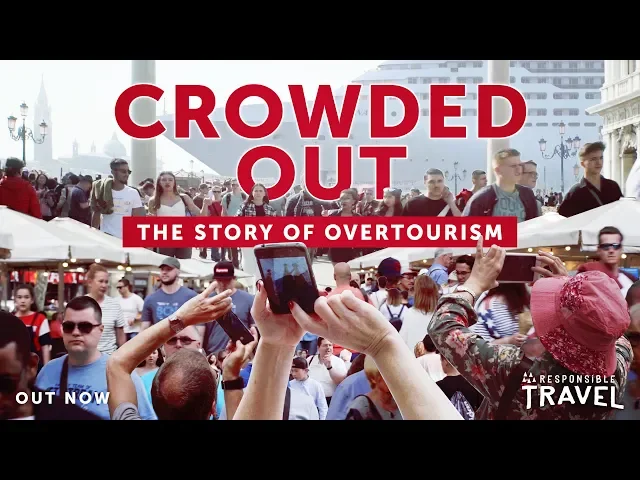
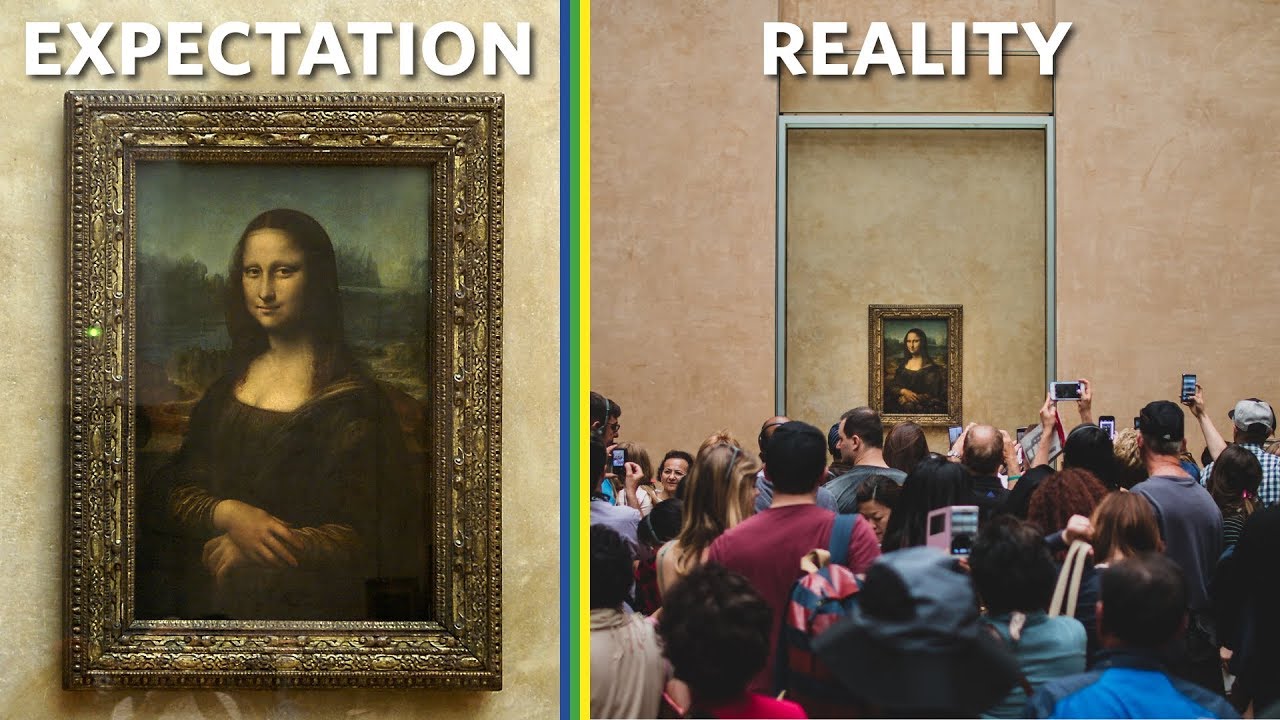
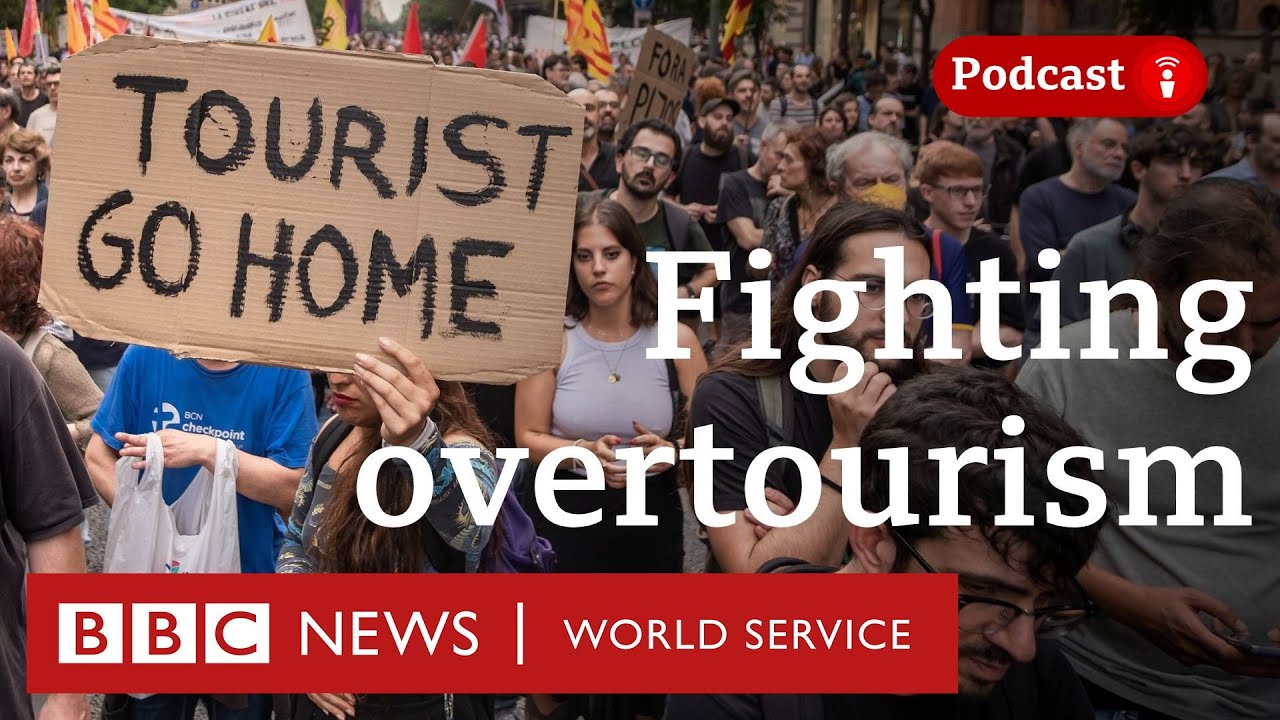
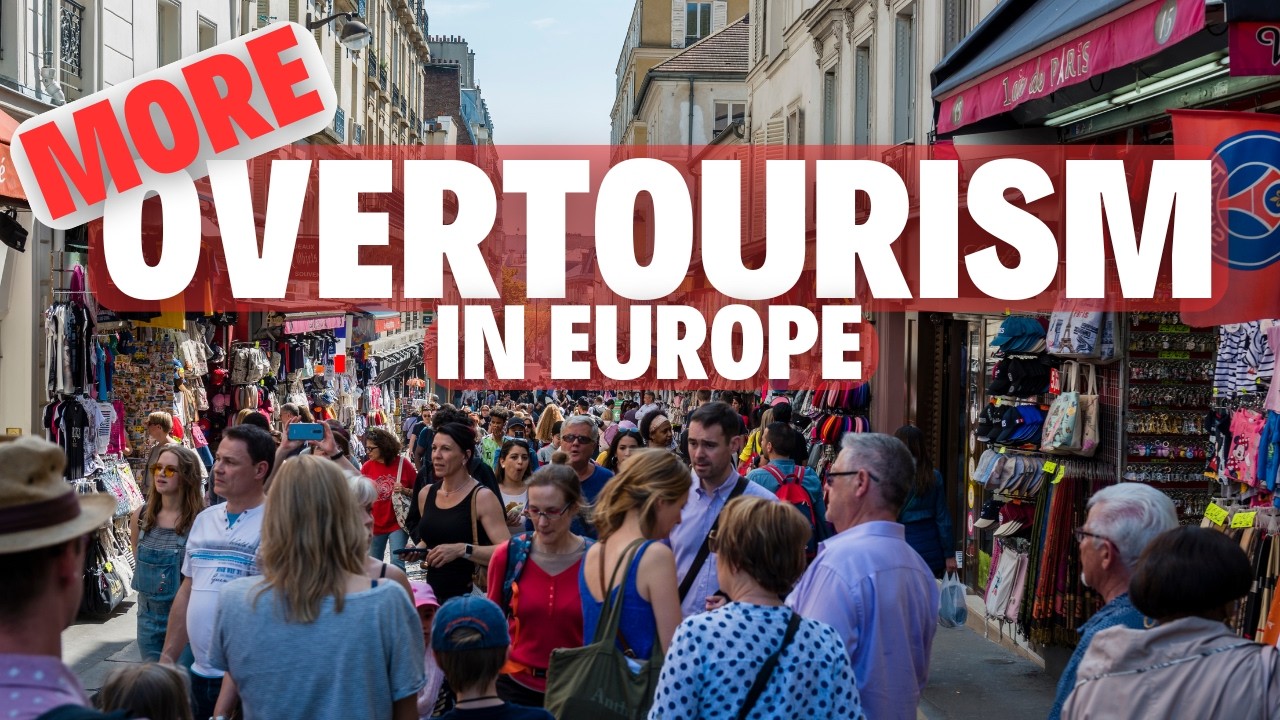
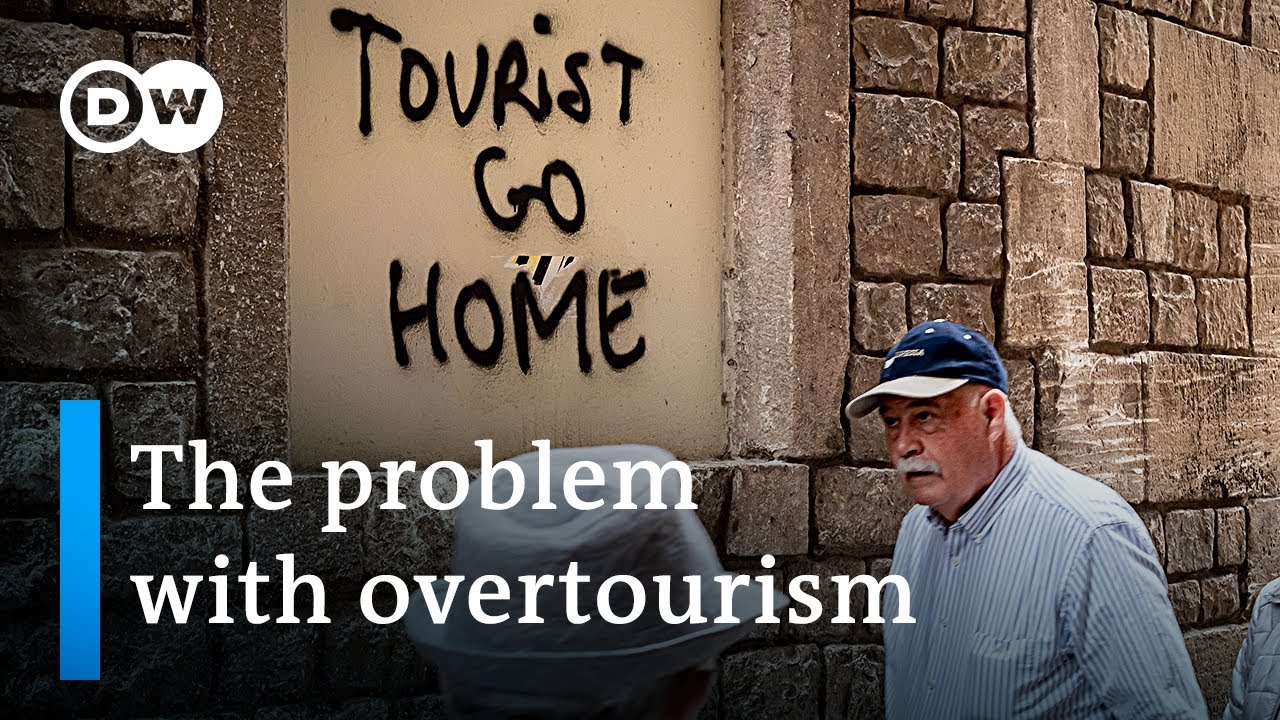
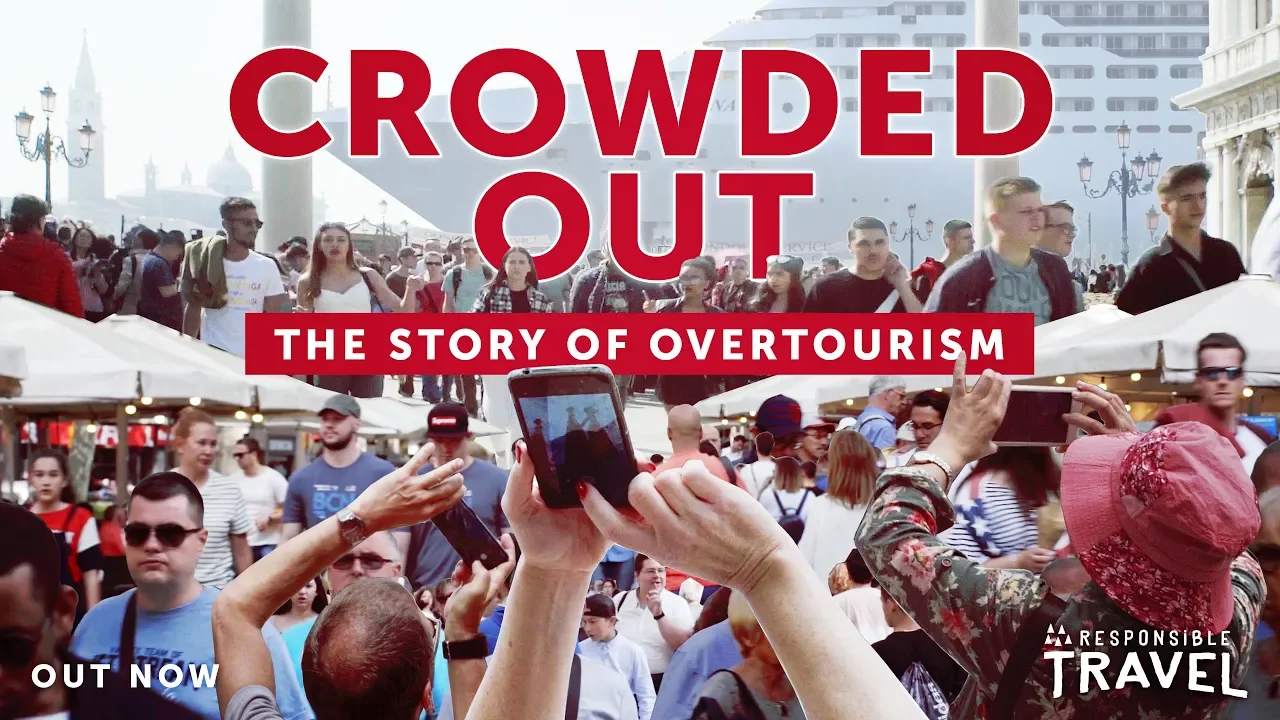
[Music] this is a story about tourism and a world on the move tourism has been widely regarded as a benign industry a win-win for tourists and local people who benefit from the jobs that the industry creates in 2017 everything changed the group protesting against mass tourism in Spain has threatened further attacks after time tourists for driving up the cost of rents and basic necessities the world's largest cruise ship was embarked on its maiden voyage from Barcelona to manager so - that is the order tourism is the toxic that's getting more and more attention over to
another [Music] my name is Justin Francis much of my life and work has been dedicated to travel my own travel has led me to enriching experiences and a warm embrace from local people for the past 17 years I've run a travel business which allows others to have similar experiences the events of 2017 sent shockwaves through the tourism industry and a new term emerged over tourism I spoke to Professor Harold Goodwin to understand what it means I think over tourism is actually quite easy to understand and the reason the word is caught on is that people
understand immediately what it means it means a situation where either local people all the tourists feel that the place is just over visited and that it's changing its character so for the tourists it loses authenticity and for the local people it just causes irritation and annoyance when that all add additive this is your holiday but this is my home it rings really true now didn't you do you think that's I think that campaign hit the nail on the head we take our holidays in other people's homes when I was working here in South Africa back
in 2000 or 2001 I went with the Township operator in the back of a small minibus into into kaliesha and he wanted me to meet an elderly lady who was trying to start a restaurant in her house and it was an amazing experience you know one of those privileged times that you remember but I'd been invited into our house we came out and there was a big fifty seater coach parked outside and the tourist rules stood up at the windows shooting with a camera down at us and she turned to me and she said they
think we're animals and that really went home I just thought this is appalling yeah and that is over tourism frustrated and appalled by such treatment communities across Europe took to the streets and turned against tourism in angry protests I'm going to try to find out more about what triggered these outbursts what's changed and why have many local communities had enough of tourism you [Music] it's a it's a fight every everyday it's a fight we still survive but I'm not with you know they call us the pandas or anything the few left citizens there must be
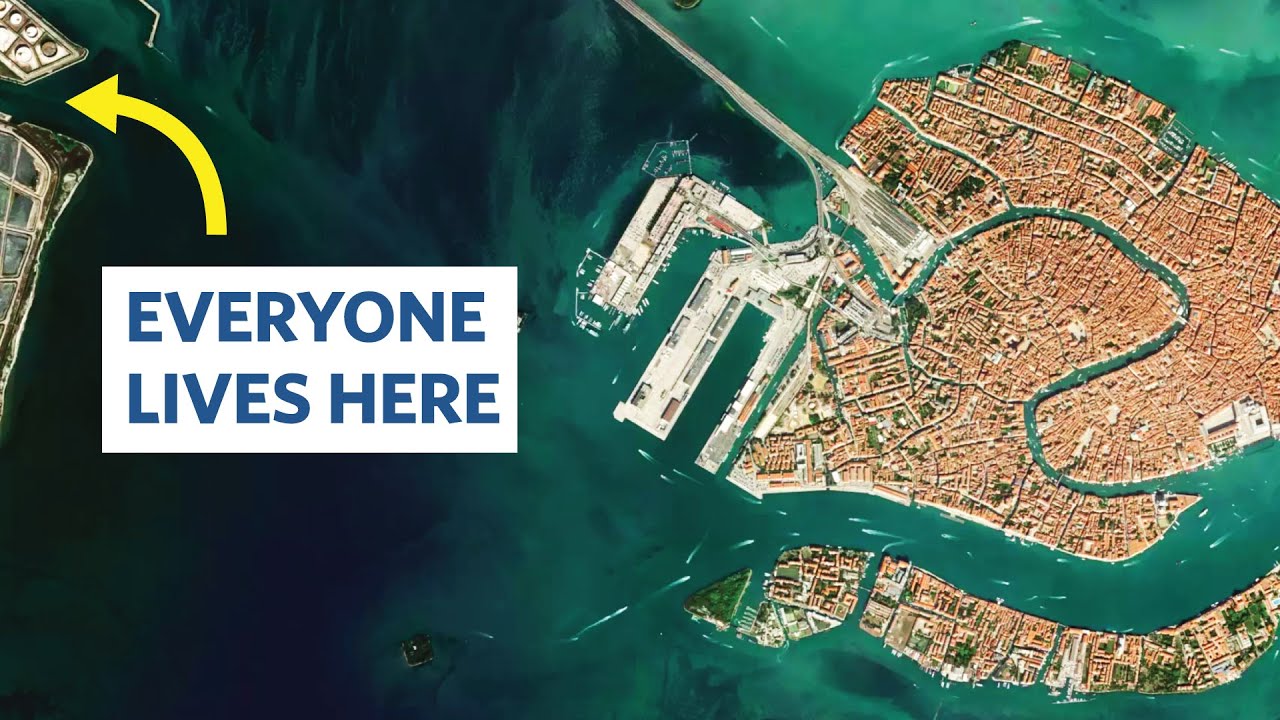
a way to contain this okay there is a maximum amount of tourists this place can carry so this huge flow we're getting every day it's just unbearable every single day you find a problem you know when you had to cross the street when you had to buy something when you to get the public boat it's kind of destroying the community because everything is case for tourists there are more short let flats than permanent residency for locals we don't have enough flat for inhabitants so people moving away because you cannot find a place to live here
losing people losing habitants means losing the character or the city you know it now is becoming Disneyland all the the butchers the bakers the pharmacies you know the dress makers are all going and being replaced by souvenir shops we are losing the meaning of the city Venice is so different from the other part of the world the so fragile is so weak somehow educating the visitors to you know respect the locals respect the size and and the layout to understand which is very very unique as you see the gondola yeah you should you should feel
bad you should feel that look at that look at the mess Chaya Venice kayak they cross in a in a place where all we going to like cross and this is completely crazy [Music] the main effect that I feel this time it's losing its identity which is ironically what are the tourists come to buy but it's gone you know [Music] it feels like the infrastructure can't really cope with the amount of people that we have here generally the residents feel that the city is becoming overrun by tourism and it's becoming more of a city for
the tourists actually the residents who've been living here for generations in the neighborhood I'm living here now over the past seven years has changed massively and it has converted into a tourist neighborhood and I cannot sleep I mean they just forget about their behaviors right they come here just to mean to do everything that they cannot do in their in their home countries here they call it el Turismo Deborah Shira charisma Deborah Tara is the drunken parties [Music] local markets in Barcelona have become in a way the biggest victims of this tourist massification as they
are the core of what is supposed to be authentic culture they become tourist attractions in their own right so tourists go but they basically go to take pictures they will not actually shop as residents do they've changed from selling food fresh food they've just going to selling fruit juice I mean just for tourists so everyone is just changing shaping their mind to see how they can make business out of tourists and not offering value to local people actually it's a vicious circle because of course the more you develop the industry the more the massification will
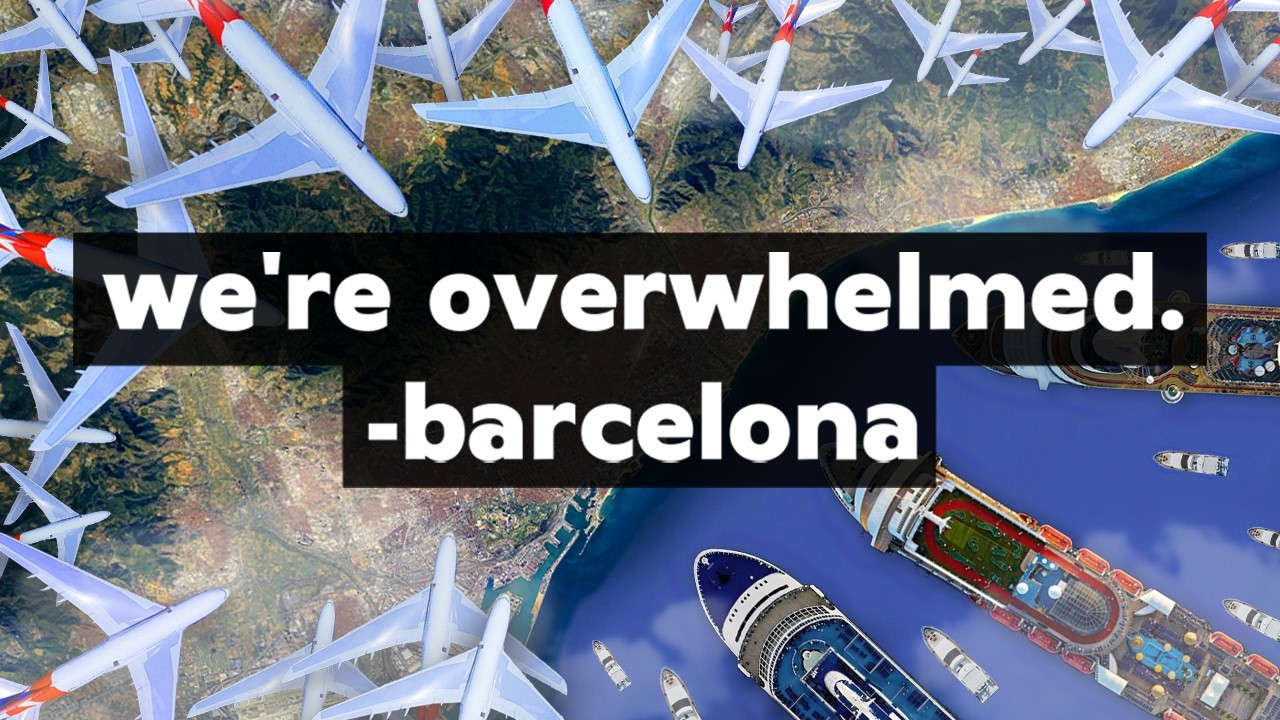
affect the tourist experience you know because if numbers continue to sustain ly grow probably very soon Barcelona could die of Safed you know Barcelona as a tourist because it's so beautiful they had people were suffocated the desperation of residents and the protests which followed brought the world's attention to Europe but it didn't stop there around the globe reports of overcrowding environmental damage and local tensions emerged and in some unexpected places not only were popular cities suffering but remote fragile locations such as gili trawangan island in Indonesia were raising their voices as well photographer Thomas eglee
traveled to this Paradise Island to document the dramatic changes tourism has caused [Music] don't tell me about your project which is your recent project which is a which is like kind of personal one I think yeah it all started with my parents because 30 years ago my parents went to Paradise Island which real name is gili trawangan and it wasn't their honeymoon and it's the most beautiful place they've ever been to it was their paradise their Paradise Island so when there's thirty years later to discover what happened to the island because I already knew it
changed yeah when I saw your when I saw your work I mean the before and after pictures with the 30 year gap I mean it's barely recognizable as the same place yeah it's it's totally different I mean it starts with how my parents went to that Island when whereas they just hired a fisherman with little boats it wasn't even in the tourist guides they stood with local people and there was nothing else to do them have a swim in the sea they were like three or four people on that island whereas 40 years later they're
like 3,000 people coming on the dial and each day so it's like over a million in one year Wow and all that on a really small island now you can work how we can dive and you party a lot there are a lot of trucks everywhere yeah yeah but this question is what can tourism calls if if there are no limits yes but let's talk a little bit about the cost because the the growth in numbers that you've described is extraordinary I'm guessing that must have had some environmental impact yeah definitely when you come on
the island you wouldn't see it but as soon as you go in the middle of that island you would see a huge rubbish pit you don't really see it on the first place but it's all hidden there yeah I mean some people listening to us might say you know everybody's entitled to have fun and enjoy themselves but you know how do we respond to that that people are entitled to enjoy themselves everybody is entitled to enjoy themselves and their good things about tourism but what I think is important that the city open your mind you
know you everybody location you want to band out all the problems you know you have problems in your everyday life work job family whatever I'm going to go to vacation it's all no there is a rubbish pit but I don't care I just look at the beach and I think you have to open yourself also due to that things even when your invocation yes and you start to do small changes in your behavior yes so it's not about not going somewhere it's about how he goes from yes sadly this is just one of many examples
in what the Wall Street Journal described as a global tourism backlash Thailand was forced to close the beach made famous by Leonardo DiCaprio's movie local people in Japan increasing described effect on their lives and culture as tourism pollution some US National Park started buckling under the strain and Islanders on the other sky in Scotland call for help after surges in tourism I spoke to Elizabeth Becker author of overbooked to understand how tourism could have reached this point what was it that really drove you to want to write a book about tourism I was the International
Economics correspondent of the times the New York Times as globalization was exploding around the world what was not being covered and what seemed to pop up to me all the time was the fact that the tourism industry seemed to be taking advantage of the new open borders yeah the new economic system the new technology and I didn't see that reported yes I mean tourism is the industry that seems to have escaped acknowledgement as an industry or scrutiny is an industry yes every everybody thinks that tourism is a pastime yes it's not an industry and a
few governments treated it as an industry it's also that the explosion of the industry was extraordinary in 1950 there were 25 million tourist arrivals worldwide this number grew exponentially of the following 70 years and reached 1.3 billion by 2017 it's estimated it will reach 1.7 billion by 2030 deriving this is the exponential growth of global air travel and cruise line passenger numbers it seems to me that what we're seeing now all over the world is what happens when an industry which has talked about being sustainable but is actually dumb very little begins to bump up
against the limits of our environment and the physical limits of space and it's in that sense I think it's it's like a rash it's all over the world I believe it's a global emergency if we don't look more strategically at the question of how to manage destinations we're going to really destroy an increasing number of the world's most valuable natural and cultural assets it doesn't matter if there's a recession doesn't matter if it looks like the United States is going to start a war with North Korea tourism grows and it is it is shockproof no
longer a harmless pastime tourism has grown to one of the biggest industries in the world with a far-reaching potentially destructive impact here are some of the key factors influencing this change the rise of low-cost airlines means that a return flight from the UK to mainland Europe can be cheap as a couple of pieces and a glass of beer Ryanair even have stated their intention to offer free flights but these super cheap flights are the result of massive tax breaks for the aviation sector aviation fuel is exempt from tax in the UK alone that's estimated at
a nine billion pound subsidy the media has tended to heap praise on the same familiar destinations and journalists often receive free holidays when writing their review far too many travel writers are paid to go to these places by the very people they're supposedly judging there's always a tempest never the 10 worst so I found too much of travel writing I'm critical and what we all want to visit the same few places at the same time of year this concentrates pressure on these honeypot sites problems can be created by an extra hundred tourists in a small
place one extra million in a big city cruise liners are a source of environmental damage and fly by tourism which adds little value to local economies they're like four times taller than the buildings around them I mean have you seen that coming in I mean you just see and see that that doesn't fit here literally it doesn't fit local people are being pushed out of their own neighborhoods by a huge surge in house and flat rentals for tourists see cause it's property price inflation its reasons people the problem is when the same owner has like
20 30 40 apartments on the market it was so quick so fast that cities like Barcelona have been crushed by Airbnb changes in the global population have fueled the explosion in tourist numbers every day they were quarter of a million more people on the planet and as the world becomes more affluent and more people join the middle classes China now provides more international tourists than any other country and yet only 6% of the population of a passport as the baby boomer generation reaches retirement age it looks like the pressure on oversaturated destinations with the phone
Treece do you think things are gonna get worse before they get better in general with with the over tourism issue yes I think that's without question I read that the Thailand new Minister of Tourism said he really doesn't have any idea how to manage the problem you know and in a country that's a hot spot for the problem yeah I mean that hasn't been trained and he's he went public saying I just I have no training for this I became concerned I find it difficult to find the right nexuses of dialogue right now that that's
what I'm a little bit less optimistic about where's the nexus of dialogue that's at the scale that we need it now so you think the problems gonna get worse before it gets better yes yeah I do think that the problem will get worse and unfortunately I think in many places it will require rebellious tourists if you remember krippendorf talks about the need for rebellious tourists and rebellious locals well we need a bit of rebellion by both those groups to retrieve the change it won't just happen the interests the tourism interests are extremely wealthy and powerful
it's as any other power situation where there's a lot of money being made so I don't want people to beat themselves up but you are up against some very powerful wealthy interests who don't want this change do you think that in some sense tourism managers have been asleep on the job to see how much fuel has ever been any tourism managers who is in control of the tourism industry who has control they are it I think that really no one does well it's been a a while since I've been thinking to give it up I
love the city a lot of the way to live here I was the way we had to live here now is getting worse and worse we must be somebody would take decision and that that's the problem we don't have it I think all the residents have facing this big question mark the no matter how much we love the city we consider our home we are probably considering moving out to have a simpler life with more services and more comfort I mean I wanted to come back here and I'm happy to be here really happy and
I'm happy that my daughter is growing here but I don't know how this is gonna end and I don't know if I'm gonna be here watching that honestly it would be nice if for at least once the locals were a priority and not litoris you know out of respect for the town in its history about how to respect for people that want to stay here who do not particularly want to take part in the tourist machine and want to live like Venetians you know just slowly disappearing we're a bit of a an endangered species if
you like so I like to say in the Venetian we travel to see the world's most remarkable places and people however it's now clear that our travels are having a significant impact and then we bear responsibility for this local people are calling time on the era of unregulated and unmanaged tourism growth it now lies with governments to accept the responsibility of management and to recognize there are limits to the number of tourists that can be sustained the struggle of local people versus the power of the tourism industry is also the struggle to remember the beauty
and diversity of our planet it's the struggle of memory versus forgetting and one we must all meet [Music] [Music] you