Have you ever looked up at the night sky and wondered where did it all come from why does the universe exist and why are we seemingly the only existing life join us as we explore one of Humanity's most profound questions how did the universe begin from nothing [Music] imagine a time when the universe was compressed into an incredibly hot dense Singularity this state existed Approximately 14 billion years ago and is described by what we now call The Big Bang Theory according to this Theory the universe began as a singular point that suddenly expanded and continues
to expand today this expansion didn't involve an explosion in the conventional sense but rather a Swift and immense stretching of space itself as this initial rapid expansion occurred particles began to form eventually coalescing into atoms and simple Elements like hydrogen and helium over millions of years these elements gathered under the influence of gravity forming Stars galaxies and ultimately the vast Cosmos we observe today Cosmic microwave background radiation a faint glow left over from the early Universe provides compelling evidence supporting The Big Bang Theory this radiation Act as a sort of cosmic blueprint filling every inch
of the cosmos and offering a snapshot of the Universe when it was only about 380,000 years old observations made from satellites and telescopes have allowed scientists to measure these ancient microwaves revealing subtle fluctuations that correspond to the initial conditions of the universe such scientific breakthroughs have refined our understanding providing a glimpse into the epically Grand processes that birthed the universe from a seemingly Minuscule start the evidence supporting The Big Bang Theory is both compelling and diverse offering a multifaceted confirmation of one of the most profound events in the history of our universe one of the
most significant pieces of evidence is the cosmic microwave background radiation discovered accidentally by Aro penus and Robert Wilson in 1965 this faint Afterglow is a remnant of the early Universe dating back Approximately 380,000 years after the big bangang the CMB provides a snapshot of the infant Universe revealing temperature fluctuations that helped shape the large scale structure of everything we see today these minute variations measured with extraordinary Precision by instruments like the Wilkinson microwave anisotropy probe and the plank satellite have offered irrefutable evidence of the universe's hot dense beginning and subsequent Expansion another robust pillar supporting
The Big Bang Theory is the observable red shift of galaxies initially noted by Edwin Hubble in the late 1920s this red shift reflects the fact that galaxies are moving away from us in all directions according to Hubble's Law the farther a galaxy is the faster it appears to be receding this Cosmic dance of galaxies uniformly moving apart is consistent with the notion that the universe is expanding a Key prediction of The Big Bang Theory additionally the abundance of Light Elements such as hydrogen helium and lithium observed throughout the Universe aligns well with predictions made by
Big Bang nucleosynthesis models these models suggest that the conditions in the first few minutes after the big bang were just right for forming these elements in precise proportions collectively the CMB red shift of galaxies and primordial element Abundances weave a compelling narrative that underscores The Big Bang Theory knitting together various strands of observational data into a cohesive Cosmic Story the question of what conditions existed before the Big Bang plunges us into the murky Waters of the unknown a domain where even the most advanced scientific models grapple for clarity according to standard cosmology the Big Bang
represents the origin of time and Space as we understand them in this model asking what came before is somewhat analogous to asking what lies north of the North Pole essentially suggesting that the very concept of before becomes meaningless however speculative theories drawing from quantum mechanics and advanced theoretical physics offer some tantalizing ideas one such proposal involves the notion of a pre Big Bang State dominated By a Quantum vacuum a seething froth of probabilistic events governed by the principles of quantum mechanics in this view the universe could have emerged from a vacuum fluctuation where a temporary
disturbance in this Quantum State result Ed in a big bang like event another intriguing hypothesis is the concept of a cyclic Universe where big bangs and big crunches occur in a continuous loop in this model our current expansion might eventually Reverse leading to a future collapse that precedes another big bang moreover some theories suggest the presence of a Multiverse where our universe is just one bubble amid a frothy sea of universes each with its own physical laws and constants these speculative Frameworks push the boundaries of our understanding offering differing visions of what might have preceded
the grand Cosmic Dawn marked by The Big Bang the discovery of cosmic microwave background radiation came about through a mixture of serendipity and scientific curiosity in the early 1960s arop penus and Robert Wilson were working at Bell labs in New Jersey using a large horn antenna designed for satellite Communications they aimed to measure radio waves reflected off the Milky Way way but their efforts were plagued by a persistent mysterious noise no matter where they pointed the antenna or how Meticulously they eliminated potential sources of interference from Urban signals to environmental noise the hum remained a
constant upon consultation with various experts including Robert H Dicker at Princeton University who had been working on similar problems it became evident that this noise was not an artifact but rather a discovery dicker's team had been searching for evidence of residual thermal radiation from an early hot phase of the universe Predicted by The Big Bang Theory when penus and Wilson described their findings it became clear that they had inadvertently stumbled upon the very thing dicker's team was seeking the noise they detected was uniformly present in all directions a faint Whisper of microwave radiation suffusing the
cosmos perfectly matching theoretical predictions this seemingly innocuous static turned out to be the cosmic microwave background radiation a From the time when the universe was about 380,000 years old and cooled enough to allow photons to travel freely this serendipitous Discovery announced in 1965 provided an observational Cornerstone for The Big Bang Theory earning pensas and Wilson the Nobel Prize in physics in 1978 their work opened up new avenues of research allowing subsequent satellites like the Cobra W map and plank missions to measure the CMB with ext Extraordinary Precision thereby offering an unparalleled glimpse into the early
universe and solidifying our understanding of its Origins while the Big Bang Theory stands as a Cornerstone in our understanding of the universe's Origins it is not without its limitations and unanswered questions one major limitation revolves around the initial Singularity the point where our current laws of physics break down the theory posits that the Universe began From an infinitely dense and hot state yet it offers little insight into the nature of this Singularity or what triggered the sudden expansion this has led scientists to explore quantum gravity theories like string theory or Loop quantum gravity aiming to
unify general relativity with quantum mechanics and provide a clearer picture of the earliest moments of the universe another significant limitation is the unresolved issue of dark matter And dark energy which together account for about 95% of the universe's to mass energy content The Big Bang Theory primarily describes the visible universe but it doesn't fully explain these mysterious components Dark Matter invisible yet gravitationally influential is thought to hold galaxies together while dark energy is believed to drive the accelerated expansion of the universe despite Myriad observations the precise nature of both remains Elusive challenging our comprehension of
cosmic Evolution within the Big Bang framework questions like the asymmetry between matter and antimatter challenged the completeness of The Big Bang Theory according to the theory the Big Bang should have produced equal amounts of matter and antimatter which should have annihilated each other leaving a universe filled with energy but no matter to form stars planets or life yet the observable universe is predominantly Matter indicating some mechanism must have favored matter over antimatter a phenomenon currently not fully explained these gaps invite continued investigation suggesting that while the Big Bang Theory provides a robust framework it is
but one chapter in a continually unfolding Cosmic narrative yes there are indeed several alternative theories to the big bang that propose different scenarios for the origins and evolution of the universe One notable example is the steady state Theory which was proposed in the 1940s by Fred Hy Thomas gold and Herman Bondi according to this Theory the universe has no beginning or end in time instead it suggests that new matter is continually created as the universe expands maintaining a constant density while this theory was popular in its day it has largely fallen out of favor due
to overwhelming observational evidence supporting the Big Bang such as the Cosmic microwave background radiation and the red shift of galaxies another intriguing alternative is the cylic universe theory which posits that the Universe undergo endless cycles of big bangs and big crunches in this model the universe expands from a singularity reaches a maximum size and then contracts back into a singularity only to bounce back and start the cycle a new this Theory seeks to address some of the questions left unanswered by The Big Bang such as the initial conditions of the universe some versions of the
cyclic model incorporate elements of string theory suggesting that our universe is part of a higher dimensional brain that periodically collides with another brain triggering repeated cycles of cosmic creation the eerotic universe is another proposal that extends the ideas of the cyclic model named after the ancient Greek term for conflagration this Theory Suggests that the Universe emerged from the Collision of brains in a higher dimensional space unlike the traditional Big Bang which involves an initial Singularity of infinite density and temperature the eerotic model posits that the Universe began from a cold nearly empty state and gained
energy from these brain collisions though these alternative theories are fascinating and offer fresh perspectives they face their own sets of Challenges and require further empirical evidence to gain broader acceptance within the scientific Community they nevertheless serve as important reminders of the complexity and mystery that still surround our understanding of the cosmos measuring the age of the universe is an accomplished feat that combines several sophisticated methods each reinforcing the other to refine our understanding one primary approach Involves studying the cosmic microwave background radiation this faint Afterglow from the early Universe first detected by arop penus and
Robert Wilson in 1965 holds crucial information about the early conditions of the cosmos detailed measurements by satellites like the Wilkinson microwave anisotropy probe and the plank spacecraft have provided data on the slight temperature fluctuations in this background radi ration by analyzing these fluctuations And the universe's overall expansion rate scientists can estimate the universe's age current estimates derived from the CMB suggest the universe is approximately 13.8 billion years old another method utilizes the Hubble constant which describes the rate at which the universe is expanding first observed by Edwin Hubble in the 1920s this metric involves measuring
the red shift of distant galaxies the further they are the faster they seem to be Receding from us by determining the Hubble constant with high precision and extrapolating backward astronomers can estimate the time it would take for Galaxies to reach their current separations from an initial Singularity thereby providing an age for the universe contemporary techniques improve upon Hubble's initial measurements using Advanced telescopes and observational data such as those from the Hubble Space Telescope and other ground-based Observatories additionally astronomers analyze the oldest star clusters or globular clusters within our galaxy these clusters contain ancient Stars whose
properties and life cycles are well understood by measuring the luminosity and temperature of these stars and using models of Stellar Evolution scientists can estimate their ages these ages serve as a lower limit because the universe itself must be at least as old as the oldest Stars it Contains combining these independent lines of evidence CMB measurements the Hubble constant and Stellar ages has allowed scientists to converge on a consistent and robust age for the universe reinforcing The credibility of their methods and deepening our understanding of cosmic history singularities play a pivotal role in the conceptual foundation
of the universe's origin as they Mark points where our current understanding of physics reaches Its limits a singularity in the context of cosmology refers to a region characterized by extremely high density and gravitational force where SpaceTime curvature becomes infinite in the Big Bang model the universe began from such a singularity an infinitely dense point that contained all the mass and energy of the universe compressed into an almost unimaginably small volume the notion of a singularity arises from the equations of general relativity Formulated by Albert Einstein general relativity describes how gravity governs the motion of objects
and the structure of SpaceTime when these equations are applied to the universe on a cosmic scale they suggest that if we trace the expansion of the universe backward in time we reach a state where the density and temperature become infinitely high this theoretical moment is termed the initial Singularity however it's vital to note That while general relativity predicts such a singular state it cannot fully describe conditions at or before the singularity due to the breakdown of the laws of physics as we know them sing singularities also appear in the study of black holes another context
that highlights their enigmatic nature inside a black hole matter is thought to collapse into a singularity a point where gravitational forces are so extreme that not even light can escape This raises intriguing parallels and questions about the nature of singularities in both the microcosm of black holes and the macrocosm of the entire universe to truly understand the role of singularities in the origin of the universe scientists are exploring theories that merge general relativity with quantum mechanics quantum gravity theories like string theory and loop quantum gravity aim to provide a more Comprehensive understanding by incorporating Quantum
effects potentially resolving the paradoxes presented by singularities thus singularities symbolize both a starting point in Cosmic history and a frontier pushing the boundaries of modern physics red shift offers a compelling window into the expanding nature of our universe acting as a cosmic Doppler effect that astronomers have expertly Utilized to unravel the Dynamics of galaxies and Cosmic structures in simplest terms red shift refers to the stretching of light to longer redder wavelengths as objects in the universe move away from us when a Galaxy recedes the light it emits gets stretched causing its spectral lines to shift
toward the red end of the spectrum Edwin Hubble's groundbreaking observations in the 1920s first revealed this phenomenon showing that distant galaxies exhibit a Red shift that increases with their distance from Earth indicating that the universe is expanding Hubble's Discovery was Monumental because it provided the first concrete evidence that the cosmos was not static but dynamically evolving by measuring the red shift of various galaxies Hubble derived a relationship now known as Hubble's Law the observation that the recessional velocity of a galaxy is directly Proportional to its distance from us this linear relationship allowed astronomers to estimate
the rate of cosmic expansion known as the Hubble constant by determining this constant with increasing Precision modern telescopes such as the Hubble Space Telescope and more recent instruments like the James web Space Telescope refine our understanding of the universe's rate of expansion red shift is not just a tool for measuring the Speed at which galaxies move away it also allows scientists to peer into the universe's past because light from distant galaxies takes millions or even billions of years to reach us we observe these celestial objects as they were in the distant past consequently red shift
helps construct a timeline of cosmic history revealing how galaxies clusters and large scale structures have evolved over billions of years furthermore as we observe higher red shift galaxies we Encounter conditions closer to the Big Bang allowing us to study phenomena like the formation of the first stars and galaxies the distribution of dark matter and the role of dark energy in accelerating Cosmic expansion red shift data also synergize with other cosmological observations such as the cosmic microwave background radiation and the distribution of Galaxy clusters to fine-tune models of the universe's geometry age and Composition together these
observations form a coherent and increasingly detailed picture of a universe that has been expanding for approximately 13.8 billion years an Insight powered Lely by The Telltale shifts in the spectrum of staright the question of what triggered the Big Bang is one of the most profound mysteries in cosmology and while definitive answers remain elusive several leading hypotheses aim to provide potential explanations one Prominant hypothesis involves Quantum fluctuations in a pre-existing State according to this hypothesis before the Big Bang there might have been a Quantum vacuum an almost empty space with unpredictable energy fluctuations due to the
laws of quantum mechanics these fluctuations could have caused a rapid and immense release of energy sparking the expansion that led to the birth of our universe as described by The Big Bang another intriguing Hypothesis is the concept of cosmic inflation introduced by physicist Alan GTH in the early 1980s inflation theory proposes that a fraction of a second after the big bang the universe underwent an exponential expansion driven by a field known as the inflaton this rapid expansion smoothed without any initial irregularities and set the stage for the slower expansion we observe today while inflation explains
the conditions immediately Following the Big Bang it also raises the question of what caused inflation itself some models suggest that inflation was triggered by energy conditions in a higher dimensional space or Multiverse some models suggest that inflation was triggered by energy conditions in a higher dimensional space or Multiverse where regions of space with different energy densities go through periodic phases of Rapid expansion this leads to the idea that Our universe could be just one of many pocket universes within a vast Multiverse a related concept is the e pyrotic universe which suggests that the Big Bang
was initiated by the Collision of higher dimensional brains within a larger cosmological framework in this scenario our four-dimensional universe is part of a multi-dimensional space where brains exist and occasionally Collide these collisions produce immense amounts of energy resulting in a big Bang event the eerotic model not only attempts to explain the conditions leading up to the big bang but also offers mechanisms for cyclic universes where each Big Bang is part of an eternal cycle of creation and destruction some theories consider the role of quantum cosmology in describing the universe's Origins these models attempt to unify
general relativity with quantum mechanics suggesting that the universe may have emerged from from a Quantum State without a classical Singularity proposals include the harle Hawking no boundary condition which posits that the universe is finite but unbounded akin to the surface of a sphere eliminating the need for an initial Singularity this condition implies that time itself might have had a different character near the Big Bang blending spatial and temporal dimensions in ways that defy our everyday understanding While these hypotheses offer fascinating glimpses into the possible triggers of the Big Bang they remain speculative until further observational
evidence and theoretical developments can provide more concrete answers each hypothesis pushes the boundaries of our understanding and underscores the depth and complexity of questions concerning the origins of our [Music] universe the theory of Eternal inflation Is a fascinating extension of the concept of cosmic inflation which itself was proposed to address several key problems in the standard Big Bang model such as the Horizon and flatness problems while Cosmic inflation posits a brief period of extremely rapid expansion in the early Universe lasting a tiny fraction of a second Eternal inflation suggests that this process might never completely
end instead it proposes that inflation is an ongoing Phenomenon leading to the creation of an infinite number of bubble universes within a larger Multiverse in the standard inflationary scenario a hypothetical field called the inflaton drives rapid expansion due to its high energy State as the universe expands the inflaton field rolls down its potential energy landscape towards a minimum energy State ultimately transitioning to the slower expansion observed today however in the Eternal Inflation model Quantum fluctuations cause different regions of the universe to experience varying rates of inflation while some regions complete their transition to a slower
expansion others continue inflating due to these fluctuations this generates a fractal-like structure where pocket universes or bubble universes form in regions where inflation has ended while the surrounding space continues to inflate Indefinitely the notion of Eternal inflation suggests that what we perceive as our universe is just one of countless bubbles that have nucleated out of this eternally inflating space each of these bubble universes can have different physical properties laws of physics and constants potentially varying in fundamental ways from our own this Multiverse framework provides a potential solution to some fine-tuning problems in physics like the
exact Values of cosmological constants required for life to exist if there are an infinite number of universes with varying properties it becomes statistically plausible that at least some of them would have the right conditions for Life as We Know It Eternal inflation also has profound implications for our understanding of the Cosmic Landscape because the regions where inflation continues are constantly expanding faster than the speed of light Can travel within them these bubble universes are essentially isolated from one another this makes direct interaction or observation between different bubbles practically impossible leading to challenges in validating the
theory through empirical evidence nevertheless Eternal inflation offers a compelling narrative that expands our cosmological Horizons suggesting that our observable universe is but a tiny Speck in a vast and continually Expanding Multiverse chaotic inflation introduced by physicist Andre Linda in the early 1980s offers a distinct perspective within the broader framework of inflationary theories unlike the original inflationary model proposed by Alan GTH which assumes a specific initial condition where the universe existed in a high energy false vacuum State chaotic inflation posits a more random and less structured beginning this Theory suggests that inflation can Start in any
region where the inflat field a hypothetical field responsible for driving inflation has sufficiently high energy consequently chaotic inflation does not require a special initial State and can begin in regions with varying energy configurations making it more versatile and generalizable one of the key differences between chaotic inflation and other models is its Reliance on the Dynamics of the inflaton fields potential energy In chaotic inflation the potential energy landsc Cape of the inflat field is typically much simpler often taking forms like a quadratic or quatic potential here The inflat Field's value can be large and chaotic in
different regions of the early universe as the inflat values randomly distributed across space certain regions will naturally have sufficiently high energy to undergo rapid exponential expansion this Randomness makes the initiation of Inflation almost inevitable in some regions contrasting with earlier models that required more finely tuned conditions chaotic inflation also naturally leads to the concept of Eternal inflation which posits that inflationary regions can continually spawn new inflating regions creating a self-sustaining fractal structure of an inflating universe as different regions of SpaceTime undergo inflation they become Causally disconnected from one another leading to an enormous possibly infinite
Multiverse composed of countless bubble universes each of these bubble universes could have different properties and physical constants providing a natural explanation for The observed fine tuning of our universe without the need for precise initial conditions another aspect that sets chaotic inflation apart is its adaptability to various high energy Physics theories including string theory and Quantum cosmology making it a versatile framework for exploring the early universe's properties the Simplicity and generality of chaotic inflation have made it an attractive model for cosmologists leading to robust predictions that can be tested through observations of the cosmic microwave background
radiation large scale structure and other cosmological phenomena overall chaotic inflation Offers a compelling flexible and less fine-tuned approach to understanding the early universe's rapid expansion distinguishing itself from other inflationary theories by its Reliance on the inherent Randomness and simplicity of the inflat fields potential energy this framework not only aligns well with empirical observations but also opens up intriguing possibilities for the existence of a vast and diverse Multiverse the concept of a Multiverse Which has captivated both scientists and the public alike proposes that our universe is just one of potentially many universes that exist simultaneously each
of these universes collectively termed the Multiverse could have different physical laws constants and initial conditions potentially giving rise to environments vastly different from our own this idea lifts the the veil on the traditional understanding of a solitary Cosmos Inviting speculation about an endless diversity of realities several theories support the notion of a Multiverse each offering its own perspective one prominent framework comes from cosmological inflation particularly the theory of Eternal inflation in this model rapid expansion of space driven by the inflat field continues indefinately in some regions while other regions stop inflating and form isolated bubble
universes These bubbles are causally disconnected from each other meaning that what happens in one bubble Universe does not affect the others consequently the Multiverse from this Viewpoint is a vast frothy landscape of countless isolated universes each potentially following different physical laws String Theory provides another fertile ground for the Multiverse concept through its notion of a higher dimensional brain world according to string theory our universe Could be a three-dimensional sight or brain floating within a higher dimensional space collisions or interactions between different brains can give birth to new universes each residing on its own brain with
unique physical properties this brain World scenario complements the idea of a Multiverse by extending it into higher Dimensions where countless brains and thus countless universes exist quantum mechanics also contributes To Multiverse hypotheses through the many world's interpretation originally formulated by Hugh Everett in the 1950s in this interpretation every Quantum event that involves a choice or Randomness results in a branching of the universe into multiple equally real versions for example if a particle can take two different paths the universe splits into two in one Universe the particle takes one path in the other it takes the
alternative path this Continual branching results in a vast evergrowing Ensemble of parallel universes each representing different outcomes of quantum events moreover some philosophical and theoretical arguments appeal to the anthropic principle which suggest that the conditions we observe in our universe are fine-tuned for the emergence of life because only in such a universe could observers exist to notice these conditions in the context of a Multiverse with many different physical Settings it's statistically probable that some universes like ours will have the right conditions for Life the Multiverse is a theoretical construct that posits the the existence of
multiple universes beyond our observable Cosmos supported by various Frameworks in modern physics ranging from cosmic inflation and string theory to quantum mechanics and the anthropic principle the Multiverse concept offers profound implications it challenges our Understanding of reality suggesting that what we perceive as the entirety of existence may be just one small part of a grander more complex Cosmic tapestry Eternal inflation leads to the concept of a fractal universe by suggesting that inflationary processes can perpetuate themselves indefinitely creating a complex self-replicating structure on Cosmic scales this idea stems from Quantum fluctuations that occur during the inflationary
phase of the early Universe in the context of inflation the inflat field responsible for this rapid expansion does not have a uniform energy State instead quantum mechanics ensures that the field experiences random fluctuations these fluctuations can cause regions of SpaceTime to inflate at different rates while some regions transition out of the inflationary phase and form bubble or pocket universes like our own other regions continue to inflate at an exponential rate this Process creates a scenario where pockets of non-inflated space our observable universes are embedded within an ever expanding inflating space because the inflating regions don't
all stop inflating at once new bubble universes continue to form in perpetu it each of these bubbles can be thought of as an individual branch on a colossal evergrowing tree the self-similar nature of this structure where each bubble can spawn further bubbles with inflating Regions giving rise to more inflating regions resembles a fractal pattern in a fractal a complex pattern is recursively generated on ever smaller scales leading to an intricate and infinitely detailed structure similarly inflating regions within the universe perpetually generate new structures on various scales exhibiting a recursive fractal like complexity this fractal nature
of the universe extends to its geometry and topology as inflation continues in Certain regions space itself expands at an exponential rate stretching the geometric landscape and creating a frothy irregular network of inflating and non-inflated regions each bubble Universe can have different physical laws and constants adding layers of complexity and diversity to this fractal Cosmic structure Eternal inflation thus portrays the universe not as a singular uniform entity but as a dynamically evolving hierarchical system this system Is characterized by continuous exponential growth punctuated by the birth of countless bubble universes these bubbles or separate domains form a
vast self-similar pattern that defies our conventional understanding of spacial and temporal scales by embracing the fractal nature of Eternal inflation cosmologists can address some of the most profound questions about the origins structure and diversity of the cosmos offering a tantalizing glimpse Into the endless possibilities of the Multiverse Eternal inflation is a fascinating concept suggesting that our universe is just one bubble among an infinite sea of other bubble universes the evidence supporting this Theory ties back to the discovery of quantum fluctuations in the cosmic microwave background radiation remnants from the early stages of the big bang
these minute fluctuations first detected by the Kobe satellite in the early 1990s And later confirmed by the W map and plank satellites demonstrate that the Universe underwent a rapid expansion phase known as inflation in this scenario different regions of space could undergo inflation at different rates leading to Pockets forming their own expanding universes while inflation continues elsewhere this supports the idea that inflation never completely stops thus setting the stage for an eternally inflating Cosmos filled with Multiple potentially infinitely many bubble universes Additionally the theoretical underpinnings of Eternal inflation align well with our understanding of quantum
mechanics and general relativity two pillars of modern physics in Quantum field Theory vacuum states can fluctuate temporarily allowing energy to wne or wax unpredictably instigating pockets of inflation these bubbles eventually pinch off to become separate universes Nobel Laurat theoretical physicists such as as Alan G and Andre Linda have postulated scenarios where inflation driven by a Scala field known as the inflaton continues eternally because the inflaton potential never entirely stabilizes these scientific insights when combined with observational data create a compelling case for the perplexing wondrous model of Eternal inflation painting a picture of a cosmos far
grander and more intricate than a Single big bang universe it internal inflation provides An Elegant solution to the Horizon problem which puzzles cosmologists because of the uniform temperature of the cosmic microwave background radiation across vast regions of space that seemingly haven't had enough time to exchange information or energy since the Big Bang to understand how Eternal inflation addresses this we need to delve into the nature of inflation Itself during inflation our universe expanded extraordinarily rapidly much faster than the speed of light this dramatic EXP ion meant that regions of space that were once close together
were flung far apart very quickly because inflation Smooths out any initial irregularities in the energy density of the universe it ensures that the regions within our observable universe which appear to be in equilibrium with each other actually originated from a much Smaller causally connected area before inflation stretched them out effectively the universe's rapid inflationary phase allowed these regions to harmonize their temperatures when they were still close to each other before being blown up to astronomical distances thus when we observe the cosmic microwave background radiation and see its uniformity it's because these regions were once close
enough to exchange information and energy thanks To inflation thereby solving the Horizon problem in the context of Eternal inflation each bubble or pocket Universe including hours inherits this smoothing characteristic each new universe Sprouts from the inflating SpaceTime and undergoes its own brisk inflationary period setting up favorable initial conditions like temperature uniformity this renders The Horizon problem not merely a feature of our universe but an intrinsic resolution Embedded within the larger framework of Eternal inflation where the laws of physics work universally to create homogeneous conditions in each nent bubble Universe Quantum fluctuations play a pivotal role
in the mechanism of eternal inflation acting as the seeds that drive the continuous creation of new bubble universes within the ever expanding Cosmic Landscape to grasp their importance imagine the inflaton field a Hypothetical Scala field responsible for driving the universe's inflationary phase as the universe swells the inflaton field experiences tiny random fluctuations due to Quantum Mechanics these fluctuations cause certain regions to momentarily have slightly higher or lower energy densities than than their surroundings in regions where the inflat fields energy remains higher due to a Quantum fluctuation inflation continues unabated this means that while some Pockets
of the universe might stop inflating and settle down into a more stable State forming what we perceive as separate bubble universes other regions will keep inflating the process is much like an expanding foam where different bubbles form and grow at various stages but collectively contribute to the overall growth this perpetuation of inflation in certain regions due to Quantum fluctuations underlies the concept of Eternal inflation ensuring That the cosmos is continuously birthing new universes moreover these Quantum fluctuations give rise to the initial density variations that later evolve into the large scale structures we observe in our
universe today such as galaxies and clusters of galaxies as each bubble Universe emerges with its unique set of fluctuations it can develop distinct characteristics and physical laws thus Quantum fluctuations Not only instigate and sustain the Eternal inflationary process but also imbue each bubble Universe with the potential for varied and Rich Cosmic Evolution this intricate interplay between quantum mechanics and cosmology underscores The Staggering complexity and Perpetual creativity embedded within the tapestry of existence in the framework of Eternal inflation bubble universes form through a fascinating interplay between inflationary energy And quantum fluctu pictured the inflat field as
a vast rolling landscape where the energy levels can vary due to Tiny Quantum Jitters as some regions of this inflating space undergo these random fluctuations they hit lower energy sets where inflation slows dramatically or even stops these pockets of decreased inflation effectively pinch off stabilizing and expanding more slowly becoming distinct bubble universes with their own set of physical properties and Laws the reason these bubbles form lies in the nature of the inflaton field and how it interacts with SpaceTime when a region of space experiences A Drop In The inflaton Field's energy due to a Quantum
fluctuation this region exits the inflationary phase and begins to cool and coales into a new separate Universe while this bubble Universe matures the surrounding high energy space continues to inflate this creates a dynamic frothy Multiverse where new Bubbles constantly emerge within the inflating sea this conceptual model is akin to an ever expanding loaf of raisin bread where each raisin represents a bubble universe as the bread dough the inflating space Rises and expands new raisins bubble universes form throughout the loaf each of these bubble universes can have their own characteristics and physical constants because they develop
somewhat independently shaped by the unique conditions present at their Birth the birth of bubble universes in Eternal inflation is a continual never-ending process fueled by the interplay of cosmic expansion and quantum mechanics it paints a picture of a Multiverse that's both Dynamic and perpetually burgeoning with new Realms of possibility each potentially vastly different from our own the possibility of observing or interacting with other universes within the framework of Eternal inflation remains one of the Most tantalizing questions in cosmology according to our current understanding interacting with or directly observing other bubble universes is highly improbable if
not outright impossible due to several fundamental reasons rooted in the nature of inflation and the structure of SpaceTime when a bubble Universe forms it does so in a vast exponentially expanding space the distances between these bubble universes grow at a pace that outstrips the speed At which signals or particles could travel effectively isolating each Universe within its own Cosmic Horizon moreover the boundaries between these bubble universes are fraught with exotic and extreme conditions these boundaries known as domain walls could possess varying energy densities causing immense gravitational effects or even hazardous environments that would make any
form of traversing or communication impractical with our current understanding of Physics the nature of each bubble's SpaceTime fabric might be so profoundly different that they are fundamentally incompatible with one another posing additional barriers to any conceivable form of interaction however while direct observation or interaction may be off the table indirect evidence could still be within reach for instance if two bubble universes happen to collide during their formative phases the Aftermath of such a collision could leave detectable imprints in the cosmic microwave background radiation in the form of specific anomalous patterns scientists are actively seeking such
signatures analyzing the high Precision data from missions like the plank satellite additionally theoretical Innovations in quantum gravity and string theory might one day provide Frameworks that allow for the conceptualization of how these Interactions could occur even if only in terms of information exchange on a highly abstract level thus while the direct observation or interaction with other universes seems elusive given our current technology and understanding the quest to uncover indirect evidence continues to drive scientific inquiry it keeps open the tantalizing possibility that one day we may glean insights into the nature of a Multiverse teeming with
Realms as rich and comp comp Lex as our Own Eternal inflation fundamentally Alters our perception of the universe's size suggesting it is not just vast but potentially infinite in the standard Big Bang model the universe is already enormously large expanding from an initial Singularity around 13.8 billion years ago however the concept of Eternal inflation introduces a scenario where our observable universe is just a tiny fraction of a much larger eternally INF in Multiverse during the inflationary Phase space expands exponentially meaning that even tiny regions of the inflating space become immensely large in an incredibly short
period since this process is continuous and unending in some regions due to the stochastic nature of the inflat field it results in a never-ending creation of new bubble universes each bubble Universe like the one we inhabit might be finite in size but the space in which they form is relentless LLY expanding and generating New bubbles hence the Multiverse comprising all these bubble universes is not just vast but potentially has no bounds meaning it could be infinite this has profound implications for our understanding of the cosmos first it challenges the notion that our observable universe is
all there is it becomes just one of countless other universes second it implies that the true scale of reality is so large that many physical phenomenon or constants we Take as fundamental might vary in other bubbles for instance the laws of physics or the fundamental constants like the speed of light or gravitational strength could differ from one bubble Universe to another moreover the sheer size suggested by Eternal inflation adds a layer of complexity to the cosmological principle which assumes that on large scales the universe is homogeneous and isotropic while this may hold true within individual
bubble universes the Multiverse as a whole might exhibit incredible diversity the implications for other fields including philosophy and metaphysics are equally staggering prompting re-evaluations of Concepts like existence and reality by expanding our idea of the universe's size to potentially infinite proportions Eternal inflation opens up Realms of contemplation and discovery that are as boundless as the cosmos it seeks to describe [Music] the anthropic principle is a philosophical consideration that aims to explain why the universe's physical constants and laws appear finely tuned to support the existence of intelligent life particularly human life at its core the anthropic
principle suggests that the universe's properties must be compatible with the conscious beings observing it otherwise those beings wouldn't be here to make the observation In the first place there are two main formulations of this principle the weak anthropic principle WAP and the strong anthropic principle the weak anthropic principle posits that we can observe the universe's properties because they allow for our existence for example the constants governing the strength of electromagnetic forces or the cosmological constant are precisely what they need to be for stars to form for Chemistry to happen and for life to evolve in
a Multiverse scenario brought forward by eternal inflation this principle implies that numerous universes with varying physical laws and constants exist but we find ourselves in one of the rare universes where conditions are just right for Life conversely the strong anthropic principle goes a step further by proposing that the Universe must have those properties that allow life to Emerge and evolve some interpretations of sap even suggest that the universe is compelled to evolve in a way that Fosters life and Consciousness a Viewpoint that blends cosm ology with deeper metaphysical implications the anthropic principles implications are profound
it offers a potential explanation for why our universe seems so precisely tailored for life without invoking a Creator or designer it aligns well with the many World's interpretation of quantum mechanics and the Eternal inflation model in cosmology where different universes within the Multiverse have different properties and only a fraction of these universes can Harbor life critics argue that the anthropic princip principle is tautological or non-falsifiable however its contribution to our understanding of cosmic fine-tuning remains a crucial and thought-provoking Element of contemporary scientific discourse physical constants play a crucial role in shaping the universe's conditions and
consequently the possibility of Life as we know it these constants determine the fundamental forces and interactions that govern everything from the smallest subatomic particles to the largest Cosmic structures even slight variations in these constants could result in a vastly different Universe potentially hostile To life take for example the gravitational constant it's an extraordinarily small number but it dictates the strength of gravity which in turn influences the formation of stars and galaxies If gravity were significantly stronger Stars would burn out much faster providing a much shorter window for life to develop conversely If gravity were weaker
Stars might never ignite and galaxies might not form leading to a Cold Dark Universe devoid of complexity another critical constant is the electromagnetic force determined by the fine structure constant this constant affects how atoms interact and bond to form molecules a considerable deviation in this constant could mean that the stable atoms and molecules necessary for chemistry and therefore biochemistry wouldn't form for instance if the fine structure constant was slightly stronger or weaker it could Alter the energy levels within atoms compromising the stability of essential elements like carbon and thus eliminating the possibility of carbon-based life
forms the strong nuclear force responsible for holding protons and neutrons together in atomic nuclei is equally vital if this Force were only a few per stronger nuclear fusion in Stars would be so efficient that nearly all hydrogen would be converted to helium leaving no room for The formation of other essential heav elements a weaker nuclear force on the other hand might prevent nuclei from forming altogether undermining the universe's Elemental diversity needed for complex chemistry and life these fine-tuned constants are often cited in discussions of the anthropic principle which posits that we observe these precise values
because only universes with such values can support observers like us the delicate balance imbued Within These constants is a Cornerstone of why our universe can host life providing a stable and hospitable environment where complexity can emerge evolve and Thrive such considerations continually Fascinate scientists and philosophers alike prompting deeper questions about the nature of our universe and the potential existence of other Realms with different physical laws the fine tuning of the universe for life is an intriguing aspect that has Captivated scientists and philosophers alike it refers to the observation that various physical con and conditions in
the universe are precisely calibrated to allow for the existence of life particularly intelligent life here are some compelling examples of fine tuning the cosmological constant often associated with dark energy dictates the rate at which the universe is expanding if this constant were even slightly different the universe would either have Expanded too rapidly for Galaxies to form or collapse back on itself too quickly the precise value we observe allows for a stable gradually expanding Universe where stars and planets can form over billions of years providing a time frame conducive to the evolution of Life the strong
nuclear force is a fundamental force that holds protons and neutrons together within Atomic nuclei it is finely balanced if it were just 2% stronger nuclear fusion in Stars would Proceed so efficiently that almost all hydrogen would be converted to helium and other heavier elements leaving little hydrogen to form water if it were 2% weaker Atomic nuclei wouldn't hold together and the universe would lack the stable elements necessary for forming complex structures including life the weak nuclear force is responsible for processes like beta Decay vital for nuclear reactions inside Stars if the weak Force were Significantly
stronger or weaker the delicate balance of the fusion processes in Stars would be disrupted this could hinder the production of heavy elements like carbon and oxygen which are essential for Life furthermore changes in the weak Force's strength could impact the rate of supernova explosions which scatter heavy elements throughout the Universe enriching star forming regions with the materials necessary for planets and life the electromagnetic Force governed by the fine structure constant this Force controls how atoms hold together and interact a slight change in the electromagnetic Force's strength would alter the energy levels within atoms making chemistry
as we know it impossible for instance Essential Elements like carbon might not form stable compounds severely limiting the chemistry needed for Life the mass ratio between electrons And protons is approximately 1 to 1836 this ratio affects the chemistry of atoms and molecules if this ratio were significantly different the bonding properties of atoms would be altered potentially preventing the formation of molecules necessary for life such as water and organic compounds these examples of fine tuning highlight the delicate balance required for a life- sustaining Universe the precise values of these constants and Conditions appear almost designed to
allow for the complex chemistry and long-term stability that life depends on while some see this as evidence of design or purpose others consider it a natural consequence of the anthropic principle where only universes with such fine-tuned parameters could Harbor observers capable of pondering their existence regardless of the interpretation the fine tuning of the universe remains a profound and Compelling feature of our Cosmos the type of star around which a planet orbits significantly influences the planet's habitability affecting everything from its temperature and atmosphere to the potential for life- sustaining conditions different Stars emit varying amounts and
types of radiation have diverse lifespans and can influence planetary environments through Stellar activity such as flares and winds These factors collectively shape the habitable zone a region where conditions might allow liquid water to exist a critical ingredient for Life as we know it sunlike stars or gtype main sequence stars are considered ideal candidates for habitable planets the sun a g2v star has a stable luminosity and a relatively long lifespan of around 10 billion years providing a Long window during which life can potentially develop and evolve the habitable zone around a Sunlike star is also at
a convenient distance where water can remain liquid planets in this Zone can enjoy stable climates that are not too hot or cold fostering the development of complex life on the other hand smaller M type Stars known as red dwarfs are the most common stars in the galaxy and have lifespans that can extend into trillions of years while this longevity provides ample time for life to potentially evolve red dwarfs present unique Challenges their habitable zones are much closer to the star due to their lower Luminosity this proximity increases the likelihood of tidal locking where one side
of the planet perpetually faces the star possibly creating extreme temperature gradients additionally red dwarfs are prone to intense and frequent Stellar flares which can strip away planetary atmospheres or bathe the surface in harmful radiation posing a significant Threat to the development of Life conversely larger and hotter Stars such as ATI or ootype stars have much shorter lifespans ranging from a few million to a few hundred million years while their higher energy output widens the habitable zone their rapid aging and eventual violent demise through Supernova explosions don't provide enough time for complex life forms to develop
the intense radiation from these Stars can also be destructive to any Nent biospheres kype stars or orange dwarfs present an intriguing Middle Ground they are cooler and dimmer than g-type stars but more stable than red Dwarfs with long lifespans ranging from 15 to 30 billion years their habitable zones are also closer than those of sunlike stars but not so close as to cause tidal locking planets around kype Stars might therefore have a better chance at maintaining stable climates and longer Periods for biological evolution thus the habitability of a planet is greatly influenced by the characteristics
of its parent star while sunlike Stars provide a stable conducive environment for life's emergence and evolution other types of stars present unique opportunities and challenges whether in the habitable zones of long-lived red dwarfs the more energetic environments of orange dwarfs or the short-lived Realms of massive stars each Stellar Type contributes to the rich tapestry of potential habitats in our galaxy water is often considered the Cornerstone of planetary habitability primarily because it serves as a crucial medium for biochemical reactions and plays a vital role in regulating planetary climates and environmental conditions its unique properties make it
indispensable for Life as We Know It providing both a solvent for life's chemical processes and a medium that Helps stabilize environments conducive to sustaining life one of the key roles of water is as a universal solvent many of the complex biochemical reactions necessary for life such as those involving proteins nucleic acids and cellular structures dissolve and interact within water this aquous environment allows for the efficient transfer and transformation of energy and nutrients facilitating vital processes like metabolism DNA Replication and cellular respiration the polarity of water molecules enables it to dissolve a wide range of substances
making it an ideal medium for transporting essential nutrients and waste products within living organisms water also influences climate and temperature regulation on a planetary scale it has a high specific heat capacity meaning it can absorb and store large amounts of heat without experiencing significant changes in Temperature this property helps moderate a planet's climate preventing extreme temperature fluctuations that could be detrimental to life Earth's vast oceans for example act as thermal buffers absorbing heat during the day and releasing it at night thus maintaining relatively stable and hospitable conditions over long periods furthermore the existence of liquid
water on a planet's surface can indicate a stable and relatively benign atmosphere a Stable atmosphere is essential for protecting life from harmful solar radiation and maintaining a pressure that allows liquid water to remain stable planets within their Stars habitable zone where temperatures are just right for liquid water to exist are prime candidates for habitability this Zone often referred to as the goldilock Zone provides a range where conditions are neither too hot nor too cold but just right for water to remain in liquid Form water also contributes to the dynamic processes that sustain a planet's geological
and Atmospheric equilibrium on Earth for instance the water cycle including processes like evaporation condensation and precipitation plays a crucial role in weather patterns and the distribution of heat across the planet additionally water is a key agent in the formation of soils and rocks through erosion and sedimentation creating diverse habitats And recycling nutrients essential for Life moreover water interacts with other critical molecules like carbon dioxide through processes such as the carbonet silicate cycle which helps regulate atmospheric CO2 levels this interaction AIDS in maintaining a stable greenhouse effect crucial for keeping a planet warm enough to support
life water's role in making a planet habitable extends Beyond just being a solvent for biochemical reactions it is int Al to climate Moderation temperature regulation and geological and Atmospheric processes that create and maintain environments where life can Thrive its unique properties make it an essential component in the search for potentially habitable exoplanets as the presence of liquid water significantly increases the likelihood of finding life beyond Earth the distance of a planet from its parent star is one of the most critical factors influencing its habitability mainly Because it determines the planet's surface temperature and the potential
for liquid water a key ingredient for Life as We Know It This optimal range of distances is commonly referred to as the habitable zone or the goldilock Zone an area around a star where conditions are just right not too hot and not too cold for liquid water to potentially exist on a planet's surface close to the star within what is known as the inner edge of the habitable Zone a planet May face intense Heat leading to conditions similar to those on Venus here the Stars radiation could cause any surface water to evaporate rapidly resulting in
a runaway greenhouse effect where water vapor a potent greenhouse gas traps more heat this could lead to extremely high surface temperatures making the planet uninhabitable the intense heat can also strip away the planet's atmosphere over time further diminishing its potential To support life conversely planets located beyond the outer edge of the habitable zone may be too far from their star resulting in frigid conditions where any water present would be frozen into ice such environments akin to the conditions on mars or the moons of the outer solar system like Europa or Titan might Harbor some subsurface
liquid water beneath ice layers but the surface conditions would be too cold to support liquid water and Thus life as we traditionally understand it the habitable Zone's position isn't static it varies depending on the star's type and Luminosity for for instance sunlike Stars gtype main sequence stars have a habitable zone that ranges approximately from 0.95 to 1.4 astronomical units AU from the star with One AU being the average distance between Earth and the Sun for smaller cooler M type stars or red dwarves the habitable zone is much closer sometimes Just a fraction of an au
due to their lower energy output this proximity poses challenges such as increased Stellar flares and the potential for tidal locking where one side of the planet permanently faces the star leading to extreme temperature differences between the day and night sides in addition to the star type other factors also modify the impact of distance on habitability for example a planet with a thick atmosphere rich in greenhouse gases like Carbon dioxide can trap more heat extending the habitable zone farther from the Star an excellent case is Earth whose atmosphere and oceans help regulate temperature and distribute heat
more evenly across the globe likewise a planet with reflective ice or cloud cover can deflect a significant amount of the stars energy potentially allowing it to remain habitable even closer to the star furthermore orbital eccentricity or how elliptical a Planet's orbit is can also affect habitability by causing significant variations in distance from the Star over a single orbit leading to wide temperature swings planets in almost perfectly circular orbits have have more stable climates which are generally more conducive to life the distance of a planet from its star profoundly affects its surface temperature and the potential
for liquid water thus heavily influencing its habitability while the Habitable zone defines a Goldilocks area for the possibility of Life various factors like the planet's atmosphere star type and orbital Dynamics play essential roles in determining whether a planet within this Zone can indeed support life The goldilock Zone also Al known as the habitable zone refers to the region around a star where conditions are just right for liquid water to exist on a planet's surface the term goldilock draws from the fairy tale Goldilocks and the Three Bears where Goldilocks finds that the porridge in one of
the bowls is neither too hot nor too cold but just right similarly The goldilock Zone around a star is not too hot and not too cold it's just right for supporting conditions potentially conducive to life the exact distance of the goldilock Zone depends on the type of star in question for a star like our sun a gtype main sequence star the habitable zone typically ranges from About 0.95 to 1.4 astronomical units from the star with One AU being the average distance between Earth and the Sun within this Zone a planet receives enough Stellar radiation to
maintain surface temperatures that allow liquid water to exist without boiling away or freezing solid for stars that are cooler and less luminous than the sun such as mtype red dwarfs the goldilock zone is much closer in these Stars emit less Energy so planets need to be nearer to receive sufficient warmth for instance the habitable zone around a red dwarf might range from just 0.1 to 0.3 Au however this proximity exposes planets to increased Stellar activity such as flares and radiation which can pose challenges for the development of habitable conditions conversely for stars that are hotter
and more luminous such as a type or ftype Stars the habitable zone is Farther out these stars shine more brightly and emit more radiation necessitating a greater distance to avoid overly intense heat the habitable zone for such Stars might extend from 1.5 to several Aus away several factors can influence whether a planet within the goldilock zone is genuinely habitable a planet's atmosphere plays a critical role a dense atmosphere rich in greenhouse gases like carbon dioxide can trap heat effectively Extending the habitable zone farther from the Star conversely a thin or absent atmosphere can render a
Planet Too Cold even if it lies within the traditional bounds of the habitable zone moreover the concept of the habitable zone doesn't account for subsurface environments which can also Harbor life for example moons like Europa and Enceladus in our own solar system lie far outside the sun's goldilock Zone but possess subsurface oceans beneath their Icy crust crusts potentially heated by geothermal activity orbital characteristics like eccentricity also play a role planets with highly elliptical orbits experience significant temperature variations which might complicate their habitability planets with nearly circular orbits are more likely to have stable life-supporting climates
the goldilock zone is a crucial Concept in astrobiology and planetary Science identifying the region around a star where liquid water can exist on a planet surface surface making it a key Target in the search for life beyond Earth the specific boundaries of this Zone vary depending on the characteristics of the star and the planet in question influenced by factors such as atmospheric composition and orbital Dynamics despite its limitations The goldilock Zone remains a foundational guide for identifying Potentially habitable exoplanets planetary magnetic fields play a significant role in contributing to habitability by providing protection against various
space weather phenomena and maintaining the stability of a planet's atmosphere these magnetic fields generated by the movement of conducting materials within a planet's core create magnetic Shields that can deflect harmful solar and Cosmic radiation thereby fostering conditions Conducive to life one of the primary functions of a planetary magnetic field is to protect the atmosphere from being Stripped Away by solar wind solar wind is a stream of charged particles mainly electrons and protons emitted by the the star without a magnetic field these charged particles can gradually erode a planet's atmosphere as they collide with atmospheric particles
and impart enough energy to eject them into space Mars provides a striking example of what can Happen when a planet loses its magnetic field It is believed that Mars once had a thicker atmosphere which was gradually eroded by solar wind after its magnetic field weakened leading to the thin arid atmosphere we observe today the magnetic field also protects the planet surface from harmful ultraviolet UV and Cosmic radiation high energy particles can damage biological molecules including DNA thus jeopardizing the viability of potential life forms on Earth the Magnetic field channels many of these charged particles towards
the poles where they interact with the atmosphere to create auroras spectacular light displays but more importantly this deflection significantly reduces the radiation levels on the planet's surface making it more hospitable for Life additionally a stable magnetic field can contribute to climate stability Earth's magnetic field for example indirectly helps regulate the climate by protecting The ozone layer from solar wind erosion the ozone layer acts as a shield against harmful UV radiation which can otherwise lead to significant climatic and biological disruptions by preserving the Integrity of the atmosphere including the ozone layer the magnetic field supports stable
and life-friendly climatic conditions the presence of a magnetic field can also indicate a geologically active Planet which is another Factor Contributing to habitability the Dynamo effect responsible for generating the magnetic field requires a molten convective outer core this geological activity often correlates with other vital processes such as plate tectonics and volcanic activity which recycle nutrients and contribute to long-term climatic stability through processes like the carbon silicate cycle however magnetic fields aren't a strict requirement for Life some moons in our Solar system such as Europa orbiting Jupiter and Enceladus orbiting Saturn lack significant magnetic fields but
are still considered promising candidates for Life due to their subsurface oceans which may be heated by internal geological activity these environments are shielded from radiation by their thick ice crusts demonstrating that a magnetic field while beneficial is not the sole Criterion for habit ability planetary magnetic fields Contribute significantly to habitability by protecting the atmosphere reducing surface radiation and supporting climate stability they offer a shield against space weather and high energy radiation creating a safer environment for life to develop and Thrive although not an absolute requirement for all forms of life the presence of a magnetic
field enhances the potential habitability of a planet and is a crucial consideration in the ongoing search for life beyond Earth While Earth life is based on carbon water and oxygen astrobiologists speculate about alternative biochemistries that could in theory support life in different environmental conditions some intriguing Alternatives include silicon-based life forms ammonium solvents and exotic forms of biochemistry that do not rely on water these hypotheses expand the possibilities of where life could exist beyond the traditional confines of our Understanding silicon-based life silicon is often cited as a possible alternative to carbon because of its similar chemical
properties both elements lie in the same group on the periodic table and can form four bonds with other atoms allowing for complex molecular structures silicon-based biochemistry might occur in environments where temperatures are significantly higher than on Earth as silicon silicon and silicon oxygen bonds Are more stable at these temperatures however silicon dioxide silica is a solid at a wide range of temperatures which could limit the mobility and versatility of silicon-based Life still in certain high temperature environments especially on planets or moons with thick silica Rich atmospheres silicon life forms might be plausible ammonia based life
some scientists propose ammonia as a potential solvent for life because of its similarities to water Ammonia has a lower freezing point approximately - 78° c making it suitable for life in much colder environments than those on earth like water ammonia can dissolve many organic compounds and supports a variety of chemical reactions it also forms hydrogen bonds although they are weaker than those in water which might affect the stability and structure of biological molecules planets or moons with abundant ammonia could support life that thrives At temperatures where water-based life would be frozen solid methane or ethane
based life on Titan Saturn's largest moon there are lakes of liquid methane and ethane suggesting the possibility of methane-based biochemistry methane and ethane could serve as solvents and some scientists speculate about cryogenic life forms existing at extremely low temperatures around- 180° C where methane and ethane Are liquid the metabolic processes in such life forms would need to be vastly different from those on Earth as the energy yields from chemical reactions in hydrocarbons are typically lower than in water sulfur-based life in environments rich in Sulfur compounds such as deep sea hydrothermal vents on Earth sulfur can
play a central role in the metabolism of various extremophiles some microorganisms use hydrogen sulfide H2S in chemosynthesis generating energy through chemical reactions that do not involve sunlight a sulfur-based biochemistry might be plausible in similar extreme environments on other PL planets or moons where sulfur compounds are abundant hydrocarbon solvents liquid hydrocarbons such as those found on Titan offer another potential solvent for alien life unlike water hydrocarbons don't dissolve ionic substances well so any hypothetical life relying on Hydrocarbons would have to use non-polar biochemistry this presents unique challenges and opportunities for how organisms might acquire and use
nutrients process waste and store energy life based on alternative biochemical Pathways it's also conceivable that life could use entirely different biochemical Pathways than those observed in Earth life forms for example arsenic typically toxic to Earth life has been suggested as a potential alternative to phosphorus A key element in DNA and ATP although this is a matter of ongoing scientific debate extreme biochemistries exotic environments such as high radiation zones highly acidic or alkaline conditions and high pressure environments might support life forms based on biochemistries we can scarcely imagine these might involve novel energy sources like radiation
or electrical conductivity and unique metabolic cycles that recycle uncommon elements in ways That are foreign to Earth biology while these alternative biochemistries remain speculative they underscore the potential diversity of life in the universe by considering these possibilities scientists broaden the scope of astrobiological research allowing for the exploration of environments previously deemed inhospitable this inclusivity enhances our strategies for detecting extraterrestrial life whether it be in Our solar system or on exoplanets light years away our quest to understand the odds of intelligent life existing elsewhere in the universe brings us face Toof face with the enigmatic Drake
Equation conceived by the astronomer Frank Drake in the early 1960s this formula compels us to consider several factors including the number of stars forming each year in our galaxy the fraction of those stars with planetary systems and the number of planets per Star capable of supporting life though each step involves speculative guesses current estimates suggest that our galaxy The Milky Way Harbors potentially billions of earthlike planets situated in habitable zones where liquid water could persist recent advancements heighten this Intrigue the Kepler space Telescope launched in 2009 has detected nearly 3,000 confirmed exoplanets some of which
exhibit earthlike conditions still Discovering microbial life is one matter intelligent civilizations capable of communication with us are another the fraction of those planets where life evolves the fraction where intelligent life develops and the longevity of such civilizations all culminate in varied probabilities optimists might argue that given the universe's vastness hosting about 100 billion galaxies the odds tip favorably toward other intelligent beings Skeptics concerned with the Unknown terms in the Drake equation May view this Pursuit with caution yet every new discovery fuels our anticipation leaving us wondering whether we are on the brink of contact or
eternally alone in this Cosmic ocean [Music] quantum mechanics is a branch of physics that delves into the behavior of particles at the smallest scales such as atoms and subatomic particles this fascinating field emerged in the early 20th century as scientists sought to understand phenomena that classical physics couldn't explain at its heart quantum mechanics reveals a world far removed from our everyday experiences where particles can exist in multiple States at once a concept known as superposition for example an electron isn't just in one place around an atom's nucleus it exists in a probable cloud of locations
until measured further intriguing is the phenomenon of Entanglement where particles become so deeply connected that the state of one instantaneously affects the state of another no matter the distance separating them a phenomenon Albert Einstein famously dubbed spooky action at a distance these principles are encapsulated in Schrodinger's wave equation and Heisenberg's uncertainty principle both cornerstones of Quant Theory Schrodinger's equation describes how the quantum state of a physical System changes over time while the uncertainty principle highlights a fundamental limit to how precisely we can know both the position and momentum of a particle simultaneously though its principles
might seem counterintuitive quantum mechanics underpins many modern Technologies including semiconductors lasers and even MRI machines illustrating its profound impact on both our understanding of the universe and Practical advancements virtual particles are an extraordinary aspect of quantum mechanics giving us a glimpse into the Restless fluctuating nature of what we often think of as empty space even in a vacuum energy fluctuations incessantly create pairs of particles and antiparticles which momentarily pop in and out of existence these particles are called virtual because they don't adhere to the conserved energy and momentum Laws that govern real particles instead they
exist transiently permitted by the Heisenberg uncertainty principle which allows for brief violations of energy conservation as long as they occur within incredibly short time frames this puzzling phenomenon is often visualized through Fineman diagrams which are schematic representations used to visualize interactions in Quantum field theory for example in the context of the quantum vacuum these diagrams Illustrate how for an infinitesimally small period virtual particle pairs can emerge interact and then annihilate each other returning their borrowed energy to the vacuum this ephemeral dance of creation and Annihilation has realworld implications one such implication is the Casmir effect
where two uncharged metallic plates placed close together in a vacuum experience a force pulling them together this Force arises from the Difference in the virtual particles pressure between the plates and outside them demonstrating that even empty space space sees with activity these Revelations underscore that a vacuum isn't truly empty but teams with potentiality at the quantum level quantum foam also known as SpaceTime foam is a concept rooted in the attempt to reconcile general relativity with quantum mechanics proposed by the theoretical physicist John Wheeler in The 1950s it envisions SpaceTime at the smallest scales as being
turbulent and frothy rather than smooth and continuous this notion arises from the Heisenberg uncertainty principle which suggests that it scales on the order of the plank length approximately 10 circumflex 35 M energy fluctuations within a vacuum are so intense that they could momentarily warp SpaceTime itself creating a chaotic foam of tiny transient wormholes and Bubbles imagine SpaceTime not as a Serene Placid Lake but as a stormy sea where minuscule waves and ripples are constantly forming and dissolving these fluctuations are a product product of quantum gravitational effects still largely theoretical as our current technology cannot probe
distances this infinitesimal the concept of quantum foam serves as a bridge in our quest to understand the mysteries of quantum gravity a realm where classical descriptions of gravity given by Einstein's general relativity and quantum mechanical principles must come together as these microscopic distortions occur at the plank scale they hint at an intricate and dynamic structure of the fabric of the universe challenging our macroscopic perceptions of SpaceTime and offering tantalizing Clues into the very nature of reality itself Heisenberg's uncertainty principle is a Cornerstone of quantum mechanics establishing that certain Pairs of properties such as position and
momentum cannot be simultaneously known to arbitrary Precision this inherent uncertainty doesn't just limit our measurement capabilities it fundamentally shapes the behavior of particles at Quantum scales this principle is intimately connected to the phenomenon of spontaneous creation which is vividly manifested in the concept of virtual particles according to the uncertainty Principle the product of the uncertainties in energy and time has a lower bound this means that for exceedingly brief periods The Borrowed energy can be substantial in a vacuum where you might assume nothing exists these energy fluctuations allow for the temporary creation of particle antiparticle pairs
these virtual particles spontaneously pop into existence and then vanish back into the vacuum in a time span so fleeting that They do not violate the conservation of energy in any appreciable way in this Quantum dance the uncertainty principle provides the wiggle room needed for these creations and annihilations to occur without violating the fundamental laws of physics thus Heisenberg's uncertainty principle doesn't just impose limits it also enables the Restless dynamism of the quantum vacuum allowing it to team with ephemeral activity that might be invisible to us But is essential in understanding the deeper underlying mechanics of
the universe vacuum energy plays a fascinating and crucial role in the realm of quantum mechanics particularly in the phenomenon of particle creation contrary to the classical notion of a vacuum as an empty void quantum mechanics reveals that a vacuum is a seething cauldron of energy fluctuations even in the absence of any matter or radiation this energy sometimes referred To a Zero Point Energy arises from the Heisenberg uncertainty principle which implies that there can never be a state of absolute rest even in what we perceive as empty space these perpetual energy fluctuations in the vacuum give
birth to pairs of virtual particles and antiparticles which spontaneously emerge and then annihilate each other within incredibly brief moments this temporary particle creation occurs because the vacuum energy Provides the necessary energy to momentarily break the symmetries of space and time allowing o these particle pairs to exist for example in the phenomenon known as Hawking radiation vacuum energy near the Event Horizon of a black hole can cause the creation of a particle antiparticle pair with one particle falling into the black hole while the other escapes effectively leading to a loss of Mass from the black hole
itself moreover vacuum energy is Also implicated in the Casmir effect where the vibrational modes of the quantum vacuum between two closely spaced metal plates result in an attractive force between them this demonstrates that vacuum energy is not merely a theoretical construct but has measurable physical consequences thus vacuum energy underpins the creation of particles and influences macroscopic phenomena painting a picture of the vacuum not as Empty and inert but as a dynamic and vital component of the quantum Universe Quantum fluctuations are fundamental to the birth of matter in the universe serving as the ripples in the
fabric of SpaceTime that can eventually grow into the galaxies stars and planets we observe today these fluctuations are tiny random changes in energy occurring in a vacuum due to the Heisenberg uncertainty principle during the very earliest Moments of the universe just fractions of a second after the big bang the universe experienced inflation a rapid expansion that stretched these minuscule fluctuations to macroscopic scales as the universe expanded these Quantum fluctuations became the seeds for matter the regions with slightly higher or lower energy densities eventually became gravitational Wells that would attract more matter leading to the formation
of the vast Cosmic structures we see now This theoretical prediction aligns well with empirical observations the cosmic microwave background the Afterglow of the Big Bang provides a snapshot of the universe when it was just 300 80,000 years old the tiny temperature variations in the CMB match the pattern expected from Quantum fluctuations stretched by inflation supporting the idea that these minute ripples were indeed the cradles of cosmic structure moreover Quantum fluctuations Are continually at play at subatomic levels these energy variations can manifest as particles and antiparticles that appear and disappear within the constraints of the uncertainty
principle such fleeting partic I Les can influence observable phenomena such as the Kazmir effect or lamb shift both of which have been confirmed experimentally thus Quantum fluctuations not only played a pivotal role in shaping the early universe and giving rise to matter but They also continue to underpin many subtle yet significant physical phenomena the idea that entire universes could spontaneously appear from Quantum fluctuations is a topic of profound speculation and significant Intrigue in theoretical physics this concept stems from the framework of quantum cosmology where our understanding of quantum mechanics is extended to the entire universe
according to one line of thought based On the principles of quantum mechanics and general relativity the universe could be part of a Multiverse a vast collection of potentially infinite universes with varying physical laws and constants in the context of quantum fluctuations the inflationary theory of the universe provides a fertile ground for such ideas inflation posits that a Quantum fluctuation in the early Universe could have led to an exponential expansion Stretching outwards to become an entire universe much like our own these Quantum fluctuations could originate from the so-called false vacuum a high energy state that provides
the conditions for inflation once the energy within this false vacuum decays it could give rise to a bubble universe that expands rapidly and evolves into a cosmos with its own distinct properties support for the plausibility of these ideas comes from the Theoretical framework known as the Eternal inflation model here inflation never entirely stops but continues in different regions of SpaceTime spawning new bubble universes endlessly each bubble represents a nent universe with potentially different physical constants laws and structures conceptually similar to Quantum fluctuations on a grand Cosmic scale while these Notions remain highly speculative and are
far from being conclusive ly proven they offer a Tantalizing glimpse into the complex and mysterious possibilities suggested by quantum mechanics and cosmology combined current quantum theories despite their success in describing the behavior of particles and forces at microscopic scales face several significant limitations when it comes to explaining the creation of the universe and other large scale phenomena one of the most glaring limitations is the lack of a unified theory that seamlessly Integrates quantum mechanics with general relativity the theory of gravitation proposed by Albert Einstein quantum mechanics excels at describing the interactions of particles through the
electromagnetic weak and strong nuclear forces but it does not incorporate gravity effectively this inconsistency becomes particularly problematic in extreme conditions such as inside black holes or at the very beginning of the universe where both Quantum effects and gravity play crucial roles another limitation is the challenge of empirically testing Concepts like Quantum fluctuations giving rise to entire universes or the existence of a Multiverse these ideas while mathematically intriguing often lie beyond the reach of current experimental capabilities detecting or observing Another Universe spawned from Quantum fluctuations remains a hypothetical Endeavor due to the sheer scale and inaccessibility
involved likewise the foundational elements of quantum field Theory and string theory the latter being one of the leading candidates for a theory of everything still lack experimental evidence to confirm many of their predictions about the early universe and high energy phenomena moreover quantum theories struggle to address the full nature of dark matter and dark energy which Comprise about 95% of the universe's total mass energy content these mysterious components do not fit neatly into the standard model of particle physics which is the current best framework for understanding fun m al particles and their interactions until we
refine our quantum theories or discover new principles that can incorporate these enigmatic aspects of the universe our understanding remains incomplete the pursuit of quantum Gravity and the hunt for empirical evidence to support far-reaching theoretical predictions remain on The Cutting Edge of modern physics underscoring the current limitations and the exciting potential for future breakthroughs spontaneous symmetry breaking is a pivotal Concept in the field of particle physics and cosmology providing profound insights into the creation and diversity of particles in the universe essentially spontaneous Symmetry breaking occurs when a system that is symmetrical under certain conditions ends up
in an asymmetric State this process is fundamentally tied to the higs mechanism which explains how particles acquire Mass to understand this consider the early Universe shortly after the big bang in its initial extremely hot St State the universe likely possessed a high degree of symmetry with fields and forces unified however as the universe cooled certain Symmetries broke spontaneously akin to how a perfectly round ball might settle into an asymmetric position when placed on top of a symmetrical Hill the higs field a Scala field permeating all of space underwent spontaneous symmetry breaking leading to the emergence
of the higs boson the interaction of various particles with this higs field endows them with mass distinguishing one particle from another based on how strongly each interacts with the Field in particle physics this concept is elegantly captured within the framework of the standard model before symmetry breaking fundamental particles were massless and indistinguishable under the unified Force spontaneous symmetry breaking introduced distinctions that resulted in the varied particle zoo we observe today electrons quarks neutrinos and more all acquiring distinct masses and properties this breaking also gave rise to different Force carriers such as the massive w and
z bosen responsible for weak interactions and the massless photon responsible for electromagnetic interactions beyond the standard model spontaneous symmetry breaking has implications for cosmology as well in Grand unified theories and models of inflation spontaneous symmetry breaking can drive phase transitions in the early Universe leading to structures and forms that Define cosmic Evolution therefore Spontaneous symmetry breaking is not just a theoretical abstraction but a fundamental process that underpins the intricate tapestry of particles and interactions crafting the diverse Universe we probe and explore today over the years several key experiments have provided insights into the elusive realm
of quantum fluctuations validating theoretical predictions and enhancing our understanding of the quantum vacuum one of the most direct ways to observe The effects of quantum fluctuations is through the Kazmir effect in 1948 Dutch physicist hendrik Casmir predicted that two uncharged perfectly conducting plates placed very close together in a vacuum would experience an attractive Force this Force arises because Quantum fluctuations in the vacuum produce virtual particles creating a pressure differential between the inside and outside of the plates the Kazmir effect was experimentally Confirmed in the late 1990s by Steven Laro and others demonstr ating the tangible
impact of quantum fluctuations another experimental Avenue is the observation of the Lamb shift this effect first measured by Willis lamb and Robert retherford in 1947 pertains to Tiny shifts in the energy levels of electrons in hydrogen atoms these shifts arise due to interactions with virtual particles generated by Quantum Fluctuations the precise measurement of the Lamb shift provided crucial evidence in favor of quantum electrod Dynamics the quantum field Theory describing the interactions between charged particles and the electromagnetic field perhaps one of the most profound examples of quantum fluctuations at work is observed in the cosmic microwave
background radiation first detected by the cob satellite in 1992 and more precisely by the W map and plank spacecraft is Believed to be the imprints of quantum fluctuations from the very early Universe stretched to Cosmic scales by inflation these minuscule fluctu ation in density seeded the formation of large scale structures like galaxies and clusters thus linking quantum mechanics with the grand architecture of the cosmos in particle physics high energy experiments such as those conducted at the Large Hadron Collider frequently involve phenomena where Quantum Fluctuations play a significant role processes such as the creation of virtual
particles contribute to the background noise in detectors yet their consistent presence aligns with the prediction of quantum field theories these experiments underscore the reality of quantum fluctuations transforming theoretical Concepts into observable phenomena even though we can't directly see these fluctuations their effects are palpable in both Microscopic and Cosmic scales asserting their importance in the framework of modern physics [Music] the concept of zero energy in the universe often discussed within the context of cosmology and theoretical physics posits that the total energy of the universe might be zero when taking all forms into account this intriguing notion
Springs from the interplay between positive energy typically Associated with matter and radiation and negative energy which is attributed to gravity to elucidate positive energy encompasses the energy stored in matter having mass and rad iation like photons according to Einstein's famous equation eal mc^2 even a small amount of mass can represent a vast amount of energy similarly the energy carried by radiation contributes to the overall positive energy content of the Universe on the other side of the Ledger The gravitational field contributes negative energy in simplistic terms because gravity is an attractive Force pulling objects toward each
other it is said to possess negative po potential energy imagine two masses separated by a distance the work required to bring them together under Gravity is considered positive implying the potential energy prior to moving them must be negative to balance the equation if we consider the universe as a whole with large scale Structures like galaxies and clusters of galaxies the negative gravitational energy resulting from their interactions could potentially offset the positive energy of matter and radiation this Balancing Act suggests that the Universe might obey a zero energy principle the sum of all positive energies matter
plus radiation and all negative energies gravitational could net to zero some cosmological models such as those considering the universe as a Quantum Fluctuation from a vacuum State leverage this Zero Energy hypothesis to explain the emergence of the universe without violating conservation laws in these scenarios the universe essentially borrows energy from the vacuum balancing the books with negative gravitational energy this Zero Energy Universe concept offers a tantalizing glimpse into the interplay of forces at Cosmic scales and could provide clues to profound questions about the universe's Origins And its ultimate fate however it remains a topic of
intense debate and ongoing research highlighting the intricate dance of forces that govern the cosmos the notion that the total energy of the universe could be zero is one of the more mind-bending ideas in cosmology suggesting a perfect balance between all forms of energy this idea hinges on the interplay between positive and negative energies primarily involving matter radiation and gravity in the simplest Terms consider positive energy to be associated with all the matter and radiation in the universe this positive energy includes the kinetic energy of moving particles the energy stored in mass as per Einstein's equation
e equal mc^2 and the energy carried by photons and other forms of electromagnetic radiation If This Were the whole story the universe would indeed possess a vast amount of positive energy however gravity enters the Equation with a Twist the gravitational field is considered to carry negative potential energy due to its attractive Force for instance when two objects are moved apart against the gravitational pull work must be done which adds positive energy to the system conversely the initial State before they were moved apart must embody negative potential energy to balance this out now extending this idea
to the entire universe theoretical physicists Proposed that the negative gravitational energy could precisely counterbalance the positive energy associated with matter and radiation imagine the universe as a giant accounting Ledger where every positive entry like mass and radiation is matched by a corresponding negative entry gravitational potential energy this conceptual framework supports models like the Zero Energy Universe hypothesis where the universe emerged From a state of Net Zero Energy one fascinating implication of this idea is that it aligns with some interpretations of quantum mechanics and general relativity suggesting the universe could arise from a Quantum fluctuation from
nothing borrowing energy in a manner analogous to Virtual particles in a vacuum in these models the initial inflationary period of the universe might have stretched the these Quantum fluctuations leading to the mass and Energy observed today with the gravitational energy acting as a balancing Force hence despite the prodigious amount of energy we observe in the form of matter and radiation the entire system's net energy could theoretically sum to zero this concept is still subject to ongoing scrutiny and research as it touches on deep questions about the nature of energy gravity and the origins of the
cosmos nevertheless it provides a Profound and elegant perspective on the ultimate balance that might govern our universe gravitational energy plays a crucial role in the hypothesized balance of the universe's total energy acting as the counterweight to the positive energy found in matter and radiation this intriguing balance stems from the nature of gravitational potential energy which is considered to be negative to explain further positive energy in the universe includes all Forms of matter and radiation matter as defined by E equals mc^ s stores vast amounts of energy in its mass similarly various forms of radiation including
electromagnetic waves like light carry substantial Energy across the cosmos in the absence of other factors the universe might appear to be filled with an overwhelmingly positive energy tally however gravity adds a complexity to this equation gravitational potential energy is inherently negative because it Describes an attractive force that pulls objects together imagine separating two masses in in space doing so requires work which adds positive energy to the system therefore the initial State before separation must have contained negative energy to allow this addition to balance out on a cosmic scale this principle suggests that the cumulative gravitational
potential energy from all masses in the universe could represent a Significant reservoir of negative energy consider the gravitational interactions within galaxies between galaxies and across larger Cosmic structures each of these interactions contains negative gravitational potential energy representing the work required to overcome the gravitational forces pulling these massive objects together in scenarios describing the universe as a Zero Energy System this negative gravitational energy perfectly offsets The positive energy from matter and radiation this theoretical balance aligns with some Concepts in Quantum cosmology where the universe could spontaneously emerge from a Quantum fluctuation borrowing energy in a zero
sum transaction for instance the inflationary model of the early Universe posits that a rapid expansion phase stretched initial Quantum fluctuations into macroscopic scales establishing the Large scale structure of the cosmos in this framework positive energy from the hot dense state of the Big Bang would be balanced by the negative gravitational energy maintaining a Net Zero Energy State the potential validity of this concept is still subject to investigation and debate among physicists yet it offers An Elegant perspective on the fundamental balances within our universe despite the vast complexities and energy evident in the Cosmos the idea
that gravitational energy can act as a counterbalance underscores the profound and sometimes paradoxical nature of the laws governing reality the law of conservation of energy is one of the most fundamental principles in physics stating that energy cannot be created or destroyed only transformed from one one form to another this principle holds true in every closed system within the universe raising intriguing implications when we Apply it to the universe as a whole in the context of the cosmos the concept of energy conservation can become considerably complex due to the nature of SpaceTime itself and the dynamic
evolution of the universe for instance when considering general relativity energy conservation isn't as straightforward as in classical mechanics general relativity which describes gravity as the curvature of SpaceTime allows for the fabric of space To stretch as seen during Cosmic expansion this stretching affects how we measure and account for energy on a universal scale one significant challenge arises from the expansion of the universe which itself is described by the metric expansion of space as space expands the energy density of matter and radiation changes the energy of photons for instance decreases over time due to cosmological Red
shift essentially the Stretching of wavelengths as the universe grows this loss of energy in photons due to Red shift might seem paradoxical if taken literally yet it aligns with General relativity's framework where energy conservation isn't local but intertwined with the curvature and dynamics of SpaceTime despite these complexities the conservation principle may still find Harmony within cosmological models through the concept of a zero energy Universe according to this hypothesis the positive energy from matter and radiation is exactly balanced by the negative gravitational energy leading to a net energy sum of zero for the universe this would
imply that the universe as a closed system adheres to the conservation of energy in its totality but does so in a nuanced and non-intuitive way that fits within the relativistic Paradigm furthermore the conservation of energy is Central to the Understanding of various processes in the universe such as the formation of cosmic structures the behavior of black holes and the thermodynamics of stars for instance nuclear fusion in Stars converts Mass into energy aligning with conservation principles while also adhering to Einstein's mass energy equivalence thus while the straightforward application of energy conservation in the universe is adjusted
To accommodate the Dynamics of general relativity and Cosmic expansion the underlying principle remains a Cornerstone of our understanding it reflects the universe's intricate balance and helps guide theoretical and empirical exploration into the fundamental laws that shape our Cosmos virtual particles are a captivating phenomenon in quantum mechanics they are particles that spontaneously pop in and out of Existence seemingly defying the classical laws of energy conservation unlike ordinary particles virtual particles exist for such fleeting moments that they can never be directly observed instead their presence is inferred through their effects on measurable quantities these ephemeral manifestations arise
due to the uncertainty principle a Cornerstone of quantum mechanics introduced by Vera Heisenberg which allows for energy Fluctuations in a vacuum over very short time periods in a vacuum the energy borrowed to create these particles is quickly repaid thus maintaining the overall conservation of energy now how do these ghostly entities tie into the concept of a zero energy universe the idea here is both as elegant as it is baffling the Zero Energy Universe hypothesis suggests that the total amount of energy in the universe could actually sum to zero when considering Both positive and negative contributions
in this framework the positive energy of matter is perfectly counterbalanced by the negative energy of gravity virtual particles play a role in this Cosmic Balancing Act emerging briefly in the vacuum of space and contributing to the transient energy fluctuation these fluctuations might even have been crucial in giving rise to the universe from nothing as proposed by some cosmological models thus virtual Particles are not just quirks of the quantum realm but are also integral to some of the profoundest theories about the very fabric of our universe calculating the energy of the universe is a meticulously challenging
Endeavor that intertwines Concepts from both general relativity and quantum mechanics one of the primary approaches involves understanding the contributions from various forms of energy including matter radiation dark matter and dark Energy physicists start by measuring the contribution from ordinary matter which comprises stars planets and galaxies this luminous matter is relatively straightforward to quantify using telescopic observations and the gravitational effects it exerts a more elusive form of energy Dark Matter does not emit light but reveals its presence through gravitational interactions scientists estimate dark matter by observing rotational speeds of Galaxies and gravitational lensing effects on a
grander scale dark energy which is theorized to drive the accelerated expansion of the universe contributes significantly to the total energy budget by measuring the rate of this Cosmic expansion through Supernova observations and combining this with the cosmic microwave background radiation data physicists gain insights into the fraction of energy attributed to Dark Energy calculations also incorporate the Theoretical groundwork laid by Einstein's equations of general relativity which relate the curvature of SpaceTime to the energy content within it when it comes to Zero Energy Universe theories the calculations dip more into the interplay of these energies balanced against
the gravitational potential energy aiming for a net energy that may approach zero hence calculating the energy of the universe is not merely about adding up numbers but requires a Holistic understanding of cosmic forces elements and the Very geometry of SpaceTime itself the Zero Energy universe theory while intriguing has certainly drawn its share of criticisms from the scientific Community one of the primary criticisms revolves around the difficulty in precisely defining and measuring gravitational potential energy in the context of an expanding Universe unlike kinetic energy or mass energy Gravitational energy is inherently negative but its calculation is
complex and heavily dependent on the geometry of SpaceTime which can vary significantly on a cosmic scale critics point out that in an infinite and dynamically changing Universe keeping a tally on the exact balance of positive and negative energy becomes theoretically murky and may not be attainable with our current understanding and technological limitations another major point of Contention is the speculative nature of some some aspects of the theory for instance while the concept that the Universe could emerge from fluctuations in a Quantum vacuum is supported by some interpretations of quantum mechanics direct empirical evidence for this
precise mechanism remains elusive Additionally the theory assumes a uniform distribution and behavior of dark energy and dark matter which are components that we currently do not Fully understand our limited knowledge about these elusive elements including their Origins and properties raises questions about the feasibility of accurately achieving a zero energy balance consequently while the Zero Energy universe theory offers a fascinating and elegant framework it remains heavily debated and is yet to be universally accepted within the scientific Community the Zero Energy Universe Concept intriguingly aligns with principles of quantum mechanics offering a compelling narrative that Bridges microscopic
Quantum phenomena with the vastness of cosmological scales in quantum mechanics Heisenberg's uncertainty principle allows for the temporary violation of energy conservation through the existence of virtual particles short-lived pairs of particles that spontaneously appear and then annihilate each other in a vacuum This gives rise to the notion that on incredibly short time scales the laws of physics permit the borrowing of energy provided it is repaid almost immediately this Quantum fluctuation is Central to the Zero Energy universe Theory suggesting that the universe itself could have originated from such a Quantum event in this theoretical framework the positive
energy of matter and radiation counterbalances the negative Gravitational energy leading to a net energy sum of zero the holographic principle which arises from quantum gravity theories further enforces this idea by suggesting that all the information contained within a volume of space can be represented as encoded on its boundary heavily implying a deep fundamental connection between quantum mechanics and the structure of the universe by adhering to the Zero Energy constraint the universe would be in line With the probabilistic nature of quantum mechanics where the existence of something from nothing follows from Quantum fluctuations thus the Zero
Energy universe theory and quantum mechanics together propose a paradigm where the cosmos emerges as a natural consequence of the intrinsic albeit temporary uncertainties allowed in the quantum realm the implications of a zero energy Universe for the creation of the Universe are both profound and far-reaching fundamentally altering our perception of cosmic Genesis one of the most striking consequences is the idea that the Universe could have spontaneously Arisen from Quantum fluctuations in a vacuum essentially from nothing in quantum mechanics the vacuum isn't empty but is teeming with temporary fluctuating fields and particles according to the zero energy
universe theory these Quantum Fluctuations could give rise to the entire Cosmos with the positive energy of matter perfectly balancing the negative energy of gravity if the total energy of the universe is indeed zero then the creation of the universe doesn't violate conservation laws making the emergence of everything from nothing an energetically feasible process furthermore this concept could potentially unify aspects of quantum mechanics with general relativity Offering a coherent framework for the birth of the universe that fits within the known laws of physics it provides a counternarrative to traditional cosmological models like the big bang Singularity
suggesting that our universe's Inception might not have required a unique singular event driven by unexplained initial conditions instead the Zero Energy hypothesis aligns with a naturally occurring process inherent in the quantum nature Of the cosmos additionally this Theory might influence the way scientists approach the surch for the initial conditions of the universe encouraging the exploration of how Quantum fluctuations could transition into large scale structures observed today thus the Zero Energy Universe concept provides a thought-provoking lens through which to consider the origins and ultimate fate of everything around us seamlessly blending the microscopic and macroscopic Realms
into a unified narrative dark energy and dark matter play crucial roles in the Zero Energy Universe framework and acting as pivotal components that help balance the cosmic energy equation dark matter which does not interact with electromagnetic forces and is hence invisible contributes significantly to the universe's total energy it is primarily inferred from its gravitational effects such as the rotation curves of galaxies and Gravitational lensing despite being Elusive and undetectable directly Dark Matter contributes positive energy to the universe contributing to its total mass energy content on the other hand dark energy is even more enigmatic constituting
roughly 70% of the universe's total energy density dark energy is theorized to drive the accelerated expansion of the universe it is usually characterized by a negative pressure which theoretically Results in negative gravitational energy due to its expansive effects on SpaceTime in the Zero Energy framework this negative gravitational energy from Dark Energy could counterbalance the positive energy contributed by both ordinary and dark matter when we tally up all the energy contributions from ordinary matter Dark Matter radiation and dark energy the hypothesis suggests that these energies might sum to zero maintaining an overall balance thus dark Energy
and dark matter are not just mysterious elements but are integral to the Zero Energy Universe concept contributing to a delicate equilibrium that could explain the universe's emergence and sustained existence Within the boundaries of known physical [Music] laws the mathematical Universe hypothesis proposed by the cosmologist Max tegmark is a bold and intriguing idea that suggests the universe itself Is a mathematical structure according to this hypothesis not only can the universe be described by mathematics but it actually is mathematics this idea stretches beyond the conventional view that math is merely a language or tool created by humans
to describe the cosmos instead tegmark posits that every structure in the universe from subatomic particles to galaxies fundamentally arises from mathematical properties and Relationships in the mathematical Universe hypothesis reality is viewed as a vast and comprehensive mathematical object composed of patterns symmetries and invariant quantities that are intrinsic to its existence this means every physical entity or phenomenon can be represented as part of this mathematical structure under this model what we perceive as physical existence is simply our interpretation of these underlying mathematical truths if Correct this hypothesis has profound implications for our understanding of reality suggesting
that discovering the ultimate laws of physics is equivalent to uncovering mathematical truths tegmark's idea also implies that other un universes different from our own could exist and be equally real each governed by different mathematical structures thus the mathematical Universe hypothesis not only redefines what we consider to be physical reality But also opens the door to an infinite set of possible universes each potentially governed by its unique set of mathematical laws the relationship between mathematical structures and physical reality has fascinated philosophers and scientists for centuries and remains a profound question at the core of the mathematical
Universe hypothesis the concept posits that the physical universe and its behaviors are Intrinsically tied to mathematical rules and constructs essentially mathematical structures are abstract entities composed of numbers shapes probabilities symmetries and patterns these structures govern the laws of nature from the fundamental particles in quantum mechanics to the expansive patterns observed in cosmology one striking example of this relationship is the predictive power of mathematics in describing physical Phenomena equations like Newton's Laws of Motion Einstein's theory of relativity and Schrodinger's equation in quantum mechanics precisely predict the outcomes of experiments and observations this uncanny accuracy suggests that
the Universe operates according to mathematical principles that we discover rather than invent furthermore the mathematical language unifies disparate areas of physics the same equation that describe the motion Of planets also apply to the behavior of electrons in an atom albeit with different parameters the mathematical structures underlying symmetry such as those described by group Theory play essential roles in describing the properties of Elementary particles and forces for instance the standard model of particle physics relies heavily on the mathematics of symmetrical operations to categorize particles and predict their Interactions this model has yielded predictions confirmed by experimental
data further reinforcing the idea that physical reality is deeply rooted in and emergent from mathematical structures mathematical structures provide the blueprint for the laws of the universe they not only describe but also govern the physical phenomena we observe this close relationship underscores the idea that to understand the universe fundamentally is to uncover the Mathematics that lies at its core whether one subscribes to the mathematical Universe hypothesis in full or not it's clear that mathematics offers a profound and Powerful lens through which to interpret the very fabric of reality mathematical structures that could potentially form universes
span a diverse range of abstract Concepts each offering a unique set of properties and behaviors let's consider a few Intriguing examples one fundamental mathematical structure is the set of geometric shapes and spaces ukian geometry described describing flat space exists alongside non- ukian geometries such as hyperbolic and elliptic geometries which describe curved spaces in a universe governed by hyperbolic geometry for example the rules of angles and distances are radically different leading to distinctive cosmological and physical Phenomena imagining a universe built upon such a geometric structure allows for intriguing possibilities such as faster than light travel or
unusual gravitational behaviors graph Theory offers another fascinating mathematical framework graphs consist of nodes connected by edges and can represent a vast array of systems from social networks to molecular structures a universe based on graph Theory could be fundamentally different From our continuous SpaceTime potentially visualized as a vast Network where nodes represent fundamental particles or Quantum States and edges represent interactions or relationships this could lead to a discrete model of SpaceTime where distances and motions are quantized changing our understanding of continuity and causality algebraic structures such as groups rings and Fields also present Compelling possibilities these
structures Define how elements combine and interact which could inherently dictate the physical laws governing a universe for example a universe based on a particular group Theory may have distinct symmetries that manifest as conservation laws or particle behaviors topology which studies properties of space preserved under continuous deformations suggests universes with different connectivity and boundary Conditions a universe with toroidal topology resembling a donut shape could enable closed loops and cyclical behaviors in space time leading to novel cosmological models these examples illustrate that mathematical structures offer a rich tapestry of potential universes each grounded in a unique set
of properties and laws as we explore these mathematical Realms we gain not only insights into the nature of our own universe but also an appreciation for The endless possibilities that such abstract constructs can provide the concept of a Multiverse arises from mathematical principles in several profound and interrelated ways one foundational aspect is the realization that the equations governing our universe do not uniquely specify a single set of initial conditions or parameters instead these equations can describe an infinite Vari iy of solutions each corresponding to a Different Universe with potentially different physical laws and constants for
instance the equations of general relativity allow for solutions that describe an array of different space-time geometries suggesting a multitude of possible universes with varying curvatures energy densities and even dimensional structures quantum mechanics further bolsters the Multiverse idea through the interpretation that every Quantum event Branches off into a separate Universe this is most famously encapsulated in the many world's interpretation posited by Hugh everit according to this view every possible outcome of a Quantum measurement actually occurs each in its distinct non-communicating branch of the universe the Hilbert space in quantum mechanics representing all possible States inherently supports
this idea by mathematically encapsulating a vast landscape of potential universes Inflationary cosmology is yet another fertile ground where mathematical principles lead to the Multiverse concept the inflationary model proposed by Alan Guth describes how a rapid exponential expansion of SpaceTime could give rise to pocket or bubble universes within a larger inflating Multiverse the equations governing this inflationary process indicate that different regions of space could stop inflating at different times resulting In isolated universes with their own distinct properties and laws this creates a mathematically grounded framework that naturally extends to a vast collection of universes String Theory
a leading candidate for a Theory of Everything also implies the existence of a Multiverse string Theory's complex equations allow for a multitude of solutions known as the string landscape each solution represents a different Vacuum state with unique physical constants and dimensions this landscape comprises an astronomical number of possible universes each with its own laws of physics the mathematical flexibility within string theory equations therefore inherently supports the existence of a Multiverse the Multiverse concept is not merely a speculative idea but is deeply rooted in the mathematical principles governing different areas of physics from the Diverse Solutions
of general relativity and quantum mechanics to the complex Landscapes proposed by inflationary cosmology and string theory mathematics consistently reveals a panorama of possible universes each governed by unique laws and constants this profoundly impacts our understanding of reality suggesting that what we perceive as our universe might be just one of countless others in the grand mathematical tapestry of Existence Max tegmark a prominent cosmologist proposed a framework for categorizing different types of multiverses which he organized into four levels each level represents a progressively more inclusive and speculative notion of parallel universes expanding our understanding of reality far
beyond our observable universe the first level the level one Multiverse consists of regions beyond the observable universe but governed by the Same physical laws and constants our Cosmic Horizon limits what we can see due to the finite speed of light and the age of the universe but space itself extends far beyond this Horizon in this context regions of space that are vastly separated from us might contain different Arrangements of matter leading to universes with different Cosmic structures and histories essentially these are universes separated by vast distances within an infinite space but Adhering to the same
fundamental rules we observe the second level the level two Multiverse stems from the theory of Eternal inflation in this scenario the inflationary mechanism that caused the rapid expansion of our universe is not a one-time event but continues eternally creating pocket universes within the larger inflating space each pocket Universe could have different physical constants particle types and even Dimensions based on how symmetry Breaking occurs during the inflationary phase thus these universes could Harbor entirely different physical laws than our own resulting in a much more diverse Multiverse going deeper into abstraction the level three Multiverse arises from
the many worlds interpretation of quantum mechanics according to this interpretation every Quantum event that can happen does happen but in separate branches of reality each of these branches constitutes a parallel universe Created when a Quantum wave function collapses into various possible outcomes this type of Multiverse doesn't require separate spatial regions but rather exists as a vast array of parallel realities where every conceivable outcome of every event occurs finally the level four Multiverse is the most speculative and comprehensive it is based on the idea that all mathematical structures correspond to physical realities According to tegma Mark
mathematical structures are not just abstract entities but are as real as our physical Universe thus every mathematically possible Universe exists each with its own set of rules and fundamental definitions this level encompasses all conceivable universes described by different mathematical Frameworks suggesting an incredibly vast and all-encompassing Multiverse tegmark's four levels provide A structured way to think about the concept of parallel universes moving from the relatively familiar ideas of vast spatial separations to the profound and Abstract notion that all possible mathematical realities exist this framework expands our understanding of what Universe could mean challenging the boundaries of
Science and philosophy alike symmetry is a fundamental Concept in both mathematics and physics playing a crucial role in the formulation and Understanding of the mathematical Multiverse in this context symmetry refers to invariance under certain Transformations which can include spatial rotations Reflections translations and more abstract operations these symmetrical properties are not merely aesthetic or simplifying tools but are deeply ingrained in the laws governing physical systems and mathematical structures in the mathematical Multiverse symmetry often dictates the fundamental laws and constants that Define a particular Universe for example the standard model of particle physics which accurately describes the
forces and particles in our universe is built on specific symmetrical Properties encapsulated by group Theory these symmetries determine how particles interact ensuring the conservation of certain quantities like energy momentum and charge different universes within The mathematical Multiverse might be governed by different symmetry groups leading to varied sets of physical laws and constants for instance a universe dictated by a different symmetry group might have different types of fundamental particles or forces resulting in entirely unique physical properties moreover symmetry breaking a process where a system that is initially symmetrical becomes asymmetrical under certain conditions plays a significant
Role in the formation of diverse universes within the Multiverse during events like spontaneous symmetry breaking the universe transitions from a high symmetry state to a lower symmetry State leading to differentiated structures and phenomena in our universe this process is crucial for understanding the early moments after the big bang where symmetrical forces split into the distinct forces we observe Today different instances of symmetry breaking could lead to vastly different universes each with its unique set of physical laws at a more abstract level mathematical structures that form the basis of tegmark's level four Multiverse are inherently symmetrical
these structures often possess symmetries that Define their intrinsic properties and behaviors for example example geometric spaces can exhibit various symmetries like rotational or translational Invariant each leading to different types of spatial geometries in a Multiverse composed of different mathematical structures the symmetries of each structure would play a pivotal role in defining the corresponding universe's nature symmetry also facilitates the unification of seemingly disperate physical phenomena through a single coherent mathematical framework for instance Emy ne's theorem one of the cornerstones of theore iCal physics Links symmetries directly to conservation laws in a mathematical Multiverse such unifying principles
suggest that the diverse tapestry of possible universes might still adhere to deeper Universal symmetrical principles albe it realized in different ways symmetry in the mathematical Multiverse is more than just a helpful concept it is a foundational principle that can determine the properties behaviors and fundamental laws of Individual universe es different symmetrical properties and symmetry breaking events give rise to the rich diversity of universes within the Multiverse each governed by unique but mathematically consistent rules the relationship between mathematics and the laws of physics is both profound and intricate serving as a foundational Bedrock for our understanding
of the universe mathematics provides the Language and framework through which the laws of physics are articulated and understood acting as the bridge between between abstract theoretical constructs and empirical observations one of the most compelling aspects of this relationship is the predictive power that mathematics affords physical laws when expressed mathematically enable precise predictions about the behavior of natural systems for example Newton's Laws of motion and universal gravitation are captured by straightforward mathematical formulas that can predict the trajectory of planets the fall of objects and much more similarly Einstein's equations of general relativity which describe the curvature
of SpaceTime in response to mass and energy have led to predictions verified through phenomena such as gravitational lensing and the expansion of the universe mathematics also Provides a unifying framework that links disperate physical phenomena under a single coherent set of principles Maxwell's equations are a prime example of this unification elegantly combining the laws of electricity and magnetism into a single cohesive framework in the realm of quantum mechanics Schrodinger's equation governs the behavior of particles at microscopic scales revealing a probabilistic nature fundamentally described by wave Functions moreover the intrinsic symmetry found in many physical laws is
inherently mathematical group Theory a branch of mathematics exploring symmetrical structures plays a crucial role in modern physics it underpins the standard model of particle physics explaining how forces and particles are interconnected em noa's theorem formalizes this relationship by linking symmetries in physical systems to conservation laws Such as the conservation of energy and momentum revealing an intimate connection between physical invariances and mathematical symmetries the relationship extends even further into the realm of theoretical physics Concepts such as String Theory rely heavily on advanced mathematics to propose that fundamental particles are not pointlike but rather one-dimensional strings whose
VI vibrations determine particle properties these models often Exist in higher dimensional spaces necessitating complex mathematical Frameworks like differential geometry and topology to describe potential cosmological and Quantum phenomena Additionally the discovery of mathematical truths often precedes their physical application a phenomenon that has repeated throughout history non- ukian geometries were studied as pure mathematics long before Einstein found that they perfectly described the curved SpaceTime in general relativity such instances suggest that mathematics has an intrinsic capability to elucidate the underlying structure of physical reality sometimes anticipating scientific discoveries by decades or even centuries the relationship between mathematics and
the laws of physics is deeply intertwined mathematics provides the fundamental language for formulating physical laws predicting natural events and unifying diverse phenomena whether Through the precise description of Dynamics and forces or the more abstract constructs in theoretical Frameworks mathematics and physics work in concert to deepen our understanding of the universe this symbiotic relationship suggests that the universe itself may be fundamentally mathematical in nature a concept that underpins many speculative and theoretical Explorations in modern science different mathematical models can lead to the concept of different Universes by describing alternative sets of physical laws constants and parameters
that result in varied possibilities of how a universe can evolve and behave each mathematical model encapsulates A distinct framework of rules and relationships fundamentally shaping the nature of everything within that Universe from fundamental particles to the large scale structure of SpaceTime itself here's how this Divergence can manifest firstly consider The role of geometry in shaping different universes the properties of space itself whether it is ukian flat hyperbolic saddle shaped or elliptic spherical determine how matter and energy interact within it for instance Einstein's theory of general relativity describes our universe using ranan geometry a type of
non- ukian geometry this model allows for curved SpaceTime which is essential for explaining the phenomena of gravity if a different type Of geometry were used such as one with a different curvature or dimensionality the resultant Universe would have different gravitational behaviors potentially leading to entirely different Cosmic structures and phenomena another example is seen in the context of quantum mechanics and statistical models shring as equation which governs the behavior of quantum systems implies certain probabilities and outcomes for particle behavior However different mathematical formulations such as those seen in alternative interpretations of quantum mechanics for example pilot
wave theory or objective collapse models could lead to universes where Quantum events unfold in radically different ways these variations can influence everything from atomic structures to the fundamental nature of Randomness and determinism in these universes Symmetry and its breaking is another domain where Mathematical models lead to diverse universes the standard model of particle physics relies on specific symmetry groups like su3 cross su2 cross U1 to describe particle interactions and forces if a universe were based on different symmetry groups the types of Elementary particles the forces acting upon on them and their interplay would all differ
for example a universe operating under a different gauge group might feature a different number of Fundamental forces or particles with dissimilar properties leading to a very different set of physical phenomena mathematical constants also provide a fertile ground for diversity parameters such as the gravitational constant the speed of light and planks constant Define much about the behavior of physical systems universes where these constants take on different values could have dramatically different laws of physics For instance a slightly higher or lower gravitational constant would affect star formation planetary orbits and even the expansion rate of the universe
leading to a cosmos with distinct evolutionary paths and structures in the realm of higher theoretical models like string theory mathematical models proposed by different configurations of strings brains and compactified dimensions can lead to a multitude of vacua or possible states of the universe These vacua represent different solutions to the string theory equations each corresponding to a unique set of physical laws and constants this allows for a vast landscape of potential universes each with its own unique characteristics based on the specific mathematical formulation at play the mathematical Multiverse suggests a radical shift in our understanding of
reality traditionally we consider what is real to be what we can observe and Measure in our universe however if every conceiv able mathematical structure corresponds to its Universe the scope of what is real expands vastly beyond our observable Cosmos this broadens the notion of existence itself implying that reality might not be singular but a vast collection of equally real universes each governed by different mathematical laws and principles such a view challenges ontological perspectives and invites us to consider a more Pluralistic notion of existence epistemologically this concept questions the limits of human knowledge and understanding if
there are infinitely many universes each with different sets of physical laws and constants understanding our specific Universe could be seen as a local Endeavor within a much larger possibly unknowable context this raises questions about the nature and scope of scientific inquiry are there Universal truths or are our Scientific laws just one set of rules among many it challenges the idea that the laws we discover are unique instead suggesting they are contingent on our specific mathematical framework moreover the mathematical Multiverse has significant implications for the concept of fine tuning and the anthropic principle the fine-tuning argument
posits that the constants of our universe appear precisely calibrated to allow for the existence of life Particularly intelligent life a Multiverse filled with all possible mathematical universes dilutes this argument if every possible set of constants exists it is not surprising that at least one universe like ours has the properties necessary for life this shifts the reasoning from a special possibly designed Cosmos to a natural consequence of infinite diversity ethically and existentially the Multiverse theory has implications For the meaning and significance of human life if our universe is just one among an infinite number of universes
each with its unique trajectories and outcomes what does this mean for individual existence this can be both humbling and liberating humbling in the sense that our universe and our individual lives are not unique in the grand scheme yet liberating in the sense that every possibility is realized somewhere in the Multiverse Additionally the mathematical Multiverse touches on the nature of mathematical platonism the philosophical view that mathematical entities exist independently of human thought if every mathematical structure has a physical counterpart it suggests a deeply platonic reality where abstract mathematics is more than a human invention but an
intrinsic part of the fabric of all possible universes this has implications for the philosophy of Mathematics reinforcing the idea that mathematical Discovery is akin to uncovering fundamental truths about a broader multiversal reality imagine for a moment that our universe is just one of countless mathematical structures existing within a vast Multiverse each of these structures follows its own set of mathematical rules and principles creating entirely self-consistent worlds according to cosmologist Max Tegmark's hypothesis known as the mathematical Universe hypothesis these mathematical structures exist in a platonic sense here's where it gets truly fascinating if each mathematical universe
is entirely self-contained operating under its own unique laws how could they ever interact the idea of interaction between mathematical universes suggests a bridge that transcends their inherent isolation consider the concept of quantum Entanglement where particles remain interconnected regardless of the distance separating them some theorists speculate that an analogous form of entanglement might exist between separate mathematical realities this interaction wouldn't necessarily mean a direct exchange of particles or energy as we understand in our own Universe instead it might involve a more abstract form of information exchange or interference if mathematical universes Could influ inuence each other
in any perceivable way it would revolutionize our comprehension of reality suggesting a complex meta reality where these different Realms are somehow woven together into the fabric of the [Music] cosmos one of the most compelling Arguments for the existence of a Divine Creator is the fine tuning of the universe proponent of this argument point out that certain fundamental Physical constants and conditions are extraordinarily precise allowing for the existence of Life as we know it if the gravitational constant the strength of electromagnetic interactions or the rate of expansion of the universe were even slightly different Stars might
never form and life could be impossible this Precision often leads to the question did these constants arise by chance or were they set intentionally by a higher intelligence Many argue the likelihood of chance is so infinitely small that an intelligent designer seems not just plausible but necessary another major argument is the cosmological argument particularly the cam cosmological argument which hinges on the principle of causality it asserts that everything that begins to exist has a cause making the universe which began with the big bang around 13.8 billion years ago no exception this line of reasoning leads
To the conclusion that the Universe must have a cause that exists outside space and time for many this cause is best explained as a Divine Creator an entity with the power to bring not just matter but the very fabric of SpaceTime into existence this argument Dov tales with the philosophical musings of Aristotle and aquinus who posited a first mover or necessary being fundamentally grounding the continuous existence and progression of Everything in Christianity the creation of the universe is a central theme described vividly in the Book of Genesis according to the judeo-christian tradition God created the
heavens and the Earth in six days and rested on the seventh the process includes the creation of light separating it from Darkness forming the sky land and sea and populating the world with plants animals and finally humans this narrative underscores a purposeful Sequential Divine act characterized by an omnipotent and benevolent creator the Genesis account while often interpreted literally by some is also viewed allegorically by others who see it as expressing fundamental truths about the divine origin of the cosmos life's inherent order and Humanity's unique place in the creation in Hinduism the concept of creation is
more cyclical than linear the universe is said to go through endless cycles of creation Preservation and destruction known as yugas according to Hindu cosmology the god Brahma is the creator who brings the universe into being Vishnu the preserver maintains it while Shiva the Destroyer dissolves it allowing for rebirth the rigveda one of hinduism's oldest sacred texts speaks of a primordial Cosmic being perusia whose self-sacrifice led to the creation of the world additionally Hindu mythology includes various creation stories like that of The cosmic ocean churned by gods and demons to produce the nectar of immortality which
reveals a Rich symbolic tapestry about the universe's origins in both religious traditions and others such as Islam and Buddhism creation stories provide profound insights into how different cultures understand the cosmos our place within it and the Divine forces believed to orchestrate it all the Quran for instance presents a vision of a universe Created by Allah unfolding systematically from a state of gaseous Darkness to an ordered World emphasizing divine omnip Ence and unity comparatively Buddhist cosmology isn't centered on creation by a deity but rather on cycles of existence shaped by Karma and Cosmic law reflecting a
worldview where the universe's structure is an eternal Dynamic process rather than a finite Act of Creation each explanation offers a unique lens through Which Believers see their existence the universe's nature and the Divine or metaphysical realities that sustain it the concept of a first cause largely stems from philosophical and Theological contemplation on the origin of the universe it's the idea that everything in existence has a cause and if you trace these causes back far enough you must arrive at an initial uncaused cause that set everything else into motion this first cause is often equated with
a Divine Creator or a prime mover an ultimate source from which all things emanate philosophers and theologians like Aristotle and aquinus have famously expounded on this concept Aristotle spoke of an unmoved mover a perfect being whose very existence is the cause of all other movement and change in the universe for Aristotle this mover is eternal unchanging and entirely actualized meaning it lacks any potential for change as it is already Perfect aquinus building upon Aristotle's ideas formulated the five ways in his Suma theologica arguing that the chain of causes must logically lead to a first cause
which which everyone understands to be God aquinus his argument is rooted in the impossibility of an infinite regress of causes suggesting that without a first cause nothing could exist today the first cause concept is not confined to Western thought in various Eastern philosophies And religious systems there's also recognition of an ultimate source or principle that Sparks existence even if it isn't personified as in monotheistic traditions for example in Hinduism Brahman is considered the Ultimate Reality or Cosmic Spirit from which the universe stems while in some interpretations of Buddhism it's acknowledge that the fabric of causality
must have an ultimate source this concept intersects with Modern cosmology as well the Big Bang Theory describes a moment around 13.8 billion years ago when the universe rapidly expanded from an extremely hot and dense Singularity some argue that the initial conditions of the Big Bang could point to a first cause though others posit that our understanding of physics at that Singularity might be incomplete whether conceived through the lens of religion philosophy or science the concept of a first cause continues To provoke deep reflection and debate about the ultimate origin of everything the cosmological argument is
a classical philosophical and Theological rationale that seeks to establish the existence of a Divine Creator based on the existence and origins of the universe it primar faily hinges on the principle of causality which asserts that every effect must have a cause the argument is crafted to show that the existence of the universe which is an effect must Ultimately Trace back to a cause that itself is uncaused this uncaused cause is posited to be a Divine Creator one of the most prominent forms of the cosmological argument is the cosmological argument which consists of a few simple
premises everything that begins to exist has a Cause the universe began to exist therefore the universe must have a cause the strength of this argument lies in its Logical progression leading to the conclusion that if the universe had a beginning as suggested by evidence like The Big Bang Theory it must have a cause Beyond itself given that the Universe encompasses all of space and time this initiatory cause must inherently exist outside of space and time suggesting an immaterial Timeless and Powerful entity at attributes commonly associated with a Divine Creator another variation is Thomas aquinas's argument
from Contingency aquinus posited that everything in the universe exists contingently meaning it could conceivably not exist as its existence depends on external factors if everything were contingent there could have been a time when nothing existed and nothing would exist now as nothing can come from nothing therefore there must be at least one necessary being whose existence is not contingent upon anything else but is Inherent and eternal this necessary being which grounds the existence of all contingent realities is identified with God together these arguments make a case for a Divine Creator by pointing to the necessity
of a first cause or an unconditioned reality to account for the Existence and nature of everything in our universe they assert that the very fact of the universe's existence is most coherently and plausibly explained by the presence of a Divine Creator one That initiates and sustains ains all being and becoming the fine-tuning argument for a supreme Creator posits that the precise conditions necessary for life in the universe are so improbably specific that they suggest intentional design while this argument is rooted in the seemingly improbable nature of these conditions it aims to provide evidence of a
purposeful Creator who set these conditions with the intent of fostering Life consider the fundamental forces of nature the gravitational constant the electromagnetic Force the strong nuclear force and the weak nuclear force each of these forces must lie within an extraordinarily narrow range for a universe capable of supporting life for instance if the gravitational constant were even slightly stronger or weaker the universe could have either collapsed back on itself or expanded too quickly for Galaxies stars and planets to form Similarly the balance between the strengths of the strong and weak nuclear forces affects the for formation
of the basic elements necessary for life these parameters among dozens of others must be finely tuned to a degree that is statistically mindboggling to allow for a cosmos where Life as we know it can exist supporters of the fine-tuning argument often compare these Cosmic parameters to the idea of a lottery with odds so slim they defy comprehension the Sheer improbability of a life permitting Universe arising by mere chance leads some to conclude that it points to an intelligent designer this designer is perceived as setting the dials of the universe's laws and constants meticulously to ensure
a hospitable environment for Life One famous exponent of fine tuning physicist John polkinghorn has argued that the beauty and Order seen in the mathematical laws of physics suggest a mind behind the Cosmos likewise philosophers like Robin Collins contend that the fine-tuning argument adds substantial weight to the case for a supreme Creator a being that purpos y calibrated the universe to make life possible while alternative explanations such as the Multiverse hypothesis exist positing countless universes with varying laws where our universe just happens to be one that supports life proponents of the fine-tuning argument argue that a
Divine Creator Remains the more plausible and elegant solution to this profound Cosmic order theologians often approach the reconciliation of scientific theories with Divine creation through a variety of Frameworks that emphasize compatibility rather than conflict one prominent approach is the concept of theistic evolution which posits that evolutionary processes described by science are the means through which a Divine Creator brings about life this Perspective allows for acceptance of biological evolution and geological time scales viewing them as mechanisms orchestrated by God in this view the natural processes uncovered by science are not seen as contradictory to Divine action
but rather as expressions of it by integrating scientific understanding with theological Doctrine theistic evolutionists maintain that the Grandeur and complexity of the natural world are evidence of divine wisdom and Power moreover theologians like John polkinghorn and Francis Collins both of whom are also scientists argue that scientific discoveries and religious beliefs address different dimensions of the same reality ping horn for instance uses the term complimentarity to describe the relationship between science and religion each offers its own perspective on Truth while science explains the mechanisms of the universe such as the Big Bang or evolutionary Theory religion
addresses the meaning and purpose behind these processes this perspective is not about filling gaps in scientific knowledge with divine intervention but about seeing the Divine hand in the known processes another reconciliation approach is the interpretative flexibility of sacred texts many theologian advocate for reading the biblical creation accounts in a nonliteral allegorical or metaphorical way for example the six Days of creation described in Genesis can be understood as symbolic of longer periods aligning with the scientific evidence of a universe that is around 13.8 billion years old this symbolic interpretation allows theologians to maintain the theological truths
of creation such as the belief in a purposeful divinely guided origin of the universe while embracing the empirical find ings of contemporary science Additionally the principle of Contingency provides a synthesis between Divine creation and scientific discovery this principle holds that the laws of nature and the constants of the universe could have been otherwise which raises the question of why they are such that life is possible from a theological standpoint the contingent nature of the universe points to a Divine Creator who chose to create the cosmos in this particular life permitting way suggesting a deliberate Act
of Creation That is harmonious with the scientific understanding of the universe's Constitution and history through these various approaches theologians seek to construct a coherent worldview that honors both the empirical rigor of Science and the spiritual insights of theology this integrated perspective aims to enrich understanding of the universe by acknowledging the roles of both Divine Purpose and natural Processes philosophical objections to the concept of a Divine creator are numerous and varied often arising from different metaphysical epistemological and ethical perspectives one of the most significant objections is rooted in the problem of evil this argument famously articulated
by philosophers like David Hume and JL Mackey questions how an omnipotent omniscient and Omni benevolent God could allow the existence of evil and suffering if a Divine Creator has the power to prevent suffering and the knowledge of all suffering but chooses not to it raises sign ific doubts about either the nature or the existence of such a being the prevalence and intensity of both natural and moral evils in the world challenge the coherence of traditional theistic attributes another crucial objection comes from the realm of empiricism and the principle of parsimony often associated with the philosopher
David Hume and later formalized as oam's Razer this principle recommends that when presented with competing hypotheses one should select the one that makes the fewest assump ions many philosophers and scientists argue that naturalistic explanations for the universe which rely on observable phenomena and well-established scientific principles are simpler and more parsimonious than invoking a supernatural Divine Creator they contend that hypotheses about a Divine Creator introduce unnecessary complexities without providing additional explanatory power beyond what science already offers about the origins and workings of the universe additionally fin the issue of the infinite regress in the cosmological argument
presents another philosophical challenge critics argue that proposing a Divine Creator as the first cause simply relocates the problem rather than solving it if everything needs a cause Then why would the Divine Creator itself be exempt from this requirement the question who created God leads to an infinite regress unless one accepts the special pleading that a Divine Creator is necessary and uncaused this special status is often seen by Skeptics as a conceptual weakness that undermines the cosmological arguments appeal lastly some objections arise from the perspective of non-theistic existentialism a philosophical stance Advanced by thinkers like Jean
Paul satra and Friedrich nicher this Viewpoint challenges the necessity and desirability of a Divine Creator in providing meaning and purpose to life satra for example argued that individuals should find their own purpose and create meaning through their choices actions and relationships rather than relying on an external Divine entity this existential autonomy Fosters a human- centered approach to ethics and Meaning often clashing with the idea of a pre-ordained purpose imposed by a deity these philosophical objections converge to challenge the coherence necessity and implications of the concept of a Divine Creator fostering ongoing debate and exploration in
both philosophical and Theological circles the problem of evil is one of the most challenging philosophical and Theological issues in relation to the concept of a Divine Creator it questions How an all powerful all- knowing and all good deity would allow the existence of evil and suffering in the world this dilemma is articulated through both logical and evidential forms each presenting nuanced critiques of the coherence of traditional theism The Logical problem of evil famously presented by philosophers such as epicurus and more formally by JL Macky argues that the existence of evil logically contradicts the Characteristics commonly
attributed to a Divine Creator the argument goes as follows if God is omnipotent God has the power to eliminate all evil if God is omniscient God knows about all the evils and their potential consequences if God is Omni benevolent God would want to eliminate all evil to prevent suffering however evil exists therefore the existence of such a appears logically inconsistent with the existence of evil this formulation pushes theists to Either redefine the nature of God or provide a framework in which the coexistence of God and Evil is logically possible in response to the logical problem
many theists propose the Free Will defense most notably articulated by Alvin plantinga this defense suggests that God grants human beings Free Will which is a greater good that justifies the possibility of moral evil free will allows for genuine relationships and moral growth but it also permits Individuals to choose evil actions thus the existence of evil is a necessary consequence of a world where Free Will is granted by a Divine Creator preserving the notion of God's omnipotence omniscience and omnibenevolence the evidential problem of evil Advanced by philosophers like William row takes a different approach it argues
that while the existence of some evil might be compatible with a Divine creator the sheer amount and Apparent gratuitousness of suffering seem unlikely in a world governed by an all good deity this argument does not claim a logical contradiction but instead questions the probability that an omnipotent and Omni benevolent God would allow so much seemingly pointless suffering instances of intense and widespread suffering such as natural disasters or the suffering of innocent children are presented as evidence that challenges the likelihood of such a Deity existing in addressing the evidential problem some theologians invoke the concept of
Soul making a theory proposed by John hick this theodicy suggests that the world with its challenges and sufferings is a setting for spiritual growth and development the idea is that experiencing and overcoming suffering can lead to personal and Collective moral Improvement and that this process is ultimately aligned with Divine Purposes even if it is not immediately apparent to human understanding additionally other theodes explore the idea that human knowledge is limited and what appears as gratuitous suffering might have reasons Beyond human comprehension often referred to as skeptical theism this perspective posits that trusting in the greater
wisdom and benevolence of God can be a rational stance even in the face of apparently Inexplicable evils the problem of evil thus remains a profound and complex issue for the concept of a Divine Creator fostering deep philosophical and Theological in quiry into the nature of divinity Free Will moral growth and the limits of human understanding creation myths from different cultures offer fascinating insights into how diverse societies have tried to understand the origins of the universe and human existence despite Their varied geographical and historical contexts many of these myths share certain themes and structures that reflect
Humanity's Universal quest for meaning and explanation in the judeo-christian tradition as found in the Book of Genesis the universe is brought into being by a single omnipotent God over 6 days God creates light sky land vegetation celestial bodies Birds fish animals and finally human beings Culminating in a day of rest this narrative emphasizes the power intentionality and benevolence of a singular Divine Creator setting a foundational framework for the abrahamic religions by contrast Chinese cosmological narratives such as the story of pangu present a more animistic and anthropomorphic view of Creation in this myth pangu emerges from
a cosmic egg separating the chaos within into the heavens and the Earth through his own Physical transformation his death gives rise to various natural elements symbolizing an intimate connection between the Creator and the created world this concept underscores a Unity within creation processes stressing the interdependence and holistic nature of all things moving to the Polynesia cultural sphere the Hawaiian creation chant kumulipo provides another unique perspective this chant is a genealogical Prayer that traces the origins of the cosmos through a series of generations depicting the emergence of life forms from primordial Darkness it highlights a genealogical
and evolutionary view of creation where gods and natural elements are deeply interrelated it emphasizes the idea that all life forms including humans are interconnected parts of a continuous creation story similarly rich is the Hindu creation story from the rigveda which speaks of a primordial Cosmic being purusa whose sacrifice leads to the creation of the world his body parts become different elements of the universe deities and social classes this sacrificial act reflects themes of unity transformation and cyclical processes consistent with Hindu cosmology's broader metaphysical principles that emphasize cycles of creation preservation and dest destruction in indigenous
American traditions such as the Navajo creation Story there's often a communal aspect to Creation the Navajo myth describes a series of Worlds through which ancestors must Journey each World representing a stage of spiritual and physical development this narrative places significant emphasis on the journey transformation and the collective effort of beings working together to create and sustain life embodying a communal and process-oriented view of existence the Nordic creation myth Provides yet another strikingly different image in Norse mythology the world emerges from the icy void of ginon gagap where the fires of muspelheim Meet the cold of
niflheim from this Dynamic interaction the first giant yir is born and from yamir's body the gods Odin and his brothers fashion the Earth this myth highlights conflict transformation through struggle and the balance of Elemental forces in comparing these creation myths it's evident that every Culture employs its unique symbols and narratives to explain the phenomena around them yet common themes such as chaos transitioning into order the significance of sacrifice the interplay of elements and the intimate connection between the divine nature and Humanity are recurrent these stories reveal much about the values worldviews and existential questions that
have shaped human cultures across time and space Faith plays a crucial role in Understanding the creation of the universe especially within the contexts of various religious and spiritual traditions where it often serves as the bridge between the known and the unknown while scientific methods rely on empirical evidence and reproducibility Faith incompasses a belief in principles and truths that transcend immediate sensory experience this belief system offers a framework for interpreting the origins and Purposes of the universe in ways that science alone may not address in Many religious Traditions faith is what allows Believers to accept creation
narratives and divine agency without requiring empirical evidence for instance in Christianity faith in the Genesis account of creation is not necessarily about validating scientific claims but about understanding the moral and spiritual lessons The Narrative conveys faith in this context Underscores a relationship with a Divine Creator seen as loving purposeful and intimately involved with creation such Faith helps to imbue existence with meaning purpose and a sense of order and Destiny similarly in Hinduism faith in creation accounts as revealed in texts like the rigveda and the upanishads involves accepting profound metaphysical truths about the nature of reality
the Divine and the self for Hindus faith can take the form of trust in Cosmic Principles such as Brahman and Dharma helping to make sense of the intricate relationships between the physical and spiritual ual worlds even if they transcend human understanding moreover Faith often complements scientific inquiry by offering narratives and principles that provide emotional and existential support for example while cosmologists study the Big Bang Theory and the evolution of the universe individuals of Faith might see this scientific understanding as consistent with or reflective of divine creation thereby integrating scientific knowledge with spiritual beliefs this integration
can lead to a more enrich world view where the a inspired by Cosmic wonders deepens religious and spiritual significance Faith also plays a role in ethical and moral dimensions of understanding the universe by positing a Creator or an ultimate principle Religious Traditions provide a moral framework for human behavior the belief in a purposeful creation often comes with an ethical mandate to care for the Earth and Humanity seen as part of a divinely ordained order faith-based ethics concerning creation can motivate conservation efforts social justice and a sense of stewardship over the natural world yet faith is
not without its challenges and tensions particularly when confronting scientific explanations That seem to contradict traditional beliefs these moments can lead to a dynamic interplay between reason and belief pushing the faithful to reinterpret and reimagine their understandings in light of new evidence this can result in a deeper more nuanced faith that accommodates both spiritual and scientific perspectives ultimately the role of faith in understanding the creation of the universe is multifaceted it serves To Foster trust in a greater plan or purpose provide existential meaning Inspire ethical living and offer a harmonious integration with scientific insights Faith does
not contradict reason but rather expands the scope of inquiry to include dimensions of human existence that science alone might not fully capture [Music] the theory of a self-creating universe often associated with the idea of a Self-sufficient or self-referential Cosmos suggests that the Universe could have originated and evolved without the necessity of an external Creator this concept draws from advancements in cosmology quantum mechanics and theoretical physics to propose mechanisms by which the universe could spontaneously arise from a state of nothingness or through the intrinsic properties of SpaceTime and physics one influential version of this Theory is
tied to Quantum cosmology and the idea of quantum fluctuations according to this perspective rooted in the principles of quantum mechanics the universe could have emerged from a Quantum vacuum a state that is not truly empty but rather teeming with potential energy and fleeting particles physicists like Steven haw and James hartle developed models suggesting that the Universe could have originated as a Quantum fluctuation where a temporary Perturbation in the quantum vacuum could give rise to a rapidly expanding Universe this process aligns with the big bang but without requiring a pre-existing SpaceTime or an external causal agent
the notion of a self-creating universe is also supported by the concept of the Multiverse in this framework our universe may be one of many each spont ously generated according to different physical laws or constants in some Multiverse scenarios Bubble universes form within a larger inflating Cosmos each potentially springing into existence due to inherent properties of quantum Fields such a Multiverse doesn't necessitate a singular beginning but instead includes a continual generation of universes possibly making the question of an initial cause or creation less pertinent additionally theories like the Zero Energy universe hypoth is posit that the
total energy of the universe Might sum to zero in this view the positive energy of matter is perfectly balanced by the negative energy of gravity this balance could imply that the universe as a whole might have emerged from a state requiring no net energy input allowing for a self-sustaining creation process physicists like Alexander venin have proposed models where the universe tunnels into existence through Quantum processes suggesting a self-starting Mechanism without the need for a pre existing state or a Divine Creator one important consideration in these theories is the application of the no boundary proposal by
Hawking and harle which suggests that the Universe might not have a definitive temporal beginning instead time as we understand it could seamlessly blend with spatial dimensions in a way that avoids a singular starting point akin to the surface of a sphere having no Edge this model hints at a Self-contained Universe finite yet without a boundary in time further supporting the plausibility of a self-creating cosmos while these theories do not necessarily negate the possibility of a Divine Creator they offer alternative Frameworks in which the universe could potentially explain its own existence through natural laws and processes
intrinsic to the fabric of reality the idea of a self-creating universe invites us to consider the Profound implications of quantum mechanics and cosmology opening up new Vistas for understanding our origins in potentially self-sufficient terms terms the notion that natural laws can lead to the spontaneous creation of reality hinges on principles from quantum mechanics relativity and cosmology that describe how the universe might arise from a state of nothingness or a Quantum vacuum this idea posits that the Universe can self-generate Through physical processes without requiring an external agent or initial condition imposed from outside the framework of
natural laws one of the central Concepts in this regard is quantum fluctuations quantum mechanics tells us that at a fundamental level particles and energies are always in a state of flux due to the Heisenberg uncertainty principle even in what we perceive as a vacuum there are transient changes in energy levels Leading to the spontaneous appearance and disappearance of particle pairs in the framework of quantum cosmology it's proposed that these fluctuations could cause regions of SpaceTime to momentarily form potentially leading to the creation of a universe the idea that vacuum fluctuations can give rise to entire
universes is rooted in the fact that these fluctuations can produce sufficient conditions for a big bang like event without requiring Pre-existing conditions the theory of cosmic inflation introduced by Alan Guth and others builds upon this Quantum groundwork inflation suggests that right after the big bang the universe underwent a rapid exponential expansion due to a high energy State Quantum fluctuations in this inflating Universe could have caused regions of space to inflate at different rates creating bubble universes our universe might just Be one bubble among potentially countless others in a larger Multiverse each that popped into existence
due to inherent properties of quantum fields in addition to Quantum Mechanics the principle of the Zero Energy Universe provides another pathway for spontaneous creation according to this hypothesis the net energy of the universe balances out to zero when considering the positive energy of matter and the negative energy of Gravity this balance implies that the Universe could emerge from a vacuum State without violating conservation laws the work of physicists like Steven Hawking and Alexander venin elaborates on how Quantum tunneling might allow a universe to essentially borrow energy from this vacuum State thus bootstrapping itself into existence
without any net energy cost Hawking's no boundary proposal developed with James hartle provides a Further Dimension this model suggests that the Universe does not have a boundary in time instead time might behave like a spatial Dimension near the origin of the universe this implies that the Universe could emerge smoothly from a Timeless State avoiding the necessity of an initial Singularity or an externally imposed beginning in this view the laws of physics themselves dictate the self-contained and self-sustaining origin of the universe Additionally the idea of spontaneous symmetry breaking in particle physics and cosmology suggests that the
early Universe started in a symmetric state which then broke into the distinct forces and particles we observe today this spontaneous process illustrates how simple high energy conditions can transition into the structured complexities of the current Cosmos guided entirely by natural laws these theories collectively demonstrate that The universe's spontaneous creation can be explained through the lens of natural laws and fundamental physical processes these processes do not necessitate an external creator but rely on principles inherent to the nature of Reality by combining insights from quantum mechanics general relativity and cosmology scientists construct models where the emergence of
reality is a natural albeit profoundly complex outcome of the fabric of existence Itself this highlights the extraordinary capacity of natural laws to give rise to the vast and intricate Universe we inhabit symmetry breaking plays a crucial role in the processes that may lead to the self-creation of the universe this concept rooted in physics and particularly in the domains of particle physics and cosmology refers to situations where a system that initially exhibits symmetry ends up in a state that does not maintain that symmetry This mechanism is fundamental because it helps explain how a simple high energy
symmetric State can evolve into a complex diverse Cosmos filled with structure and Variety in the early Universe shortly after the big bang it is believed that conditions were extremely hot and dense a state characterized by a high degree of symmetry all the fundamental forces gravitation electromagnetism and the strong and weak nuclear forces might Have been unified appearing the same from all directions and points in time as the universe expanded and cooled this primordial symmetry was broken causing these forces to distinguish themselves from one another through processes likened to phase transitions for instance consider the concept
of spontaneous symmetry breaking best exemplified by the higs mechanism in particle physics the higs field permeates the universe and its Interaction with other Elementary particles gives them Mass initially the higs field is symmetric but as the universe cools this symmetry is broken resulting in the field acquiring a nonzero value this change endows particles with mass and establishes the fundamental differences between particles which in turn leads to the rich tapestry of matter and forces we observe today symmetry breaking also plays a Pivotal role in the early stages of cosmic inflation during inflation a Scala field known
as the inflat field was uniform and exhibited symmetry however Quantum fluctuations caused by the Heisenberg uncertainty principle disrupted this uniformity seeding tiny random differences in energy density throughout the inflated Universe these minute perturbations were crucial because they would later evolve into the large scale structures of galaxies stars And planets due to gravitational attraction additionally Grand unified theories and theories of everything toe posit scenarios where symmetry breaking occurs at even higher energy scales further elucidating how the intricate web of natural laws emerged from a more unified primordial framework the sequence of symmetry breaking phases signifies a
transition from Simplicity to complexity marking the universe's path from a homogeneous state to one With varied particles forces and structures on a more speculative level some cosmological models suggest that the entire universe could have emerged from a symmetric vacuum State through processes involving Quantum tunneling and fluctuations the breaking of vacuum symmetry would be a critical step in transitioning from a nothingness or false vacuum to an inflationary State ultimately giving rise to space space time and its contents symmetry breaking Is Central to the concept of self-creation of the universe it explains how from an initial symmetric
high energy State the universe evolves into a complex structured Cosmos by breaking certain symmetries fundamental forces and particles acquired their distinct identities and properties leading to the rich and varied Universe we observe today this profound mechanism deeply embedded in the natural laws showcases the elegance and power of Symmetry and its breaking in the cosmic Narrative of self- creation feedback loops are fundamental processes that contribute to the self-creation and self-organization of complex systems including the universe by definition a feedback loop is a system where outputs of a process are routed back as inputs potentially modifying future
outputs these Loops can be either positive which amplify changes or negative which stabilize the system In the context of cosmological and physical theories feedback loops play a crucial role in driving the dynamic processes that lead to the emergence and evolution of the universe one Salient example of feedback loops in cosmology is the process of star formation in the early Universe slight fluctuations in density as described by the theory of inflation and Quantum fluctuations served as initial perturbations in the evenly distributed primordial gas under The influence of gravity these dead regions attracted more matter further increasing
the density and gravity in those regions this feedback loop continued until gas clouds became dense enough to trigger nuclear fusion resulting in Star formation stars in turn create heavier elements through nucleosynthesis which are recycled into the interstellar medium when stars die this recycling process enriches subsequent generations of stars and Planetary systems with the necessary materials for complex chemistry and entally life in particle physics feedback loops are integral to mechanisms that govern the behavior and properties of fundamental particles for instance the interaction between the higs field and Elementary particles creates a feedback loop where particles acquire
Mass influencing the behavior of the field itself this Mass acquisition is not a Static process but a dynamic equilibrium maintained by the interplay of forces described by the standard model of particle physics feedback Loops also play a critical role in the large scale structure of the universe gravitational interactions between galaxies clusters of galaxies and dark matter create complex feedback systems the intricate web of cosmic structures emerges over billions of years through these interactions illustrating how initial Conditions can lead to incredibly diverse outcomes through iterative processes in thermodynamics and statistical mechanics feedback loops contribute to the
emergence of order from apparent chaos the concept of dissipative structures introduced by Elia Progene demonstrates how systems far from equilibrium can self-organize into ordered patterns through feedback mechanisms for example chemical reactions in a highly non-equilibrium State can produce oscillatory behaviors and spatial patterns which are stabilized by feedback loops such principles can be extended to cosmological scenarios suggesting that the universe's structure and complexity could arise from similar self-organizing principles another illustrative example is the concept of cosmic inflation during the inflationary phase the rapid expansion of the universe dwarfed Quantum fluctuations to macroscopic Scales these fluctuations served
as the seeds for all current large scale structure the inflationary Fields Dynamics involved feedback loops where energy density influenced the rate of expansion and vice versa driving the rapid growth of SpaceTime itself moreover feedback loops underpin theories related to the emergence of life and consciousness the interplay between environmental conditions and biological processes Creates a complex web of feedback loops that drive Evolution and adaptation living organisms constantly interact with and modify their environments which in turn influences their evolutionary trajectories this bidirectional process illustrates how life can emerge and flourish due to these self-amplifying and self-regulating mechanisms
feedback loops are Central to the self-creation and evolution of reality through positive and negative Feedback mechanisms they enable the dynamic processes by which initial conditions lead to increasingly complex structures and behaviors whether in the formation of stars and galaxies the behavior of fundamental particles or the emergence of life feedback loops underscore the interconnected and iterative nature of the cosmos by understanding these processes we gain insight into How the Universe and the phenomena within it self-organizes Leading to the rich tapestry of reality we observe today imagine a universe that essentially creates itself a concept that could
stretch the boundaries of our understanding of existence itself this idea is encapsulated in a theory known as the bootstrap Universe in scientific terms a bootstrap universe is a self- sustaining Loop where the universe brings itself into existence without an external cause it's a mind-bending concept where the cosmos might be its Own origin linked by an intricate web of feedback loops that operate on the quantum level one could think of it like a cosmic oroboros the mythical serpent that consumes its own tail in this model every component of the universe is intricately connected and self-consistent meaning
the universe's laws and constants stabilize themselves in a delicate balance Quantum fluctuations small random changes in energy could have spontaneously created Particles and antiparticles that evolved and shaped the structure of the universe as we know it this idea challenges our conventional Notions of cause and effect adding a mystical yet scientifically grounded layer to our understanding of the cosmos imagine the Allure of contemplating a universe that is not just governed by the laws of physics but one that inherently creates and preserves those very same laws in an infinite Loop the bootstrap Universe Opens up a realm
of possibilities pushing us to rethink the origins and the Very fabric of our reality the principle of causality the idea that every effect has a cause is one of the Bedrock Concepts in science and our everyday understanding of how the world Works however when we apply this principle to the notion of a self-creating universe things get intriguingly complex in a self-creating universe such as the one proposed by the Bootstrap Theory causality takes on a peculiar and looped form here the universe might be seen as both the cause and the effect of itself challenging the straightforward
linear progression of traditional causality imagine if the end point of a river was also its source a scenario where the water seems to flow into itself creating a continuous loop on a cosmic scale this means that time space and matter could be interconnected in ways that defy our usual temporary Ordered cause and effect relationships in quantum mechanics where particles can exist in superpositions and entanglements the bootstrap universe doesn't violate causality but rather operates within a more intricate version of it one where the beginning and end are part of a singular self-sustaining system this Paradigm suggests
that our universe with its physical laws and constants might arise from a self-referential process painting a Picture of a cosmos that is not just a passive stage for events but an active self-initiating entity it's a theory that pushes the boundaries of both physics and philosophy inviting us to reconsider not just the origins of the universe but the very nature of cause and effect itself in the grand tapestry of the cosmos information plays a surprisingly foundational role in the creation and maintenance of reality at the quantum Level everything we consider to be matter is influenced and
even constituted by information information in this sense is not just data or knowledge but a fundamental component of the way particles behave and interact Quantum particles the building blocks of the universe exist in a state of probabilities until they are observed at which point they choose a specific State this process of observation and measurement is in effect an exchange of Information taking this further physicist John archal Wheeler proposed the idea of it from bit suggesting that every particle every field of force even the SpaceTime Continuum itself derives its function its very existence from binary choices
bits of information in this view the universe is a massive computation continually crunching data to sustain its form and Dynamics black holes offer a striking illustration of this concept they famously devour matter And energy but also seemingly disappear information according to Steven Hawkings theory of Hawking radiation black holes can emit radiation that eventually causes them to evaporate theoretically releasing the information they swallowed albeit in an aled form the framework of information Theory also extends to how we understand entropy and the arrow of time entropy can be viewed as a measure of the information or disorder
in a system as entropy increases the amount Of usable information decreases driving the universe towards thermodynamic equilibrium this perspective opens a riveting window into the nature of reality itself suggesting that the universe's evolution is an Ever complexifying network of informational transactions thus reality may not just be a static framework we navigate but a continuously unfolding narrative written in the language of information shaping and Being shaped by the very fabric of existence in a self-creating universe emergent properties manifest as a result of intricate interactions at micro levels that give rise to complex new behaviors and characteristics
at macro levels emergence is a phenomenon where simple rules or interactions among basic elements lead to unexpected higher order patterns and functionalities think of it as the principle where the whole is greater Than the sum of its parts this concept is particularly fascinating when applied to the cosmos as it suggests a dynamic interplay of fundamental forces that generate the complex structures and systems we observe take for example the self-creation described in theories like the bootstrap universe or the holographic principle at the smallest scales Quantum fluctuations act as seeds for eer phenomena these fluctuations can Lead
to the formation of particles which interact through fundamental forces to form atoms molecules and eventually galaxies and biospheres it's akin to a simple set of instructions leading to the blossoming of infinite possibilities within a self-creating universe these emergent properties might include the laws of physics themselves initially perhaps Quantum rules and States fluctuate in such a way that they Evolve into stable values and operations we recognize as gravity electromagnetism and nuclear forces in terms of complexity consider life itself an emergent property a self-creating universe doesn't just form sterile structures the same fundamental interactions that yield stars
and galaxies can also lead to biochemical networks giving rise to living organisms and eventually Consciousness this emergent complexity arising from basic Informational interactions adds layers of depth and un predictability to the universe creating a rich tapestry of reality from simple self-referential rules the self-creating nature ensures that the universe is a continuous loop of Genesis and evolution with emergent properties acting as milestones in this ever unfolding narrative the philosophical implications of a self-creating universe are vast and profound challenging long-held beliefs About existence causality and the nature of reality a universe that creates itself calls into questions
the need for an initial cause or external Creator Shifting the Paradigm from a linear Genesis narrative to a cyclical or self-referential one this fundamentally Alters our understanding of Origins suggesting that the universe is not a finite construct resulting from a singular event like the big bang but an ongoing process where the cause and Effect are intertwined in an eternal Loop one major philosophical implication is the reconsideration of the role of Consciousness and observation in the universe if the universe is self-creating then the act of measurement and observation which brings Quantum States into reality becomes not
just a passive activity but a participatory one this suggests a universe where Consciousness and matter are deeply linked potentially implying That the cosmos is incomplete without observers to interact with and help shape its reality this aligns with certain interpretations of quantum mechanics such as the Copenhagen interpretation which posits that particles exist in a state of probability until observed furthermore a self-creating universe might support a more holistic view of existence where all things are interconnected within a vast network of Informational transactions and feedback loops this interconnectedness could imply that every action no matter how small reverberates
through the entire Matrix of reality reminiscent of the butterfly effect in Chaos Theory philosophically it means that the universe is a dynamic self-resolving entity where meaning and purpose arise from the complex interplay of its parts rather than being imposed from outside lastly this concept could lead To an existential re-evaluation humans rather than perceiving themselves as products of a predetermined Cosmic plan might see themselves as active participants in a self-evolving universe co-creators in a grand ongoing process this perspective invokes a sense of responsibility under underscoring the impact of human actions on the cosmic scale and inspiring
a moral framework based on interconnectedness and Stewardship the self-creating universe posits a cosmos that is less A Clockwork mechanism and more a living breathing entity relentlessly crafting its story in every moment the concept of a self-creating universe fundamentally disrupts traditional views of creation which often hinge on the notion of an initial cause or an external creator that sets everything into motion classically religious and philosophical doctrines have posited a prime mover Whether a deity a singularity or a metaphysical Principle as the origin of everything that exists this linear causality presents a clear beginning typically framed as
the moment of creation followed by a sequential unfolding of the universe's history in contrast a self-creating universe implies that the cosmos is its own cause operating under a cyclic or self-referential model that lacks a definable starting point This self- sustaining Loop challenges the deeply ingrained idea that every event must have a preceding cause and instead introduces a framework where the universe constantly regenerates and maintains itself through feedback loops and self-organizing principles it also negates the necessity for an external agent or force that instigates creation suggesting that the laws of physics and quantum mechanics innately possess
the potential to bring the universe into Existence and sustain it this resonates with contemporary scientific ideas like the Multiverse hypothesis and the holographic principle which consider that our universe might be just one of many each self-perpetuating and evolving according to its own intrinsic rules from a metaphysical perspective the self-creating universe compels us to rethink existential Concepts like purpose and design traditional cosmologies often imbue the cosmos with Intrinsic meaning and Direction provided by an external Creator or through iological principles which imply an end goal or destiny on the other hand a self-creating universe suggests that meaning
and purpose are emergent properties arising from within the universe itself rather than being pre-ordained this perspective elevates the role of natural processes and interactions implying that complexity Consciousness and even ethical systems Develop organically through the universe's self-referential Evolution the concept of a self-created Universe not only redefines the origins of existence but also shifts our understanding of our place within the cosmos it transforms The Narrative from one of passive existence within a predetermined framework to an active participation in a ceaselessly creative and dynamic process do you believe the universe Started from nothing and are we really
the only life in the universe let us know your thoughts and ideas in the comments below thanks for watching




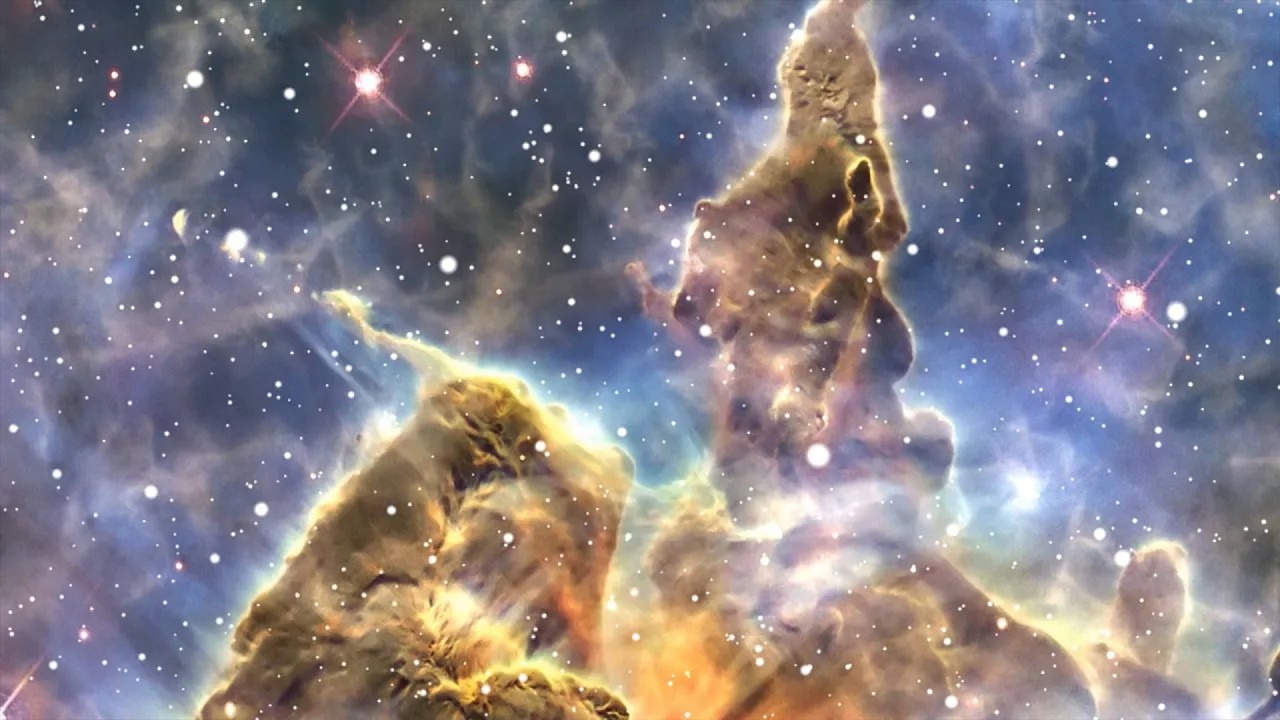
![A Journey to the Strangest Objects in the Universe [Space Documentary 2023]](https://img.youtube.com/vi/wHN5riz5xRw/maxresdefault.jpg)