[Music] Neil welcome back to the GSB well thank you for having me Shannon hello everybody it's great to be back it's always super exciting to be although I was not on this campus I was at that very old campus uh but it's great to be uh on site with all of you well it's great to have an Alum on this stage who's been in our shoes before and when I Was preparing for this interview I did The first thing we always do I looked you up on YouTube and I want to show one of my
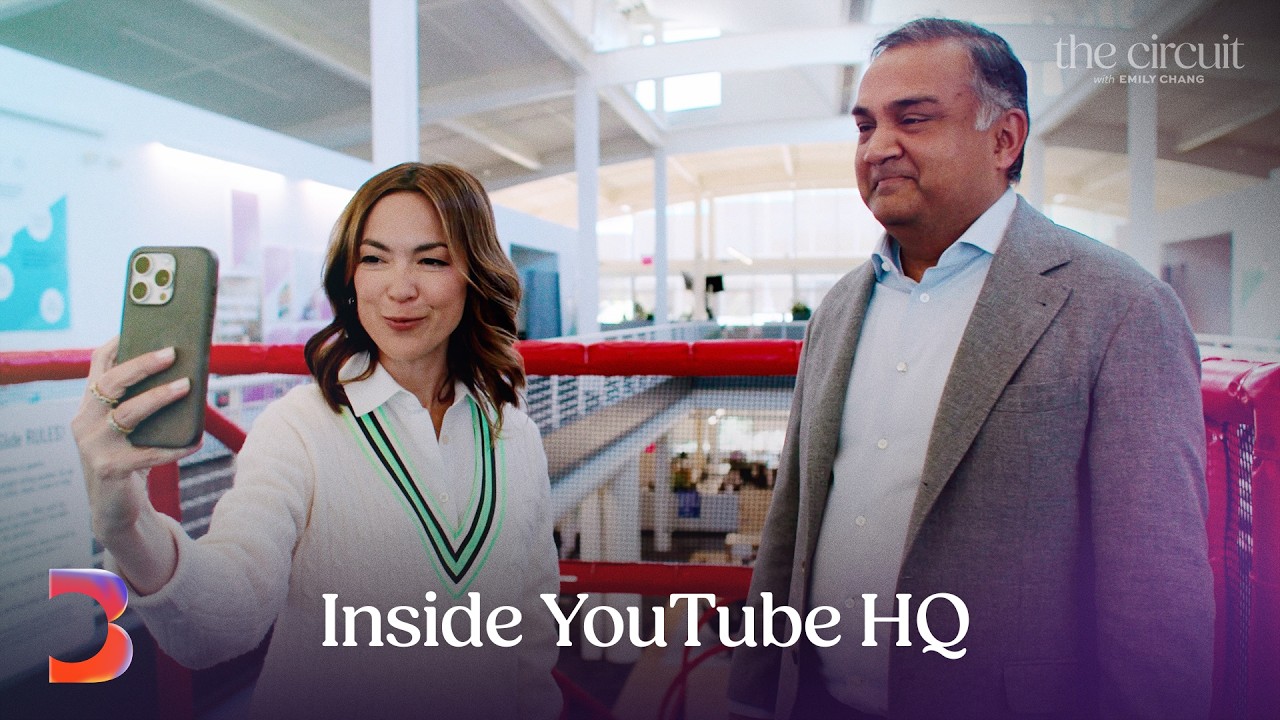
favorite videos that I found uh oh let see what this is Neil Mohan is the most mysterious man on YouTube he's a new CEO and people don't know what to think about him so I decided to invite him to a music festival to get a Vibe check on him and he said yes I decided to put my best foot forward and get commemorative best friend t-shirts made nice Neil and I had Lunch together and he bought me my favorite food Neil and I made our own secret handshake Neil and I unsubscribed for Mr Beast Neil
gave me a piggyback ride when my feet started to hurt I didn't even ask Neil and I signed a legally binding agreement that prioritizes my videos over everyone else's videos on the YouTube algorithm need you to stop overall I give Neil a 9.5 out of 10 oh my God I I didn't realize that when I took over the CEO gig a big part of my job would be being a straight man for our for a lot of YouTubers out there but the other the funny thing about that uh that video was you know I've you
know I do like you know lots of various press interviews and this and that and um I have a 15-year-old and his friends couldn't have cared less about any of that stuff but when I was in that short with a act that was like I basically hit The big leagues with the with the 15-year-old set so that was pretty exciting that's great and I mean a 9.5 creators are a tough crowd I know I know uh we have so much to cover today from creators to AI to your personal leadership uh and we'll get to
all of it but I want to start at the beginning you were born in Indiana and spent the second part of your childhood in India how did those early experiences influence you um it's a great question Um and uh you know just by way of background my my story like the you know I and I can trace it the straight line back to me sitting here with you today uh Shannon started with with my my dad my parents my dad came over here he graduated from IIT in India um and wanted to come here to
do his PhD he was he was uh admitted to Purdue and he was a civil engineer so he wanted to do his PhD there he landed at uh uh at JFK with $25 in his pocket and uh he asked the First person first friendly face he saw uh the quickest way to Lafia at Indiana and um a kind gentleman put him on a Greyhound bus uh and uh that was sort of the start of my journey that's where I was born as you said uh I grew up mostly in the midwest uh in Michigan right
outside an arbor and um yeah Michigan fans here um uh and uh you know pretty normal childhood um you know I was we're talking now I'm dating myself but this was the early kind of 80s so it was like A lot of Transformers and Star Wars and that's what I and you know baseball that's what I spent a lot of my my childhood on but I remember uh distinctly that uh there was really kind of two Indian families in in our entire town it was a small town in Michigan it happened to be that the
other kid Indian kid was roughly my age his name happened to be Neil also so that was a little confusing for a lot of people um but um as you alluded to in um right before High school my folks decided to move back to India and uh I did too and that was um really at the time it felt like a pretty big sort of traumatic change and this is you know we're talking about the mid 80s here so this is not like where you can fly to India and back in a few days and
kind of it's just kind of normal Power for the course that was a big deal uh I couldn't speak the language read it or write it I could understand it cuz my parents would speak It to each other occasionally but um that was a big shock to the system and um you know it was a seminal moment for me because uh because of two things one is it would just sort of um formulated in my mind in retrospect sort of this um concept of just really leaning into change and that's been I think sort of
a theme throughout my career happens to be really important in the tech business which I'm in of course um but uh it was really about sort of embracing that Change ultimately some of my best friends through life are friends that I met during High School uh in India I had to learn you know nine years worth of Hindi and Sanskrit and all of that uh um and uh it's really about not just surviving it's about thriving through those types of uh kind of seminal sort of pivotal moments and that's happened For Better or Worse many
many times in my life and career since then but that sort of like a big part of my childhood Of going from kind of this small Midwestern town to this you know pretty big city L now in in India and um just being able to roll with it and and um you know come out of it in a in a much more sort of positive way well it sounds like you embraced change again because then you came back to the US to go to Stanford for undergrad and then you came back again to the GSB
so how did those experiences here at Stanford shape the trajectory of your life uh oh boy well You know I mean as you know uh John alluded to in his his kind remarks I mean Stanford is a real and as my wife knows who's here uh heon knows is it's a big it's a really important part of my life because uh starting with undergrad and then I'll get to the GSP in a second it really it really did change my life um even in high school I was kind of like this um you know I
knew that I wanted to do something in technology you know I remember I started this uh Software company when I was in high school was uh and and uh it was like it was true like nerd Nation Stanford was like nerd upon nerd it was like basically software to teach people organic chemistry which is a very strange thing but I loved chemistry and I loved programming uh and I said they did both of those things so I always knew that I wanted to have a career associated with Silicon Valley and uh coming here as an
undergrad was really Kind of the gateway to that but it was really less about that engineering education and really about everything else that of course you all know that Stanford offers and um you know and so coming back for the for for business school a because it's you know the GSB let's face it but also because I knew about Stanford uh was a really easy decision um for me and um you know what I'd say about about the GSB and and you hopefully you all sort Of experienced this one thing that sort of went into
my decision there was the fact that I felt like it was a school that wasn't just going to be you know business War Stories or what have you it was really going to be truly sort of grounded in fundamentals and um that was my experience here and I've always thought for years like why is that sort of such a unique thing about uh uh the GSB and um I was actually in a meeting earlier this Morning and my friend uh Derek Bolton like he always does kind of distilled it down to its Essence and it's
really about sort of the teaching and faculty model we have here that's this combination of like the world's best academics with the world's best you know practitioners sort of coming together and teaching and so I remember that as sort of like a core part of my experience here nobody talks about a lot of the classroom experience when they Give their GSP story so I thought I would I'd share that one because I just remember distinctly every class that I took you'd have this broad business context but there would be like one or two truly sort
of seminal sort of principal things that came out of that class whether it was like my you know non-m markets class and it was like this concept of like you know the media and voter theorem which you know many of us know and it sounds like like kind of This abstract dry thing but I can tell you in my career like literally every month there's a concept like that that comes up where you apply those sort of basic principles so that was sort of one thing that um I remember distinctly from my from my GSP
days I learned about the median voter theum in my class last qu so yes will prove useful to you even though it sounds very dry and boring uh and so after the GSB you took a risk and went back to this startup you Had been at double click which you worked at and then eventually sold to Google uh tell us about that experience yeah so actually that that reminds me like my the other GSB story of course which you all uh are familiar with you hear a lot about is you know the the network of
friends and relationships and colleagues that you build both here uh everybody in this Auditorium but also um throughout your career and your life and my experience was like literally like Kind of like a concentrated version of that when I was making that decision to go back to double click after business school um because my my boss at double click was a GSB Alum uh my um the company had gotten taken private which is the reason why I went back to double click by Helman Friedman which was the key investor of it was Andy Ballard who's
now my good friend like 20 years later we're on the advisory Council together um and uh my Future boss who was also trying to recruit me the um because I was making a choice between Google and double click was my professor here ER Schmidt and so it was basically like uh the GSB Alumni network sort of like manifesting itself in terms of my career choices at the mo at that moment um but yeah as you point out I did go back to double click it was a it was a difficult choice I was choosing between
going to this you know fast rising company called Google right Down the road here and um deciding to at that time commute 3,000 miles in the other direction back at double click which was in New York and I had just uh um convinced my wife who's a New Yorker uh to move out to this like very exciting town called palto from New York City and then I I sprung the news that hey um I might be taking this job back at double click and commuting in either direction but I did that um and I the
reason was because um it was really just For me at least it was just kind of a bet on myself it was it was definitely uh much more of a startup environment it was basically coming out of do 1.0 the bubble had burst and it was it was a pretty big sort of turnaround uh and so there was an enormous amount of risk with it uh in terms of business but I just felt that um being given the responsibility to kind of run um you know a big part of it be the number two at
that company and really sort of Position it for what I thought would be a very successful turn around and hope you know fortunately it turned out that way was just too good of an opportunity to pass up and so that's why I chose to go back to double click after business school and double double click for those who don't know is online advertising as we know it today and I was talking to your former professor and current co-teacher George Foster who called you the master negotiator and believes That's the reason that Google acquired double click
in that moment uh can you tell us what your approach is to negotiating these deals you most recently just landed NFL Sunday Ticket for YouTube what advice do you have for us as we're going on to do this in our careers wow that's a great question um I would say a few things so you so just by way of background as you point out double click was kind of is still kind of this sort of operating system of the Internet economy at least as far as you know the fact that it's powered through advertising and
so it was um this you know very strategic conversation obviously between double click and Google and it's you know it's obviously public information but there were lots of other companies at the time that were interested in our products and our technology and and the company and um it really just you know from a negotiation standpoint it really just means um I'm sure you hear this in your classes but Jordan George and I have talked about this over the years too it really is about trying to find um unlocking value on both sides and so yes
it was a steep price tag for Google you know over3 billion but um it was really about sort of showing what that strategic opportunity was for um for Google in this case and also then Google's all of our partners our Publishers or what have you and um it's it's really honestly not About the back and forth and it's about painting the picture that hopefully is convincing enough that there's all this value that can get unlocked if we can come to um some kind of an agreement and you know I think that I'd argue that in
terms of value for all of our partners our Publishers or advertisers that use that software on a regular basis that that was proven true so you turned down Eric Schmid but then ended up at Google anyways and while you at Google you Became the chief product officer at YouTube and fast forward to today you've transitioned to CEO so what has your uh trajectory at YouTube been like and what has this transition to CEO been over this last year well um well I've been at Google a very long time you know over 15 years the first
part of my career as I was it was running our display and video advertising uh business and and products and um my my connection with YouTube actually um predates both my time at Google before we sold double click to Google but also before YouTube uh became part of Google so one of my biggest um partners and customers when I was at double click was this small company above a pizza parlor in San Mato down the road called YouTube and I remember I'd visit from New York at the time and I'd go in and I'd meet
you know the founders and the team and they would just really be um uh um they the conversation would be like Neil how can You guys keep up like you can't keep up with our growth like how are you going to actually scale and it was just amazing to see everything was always sort of up and to the right at this you know startup at the time called YouTube and so I've I've been very closely involved with that company even before Google but during my time running ads at Google uh the biggest uh advertising property
that we had at least in terms of kind of non- search advertising was YouTube so I'd work with them very closely and then when I came over as Chief product officer it was not just you know working on the advertising side but building all of our products for our creators and our and our and our users basically the products you use every day and so that was kind of an easy decision because I was so familiar with with YouTube but um I took over um leading YouTube about uh I guess now coming up on nine
months and that transition has Been uh interesting in a couple ways one is that you know I've been at YouTube for a very long time so obviously I'm very familiar with our products and our ecosystem uh but a big part of the job is um uh different in the sense that now I am sort of the face of obviously of the company uh I have you know I spent a lot of time with our creators as you saw there um and so it's really about making sure that this ecosystem that we're bringing along of two
billion users Million tens of millions of creators obviously all of our partners our advertisers and it's my job to really be the steward of that and so that is that sort of is what falls on my shoulders uh and in a way that is um distinct because ultimately the bck does stop with you so these creators we've seen you at Coachella you've mentioned them now what have you learned from them you've spent a lot of time with them over the last year and presumably before that too what Have they taught you yeah I mean so
um I presumably lots of folks in this room have you know their favorite creators that they watch uh on our platform on a regular basis I know many there are some people in this audience who are creators themselves and I would say uh a couple of things um the first and probably the most Salient thing and this is actually advice I give to people who ask me like what is the secret sauce of being a successful Creator on the platform is it Really is just be true to yourself and that is um sounds sort of
very cliche but I wish somebody had given me that advice early in my career because nothing Rings more true and I can tell you for a fact that it's not the algorithm it's all the other people that are on the other side of that glass when they're watching your video if you're a creator that can tell instantaneously whether that is actually truly your authentic self or if you're trying to Basically put yourself in another person shoes and what I always find striking is you know whether it's you know it's erak as you saw in that
short or whether it's Jimmy Donaldson Mr Beast or dude perfect or whoever your favorite creators are when you hang out with them in real life they are pretty much exactly the way that you experience them on the app and that's their in in an Essence I think that that's their secet secret to success whether they're comic creators Whether they're Sports creators whether they're musicians or artists like it really is about that and of course they're incredibly talented and know how to tell stories but they're true uh to themselves the other thing that I think people
don't recognize as much is that not only are they amazing creative people they are true entrepreneurs like they build amazing businesses I was in uh La last week I was meeting with um you know some of our kind of OG creators Ret and Link um for those of you who may be familiar they have this show every day called uh good mythical morning I see some head nods so you might be familiar with it they obviously are amazing creative types it's really them coming true they're like they're like childhood buddies grew up in uh I
think North Carolina um started a channel it's been over a decade but they are incredibly successful entrepreneurs they have basically a Hollywood studio 100 People you know pre-production production writers rooms um and they not just don't just have their Channel they're basically cultivating um you know a number of other channels and growing and they've made the choice to build their careers on YouTube as opposed to like what used to been the case going and trying to find a gig with you know an existing sort of traditional Media Company yeah I think the creators that you
mentioned that are in our Classes here would probably really resonate with that as being entrepreneurs um and I also read recently that onethird of kids now say they want to be bloggers or YouTubers specifically when they grow up this is a changing growing industry how are you viewing the future of the Creator economy where is it headed um yeah I mean we have uh we have one of those at our house she's 11 years old and it's not because her dad works there but she We are convinced that that is like her career path um
yeah it's it's it's pretty amazing I mean this term Creator economy is obviously kind of a big buzzword today but um it's really been you know kind of the essence of YouTube since the very beginning it is like literally in our name YouTube it is about building a presence on our platform and our creators are looking to do two things they're looking to build an audience you know I I often describe YouTube as the world's most efficient you know connector of a creative person with their audience no matter where they are in the world and
so that's the first thing that we do as part of the Creator economy the second thing is economy ultimately it's about be finding a way for these creators to earn a sustainable living on our platform and so you know we are you know the world's largest and original sort of first Creator economy we take enormous pride in that uh that's What our creators tell us all the time uh and when I use the term Creator I don't I don't mean just sort of YouTubers I mean everything from you know the NFL and the NBA on
one end of the spectrum to you know somebody just starting out in their garage today like really that whole gamut um they're all creators and so we have always um prided ourselves that we we don't just find your audience uh your fans we actually help you generate um real businesses on Our platform whether that's through advertising um you'll all know that we have a number of subscription products we have a number of products where fans can directly fund uh creators and all of that Revenue um uh from all of those sources a big chunk of
that acrs to our creators and so I think in the last three years we've paid out over $50 billion to this Creator economy generated through all of these various sort of business models that I talk About and when you walk the halls of YouTube that's a lot of what you hear you hear a lot of that conversation about what is the next thing that we have to do to make creators creative people on our platform successful no matter where they are in the world I imagine AI is a big part of this content generation uh
you just rolled out several AI products uh at YouTube and I'm curious what you think you're most excited for about AI generated Content and what you're most concerned about how will that affect these creators you're talking about yeah um you know there's again that's another thing that I feel like there's just an enormous amount of sort of Buzz about that this year but first and foremost I mean YouTube a big part of our investment if you think about what YouTube the company is most of the people that work there are software Engineers um lots of
them Machine learning and AI software engineers and when you open up the app on your phones um what do you see you see you see feed that is the product of all of our investment in AI that ranking that's happening that's basically showing you the videos that you want to watch right then and there is our investment in machine learning and AI so that has been a Bedrock of YouTube for a long time but I do think that what you what you said in terms of creation of Content that part I think is going to
be uh different and I and what I mean by that is um you know AI is going to do a couple of things one is it's going to further democratize the creation of amazing content I think in general that is a very positive thing um but it's also because it's going to do that like it is just like any technology it can fall in the hands of Bad actors uh and just like we have to be that way with any content on our platform we have to Be vigilant in terms of how we deal with
it so there's always that and I think our philosophy My Philosophy is you have to be really bold um you have to lean into this techn techology back to this you know theme of kind of leaning into change uh because it will create these capabilities that will be awesome for all of us um but they but it also comes with risk so instead in addition to bold you have to be responsible and so that means trying to anticipate uh risk Whether they're around misinformation or other sort you know deep fakes whatever you want to call
it and so that's sort of how we we think about these things but you know just to give you a very concrete example um the technology you know we we talked about some of this in the in the products you're alluding to we just released this feature where you know through a text prompt you can wish for a video to be generated so you know you have a creative concept um you know Dragons flying through Manhattan that probably would have been hours if not weeks worth of work if you are a Creator prior to this
type of Technology now with this product called dream screen you can do it just like that and so an example of the power of this tool um and so we have to really harness that and I feel like YouTube uh the unique role that YouTube plays um in this sphere is that we really do sit at the Nexus of technology and human creativity so our Our kind of Mantra is how do we harness technology like AI to empower that human creativity you have technology creativity and then one of the other things you just mentioned was
safety and responsibility and I think on a more serious note my classmates and I and the world have watched in horror as the conflict in Israel and Gaza unfolded these last few weeks what do you view as YouTube's role on the world stage in these moments as a source of information And especially accurate information yeah um first of all um you know just like you said I mean we all at YouTube me personally my family um were just um shocked and just you know incredibly deeply saddened by the atrocities that unfolded on October 7th and
you know obviously the conflict that's playing out on the ground impacting millions of people on the ground but also many people around the world um and so you know the the the Reality is and I say this to my teams um you know every day every week which is uh what happens in the world happens on YouTube it's a platform where two billion people come to every single day of course what's happening in the world is manifesting itself on our platform one of the strengths of YouTube is that it is an open platform uh it
is a platform that has stood on Notions of free speech in open platforms uh but one of the things that I have learned um is That um you can't have true truly an open platform and true Free Speech if you also don't have some rules of the road and so from the very early days YouTube has had Community guidelines uh and um those Community guidelines are the rules of the road of what we allow on our platform what is removed from our platform and the conflict in Israel and Gaza that's playing out um is um
a reflection of those rules coming into play so just to you know give you Concrete examples um you know obviously there's horrific graphic violence um often times in the form of video that shows up on our platform we have clear policies around that we try to strike the balance between you know educational and documentary news related content that should stay up should get views as people are looking for information on our platform but we also try to make sure that it is um not gratuitous that it is appropriately ageg gated if it Needs to be
we have policies against violent extremism if the video is either indirectly or directly um uh promoting you know terrorist organizations like Hamas then those get removed from our platform and then to your point around misinformation this is sort of the most nebulous of course and the most diffuse but um we try to um be extra vigilant around that and the challenges you know you just asked about Ai and I talked about sort of deep fakes the real Problem oftentimes with mis misinformation isn't uh isn't about deep fakes it's about like really kind of shallow sort
of like just fakes basically and so you a lot of the misinformation narratives were literally video clips of Call of Duty like video games um that were basically being being propagated as uh footage from from the war and so just being vigilant about those types of things having clear policies having the Investment um uh in terms of not just the policies but also you know in this case again machine learning and AI to actually detect content across a corpus of billions and billions of videos is investment that we have been working on for years uh
which we've been able to put in place so that we can be fast acting in terms of uh a crisis like this um and then the other thing is as you alluded to is making sure that we raise up content so if you open up the app you See that breaking news shelf which is triggering I think still all over the world um that has content that only comes from channels that have built a history of authority and credibility on our platform and have earned the right to actually show up in our news shelves show
up higher in our search rankings in the in the in the algorithmic feeds Etc so we use a combination of of techniques and capabilities but also based on sort of these core principles of open Platform but Community guidelines which sound like competing principles but in my mind they're actually self-reinforcing this is such an important topic right now so thank you for giving us your Insight on it uh I want to understand tactically some more of your leadership style uh in this situation and others I've heard you say before that if a decision makes its way
up to your office it's a decision between two hard choices because if it Was an easy one it would have already been made so I imagine in situations that like things don't fit within the policies you just talked about um or it's something you haven't prepared for you have to make really hard choices as a CEO now how are you doing that yeah it's a it's a it's a great question it's probably the one that I think about the most um honestly Shannon and so I I will just I'll tell you sort of the the
philosophy that works for me um and I'm Obviously doing it today as the leader of YouTube but I think it applies applies to any sort of leadership role and I think that there are three things um that are really important here and conveniently they all start with P so I'm going to I'm going to walk through them the first is is people um I and I I remember I think it might have been actually at the business school where somebody said to me um you know you can as a CEO or as a leader you
can find Somebody to do every single job except for one which is hire the people to do those jobs and so the one role that you have first and foremost before anything is actually finding the right people to be on that bus before you drive to that destination and so that's I prioritize that in terms of my leadership team the people who work directly for me at the most senior levels of the company uh but also you know levels below them and just having a sort of rigorous rubric in Terms of the people that we
bring into our organization especially at the leadership levels is like the first and foremost back to your question of how to do I actually execute it's really it starts with people the second thing that I would say and you know hopefully some of this you got a flavor of this in my my answer around the Israel Gaza uh conflict the second p is principles and I think this is really important and I think hopefully my hope is actually at The end of my career this is the thing that is most Salient in terms of uh
what people perceive about how they work with me is trying to be as principled as possible in terms of the decisions that you make and the reason why principles are really important is because of what you just said because by the time a decision comes to you as a leader it's often a trade-off between two bad choices and if you're trying to make that kind of a tradeoff you better have Some sort of Bedrock of principles by which you're making those decisions and so um you know as I I described sort of one set of
those sort of competing principles the North Star is that we're an open platform we stand for freedom of speech but another principle which is sort of self-reinforcing but competing in some levels is you need to have some rules of the road otherwise you can't really have free speech if it's everything goes so we have policies Against hate speech or harassment uh they're defined very clearly and narrowly but they're but they're sort of like having that sort of principal framework is important you can have freedom of speech on our platform but it doesn't mean that you
get freedom of reach that's another type of a principle that then sort of permeates into your into your product decisions and the reason why the principles are so important is because that's really what Permeates into decision- making at every level of an organization not just for me you know that happens at the you know VP level and directors and managers and so that's that's sort of the second thing um and then the third thing which sounds the most boring but actually would kind of almost be the first chapter in any book is um is actually
around process and uh I do think a lot about these types of things because that's the Cadence by which you run a company or an Organization um what is your um you know how do you dial back everything from an annual plan to a product road map to quarterly okrs and goals to weekly product reviews to weekly pipeline reviews to daily standups having some intentionality and sort of thoughts around how you actually structure those processes is actually kind of like the lifeblood of a company that's what that's what we do all day you know we
make you know a lot of my job is making Decisions with imperfect information and you need to have that sort of process architecture to do that so it's people principles and process if I would leave you with anything that's sort of really what goes into kind of my leadership Playbook we talk a lot about principles and values here at the GSB um and you mentioned a lot of the organizational ones what are some of your personal principles that drive you where do those come from um it's a it's A really interesting question I think that
um you know kind of i as I think back on my um uh I'll say a couple things about that the first is um uh ever since I was a kid um you know back to my days in Michigan and you know my days in India and kind of everything I I did feel often times that I was part of the community but I was also you know kind of a bit of an outsider you know I in in Michigan I was you know one of a handful Kids frankly that looked like me um you
know I had lots and lots of friends in the community but I was a bit different you know my family was different and so that was a big part of um who I was early childhood when I went to India I was also again different like I was around a lot of people that looked like me but I kind of sounded like weird right compared to compared to uh them and so again it was sort of like being part of the community but being sort of An outsider and and for me um the thing that
sort of like where a lot of my strength came from was Finding you know those communities as an outsider through a lot of the means that I used like through through media actually so like whether it was a book or a magazine or a television show back in the day radio kind of sports that was the means by which I sort of found my community that's why ultimately I am such a kind of media junkie to this day and so That's kind of a motivator for me and actually if you think about even YouTube like
it's a place where you can go um you know if you're like a 15-year-old kid you feel like nobody understands you you don't fit quite into the community that you're in you can find your people on a platform like YouTube again it's in the name and so that's been like a big motivator for me and it's sort of like the thing one of the things that really um gets me going in the morning the Other one that I'll just say um is uh the one common thread sort of through my career whether it was in
my advertising days or running YouTube is that um probably one of the biggest changes I lean leaned into was when I was graduating from from undergrad which was the dawn of the internet um and so again that's obviously hard to imagine for many people in this room but I remember here at my dorm at Stanford like you'd literally line up to get an email Address like it was like a whole crazy thing like the internet was literally organized in a directory right before before before Google um and so that that was um but kind of
the core thing about the internet is that it is free and accessible and and YouTube is free and accessible it's like you know kind of the video representation of that uh and the thing that really makes it that way um is the only model the only business model that actually allows for that is An Advertising based one that's what YouTube is that is what the internet is and so the common sort of other motivation for me is that we really do feel like whether it's bringing all of us our favorite creators or our favorite news
outlets or or what have you that is actually powered through a lot of you know the business models that my team and and the like work on so in terms of like again a motivator I feel like that's a big deal and so and the story That I always use to tell that is um the just the recently the recently concluded Olympics in Tokyo the kid who won or the young man who won the um the gold medal and the javelin uh was this you know was this Indian kid you know India had never won
a medal you know kind of track and field medal gold medal before then that kid learned to throw the javelin on YouTube and that's an amazing story um like crazy that like he literally learned and became the world's best Through watching videos on YouTube but the reason I share that story Shannon is the reason he could do that is because YouTube was free and accessible to him and the reason it was free and accessible to him was because of all this work that we do and this sort of advertising powered uh business model so I
think I think it's really important the power of community really is that through line throughout your life and career have you picked up any skills Like the javelin on YouTube what have you picked up lately uh well actually you know my the skills I pick up on it are much much more uh mundane so uh during uh during the pandemic uh our um our garage door broke down so uh I not only saved lots and lots of time but some money by watching you know a two-minute YouTube video and uh I'm I'm I'm not a
handyman as my wife knows yes but I was able to fix it I learned that on YouTube great uh before We go to audience Q&A I'm going to ask you a question we're asking all of our speakers this year in ltin with our theme of redefining tomorrow and you T you've touched on a lot of this of what the future will look like but as CEO of YouTube If you could make one change that would redefine tomorrow what would it be uh that's well I I would go back actually a little bit to what what
we talked about um and it really is about And again back on this sort of theme of embracing change I do think and I've been through really big sort of generational technology shifts many of them through my career as I said I started uh my career really the dawn of the internet so that was you know very very pivotal and Salient the next big one that happened of course was the move to you know the supercomputers in our pockets mobile phones and I would argue that what we are in the midst of right Now this
AI powered sort of revolution is kind of that sort of third big seminal almost sort of platform paradigm shift and um from a YouTube standpoint I my wish is that we again really lean into it and embrace it there are lots of challenges that we will be faced with with this technology but on balance and I'm an optimist uh what it's going to unleash for all of us as human beings is going to be uh truly profound and in the the context of YouTube it's going to be About creativity I gave you examples of like
dragons flying over New York you can extrapolate that to a million different types of creative use cases but it's also going to be about you know human empowerment that example that I gave you around the javelin thrower well what if you could go to a platform and say you know give me you know a five minute tutorial in physics 101 but do it in the style of XYZ my favorite Creator right like that is going to be the power Of this type of technology in our hands and uh my world my wish is that we
that we lean into that great okay we're gonna take some questions from the audience all right let's do it hi Neil my name is gray I'm a MBA 2 here thank you so much for being here with us today I uh I'm also a musician so I have a question about the music industry um as we've seen the rise of Digital streaming platforms we've kind of been trained to Value uh every song ever written for About $10 a month and I wonder if you have thoughts on where YouTube's unique position in the music industry would
possibly be able to shift or scale that so artists can get back to living off of the art that they create yeah uh you know the the music so as you all know music is you know one of the most important if not most you know most important verticals on our on our platform were one of the largest if not largest sort of Music platforms out There so it's core to what what YouTube is and um I would say that the distinction between YouTube and other sort of you know products you might use to listen
to music is that um we are not just about um creating uh opportunities for musicians and artists through the consumption of their you know in this case not to use too much like industry jargon but your primary you know music art track or what have you we are a platform that is that takes music and Mixes it in with other Creator content you know user generated content that is the foundation of of the of this other pie that we've been able to grow for the music industry that is beyond just streaming revenues so the fact
that if you watch a video it's a wedding video on YouTube it's got a a track from uh Drake that money from that video through advertising or subscriptions actually acrs to the musician or artist and so it's a system called Content ID uh it is Proprietary you know YouTube technology but I think it's sort of one of the crown jewels of what YouTube is and so our goal is to continue to try to really expand more of that pool we we are one of the unique Platforms in that you can generate money through subscription revenues
on our platform that acre to the music business but also through advertising the complexity sort of that goes into it without getting into too much detail is that there are lots of Players obviously that own various parts of Rights uh in the music industry so there's obviously uh uh um publishing companies there's record labels as you know and so it's really about sort of the economic pie and sort of how it gets divided up but our goal at YouTube um is to try to grow That Pie as much as possible and actually that's how we
think about new technologies like generative AI how does it actually create new opportunities for artists at The end of the day we're in the business of artists and creators so our goal ultimately is to make sure that what we do is ACR to our art artist and we have to do that obviously with our partners like the labels or Publishers but that's that's a bit how we think about it which is ultimately growing the pie through these various revenue streams that we have NE uh I'm shat and I'm an MBA one student here was curious
to know if there was any particular product or Feature in YouTube that you very passionate about but it didn't take off in the way that you wanted it to or it didn't reach the potential that you were looking for it uh there's many products that we um there our culture is one of of experimentation we really do try to try out new things um we used to have a product um in a in a number of our um kind of we call them sort of our next user Emerging Markets it used to be called YouTube
go it was basically kind Of a lightweight version of YouTube that we built for um uh less capable Android phones in a lot of Emerging Markets it turned out uh that that wasn't necessary because what ended up happening in a lot of these markets is uh Lea frogs basically the local Loops the data Loops um in India is a great example where Reliance just invested extremely heavily and made it so that that problem of data and the bits of video kind of went away so That's an example of a product uh that we tried out
didn't work and then we we Sunset it um appropriately in that case another one that was a lot more controversial that some of you may remember uh is um is uh dislike counts on our on our it's like it's like literally I still to this day get tweets and emails about this feature that we that we turn down which was eliminating the count on dislikes as many of you obviously clearly know it was a very Controversial decision but we uh but we made that choice to turn down that feature and again it actually and that
one actually goes back to this principles point that I was making which is we have an ecosystem of creators and viewers and um they are both incredibly important to us but um how do we make a decision when it comes to a trade-off between those and the trade-off in this case was viewers really in many cases maybe wanted to see Those view counts or those dislike counts as an indication of like the quality of the video or what have you but what was happening was that count became an incentive for you know kind of harassment
brigading and things like that that disproportionately impacted a class of our creators and particularly vulnerable creators on our platform female creators uh and the like and that was an example again of sort of the principle was that well our viewers come To our platform for the thriving Creator ecosystem so we better really get that right um even though it might lead to a short-term trade-off on the viewer side because in the end what's good for our creators is going to be good for our viewers so that's another example of a feature that we that we
turn down hey Neil my name is Devin I'm mba1 here at the GSB you I think as we all know learning has been such a huge part of YouTube since its Inception and you Kind of hinted at maybe going from a more passive to an active role in promoting learning on the platform could you tell us if that is in the strategy and what that might look like uh I can tell you a little bit um uh so you I so you're right learning is a is a huge use case on our platform I think
the latest sort of I think it was a Pew study that I saw you especially for real you know young people teens um you 95% of them use YouTube on a regular basis the Biggest use case of course is is is is learning on our um and um so we and you know it's interesting you know YouTube kind of grew around this learning use case almost kind of like despite ourselves right like it's not like we built a particular set of features around it but recently you know one of my priorities has been investing in
this especially from kind of the learner standpoint but also importantly from the the teacher educator standpoint because There needs to be a business model that works for them there and what's interesting about the learning vertical because sometimes learning because it end oftentimes ends up being very specific or Niche you an ad supported model because ads require scale doesn't necessarily always always work and so one of the products we've been working on is something called YouTube courses so that you can actually bundle a playlist of videos and actually allow The creators to put them in the
order that they want want to have some additional features in terms of interactivity and things like that so that's an example of something that we're doing we're also thinking about should we experiment with um being able to generate quizzes off of videos so that if you're a learner you know you're you know you're what an eighth grader watching an algebra one video can you um check to see if you actually got the key Concepts out of it things like that so that's sort of the general sort of realm in terms of how we think about
it but I agree with you that obviously Learning Happens not just by watching it happens through interactivity we're obviously we're fundamentally a platform about consuming video and audio content so we're never going to build you know all that functionality that you require but we can augment it uh we can basically provide we can make it so that we Provide the better tools that then fit into perhaps another education tool or if you're a self- learner organize them in a way that's productive for you and so that's that's sort of how we think about that hi
Neil thank you so much for being here my name is Andrew and I'm an NBA 1 my question is around Sports and so following the acquisition of Sunday Ticket and the NBA media rights are coming up for auction in a little bit curious to hear how Sports and live Sports streaming fits into YouTube's overall strategy and business model yeah um so the way that I think about sports is so first of all you know we're we're again back to what I was saying about music probably applies in the realm of sports too you know we're
probably one of the largest Sports Platforms in the world and you know I grew up watching when I was in undergrad here I would just I'd watch like 5 hours of sports center in a row just on in the Background right like that's because I'm a I'm a sports not myself but then I look at it through the lens of my son who's 15 he's as big of a sports fan as I am his his version of consuming highlights is on YouTube often times through the lens of his favorite YouTube creators Sports creators in what
we call long form so you know traditional VOD content on YouTube but also through YouTube shorts uh and so the world of consumption of sports content is Changing dramatically um that's the expectation especially for young people and so the sports industry has had to adapt to that that's why you see lots of content moving to streaming platforms uh and that was sort of the backdrop of things like uh uh Sunday ticket to the NFL's credit they recognize that their fans particularly their younger fans are on YouTube and that's where they would prefer to consume a
lot of this content and so for us um it was really about Super serving those sports fans that are already on our platform so it's about kind of I think three things in that case it's about choice right like now if you're a football fan you don't need to call somebody up and have somebody come out and install a dish on your house right like you just two Taps and you're watching your favorite games the second is around just what YouTube and Google do which is just Technical and product Innovation right so that experience Glass
to glass from the truck on the field to your television screen has to be best in class so that's where you know features like multiv view if you guys have played around it come into play right like I see some head nods for I can tell the sports fans in the audience so that's that's like product Innovation that we should bring but the third thing that I think is sort of the most interesting here and back to kind of my son's example are this blending of Worlds like YouTube creators right like the fact that even
for sports bringing that to the table is the expectation that their young fans have so you know some of you may have seen right like Mr Beast was at the Tampa Bay game this weekend right like that kind of a thing is just kind of natural if you are a young sports fan and so really leaning into that type of change uh is another important aspect of it so we think about it you know really holistic consumer Choice product Innovation kind of broad sort of content integration and that's and if we super serve those sports
fans um not only does that sort of acre to them but it sort of spills over into the rest of the ecosystem there's obviously a direct svod subscription opportunity there but it also spills over into our advertising business great thank you so much for answering these questions we are going to end with a view from the top Tradition of Rapid Fire uh I will say a sentence and you will complete it are you ready all right let's do it first one if I had a personal YouTube channel the content would be about oh for me
that's easy it'd be about something sports related like I wouldn't be the best commentator but it would be maybe something to do with the Warriors yeah great we love the Warriors around here uh the biggest similarity between Indiana and India is probably probably the the those five letters in the name is probably would say yeah yeah my favorite thing to do when I'm not working is uh hanging out with my with my family our kids is probably what I like to do I always I always say that you know in my job I have to
travel a lot I have obviously lots of meetings I get to you know meet lots and lots of incredible people but like my favorite thing to do On the weekends is just hang around the house with my kids honestly a piece of advice would give my younger self is uh I I'll go back to what I said I mean I I I wish somebody has given me this advice when I was you know first coming out of business school is just truly be uh true to yourself like really try to again it sounds cliched but
really think hard about setting your own course think about it in terms of longer Term like not I'm not saying over plan but just try to really really answer the question about like on the margin how is this going to be truly about what I want as opposed to what other people's expectations are of me and we'll bring it full circle my favorite moment at Coachella was uh I don't know what do you what would it be well uh it was uh let's see Bad Bunny was great great answer my wife's favorite moment was bad
bun great Answer Neil thank you so much this has been great thank you thank you